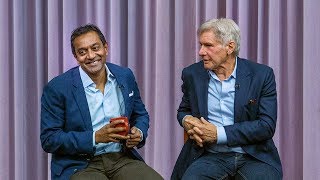
Two speakers share what they wish they'd known at 20, reflecting on their educational paths and the role storytelling played in their lives. They discuss why communication skills matter and how understanding your own story shapes your direction.
My last question to both of you is one I'd like to ask. I'd like each of you to go back a couple of decades to visualize yourself when you were a student in school and think about what you wish you knew when you were 20.
I was a desperately poor student. Very, very difficult time in my life, and I regret deeply that I didn't take advantage of the opportunity. This is what you might expect from your elders. But it's true, I didn't really discover my utility in college. Towards the end of my college years, I began to understand that I had. What moved me might be potentially useful to me. I found a community in storytelling, and that's what. That's what eventually became my life's work. So that's a pretty short story.
When I was 20, I was trying to convince my parents or fool them into thinking that I was in med school when I had really no intention of going that route. You know, we. When we were. I grew up in West Africa, and my parents encouraged my hobby, which was a love for nature and being outdoors and following things around. But they always saw it as a hobby. We'd get, you know, David Attenborough's original Life on Earth series on, like, VHS tapes, and I'd watch that whole thing, and I would, you know, kind of say, I want to do that. And they'd say, quite literally, that's for white people in my language. But that's what they would say and they'll find encouraging it as a hobby. And around the age of 20, I started realizing that there might be something that I could do productively to follow this passion that I was developing and kind of go into it all in. So it was a really interesting time where I was, like, literally taking classes just to send those grades in and then just go do something else. What I would do differently if I could go back and do it again, you know, I would. I'd pay a lot more attention to college, guarantee you that. Right. Like, it's just amazing how little, like, I actually got out of, like, 20 something years of education. I could do that today in, like, a year. Like, all of that you could actually do. I can't understand what I spend all my time doing. Right. Amazing. So. But here's some things I would have done a little differently. Communications. So, like Tynnor Harrison said, I. Obviously, he went about that in a very different and profound way. Being able to tell a story is a really important thing for an entrepreneur to have. And if you see some of the people, particularly around here who made these amazing changes and have convinced you that you could do something that no one else could. It's through that power of communication. I'd have taken more formally. I learned it just accidentally. That would have been something I would have done more. I would have probably gone harder into statistics, because understanding it helps you understand the world in a very unique way. And then I probably would have. Well, those are the two things. I would really lean in heavy on the stat side. I would lean in very heavily on the comm side, writing or speaking or whatever you take. Don't underestimate how powerful that is, even maybe especially for engineers.