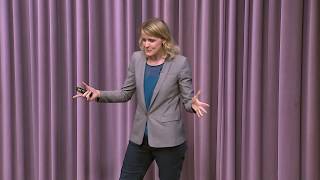
A look at how objections during product development can spark breakthroughs. Calatrio, a device that treats hand tremors by stimulating the hand to affect the brain, emerged from listening to what people said no to.
Chapters
Okay, so now we're going to move on from the why, from the needs finding portion of this into the what, and I like to call this follow your nose. And the idea here is basically, so you can see here, you do needs generation needs screening, then you do solution generation and solution screening. And the reason I like to think about following your nose is that when you're doing something really new, when you're doing something radical, you, you will hear no all the time, especially when you move into the solution phase. So at a level of needs, at the end of the day, most unmet needs are unmet needs. There is a question of how big an unmet need is, but it's almost like they're all good. Which one is better? When you get into solutions, you will hear every reason why your idea is a horrible idea. And I think that one of when I think about our team, when I think about what we've built and who has really excelled in a sort of fast paced startup environment, to me that's one of the really key things, is how can you listen to all of those nos and find who gives the most insightful no? Who is really willing to sit down with you where you can just say, honestly, I hear, you know, I hear your no. And I'm trying to see my way through this. Can you take the time to explain to me in detail why this is a no, and then have them detail it out and poke holes in the theory? And that's where so much of innovation comes from. So if you look at our product Calatrio, and to the question about business model, I'll touch on that here as well. When we were delivering our first solution, the product solution, we heard no all the time, right. The site of essential tremor is in the brain. It is the ventral intermediate nucleus in the thalamus. Therefore, to treat that site, you either have to put an implant in the brain or you have to take a drug that crosses the blood brain barrier. You know, no, it's not possible to do that without drugs or without surgery. And then when we started to dig in on it, we started to realize, you know what, actually it's a circuit. It's not a single site in the brain. And by definition that circuit goes out to the wrist, it goes out to the arm. Because why on earth can you treat the brain and have it reduce hand tremor? These have to be connected. And so then we started to think through, well, based on that, can't you reverse engineer the circuit? So if you can stimulate in the brain in order to calm the hand? Can't you stimulate at the hand to send a signal to the brain, to actually interrupt the circuit in the brain to reduce the hand tremor? And that's how our product works. So, you know, now, some years down the road, we have beautiful mechanistic data showing the effect of our therapy in the brain. So it's basically a stimulation we're treating here in order to treat the brain in order to reduce the hand tremor. But I think that's a great example of. It was only by finding the people who could give us the most articulate reasons why what we were trying to do was a little bit crazy, that those ended up being our scientific advisory board members, our clinical advisory board members. They're the people who got sort of intellectually engaged and saw that through with us.