From Conviction to Company [Entire Talk]
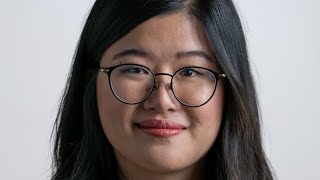
This content was created by GHION.AI . This content was uploaded by GHION.AI . This is a YouTube video titled "From Conviction to Company [Entire Talk]" featuring a seminar at Stanford University on November 15, 2023. The talk is part of the Entrepreneurial Thought Leader Seminar series, hosted by Ravi Balani, a lecturer at Stanford. The session features Michelle Lee, CEO and co-founder of Medra, discussing her journey from academia to entrepreneurship, focusing on building conviction, deep tech entrepreneurship, and the challenges of starting a robotics company. The talk includes a presentation by Michelle and a Q&A session with students, covering topics like gaining expertise, building conviction, and the role of robotics in scientific research.
Chapters
Foreign.
Welcome Stanford and broader communities to the Entrepreneurial Thought Leader Seminar here at Stanford University. Etl, as you all know, is a Stanford seminar for aspiring entrepreneurs and is presented by stvp, the Stanford Engineering Entrepreneurship center and basis, the Business association of Stanford Entrepreneurial Students. I am Ravi Balani, a lecturer in the Management Science and Engineering department at Stanford and the Director of Alchemist and Accelerator for Enterprise Startups. Today we are thrilled to welcome Michelle Lee to etl. This is a true full circle moment for Michelle. She was literally in your seats like less than a decade ago. Michelle is the CEO and co founder of Medra, which is building robots to accelerate scientific breakthroughs. The company enables scientists to automate lab tasks and focus on making groundbreaking scientific discoveries. Now, Michelle was born and raised in Taiwan and then came to the United States for high school, which began a pattern in Michelle's life of jumping into new territories and and completely excelling. From high school, she went on to come to Stanford and she's a Cardinal three times over. She graduated in 2015 with a Bachelor's degree in chemical engineering and as an undergrad threw herself into the robotics club, even though she didn't have any prior experience from high school in robots. She then goes on to get a master's degree in a completely different discipline at Stanford in Mechanical engineering. And she graduates as a Mayfield Fellow in Tau Beta PI. And then while at Stanford, she also is doing internships at McKinsey, SpaceX and Nvidia and then goes to get a PhD at Stanford in the Computer Science lab in the Mechanical Engineering department as part of the Stanford AI lab. And literally in her PhD program in her first year is the first time that she learns Python. And yet she completes her PhD in three years and then goes on to get a tenured faculty track position in Computer Science at nyu, a dream job for many. But she resigns from that dream job to go into yet another new domain of entrepreneurship because she was so compelled by the conviction that she had around Medra. And so today we're going to explore those themes around conviction, deep tech, entrepreneurship and understanding your path in life. And so with that, please welcome Michelle. So lots of ETL love for you, Michelle.
Awesome. Thank you so much Ravi for that great introduction. And this totally feels surreal because like Ravi just said, I finished my PhD in 2021, so I have literally taken so many classes in that auditorium. So it feels really great to be back for etl. And I've taken ETL before too, so this is very exciting to be back. So as Ravi Said I'd love to kind of show do a really quick presentation to just give a sense of where I have been and what MEDRA is all about. There will be robots involved. So that's why I think presentation mode just makes a lot of sense. So really quickly, let me just share my screen here so you can actually see. So yeah, I. Hey, everyone. I'm Michelle and I am a roboticist. That is me in the Stanford AI Lab, just playing around with robots, which I love. As Robbie mentioned, I did my PhD in the computer science department at Sail, even though my degree formally is in mechanical engineering. And if I had to describe my research during my PhD, it's really at the intersection of robotics, machine learning and computer vision. And for those who don't have a robotics background, let me just show you an example of what that looks like. This was a research project that I did where we taught this robot how to wipe a whiteboard just by training it with data, just by saying, hey, can you train over and over in simulation to learn how to wipe things and we'll reward you if you're successful and was able to train them to then in the real world and if you guys want to see again to be able to wipe this whiteboard directly from data. So I do want to kind of fast forward a little bit to at the end of my PhD to talk about a decision that I was making. So I want to transport you guys to 2021. I am wrapping up my PhD at Stanford in AI and I am offered to start my own robotics research Lab with almost $1 million in funding to start out, which curiously is very similar to what some investors were offering if I wanted to start my own company. So I had a choice here, two very different paths I can take. On one hand, it's academia, which is, you know, a million dollars in funding, no strings attached, and complete freedom to work on whatever I want to work on. Right? So that's academia. On the other hand, it's starting my own company. So I would get about three quarters of that funding compared to academia. So less money here in exchange for equity for this company. So strings attached with this money. And I would probably have to dedicate the next decade of my life on one single problem. So no, no freedom to choose what I really want to do. But I would get one very exciting thing that really inside inspired me and that is scale and the chance to really impact and change lives. So on the one hand, academic freedom, and on the other hand, a chance to change lives at scale. So spoiler alert. I'm here right now at etl. So you know what choice I made? I chose scale and I founded Medra. So Medra is helping scientists and biologists with the same struggle and the same dilemma I faced in 2021, which is how do you take really impactful research and, and how do you scale it to something that can actually change lives? So I want to, I want you guys to again imagine you're a scientist and many, many of you guys are. I want to imagine you're a biologist. You just made a major discovery in your lab that you can synthesize something called MRNA which can create proteins in the cells. But you don't have any proof about how MRNA can actually be useful or maybe it can be turned into a drug. And the only way to get that proof is to do lots of experiments. It's pipetting, it's moving test tubes around, it's sorting your samples in eyes, it's more pipetting, just over and over again. When MRNA was synthesized in the labs in the 1980s, researchers were already dreaming of its therapeutic potential. But it took decades before MRNA could be commercialized into a vaccine. We all know very well the MRNA COVID vaccine. So almost 40 years from research breakthrough to scaled up impact that can actually change lives. So what if instead of asking our very brilliant and highly trained scientists, instead of asking them to pipette day in, day out, we could just automate it with robots? So let me just show you some examples of what our robots can do. Robots can run experiments overnight over weekends. Robots don't really get bored and tired of repetitive menial tasks. Robots certainly don't get repetitive strain injury, which is like a real problem for biologists when they're pipetting day in, day out. Robots can 10x the experimental throughput and accelerate our drug discovery process. And this potential extends beyond drugs to even plastic devouring microbes that can clean up our oceans. We can even have the robots to come up with new lab grown meat which can replace factory farms that's creating so much greenhouse gas and maybe even combat really complex diseases and mechanisms like aging and be able to work on really exciting work in longevity. So I just want like the thing that I want you to imagine is if every biotech and pharma company out there had 10 or even 20 of these medra robots doing experiments for them and generating data. Scientists can now just focus on science instead of the monotony of repetitive manual bench work. Imagine if the next generation of biotech companies, the future modernas of the world, who are going to create groundbreaking medicine with our robots. Instead of taking four decades to come up with, go from a research discovery to a real drug, it takes them a year. That's a scale that inspired me to start Medra in the first place. And that's the reason I chose this path that, that I am on right now, and that is to build robotics to accelerate scientific breakthroughs. And today, I'm really excited to be having this fireside chat with Ravi and also to talk to you guys about how you can also find your passion and convictions in life. For you, it might not be scale, maybe it's something else. Maybe it is doing fundamental scientific discovery in academia, but it's something that you have to choose for yourself. So that's a little bit more about me, a little bit more about Medra, and I'm excited to kind of go in and talk more about more things with Ravi and also with all of you. Thanks a lot.
Thank you, Michelle. Michelle, that was very inspiring. I can understand why you're doing what you're doing, but I wanted to double click and dive in on this idea of, of actually building conviction towards an idea that you decide to dedicate your one precious life to. Just because I know all the students, just like yourself, have a flurry of options. And it's one thing to conceptually understanding and inspiring an idea, and it's another thing to actually take action. And it's even another thing, even more to take action when you're giving up such a treasured job that I think many people would have spent their lives pursuing to get a tenured track job in New York City in computer science. And so it's a different thing when you have to say no to that. So I wanted to first dive into really adding color on that inflection moment of decision where you're saying no and you're resigning from the job of the NYU tenure track job and you're saying yes to Medra. Can you give us more color on that? Was that a difficult time or was it pretty easy in your mind to make the decision? And can you add more color on exactly what was happening in those moments and how you made the decision?
Those are great questions, Ravi. And I think for me, when I made that decision, it was not difficult. But if you had to go back six months ago, I actually really struggled with, with that decision. I actually had a VC come to me because they knew I had this tenure track job. And I basically had told nyu, look, I, I want to start a company. Can I take a Year before starting a company to. To kind of to before I start as a professor. And so. So six months before I actually made that decision to resign, I actually had a VC tell me, like, why are you even trying to start a company while also trying to become a professor? And they had told me this thing which is like, as a startup founder, you should burn all bridges and burn all bridges behind you, burn all ships, so you have nowhere to go but to. But ahead. And so by having this option of becoming a professor, that actually will make you less successful as a founder. And I really struggled with that because the truth was, six months before I resigned from my faculty position, I didn't have full conviction with what I was doing at Medri. I was still exploring. And so it took a while to gain that conviction. Took about six months of exploration to gain that conviction. Once I did have that conviction, it was a very simple, simple decision to make. And I think that question of, like, how do we gain conviction? Is a better way of thinking of it then instead of framing it as optionality versus commitment. I think in Silicon Valley there's a lot of this conversation against optionality. I think Peter Thiel talks about how life is not a portfolio. You know, entrepreneur cannot diversify themselves. But I actually think optionality allows you to explore sometimes and explore different options. And if you're intentional about your exploration, instead of just chasing out the optionality for the sake of optionality, if you're intentional about the exploration, you can actually use that as a way to gain conviction towards the path you want to take.
And that was great. And can we talk about though, that moment when you actually got conviction in terms of what was the criteria or the necessary conditions for you to suddenly binarily shift and have conviction? And especially because I think many students are wrestling with whether or not their idea is good enough to actually have a to. And I think there's two convictions. There's sort of the conviction of time when you actually decide to focus your time on it, and then there's the conviction where you know that the company's going to succeed and maybe we're not there yet, but for that first conviction moment when you, after six months, when you had the conviction to then dedicate your time, what happened, what unlocked at that moment to give you conviction?
So I think the truth is conviction is going to look different for every single person. And so the question you have to ask yourself is, what. What is the thing that will make me feel conviction? Because that's going to look different. I actually talked with another founder who said, look, I didn't really have conviction about what I'm building until I raised money. And again, VCs might think, oh, well, you should have a conviction about your idea because you believe in it. But for her, it was about the economic safety of it. So everyone's source of conviction is going to look different. For me, there were a couple of things. The first was I wanted to work on something robotics related because I am passionate and just a total nerd about robotics. So I knew that about myself. The second thing, though, was I wanted to work on something where I knew it's going to have a huge impact. And that's why I chose the space of biology, which is what I explained earlier. But the third part was, for me, the conviction that I needed to see was people really desperately needed what I was going to build. Like it actually is going to make a difference. There is a market here for what I'm going to build. And so for that, for Medra, we. I actually sold a robotic system to a customer. Before I even started building the product, I actually made a sales pitch deck, I want it. And I wasn't trying to like pretend I had a product. I went out there very clearly saying to people, I don't have a product yet. I know what I need to build, I know how to build it. This is what I'm going to build. I just want to know, is this going to be helpful for you? Can you tell me? And a company said, yes, that would be very helpful. In fact, it would be so helpful. We would love to work with you and sign a contract with you. And that was the moment that convinced me, wow. That this is something I'm building, that people actually want, that they're willing to pay for it. Before I even started building anything, I just have a PowerPoint presentation. So that was the thing that convinced me.
That's fantastic, actually. So I just want everybody to note that. That the conviction moment happened when there's a couple things, but it was the measurement could have been just getting a signed contract, not with even the product built, but just the pain point and the vision validated with the signed contract. The pain point in the vision before you even built the product. I have a bias on this. I think you should never make a decision based on venture capitalists. I do think it should come from internal or customers, but they're fair enough. To each their own on coming up with conviction. But yeah, that's fantastic. I know I'm gonna have limited time, Michelle. And there's Lots that I want to discuss. But one thing that I think you're just a singularity in is leveling up and then becoming an expert in completely new areas. You know, you shift from mechanical engineering to mechanical. Sorry, from chemical engineering to mechanical engineering. Then you start learning computer science in your first year of your PhD, and you complete that in three years and then get a tenure track computer science faculty position. And you have this history of going into new areas very quickly, leveling up, and then dominating. Share your secrets. So spill for. For all the students that are scared about going into new areas and everybody who has imposter syndrome, how do you go into a new area and level up and dominate so quickly? And hacks are great.
So I definitely have imposter syndrome, first of all. And I think that is one thing that fuels me, right? It is acknowledging I'm a total beginner in something, acknowledging that I don't know as much, and just coming into a space with humility of I don't know anything. And I'm here to learn. My brother, actually, when I was an undergrad, I actually took a product design class, I think sophomore year, and I have no design experience, and I'm not very artistic. And I remember telling my brother, my older brother, like, I am like the worst person in this class. I should be taking engineering class, and I'm design because I'm the worst person in class. It feels so bad to be so bad at something. And my brother actually told me, when you're the worst person in a room, you're going to learn the most. And that's the kind of attitude I've always taken since then, whenever I'm learning something new, if I am the least knowledgeable person here in this room, then I get to learn the most. I get to grow the most. And so in terms of hacks, really, it's being honest with yourself and with others too. Like, transparent. Like, hey, like, I don't know much, but I'm here to learn, and I am willing to put in the effort to learn. So when I started my PhD, I would go to people and ask them, how did you learn how to code? Is there anything I can do? Like, what classes would you recommend? I would be in lab Friday nights and on weekends, right? And I demonstrated I cared deeply about learning. And when people see that, they want to help you, they want to teach you. And so it's this willingness to say, I don't know, but I want to grow. And I'm, can you help me grow? And I think when people See that they actually just really do want to help.
And did you ever have moments when you thought, I'm just not cut out for this? I made the wrong decision.
Yeah. I almost quit my PhD when I was studying for my quals. As a PhD student, you have to pass your qualification exam, which is an oral exam in front of professors that just ask you questions. And I was doing my qualifying exams for mechanical engineering because that department I am. But I actually did not take mechanical engineering as and in undergrad. So I was teaching myself a lot of the things that I needed to know in order to pass the exams. There were definitely times that I felt like, oh shoot and am I in the right place? But again, it's this willingness to then say like, okay, I do need to catch up on things. I'm going to be honest with myself. I'm maybe going to push back my quals a quarter later so I have more time to prepare. And I'm going to dedicate this quarter to, to really study for. I'm going to form a study group around me so I have accountability. But there were definitely times I thought that I wanted, like I wasn't cut out. But then it's again, not being, not, not being caught up on those feelings of inferiority or imposter, but using that as like a, using the curiosity of like, what can I learn here? What can I grow here? Like it's okay if I fail, like as long as I learn, as long as I can become that, that's making that the motivation rather than like, am I going to succeed or not?
That's fantastic. By the way, Sean Anker, you know, who's the Harvard researcher, I think he would completely agree with you. One of the things that we teach and that he teaches is that only 25% of your success is a function of your IQ. 75% is your optimism, your, your growth mindset and your social support. So you know, I think you're saying, you're saying that all in spades, which is terrific. I want to move now towards talking about deep tech entrepreneurship because it's so rare for us to have somebody who's so bold to go into hardware robots which are like oftentimes four letter. These are the equivalent of four letter words that VCs have a religious aversion to for a variety of reasons. And so I want to go through some of the pitfalls with doing a deep tech startup and get your, your, your responses or advice. You know, before we talked about how the way that you got to conviction on Your time was with customer validation as one point that a customer signed a contract just with the pain point and the vision without even the product being built. Many robotics companies start that way, but then they end that way too. They end as just consulting businesses where you basically find one customer or a few customers that really need the product. And because the margins are so low, it becomes a services business that doesn't scale. Can you speak to that? Is that a valid concern? And if so, can you speak to your thoughts on that?
Yeah, so I think there, there are two pitfalls I see in a lot of robotics and deep tech companies. The first is what you said, which is how do you, how do you actually avoid becoming just another basically venture subsidized consulting firm with really, really smart people? And really what I did was I looked at a lot of robotics companies, some that have succeeded, some that have failed and really worked backwards. Why, how did they fail and why did they fail? And the key thing of why robotics companies have failed is because they can't, they don't have a technology that can generalize. They can't actually scale up their technology. If they want more people to use the system, they basically have to hire more people to kind of do that consulting service. And so when I was thinking about like, what can I build at Medra, I the first thing I thought is like, is this going to be scalable and generalizable? And scalability and generalizability is not something you can get day one. It's something that you have to build technology towards. But as a team and a company, we have that in mind of like, how can we actually scale up into something that is going to, is going to be able to help, you know, if we have new customers, it's going to take a very minimal amount of time to help them get set up with a new system. But I think a second pitfall I actually see from deep tech companies and robotics company is not starting out with wanting to just build the technology without knowing what problem you're actually trying to solve. And maybe even building technology for the sake of building technology, like, wow, wouldn't be so cool. We have a robot that can do dot, dot, dot, rather than saying, is this actually going to solve a problem that's out there? So for, for me finding that customer to say, hey, I actually really want this and using that as a North Star of like, hey, we could build this, this product that the customers actually really want and really help them solve their problems, that has really guided us to be able to actually build the right thing for our customers.
Okay, that's terrific. So one of the other, I think quicksand moments for deep tech and hardware companies can be fundraising. Because oftentimes with software you can just use your own labor and build a software product that's very scalable, easy to distribute. The marginal cost of software is basically zero. But with hardware it's capital intensive. And so you have oftentimes this conundrum where you're spending. You need to spend all of your time building product, but to build product you need cash. And then you're spending all of your time trying to get cash, but nobody's going to give you cash until they've de risked the product. And you never take off because of the capital intensity of that, that fundraising product, initial development cycle. Any thoughts on that, on how to hack that or what founders who want to do hardware should think about, which might be different than software founders.
So fundamentally Medra is actually a software business, we're not actually a hardware business. And again, that goes back to that scalability question of like do we do, when I started Medra, do I actually think what Medra is doing can actually scale? I think if you're building your own hardware, it is a lot harder to scale because now you have to think about manufacturing and like you said, the capital intensity, intensity of that. The reason why I think Medra is a software business is we actually use industrial robots are off the shelf. The secret weapon and the secret sauce of what we're building is not actually the physical hardware is the software that powers the robots. And so we're using fairly commoditized industrial robots and we're actually using AI and computer vision and you know, state of the art robotics to be able to power that robot. And I think an analogy I like to use here is like self driving car companies, their magic sauce is not the car because they can just buy a car, right, and they can put it, put cameras and lighters on it. Their magic sauce is the algorithm that allows the cars to be able to self drive. And similarly at Medra, our magic sauce is the software and the algorithms and AI that powers our robots to be able to automate what, what our customers want. And so that is really what helps us become able to scale.
That's great. Okay, let me open it up now to the students.
Hi Michelle, thank you for joining us at the School of Business. I've noticed there are two different schools of thoughts around entrepreneurship. Some people have advocated that it's important to build expertise first and then use that to find gaps and then you figure out kind of where to build a business to cover the gaps. And others have advocated that, hey, if you have the conviction or interest, you can build a team around you and you kind of learn kind of in the process, you have other people to kind of supplement your knowledge. Where's sort of your opinion on that spectrum and can you kind of in terms of starting a business and if you can share details, why.
Yeah. So I think there's something, you know, a lot of people talk about product market fit, but there's also something called like the founder market fit and a question of why you. So let's say I was someone without any robotics experience. It would be pretty hard to start Medra because people will say, why me? Now let's say I didn't have robotic experience, but I had a great network in robotics. Like maybe I've worked at a robotic company as an operator, right? Then there's a bit more of why me? Because I now have the necessary components and the competitive advantage to be able to recruit a great team around me. So I think the main thing you would need to ask yourself is sure, you can have that passion, you can, you can have that drive, but you still need to create that competitive advantage and it might take a little bit more time. And I think every market is going to be different now. For me though, also, I, I did go into robotics, at least the AI part of robotics, as a fairly new beginner. But I did then do a PhD in it to become an expert in it. I don't think I could have started Medra without having that expertise of the AI and computer vision. So I think the question is like, how can you create that founder market fit to make sure you are the best founder to be addressing this problem or building this product?
Thank you, Michelle. Next question. Thank you very much for your talk. Michelle, My question is, what do you consider to be the most important characteristic and trait of an entrepreneur?
That is such a good question. In my opinion, it's the ability to learn. And I'm biased because that is the thing that served me so well is the ability to, to, you know, not know something, but like that willingness and the resilience of saying, let me become an expert in it. You know, prior to, to founding Medra, I didn't have a lot of experience with recruiting, for example, and building a team. But you have to, when you become a founder, to recruit a team around you to be able to build a product. And so I was then able to just again ask people around me, get lots of advice and surround myself with expertise and mentors to be able to learn how to do that. So if you're willing to learn, willing to, to, to grow, I think that's one of the best, one of the best traits to have as a founder.
And any tactics on learning that you want to share, either books that you love or, or, or just general tactics that you use that, that may be unintuitive, that.
Yeah, I think I'm very good at asking questions and finding the right people to ask them to and being very strategic about it. So I did an internship at SpaceX where I had only at that time I, I had worked on projects in the robotics club and built like this electric go kart with a team, but I'd only actually officially taken like two classes in mechanical engineering. And this is a mechanical engineering internship. And I just remember being like, oh, wow, like there are a lot of things I don't know and it's probably going to be very difficult to figure it out all by myself. And I basically made a list of like, here are all the people who are willing to help me here and have, you know, said, hey, they're willing to mentor me. If I ask one person all my questions, they're probably going to get really annoyed at me and they're probably going to think that, like, I'm not thinking for myself. So I basically would think about what questions I should ask, whom, when should I ask them, and also, again, demonstrate that I actually am willing to do the work. I'm not just like, every time I have a question, like, I won't even think about it, I would actually do the work, put in like half an hour, an hour of work to really think through what the possibilities are and really formulate the right questions. And I really feel like I hit the wall. And I then go to, to, to someone in the company that's a mentor to be like, hey, can you, can you help me with this? I think like, talking with experts is one of the fastest way to learn, but you have to first do that homework too. You can't just show up to someone with a list of questions and kind of annoy them with it. You have to show to them that, that you're worth investing their time into.
And what if somebody says, but I don't have a list of contacts, I don't know, a bunch of experts to go and ask questions with. How do I get that list?
Yeah, I think you need to do that research yourself, right? Like say you wanted to go into robotics. And you, you, you don't know, you don't know how to go. Go search up. Who are robotics professors around at Stanford that you could talk to? If the professors aren't willing to talk to you, who are their PhD students who have a lot more time on their hand, maybe, and maybe they're willing to talk to you. Maybe you can't do that, go to someone's office hours. So like, really take it step by step to like, build out that network.
That's terrific. That's great. Thank you, Michelle. Next question, gang. So, Michelle, it sounds like you've been really successful in terms of finding mentors and keeping up those relationships. And I was just wondering if you had any advice as to how to keep those connections going long term and.
Not just have them fizzle out. That's, that's a really great question. I actually think, I actually sometimes struggle with that too, and I don't think there's an easy solution to it. I think in the end you have to, if you want to build those relationships, you also have to invest in those relationships. But it's also also sometimes okay, like totally okay and totally normal to like, email someone after not having talked to them for a while and say, hey, I know we haven't spoken in months, maybe years, but I really want to reconnect and here's what's going on with me. And again, assuming that humble attitude of, hey, I wish I had reached out more, but I didn't. But here I am now trying to reconnect again.
And Michelle, right now you gave the example of at SpaceX when you were trying to learn something mechanical and you'd only taken two classes. Now you're in other deep, you know, new water, this, like, entrepreneurship journey. I don't know if there's things that you're struggling with right now that feel new, but can you share real time? Like anything, you know, things that you're wrestling with and how you're using mentors or advisors or finding the support that you weren't necessarily trained in in the past to solve new issues that you're trying to deal with now.
So I, I do think that like, like I said, asking for help is really important, but you have to show that you're doing that homework yourself. And one thing that I really recommend, folks, just thinking about is this concept, which has been very popularized by Elon Musk's idea of first principles thinking. Really like trying to understand a problem and thinking through the components first and doing that problem solving first to then be able to come up with the solutions. I think also, and I think that that serves me really well when I encountering a problem that I haven't faced before is to really try to like, solve that problem out first. And also the other part is really, really embracing the scientific method. And I might be a little biased here because, you know, I did do a PhD, so. But, and, and that has served me incredibly well too, as an entrepreneur, right? Thinking about what is your hypothesis and what are your assumptions, and then being able to go out there to collect evidence, empirical evidence, to be able to test that hypothesis out. There are a lot of things out there that honestly mentors and advisors cannot answer for you because especially as an entrepreneur, your situation is so unique to you, right? And yes, advisors can kind of share their thinking about it, but you cannot, as an entrepreneur, take their advice wholesale and say, let me apply that. And so you do need to also think through again, like, be very hypothesis driven and be very empirical about how you solve that problem.
That's great.
I know that sounds very theoretical and I'm trying to think if I can come up with an example here, but maybe, maybe. Ravi, if you have any questions, I can come back to that.
Well, I might dive into this concept then of first principles. Is the idea then of this. I think that's actually incredibly powerful because the truth is that even there's going to be tons of people that are going to have advice when you're starting a company. And you can also just get mentor whiplash or advice whiplash from people telling you lots of different things. But on this idea of first principles, is it the scientific method? Is it basically just articulating some basic premises of inputs that you think are driving an output and then testing that? Or, or, or is there, I don't know if there is an example you can, is like with, are you dealing with that right now, with hiring, for example, is that coming up with issues on the team or is there a tangible example we can show? We can walk through on how you apply first principles?
Okay, so, so let's, let's take the example of what should my team focus on? Right now we, in the beginning when we started working on these, we had a customer, so they told us exactly what we should be working on. Once we finish that customer, then it's what's next, right? Should we get another customer? Should we be doing R and D? Should we be building A, B or C? And I think that first principle thinking is really thinking first about, like, what is that goal? What is the goal you're trying to achieve here and really be able to work backwards from there. So our goal is to create a product that scales and a product that someone that customers truly want that really solves their problems. Right. That's really our main goal is like we want, if we, I believe if we can solve customers problems, then we're building something with value. Well then the question is how do we actually figure out what problems to be solving? Let's say we just signed a another customer and we built for that customer. But the question is like maybe that customer just had a very specific need that is not what every other customer wants. Right. So then that, that wouldn't be helpful. So if we really wanted to understand what's going to solve problems for a whole market and a whole field, we have to go talk to people. And so I realized that actually instead of spending my time doing more engineering work and you know, trying to, to, to maybe build for new customers or like building like what we think is, would be really cool. I just need to go out there and talk with scientists, talk with biologists, talk with founders of biotech companies and really understand like what, what do you actually need and can we help you with that? And what should, what should like if we, if and maybe figuring out like are there clusters of things where we see there's like a huge need and so we can really focus our time and energy on that. Another example here would be. Oh, or Ravi, I don't, I don't want to keep going.
These are great. This is great. It's like prompting all these other things. These are great. So keep going.
Yeah. So another example is we now have customers that we deployed our systems and with every new product you're. It's the first time mvp, right. The minimum viable product, the first time people ever used it. And so there's going to be problems with it. Right. And so we're now like supporting our customers and trying to fix all the problems. And a question comes up of like what should we be focusing on? Should we again try to get another customer? Should we try to make it easier to have new customers or should we try to really support our current customers? And one tool that you can use when you're doing first personal thinking is to really think about things taken at extreme. Right. Like let's say we focused on, on making it really fast to scale our product right now. Like so every new customer and maybe it takes like, you know, two weeks to be able to set up a new robot for them. Well, if you take it to the extreme, right? And say let's, let's now deploy hundreds of robots like every two weeks. We're going to do 100 robot. But support actually takes us, let's say 10 engineers. Right. I'm just exaggerating here. Then our company absolutely cannot scale because just because it's fast, we can have hundreds of robots out there. But now for every Robot, we need 10 engineers to be able to support. Right? So taking that extreme, it was very clear to us that as a team, we actually needed to focus on support now and build out all that infrastructure for support to be able to help us scale our product.
That's super helpful. And I love the extreme example too. That's really. That makes it a lot more intangible. Michelle, I'm curious because even that first thread kicked off in my head this dilemma that many founders that are trying to build ambitious, change the world companies have, which is on whether to go horizontal, where you're really focusing first on building a modular extensible platform. But when you do that, investors will oftentimes say you need to focus or go vertical, where you're focusing on a specific application. But then when you do that, investors are going to say, I don't know how big this gets. You know, it seems like it's a pretty niche product. How do you make that decision between a horizontal or vertical focus as your first move?
I think in the end it depends on the market. I know that sounds super unsatisfying, right? But you have to really understand the market dynamics. And there is no one size fits all answer. I think that's a question that we're thinking about. Should we focus on one specific protocol that the robot can do and just go after all pharma and biotech companies and academic labs that do one specific protocol? Or. Or should we be building a robot that is extensible, generalizable, works with any protocol? And the truth is it depends, right? Like if there are, if we go out there, we see, actually, yes, there are one or two protocols that almost everyone's using. And it's a huge bottleneck of huge pain point. We should focus on those two. But if we go out there and see it actually, scientists actually are all kind of doing different things. Then we have to see that and say, okay, actually it's time to invest in building that generalizability of our system to be able to go after different protocols. You can also think of it as in steps, right? Like maybe we go after one protocol first. It's not the biggest market in the world. But it allows us to actually start working with customers and focus and we use that as a wedge to, to, to keep going afterwards, to like, learn about how we can generalize and we can build that generalizability as we work with more and more customers. So there are different ways to think about it. And again, there's no one size fits all. You have to really understand the market dynamics and really understand what your goal is and work backwards from there to be able to achieve that goal.
Fantastic. Thank you, Michelle, for your talk. It was indeed very inspiring. During the talk you spoke about longevity using robotics. I want to know how do you.
See that for sure? So Medra is a tool maker in essence. Our goal is to accelerate scientific progress by being able to help scientists and biologists be able to speed up their research. What's so exciting about biology, in my opinion is I think some of the biggest problems in the world right now can be solved with biology. I mean diseases is a very obvious one, right, with, with like if biologists are literally coming up with new vaccines and, and, and new cures to diseases. But other areas where I see biology can make a huge impact is climate change. Is, is one because there's actually a lot of biotech companies that are working on new bio, for example, that can replace, replace fossil fuels. And longevity is an area where also there are a lot of very exciting companies that are founded by biologists or have wet labs are trying to uncover what, what, what are the mechanisms that make us age and how can we actually be able to, to, to, to, to change that. Right. And so we're not actually working on longevity, but we're empowering those companies and those scientists who want to work on longevity to be able to speed up their research. And I believe we can like 10x the amount of research they can do, right? They're going to be able to 10x that speed of coming up with a new cure or a new, new new drug or a new new biofuel.
Awesome. So again, on that inspiring note, we're going to draw this session of ETL to a close. Remember Medra, if you don't know it today, you'll know it soon. And Gang, everybody join me in thanking Michelle for sharing her experiences and insights with all of you, our students in the Stanford's ETL course, Ms. And e 472 and our ETL viewers and listeners around the world. Next week, Gang will be joined by Sarah Lamaison, the co founder and CEO of Dioxical. And you can find that event and other future events in this ETL series on our Stanford E Corner YouTube channel. And you'll find even more of our videos, podcasts and articles about entrepreneurship and innovation at Stanford E Corner. That's Ecorner Stanford Eduardo thank you everybody.
More from GHION.AI


O processo de reconhecer limites, mesmo quando a vida parece exigir sempre mais.





Depois de tantas histórias, aprendizados e pausas necessárias, o @interior_iza está de volta



