From Stanford Students to Co-CEOs [Entire Talk]
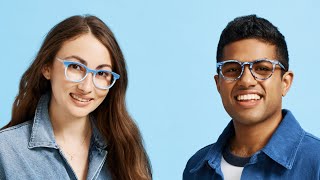
Sophia Edelstein and Nathan Kondemuri went from Stanford to co-founding Pear Eyewear, a customizable, affordable eyewear company. They pitched on Shark Tank and discuss what it takes to run a company as co-CEOs, plus hiring strategies and lessons from building the business.
Chapters
Foreign.
Today I am delighted to welcome Sophia Edelstein and Nathan Kondemuri to etl. Sophia is the co Founder and co CEO of Pear Eyewear. Since its inception, Pear Eyewear has put consumers at the center of the innovation process and ensuring that the brand is at the front of redefining the eyewear experience by offering continual customizability, freedom of choice and affordability for glasses. In her role, Sophia leads brand marketing and creative and development initiatives in addition to overseeing web and product design. She was named an honoree for Forbes under 30 in 2020. Prior to co founding Pair Eyewear, Edelstein earned her undergraduate degree at Stanford University, which was where she and her co founder Nathan discovered that current eyeglass options were limited, expensive and not at all that fun. From there, the duo made it their mission to respond to a long overdue marketplace need to bring countless affordable, stylish eyeglass options to make eyeglass experiences more enjoyable. Nathan Konmori is the co founder and co CEO Pair Eyewear Motivated Motivated by his own negative experience of wearing glasses as a child led me to Hair is reinventing the entire glasses experiences to be more empowering and fashionable for kids while affordable and stress free. Parrots When Nathan got his glasses at 8 years old, it was daunting. Like most kids, he was self conscious and embarrassed to wear them to school because of the stigma existing around glasses. After sharing his story with his co founder Sopia, the two wondered why nobody had redesigned glasses to be more fun and dynamic. Talking to 400 families, they discovered that kids don't enjoy wearing glasses and parents dreaded the expensive and stressful process. Today, one in four children wears glasses and experts estimate that by 2050 it will be one in every two. Compelled by the stories they heard, Nathan Sophia devoted the rest of their senior year at Stanford to reinventing the experience of wearing and buying glasses. Everyone please join me in welcoming Nathan and Sophia. So we're going to kick this off. Maybe Nathan and Sophia, you could introduce a little bit of what Pear Eyewear does. You know, maybe a little bit more about the company and then we're going to dive into a set of questions.
Fantastic Emily, thank you for having us. Excited to chat with you all. We both sat in those seats before as undergrads not too long ago and excited to and just honored to be here to talk to you all. Just some quick intros. I'm Nathan, this is Sophia. We are the two co founders and co CEOs of Pear. We were Stanford undergrads class of 2017 and met early on our second week of undergrad because we were both in rival freshman dorms, Twain and Larkin, and had become best friends at that second week of school. And as Emily mentioned, came up with the idea for Pair when I was just telling Sophia all about my experience wearing glasses as a kid and how it was daunting then and then as an adult, you know, really just an unexciting experience that we wanted to really revolutionize.
And the company has changed and evolved a lot since that senior year at Stanford when we first came up with the concept. But the concept has stayed true, which while we were seniors at Stanford, we came up with this idea to revolutionize the product of eyewear to make it something more personalized and self expressive. We realized that you wake up every morning, you choose your outfits, your clothes, your accessories, they're all a form of self expression. However, your glasses say the same day in and day out because they're incredibly expensive. So with Pear, we wanted to create, create a product that could actually be self expressive that you were able to affordably change on a daily basis. So with Pear, you can change the color and design of your glasses by attaching what we call a top frame onto your base frame. So you can see Nathan here is rocking a green pair right now. You can even change your glasses into sunglasses. We have thousands of designs available. We launch new collections edition basis every Wednesday at noon. Almost like the sneaker head mentality. And our customers come back to collect them all. So our average customer owns over eight top frames in their collection, but we have these whale customers that have over 800. Yeah. You know, the most rapidly growing eyewear company today, we're mostly focused on adults being over 90% of our customers. But you know, as Emily mentioned, we originally started in kids and we still have that line. So our vision is to build one of the largest global eye care companies focused on personalization, self expression and joy. We really focus on disruptive product innovation and product design, which is really what's unique around the value prop and what creates our retention focused business model. So unlike other eyewear business models where a customer will maybe purchase a pair of glasses max every two to three years, Pair customers are coming back every week and every month to add to their collection. When you look at our customers, it almost looks like a subscription business model of actually being one. We also created another moat around the business by becoming one of the first eyewear companies to really focus on licensing. So we saw a massive opportunity to bring your favorite brands and artists and characters to eyewear for the first time ever. So we've created one of the largest licensing eyewear companies in the world with partnerships with the likes of Marvel and the NBA and every major US Sports league, and artists like Van Gogh and Frida Kahlo and even nonprofit partners as well. Today, Our team is 175 people strong, and we're also fully vertically integrated. So we do all of our own manufacturing in house, actually in California, in Irvine, where we produce all of our top frames completely on demand, in addition to all of our lenses. We've been able to figure out how to make us manufacturing actually more affordable from a product cogs perspective than when you were outsourcing it. In addition to that, We've raised over $140 million in venture capital across a series of rounds. And we're happy to chat about the whole fundraising process more today. And our most recent round was a $75 million Series C, which happened, I want to say it was like five, six months ago, but it feels like it was yesterday. Things move so quickly.
Yeah. And, you know, it's been an incredible journey that we've been on. I feel so grateful to be on that journey. But we certainly could not have imagined in our wildest dreams, sitting where you all are, that this would have been our experience. And seven years later, we'd be at this 175 person team. So we wanted to just share a little bit about very quickly what that journey looked like from being seniors at Stanford to where we are today, and then can go much deeper in depth as Emily sort of asked some questions. But really all began our senior year. You know, I was studying mechanical engineering, Sofia was studying human biology with the focus in health care, economics and design. And, you know, we met as a part of a club called Design for America, where we really originally just started to explore the eyewear space and the eye care industry broadly and understand the challenges in the industry and the challenges from the customer experience standpoint. As Emily mentioned, you know, I had that experience very firsthand. I don't know, show of hands of how many people wear glasses. I imagine it's a big crew there. But, you know, I had that experience intimately of how daunting glasses was as a child, how unexciting it was as an adult, where, you know, every other consumer has a real excitement around the other products in their life, like shoes, clothes, jewelry, accessories. Those are all an extension of ourselves and our personality. But glasses had just always felt like the static medical device. And one of the aha moments was that my senior year, my Little brother Nikki was getting glasses for the first time. He was really upset about it though. He loved his sneakers. He had a bunch of pair of, you know, like Nike shoes and just really didn't want glasses and went out and really embraced, you know, the D school and design thinking to understand what were the challenges for families. Talked to hundreds of families and found that the eyewear business model was really broken. Glasses were extremely expensive, upwards of 300 plus dollars for a pair of glasses. The experience of going to a store waiting for glasses for weeks was a really antiquated model and people were unhappy. The glasses were inaccessible and not affordable and just lacked personalization. We found that kids and adults really wanted to be able to express, express themselves through their eyewear, find joy in eyewear. And that was really the aha moment where we realized that hearing from people, they wanted to be able to match their favorite clothes or match their favorite sports in their eyewear or their favorite characters. And we essentially started prototyping this concept of how could we bring customization and personalization to eyewear. We actually did some really early Prototyping at the PRL at Stanford, the Product Realization Lab, 3D printed laser cut prototypes and found consumers asking us when they could purchase the glasses, when they were absolutely not real glasses. And that's when we knew we were really onto something. And after 2017 we graduated. We both deferred the jobs we had lined up to start Pear and eventually officially launched to market at the end of 2019 and had some really exciting moments along the way. We actually aired on Shark Tank four years from today. Actually today's the four year anniversary of our Shark Tank airing March 6, 2020. And it's been an incredible growth trajectory since when we aired. Then we were four full time employees and now we're 175. So we scaled a bunch through the pandemic. There are a lot of really unique times during that growth. As Sophia mentioned, we started in kids, but today we're and I work company for all individuals with over 90% being adults. We started with 10 top frame designs available in our collection, but now we have over thousands of designs. One of the largest licensing player in the space. And while we started in online, we're now creating really disruptive omnichannel partnerships with existing optical retailers. So the evolution of the business model has been mighty and we're really excited to chat with you all about our journey.
I have so many questions, but I have to ask the first one that really piqued my interest for your whales 800, 800 in their collection. How does one even organize one's collection of collectibles? Like, who are these people?
It's incredible. Like wake up in the morning sometimes and read. We have this group called the Pear Family Group, which is an invite only Facebook community for our customers where they're constantly posting and bragging about how many top frames they have, the limited edition styles they have, and posting pictures of like how they store and organize these top frames. It's impressive. This morning I woke up one customer, Dustin, who now actually he was one of the customers who, who hit over 800 and now he's at like 960 and he's trying to go to a thousand. Um, and he has an entire closet organized. Um, each top frame has like an individual number. He has a whole like system. He's like, become a parent. I were celebrity in the group. Um, so it's like, it's truly incredible. Like, the customers are so incredibly creative and enthusiastic. Um, and kind of going back to what Nathan mentioned around, you know, the whole idea for the company started by interviewing individuals and people and, and finding real problems and trying to solve them. That stays very true to our philosophy today. So, you know, even myself, like, I'm constantly, constantly reading through customer feedback in posts because I really want to understand how people are interacting with the product and how they love it and, and what they don't. So we can continually.
Oh gosh, you know, I, I wonder what tipped it for your. Is Dustin you mentioned, right, like it. Was it at 100? He's like, I should get to a thousand now because I'm at 100 and you know, or was it, was it a certain collection? Like, was it. He, he had the whole entire Marvel Collection. He's like, I better move on to like the whole entire, you know, Disney collection. Like, like, what are some patterns with these like extreme users?
They just, they 1. I think the limited edition nature of it really helps because our customers know if they don't grab the designs during these weekly launches on Wednesday, they might never be back. And then we release it in a forum as well that gets that virality. So every Sunday before a collection launch on Wednesday, we email a teaser email out to only our VIP customers. That teaser email shows them the designs that are going to launch on Wednesday. Of course, those VIP customers then screenshot it and share it with the entire community and everyone talking about like, like we have. There's like words even in the community. Like, customers say I'm safe when like they're, they're okay, they're okay and not going to get any. And then they'll also report to the community like how many they're in for. So they'll be like, oh no, like this week like I'm in for 20, like and they'll circle the ones that they like and it starts this like virality effect. And Dustin, of course he leads that. We had a collect day and I remember he posted yesterday about how he's like committed already for 15, so good collection. But it's really amazing to see that behavior and I think it's been part of the reason why we've been so successful because we've really been able to grow this new community around really this new user behavior of, you know, every morning wake up and you're going to decide what frame you want and it's okay to change and we bridge change. And you can wear that, you know, really outlandish, funky design because it doesn't, you know, it's not a 300 commitment you have to wear for the next two to three years. God, that is so fun.
That is so fun. I can, I imagine there's probably secondary markets for some of your limited edition.
Top frames at this point, right?
You know, the really hard to get that you've only done. It's like baseball collecting baseball cards at this point, right?
Yeah, there are, there's a number of buy sell trade groups out there where limited edition tops will go for, you know, more than originally bought for. So it's really been cool created by the customers.
Gosh, what surprises. I want to maybe back up a little bit and go back to, you know, Nathan, you mentioned that you and Sophia met very early on at Stanford when you were both at what Toyon and Larkin. Did I get that right?
Wayne Twain.
Larkin. I was like, Larkin are very far.
Like.
Tell me a little bit about what it's been like to work as co founders and co CEOs. Because that's a pretty unique setup.
Right.
You know, oftentimes, you know, it's, it's, it's easier some people believe, to have a single CEO, a single final decision maker. You know, the buck stops here, right. You know, and your board of directors is one person to hold accountable versus two. So could you talk a little bit about how, you know, you two went from being friends to co founders to co CEOs and what works and you know, what doesn't work. How do you work through what doesn't work and how do you work through conflict, for example.
Yeah, that's all great questions. Emily Things we've thought a ton about along the way. But to back up, I think it did really all start from when we had just become amazing friends at Stanford that set the foundation to, I think, have a successful co CEO and co founder relationship. Because it is certainly one of the most involved relationships you will have throughout life is having a co founder. It's like a relationship. And so I think, you know, for us, we had such a strong foundation of trust in our friendship and that translated extremely well to enabling success through our co CEO and co founder setup. And you know, there's a lot to, there's both a ton of benefits from it and then there's also a lot of things to essentially be thoughtful around to ensure success in the relationship because there are, you know, as many, you know, investors, companies will, you know, like you do maybe want just one person in that CEO role. But we've actually found it to be really beneficial to have the both of us. So to start, I think, you know, some of the benefits that it's really allowed for us is that it's allowed us to go really deep into certain areas and the two of us, it's allowed us to become experts and really lead the strategy in some core functional areas of the business. And that's really how we set up and divide our responsibilities, is through functional areas of the business. So, you know, probably a year or two into starting the company is when we started to split up core responsibilities that we knew would be extremely important to the success of the business. And so I oversee more of the operational, physical product side of the business, of supply chain manufacturing, R and D, you know, customer experience, where Sophia oversees a lot more of the outward consumer facing sides of the business. So all of the marketing, tech, you know, website, product, all those, you know, areas you mentioned earlier, brand design, and then we actually share people in finance, you know, core elements of the business that drive, you know, business success and business culture and you know, being able to split those areas but then also come back to talk about them has been really beneficial for us because it allows us to essentially pressure check our thinking. Right. I'll come to Sophia about. Here's what I'm imagining our product innovation and product roadmap strategy looking like over the next three years. And sort of, here were some of the inputs I was thinking about in developing this. What are your thoughts? You can have both a deep thinking view where I've been spending all my time thinking about it, and then Sophia can come and be like, oh, but what about this and what about that and we can really debate and discuss strategy together in each other's areas of the business. And so that's been extremely helpful to really always drive to the best answer and best solution for the business because that's ultimately as a team, what you're trying to do is find the best solution for the business, find the best solution for your consumers and your customers. But there is definitely a lot that we had to learn along the way and put in place to really ensure success in the co CEO setup. So that first was just high level of trust, I think that is core really to any co founder relationship. Putting sort of the co CEO part aside, just any co founder setup, you need to have an extremely high level of trust because you're going to be in the weeds in the thick of it for many years. So you better like that person. And I think thankfully we were best friends throughout college and so we had a lot of foundation of really liking each other and being friends. That translated really well to successive pair. And part of what comes with that trust and needs to happen in a co CEO co founder setup is constant communication. You mentioned how do you handle conflict? There needs to be that level of trust to communicate when there's conflict, to have a culture of feedback where Sophia can tell me something about hey, you probably could have done that better or I can say something like that to Sophia. And we have a high level of trust where we're not taking that personally, but we know that we're all just trying to make each other better and we're, we've really made a culture of open and honest feedback and collaboration a core tenet of PEARS culture and that needs to be strongest within the co founders. And then really waterfall down another few areas that's been really impactful is having clear decision making frameworks. So the two of us both really trust the way in which we make decisions in our core areas, but will come to each other with, hey, here's a big decision we should probably both discuss together, make sure we're aligned and then look back at the data to make sure we're making the most informed decision. And then finally, I think something that's key is to just always be in lockstep in the long term vision of the business and be very crisp and concise and clear with your co founder on what that vision is and making sure that every decision that we're making as a business is driving towards building upon that vision.
It's amazing. Sophia, do you have, do you have more to add on on from your.
Perspective, I think Nathan covered a lot of it. I think, you know, I think our foundation of friendship was also really helpful at the beginning when things were really tough, like the first two years Nathan mentioned, we were just working on product development. We had both deferred what would have been considered top tier job opportunities. I actually said no to medical school as well. We were supporting ourselves by SAT tutoring on the side while we were starting the business. So it was also really helpful to just have that friendship at the end of the day because, you know, when things are tough, you have each other to lean on and you're going through it all together. So I think, you know, going through the hard beginnings also made conflict when it comes up in the future a lot easier because you have, you know, you went through all of that together. So that was also really helpful for us. And I think being low ego I think is really important as well. I think this is really important for any founder. I think certain founders have different philosophies on this. But we're both incredibly low ego, which is really important because we both went into this essentially knowing nothing. Neither of us had started a business and our philosophy is always, we probably don't know the answer from the beginning. How could we have any prior experience? But our job is to learn faster and smarter than, you know, everyone else out there in order to succeed and help each other do that. So if a speaking opportunity comes up, it doesn't matter who takes it. We both have the same understanding of the business. We're both equals. We've taken that philosophy, I think, from day zero to today.
You know what I think is incredibly beautiful is that you both agree that you're going to have low egos and from principals perspective, really focus on what's good for the business and what's good for your users. And if that's the North Star, all of your conflict is to solve for those two problems and through those lenses. And it's really powerful to have those sort of set aside ahead of time before conflict happens. So the trust is actually supported by a set of principles that you are operating by day to day. So let me go back to again, I'm fascinated to learn, learn about your journey. So the fact that you were doing SAT tutoring, you know, the fact that when you first went on Shark Tank was you, and that was four years ago to the day. Can we talk a little bit about maybe that period of your rapid learning? Because I know, you know, you have this culture of how do we learn as quickly as possible, from as many people as possible. So not only did you interview 400 people, but you managed to talk to people who you know are maybe competitors, right? Like the head of product at Warby Parker. How did you manage to find your way to speaking to individuals like that and being able to have open conversations with them and learn quickly even though it might feel competitive or, you know, in conflict of some way?
That's a great question, and I think this is one as well, where being a Stanford student I think really helped. So when we were first starting Pear, as Nathan mentioned, we had created handmade prototypes in the procedure. Very difficult to go from handmade prototypes to an actual product you can sell on, even though people were asking us to buy them. So we knew that if we wanted to accelerate that process and do it just as well as the top eyewear brands out there, we were going to have to find an eyewear expert who believed in the mission and could help us bring the product and vision to reality and help us also protect it through intellectual property. So we essentially just looked on LinkedIn, right? We were looking on LinkedIn. We cold messaged this man, Lee Zara, who's the former head of product at Warby Parker, recently coincidentally left. He was there for their first five years, led all of their product development. And the message essentially began as like, we're Stanford students, we have this crazy idea to change the business model associated with eyewear to make it more retention focused and to make it something more self expressive. We think we can partner with all of these brands. Can we just get on the phone and chat? Right? And like, I think you, you have a Stanford email address. That's something that's incredibly powerful. And you're really only a few degrees of separation really from anyone in the world. So you have to kind of just shoot your shot. And this was one of those examples where we did that and it really paid off. So Lee loved the idea. I think, you know, in Ioware the most innovation there had really been had been Warby Parker, which was, I mean, incredible. They really led the revolution of E Commerc eyewear. Prior to them, people were just buying eyewear in person, but the actual physical product didn't change. They had made something that was more fashionable and slightly more breath to your door. But still the physical product, you know, was still a one and done product. You buy it every two to three years. The fundamental business model, the fundamental margins weren't very different. This really appealed to someone like Lee, who had been in the eyewear industry for 40 plus years and wanted to do something different and innovative and exciting. So he started working with us to create the initial prototypes and then he became our first hire. So we ended up hiring him as our head of product. And that's really important. Like, we both really fundamentally believe that hiring as a founder, like it has to be your superpower. Like, you could be the best coder in the world, you'd be the best product lead in the world. But if hiring is not your superpower, like, you probably won't succeed in creating a startup because it's all about being able to paint your vision to other individuals and convincing them to join something that's incredibly risky. I mean, at any stage when you're joining a startup and invest, you know, in equity. So we were able to do that with Lee, and then from there it was really two plus years to really make sure that we had the defensibility around the product. So we didn't just want to launch a product to market, we wanted to make sure we had a family of IP that would protect it in the long term. We wanted to make sure the quality was up to par, especially because we were originally just launching with children and that was incredibly important. And then from there, I mean, there's so many other stories of innovation and listening to customers that I'm happy to get into, but even the transition from kids to adults was one that really just came from listening to customers.
Oh, interesting. Wow. Okay, so many questions. Still, going back to your comment about one of the most critical, if not the most critical role of a founder and responsibility of a founder, co founder, is to hire. Can we double click into that a little bit? Because how does one build that skill set as a Stanford student? Like what, what? I mean, you talked about being able to communicate the narrative, the vision, but gosh, you being able to hire Lee, that's a really big deal. And how, what would you share with folks in the classroom about how to get to the point where they can hire somebody who is so experienced?
Yeah, it's. I think it really begins with, you have this vision in your head for what you want the company to become, and you have to really think through what are the skill sets necessary in order to get there. And then you have to be really honest with yourself. Do I have these skill sets or is this something that we're going to have to go out and find? And then once you've been able to recognize that and realize, okay, at this point, Nathan had a mechanical engineering background, but was he going to be able to actually manufacture, produce, file patents? No, probably not. Right. Similarly, you know, I was really interested in marketing, but like, was I going to be the person to figure out from the ground up how to, you know, run a budget of, of $30 million a year? You know, not necessarily. There are people that had done it before and, and could start from somewhere that was way ahead. We just had to go out there and figure out who the, who the person would be and how they would fit into the culture and the overall org structure that we're building. So I think that's a really important skill set. And then of course, we were very hands on with hiring up until probably a year ago. So we would interview almost every single individual to join the company, I'd say up until 120, 130 people.
Wow.
Because we were very, very diligent around hiring the best talent. So we had a very, very high bar for who we would hire. And we always wanted to make sure that when they joined the company, they could hit the ground running. So they either had learnings from a previous experience, they were so far ahead in their knowledge that they could be additive to the company from, from date. We didn't want to have to train someone for, for two years in order to get that value. And then culture is really important. You see, as the company grows, you know, you start out being the culture leader and everything kind of comes from, you know, how you lead and leading by example, but after time, your managers become the culture leaders and, you know, one bad apple can completely change the culture of your company overnight. So we were interviewing everyone because we really wanted to ensure that everyone had the same values, such as innovation, testing and learning, being data oriented and their decision making ability being very empathetic. And that was really important to us and something else we thought a lot about. And then today we don't interview everyone anymore. I kind of wish we did because now it feels like people walk into the office and you're like, who's this person? But we interview everyone up until probably 2 degrees of separation from our reporting structure.
Wow.
Wow. Well, maybe I can ask Nathan a technical question. Coming back to coming out as a mechanical engineer. I was a mechanical engineer as well, and I knew nothing about manufacturing truly. And you're manufacturing, I'm guessing, you know, in the hundreds of thousands, like monthly at this point.
Right.
In terms of top frames.
Right.
And so how did you surround yourself with people who knew how to do that at volume? And then how does one, you mentioned best talent. Right, Sophia, how does, how does One evaluate best if one doesn't know the topic themselves.
So really good question, Emily. So I would say there's a few things. It all comes back to a lot of what Sophia mentioned around identifying the need first. Right. So we identified it certainly wasn't going to be me who knew how to manufacture hundreds and thousands of units at a high quality, you know, with manufacturers and with such precision. But we knew that that was a acute need for the business. And so it then comes down to understanding what are the actual core responsibilities of the individual you're looking for. And, and really thinking about primarily what's the need today, maybe into a 12 month horizon, maybe 18 months depending on the stage and how fast you're growing the business. But we always try to hire not too far ahead of the actual need today. What core jobs and roles and responsibilities are we trying to take action on today? And so as an example for us, Lee was a great example that had a product from Warby, who our core need at that point was we needed to learn how to just manufacture glasses. And that's about it. We needed to be able to do it for our original collections. That need is now very different from today where we're selling millions of top frames a year and our manufacturing needs and core roles and responsibilities are actually far different now. Quality management and quality management systems and processes are more of a need and vendor management and sourcing processes and procedures that can keep high quality at, you know, 99.9% when you're selling millions of units is a very different skill set and almost a very different job. But then I think in terms of attracting the talent, assessing what great talent is, there's a few things it's, you know, certainly asking the right questions to the best of your ability of understanding, you know, is this person going to be able to do the job that you need them to do? So that's sort of the bare minimum. But then I think the next level of assessing best is really some of those soft skill elements that Sophia was mentioning is how well are they fitting into the value set that we want to build within PEAR to, to have the culture that we want at Peer, which is highly innovation focused, highly empathetic, collaborative focused, highly focused on the customer and being adaptable to iterate quickly and pivot if need be and not feeling uncomfortable in a fast moving environment where we might be asking folks to be pivoting often and moving quickly and iterating. So I think that is the next piece of finding somebody who really meshes with the values that you're trying to build within the company and the culture that you want to and then finding somebody that's really bought into your mission and vision. That's one of the things we've really recognized as a core force multiplier for the business. When we've found folks and a lot of the folks that we've brought onto the team, the majority really, since those first four team members of Shark Tank till now have been with the company for years and very highly retention focused from an employee standpoint too. And that's because we've really tried to suss out, you know, are these folks really bought into the mission and vision of the company? Because that's sort of the last element of the, if they are, they'll, you know, really pour their, their sort of heart and soul into the business.
You know, we've kind of talked a little bit about Shark Tank here and there in bits and pieces and I wanted to take a moment, maybe we could, maybe you could share what Shark Tank is for those of us in the room that might not know. And then also why you chose to take that path. That's quite a unique path for entrepreneurs. And it was four of you, it was two of you plus Lee, plus one other. And this is still, I think, still when you were doing SAT tutoring.
Right.
And so these were hard times. What led to that decision? And I know it's been kind of a rocket ship after that, but like, maybe you know, where you can, like, what was that experience like and why do you think it put you on a rocket ship path after that?
Shark Tank was an awesome experience. For those that don't know, Shark Tank's a TV reality show where they pick entrepreneurs who have companies to pitch to a panel of celebrity investors like Mark Cuban and pitch for, for funding in your business. It's a really fun show. We encourage everyone to go watch it. If you haven't seen our episode, it was really fun. It's back when, you know, as Emily said, we were really focused on kids. That was the focus of the pitch back then. And we decided to go on Shark Tank because at the time we were family and kid focused and we realized that if you want to grow a company, a fast paced startup trajectory and go from 0 to 100 overnight, you need to do things that are more risky to help accelerate growth. Normal businesses don't grow 160% year over year. It's just, it's not natural. So in order to do the unnatural, you need to find virality, you need to have growth marketing tactics that allow you to grow at an unprecedented rate and you need to do kind of risky things like Shark Tanks. So for us, we realize that Shark Tank was this amazing opportunity where if aired, we'd be able to be on the TV screens of families all across America overnight and be able to tell our story directly from ourselves to these families and get in front of them. So with Shark Tank, we got reached out to actually by a producer. I think they must have maybe read about the company in an article. And from there you begin an audition process. There's no guarantee ever that you're actually going to air. Even when you film, there's no guarantee, which definitely stressful. You kind of just have to trust and do your best to create entertaining TV because that's what's most likely going to air. But it's a really fun process and a great experience. So we ended up airing. We found out we were going to air only a week before we aired. So it was like mad dash to get the website ready, make sure nothing was going to crash. We ended up having a watch party which was very funny because it was the last weekend, you know, it was four years from today. It was the last weekend before New York City. We're based in New York, completely shut down because of COVID At the time, I remember we had, you know, 100 people, friends and family, early investors in a room together. We were handing out Purell and we thought that was going to be fine, we were all going to be okay. Luckily, no one ends up getting Covid from the viewing party. But it's really funny to look back and it really jump started kind of the rapid growth that we then, you know, continued to see throughout the next four years. And some of the ways that it really helped is we actually, it was really helpful actually in gaining our first licensing partnerships. So it created trust not just with consumers who were seeing the brand, but also with licensing partners. And it allowed us partially to sign what became our first licensing deal, which was Marvel and then the NBA. Those were our first two partners. And then after that, you know, we really created this well oiled machine of signing on other licensors. And also very much a strategy of, you know, if you're not on the pair marketplace, you're kind of missing out on this revenue opportunity. So when we spoke to DC Comics, their only, their only con was, you know, I can't believe you, you talked to Marvel first. So, you know, that really, you know, all of that really happened because of Shark Tank. And then of Course sales. And because of Shark Tank, we actually started seeing this really interesting behavior where adult customers started purchasing our kids frames. We were perplexed at first. We were like, these are for kids. Why are these adults buying it? But we understood after doing interviews that they loved the concept and they wanted it as well. And they wanted it so badly, they were willing to buy a child's pair of glasses, not knowing if it would fit. And at the time, our investors, they were very focused on us staying within kids. But once we saw this behavior, Nathan and I kind of went against their wishes, and we were like, we have to lean into this, right? Like, this is customer demand. We're seeing customer need, and we're solving a customer problem with adults. So we created a landing page on our website. We found models in New York City. Essentially overnight, we brought them into the office. We did a photo shoot of them wearing the largest children's frames that we had, and we started running ads for adults. And overnight, the business exploded. Of course, we. We showed these metrics to our investors, you know, two weeks later, and they were like, oh, my God, we always knew this would work for adults. Like, this is incredible. But that was kind of just one example of, as founders, you have to take risky bets. You have to iterate incredibly fast. That landing page, when we look back, I would laugh at it today. It was horrible. The ads were so bad. Nothing was high fidelity, but it was a proof of concept and one that we could do incredibly quickly to get learnings that would then give us enough confidence to invest more money into something. And today, as Nathan mentioned, we're 90% adults. We.
And, you know, I was going to ask you about the pivot, but you already answered me. And I think the headlight, the headline for me there was, you did it, even though your investors were like, don't do it. And you quickly iterated and came back with data. And that's really powerful as a.
Signal.
One can trust that there's something behind that. And so that's very cool. That's very cool. So maybe we can take a moment to touch upon investors as well. So I know you had some early investors in the business, ones that probably used a lot of Purell when they.
Were at your, you know, your.
Your party.
How.
How do you choose investors?
It's a great question, Emily. And it's actually not, you know, from a culture standpoint, not so dissimilar to how we would choose and hire talent. But I think for us, we really look for, first and foremost, folks that align with our value set and believe in our mission and vision for the company, and believe in Sophia and I as founders to really lead and have trust in us to lead and execute on the vision that we set for the company. And I think we've been really fortunate to find a handful of investors that have been extremely supportive and in our vision and really helpful as well. So we think a lot about, you know, how will these investors add value, how will they be able to help pair, and that, you know, the way in which investors help will be different in each round. So when we were looking for earlier stage investors, the ways in which we were looking for help are very different than the ways in which we're looking for help today. But I think for us, it all really came down to who are people that can really help pair, that believe in Pear and believe in us to execute on our vision. And coincidentally enough, some of our main lead investors from our rounds are all Stanford grads. We didn't choose it that way, but it serendipitously happened. Our first major institutional investor was a man named Charles Hudson from the Bay Area. Actually teaches a Stanford class as well, and we've had many more since. So it's been a great journey to have really supportive investors that can also provide a lot of experience, a wealth of knowledge from past experiences in companies to help guide us and Pear in the right direction.
Amazing. I realize that I do need to let the students actually have a chance to ask questions, or I could ask questions all day long, but I want to have a chance to ask you the most important question, which is, I know you can't choose between all your children, but if you could choose one top frame that you would be like, this is my favorite. Even if it's for today, what would it be?
It's this one. For me, this is my go to. It's called the Matcha Split. It's actually an OG design. It's one of the first 10 designs that we launched and to this day is one that gets the most compliments out on the street and always been one of my favorites.
How about you?
And for me, I think it would be the designs from our Van Gogh collection. It was our first artist partnership we brought on and it was a kind of a very new proof of concept. Like no one had ever put, like, actual pieces of art and translated them to eyewear, which a lot of people said we couldn't do because, you know, the surface area is so small. How are you going to, you know, do the artist justice? And it's done incredibly well. It's our second best licensing partnership behind Harry Potter, which of course, you know, you can't beat Harry Potter.
That's amazing. So now I do have to give the students a chance. So Usman, could you maybe help us guide the students in some Q and A?
Okay, first of all, thank you very much, guys. We are here with a group of Ukrainian entrepreneurs and we had this chance to join this lecture at Stanford. We are super excited and fascinated. Thank you so much for sharing your experience. Your, your way is just exciting. So my question is that it was actually very interesting to hear about the. How do you choose investors? And, and also that how you, you guys found out yourself because you are friends and, and this is great. What is next? How do you guys. Where are you going? What is the next goal for another five years?
Thank you for coming and listening to us all the way from Ukraine. So. And thank you for the question. That's an awesome question in terms of looking forward. So our vision is to become the largest eye care company in the world, really focused on personalization. And to date we've been 100% E commerce in the United States. And recently around seven months ago, we opened up Canada, incredibly successful. So now our eyes are that really in two new kind of verticals for expansion in addition to, you know, continual expansion here in the United States, which is Omni Channel, in addition to international expansion. So for, for Omni Channel, we've realized that while E commerce eyewear is fantastic, there's still a very large portion of people in the United States that do not purchase glasses online. The demographics look very similar to the demographics of customers that buy online from Pear. However, they just to go in, get an optical exam and purchase in person. So we wanted to create kind of a first of its kind partnership where an E commerce company was actually partnering with existing optical retail versus starting our own brick and mortar stores like Warby Parker, which can work, but is incredibly capitally intensive and not necessarily the most profitable way to go. So we recently launched a partnership with National Vision is the second largest eyewear chain here in the United States. They're publicly traded and the partnership's going incredibly well. We're the top selling frame in our price category and it's the super serendipitous model where we're able to drive our customers in for eye exams, we're able to acquire new customers and we're even able to get those customers to go online. Second order of top frames@paireyewear.com we make sure that the customer gets the same experience over the long end with our limited edition drops. And then on the other end of the sphere, we're very excited about building a global company. So our value proposition is very unique. In Iowa, there's no one in the world doing what we do, which we believe allows us to really grow, you know, internationally. So we can't say too much but you know, over the next few months keep, keep an eye out, expand, you know, across, across board.
I think our friends in Ukraine hope you end up in Ukraine soon. So hey there.
My question was just about sort of like your decision making process since you're both, since you're both CEOs, I was just curious like throughout this entire process has like your mission, your vision and the values of the company always been the same? Has there ever been any disagreement when you two are trying to make a decision with each other? Thank you.
Yeah, really, really great question. I would say our decision making process is one that is very, as we mentioned earlier, focused on just getting to the right answer and solution for the business and for the customer. So we always keep that at the forefront of how we're making decisions. As Sophia mentioned earlier, we're very low ego. It doesn't necessarily matter who might be right or who might have the right answer, but we're focused on just understanding the problem, the question the best. And so we're very data oriented with how we make decisions for the business. I would say, you know, for the mission and vision of the company. It's definitely evolved a bunch over time. You know, we launched in the kids space even, you know, in our wildest dreams. We never thought we'd have ambitions to build one of the largest global eye care companies in the world. And so really the evolution of that is something that, you know, Sophia and I really build on together and we are in constant communication of, you know, where do we see the business going, how big can we imagine pair being and how do we want to set, you know, the business, the team, the structure of the business up to execute on that vision and we're staying in very close touch on that. So we never like really disagreed a ton on, you know, long term vision and mission of the company because we're just constantly communicating and iterating on it. We've definitely disagreed on smaller decisions for the, whether it's initiatives and I think it always comes back to trying to find the best answer for the business and relying on the information that we have from the customer from data. One of the biggest things that we've made. Really a large part of the PEAR culture is being data oriented and data focused and really letting that guide the decisions we make as a business. So we'll always use that to inform our decisions and sometimes one of us is wrong and then we'll look at the data and like, okay, yeah, it looks like this is the decision we should make based off of the data and then we, you know, go forward from it.
It's amazing.
Thank you. Before we close, I want to share a few notes, but this is the last of the ETL series for this quarter and we're going to be back here on April 10 for the kickoff to the spring ETL series. And if you are interested, lots of material on U corner, Stanford edu, podcast, videos, etc. So thank you again, Nathan and Sophia. This is super fun.
Awesome.
Thank you. Thanks for having us.
More from GHION.AI


O processo de reconhecer limites, mesmo quando a vida parece exigir sempre mais.





Depois de tantas histórias, aprendizados e pausas necessárias, o @interior_iza está de volta



