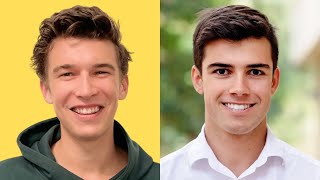
Ben, a FarmLink founder, discusses the organization's mission to reduce food waste and close the meal gap. One-third of food produced in the U.S. gets wasted, over 100 billion pounds annually. As the largely student workforce returns to in-person classes, FarmLink faces operational challenges while scaling toward 7 billion meals.
Chapters
This was the decision we faced. Are we going to keep going? And from a mission perspective, the answer was clear. Every year, one-third of all the food we grow goes to waste. In the United States alone, it's over 100 billion pounds of food. And this isn't just a moral crisis, it's an environmental one. If food waste were a country, it would be the third largest emitter of greenhouse gases, behind only the US and China. But our, our goal wasn't to rescue 50 million meals or even a billion. Both of these are milestones. Our goal was to get to a day in our lifetime where everyone in this country has access to the food that they need to succeed. The meal gap in this country is about 7 billion meals. It's the number of meals we would need to end hunger in the United States. And we were a far way off from 7 billion meals one year into FarmLink. but we saw a path. We saw a path to meaningfully drawing down that number, to protecting our planet, and to offering a really valuable service to farmers at the same time. Even one year in, we were the best equipped team in the country to take a huge volume of surplus food and get it to communities fighting hunger no matter what. And so it felt like all of these pieces were there, and it was just an opportunity to put it together and to scale. But as James said, at the same time, In less than 6 months, our entire student workforce was going to go back to in-person classes. 30 to 40 plus flexible hours of FarmLink time per week were going to be 5 to 10 rigid hours. And what's more, our vibrant remote community now had to compete against in-person ones. And so it felt like we had this opportunity to address a systemic issue, but who was going to do it? And that's really what we had to figure out. Now, we recognize that most organizations don't get to a point where they have to worry about their entire workforce going back to in-person Spanish class. But it felt like we were getting to a point that many teams ultimately do, which is the feeling that in order for us to grow, we needed to grow up. And to grow up, you read these case studies and the same themes, they come up.
Competition has exploded. If we don't bring on more experienced people, we're gonna lose the company. If we don't add clearer OKR practices, we're not gonna get anything done. And if we don't focus and pick the very few things that we're gonna be good at, we're likely gonna be mediocre at everything and we're ultimately gonna fail.
And all of these thoughts were running through our mind, but growing up at the same time was scary. We were a bunch of students. I mean, the idea of a bunch of students growing up terrified us because did it mean we were gonna lose the very thing that made FarmLink special, that made FarmLink FarmLink? I grew up a twin brother sleeping 6 feet away from Will, who's another founding member of FarmLink, and we did everything together. He was my first co-CEO. And when we were little, we were going to do everything and anything. We were going to be professional athletes playing 5 different sports. We were going to be musicians playing the piano and guitar and sing, and we were going to be pilots and astronauts and chefs and teachers and Bill Nye the Science Guy and pirates. We're going to be everything. But at a certain point, well, what's interesting about being a twin, first of all, is there was no just Ben or just Will. There was Ben and Will. We did everything together. And eventually, we had to stop doing everything together, a mile wide and an inch deep. We had to make choices about what to focus on, to pursue and love and excel at, and at the same time, what to leave behind. And these were the choices that made us Ben and will. They were the things that helped us grow up, and they ultimately shaped our identities. For that first year at FarmLink, we threw everything at the wall, and we just tried to see what stuck. But for us to really grow and scale, we needed to focus, and we needed to grow up. For James and I, this meant we faced a lot of unpopular decisions. Even if it felt right or obvious to us, we were forced to do things that required ending projects or introducing change or saying no. And that was new. And at the same time, this wasn't just a choice. This was an urgent matter of survival. Our students were going back to in-person classes. We didn't have a team that was going to allow us to keep growing.