Halle Tecco: Accelerating Real Change in Healthcare [Entire Talk]
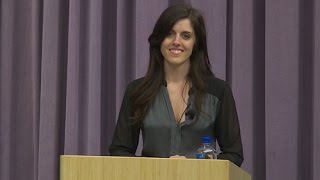
Halle Tecco, founder of Rock Health, talks about building startups that fix healthcare's broken incentives. She walks through systemic problems: opaque pricing, fragmented data, and misaligned payments. Rock Health has backed companies like CellScope and KitCheck that are trying to make healthcare work better.
Chapters
Thank you. Did I hear that you guys get credit for listening to me speak? That's not right. I wish Harvard was that easy. So how many of you guys— sorry. How many of you guys that are students know what you want to do with your lives? Know where you want to go? Not a lot. So I have no idea. But how many of you guys know that you want to get into technology? Something in tech startups? And how many of you guys in healthcare? Just like— okay, so a lot of people in tech, not a lot in healthcare. That's about what I would expect. Well, I work at kind of the intersection of the two, and I'm relatively new to healthcare. Unlike most people in the healthcare space, that really knew they wanted to be doctors since they were this little. If you guys know any pre-meds, most of them were born knowing they wanted to be a doctor. I'm relatively new to the healthcare space and I hope that throughout my talk today I can inspire some of you guys that never thought about a career in healthcare to maybe consider becoming a healthcare entrepreneur. So quick background on me, born and raised in Ohio. Any Ohioans? Yay. I was one of the editors and the designers of my high school newspaper and All kind of growing up, I thought I was going to go to New York City and become a magazine journalist and design magazines and do something really creative. But life had other plans for me. And I couldn't afford to go to NYU where I really wanted to go. And my senior year, 9/11 happened. And so I really reassessed what I was going to do. And I decided to go to school a little bit closer to home where I had a scholarship at Case Western. At that point, I didn't know what I was going to do because my dreams of being a fashion magazine editor were crushed. And my dad convinced me to study finance. He thought that I was okay at math, but most importantly, if I studied finance, I'd have a stable job and a 401(k), and that's all he really wanted for me. So I studied finance, I studied econ, and I didn't fail out. And when it came time to graduate, I didn't know what I wanted to do, but I wanted to know that— I knew that I wanted to go as far away as possible from Ohio. So I ended up getting a job out here at Intel in the corporate finance department. I didn't even know what a microprocessor chip was at the time, but I knew that California was much better than Ohio, and I packed my bags, drove cross-country, and I've been here ever since, except for the 2 years I went back out east. I enjoyed my first job. I thought it was a really great place to launch my career. I already knew how to work. I actually had jobs since I was 15, all through high school, all through college. And I think part of the battle is just knowing how to work, how to get up every day, go to the office, please a boss, keep good tabs on your colleagues. So I already knew how to work. And really it was the technical aspects of my job that I had to learn. I was responsible for subset of revenue for Intel, and I had to pull this data out of one system, put it into another report, and send it to my boss, and she sent it to her boss, and her boss's boss, and her boss's boss. The work was pretty tedious, and so I decided to invest in building some macros to make my job a little bit easier. And I was able to get my job down to— I'm not gonna say because someone from Intel might be watching, but a lot less than 40 hours a week. I was able to just click a button, it pulled all the data, it automatically put it into the spreadsheet, and I had a pretty easy job. So I ended up with a lot of time on my hands, and I began doing yoga, volunteering, getting to know the San Francisco nightlife scene. I met my now husband at a bar in North Beach, which is no longer in existence. And he was working at a little startup called Facebook at the time. And one day when I was at yoga, I had a lot of time on my hands again. I was looking around and the class was half full and there was a bunch of excess capacity in there. And I came up with an idea. I thought, you know, it costs the studio just as much to fill this class as not. And if we could make use of those extra spaces in this class, then maybe we can do some good. And so I went down the street to, you know, UCSF's Osher Cancer Center, and I said, if I can get you guys free yoga, are there recent cancer survivors that are no longer eligible for your services that we could get into these yoga studios? And then I went to more yoga studios and said, can you give me free passes? I'll put them to use, and you're not going to fill this class up anyways. So I started doing this on the side and grew the organization to about 200 yoga studios that were offering free classes across the nation. And then we started doing classes within the clinical setting as well. And it was really cool. I called it Yoga Bear. It's still up and running, yogabear.org. Check it out. So I had this day job in corporate America that paid well but was really boring. And then I had this side project that was going really well, that was really interesting, but most importantly, really rewarding. So I had these two kind of lives that I was living. And I did what any 20-something that doesn't know what they want to do with their lives did. I applied to grad school and was fortunate enough to get accepted to Harvard Business School where I decided I would figure out what the heck I wanted to do with my life. By that point, at least I knew the direction I wanted to go in. I loved Silicon Valley. I loved the technology industry. I love the energy and optimism that's out here. But also through my work with Yogabear, recognized that there was a lot of issues with our healthcare system and how we define care and how we really help people get better. So I tried to learn as much as I could about this industry called mobile health and how our phones would turn into healthcare for us. I was very lucky to get an internship at Apple where they put me in charge of the healthcare and medical segment. The fact that they put an intern in charge of that segment probably illustrates how the segment was doing for the App Store. It wasn't that interesting, it wasn't that profitable, It's getting better, but the gaming segment, the lifestyle segment, the sports segment, all these other apps just had a ton of really great products and really great entrepreneurs that were building tools. And the developers that I was working with at the time were mostly third-tier development shops overseas that hospitals or large healthcare companies would hire to build an app. And I was really disappointed that I didn't see more great entrepreneurs in this space. And so I came up with an idea, Rock Health, which is what I'm doing now, to really inspire and find and support great entrepreneurs that want to take a stab at fixing some problems in healthcare. So that's kind of how I got to where I am. And now that you know a little bit more about me, I'd really like to just spend the rest of the time trying to convince you that healthcare needs your talents. And if I can just get even one of you excited about healthcare, I think it will be worth the rush-hour drive that I took to get here. So the healthcare system traditionally hasn't done a great job welcoming diverse talents into the space. The industry is full of jargon and complexities and it's notoriously closed, hierarchical, understaffed, chaotic, nothing that was appealing to me as a 19-year-old and perhaps Why so few of you raised your hands today? And the healthcare industry likes to think that it's unique. It likes to think that it's a system unlike other systems that we experience. And it thinks it has a monopoly on wisdom of how to solve the problems that we face. But I like to quote Albert Einstein when he said, "We cannot solve our problems with the same thinking we used when we created them." Healthcare is a system and we need all sorts of thinkers, developers, designers, economists, system architects, we really need even MBAs to work together to make change in the industry. I've committed my career to finding and inspiring the best entrepreneurs who can think differently about the problems that we face today. If you didn't know, our healthcare system is a big hot mess. It's one of the largest industries in our nation. We spend $2.7 trillion on healthcare in the U.S. alone. To put that into context, does anybody know how big the US advertising industry is? It's $150 billion. So the total addressable US market for Twitter, Facebook, Google, Snapchat is 5% of the healthcare market. So you have all these really great entrepreneurs that are building new ways to share photos, yet that market is only 5% of what a market in healthcare could be for your business. So from a business standpoint, you should consider it. We have the most expensive system in the world, yet our health outcomes and quality are no better and often worse than other developed nations. The National Academy of Sciences put a report out last year saying that Americans are less healthy across their entire lifespans than citizens of 16 other wealthy nations. We live shorter lives, experience more injuries and illnesses than people in other high-income countries. But we pay the most. And as healthcare consumers, which you all are, this should make you very, very mad. I can't think of another industry that's so vital to our lives, that's so universal, that touches every one of us throughout our entire lives, that's also so broken. So, to understand some of the problems, the costs, and why costs are so high and why outcomes are so dismal, I wanted to take you I'm going to take a few minutes to describe 3 problems that are systemic problems in healthcare. The first is how we pay for healthcare. The second is how providers or hospitals price healthcare, and the third is all around our personal health records and how they don't really belong to you. So let's talk about how we pay for healthcare. Does anybody know how we pay for healthcare? Employers. Employers, yep. So, consumers, while we consume over $2 trillion in healthcare services, we actually only pay for out-of-pocket ourselves directly 12% of the healthcare we consume. So, when it comes to paying for healthcare, we as consumers expect not to pay. So, who's paying? It's really our employers. Over the past 50 years, there have been major shifts in who pays for healthcare, and employers are now spending 21— sorry, are now paying for 21% of healthcare spending, mostly via insurance premiums. This employment-based system that we've created was not the product of a carefully designed health policy in a free market. It was actually the byproduct of wage controls during World War II. So, during this time, employers had a wage freeze and they had a ceiling on how much they could pay employees. But there was a loophole. Wage controls only accounted for salaries. Employers could get creative and provide fringe benefits like healthcare. And they were able to do that and provide healthcare so they compete with one another. And I like to think about it as like food at Google. Once you set the standard that something's going to be there and be available, it's nearly impossible to take away. Congress actually has encouraged this and they treat employment-based health insurance as a tax-deductible business expense, even though unfairly tax preferences are not granted to any of you if you buy insurance as an independent individual. So, there are a couple of problems with having employers pay for our healthcare. Problem number 1 is that in the long run, we're really just moving around dollars that would otherwise be salaries. A healthy family that doesn't visit the doctor more than once a year for a checkup and doesn't have any prescription drugs, they tend to think that they spend nothing on healthcare. Yet, it's probably their biggest purchase all year. The average family in their premiums exceeds $22,000. This is the average family in 2013 spent $22,000 a year even if they only did one checkup and they had no prescription drugs. So, it's a huge purchase and we tend to think that we're not paying anything when actually we really are. The second problem with having employers control our healthcare is that it's only temporary. It's tied to a certain job at a certain company, and once that job is no longer there for you, you lose your healthcare. Nowhere else in the industrialized world does a family that's already down on their luck from losing their job also lose their health insurance. It only happens here in America under the employment-based healthcare insurance. So, the second systemic problem is really how we price healthcare, and this one was really fun to learn about. Healthcare is not a free market. The prices are not transparent to us unlike any other big-ticket expense. If anybody's bought a car or a house or even a haircut, it's virtually impossible to know how much a medical procedure costs until you get the bill. If you try calling a hospital and asking them how much something very routine costs, they'll tell you that that's proprietary information. Not only are healthcare prices opaque, but they're based on what hospitals and doctors do rather than what patients need. In theory, hospitals determine the price of procedures using what is called a chargemaster. Essentially, this is a database containing all of the procedures that they perform and the associated price. However, insurance companies, they like to negotiate prices, and since they cover many, many lives in a region, a hospital has little leverage if they want to see those patients. So, the only people who really end up paying the full price that's listed on the chargemaster are those who are least able to pay, the unemployed— sorry, the uninsured. A problem with how we price healthcare traditionally is that hospitals and doctors are paid based on the volume of procedures that they perform. The fee-for-service system only creates perverse incentives rewarding volume rather than health outcomes. And it does little to encourage preventative care, even if it would significantly improve a patient's outcomes in the long run. Do you think a hospital makes more money from preventing or treating a heart attack? Treating. Yes, they absolutely make way more money treating a heart attack than educating patients so that they don't get that heart attack in the first place. One of our entrepreneurs told me a story that I really like. During the 1800s, the British colonies were sending their prisoners to Australia. And they were paying the ship captains for every prisoner that would get on the ship. As you can imagine, the ship captains would then take as many prisoners as they could, stuff them in the ship, and send them to Australia. But only about half of the prisoners were surviving that long trip, and they thought this was a problem, so they started sending doctors on board. They started providing citrus to combat scurvy, but nothing worked. Still about half of the prisoners would die before they get to Australia. Then economist Edwin Chadwick suggested a change in the incentive structure for the ship captains. Instead of paying them for every prisoner that boarded the ship in the UK, instead, why not pay the ship captains for every prisoner that got off alive in Australia? Can you guess what happened? Survival rates went from 50% to 98%. The moral of the story is that incentives really do matter, and we've fallen into this system where our incentives are just completely out of whack. The third problem, which is not related to policy as much, it's really around the issue of interoperability. So a friend of mine was actually being treated for what they thought was a brain tumor here at Stanford Hospital. A few months into her treatment, she actually fell into a coma while she was at home in San Francisco. We called an ambulance and they took her to the nearest hospital, which was UCSF, and it was a Friday. Now UCSF and Stanford are really the two leading hospitals in the world. They're 35 miles from each other in the heart of Silicon Valley, in the innovation epicenter of the world, and in 2012 UCSF spent $160 million on a new medical records system with a company in this space called Epic. Stanford actually uses that same exact software to manage the medical records on their campus. Despite all of this, UCSF was unable to obtain her medical files outlining her condition, her latest MRI results, and other health details for 4 days. It was the weekend, and there was no human being to transfer this vital information 35 miles. UCSF had no choice but to run the tests again. I tell this story because a lot of the problems in healthcare are not technology problems. I wish they were technology problems because there are a lot of really smart technologists, but the technology to remotely share health records is not novel, it's not a groundbreaking technology, it's a systemic problem. We treat medical records as though they were Stanford's property, not the patient's property. There was no financial disincentive or penalty for Stanford not to share those records. And UCSF actually made more money by being able to run those tests again. There is an incentive problem for providers not to be interoperable, and that's truly a market failure. I could go on and on and on and on listing all of the problems in this mess that we've inherited. The healthcare system simply doesn't work, and we all have a responsibility to fix it. So let's talk about some of the people and the companies that are doing just that. Through my work at Rock Health over the past couple of years, we've funded almost 60 companies working in digital health. We look for entrepreneurs from inside or outside the healthcare system who are working on software and hardware solutions that will transform the industry. One of the first companies we funded is called CellScope. The team came out of a microscopy lab in Berkeley in 2011. They developed a hardware gadget that sits over the camera on a smartphone and turns it into an otoscope. So this means that parents can diagnose an ear infection at home. They can take diagnostic quality ear images to detect something that normally would have to be done through a doctor's office. I imagine not many of you have children, but ear infections are the number one reason for doctor's visits with kids. And here's the thing, parents usually know when their child has an ear infection, yet they have to go through the process of taking the kids, dragging their sick kids to the doctors for treatment. Imagine the time and money saved when the parents can take the image, actually it's a video, from the comfort of their home at any time of the day and and a doctor can remotely determine if the child needs antibiotics or not. CellScope raised funding from Coastal Ventures and they began shipping product in December. And all the companies I'm going to tell you about today are hiring. I don't know if you guys know this, but Benadryl at a hospital costs $800. One of our companies, KitCheck, is automating hospital pharmacies and trying to reduce the overall cost of medicine. Entrepreneurs Kevin and Tim came to Rock Health in 2012. Kevin worked at Sun where he brought Java and RFID to market, and he went to college with Tim who's a software developer. They were having dinner with a friend who's a hospital pharmacist, so this is a pharmacist that's embedded within the hospital instead of working at Walgreens or CVS, and she was complaining that she had to manually check each set of medications for a procedure. This simple conversation about a simple simple pain point in the system for one pharmacist inspired Kevin and Tim to start this company KitCheck that digitizes the inventory tracking for a hospital setting. So their first use case is in emergency kits. Basically inside a hospital on each floor or in multiple, multiple places on the floor, there's a crash cart that's used in emergencies. On the cart is a small tray of vials crammed with about 80 life-saving medications. And if someone crashes, a button is pushed, the cart is wheeled over, and a doctor looks for what they need and hopefully picks the medicine that will save the patient's life. So the cart now has 79 drugs and needs to be taken back to the central pharmacy where the medicine is restocked. And if I had a picture of one of these kits with the 79 medications with one vial missing, I promise you would not be able to find the missing one. It takes time and manual effort, and hospitals have dozens of people on staff that are just checking for missing medications, expired drugs, or potentially mislabeled vials. Kevin and Tim were consist— Kevin and Tim knew there was a better way, so they developed a solution. They tag every medicine in a kit with an RFID, and they use a scanning station and cloud software so a hospital can see its entire inventory in seconds, and know which kits may have expired or missing medicine. Automating this manual labor-intensive checking process saves time and money, and last I heard from Kevin, over 100 medical errors are prevented every day using their product. They raised $10.5 million last year in venture funding and now have dozens of hospitals that are using their product. The last company I want to talk about is called Neurotrack. It's a completely software-based Alzheimer's diagnostic. They came to Rock Health in the summer of 2012 after completing an NIH trial at Emory University. And they ended up following the patients in the trial for an additional 2 years. And they found that the software could predict Alzheimer's 3 to 6 years earlier than the status quo. NeuroTrax Diagnostics, it's not a biomarker. It's not a genetic test. It's an eye-tracking test taken on a computer using software. It takes less than 7 minutes and requires no specialized training. You don't have to download anything. It is based on innate human preference for novelty, and with its algorithms can detect highly subtle changes in a person's cognitive function. It's not necessarily the direct-to-consumer application that's most exciting, although I'm sure all of you would be very interested to take the test. It's really the application in clinical trials. Today we have no treatment for the millions and millions of people who suffer from this devastating disease. Most experts and researchers will say we have the molecules, we have the targets, it's just impossible to put together the perfect clinical trial because you don't know who's going to get Alzheimer's or not. They raised a Series A from Peter Thiel and the Social Capital Partnership last year and are now actively working with pharmaceutical companies to better design their clinical trials so we can find a cure for Alzheimer's. So these three companies, CellScope, KitCheck, and Neurotrack, I think are great examples of entrepreneurs mostly from outside of healthcare today that are using technology to transform healthcare. These tools really allow us to be high resolution in our understanding of the patient. They move us from a reactive system to a preventative model which saves money and lives. Our current system is hospital-centric and doctor-dependent, But with technology, we can move care out of the hospital walls and into our homes and our daily lives. Technology allows a team of caregivers to communicate and collaborate on a healthy— on the health of a child or elderly family member. And perhaps most importantly, technology can empower all of us to take healthcare into our own hands and be more proactive. All these things are changing healthcare as we know it. So what's this all about? It's not about eliminating doctors. It really isn't. Any doctors in the room? I piss off a lot of doctors. It's really not about replacing doctors. If we look at what we call the healthcare supply stack, the chain of specialists, generalists, nurses, laypeople, and we can just move the diagnosis from inside the very expensive healthcare into the patient's hands, just cascade it downwards for the things that are more routine like ear infections. Things can be diagnosed with ubiquitous software and sensors, and we have this amazing opportunity to free up capacity in the system. Then doctors can focus on the most complex cases and coordinating care for the highest-risk patients. Imagine if today every woman needed to go to the doctor's to get a pregnancy test, or if we had to see a specialist to get a strep throat diagnosis. It pulls an incredible amount of cost out of the system, we all interact with the very costly system less, and we free up our capacity to focus on the most complex cases. Healthcare is broken. As I mentioned earlier, we have the most expensive system in the world, yet our outcomes and quality are no better and often worse than other developed nations. We all know that modern technology has the power to lower costs and make healthcare better for everyone, yet the use of technology in healthcare is minimal. Over the last 20 years, while the general economy has seen labor productivity gains of 1.8% per year, productivity in the healthcare industry has declined. We need more people today than we needed 20 years ago, and we get no better output from it. Healthcare is the single largest opportunity today to create lasting value for our health and human happiness, and I hope that as you guys think of your career moves after Stanford, you consider bringing your talents to healthcare. Thank you.
So I forgot to say that she is one of CNN's 12 Entrepreneurs Reinventing Healthcare. I think you just see why or saw why or in Forbes' 30 Under 30. Did you win the Golden Globe the other day too?
Yeah. Did you miss it? Yeah.
That was something else and thank you for helping us start this off. You know our format is to open up for Q&A and we'll do that in a few minutes. Our team had a few questions though. Softballs, I promise. So let's— can we talk about Rock Health a little bit and how many companies are being incubated or accelerated there right now?
Well, we have almost 60 companies in our portfolio, so.
—so and— We have—
in the office at one time we'll have 12 companies. Okay. And how do you select them? So we have a bunch of partners from industry and— well, one of the fortunate things from being outside of healthcare, coming into healthcare was that I knew I didn't know anything and I was able to bring together a lot of really smart people from across the healthcare system, all the stakeholders. We work with top hospitals, we work with a lot of the corporates, the distributors, the VCs and so we really lean on our partners to help us take weeks to receive 20,000—
And what's the primary reason they agree to get involved? I mean speaking of incentives.
Yeah, it depends on what kind of partners. I mean the large healthcare companies, their industry is changing so rapidly. I mean with the ACA, Obamacare, there are a lot of changes for payers for instance, the insurance companies have new regulations that are changing their businesses. Pharma companies are having a really hard time with R&D right now. So all these companies are investing in innovation and learning from how technology can be applied to healthcare. So it's really hard for them to hire great technologists, to be honest. And probably very few of you have dreams of going and working at Aetna. But they need to really bring talented people in, so they're looking to work alongside entrepreneurs with great technologists that have better products versus building them themselves.
Can we talk a little bit about your career? Sure. So— but let's connect it to Rock Health first. So you came up with this idea as a second-year Harvard student?
It was between my first and second year.
And it came to you and so how— what was that like to— germinate an idea as a student? Because some people are doing that.
Yeah, how many people have ideas now? Yeah, well, I think a lot about what was— because you kind of have rose-colored glasses on when I look back and it's like, oh yeah, I always knew it was going to work out. But to be honest, I mean, there were a good 6 months that I was talking to my husband every night crying, thinking it wasn't going to work out. Because there's a point where you really have to— when you're in school, you can kind of toy around and work as though it's going to happen, but then you have the safety net of if it doesn't happen, you graduate and get a real job. So being a student is a great time to start a company. It's totally de-risked for you. But there is a point where you're coming upon graduation and you have to decide really to jump in or not. And I got a lot of positive signals from early supporters of Rock Health, including the Mayo Clinic, which was kind of our first partner. But it really— there were probably a good 6 months where I didn't think I was able to pull it together and you just have to kind of pretend like it's going to work out and fool everyone into following you, crossing fingers.
Yeah, we hear this over— in this speaker series and all our other courses, we hear this notion of tenacity over and over again. Yeah. And that's still the case even in this generation of entrepreneurs. I remember in meeting you at that Harvard Business School Advisory Council out here, you had just been Flying, doing red eyes every week or something like that for months. Yeah. Something like that.
Yeah.
So that was grad school though. So going back, you worked at Intel and Apple, I mean two technology giants, but they're big companies. What experiences or skills from working there are you using now?
That's a good question.
As a CEO yourself.
I would say there's just this like learning how to work. It's just so different from school. Having to just do the same thing day in and day out and having a manager that you have to keep happy and understanding politics within a workplace. So there are those kind of soft skills that you don't learn in school at all. Learning how to sell, I think that's a really— I actually never even learned that at Intel. I learned that when I worked at Nordstrom in college. But learning to sell is one of the best skills you can have. It just pays so well. And as an entrepreneur, if you can sell, you're always selling. You're selling new employees. You're selling investors. You're selling your customers. And if you can learn how to understand customers and serve customers— and you can learn that at a low-stakes job at Starbucks or In retail, I would suggest doing that, because that was probably where I learned the most.
Yeah. So Heidi, I don't know if you have— and I should have mentioned you earlier. Heidi Roizen is here, and she is teaching the course that takes place after this course. I know a lot of you here are to take the course for 1 unit, but you ought to consider MSNE 178 sometime, because what happens after this— and I'm just saying this for folks who are new to this— is another course that adds on to it for a couple more units. Do you have any questions, Heidi?
I'm just, I'm really curious about, so you have a small fund. And so you need to have other investors follow on that sort of, you need to engage with other people. And healthcare is, I was just with a group of VCs last night giving advice to some new VCs. And one of them said, oh, do not invest in healthcare, right? I mean, just like, it's a terrible space. It's fraught and the FDA is terrible and all of a sudden— and so how do you line these companies up and how do you think about that in terms of what you fund? Because there's sort of this chasm to get them through with the more traditional funding sources. I mean, it's a good question. We really align ourselves with large VCs. I mean, Kleiner Perkins is one of our investors and so we try to align ourselves with finding ideas that are not just appealing for a seed investor but would be really appealing for for VCs that need to see huge, huge exits. And that helps us also think really big. So we can just be like, go big or go home. There are a lot of deals that might exit for $10 to $20 million. And that's a really good investment if you've done $100K. But we try to focus on deals that can then go get venture funding and either lead to an IPO or really large exit. Do you, for example, do you lean towards companies where the consumer is paying the bill as opposed to the insurance company? Do you lean towards things that don't need FDA approval? I mean, are there sort of known potholes in the healthcare road that right now you're saying we're not heading towards those or you take some of that on as well? Yeah, so things that— there are a couple of things that we do like. So if something already has a reimbursement code, so the insurance companies are already paying other people for that same tool, then if a company can come in and do that digitally and have it be much lower cost, then it's able to scale. We have a company that is taking a known therapy for pre-diabetics that is reimbursed, and it's actually an in-person class that insurance pays for people to go to the hospital to take these classes, and they're just bringing it online. And so there's already reimbursement code, they already know that they can fit into the system, and they can do it. At a much lower cost and make it a lot easier for patients to do because they don't have to go into the hospital every time. There's a lot in hospital administration and it's not very sexy, but there's a lot of money for hospitals to be able to deploy better tools that can help them make decisions. The EHR landscape is one of the biggest industries within healthcare right now. Being able to— as KitCheck I think was a really great example— automate some processes that are traditionally done on pen and paper. So hospitals have a lot of great needs that aren't really being addressed by the incumbents. The legacy healthcare technology companies are— the bar is so low. I encourage all of you guys to go look at the software that's being built by the big healthcare IT companies and you will be like, I can build that better. From my dorm room, I can build that better because the status quo for the technology is just so crappy. Crappy.
Well, then that makes me think of the last question before we open it up. There's this thing called the Affordable Care Act. Yeah. And it's even been renamed into Obamacare. Yeah. So our department, which sponsors this as well, the Management Science and Engineering Department, prides itself in teaching technology and entrepreneurship, but also policy. So can we talk a little bit about Obamacare? Sure. I'm confused.
I don't know what—
I really, I don't know what to think about it anymore. So I mean, I would think you, from your vantage point and everything we've heard about what's happening with Rock Health, I mean, what's happening?
Yeah, well, a bunch of things are happening. One is really around insurance reform. So insurers now, the health exchange, so they're starting to compete on a marketplace. So they're not just competing based on who your employer is, but there are 30 million new people who are going to get insurance that did not have insurance before, and insurers are going to have to compete based on quality. So they're adding services to differentiate their products from others. And so we're starting to see them really invest in greater tools for their population. We're also seeing new health insurance companies pop up. I don't know if you guys have heard of Oscar in New York, but a classmate of mine from HBS was like, I can do this better. He's like a— he's a tech investor. He invested in Instagram and— Bastu, and he's like, you know, I want to start a new health insurance company that's better than anything out there, that people can email us and we can have better service and we have lower infrastructure costs because we don't have this legacy group of people we have to insure. So, that's one piece of the Affordable Care Act that I think is making a big difference. I mean, another thing that, you know, I talked a lot about how we pay for healthcare and how right now we pay for volume rather than outcomes. But one of the things that is changing is around the way we pay for healthcare, and there are things being set up called accountable care organizations, ACOs. You guys might have read about them, but they're really new financial instruments for providers that enable them to get paid based on caring for patients as a group. So the incentives are restructured so that they have teams of care coordinators that are taking care of a patient instead of having you go see 15 specialists if you have some chronic disease. All right.
Well, you've been so patient, so I'm going to give it to— give it to you. Do you have any further questions for her?
Yeah. I noticed that a number of Rock Health portfolio companies involve like data infrastructure, data analysis. And I just want to know what you see as data's role in healthcare in the next few years. Yeah. There's so much talk about big data. Yeah. Well, I think there are two really great applications for data. One is on the research side of things, so enabling researchers to share data across academic institutions that would usually silo their data instead of kind of sharing across. We have a company called CancerIQ that's doing that with cancer data. They came out of University of Chicago and wanted to enable every community researcher to have the same sort of data that a large cancer center would have. So if you're a small researcher, you probably only see a few rare cases, you don't have enough data to actually do research on that. Instead, they're able to kind of combine it across institutions. So, one place would be around research. And then the other is point of care. So, when you're actually receiving care from a provider, the more data they have on your exact— who you are, your genomic data, your clinical history, they're able to use that information in making clinical decisions. So, a lot of hospitals are starting to invest in the genomics your face so that they have— they know you as a human and not just your medical records. But if you have BRCA1, you're more likely to get breast cancer, they might have you test for breast cancer earlier since you're more likely to get it, et cetera. So we're making decisions. We call this precision medicine, personalized medicine. You guys might have heard that term. But it's really using everything that we have as data to make sure that every person isn't isn't just the average. We don't just look at, like, on average, people get cancer at this age. But given what we know about you, when are you going to get— most likely to get cancer, and how can we avoid that?
Can you repeat the question for the live audience, just in case? Oh, yes.
So the question was about how data— big data is being used in health care. Yes? So thank you for painting such an inspiring vision about revolutionizing health care. Are you ready to start a health care company? Hopefully, but you also explained how broken the system was. So we talked a lot about the opportunities entrepreneurs have, but what are the challenges that they are facing right now? I don't want to discourage you, so I'm not going to tell the worst now. There are a lot of challenges for entrepreneurs in healthcare and they are really changing, I would say. 3 years ago when I started this, the problem was getting funding, so there weren't a lot of investors that were comfortable with both the technology aspect and the healthcare aspect. Traditional VC is divided between life science, that has traditionally been therapeutics and devices, and technology, that's generally been consumer web or enterprise. And this kind of intersection, there are few VCs 3 years ago that were focused on it. There were a couple of VCs that were well positioned because they had people in both areas, so VCs like Kleiner and NEA that have both a life science practice and a tech practice were able to move really fast. So I'd say 3 years ago it was funding, but since I started this in 2011, funding— venture funding in the space has more than doubled. So we've seen this year, I think it was almost $2 billion that was invested in digital health, which is really exciting. And funding is no longer a problem, I don't think. Our entrepreneurs have raised over $100 million in follow-on funding. So they're definitely getting funded. Not all of them, but a lot of them are getting funded. And I think the problems— the biggest problems now are really around how fragmented the system is. And if you're selling to a hospital, if you're selling to even an insurer, whoever your customer is, there are thousands of them. And you have to go out and build a sales team to really go sell those customers. So I think that would be probably the most challenging on the enterprise side. And then on the consumer side, I mentioned in my talk that we only pay for 12% of our healthcare. We don't like paying for things. We're cheap when it comes to healthcare. We want someone else to pay. And so coming up with business models that rely on having the consumers pay for things is really challenging. So you have to figure out where the value is being added. So maybe the consumer doesn't pay, but you're adding— you're keeping the consumer healthy so that the insurance company doesn't have to pay for something down the road. So maybe you can convince the insurance company to pay for it. Probably not, but maybe. Or employers, maybe an employer would pay for it since it's more wellness-oriented. So I think the business model part is a big challenge for entrepreneurs, but it's not insurmountable. Yeah? How does Rock Health differentiate itself from other incubators in the space like StartXMed or HealthBox? Yeah. So we're not an incubator anymore. We're a full-service seed fund. So we started out as an incubator. We were at the $20,000 investment level. And then we kind of evolved to become more of a seed investor because we knew that the companies needed to have a little more funding than $20,000. So we give $100,000. So we're kind of in between incubators and venture funds. And I would say we're very complementary to— we've had companies go through StartX. And Rock Health. We've had a ton of companies go through YC and Rock Health, and so we see ourselves as very complementary, and it's great to see all these places that are trying to support entrepreneurs. It's a good thing for us. Yeah, back there. You talked a lot at the beginning about preventive health. I know you have a lot of health, wellness, and fitness digital technologies in your portfolio. Can you talk about the opportunity you see in that part of the market? Yeah, I mean, well, wellness is a $36 billion market. And consumers have for a very long time paid for things like supplements, gym memberships, things that kind of keep us healthy. The diet industry is huge, as you know. So that's kind of a market that already exists. And digitizing it is a really interesting opportunity. We have a couple of companies that are in the space. I'll just give one example of a Stanford company called Wello. And they're basically creating an online platform for trainers to meet virtually with anyone who wants a personal trainer but can't afford to have one at the gym. And because it's online, it's cheaper. You can do it at home. If you're on the road a lot, you can stay with your trainer. You don't have to actually go into the gym. And trainers, who are usually really busy before work and after work— so they're usually busy between like 6:00 and 8:00 AM and 5:00 and 7:00 PM, and then the day they're kind of— at a loss of what to do, they're actually connecting people with trainers that are in different time zones. So they might be in New York and you're in San Francisco. And so they have a lot of downtime. And they'll take a client virtually for a lot less because they want to fill their time. So they're bringing down the cost of having a personal trainer and getting fit. And they're increasing access for all of us. And that's in the wellness space. I'm really excited about what they're doing. One more Stanford, we have a lot of Stanford companies. I'll plug one more, Spire, and these are guys, all of them are hiring. So if you guys are looking for internships or jobs, Spire is a really interesting quantified self tool. It's a gadget that sits right here on your belt and it monitors your breathing. So they did a trial with LinkedIn to see if LinkedIn employees would wear it, if they could tell you when you're getting really stressed out and when you're breathing heavily, if they can help employees stay calm and be more productive. And so they're going to be starting a Kickstarter campaign in the next few months. Look out for them. But they came out of the Calming Tech Lab. I don't know if you guys know the Calming Tech Lab. But they're a really cool team working on an important thing in the wellness space. Yeah? So you mentioned a lot of the advantages of digital health, like the fact that it can provide ease of access to health healthcare and it can make it cheaper. Yeah. But what do you think are some of the disadvantages of medicine progressing towards digital health? Like, do you think it presents new like privacy challenges or security challenges or what would you say to critics who say that like digital health is kind of like commodifying healthcare and removing like the typical, the traditional patient-physician relationship? Yeah. Well, you know, doctors are spending a lot of their time with their backs towards their patients typing into the EMR system and that's a complaint that is very loud and clear in the system. I don't know if any of you guys have experienced that. So there are ways that technology has kind of distracted providers from what's really the task at hand, it's caring for an individual in that one-on-one relationship. And I think that that's a problem. However, having that information digitally and having kind of a record I mean, that's the price you pay to have kind of your information stored. So there are definitely pros and cons. But it's also, again, like a cultural— it's a cultural thing. These are not necessarily technology problems. They're, you know, why don't we rethink— why aren't we using iPads then? Because, you know, you can really use an iPad while looking at someone in the eyes. But it's a good question. I think that I obviously believe there are more benefits than cons of using technology within the system, but we have to be really aware of the pitfalls. Yeah. When you think about the moment of informed consent to procedures in hospitals and empowering the patient, have you seen any apps come forward that instead of empowering the docs, empowering hospitals or empowering the patients at that moment of critical care? I don't think I have, yeah. So the question was, have I seen any tools that enable informed consent at the point of care? And I don't know if I have. So are you working on something like that? What's the name of it? We'll talk after. All right. Yeah. So you mentioned that one of the difficulties in the healthcare space is that, especially as compared to traditional VC roles in tech, healthcare is much more highly regulated.
We saw that recently with the FDA cracking down on 23andMe. So do you think that you offer sort of expertise with companies in sort of navigating that, or do you think that the best solution is really just to have these sort of like find issues that are already accepted and make them better?
Yeah, so there are a couple— so the question was around the regulatory burden on entrepreneurs and how my organization kind of supports entrepreneurs through that process. So I mean, just today we had the CTO of HHS, so Health and Human Services, in our office talking to our entrepreneurs about what they're working on. So just being able to kind of bring someone in and talk to many people at once is really helpful. We've never been afraid of the FDA. In a lot of ways, I think of the FDA as a competitive advantage because if you can get FDA approval like CellScope, they got FDA approval, it takes your competitors that much longer to get to that point. And the FDA really is around to protect patients and we've met with them and we know that their intent is to protect patients. So as long as there is a clear process, for getting FDA approval, then I think that's a fair thing that we have in our society. I think where it gets challenging is when it's unclear, that process is unclear, and there is a lot of uncertainty around the mobile health guidelines. And so if you put a— so medical devices have long been regulated by the FDA. If you claim to treat or diagnose anything, you have to get approved by the FDA. So the million-dollar question is, if you put an app, a healthcare app on your smartphone, does that turn your smartphone into a medical device? And does that app need to be regulated? And for a long time we didn't— we still don't quite know what the FDA is going to do, but they're starting to put out guidelines. And for me, I'd rather have very clear guidelines of what's regulated and what's not than ambiguity, because that's when entrepreneurs step back and say, well, I'm not going to invest in building this because I don't know if the FDA is going to come down on me. But when we have kind of clear processes and an understanding and a process that's not too expensive, then I think it's something that is necessary in society. I hope that answered the question. Okay. I see a hand in the back. Yeah. Do you measure success with other metrics besides financial returns and can you answer your choice on whether you do or not? [Speaker] Yeah, we actually had— is Elise in the room? We had an awesome Stanford MBA intern last summer that helped us. We called it our impact project and we wanted better ways to measure the success of our companies than follow-on funding and number of employees. Those are like— that's like low-hanging fruit. That's really easy to measure, but it doesn't necessarily tell us what kind of impact we're making in the healthcare space. So we had Elise, who was a GSBer, come in for the summer and really help us devise a survey for all of our entrepreneurs that put them in different buckets based on what they were trying to accomplish. Because you can imagine it's not apples to apples. One company might be looking at how many pounds were lost using their app. Another company might be trying to reduce medication errors like KitCheck. And so we were able to come up with a series of impact metrics that we wanted to measure, and we gave each of our companies a way to report on those metrics. So we said, because you're working on this tool, we expect you to tell us how many patients have used your tool, how many doctors have used it, how many lives have been saved by triangulating from all that other data. And so it is very important to us. It's very challenging just because our companies are all so different that there's not like one number that would say the impact that we're making on the healthcare system, but rather many numbers. And if you go to our website, now we're featuring our annual report on our homepage, and that's where we released a lot of this data of the outcomes of our companies. Yeah? Q: You talked in the beginning about the $2.7 trillion that we spend each year on the health care system and that we know, you know, with Chargemasters that we're being loaded with these costs. And if we move towards a more efficient health care system in America to be comparable to everyone else in these underdeveloped countries, wouldn't that in a sense shrink the marketplace of what we want through policy and through competitive pricing How are you addressing in Rockdale the future of— So the question is, if we fix some of the problems of prices being too high and outcomes not being high, are we actually— if we solve that, are we shrinking the market that we're working in? And is that becoming less— it's actually a very good question. I never thought about it that way. But I had a professor that once said to me in business school where Where there's waste, there's opportunity. And there's so much waste in the healthcare system. We spend so much money that is not going to help us get healthier. It's not going to helping people who are uninsured get insured. There's just a ton of waste in the system. And so I think by reducing the waste, we kind of even out other aspects that are beneficial to us, and that it's like, We don't want the healthcare system to be so big. It's not a good thing. Yeah? Yeah, you talked about our healthcare system not being good as others around the world. Have you heard of any solutions like health tourism or global rates? Yeah, we actually have seen a lot of interesting companies that are addressing medical tourism. We actually haven't worked with any companies in that space. We have some ethical concerns around pointing people towards providers that you can't necessarily vet and that don't have to go through the same sort of rigor as the physicians here in the U.S. So ultimately, it's a space that's like very intriguing, but for like what procedures? The one that we saw was a lot of like elective cosmetic procedures, and that just wasn't a business that we were excited about. But I think it's ripe for opportunity, so you should start that company. Let's do one more. Oh, send them my way. One more? One more? One more? A good one. Yeah. So I mean, in order to decrease the healthcare cost, I mean, one has to focus on the preventive side, right? But I mean, one problem with the preventive side is that there isn't a whole lot of money and then insurance companies are not really willing to pay. So it gets really kind of a complicated problem. So I mean, what do you think about that, especially in the long term? What's your take on that? Yeah, it's a great question because when anything that's kind of preventative, so when you're saying you're going to prevent someone from having a heart attack or prevent them from having diabetes, It's like this promised value in some future date, like we're going to save you money down the road, but who actually wants to pay for that? And the only answer is who's paying for it— who would be paying for it instead of you, which is the insurers. And so they're the ones that are really focused on being able to prevent anything that will cost them a lot down the road. The problem is we switch employers and we switch insurers all the time. And so the insurance companies also have their actuaries that are doing the math on it and they might be preventing something that another insurer will have to pay for down the road. So there are a lot of questions there. That's a good question. All right. Thank you so much. Thank you, guys.
More from GHION.AI


O processo de reconhecer limites, mesmo quando a vida parece exigir sempre mais.





Depois de tantas histórias, aprendizados e pausas necessárias, o @interior_iza está de volta



