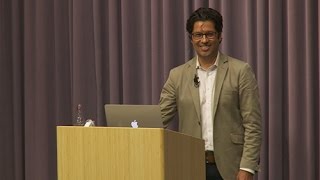
This content was created by GHION.AI . This content was uploaded by GHION.AI . This is a YouTube video titled "Hemant Shah: Innovator's Dilemma in Action" created on April 2, 2014. It features Hemant Shah discussing the challenges faced by RMS in navigating the innovator's dilemma, focusing on the need for strategic pivoting and internal cultural change to maintain growth and innovation in the insurance reinsurance market.
Chapters
You've all heard of this notion of the innovator's dilemma. By the end of last decade, 2008, 2009, 2010, things were looking pretty good at RMS. We were closing in I think on 250 million in revenue again up from 30 million a decade before. We were quite profitable margins, 30 plus percent operating margins. We were growing steadily, like a rocket ship, but growing steadily. And we were really woven into the fabric of the insurance reinsurance markets that we serve. And it started to get a little uncomfortable and there was a sense that the language was starting to change. The language of meetings in the company started going from growth to how do we protect our market share. The language started shifting from how are we going to double the company again as the key metrics to how do we ensure we can keep a 50% market share in the business that we're serving. A lot of language that was self congratulatory. It was language that was we are the leaders as opposed to we're leading, we are the most innovative company in the space as opposed to innovating. And while what we did every day was quite innovative, after all, building stochastic models for typhoons and floods and terrorism is inherently incredibly stimulating and intellectually demanding work. We were running in the same playbook that we had been running for over a decade. And there was a sense of defending the status quo, celebrating what we had accomplished as opposed to re envisioning how we could add value, what we needed to do to invest in new ways of adding value and how to think of ourselves not as the market leader in the field, but but rather than the 50% market leader in the niche field, what's the market that we could serve that were the 5 to 10% market share player in? And it's the classic sort of innovators dilemma which is how do you make the shift from being so invested in one's own status quo to take the necessary risks to try to drive a new round of growth in the business. And this was a very interesting and challenging time. The company was not, you know, not a goliath, but by our historic standards we started 5,25,50,800, 900 people in the business, lots of clients, real profits, significant revenue streams, market share, position. We re envisioned in a very top down way a new strategy for the business which was one in which would require us to take some very significant risks in order to pivot our fundamental value proposition and how we add value in a way when we still had the tools at our disposal. The financial Resources, the market position, the momentum, when we could still be in control as opposed to settling on increasing defensive posture about defending market share, defending position, and then waiting for the time for somebody to change the rules of the game out from underneath us. After all, a lot of these kinds of businesses where you have very significant market positions don't often succumb because your number two or number three competitor picks up 10 points of market share. It's because you become so invested in defending the status quo, you don't see something coming that fundamentally changes the terms of value that the customer experiences and the ways in which they can consume that value. And there's some disruptive change that causes you to fundamentally lose the plot line. And then no matter how much you try to defend your market share, it's like sand running through your hands. So we went through this process which was very challenging because we went into our own organization and said we need to undergo a substantial pivot in our strategy. We need to go from being a primarily being seen as the world's leading provider of scientifically informed catastrophe models to delivering the exposure and risk management environment for this industry to yes, analyze risk using models to, to manage risk and to do so by opening an ecosystem of capability to our competitors and to others to build models and analytics and applications on our platform and deliver all of that software and platform as a service in the cloud. And these conversations were extremely difficult internally, some of the most challenging. And the story is not over yet by the way. So I'm not quite sure how this is all going to turn out. We had a number of. This transformation has been going on for over two years now. But it started with a lot of very angst filled internal dialogue about why is there the need for change and the institutional, internal and cultural barriers to change. When you've been able to develop a reasonably successful business that has a well defined brand and market position that is understood by employees and customers alike to, to be doing something very specific, very well and getting compensated for that. To make the pivot and do something different only happens in one of two situations. One is when you're under existential threat of death. And that's quite a motivator to try something different or the opportunities are so significant it challenges you to think differently and take some risks. And we went through a whole internal process and I made so many mistakes and learned so many things the hard way about how a top down strategy to take an organization that was intensely proud, as it should be, of everything that accomplished over 20 years of innovation in a very specific dimension. To take that organization through change and build the case for change was extremely difficult. And we got there, we got there, we got full alignment. But it took a lot longer than I thought, and it was much harder than I imagined. And it was very scary at times. When you are starting to pivot the company and try to bring the culture with you and realize that you might fracture the very organization that brought you to this place, and you haven't yet made the definitive, not only intellectual case, but emotional case for why a company should go through significant change. And it's a very scary place as a leader, to go through that realization that you might not make it to the other side. And often it's not the customers or the market who votes. It's your own employees and colleagues who vote, whether they buy in to the rationale for change and stick with you through the process.