How Strava Found its Niche [Entire Talk]
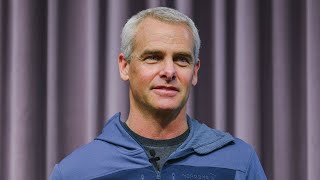
Mark Gainey explains Strava's "inch wide, mile deep" strategy: start with passionate cyclists, build obsessive engagement through features like leaderboards, then expand authentically. He shares tactical choices from grassroots recruiting to freemium models and lessons from his earlier company Kana.
Chapters
Who you are defines how you build. I was asked to come in and give you a little bit of background on myself, a bit of the Strava story, some war stories, some lessons along the way. And in particular, as the title slide shows here, this idea of an inch wide, mile deep. I want to take sort of one lesson that we've learned, actually both from the Kana Days as well as the Strava Days, see if I can go a little deep on that, a strategy that worked really well for us as a go-to-market. It may not work for everybody, but In our case, it's been pivotal twice through two different startups. So let's get growing. And by the way, my hope is 20, 25 minutes of me talking, and then we can get some Q&A. Some quick background. So as I mentioned, art history major. I actually grew up in Reno, Nevada. I was lucky enough to go out to Harvard, studied art history, learned very quickly that it's really cold back there. So I hoofed it back as quick as I could to the West Coast. I graduated in 1990, the previous century. I came out here and I went to work for a venture firm, a firm called TA Associates in downtown Palo Alto. Great job out of school. This is pre-internet, folks. So my job was to basically sit on the phone all day long and talk to entrepreneurs, call startups, try to find out whether there was an investment opportunity. Great for two reasons. One, I learned the business of— the language of business. But two, I caught the bug to be an entrepreneur. And so in late 1995, I left that firm and with a good friend of mine, actually someone who was a professor here at Stanford in the economics department, a guy named Michael Horvath, we founded what became Kana Communications. Kana, perfect example of going an inch wide and a mile deep. And what I'm talking about there is picking a niche, something that to many people may look like too small an opportunity, but going really deep into that opportunity, trying to be authentic there, trying to develop leadership in that space with the hopes that then that opportunity leads to something bigger. In the case of Kana, what we did was we found this opportunity in customer email. Again, this is 1995. Companies are just beginning to go online, beginning to build their internet presence, and they have this problem, which is as soon as they go online, they start getting customer email, and there weren't systems to actually answer those messages. So we developed a company, and with some folks other than me who wrote the software, we were able to come up with a solution. 5 years later, we started 2 Guys and a Dog in 1995. By 2000, we were a global company, 53 offices around the world, 1,200 employees, generating hundreds of millions in revenue, traded on NASDAQ. Sort of your classic, we got very lucky, right place, right time. But we picked that inch wide, mile deep. I can tell you when we were trying to raise capital, we were accused of being a feature, not a product, definitely not a company. But what we proved was by going deep, into that one space, that customer email space, it gave us that credibility that then allowed us to expand in our customer base and ultimately offer a whole bunch of other things to our existing customers. And then we get to Strava. So I left Kana in 2000 to start a family, sit on some boards, do some things that probably I shouldn't have, I had horrible bicycle accidents and way too much time in Stanford Medical Center, but ultimately caught the bug to be an entrepreneur again. And Michael and I came together in 2009 to launch Strava. Quick background on Strava. So 2009, January of 2009, that's the official start date. To be clear, its history goes all the way back again to the previous century. As I mentioned, Michael and I have been friends for a long time. We met in the boathouse right there. That's Newell Boathouse on the Cambridge— on the Charles River there in Cambridge at Harvard. We met there on the crew team. It was an amazing experience, really hard to define for those of you who haven't ever been in a boat like that, but the camaraderie, the esprit de corps, frankly just the trash talking and the competition, everything that comes with being on that team was perfect. It was sort of what defined my college experience. The only problem was that I graduated. And when I graduated, poof, it disappeared. This whole idea of sort of having my tribe, my team that I could hang out with and that kept me inspired was gone. And so as early as 1995, Michael and I had actually developed a business plan. It was called Kana Sports at the time, not Strava. But we were fully intent on creating this virtual locker room. We were going to use this new thing called the internet to create this place where we could get all of our buddies to bring their workouts together. We were going to have this wonderful sort of virtual team. Good news, bad news in 1995, right? The bad news, we were way too early. We were about 15 years too early in terms of the idea. The technology was not there to capture the activities and frankly, and frankly even the consumer behavior wasn't there. But the good news was by pursuing CONA Sports, that's what actually introduced us to the customer email problem. So lesson number 1 that I would just share with you, oftentimes I talk to entrepreneurs and they'll say to me, I just, or I should say want to be entrepreneurs, they want to go start something but they just say to me, I just don't know the right idea, I just don't have the right idea. I would just caution you that pick an idea and just start rolling with it, start having conversations and you'll be amazed at where it takes you. If anybody had told me that a virtual locker room would lead to an enterprise software company worth $11 billion, I would have laughed. But that is what happened. Like the opportunity of pursuing the sports introduced us to this problem because of the sporting good companies and the things that they were experiencing online and because we were objective, we were able to evolve our business and become Kona Communications. The other piece of good news was we were 15 years too early, but we were still very passionate about the idea. And so come 2009, the world had changed. For one, things like wearable devices, the smartphones, you were able to capture activities in ways you couldn't do it 10 years earlier. And the other thing that had changed was consumers themselves, the athletes. You were much more comfortable sharing your information online. That was not something we were doing in the late 1990s. So 2009, we decide to start a business. How do we go about doing it? We had this vision. Michael and I were really excited about creating a consumer brand. It was not something we'd done before. Before. We'd done enterprise software, but when we thought about the companies that we admired, they were much more akin to the Virgins and the Patagonias and the North Faces of the world, these iconic brands. And so that's what we wanted to do with Strava. And we thought, how could we create something using the internet to inspire this global community of athletes? So that was the vision for the business from day one. We still have that in the business plan. But our go-to-market strategy was this niche. It was basically taking a page right out of the Kana playbook, let's pick one category, one group of athletes, go really deep, be authentic with them, and let's see where that lends us or sort of takes us down the road. In this particular case, we picked the passionate cyclists. In fact, internally we refer to them as MAMMALS. These are middle-aged men in Lycra. That is our target audience. And on the surface, to us, they look really, really good. Very fanatical about their sport. Very intense and obsessed with their data and the technology associated with cycling. They tend to spend a lot on their sport and frankly there wasn't another solution out there in the market. There were lots of things coming out for runners and so forth but there was nothing for the cycling audience. So Michael and I looked at that and said, great, this is perfect. But again I will tell you when we talked to investors, even family and friends, we were accused time and again of, cute little hobby, but you're never going to be able to build a business there. We heard this over and over and over. Despite hearing it, because of the effect that we had had at Kana and frankly we were sort of middle-aged men in Lycra and we needed the solution, so we just started building. And we did 4 things that I want to share with you when it comes to being an inch wide and a mile deep. First thing we did was we did grassroots recruiting. Oftentimes entrepreneurs, particularly here in the Valley, you're immediately trying to figure out how do you get your first 1,000, your first 10,000, your first 100,000 customers online. We did not think that way. We were literally— I can remember the first 5 cyclists that we had on Strava. There's a gentleman, I won't give you his name, but his initials are DB. He's our first customer. He's still on Strava 11 years later. We were begging and borrowing and stealing from cyclists anywhere we could. We would go to local cycling clubs here. There's crazy stories of going down to Costco and trying to figure out how to negotiate with Costco to buy tens of thousands of dollars worth of Garmin cycling computers just so we could give those away to our friends so that they would participate on Strava because we could not get Garmin to sell us a device. So we had to negotiate with Costco. We got fleeced by eBay sellers who promised us hundreds of Garmin devices that would never show up after us sending them checks. We did everything wrong, but what we were doing is really going grassroots, trying to find those early customers, those early cyclists that we could do, which was the second thing, create a conversation with them. This was about sitting down and really listening to what their needs were as a cyclist, forging this relationship. We didn't call them customers. They were our partners in this project. And what was happening was when you had that conversation, you start to hear these little nuances that become very, very important. For instance, as a cyclist, it doesn't matter whether you're going on a 5-mile ride, a 20-mile ride, a 50-mile ride, or a 100-mile ride. It turns out that there's always this iconic moment. There's this moment when you hit a hill and you're going to climb it as hard as you can, and that's the thing that cyclists remember. It's like what they memorialize on their rides is the climb that they do. So for us, that was important because if we could figure out how to capture and memorialize that climb inside Strava, that's the kind of unique opportunity that nobody else was offering. We learned that they were really fascinated with power or wattage, sort of the energy output that they were doing. So how could we take advantage of that data that was coming through things like the watches and their bicycle and take advantage of that information and do something unique online? The third thing we did that was really critical at Strava was we focused on this notion of engagement. Again, if you think about a consumer model, you have acquisition, of your customer, you have engagement of your customer, you have monetization. Those are kind of the three basics. There's churn and retention and everything else, but the three basics are acquire your customer, engage them, and then monetize. At Strava, it was all about engagement. That's where we obsessed. We spent our time trying to figure out once we'd found one of those cyclists, grassroots or otherwise, how do we get them to just keep uploading time and again? How do we make the experience as exciting as possible? How do we create this long-term relationship with them? All right, the thought process was twofold. One was because we were talking about a vertical niche, we knew that we had a finite number of customers out there. So anyone that we got, we wanted to keep around. But the other reason that that was so important was that we learned very early our best source of growth was word of mouth. So by focusing on engagement, we actually saw that our growth actually accelerated. So without focusing on it, that was a great strategy. And then the fourth thing that I'll mention that was really part of this inch-wide, mile-deep strategy was a simple notion of what we call single-player mode. There is this misconception with Strava that from day one we were out to sort of build the community. How do we sort of bring this party together in one big place? And yes, we were really excited about this idea of a virtual team. Like we believe that people make other people active. It's something we've seen. We can actually show you the data. It's really true. As soon as you have followers on Strava, really good things happen. But in the early days of Strava, it was all about what we called single-player mode. And what I mean by that is we had to assume we had one customer, one cyclist who was uploading one ride on Strava. How do we make that experience valuable so they'll want to come back again? So it was all about high utility, sort of just high value from that one experience. It was that single-player mode that was critical early on. I talked to way too many entrepreneurs where they're like, It's going to be this amazing community-based business, but we can't figure out how to bring everybody together. I'm like, you've got to get product market fit for that one customer. And once you do that, a couple years in, we got very excited about the community features. But we had to grow into that. We had to mature into that opportunity. So those are the 4. The last one I'll say that we did was what I would call patience. Expansion only happened after we really felt that we had nailed this niche. This first group. And what I meant by that was we needed to know that we were the definitive leaders when it came to serving the cyclists online. We could see that both in the numbers, we could see that in engagement, we could see that by what was being written in the press. But it wasn't until we felt that we had established that number one position in the marketplace that we gained the confidence to really think about now an expansion strategy. And we frankly, we took a page, I would argue more so out of some of the other sporting good companies than we did sort of tech companies because expansion for us was akin to what Nike did or others where we picked a new sport that was a new vertical and said okay, now it's time. And we went after running. It was 3 years later, 2012, that we launched running. We launched it first off as a separate app. Today it's all integrated into one, but we actually had cycling, Strava Cycling, Strava Run. They were separate. We learned a ton of difficult lessons. We originally thought we could basically take the cycling experience, reskin it, The old 80/20 rule, 80% of it would work for our runners? No. If we were going to be authentic, if we were going to get that same kind of high running engagement, we really had to start internally with the DNA of the company and rebuild from the ground up a running experience. But it did work. What we saw, as I mentioned earlier, word of mouth began to spread. We saw a really fascinating viral effect. We saw that many of our athletes are not cyclists or runners. We find that they tend to be multi-sport. Unless you're professional and you're making a living as a cyclist, you're not riding every day. You're riding and then you're running and you're skiing in the winter and you're swimming and you're playing around, you're doing lots of different things. And so we found our existing athletes were expanding with us and they were bringing more and more of their friends along. So you fast forward to today, as was already mentioned, we've had some fun here in the last few years. We've just eclipsed 50 million athletes. We add about 1 million athletes now every month. We've truly gone global. As it says up there, we're now over 195 countries. There is not a country in the world where you can't find a Strava upload. You can literally find guys doing fat bike rides to the South Pole on Strava. You can find folks that are climbing to the top of Everest. The vast majority of our members are outside the United States, 82%. Probably what's more exciting than just the geographic expansion is the diversity of our community. As I mentioned, you can find alpine climbers, you can find professional cyclists, you can find Olympic gold medalists on Strava, but you can also find people who are trying to do their very first 5K or they're doing a first charity walk to raise money for breast cancer or whatever it is. It's a really fascinating mix. Really what it's become is it's the home for their athletic life. This is the place, hopefully for those of you who raised your hand and are using it, we're really hoping that you find that this is the place you can post your rides, you can post your workouts, and really share similar interests and common goals with the rest of the community that's out there. The other point that I want to make here, we continue to be obsessed with engagement. It says up here we measure success by how many athletes sweat. That's absolutely the case. Now instead of just running and cycling, there's literally 34 different sports you can do on Strava. You can do everything from hiking and walking on a Sunday afternoon to posting kiteboarding and Nordic skiing. You name it, it's available on Strava. We see roughly 15 to 20 million activities per week. Funny stat, it took us 8 years to see our first billion activities on Strava. It took us 18 months to see our second billion. It took us 13 months to see our third billion. It just, again, if you build patience into these models, really interesting things start to happen. But you have to have that authenticity in place. And the last stat here on Strava, then I'll get into some of the more interesting challenges of the business, This 50:1 ratio, this is probably the one we're most proud of. What this stands for is for every 1 minute that somebody is inside the Strava app, they're spending an average of 50 minutes working out. And we're actually seeing that stat continue to increase. So again, our mission is to make sure that you're out there, you're being active. We don't need your eyeballs in the app all the time. We just want to know that we're a part of that experience. And so that's, that's been the mission for Strava. And as we go forward, it's largely a lot of the same. It's a freemium business model. You can use the vast majority of Strava for free and then there's these upgrade paths where people can subscribe. And that's been the business. So I make it sound like niche, you focus on it, you go global, bada bing, bada boom, right? It's all easy. Trust me, I could spend the next 3 hours walking you through the vast majority of challenges and heartaches that we've been through. It's been a crazy time, lots of ups and downs through Strava. I pulled up 4 here that are related to this idea of just the challenges associated with going an inch wide and a mile deep, but I could list another 20. The 4 that I've got here, this notion of abandoning the core, right, so great to go after the niche, but the minute you think about expansion, you've got a core group of audience that's saying, hey, wait a second, what about me? Right, as soon as we went after running, we had this horrible sort of PR fiasco around the cyclists feeling like they'd been abandoned. So how to sort of think about what that balance looks like, what it is to continue to serve the core needs of that audience that's got you to that successful point, yet knowing that you're looking for expansion. So we really sort of muddled our way through that. I call something up there the noise of opportunity. It's just a simple challenge even within cycling. If you think about where we started, we started what we call sort of post-ride. And what I mean by that is Strava was really great when somebody had gone out, done a ride, and then they put their information onto Strava and we showed them something interesting. We hopefully sort of surprised and delighted them. But it turns out that there's all these great opportunities to help cyclists while they're riding or before they go ride. How do we help them discover new activities? It turns out that there's just so many different ways in which we can expand our business and the services we offer that it becomes deafening, the noise of opportunity. And so we've really had to refine the art inside Strava around prioritization. What are the things we're not going to do? I often refer to it as the no list. Just the things that are on the no list that despite a lot of people wanting us to do them, we're not going to do them, at least not right now. Third challenge that I would mention to you, the business model evolution. Right, again, here in this valley you'll hear all the time things like multi-level revenue models and so forth. And these are referring to this idea that you get these consumer models, you often sort of see these multiple ways in which you can generate revenue. And trust me, over 10 years Strava has experimented across the board. We've got our subscription business, we've done e-commerce with our athletes, we've had marketing and advertising associated with Strava, we've had data insights, we've been pulled into lots of different things. Imagine once you have 50 million athletes, it's a pretty rich target audience for a lot of other brands and businesses. But there's some really interesting sort of strategic and ethical questions that come around that. And so as much as we've evolved the business and tried different things, I will tell you we always come back to our core. In some ways, business model evolution for us follows that same strategy of inch wide, mile deep. We're at our best when we know our customer is the athlete and that's the business we're going to be great at and that's the subscription business. And the last one I put up there, Silicon Valley GBF trend. So what I'm referring to there is the get big fast mentality that seems to be pervasive in Silicon Valley. If you're not getting big fast, if you're not growing as fast as you possibly can, somehow you're failing. We've felt that pressure internally. This isn't just from investors. The employees themselves, everybody wants to know that we're sort of succeeding at the rate, we want to know that we're fulfilling our potential. But I would just caution you that this notion of get big fast, things that tend to go up like this have a funny way of moving just as fast the other way. And so Michael and I have sort of taken this philosophy that if we've got to kind of go up and to the right this way, we find we end up in a much healthier, stronger platform. So we're willing to be patient and sort of build that into the model, but we know that it comes with a lot of grief and a lot of interesting discussions at the boardroom and other places. Those are just some simple examples. Again, I could go on. Recruiting and retention inside Strava. We could probably spend an hour in here around privacy and what it is to sort of hold people's geolocations inside Strava. And if any of you have seen, I mean, there have been fascinating stories published on Strava around the heat map and We've had Senate inquiries and we've had NATO that's been in touch with us. I mean, you name it, we've had sort of fascinating things that have happened. But fundamentally they come back to these really basic issues that you just need to be aware of. All right, then lastly here, let me just give you 5 quick takeaways that again relate to this idea of inch wide, mile deep that I've learned along the way and we'll see if these resonate with you. First one, takeaway number 1, don't confuse go-to-market with vision. Vision, vision is the long-term dream. It's the holy grail, it's the brass ring, it's that thing that as a company you should be aspiring to get to, but you never quite get there. Go-to-market, that's a strategy, that is a waypoint along the journey to get to the vision. At Strava from day one, we can show you the business plan, our vision was this idea of what would it be like to bring this global community of athletes together because we believe that That's what inspires you to keep going is the people who keep people active. But our go-to-market was let's go deep with this niche in cycling. I've seen way too many entrepreneurs, they do one of two problems. Number one, they immediately think that their vision has got to be their go-to-market. They try to basically be everything to everybody. Or I see the opposite problem. I often see entrepreneurs who take their initial product idea and they think that's the company. Remember, as entrepreneurs, You're in the business of building a company, not a product. The product is a means to the end. So again, don't confuse these two. They're really important and you need them both. You need them both for the company, you need them for investors, you need them for employees. This is what inspires everybody. Takeaway number 2, to quote Homer, if you serve too many masters, you'll soon suffer. Okay, we've seen this time and again at Strava. This is one that's been painful. I'm not talking about sort of the expansion of the athletes. You know, yes, we have a very diverse population that's on Strava today with lots of different needs. Trust me, trying to take care of the needs of a trail runner in Brazil is fundamentally different from that roadie who lives in the Netherlands. It's just, they are different. That's okay, they're all athletes. There's sort of universal bonds that bring those together. What I'm referring to here is what happens, a little bit what I talked about a second ago with this business model evolution. When you have customers that start to emerge that are not the athletes, in our case like when brands started coming to us and really saying, how can we participate in Strava? We'll pay you to be involved in Strava. How can we advertise to your athletes? Things like that. Or we have other companies, fascinating, here's a great one. We have a product called Strava Metro where we're actually working with city planners and local governments around the world. We have about 300 partners today. Where they're looking at the data that we're able to pull up for these cities to understand the way in which people move through the cities, cyclists, pedestrians, runners and so forth, so that they can make more informed decisions about the way in which they build their bicycle path infrastructure and their pedestrian infrastructure. Really good stuff. I mean this is fascinating stuff. The problem is if these guys become your customers and you're trying to meet the needs of Transport for London or the State of Oregon, while you're simultaneously trying to take care of the athletes, there's a lot of conflict that's built into that. So at Strava, we've had to take some hard, hard look inside and basically plant a stake in the ground. Our customer is the athlete. That is who we're there to take care of. And anybody else that we work with, they are our partners. So as long as we know that together we're doing something for the athlete, great. But we know that the fundamental business, the revenue, everything else needs to come from the athlete. It's worked well for us. Takeaway 3, remember the Starbucks test. Okay, so quick anecdote. Going back about 10 years ago, start of Strava, I was sitting in a local Starbucks here in Menlo Park with a good friend of mine, she's a consultant, she's written a number of books around subscriptions and membership economies and so forth. And I was wanting to pick her brain on a lot of things. And she turned to me and she said, Mark, tell me a little bit about your target audience. Tell me about sort of this addressable market you're going after. And I looked up and in the Starbucks in the far corner was frankly a group of mammals, a bunch of guys sitting around in their Lycra, their what we call the cycling kit, right, and they were having their lattes after their ride. And I pointed over to them to Robbie and I said, "Right there, if you look at those 6 guys, that's our target audience." And Robbie's eyes lit up. She's like, "Oh my gosh, you don't know how many entrepreneurs when I'm sitting here in Starbucks and I ask that question, they tend to go like this." They say, "Well, anybody, anybody inside the Starbucks, they're a perfect target for sort of what we want to go do. And she and I had this long conversation around the fact that while that sounds great in theory, that you've got a big enough opportunity that everybody should be a customer, when you're an early-stage startup, it is really hard to get product-market fit for that diverse a group. So again, I'm kind of repeating over and over, but the Starbucks test is a good one for any of you to go out to. I will challenge you to walk into a Starbucks, It's a really diverse population that's sitting inside a Starbucks anytime, day or night. But try to figure out who that target audience is that you're initially going after, your go-to-market. Takeaway number 4, even being a niche number 1 gives you street cred. Do not underestimate the power of being number 1, even when it's a niche. And there's really 3 reasons. The first one is just credibility. Even if it's just a niche, if you're number one, if you're the leader in that space, I'm telling you, you develop thought leadership. You develop a voice in the market. People will want to talk to you. You will see that the partners start to emerge. We've seen this now twice in both of our companies. It works really well. Do not underestimate that credibility. The second thing it does is frankly, it just develops confidence. You're winning. If you're number one, you're winning. You're beating somebody out there. And with confidence comes this courage to now begin to think about expansion. And the third, and at least this has happened now twice for us, do not underestimate what happens with these niches. In the case of Kana, what was this little thing called customer email turned out to be a massive problem for every single company on the planet that wanted to go online. So when initially we were accused of going after a feature, it turned into a beautiful high-value business. And in Strava, we had to laugh. We never would have guessed that in the last 10 years we'd see the renaissance that we've seen in cycling. There's been this explosion in participation in cycling that we could never have projected. But the reality is we're still growing in that space even 10 years later. It's become like the golf of the 21st century. So in both cases, what were these little niches, by going deep and frankly some luck that was involved, but the niches themselves ended up proving to be more valuable than we had initially anticipated. Anticipated. The last takeaway, please, please focus on great rather than big. Okay, I can't say this strongly enough. Too much time, if we spend time thinking about how to get big, it's again like I said, big really quick, come down really fast. Focusing on this notion of being great, focusing on this notion of being authentic, focusing on being the best at something, that provides that platform from which expansion comes. It's not rocket science, but I think we just lose sight of this in this sense of sort of how to move as fast as we possibly can, the speed at which we need to move. So again, I just always come back to great versus big. And the irony here is if you're great, big will come. It will come. Dope. I'll finish here. Just the 3. Confidence in the niche. Please. I know, every single time you look at it on the surface, you will have the naysayers. Have confidence in it. It has worked at least for us, 2 for 2. I'm willing to bet on a third time. Second, real problems for real people. Okay, when you've got a niche, you've identified that, that real customer. Again, think about Kana. We found a real problem. We found this customer email. We found the people who were dealing with it. They were the people who were running customer service inside these companies and they had real budget. In the case of Strava, because we focused on this, we found that cyclist, we found that person, we understood their needs and we could build product that was of high value. So real people, real problems, just do that. It's amazing what happens when you find the real people, real problem, even if you're a one-person startup, that person who has the problem or the opportunity, they will listen to you, they will take the call. And the third, I just mentioned, Just commit to being great, right? It's just, it's, being great, it leads to wins, right? Wins leads to confidence, and confidence really leads to that expansion opportunity. Alright, enough of my talking. Hopefully that makes sense. Great, then thank you for letting me share a couple notes, and let's open it up to questions. Anybody? Yeah.
So I have a question about how you scaled your business. So you obviously started off, it was like a really small niche with, as you call them, mammals and targeting their needs and building products that really value. And now you're serving millions of people and I imagine most of those people don't fall into your initial niche that you designed for. So how did the design of your product change as you expanded, as you wanted to reach more diverse groups? And how is the overall strategy for your product changed now that you're serving much more customers?
Yeah, great question. So the question basically was, as we expanded, from this niche to this large global population, what were the strategies that we deployed to really begin to not only grow aggressively but meet the needs of this diverse audience? You get that? So I think there's a couple of things that I would point to that happened. Some of the things that frankly were outside of our control but proved to be really valuable. When we launched, we were a web-only business. The smartphones, while they were out in the marketplace, they were not capable of handling this sort of activity data and so forth. The battery life was bad, GPS was bad. So we were web-based, which is part of where that slow growth came from. Once we were able to go mobile in 2011, even just with our niche, we saw expansion happen. The app stores and everything else just allowed for a level of expansion. Second thing that happened was we focused very much— we realized that our community was driving us out internationally without— we couldn't control it. It wasn't like we chose to go to the UK or to Brazil, which are two of our largest countries after the US, our athletes immediately took us there. And so by focusing on how to become a really strong international company, localization, but also understanding the nuances that were taking place. As I joked earlier about like the trail runner in Brazil, like we actually now have people in country in these places who really help us understand the nuances associated with culture around sport. Brazilians are fascinating. There's a combination of two things that are going on. There's this love for sport down there, but there's also this love for social media. And so understanding the way in which they want to interact with Strava became really important. And then I think the third thing was, as I mentioned, we had this single-player mode for really the first few years, which allowed us to get that product-market fit. But there came a time when we began to see that the community features we could build into Strava were really, really important. And just simple little examples. One would be very authentic, something as simple as a leaderboard. So you can go on Strava, you can post your ride. One of the things that you will see pop up is that you have ridden on a stretch of road or run on a trail where other people have been on, and we'll show you how you rank on that trail. Now, everybody says they're not competitive, but everybody loves to look at that. And we let you slice it and dice it lots of different ways. So there's sort of a community element or context to the experience that ended up being really good because now you're inviting your friends to join Strava, which is the third thing that we did. We realized that our best source of growth was word of mouth, but we figured out there were ways we could make that really easy. So simple things like when you finish a ride, hey, add your friends to that ride that may not have been on Strava. There were tricks like that that we started to build into the experience. Yeah.
So I'm a longtime Strava user, so thank you for that product. You're probably the worst person in the world to admit this to, but I am a free user. I haven't been converted to pay. And so my question is, in terms of monetization, because it seems like I know a lot of people use Strava. I actually don't know anybody who pays for Summit. And so the question is, what do you do about that? And maybe, I don't know, maybe my sample size is too small and you guys are doing a great job. But I'm just wondering, it seems like some options would be you You know, you can use Strava as lead generation for other companies or other products. You can try to tweak your marketing tactics to increase conversion rate, or you can either remove features from the free version, add features to Summit. I'm just curious what your thoughts are.
Yeah. So it's a question coming from a Strava member who's currently a free member is what are we doing about that business model? How do we, how do we think about either either evolving our revenue sources or how do we continue to improve the subscription business. It is a topic that is near and dear. It's constant inside Strava. I will start by the following, which is our free members are invaluable. So if you think about sort of the Strava ecosystem and the way our system works, the fact that you're just uploading your activities to Strava, we know is of value because with every activity that comes in, it's user-generated content. And so that activity is something that we know becomes of value. So we will remain freemium as long as Strava exists, and there will always be an aspect of Strava that's free. That being said, the second point I would make is that we've been told for 10 years our free is way too good. Our free is— and it is, it's feature-rich, it meets the needs of the vast majority of our athletes today. We are aware of that, and we constantly do look at the things that are on both sides of the paywall. If there are things that are commodity that are on the paid side, why? Let's move them over to free. On the other hand, if there are unique aspects of Strava that we currently offer on free that you can't find anywhere else, we have to ask ourselves the question, why are we doing that? Maybe that's something that should actually be something that you pay for because it's something you can only find inside Strava. So we're dedicated, as I mentioned earlier, to the subscription business. We really like just having that one-to-one relationship with you as an athlete. And the onus is on us. I would expect you to remain free until we reach a point where you're looking and saying, it's a no-brainer, I've got to actually pay. And by the way, we're talking about like $5 a month, so we're not asking you to pay a lot, but it's up to us to ultimately prove to you that the value is there on the other side of the paywall. In the back.
Yeah, so when you were first starting and it was grassroots and you were talking to people one-on-one, how do you get your first 100 users. With a company like this that's very niche, these users are the exact people you want to talk to. So how much did you let their feedback guide your vision versus what you originally thought you wanted to make?
Yeah, it's a great question. So the question is, based on this sort of initial grassroots efforts and really having this deep conversation with these passionate cyclists, How much of it was the cyclist telling us what they wanted that we were building versus we were actually creating something that was new? And my answer is probably not going to be very satisfactory, but I would say that there's— this is the art and the magic of any kind of product effort. And I think we got somewhat lucky at Strava. I'm going to give credit where it's due. There's a gentleman named Davey Kitchell who's been with us from day one. We call him the mad scientist. And the art is our ability to listen, hear what their needs are, but not actually build exactly what they're asking, rather think of creative ways in which we can bring something that's special inside Strava. So the perfect example, we were hearing people talk about climbs, and what they were saying was that they wanted to understand how they could measure their performance on a climb when they were out there. It would have been easy for us to just simply carve off that climb based on basically grade and distance, and show them that data. But when we took a look at it, we thought, OK, there's some more fun things we can do here. For instance, there's international standards around how you measure the difficulty of a climb. So let's apply that international standard so that somebody knows how hard that climb is. And then where we got really excited was we quickly realized, hey, I'll bet we can show how that person's doing against all their buddies on that same climb. I mentioned the leaderboards a second ago. That was something nobody was telling us about, but once we added that, it was game over. I mean, all of a sudden now we had all these cyclists trying to invite their friends on because they wanted to see how they compared. So it's that art of absolutely listening and seeing what was important to them and then what was the magic we could bring to that was something we hadn't necessarily heard. Does that make sense? Good. Sure. I'm an avid cyclist and Strava user and I use some of the other applications also. In the case of the social media aspect of Strava, I know a number of years ago you had some bad press because people were using it in the wrong way and somebody got hurt. The descent portion, going as fast as you can down the hill. And I'm wondering if you've had other situations like that where it's kind of like with Facebook. I mean, it's a great it's a great tool but people use it in the wrong way. Where you change the product or the direction of the product because you wanted to avoid this kind of situation from occurring? Yeah, so question from another Strava member who's familiar with our history and we've had the particular situation this gentleman's bringing up is there was a time early in our history, actually this goes back to I think our first 2 years, There was a Strava member who was descending a hill, actually in the Berkeley foothills, was going at excessive speed, way over the speed limit. He crossed over the WLL line, was hit by an SUV, and he died. And, uh, we— unfortunately, folks, if you're involved at all in cycling, you'll hear those stories weekly here, even just in the Bay Area. It's not a safe environment out there for cyclists yet. We're working on it, but it's not great. In this particular case, we were sued by the family of the gentleman who died. For wrongful death. And I think to answer your question, there were two things to this. One, we fought that vigorously. It was thrown out of the courts. We were accused of being a race director. There were some interesting things about that case that we felt were patently false, and we defended ourselves. At the same time, I think your other question was what have we done inside the app when situations like this, or I alluded to some of the privacy things where our heat map goes out, we were accused of at one point in the press of outing military bases throughout the world because you can look at our heat map and if you basically zoom in on elements of our— our heat map is basically our global database of all activities visually presented via heat, via sort of lighting for all public activities inside Strava. It's a really valuable resource that's out there. And if you go in though, you can see interesting parts of the world. And so there were folks who were going in and they were finding places in Afghanistan and others where there were soldiers who were basically doing their workouts on military bases. And so we were accused of outing these bases. So now, the reality of the situation, the military was very much aware that this stuff was there. They weren't concerned with it. When there have been concerns, we've worked with governmental agencies to make sure that we're not disclosing information that shouldn't. But I think to answer your question, what we've done is we've spent a lot of time— I'll give you two examples. In the case of the person who was going downhill, we looked hard at sort of the way in which people were using Strava to think about being competitive. So as an example, we don't set up leaderboards on downhill segments. It's just gone. It's not something that you can do. You can do it on uphill, you can do it on flat, but we don't have those. In the case of privacy, we've spent an enormous amount of time. We now feel that we're one of the thought leaders when it comes to sort of giving our athletes total control over the privacy of their experience. You can go completely dark on Strava. You can be single-player mode, totally private, use it as your personal training log. No one will ever see anything other than you. And then you need to decide sort of at what level you want to sort of open it up. The funny thing is we get questions all the time. We had one come in just a few weeks ago where the gentleman was like, look, it's really important for me to be private, but I'm not on the leaderboard. How come I'm not showing up? And it's like, We had to have the conversation. At some point, it has to be one or the other. We can't give you both. You can't be on leaderboards and be private. So it's a constant conversation with our community that I think has served us well to figure out how to find that balance. Sir?
So I'm curious, given the requests that you get from all your users, what is the top of your no list based on the most common requests?
Can you repeat the question? Yes. So the question is, based on sort of all the requests that are coming in from our users today, what would be the top of the no list? I'll give you a simple example that pops to mind just because I know we were talking about it just last week. Ironically, even just with the 34 sports that we have today, there's always both another sport that someone wants us to add and they want us to go deeper. The irony at Strava is we went really deep with cycling and running and swimming is good and so forth. But there's what I call the long tail. I had a gentleman who's America's Cup sailor, Olympic silver medalist and so forth, and he's been pinging me by email because he really wants us to make improvements so that the sailing experience on Strava is more authentic. We cannot justify that right now. I mean, I love this guy to death. I want to make Strava as good a sailing app as we possibly can, but there is no way that we can justify taking product resources and engineering to go deep in a sport like that. Not right now. So that would be an example. Yeah. Yeah. Yeah.
I'm going off of this gentleman's earlier question. I'm just curious. You talked a little bit about privacy and how that's changed the way users experience Strava. Are you seeing more— are you seeing a change in the way people engage with community? Communities on Strava and have you built out a trust and safety team for Strava and what has that been like for your product?
Yeah. So the question was just based on sort of all the stuff that's happened with privacy and so forth, what has Strava done? Have we built out a trust and safety team? Are we seeing sort of changes in the way that our own members sort of utilize their privacy more effectively? So quick answer, yes, we have a full trust and privacy, our trust and safety team that's out of our Denver office. That's all they do. It's all about integrity, trust, privacy. We've got a legal team that's on that as well. There's one person who's dedicated to just constant communication with our athletes. GDPR, which is the European privacy, you know, obviously we were on top of that. We're trying to get ahead of it. If you go look, there's some great stuff that's been publicized recently on Strava. Just, we got high marks in terms of frankly simplifying privacy. A lot of the privacy stuff, a lot of companies have done great work, it's just, it's arcane. It's very hard to maneuver through as a user. So we took a bunch of time just to simplify that process, make it point and click, and give our athletes options. I think that the theory for us is give them the option and make sure they understand where it's available, and then put it in their hands. And that's worked well for us.
Yeah. I'm curious to hear about how you approach defensibility of your software, and in particular, how you've thought about hardware integration. You mentioned that hardware accelerates the value of your app. And so how you've thought about partnering with existing hardware on the line, or even for building your own hardware, and how that transfers across different types of sports.
Yeah, interesting question, one that I hadn't even thought about, but it's It's a huge part of Strava. So the question is in terms of sort of defensibility of our position and in particular the way in which hardware plays a role and have we considered sort of hardware as part of our solution or how have we worked with the hardware. So the short answer is we've been very methodical and very direct in our strategy, which is to be Switzerland. What we realized early on, from the very earliest days you had to use a Garmin device to even upload to Strava and once we developed that partnership and it actually became one where we weren't getting what I call bloody knuckles knocking on the door trying to get them to just even take a meeting, the reality was it's been great. And so if you fast forward to today, there is not a major hardware manufacturer in the fitness wearable space that doesn't integrate with Strava, whether that's Apple Watch or Garmin or Suunto or you name it. And we've found that that's been important. We've been Switzerland. We have taken the position we will not get into the hardware business. Our argument is there's a reason they call it hardware. It's really hard to do. We like the software business. And frankly, we want to give, again, back to athlete choice. We find that athletes have different use cases. They have different ways in which they want to capture their sport. We don't want to be dictating how they should do it. We just want to make sure we can work with whatever it is that they want to do. So that's served us really well and put us in a place where we're kind of a platform. So we've done that. And then the other thing that we've done is we opened our API a number of years ago. I think we're now at 40,000 API partners. And so we're just in this position where it's rather than sort of look at this as everybody's a foe, we took the position of everybody's a friend. How can we go and create these experiences together? And that seems to have actually positioned us sort of uniquely in the marketplace. One more question. How about way over here? I was wondering how many free customers can obtain How many customers support? Oh, wow. You stumped me with the last question. I picked the wrong person. So the question was how many free users get supported by a single subscriber? Well, let me answer it in a funny way. We're not yet profitable. So 10 years in, we're still dependent on what we're doing, so I'm not sure that we figured out that answer. It's a mission that we're on right now as we move towards breakeven, the business is good. But ironically we don't think about it that way. So I'd actually have to go back and kind of run my math to actually even be able to give you a good answer. It's— what we do know, we benchmark against other freemium businesses. There's lots of subscription businesses that are out there, the Netflix of the world and the HBOs and so forth, but there's actually not a lot of really great freemium businesses. So we tend to benchmark against the Spotifys and others where there's a clear free and then there's a paid side. And we just look at what is their percentage of total MAU, or monthly active users, that are subscribing. And we've been very comfortable for the last 8 years. Our subscriber rate as a percentage of total monthly active user is right where it should have been. Now, it's not high enough for us personally. We believe that we can aggressively move that, and that's something we're focused on in the coming year. But that's the metric that we've used, is what is the percentage of total monthly actives that are currently subscribers.
More from GHION.AI


O processo de reconhecer limites, mesmo quando a vida parece exigir sempre mais.





Depois de tantas histórias, aprendizados e pausas necessárias, o @interior_iza está de volta



