How to Adapt and Flow [Entire Talk]
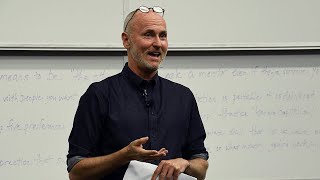
Chip Conley shares 10 lessons from his time at Joie de Vivre and Airbnb, including growth mindset, mentorship, and not tying self-worth to net worth. He draws on advice from Herb Kelleher and Peter Drucker, and discusses founding the Modern Elder Academy for midlife learning and leadership.
Chapters
Who you are defines how you build. It was my third day on the job at a hot Silicon Valley startup in early 2013. I was more than, uh, I was more than double the age of the dozen engineers in the room. I'd been brought into this hot startup because of my— I was a seasoned expert in my field. But in this particular group of geniuses, young geniuses and engineers, I felt like a complete newbie. So I did everything I could to actually be invisible. And then the wizard, the 25-year-old wizard who was leading the meeting, turned to me and said, Chip, if you shipped a feature and no one used it, did it really ship? I looked at him, my jaw dropped, and I said, Chip is in deep ship because I have no idea what you're talking about. There was an awkward silence. He moved on to someone else. I slid down in my chair and I could not wait for that meeting to end. That was my introduction to Airbnb more than 6 years ago. I'd been asked by the 3 millennial co-founders to come in and be the head of global hospitality and strategy, as well as the in-house mentor to Brian Chesky, the CEO and co-founder. Now, I'd spent from age 26 to 52 being a boutique hotel entrepreneur. And so I had a lot of hospitality knowledge accumulated, but after my first week on the job at Airbnb, I realized that the brave new home-sharing world didn't need most of my old-school bricks-and-mortar insights, hospitality insights. A stark reality rocked me. What in the hell do I have to offer these people? I'm twice their age on average. I've never worked in a tech company. By the way, back then in early 2013, when Brian said to me, when he was trying to convince me to join the company, he said, "I'm gonna Uber over to your home and let's talk about it." And I said, "What's that? What's Uber?" I didn't have an Uber or Lyft app on my phone in early 2013. So I was in a place that was not my natural habitat. I was also 52 years old, which is not exactly the age where people try new things to sort of see if they're gonna succeed or fail. But instead of actually turning my nervousness, my anxiety into judgment, against these young geniuses, I decided to see if I could match my wise eyes with their fresh eyes. And I actually started to imagine myself as almost like a modern Margaret Mead amongst the millennials, because I actually got curious. I got curious about what we could learn from each other. And I came to realize that we had a lot to learn from each other. So that brought me to a point in my first few months at Airbnb, about 6 years ago, where I started to ask the question, why is it that we as different generations, we have 5 generations in the workplace for the very first time, why is it that we almost treat each other like separate countries on the same continent? We actually haven't learned how to open up the borders and the dialects so we can actually learn from each other. And I truly believe that one of the critical trade agreements of our time in the 21st century is learning how to create an intergenerational potluck that all of us can actually take advantage of. So that's my, those are the first few thoughts from my TED Talk last year. And as Tina said, my background is I was here, went to undergrad business school here, started my company Joie de Vivre, grew it to 52 hotels. My last hotel that we as a company created was a place in downtown Palo Alto called The Epiphany. That Larry Ellison bought, you know, and he came in and now it's the Nobu Hotel. So I've loved, I loved that part of my career until I actually didn't. And during my 10 lessons, you'll hear a little bit more about that. And then more recently, I created something called the Modern Elder Academy, which is the first midlife wisdom school in the world. And during Q&A, you can ask a little bit more about that. Tina actually got a little taste of it. And it's a place where people can actually reframe their mindset to look forward to actually the extra years we have in our life. I'm 58 now. And a year ago, I was scuba diving with my father in Indonesia. My father at that time was 80. He's 81 now. So I went onto one of those online sites and I looked at, okay, well, what, how long am I gonna live? And so I just put in a bunch of information there. Obviously, they didn't have my genome study or anything like that, but they actually spit back after about a 20-minute thing. They said, came back and said, you're probably gonna live to about age 98. So I went downstairs to go out scuba diving with my dad for the morning. And I asked my dad, how long are you gonna live, Dad? And he said, 98. So that's interesting. Let's do the math. Dad, if you're 80 years old now, what percentage of your, adult life is still ahead of you. Well, actually, if you're 80, you've got 62 years behind you, 18 years ahead of you, you're barely into the fourth quarter of your adulthood. Me, I was 57 last year at that time. If I actually do live till 98, that means like I'm not even halfway through my adulthood yet. That kind of thinking is what led me to sort of asking the question, why is it that we don't actually, don't create midlife wisdom schools so people could actually reimagine and repurpose themselves and shift their mindset. So I'll talk a little bit more about that in the Q&A. So what I'm gonna jump into now is my 10 lessons. Now, I wasn't gonna give a talk about 10 lessons, but actually when they were telling me about what this program is about, I figured, okay, yeah, they said, come and talk about your 10 lessons. So I took it seriously. I thought about it a lot and I said, okay. Over the last week, I came up with my 10 lessons and I've got them up here on the board. So pardon, it's a lot. Yeah, I'll give you a few stories along the way as well. So my first lesson, and yet this is very old school, no PowerPoint, no. So, and you probably can't even read that, but you'll hear me say it. So the first lesson is learn the difference between a fixed and a growth mindset. Carol Dweck, great psychologist here at Stanford, popularized the idea that we can actually have a fixed or a growth mindset. When you have a fixed mindset, you have a tendency to wanna prove yourself. And for you, success is defined by winning. And I, I, in some parts of our life, that may be how we operate. And the beauty in that is you win a lot. The, the, the sadness about that is you actually play in a relatively small sandbox because if you actually believe that winning, if success is defined by winning, you don't try things that you're not gonna win. A growth mindset, on the other hand, is not about proving yourself, it's about improving yourself. And so if you're actually focused on improving yourself, success is not about winning, it's about learning. And that's not just, you know, something that's appropriate for someone who's young, it's someone at any age can be learning. So I have, you know, one of the things I did when I joined Airbnb and started mentoring Brian, the CEO, is I taught him about the idea of a fixed versus a growth mindset and how could we create a company that had a growth mindset. I also sort of took advantage of a relationship that I've had for maybe 10 years now with a guy named Mihaly Csikszentmihalyi. You know who that is? So the guy who sort of, he popularized the concept of flow, the idea of being in the flow, what brings you in the flow. And one of the things he taught me was the following. This is the flow diagram. On the vertical axis is challenge, on the horizontal is skill. What he taught me was this, is when you're in the flow or in the zone, you're in a place where you sort of feel like you are in exactly where you're supposed to be and you're tapping into your natural talents. He says what you do is you actually, in order to get into the flow zone, which is about at the 45-degree angle here, you actually have to do the following physics. You have to go up and then over. What does that mean? It means you actually have to go challenge, skill, challenge, skill, challenge, skill. If you don't do challenge, skill, if you sort of, if you say, I'm just going to do skill and no challenge, where do you end up? The place that a lot of people end up in midlife, boredom down here. Now, if on the other hand, you're only doing the challenge and not building the skill, you end up in anxiety. The better your mindset, the more you actually expand your mindset such that you have a growth mindset, the wider this arrow is. Now that's my own little conceit of what I've, you know, mixing Carol Dweck's work with Mihaly Csikszentmihalyi's work is if you have a very skinny flow zone, you have a fixed mindset. And if you have a very wide one, you're open to learning and building a skill, even though it's hard. I'm 58 years old. I've learned how to surf at 58, and I'm learning Spanish for the first time. I'm not very good at either, but I've learned that actually if you have fun, it's easier to try a new skill. And once I understand, understood the challenge-skill two-step, I understood that's the only way I was gonna get better. So that is a first lesson. I'll also say that this idea of a modern elder just to speak to that for a second, is somebody who is as curious as they are wise. Now that's the, that's I think the shift from the elder of the past. The elder of the past, the traditional elder dispensed wisdom. And frankly, in a society, especially agricultural societies, where things didn't change much over time, the fact that your 75-year-old grandpa was telling you about land wisdom was valuable to you. But today we live in a different era, no doubt. And in fact, being an elder isn't all that cool anymore, especially in the United States. But I distinguish elder versus elderly. Elderly is maybe the last 10 years of your life. Being an elder means it's a relative term. It's a relative word. It's a word that describes you relative to those around you. If you're 42 years old surrounded by 22-year-olds, you're probably an elder. At Airbnb at 52, and now 58, because I'm still there as a strategic advisor after 4 years of full-time, I am an elder at Airbnb, no doubt. And it was Joe Gebbia, one of the co-founders, who started calling me that within the company. So I actually think a modern elder, and we need to sort of understand why, if we're gonna live 10 years longer and power is moving 10 years younger in the digital society, what do you do with people in midlife who still have some wisdom? Well, I think you actually feed them the idea of curiosity. How do you build curiosity? And you make sure that they understand that this, being an elder is not about reverence anymore. It's about relevance. And relevance requires a certain amount of curiosity and a willingness to learn something new, which requires that challenge skill. All right, that's the first one. Let's go to number 2 of Chip's lessons that he's learned in his career. Experience what it means to be the other. Now, this is an interesting one. I liked writing this one down partly because It's not necessarily one that you would, you would expect. What it says is, first of all, we know about diversity and inclusion and belonging. The idea of diversity and inclusion, lots of evidence that it actually works in the workplace. Diverse workplaces when it comes to gender are 15% more successful according to McKinsey. And diverse workplaces when it comes to race are 35% more effective in terms of what comes out of them. When it comes to age, tons of evidence that age-diverse teams do better, partly because young people are exceptionally good at focus. Older people, we know what we lose brain-wise as we get older, right? What do we lose? Did you already forget? You lose memory. That was a joke. You get older and your memory's not as good, and you're maybe not as quick as you used to be. But the thing that a lot of people don't know about the aging brain or the mature brain is you actually get more adept at doing the left brain, right brain tango. You actually do all-wheel drive of your brain. You actually are more able to synthesize left and right brain. Why is that valuable? It means you can actually see, you can sort of connect the dots and synthetically see holistic things that someone else might not be able to see. You have that kind of person on a team while you also have a young person who's like brilliant about some specific things, that can be a great team. Well, so I think diversity is really essential, but I don't say this necessarily purely for effectiveness. I don't say it necessarily purely for political correct reasons, but I say it frankly for your own benefit. If part of what I'm talking about today is the lessons I've learned, A lesson I've learned is when I was the other, I learned what it meant to be more empathetic. And when I was an empathetic leader, I understood what a person was feeling in the room. So I was the other in high school. I went to a place called Long Beach Poly High School, Snoop Dogg's high school. You know Snoop Dogg? Look at the guy in the back, he's going, "Yes, yes." Snoop, are you from Long Beach Poly? [Speaker] No, my buddy is. [Speaker] Okay, so you know what it is. It's an inner city high school. They called me curious white boy. Um, because I was curious about other cultures, but I learned luckily in my high school years as a white guy, what it meant to be the other. Then at age 22, I came out as a gay man in a fraternity, having played water polo at Stanford. That was also being the other. And at Airbnb, absolutely no doubt, as a 52-year-old amongst 26-year-olds, I was the other. But that ability to be the other truly tenderized my heart and my ability to understand other people better than anything else I've ever had in my life. So when you can, especially for those of you in the room who are white, male, and straight, figure out an opportunity to be the other. Whether that means living in a foreign country for a period of time, or joining a group that's very different than you demographically, It will actually make you a better human over time beyond just being a better leader. All right, number 3, surround yourself with people who you want to become. Now, it's possible that nothing will influence you more in your life than the collection of people you surround yourself with. I went to Stanford Business School here. I didn't like it a whole lot, to be honest with you. I'm a type A competitive person, and I was surrounded by type A competitive people. And I sort of felt at times like I was just being a rebel and a radical just to be different than everybody else. Well, for me, this lesson, surround yourself with people you wanna become, was I started seeing that out of business school, I was hanging out with artists a lot. And I think it was partly because there was a piece of me, I took, as an undergrad here at Stanford, I took a lot of studio art classes. But felt like, you know, not very practical. But I started hanging out with artists. And massage therapists. That, there's some real benefits of that if you have massage therapists as friends. And what else? Writers and even a shaman. One of my closest friends is a shaman today. So why do I say that? I say, you know what, the thing that's really interesting about life is hanging out with people who think differently than you do. And absolutely helpful when you're struggling with something. You know, when I've struggled in business, I've actually found I've gotten better advice from friends of mine who have no idea about anything in business. Doesn't mean that you can't get some good advice from another business person, but often they're gonna say something to you that you might have already thought of yourself. So all I can say is surround yourself with people you want to become or who actually are different than you. Again, number 2 and number 3 have a little bit of similarities, Number 4 is force rank your top 5 preferences when it comes to job opportunities. So I say this to you for those of you in the room who are undergrad or graduate school, you're gonna have some job offers, you're gonna have the choices of location, the nature of the company, the nature of the title you'll have, how much money you'll be making, who you'll be reporting to. There are a lot of different variables. That define how you make that decision. My recommendation to you, again, those of you who are, this is true, I think, for any of us in the room, but the younger you are in the room, this I think is particularly predominant. The amount of money you make in your first job out of college or graduate school has almost zero correlation to how much wealth, if financial wealth is what you're looking to actually create. There's almost zero correlation to it. So my recommendation is you force rank your top 5 preferences when it comes to job opportunities, and you make sure that money is not in the top 3 unless you absolutely need money to pay back your loans, which is for a lot of people true. But the natural tendency, because it is absolutely benchmarkable, is that you use money as one of the predominant ways to actually judge the offers you have. I'll tell you a personal story for me. So I, I, for between my first and second year of business school, I went to work for Morgan Stanley in New York in their real estate division. I did well. They liked me a lot. You know, they wanted me to come back. They gave me an offer. I turned it down. They gave me a second offer. And you know, it was back then in 1984, which is when this was happening. Um, it was a lot of money. It was like $80,000 to $100,000, which back then was a lot of money. I was actually, I think it was actually $100,000, including the guaranteed bonus. I took a job out of Stanford Business School in 1984 for $24,000 a year salary. Maybe I'm dumb. The next, actually, they stack, one of the people in the career development section of the business school pulled me aside one day and said, do you know that the next highest person, they couldn't tell me who it was, in terms of what the next lowest salary was after my $24,000, it was $55,000. So there's like, I was way off the bell curve. Um, but the lesson for me is this. I knew I wanted to be an entrepreneur when I grew up. I knew I wanted to be a real estate entrepreneur, and I wanted to do something creating some, creating interesting projects. So rather than go to work for Morgan Stanley out of business school, making about $100,000 a year, um, I was in a lucky position that I didn't have a lot of student loans. And I actually was able to take a job that paid me $24,000 a year, but did promise that within a year if I was doing well, I'd become a partner in the business, which I did. And within a year after that, we were looking at doing a hotel project, which introduced, in San Francisco, which introduced me to the idea of hotels, which led me to saying, I would like to be a real estate person, but specializing in hospitality. So 2 and a half years after I graduated from business school, I started, a boutique hotel company and grew it to the second largest in the US. At age 26, I started that. If I had gone to work for Morgan Stanley, that would never have happened. I'm not saying it wouldn't have been a bad path. I might have learned how to become an institutional real estate person, but that wasn't what I was looking for. So if you get too wedded by the one thing that's most easy to benchmark, which is your salary, you actually give extra weight to something that in the long term may not matter all that much to you. All right, we're going on to number 5, find a mindfulness practice that suits you. More mindful, less monkey when it comes to your mind. Why do I have this one here? I have this one here because we as humans and we as generally high achievers use all kinds of things to actually settle down our mind. Most of them give us a little bit of an intoxication effect, whether it's alcohol or pot or prescriptive drugs, or a variety of other things that we get obsessive about sometimes. We might even get addictive about things as our way to have a diversion. Well, I was lucky enough, I have never liked yoga. I've been trying to do it for 35 years. I'm okay at it at best. I'm way, way, way focused too much on how do I compare with everybody else in the room. But when it comes to meditation, been doing it for 35 years, thank God for meditation, you generally close your eyes. Because I'm not comparing myself with anybody else. And I'm just allowing myself to go a little deeper. Now, why is all this relevant? Here's how it's relevant. I think there are two kinds of modes of operation of how we show up in the world. It's either attain or attune. And sometimes you want to be on one path, the attain path, and that's been most of my life. And other times you want to be on the attune path. The truth is there are effects on both. When you're in the attain mode all the time, you actually sometimes have sharp elbows and everybody has to get out of your way and you have to atone for things later. So attain can lead to atone. Attune can lead to feeling at one, a sense of harmony with your surroundings. For me, as a Type A competitive person, the process of learning when in my life I need to be in the attain mode and when in my life I need to be in the attune mode has been probably one of the most valuable things I've learned in my whole life. And it's helped me to not get addicted to a bunch of other things that we tend to use to slow our mind down. So I highly recommend, it doesn't have to be meditation, whatever thing actually, you know, for some, one of my best friends, it's surfing. That's his form of mindfulness. So find something that actually helps you to moderate that monkey mind. It will, you know, be very good for you for the rest of your life. Number 6 is seek a mentor, even if they're not someone you've even met. So I was brought into Airbnb to become Brian Chesky's in-house mentor. As I wrote about in my book, Wisdom at Work: The Making of a Modern Elder, I learned within the first week that I was not there to actually be Brian's mentor exclusively. I was there also to be his intern. I was the mentor and the intern at the same time. How many people saw Robert De Niro, The Intern, Anne Hathaway? So I had the opposite experience of Robert De Niro. Robert De Niro came to the, in the movie, he was a 70-year-old intern who was gonna actually help the CEO to be brought in as an intern, but he ended up becoming the mentor for Anne Hathaway. I was brought in as the mentor who ended up becoming the intern because I needed to learn tech. I didn't understand tech at all. And so my process of actually learning tech had a lot to do with Brian. I, I say that what we had was that we had a trade agreement where I gave him EQ, emotional intelligence, which is something you tend to build over the course of a lifetime. And he gave me DQ, which was digital intelligence. And so that was the trade agreement we had. So my experience with this one is interesting because my, the two most profound mentors I've ever had in my life, I never met. Interesting. The first one was a guy named Herb Kelleher. So Herb Kelleher was the founding CEO of Southwest Airlines. And with, after a couple years of starting my company and I was growing the company, we're going to have a second and a third hotel. I wrote to the CEO of Southwest Airlines based in Dallas. I wrote a letter because that's what we used to do. So I wrote a letter and said, will you help me? I am a, at that point, a 28-year-old CEO. I'm growing my company. I like your culture. The culture of your company is incredible. And I said, can you teach me a few things? 3 weeks later, I received a letter back from Herb Kelleher saying, yes, I will help you. I guess, you know, the letter I wrote was pretty, pretty, I guess it was poignant or something. And he just, he said, I'll help you. So for the next 10 years, about once a year, I'd write him a letter. We never had a phone call. Never had a phone call. We just wrote letters to each other. Now, similarly, I wrote one letter to a guy named Peter Drucker. And I think Peter Drucker was the first modern elder before we actually had a phrase modern elder. Peter Drucker lived till the age of 95. He wrote, of his 40 books he wrote, two-thirds of them he wrote after age 65. He's the one who popularized the idea of the knowledge worker in 1959. I think today it's, we don't need knowledge workers anymore, we need wisdom workers. Because knowledge is all in our smartphone. But both of these guys, I wrote Peter Drucker, he wrote me back. So just know that sometimes we think that, you know, there's not a mentor in our midst, but there may be somebody out there you could write or you can reach out to. Or in the world we live in today, you can learn so much about someone else who you may never meet and just learn everything you can about them. And then use that as your form of, DIY, do-it-yourself mentorship from somebody you might never even meet. All right, number 7, your reputation is portable and is delivered by the cosmic bellhop. A little hotel joke there. Practice karmic capitalism and your reputation will flourish. So that guy, Mihaly Csikszentmihalyi, who came up with the whole flow concept, he said something to me, he and his wife, what a sweet man. He invited me to come up to Montana. He lives in Southern California. He invited me to come up to Montana in the summer for 3 days to hang out with him and his wife at their summer home in Montana, tiny little cottage. I mean, really, I was like, I felt like I was family. And on that, during that time, I learned so much from him. And so he sort of was a mentor as well. But one of the things he said to me that was so critical in terms of my memory of it was he said, you can tell who's powerful in a society by how tall the buildings are. And he said 150 years ago, it used to be religion was the most powerful part of a society, and the cathedral in town often was the tallest building in town. And then 50 years ago, it actually was City Hall or some government building that actually sort of predominated over a skyline. And that's still true in a lot of cities where the City Hall is the biggest structure in a city, the tallest structure. In fact, in some cities, it can't be any taller You can't build a taller building than the city hall. But today, he says, you know, it's all about skyscrapers. And so who has the power today? Mihaly said, he's also known as Mike, Mike said, power is in business. And he said, what's gonna happen as a result of that is people are gonna expect more of you business people. And he says, and this is 10 years ago, this is before really I think we have the kind of transparency we have today, with the internet and social media, he said, people are gonna know whether you're greenwashing something, whether you're sincere about how you show up as a business leader and as a company and with your values. And people will choose to buy based upon your values. Well, he was absolutely right, and there was obviously some evidence already at that point. So I call this karmic capitalism. What goes around comes around. And so it's been sort of a big part of my, way of doing business for a long time. And the story I'll tell here is there's a hotel in San Francisco called the Hotel Vitale. It's on the waterfront. It's across the street from the Ferry Building. It's on city land. And back about 20 years ago, we were competing with 4 other developers to build a new hotel on city land. And we were competing, the big gorilla in this match was Kimpton. Bill Kimpton and his company Kimpton Hotels, which ultimately became the largest boutique hotel company in the US. We became the second largest and we were both in San Francisco. But 20 years ago, we were still a relatively small company. So we were competing with Kimpton. And I'll never forget when we were doing our presentations, we did our presentation, there were 4 of us, you know, it was a 3-hour presentation. We were like psyched, oh, I think they really liked us. And we came down the elevator And when we got to the ground floor, the person who was right in front of us as the door opened was Bill Kimpton and 16 people on his staff who were there to actually do the presentation. And we'd been so excited, it was like, oh shit, they're gonna win. They're the big guys. He's got a lot of money. We don't have a ton of money. But long story short is karmic capitalism ruled. Now it was a process where there are a lot of different opportunities to have that the citizens of San Francisco speak up about who should do this hotel. And the guy, Mike Casey, who ran the hotel union in San Francisco, spoke up on our side instead of on Kimpton's side. But more importantly, because we had done a lot of things with local nonprofits, like we were actually part of our, part of the thing we do with our general managers is we didn't just judge our general managers based upon profitability and market share and employee and customer satisfaction. We actually judged them and actually evaluated them based upon how much money they gave away, based upon nonprofit groups using our meeting space and hotel rooms as an in-kind contribution. So what happened without us even knowing is, and we did something called the Celebrity Pool Toss, which is a fundraiser for Kids in the Tenderloin, and something called the Hotel Heroes Award, which was like the Oscars for like, line-level employees at hotels. So we certainly had the karmic capitalism momentum behind us, but it was sort of hard to toot our own horn. Well, what ended up happening is one of the nonprofits in town, the Tenderloin Neighborhood Development Corporation, TNDC, went out and they got a dozen other nonprofits to come together and write a letter and talk about what kind of influence we had had as a company on the San Francisco nonprofit scene. And at the end of the day, what we were told is even though we offered less money than Kimpton did for this 55 or 65-year lease, long land lease, they gave the contract to us for the long land lease because of that reputation. So do know that sharp elbows, especially when you're in the attain mode, may mean that you create a few bloody noses around you. Um, but recognize that your reputation precedes you. Uh, and that's true of us as individuals, as well as a company. Number 8 is develop a workplace skill that is valuable no matter where you live or what industry you're working in. So think about that for a moment. What's the skill that people are going to look to you 30 years from now 40 years from now, 20 years from now, and say, that person, she or he, you are the best in the world at that. What could that be? Now there, we have a little bit of history with a, something called ikigai. How many of you have seen this before? Okay, very few. So ikigai is, you know, it's, I know it's really small up here. So apologize for that. Take a picture of it, or actually right now I can see it on the camera up there. It's actually, you'll be able to see it in a video later. There are 4 components here. What you love, what you're good at, what the world needs, and what you get paid for, what you can be paid for. Right there in the middle, if you can find the sweet spot of something that has all 4 of those things, that's a perfect fit. Most of us don't have that. And if you actually have one, two of these primarily, it's either a profession, a passion, a mission, or a vocation. Well, for me, gosh, I was lucky. Very early on, I realized I was fascinated by cultural trends. I'm really interested in where things are gonna be 10 years from now. How are people, how are people, how are people changing their behaviors? And so long story short is every time we created a boutique hotel, 52 of them, it was based upon a different magazine and 5 adjectives because we thought magazines are sort of ahead of the trend usually. And so that first hotel, the Phoenix, that rock and roll hotel was based upon Rolling Stone magazine. And we came up with 5 adjectives that define Rolling Stone magazine, funky, irreverent, adventurous, cool, and young at heart. And we created a hotel that had that personality. What we didn't know at the time and what became the magic is we came to realize that we were not just in the business of creating cool boutique hotels, but the people who fell in love with that hotel almost thought of it as a habitat, their perfect habitat. And it was like an identity refreshment because the people who love the Phoenix are funky, irreverent, adventurous, cool, and young at heart. And this is true of boutique hotels. The place you love the most probably has adjectives or qualities about it that most define it, define you aspirationally. That, learning that at a very young age and then building that skill to understand 6 years and 4 months ago that as most of my hotelier friends looked at me and said, why would you ever want to go work for Airbnb? Home sharing sucks. No one actually is, it's just a millennial thing. Well, I said, you know what? I think actually, I think Airbnb is just the next cultural thing after boutique hotels. It's just taking boutique hotels 10 steps further about a localized experience. And so being able to see a trend, I think I'm seeing a trend right now with the Modern Elder Academy, the idea of creating the world's first midlife wisdom school. So just, so that's my, that's maybe my gift. That's the thing that I've been able to learn. What's yours? What's the thing that you're going to be able to find maybe in that exact center spot where you have an ikigai? Number 9 is find or create a leadership point of view that serves you in good times and bad, and that you can teach to other people such that it's your leadership legacy. I'm going to show you something that's way, way too small for anybody to be able to see it, I think. That's right. Thank you. But I wrote a book 12 years ago called Peak: How Great Companies Get Their Mojo from Maslow. And I was fascinated by Maslow. Abraham Maslow created the hierarchy of needs, which is on the right-hand side there. But what was curious to me at the time I started using it, and I didn't write the book, I basically used it in the company. And because I saw it work so well, Ultimately, I ended up writing a book about it. But what was curious to me was Maslow had 5 levels of the pyramid, right? So it starts with physiological, goes up to self-actualization. But there's basically 3 paradigms on those 5 levels. There's survival, which is the first 2 levels, which is physiological and safety. There's success, which is what you feel when your social esteem— I'm sorry, social belonging and esteem needs are being met. And then there's the top of the pyramid. When you're in self-actualized state, you're in a transformational state, you're transformed. So what I was curious about is since companies are full of humans, let's take this human hierarchy of needs theory and apply it using survival, succeed, transform to a pyramid that has employees, customers, and investors. And in the middle is this karmic capitalism. Of you create a great culture and you make your employees happy. That leads to customers being happy, which tends to lead to market share growth, which leads to investors being happy. And then you invest back in culture. That's my model. That's the model that will be my leadership legacy. It's the one that I taught my 3,500 employees in Joie de Vivre, including all of our housekeepers and our bellmen. Everybody learned that. It's actually part of the reason why Brian Chesky called me. He said, we're intrigued by that peak thing. We'd like to have it here at Airbnb. And that was when we were a tiny company with 300 people in it. Not tiny, but it was not what it is today, which is 20 times larger. So that's what's led me, frankly, to have a number of young entrepreneurs come to me and say, yes, I'd like to see how we could apply that model here. There's all kinds of leadership legacies. There's all kinds of business models out there. There's servant leadership. There's, Richard Branson said to me, his, his whole business philosophy was, I am the market. His whole premise behind business was, I'm the market. I better be delighted by what we create. Well, that's okay, but that's probably not a full leadership model. John Mackey from Whole Foods Markets has his conscious capitalism model. You don't have to go out and create a model and write books or anything like that. But being able to get to a place in your career where you can articulate down to either something you can put on paper or something you could maybe summarize in a paragraph such that people who are working with you can understand it is a legacy that you can offer to other people. So that is number 9, and then number 10 is don't tie your sense of self-worth to your net worth and create some emotional insurance in your group of friends. What I've seen way too many times, and it has been true in my life as well, is the emotional rollercoaster of having a company that goes up and down and up and down becomes your own personal rollercoaster. I remember in the early days of The Phoenix, I'm this young boutique hotelier, created my first hotel. Friends would come up to me and say, Chip, how are you doing? And my immediate response would be, The Phoenix is doing great. And then finally one person pulled me aside and said, no, Chip, how are you doing personally? And I was like, I don't know. The Phoenix is doing great. But my sense of self-worth was almost exclusively connected to the success or failure of my business. Now that is dangerous when you hit a great recession. And I had 5 friends, 3 of them entrepreneurs, commit suicide in 2008 to 2010, partly because their sense of self-esteem was way too connected to the company's fortune. So let me just finish by saying, on that very sober note, you can have emotional insurance in your life. This is particularly true for the men in the room. Who aren't usually as good at this as the women. You can be vulnerable with some friends. You can have maybe a couple other entrepreneurs who you have as your little support group. But just remember that your sense of who you are and what you've done in the world is much bigger than the number of zeros you have on your balance sheet. So with that, I'm gonna open up, I think we don't have much time, but I'm, what, we have 5 minutes. I'm gonna open up for questions. Sorry that went along, it's the first time I've given this one. Who wants that? Who has a question? And I think we've got a microphone. Is that right? No, just throw it out there. Raise your hand. Right here. What does a typical week look like for you today? Where do you spend your time? And please repeat it. What does a typical week look for me like today? I live in Baja, California, an hour north of Cabo, which is where the Modern Elder Academy is. I'm teaching there a lot of the time. So that's my primary place. And I teach a lot of workshops. I've just finished 3 workshops in a row, including one for like 14 doctors who wanted to take the Modern Elder Academy curriculum and somehow apply it to hospitals around the US. I spend some time in Austin, Texas, which is where I live part of the time, because I have a bunch of companies that I advise there. And then I'm in San Francisco part of the time. In terms of how I spend my time in life, there are a bunch of things I love the most. I love hanging out with friends. I love Traveling. I love films. I love athletics. I'm going to a Warriors game tomorrow night. I'm excited about that. So yeah, so that's my life today. Someone held their hand up back there. I also have two kids. I have two kids, so I hang out with those kids too. This modern elder thing. This modern elder thing, yes. You can call it a thing. I call it an academy. But that's fine. What are sort of the key lessons you're trying to teach? Yeah. So if— so quick thought on that. We are great as a society in creating rites of passage for people in transitional times. Puberty, you know, going from adolescence to adulthood. You're going to get married, have a wedding. You're going to have a baby, you have a baby shower. You die, you have a funeral. But midlife doesn't have any rituals. Partly because midlife is a completely new phenomenon in the modern world. In 1965, we created the— we coined the term midlife crisis, but 54 years later, we've done nothing other than make midlife longer and more, you know, so I would just say that what we're trying to do is help people to understand how aging is not necessarily a bad thing. For example, the U-curve of happiness, social scientists have shown, shows that frankly, people get happier in their 50s than their 40s. 60s better than 50s and 70s better than 60s. Well, that's not the societal narrative, but that's the personal narrative of people. So how do we help people to reframe their mindset around what they are gonna do with the extra years they have? And so very much a focus on mindset shifts. How do you mine your mastery and your wisdom to know how you can repurpose it in new ways? That's what I had to do at Airbnb. I thought I was being brought in because I was a hospitality expert. Frankly, it didn't matter at Airbnb how many— me knowing how many rooms does a maid clean in an 8-hour shift. That doesn't matter in home sharing. So the fact that they brought me in for one thing, but my value to the company was something else, was me starting to see, ah, I fit in. I know how I can make a difference here. And it's not in the way you actually originally brought me in. Does that make sense? Maybe another question right there. Yes. All right. So I was gonna ask, here in Silicon Valley, at what age does one transition into being a modern elder? If you read the New York Times cover story in the Sunday paper a few weeks ago, you would know it's age 30. I don't, you know, only about 10% of our Modern Elder Academy students are in their 30s. Average age is 52. But depending upon the industry you're in, if you're in tech or entertainment or advertising or professional sports, yeah, it tends to happen in your 30s.
More from GHION.AI


O processo de reconhecer limites, mesmo quando a vida parece exigir sempre mais.





Depois de tantas histórias, aprendizados e pausas necessárias, o @interior_iza está de volta



