Investing at the Cutting Edge [Entire Talk]
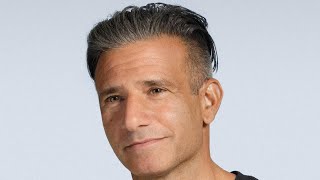
This content was created by GHION.AI . This content was uploaded by GHION.AI . This is a YouTube video titled "Investing at the Cutting Edge [Entire Talk]" featuring a talk from June 7, 2023, by Josh Wolf, co-founder of Lux Capital, at the Stanford Entrepreneurial Thought Leaders Series. The talk, introduced by Mo Fong, covers Josh Wolf's investment philosophy, focusing on supporting scientists and entrepreneurs tackling complex problems with innovative solutions. He discusses various principles of investing, the importance of contrarian thinking, and shares insights into Lux Capital's investments in cutting-edge technologies and companies.
Chapters
Who you are defines how you build.
Welcome YouTube and the Stanford community to the Entrepreneurial Thought Leaders Series. And I am Mo Fong, the Executive Director for stvp, the Stanford Engineering Entrepreneurship Center. So the ETL series is brought to you by STVP and Basis, which is the business association of of Stanford entrepreneurial students. And today I am so honored to welcome Josh Wolf to the ETL stage. And I'm going to read a little short bio but his amazing accomplishments, you should really look it up because it is incredible. Josh co founded Lux Capital to support scientists and entrepreneurs who pursue counter conventional solutions to the most vexing problems and puzzles of our time and in order to lead us into a brighter future. He is the Director at Shapeways, Stratios, Lux Research, Caliope Control Labs, Variant and Varda and helped lead Lux Capital's investments in Anduril, Planet, Echodyne, Clarifai, Arthuria Resilience and Hadrian. I don't know how you were able to do all those things. Well, wow, that's a lot. But it keeps going. He is the founding investor and board member with Bill Gates in Chi Meta, which makes cutting edge antennas for high speed global satellite and space communications. He is a Westinghouse semifinalist and published scientist. He previously worked in investment banking at Solomon Smith Barney and in capital markets at Merrill Lynch. In 2008 he co founded and funded a contrarian bet in the unlikely business of using advanced robotics and state of the art engineering and chemistry to clean up nuclear waste. Now, for those who are in the school of engineering, that is awesome, right? But it is unlikely business because who thought that this unmet and inevitable need with no solution in sight would be one of the first responders to the Fukushima Daiichi disaster? That's incredible. So in February 2016, Veolia acquired Curion for nearly $400 million, 34 times Lux's total investment. Josh is a columnist with Forbes and editor of the Forbes Wolf Emerging Tech Report. And he has been invited to the White House and Capitol Hill to advise on nanotechnology and emerging technologies. He has lectured at mit, Harvard, Yale, Cornell, Columbia and nyu. And now here at Stanford University, he is a term member at the Council on Foreign Relations and Chairman of Coney Island Prep Charter School where he grew up in Brooklyn. He graduated from Cornell University with a BS in Economics and Finance. I understand you flew in all the way from New York to be here with us, so thank you for doing that. And everyone please join me in welcoming Josh. Thank you.
So I'm going to Give you a quick moment here about Lux, just so you can get a flavor of the kind of stuff we invest in. It. Sam. All right, so the kind of stuff that we fund, everything from robotics to high tech sensors, the intersection of biotech and artificial intelligence, novel foundation models that are touching pretty much every industry, all of this comes with backing entrepreneurs. I know that that's the core content of what the class is about. And I'll give you a whole bunch of principles about the kinds of things that we look for when we're either starting a company with some entrepreneurs or we're identifying founders and the kind of attributes, personality wise, that we like to back. These are some of the people that we've been backing and they came from illustrious places and founded Oculus and were heads of R and D at Amgen, and we're key engineers at SpaceX and CTO of SpaceX. And then they go off and we say, okay, these are brilliant people. You know, they've done it before. They're going to be able to attract incredible talent and lower the cost of capital and raise money and tell stories. And we like to back them, but we also like to back first time entrepreneurs and we like to say that we believe before others understand. So it's really an instinct that's honed over many years of what somebody might look like in their disposition and how they're going to pitch somebody that believes that what they're doing is absolutely impossible and we believe that it's inevitable. A few of the themes I touched on, and again, I'll fly through a whole bunch of this stuff principles and I'm just going to sort of stop and make a poignant point at some of these principles. This underlies everything we do. And what this is, is about the cost of capital. Right now the cost of capital is rising, but when the cost of capital is low, it is like a tractor beam for the future. It takes far out 20 year projects and turns them into 20 month frenzied projects. And so the further out that something is, when the cost of capital is very low, money flows. Lots of experiments get tried. The vast majority of them are going to fail. We are now in a different era, an era that really we haven't seen in a generation or longer where the cost of capital is rising. And what that means is, is that only fewer things are going to get funded. But arguably the necessity of those, the importance of them is going to be much higher. You make great companies and make fortunes, you know, in up and down markets. And when the Cost of capital is high or low, but right now it is rising. Another principle, 100%, and this is a truism, 100% of the information that we have right now is based on the past. Everything you've learned, everything that you've read, everything that you've experienced. But 100% of the value, if you're an investor, an entrepreneur, is based on, on the future, which is inherently probabilistic. It's unknowable, it's uncertain. All you can do is think about probabilities. And the best definition of risk, which we hold at locks, is that more things can happen than will. And so we're always trying to think about the good things that can happen and the bad things. And you'll see in some of the dispositions around the founders at LOCKS how that plays out. One of the other principles is the directional arrow of progress. We don't know which technology, we don't know which entrepreneur, we don't often know which specific company. But we do know that there are these directional arrows of progress. And you're going to see, as I talk through some of the companies and the examples and the founders that we backed, some of these directional arrows of progress. Everybody knows Moore's Law. Moore's Law has transcended semiconductors. It's been in memory, in compute, in transportation, in telephony and film and tv. We had an insight going back during the first cleantech boom that there was another directional arrow of progress. And a lot of people were not focused on it. Most of people were, were consensus looking at alternative energy. Very few people were looking at nuclear. And all we did was look at the directional arrow of progress, of mankind's use of energy. And we went from left to right, from carbohydrates to hydrocarbons to uranium. And the unarguable trend was higher and higher density per unit of raw material. Why was nobody looking at nuclear? And there's a variety of reasons, some of them psychological, some of them political, some of them technological. But we said, what's the one thing that really sucks about nuclear? And that's the favorite question that we like to ask about any industry. I always joke that it's sophisticated. Two word PhD level question, what sucks? You find something that sucks and it is waiting for a technology and an entrepreneur to go and solve that. So we looked around for entrepreneurs and couldn't find one. And so we ended up starting a company from scratch. We named it after Madame Curie, we called it Curion. And we recruited people that were slightly under the age of 60, but were industry veterans. And we pulled together this team, we pulled together technology and we decided that we were going to go after the nuclear waste problem. And it turns out that there's 104 domestic reactors, there's 440 global reactors. You can make a market selling into those, but there's this huge defense market that's in places that most people have never heard of, like Hanford and Savannah river and Idaho National Labs and Sellafield in the uk. And all of these places have hundreds of millions of gallons of radioactive waste. And that really sucks. That was a big problem. And so we saw an opportunity for a big solution. Now this is a company that would have been great. It would have been a phenomenal business over the course of a decade. We found this company back in 2008 or 2009. March 11, 2011, something terrible happened in Japan. It was a negative black swan. It was the Fukushima disaster, earthquake, tsunami, nuclear disaster. And that became a positive black swan for this little company. We had never predicted that this outsize negative event would become this outsized positive event for this company. We became the only US Company picked for the cleanup of that nuclear disaster because we had assembled the team that had the know how the technology, the robots, the intel and the access for the relationships. And I'll give you a quick video of what occurred here at Fukushima.
The water is so radioactive that people.
Don'T even want to go near it to even sample it. When I first got to Fukushima, they said it was going to be 30 years. And I thought, that can't be possible. Until I got to the site, they.
Didn'T even know how to define the problem.
It was almost like a comet had hit their plant.
We actually knew immediately what the answer was and we designed it in two.
And a half weeks, filled three Russian Antonov military transports with 700 metric tons of equipment in five weeks and started it up three weeks later.
We were just, you know, shocked by.
The enormity of the whole thing. Large company like Tipco Trust, a tiny little startup of six people is a.
Critical part of what they needed to recover from the accident just was mind blowing. The day we started was a scale.
Of about a hundred times bigger than.
What went on at Three Mile Island.
And there's nothing more full scale than Fukushima. To actually work on a project where.
You went from a whiteboard sketch to.
An operating system in eight weeks and.
Succeeding is the accomplishment of a lifetime.
Now we really like to find entrepreneurs and sectors where there's like one or two competitors. So not an area where there's 50 entrants and people are developing social media apps. Something that is really hard, something that has a very high barrier to entry, something that is very technical. And if you are an entrepreneur and you can identify one of those spaces that is very technical, something that you can do or assert that you can do or a team can do that nobody else can do, your ability to raise capital is going to be much higher. Your ability to succeed is going to be much higher because you're competing with far fewer people. So we like to find these weird off the beaten path and technologies and problems that very few people are going after. Another philosophy, we like to say that failure comes from a failure to imagine failure. Now, when I say we, it's mostly me because I'm very negative. It's an adaptive mechanism. Growing up, if I could expect all the bad stuff that can happen psychologically, I could cope with it better. But I think that this is a great way to manage risk. There's this mythology around entrepreneurs that entrepreneurs are these great risk takers. But I actually think that most entrepreneurs are risk killers. They identify a risk and then they try to kill it. My co founder of Lux, Peter Hebert. Peter Hebert and I have met 25 years ago. We founded Lux nearly 20 years ago. Pete is an optimist. He is wearing bright colors as he always is, typically pastels. He's thinking about how can things go right? How might this work? What if it's successful? How much money could we make? Who could we populate the board with? What's the right syndicate construction? How do we help these entrepreneurs? And I am thinking, okay, how is this all going to fail? How is this all going to go terribly wrong and what can we do to prevent it going wrong? So people like to joke that Pete invented the airplane and I the parachute. And this is a beautiful yin and yang in a partnership. But it's also something as entrepreneurs that you need. You need somebody that can believe and say, we're going to go do it, especially when you have down times. But you also need somebody who's a little bit of a realist that can put the brakes on. So this yin and yang, I think in Founder Dynamics is actually really important. Okay, Another principle, chips on shoulders. Chips on shoulders. Put chips in pockets. The favorite entrepreneur that we like to find is somebody that has a real chip on their shoulder. They might have come from a broken home. They might have been the obese kid that everybody made fun of in a Friday night's Texas Town. They might have been a minority, they might have been gay, they might have been made fun of, they might have had a disability. But there's something. And a lot of immigrants have this as well. But there's something where they felt rejected by the system, and they know that they are better, that they are more valuable than what the market is saying they are worth. And those are the best people. And the most interesting thing that we have seen through generations of these kinds of entrepreneurs is no matter how much money they make, no matter how much success or achievement they have, they still have that chip on their shoulder. It never goes away, and it is this beautiful force. So a lot of people, particularly out on the west coast, because I am based in New York, half our team's menlo, half our team's New York City. A lot of people out here are about mindfulness and meditation. How many people try to meditate every day? Okay, that is a wonderful thing for you. It is a terrible thing for society. You want troves of disaffected, miserable people that want to improve their lot in life or something else that they identify that sucks. And so we really like to try to find that. Another tip, when you go to pitch venture investors and you're starting a company or raising money for one, if you come in and say, I just want to change the world for most people, I think that's bs. I think that most people have a chip on their shoulder, and the best entrepreneurs have something to prove. And a byproduct of that is that they end up improving the world in a positive way. But a lot of people come in with this sort of vainglorious positivity that I'm just a little bit too cynical to believe in. But I do believe deeply that chips on shoulders put chips in pockets, and you pick many of the people whose buildings are named after them on this campus, they all had chips on their shoulder. They had something to prove. They had people that doubted them. I'll give you two great examples. One, in science, this guy, Peter Mitchell. Peter Mitchell had a theory of chemo osmosis. And everybody thought that this guy was a complete idiot. So he ends up winning the Nobel Prize because he was right. But what was amazing about the Nobel Prize speech, and this is one of the best speeches ever given in all Nobel Prize history, is he put up a chart that. And he explained his work and how the technology came about, but he also put up a chart that showed every person that was a colleague or an enemy and when they finally changed their mind and agreed with him. Okay, that is a chip on your shoulder. That is a motivating force. When the haters and the doubters don't believe in you and that should be for all of you, it will happen. It has happened in your lives. Fuel for your fire. You should never let that go. People are going to tell you that you suck, that you can't do it, that you should go back to business school, that you should do something else. If you believe in yourself, you stick with it. It's one of the most important lessons from our great entrepreneurs. I'll give you another great person and listen to the scouting report for this local hero. Stephen Curry. Six three, £185, position point guard. Stefan's explosiveness and athleticism are below standard. He's not a great finisher around the basket. He needs to considerably improve as a ball hand. Alright, you get the point. When you are an entrepreneur, when you are an investor in venture, there are three sources of edge that you can have. And it's really important that you understand this because the third is the most important. You can have an informational edge, you can have an analytical edge. You can have a behavioral edge. Informational edge means that you get information that other people don't have. In today's world, that's really hard because information is abundant. It wants to be free in the proverbial sense. It's flowing everywhere. Analytical is that we get the same information. Maybe Dina, my partner, gets a piece of information, I get another piece of information. It's the same piece of information, but I analyze it differently than she does. Maybe she's closer to ground truth and I'm wrong. Okay, Also really hard because there's brilliant people and now we're all augmented by AI and it's really hard to have a better analysis than somebody else. But behavioral is the one source of lasting advantage to identify where the herd is going. Back then in that example with nuclear, everybody in the herd was going in cleantech for alternative energy and biofuels and solar and ethanol. And we tack the other way. So if you as an entrepreneur can identify what is everybody else doing and what can I do differently and then be right is really powerful. Okay, this is a great example. It's the Simon Asch experiment. How many people have ever seen this before? Okay, the guy in the red sweater is the mark. Everybody else is in on this. It's a psychological study about group things. So watch what happens. They're going to show a bunch of lines and the Lines, they're going to lie about which one matches. Okay. And he's going to look at them and say, you idiots. Like you got it completely wrong. Watch what happens in the first test. The correct answer is 2, 1, 1, 1, 2, 1. Once again, the correct answer is 233 3, Three. Now he knows it's not three. But the social pressure is so strong and you will encounter so many situations, and I'm sure you already have, where that social pressure to conform and go along with what other people are doing. And again, have the belief and the conviction in your own ideas and stand away from the crowd. It's painful. It literally feels like pain to be socially ostracized. But if it's of your own choosing to separate, it's a really powerful thing. Okay? So those three lines, if you flip them horizontally, you get a different advantage, which is time arbitrage. If you can think longer than other people. So many people are looking for the startup that is the quick fix, something that's going to pay off in a year or two. But all the deeply technical stuff takes a long time. It takes a lot of money, it's a lot harder. It's like taking a shot and you don't know if you're going to hit a three pointer for like six years. But sometimes the biggest payoffs are these longer term things. So we like to invest in things where there's time arbitrage, where we're going further out than other people are because there's just less traffic there to compete. I'm gonna skip the marshmallow test, you guys know, and the myth of Odysseus tying himself to the mast to resist the siren song, in this case the siren song of the temporal. Now I'm gonna skip this as well. The reading of good books is like a conversation with the best men of past centuries. This was a placard outside of our New York City office, our old office. And it went up to the New York Public Library. And I love this because there are three great men in literature that help define where you should focus. And each one has a famous quote associated with them. Fitzgerald's quote was that the test of a first rate intellect is the ability to hold two opposing ideas in your head at the same time and still retain the ability to function. Okay, so if Fitzgerald's situation for us at Lux is the stuff that everybody's arguing about, the stuff that's on the front page. Okay. And I actually say that this is not really valuable to focus on gold. Gold is a shiny Piece of metal, gold is a great store of value in an otherwise fiat currency world. China. China is an engine of growth. Or China is a giant bubble waiting to collapse, and there's nothing but lies, damned lies, and government statistics. What you can predict in these Fitzgerald situations is that people are just going to be battling it out online. Okay? A lot of volatility in something that is widely known. The next domain is Twain. And Twain's famous dictum was, it ain't what you don't know that gets you into trouble. It's what you know for sure that just ain't so. It's where there's certitude, where people are highly confident that something is going to happen and continue to happen, but they're wrong. The housing crisis was a great example of this. Housing prices can only go up until 2007, 2008, boom, massive crash. All of a sudden, people are shocked. Huge leverage, huge disaster. Great financial crisis, another example. We all experience this every year. Now, imagine you're a turkey. Start of the year, you're an egg. You're growing, you're getting fatter. Life is good. Every day is better. All of a sudden comes Thanksgiving, die. Okay? So any presumption of linearity is a dangerous thing. Now, where we like to spend our time is in the Schopenhauer domain. The Schopenhauer domain. His famous quote was that talent is hitting a target that no one else can hit. And genius is hitting a target that nobody else can see. Again, being a contrarian, thinking differently, being willing to stand out, seeing something that other people don't. This is talent. Final seconds of the third, and here's Wade got it. This is Talent 2, But it's not genius. Now, the classic cliche is that the best way to predict the future is to invent. And the people that historically invented the future used to look like this. White men in lab coats, Bell Labs, 1928, 1960s, 70s. Come along, you start to let a few women in. Now you're wearing different kind of lab coats. Then you get these freaks and geeks. And of course, most people in the audience should know who this is. This is the founding team of Microsoft. Bill Gates there on the bottom left. If you ask many of these people, including Bill, what was your inspiration? A lot of people will say it was science fiction. Science fiction inspired me. It was somebody in fiction imagining the world that I wanted to live in. And then I became an engineer or a scientist because I wanted to create that world. And we actually contend that the gap between sci fi, and sci fact keeps shrinking. And we've cataloged a lot of these examples. So you take the Star Trek tricorder that begot the first Motorola cell phone that we all had, the flip phone back in the day, the phaser from Star Trek begot the Taser. Now this is heresy because people hail Steve Jobs. And I actually think that Steve was an incredible sci fi archivist. This is Captain Picard, Star Trek, Next Generation with a trove of iPads strewn across his desk long before the iPad was ever invented. You just have to go back Into Sci Fi 2001 Space Odyssey, FaceTime long before Steve demonstrated it on stage. Okay, so it's a great inspiration. Hal, Siri and on and on. We funded a company that was focused on blind and visually impaired people. The inspiration came from Terminator. Early visions of augmented reality. And back then it was using Google Glass with facial recognition. Simple AI to be able to identify a person, navigate through restaurants and whatnot. And we'll continue to see that augmented reality. But it came from the inspiration of Arnold Schwarzenegger who is a great source of new companies. This was Total Recall. Arnold walks through at video frame rate instead of stopping at an X ray scanner. Terrible movie, but great science fiction. This is evolve technology. It's a company that we co founded Bill Gates, we spun it out of a bunch of universities and key IP around an area of physics called metamaterials that could do rapid video frame rate scanning of bombs and explosives and other weaponry. This was just recent. So I'm on an endless search for these kinds of things. This is a cartoon. I think it was called Paragon, but I might have that wrong. And watch what happens. I guess it's kind of like an iron rod through the head. It's one problem neither a human nor computer could solve. Not even Steven Holstrom though he got close.
Yeah, I mean I've got no idea what it's about. Like I don't even understand if it's a code problem. I mean do you even have readable code?
Sure, if you have an eternity or two here. This is my sense of smell. Okay. Now for a decade we have been on a quest trying to find entrepreneurs and scientists and engineers that could digitally record a sense of smell to create digital olfaction. Our phones can record our sense of sight with cameras and ever high definition and frame rates. Our phones can record a sense of sound, but it can't record smell. You need large scale mass spectrometry or liquid gas chromatography. You can't shrink it down. We found a team inside of Google and last year we spun them out. $60 million founding round brought together some amazing people. Alex Wiltchko is the founder. I'm going to give you maybe a second here. What's the vision for osmo?
Computers can see and they can hear. And when those things happen, society and our species changed permanently. And smell is no less important. And in many ways it's more important. It's older and computers need to be able to smell. There's information in the chemical world that's not being used, that if we were using it, people would live longer lives. Cancer has a smell. COVID 19 has a smell. This information is not available in our pockets, it's not available pervasively, it's not even available in our homes. And it needs to be. So the thing that every other sense has that's let us understand how the brain creates it, that lets us digitize it is a map. So rgb, red, green and blue is a map of color. That's what lets us understand how our eyes work. It's what lets us build a camera. And low to high frequency called the Fourier basis, 20 Hz deep bass to 20,000 Hz in audible. That's a map of sound. That lets us make any song. And that's what lets us understand how the brain codes for sound. And so it lets us build a microphone. Those are maps that you can even draw on a flat piece of paper because there's just two or three dimensions to them. And that makes sense because our eyes have two or three different types of cells that code for color, but there's hundreds of different types of receptors in our nose.
This company called Osmo started last year, poetically, when I signed the term sheet for that deal. After evading Covid for two and a half years, I finally got Covid. And my only symptom was that I lost my sense of smell for three weeks. It was perfect. Poetic justice. Okay, other one, Peter, co founder of Lux, identified an amazing entrepreneur. And by the way, before I go on, the great thing about Alex is not only is he a technical genius, not only do people want to work for him, not only is he doing something that's unique and rare and nobody else is doing, he's a great communicator. He can sell and he can sell credibly. He's not a BS artist, he can sell credibly and he captivates you when you listen to him. So that is the kind of entrepreneur that we wanted to back and put into business. To do something that we thought was going to create history. And a year old company is doing amazing things. Peter identified an entrepreneur at this time. It was an entrepreneur that founded a company, a very large company called called Intuitive Surgical. The founder was Fred Moll. $50, 60 billion dollar plus publicly traded company. Fred said, you know what? I'm go do this again. Robots have gotten smaller. There's more technology that we can apply. There's AI, there's wayfinding that we can do inside of the body. And he said, you know, instead of having to surgically enter the body through a cut, we can do it through an orifice without making a single incision. This inspiration came from Star wars on the top. After Vader cuts off Luke Skywalker's hand, you have a robot performing robotic surgery. Okay, fast forward two decades. You have the same thing now with this company, Oris Surgical Robotics. Oris would end up getting bought by J and J for $6 billion. And it's just a fascinating case study that again came from science fiction on the top again, Star wars holographic display of Princess Leia on the bottom. One of our companies between Hong Kong and Brooklyn called Looking Glass, they don't believe in virtual reality. They think that we're going to be hovering around these sort of volumetric displays and watching football and soccer and baseball and a pitch that's on a coffee table. 3D printing. Star Trek originally had the replicator you conjure your morning cup of coffee. Back in the day you had MakerBot doing simple resins and additive manufacturing. Then you have companies like desktop metal. 3D printing is also spurring another revolution in industrial design. The technique enables the creation of objects unimaginable using traditional tool and die techniques. The company is designing with software made smart by the artificial intelligence technique called machine learning. And here's the ironic twist. The machine is designing parts that appear to come from nature's playbook. Check out these two parts. I'm going to skip a whole bunch of things here on robotics, But it's a trend that very important in history. And I'm going to talk a little bit about how one company leads to the next. This is a company that we funded called Kymeta based on crazy breakthrough in metamaterials. Metamaterials were very hot. This idea of invisibility cloak that is not real, but you can actually do beam steering antennas. So we start this company with Bill Gates. You can put these flat panel antennas on anything that's moving. Main competition of course, Starlink. And they'll eventually be moving. This is the first one that came off the line.
You guys can transmit. This is at a receive frequency.
That's what a fancy board meeting looks like, by the way. You could transmit with it though. Crappy room and paper strewn everywhere today. Key part of both special operations, Ukraine shipping globally and very important. But this led to a principle which is what we call 100 0100. And it's really important as an entrepreneur to pay attention to some of the problems that you encounter because they often tell you that there's a company that's out there that you might want to acquire, you might want to bring in. There's talent you might want to bring in. We call it 100-00-Because I say with a little bit of arrogance that Lux will be investing in the most cutting edge crazy stuff that you can imagine over the next two years. I have zero percent certainty and I say that with a little bit of false humility. What those things will actually be, we don't know. But we know where we will find them. And that's typically at the edge of our already cutting edge companies. So one company gives us an insight that leads us into the next. And as long as we're paranoid and curious inside of the boardrooms, it leads us from one company to the next. So Chimeta led us to these guys in San Fran, in the dogpatch area that were founding a company at the time called Cosmogia. Then it became called Planet Labs. Now it's publicly traded, called Planet. They wanted to take these little small cubesats, put a KYTA antenna on top and go launch. Now sometimes the launches work. The ISS, that main engine's at 108% and sometimes they don't. In this case, the economics of these small satellites were so cheap that it didn't matter. A month later we were able to launch again and get these up into space.
Two of them being deployed from the International Space Station. It gives you a bit of a.
Sense of the scale of them. That means like little satellite. One of the last vestiges maybe of US Russian diplomacy back then. But this is important because again, one company leads to the next. So an antenna company leads to a satellite company. The satellite company leads to the insights that you can run AI longitudinally over the data that you're getting. That was a company called Orbital Insight. And then on and on. And this is the same thing in drones, in robotic systems. Drones that we saw flying in the sky led us to the idea, wait a second, there's different mediums for this. What if you put it in the ocean? And so we funded a company out here in Alameda called Saildrone. When we first funded them, they had one of these things, they were bright orange. And then they said, okay, what if we create a fleet of these? And we said, okay, that's interesting. We do a lot with the military and defense industry. And we brought on the Under Secretary of the Navy guy, Hondo Gertz. He became advisor to the company and he said, you know, it'd be better if you paint these things gray. And so they painted them gray. And that led to this. This was back in the fall about seven, eight months ago. But an Iranian warship captured one of our cute little drones and we had to send a Black Hawk helicopter and a naval warship to reclaim them. But that became an international incident. Another company based out here, we originally saw an automation at a time that very few people were looking at. This was a company called Zoox and it was here on Slack at the Stanford Linear Accelerator. We had an amazing founding duo and with one swift keystroke, I give complete control of my life over to an AI. I'll skip some of the videos here for the sake of time, but fast forward and Amazon would end up acquiring these guys for a little over a billion dollars. And it's the key kernel for what will end up being 24, 7 right hand lane deliveries, you know, make all of our lives ever more convenient. That in turn led to an insight, and this is going back seven, eight years to the idea that the soul of the new machine, we're not going to be CPUs but GPUs. We went into Zoox and we saw all these people that looked like they were playing video games. And we said, what the heck are you guys doing? We just put $25 million in the company. You guys are sitting here playing video games. And they said, no, no, no, we're not playing video games. We're training these machines. Because the machines don't know the difference between what's outside in the real world and what's inside in Silico being simulated. And we said, okay, that's interesting. What are you doing these on regular Intel Pentium chips? I said, nope, we've got cutting edge Nvidia chips that aren't even on the market yet. That led to this idea that GPUs were going to be a really big deal. We shared with our LPs and lots of public market hedge fund friends. They made a lot of money. It also led us to go and find what's the next AI based chip. And we ended up funding a guy, Naveen Rao, around here. We sold that to intel and then we backed Naveen again. And that's one of the great things that when you become an entrepreneur and you find partners, both entrepreneur, both employees and colleagues and investors that you like to work with, you get to do it time and time again. So we backed him in a new company some of you might be familiar with called Mosaic ML. And that's, that's very successful right now. Mosaic also is tied into a whole bunch of other companies where we were early investors in Hugging Face. How many people have used the Hugging Face repository and machine learning? It has become effectively the GitHub for AI and ML. That was when we signed the first term sheet. We dressed head to toe in Hugging face emojis and made fools out of ourselves and helped to win the deal. Runway, another company that's at the cutting edge of AI and ML, they really, we're responsible for creating stability, diffusion and I'm going to skip some of the videos here, but this is the latest stuff that they're working on. Not too long ago, Runway pushed the boundaries of generative AI with Gen1, a video to video model that allows you to use words and images to generate new videos out of existing ones. In the weeks since launching, the model has constantly gotten better. Better temporal consistency, better fidelity, better results. And as more and more people gained access, we unlocked entirely new use cases and displays of creativity. And today we're excited to announce our biggest unlock yet, Text to video with Gen2. Now, you can generate a video with nothing but words. No driving video, no input image. Gen 2 represents yet another major research milestone and another. So Grace, who's one of the partners and leads on this investment, we were talking to the founder, we said, what's the craziest thing that you can imagine in the next two years? He said, we are going to have entire cinematic videos, full movies in the next two years with no lights, no cameras, no actors. Everything will be generated just by the creativity of people that are able to do really excellent prompts. I'm going to skip a whole bunch of stuff here for the sake of time because I want to make sure that we get to Q and A. This is another important point. Anytime you hear your parents, anytime you hear older people say this is terrible, you know, we need to ban this, we need to regulate it. Just remember that these words that it will rot your brain is the most powerful predictive thing of the next 10 billion dollar industry. Okay, so you take video games. That was Kobe in the beginning and how crappy the videos were. GPUs get better. The sweat drop that he's got on his face back almost seven, eight years ago, had more computational power than the entire first video game when he was a rookie. Just absolutely amazing. But anytime that somebody says it'll rot your brain, it predicts the next $10 billion industry. So rock and roll parents said it'll rot your brain. Huge industry, video games, tv, it'll rot your brain. Internet, online chat communities. These kids, these couch potatoes, as parents were calling them, would become the drone pilots and the robotic surgeons of the future. So huge believer that anytime somebody says it'll rot your brain, it's really predictive of the next industry. Another interesting company that also was inspired by sci fi is a company called Matterport. This came from another sci fi movie called Disclosure. He scans himself into this virtual reality world. He being Michael Douglas back then, he's gotta be 25 years old and enters this world. Matterport does the same sort of thing now. Two more principles and then we'll go to questions. We like to come up with these narratives and we tell them to ourselves and we use them as these guiding forces to find these directional arrows of progress. One of these was this half life of technology that the half life of technology gets more and more intimate with you over time. So it sounds a little bit weird, but think about this. 50, 60 years ago, you had an ENIAC. You would physically get up and touch the machine and you would pull some plugs and levers. That was the way you interacted with. Then you get desktop machines, and now you're tickling the keys with your fingers. You've got a mouse under your palm. You're pushing the monitor, flicking the beige box on the back. Okay, then you get laptops. Now it's touching your thighs. Then you get a phone. It's the first thing you touch in the morning and the last thing you touch at night. Typically 16, 18 hours a day, cradled in your hand for men separated from your body only by a thin film of fabric. Then you get your watch that's now 18, 20 hours a day, directly in contact with your skin and AirPods with computer. So we had an inspiration based on this directional hour of progress. What was going to be the future of compute. And another entrepreneur introduced us to this guy Reardon. Reardon has a major chip on his shoulder. He comes from a family of 17 brothers and sisters. 10 biological. He's the youngest of the 10 seven, adopted, just insane. He goes and 17. He's auditing classes at MIT. This guy out in Seattle, Bill Gates finds him and says, I heard you're really smart, come and work for me. He does that in 1990 and then four years later he, he single handedly codes and creates Internet Explorer. So now his main antagonist is Netscape. He's Bill's right hand guy. Going up again. Marc Andreessen stays with Bill all the way through the late 90s, makes a ton of money. Technologically renowned, decides to do what anybody at the age of 33 would do. He goes back to college and gets a degree in classics and Latin and then spends the next eight years getting a PhD in neuroscience. Okay. I mean this guy is just driven. And you meet him today, he's just insanely driven, constantly thinking about the next thing. Today he's the head of neuro at Facebook. Facebook ended up acquiring his business. His business was how do we take a myoelectric response, a highly technical set of sensors and neuroscience to be able to anticipate how you are going to interact with your computers before you even do it. So that you can just gesture in free space. Okay. And his idea was, let's disintermediate the fact that you need all these control things. I'm using a clicker right now, which is connected to my computer. But his idea was I should just be able to connect to the device directly, take the signals that are coming off of the brain and particularly off of the muscles and be able to actuate them. Just going to show you how we're able to actually decode just from the nerve itself what the hand is doing and create a biologically accurate hand. Virtually all the fine digit movements, flexions and extensions. This is a hard problem and I think it's impressive. What you'll see next is how we actually do something more complicated. What you're seeing here is my intention. I'm not moving, but the nerve is active and I'm just trying to wave my hand back and forth without moving. Now when we saw that, we had a feeling of magic. It was just showing the forces that I'm able to generate. This is just a simple grasp and I actually have nice control over this. Probably about nobody else was doing it. And it's the kind of thing again, if you can do something that nobody else is doing and you're confident that nobody else is doing it, it's super powerful. Again, I'm going to skip some videos here. Facebook ended up acquiring these guys. It was this Vision, also inspired by science fiction from Minority Report, but instead of having to wear ridiculous gloves, it was that it would just read off of the body. And you will walk into the room in the near future and you will be able to control Spotify and just make a simple gesture with your hands. They will be wrist borne devices. They will first start with Oculus integration and then you will end up seeing them in traditional watches. The very last one I'll give you, which also inspired by sci Fi, is Ready Player One and VR. And it's important because it's the ultimate chip on your shoulder. Okay, this is Palmer Luckey. Palmer made a lot of money when he sold to Zuck. And Zuck was inspired by Ready Player One, the board of Facebook. Read the book and it became basically the playbook for how they were going to make acquisitions from everything from software to haptics. And listen to what Palmer says here. I used to be an outdoor kid, then I discovered computers and I became an indoor kid. I really like working with all kinds of various hardware systems, so gas lasers, solid state lasers, optics, displays, modifying old game consoles, modifying new game consoles. My name is Palmer Luckey. I started my career when I founded a virtual reality company called Oculus VR. I sold that to Facebook for a few billion dollars. And when I got fired, I started Anduril so that I could work on autonomous systems for national security. When I got, I mean, that was the most important thing. I mean, this guy has a perennial chip on his shoulder. He is still picking fights on Twitter with people that are talking smack about him. So I've got a ton more content. But I think in the interest of time, I will stop here and then just open up to Q and A. But the key takeaways I want you to have, number one, if you've got a chip on your shoulder, it is a great virtue. It is something that we as venture capitalists love to find in people. It's not great for you individually. You're probably stressed and you're pulling your hair out and you can't sleep. But it is great for society because you are the ones that are going to invent the future that everybody else is going to live in. So really dig into that. Be comfortable being a contrarian. Be comfortable knowing what the rest of the herd is doing and knowing that you pay a high price for a cheery consensus. If everybody else is doing something, it's priced in. Do the stuff that nobody else is doing and have the psychological comfort to stand out from the crowd. So I'll Stop there and drop the mic and open it up for Q and A. Thank you for your time. I'm a master's student here. My background is national security and deep tech. And I'm curious about how you think about identifying entrepreneurs versus venture formation and how you collaborate with the government. So certainly there's just geniuses out there who've been thinking about a problem for decades, and then there's expert venture capitalists who can say, here's a problem with the market. We should design and implement a solution. How do you think about that? Those different options? When you think about identifying a solution to a problem and then when you find a solution to a problem, how do you work with the government, which is, in my experience, very hard to work with, and some VCs are doing it better than others. And how do you think about that? Okay, great question. So the first one is we really are not valuable. Okay? The one thing that we do that's valuable, aside from raising money from people who have interest to make a lot more money, foundations and endowments and wealthy families, is that we believe before others understand. That is our key mantra to identify. So if you said, I think that there's this unmet need I served, I know the communication systems, or I know the armor systems, there's a huge gap. It sucks. This is something to solve. I've got the team, I've got the technology, I've got the will to do it. We love that. And we want to back you. Right? So that's the most important thing. All of the value is from the entrepreneur. It's not from the VCs. VCs are relatively commodity, okay? We have different styles, we have different reputations, but it's really the founders, and we are competing to get the chance to partner with the great founders across all the sectors that we fund. So what we're looking for are people that can tell stories, that truly can execute, because you can have great people that can BS and raise money, but they can't deliver. The best people are able to raise money, tell a story, it happens to be true because they really have that deep conviction that they believe in it. People will part with their money. People will move across the country with their spouses and drop what they were doing to join them. That kind of galvanizing force is so powerful. So that's really what we're looking for, is somebody that can really galvanize talent and capital and then actually execute and be held accountable. How do we work with government? Anduril is really the great Case study of this because historically in defense tech companies you got cost plus contracts. And, and it took forever. And something is happening now that hasn't happened in at least a generation, maybe two, since the Cold War. The first is we have real peer competition, particularly with China. Russia's important, but China's really important, and particularly the ccp. And so you have a motivating force to say, wait a second, are we behind? Are we behind in satellites? Yes. Are we behind in hypersonics? Probably not. Are we behind in AI today? No. But those are the kinds of things where we look and say, okay, where's the sort of surface area that you can attack? Problems in working with government. What Anduril decided to do is we're not going to go after cost plus contracts. We're going to raise a lot of money. And right now They've got nearly $2 billion on the balance sheet now, and they're going to fund it and they're going to do demonstrations and the customer is going to buy it because it's a better product. And that's really the bet that they've been taken and paid off. And I think it's going to usher in a wave of other startups that follow that model. Let's raise from equity and debt dollars, let's execute, and then the government will buy. Very different model. How important in your vision, in your movement, is the ability to communicate your message through news and to change the perspective of society to your ideas. First is the audience that you're trying to get communicate to. So today, because everybody has access to Twitter, everybody has blogs, everybody has podcasts, everybody has. It's just, it's an abundance of noise. And so it's incredibly important to be able to communicate so that you can get a signal out there. But it speaks even more to why you have to do something that's differentiated. Because if you're doing the nth company where there's 40 of them, I can tell you that if you ask a journalist, like, hey, we've got this great company and I want to pitch you, they're like, you know, I've heard like 17 of those already. Like, how is this one different? You know, if you, if you hear somebody is doing digital olfaction, like they're digitizing your sense of smell, people perk up. I haven't heard of that. That's interesting. Wait, we have a fleet of sailboats that are entirely autonomous, that could be used for oceanography or for defense. Okay, that's interesting. I don't know. Are There other companies doing that. So we like the singular nature that there's less than five companies in a sector. That's how you really get attention. My question is, as you're thinking about sort of investing in both software companies as well as deep tech companies, they'll sort of have different cycles in which you're expecting returns, but you're also kind of raising a bunch of different funds. So how are you thinking about sort of the capital allocation and expected returns from those different types of plays? Brilliant question. And I can tell you, the way that we analyze our healthcare IT companies, the way that we analyze our biotech companies, the way that we do our defense companies, the way that we do our software companies, they're all very different, they're all idiosyncratic. Now our job is build a portfolio, a portfolio of different approaches with different end markets, different capital needs. Some are very capital intensive, some are very capital light, some would get lucky and they don't need that much capital because they've caught lightning and in a bottle. Some require a lot of capital. So every company in every sector is different and it requires a different set of milestones. But the common milestone that I think is true of everything that we fund. And if you're an entrepreneur, when you're thinking about how much money should I raise, how much money accomplishes what in what period of time and who will care? I can tell you that there's people that are doing quantum computing and they're coming up with all these kinds of things where they're like, we're going to get 14 nanosecond anneal in. The question is, who cares? What does that mean to somebody? You know, in biotech, what it's going to be for Pre Clinical or IND or Phase 2, you know, the probabilities associated with those, you know, in aerospace, what it's going to be if you're going to actually do a launch and whether that launch succeeds or fail, and if you get your asset up into space and orbit, and so it's really how much money accomplishes what in what period of time and who will care? Yeah, I had a question about if you had any advice for like undergrads, if they want to become an entrepreneur, should they go get a PhD or should they go into like industry or do you think they can just start one just right out of college? I think you can start out of college. I mean, I think there are people, of course, that are done remarkable things that didn't even go to college. Right. It really is. Do you have Deep conviction in something. And do you feel like you have a unique capability or you can attract people that have a unique capability to go and do it. But degrees, I mean, I can tell you I don't care where somebody went to school, I don't care if they went to college. I mean, all those things are somewhat predictive of like what they might be able to do. But really it's like, you know, you can tell the people that at six or seven years old were running circles around their parents, you know, they were just like really clever. And the great definition of an entrepreneur is somebody that does more than anybody thinks possible with less than anybody thinks possible. So that cleverness, you know, the can do it ness is way more important than any of the the bonafides. Now if you're doing something in semiconductors and you're doing a tape out of a chip, like we want to know, okay, you actually know what you're talking about because if you're wrong, it's going to be really, really expensive. But some of the people we've backed had no experience doing whatever they were doing. Clem at Hugging Face had no experience doing anything in open systems for AI before. And so some of the greatest entrepreneurs just went and did it. And then post facto we all look at these wonderful narratives, but most of the time they had no experience. We started a venture fund as entrepreneurs, we had no experience in venture. So I really believe that experience is very overrated. Thanks for the inspiring Talk. I'm a BioE PhD candidate and I was wondering, you talk a lot about.
Belief, charismatic founders and also analysis of the company and probably of the field itself. I wonder what are the percentage of that factor in the decision making of whether to invest or not? And what is the failure rate that you think is acceptable to act upon the decision?
And then your question in the back. Ok, so both questions related to instincts around founders. It is very much pattern recognition. And I can tell you we get it wrong on both sides. So the pattern recognition around a founder, sometimes we see somebody that reminds us of somebody else who we made money with or we had great success with and maybe they turn out not to be like that person. Or conversely, sometimes maybe we get it wrong, we make an error of omission and where we said, you know, something just feels off about them, but then they go off and shock us because they were able to raise a ton of money and then, you know, convert it into something else. And then the second part of your question, just remind me again, what is failure rate that you failure rate. For us, it is a game of frequency versus magnitude. So our failure rate is not that high. And sometimes maybe that suggests that we're actually not taking enough risk. But I would say that what matters more is not how often you are right or wrong, but how much you make when you're right minus how much you lose when you're wrong. So the magnitude of our outcomes and, and it's true in venture, it's true in any sort of power law hits driven business is way more important than the actual rate. I mean you get into the majors, the hall of Fame in baseball, if you bat 300 and you're wrong 70% of the time, I think we're at a little bit better than that. But most importantly is how much we make when we're right. Awesome.
That's great to end on. So can we all give Josh another hand?
Thank you so much for being with us. Thank you, thank you so much.
And thank you to all of you because you have attended the last session in our Entrepreneurial Thought Leaders series for spring quarter. And I'd like to invite all of you back in October 4th as we kick off the Fall ETL series. And you can find that event and other future events in this ETL series on our Stanford E Corner YouTube channel. And you'll also find even more videos, podcasts and articles about entrepreneurship and innovation at Stanford Ecorner. It's Ecorner Stanford Edu. So there's a lot more wealth of information and knowledge out there. And as always, thank you, thank you, thank you for tuning into etl. Couldn't do this without you. Thanks and have a great day.
More from GHION.AI


O processo de reconhecer limites, mesmo quando a vida parece exigir sempre mais.





Depois de tantas histórias, aprendizados e pausas necessárias, o @interior_iza está de volta



