James Beshara: Building Insights with Bricks and Mortar [Entire Talk]
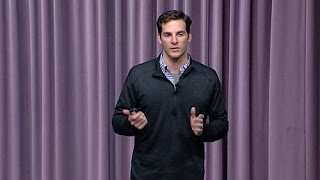
This content was created by GHION.AI . This content was uploaded by GHION.AI . This is a YouTube video titled "James Beshara: Building Insights with Bricks and Mortar [Entire Talk]" created on October 23, 2015, which appears to be a talk or presentation by James Beshara.
Chapters
Thank you, sir. Thank you guys for coming to this and having interest in the talk. I hope to keep it informative and helpful for you guys. First off, and I was telling Tom and Anais this before coming up here in a prep call that it's really special to be here because five, six years ago, when I was living in Cape Town, South Africa, I. I would listen to these podcasts and, man, I was literally 10,000 miles away, but I felt 10,000 miles away from the center of gravity of the innovation that was happening in the world we live in out here in Silicon Valley. So it is really surreal to be up here. It's really surreal just to be living in San Francisco and working on tilt in this part of the world. But it's something that I really owe debt of gratitude for these podcasts because I've gotten a lot out of them. So kind of put a little pressure on myself to try to make this super informative and helpful and give back to the folks that are listening to it here, you guys, and to the people around the world that might be listening in Cape Town, South Africa and beyond. Something I heard one time in a TED talk was to do this right before speaking. And this is kind of the universal sign for victory. It gets the hormones going. So I try to do that before I speak, even if it's right in front of the crowd. So I have slides. But because I know the nature of the podcast, I will walk through or talk through the slides for everybody. The first thing that I'm going to talk about is give you a little background on tilt, where it started, what we do and why we do it. So the very high level, if I saw you at a bar or if I saw you on college campus, if I saw you on the quad, I would tell you that tilt is the easiest way to collect money from a group for free. But if you're interested in the startup space or you're a technologist, I would actually kind of put a little bit nuance in it. A little nuance on top of that, I would say we're building what we think crowdfunding will be like, and in a mobile world. And our Y Combinator application is quite literally what we applied with, was the answer to that question, what will crowdfunding look like in a mobile world? And we had some icing on top of the cake beyond that. But that was the heart of what we were trying to design, a bite sized, simplified version of crowdfunding to where, quite literally, you could launch a crowdfunding campaign in the time it takes to write a tweet. That was kind of the challenge we gave us. If you download the app, I hope you see we've gotten close to that. The background, though, starts probably before Tilt starts. In Cape Town, South Africa, I studied development economics and if you guys don't have that major here, you guys should. Wake Forest had a great program around development economics. Loved the major. Started working the field on the ground in development in Cape Town, South Africa in micro finance and micro insurance, and started to kind of combine my hobby and my passion. My passion was in poverty alleviation. My hobby I picked up in college was web development. So I started to build out a site called develo.org develo.org is essentially an online lending platform that had elements of crowdfunding for developing communities, similar to kiva.org, focused on micro insurance. However, and in building that out in 2009, 2010, this one little feature within that site, develop.org where you could get family and friends to give with you and collectively accomplish $1,000, $5,000, collectively accomplish something you couldn't individually give. That little feature. That was it. That was the thing that put it in this brand new category that was forming called crowdfunding. And it put it kind of in this journalist just codified the term in 2010 and I started to think, man, I thought this was in the online lending space, but this feature, this ability to coordinate your resources on an unprecedented, instantaneous scale. Holy s I'll say s for my wife, she always gets mad if I cuss. I was like, man, this crowdfunding thing, this might be a decade defining phenomenon. So ability to tap into the collective, collaborate and pool our resources on an unprecedented scale could be huge. If you think about it, in my favorite web products are the ones that augment our natural innate behavior. As humans, we've been pooling our resources for hundreds, thousands of years. Every civilization I know of is built on shared resources. And yet in 2015 or back then, in 2012, it was still phenomenally hard to pool your resources. Resources for a neighborhood cause, an awesome party bus with your friends if you wanted to run for mayor. We've even had tilts for mayoral candidates in Oakland, Boston, Chicago, New York, if you wanted to do that. It's not that easy yet, but I felt like this is going to be a really, really big space. Ultimately, D'Avelo.org, long story short, in the online lending space, the SEC changed their stance on online lending. That was a swift kick to the stomach in the model that we had, but the kill shot was it was going to require us, on top of registering as a broker of securities, it was going to require us to do about 10 to 15 minutes of paperwork for every $25 loan. So it made the model pretty untenable. Came back to the US Pretty discouraged. In fact, there was three or four months there when I thought, there's no way in hell I'm going to start anything again. It was really, really hard to shut something down after working on it for two years. But I couldn't shake that insight of, man, this crowdfunding thing is going to be really, really big. But I was kind of content with just being on the sidelines, watching it blow up before my eyes and see the power of crowdfunding happen. I was kind of content not doing anything within the space and maybe going to grad school, saving up to go to grad school and then go work at the World bank or imf, work in development. And then another insight hit me. It was this view that, man, these current crowdfunding platforms that are really awesome, we're still big fans of them, Kickstarter or Indiegogo, these current first generation of these tools, they're really going to struggle to translate to a mobile world. Watching a five minute video, reading nine levels of rewards, reading eight paragraphs, that might be a lot to try to digest on the bus to work or in a car to class. So in 2011, it was also about the time that Instagram was blowing up as this bite sized, mobile focused version of sharing photos. Now that point is kind of moot because they're owned by Facebook, but at that time it was a good analog of saying, ok, if we could take our favorite elements of crowdfunding but bring it down in a more bite sized, simplified version built for a truly mobile world, then maybe we can reach the 1.5 billion connected devices out there, half of which will never own a PC. Now that number is 3 billion. If you actually add up all the crowdfunding platforms, the major ones, us and a few others, there's only a couple hundred thousand people that have started crowdfunding campaigns before, and yet there's 2 billion connected to 3 billion connected devices in the world. So that stat, as well as that question that we had early on, what will crowdfunding look like in a mobile world? That was kind of this second insight, on top of feeling like crowdfunding is going to be really big, was thinking through, okay, what platform or what type of model will excel in a mobile world? Mobile context. Started to build that out in my bedroom back in Dallas, Texas. Any Texans here? There we go. All right. There we go, Longhorns. Nice. Sorry about the football season. The idea with Tilt was actually very different than how I started develop.org with tilt. It was a nights and weekends thing. I showed everyone from the homepage to the first version of it, wanted feedback from people. Very different than how I started develop.org but in showing it to people. An investor down in Austin, Texas, probably the best angel investor in Austin, a guy named Bill Babel, built a company called Webmail and was bought by Rackspace. And he was in Austin just angel investing and reached out wanting to invest. But he said, in fact he invited me down to Austin and I drove down there getting lunch with him. Walk up to the restaurant, I see this kind of this look of disappointment and I'm like, why is he disappointed? He's like, where's your team? I really want to meet the whole team. It's like, there is no team, it's just me. And that look of disappointment really started to look pretty. More like despair. And he's like, oh, I saw on the website it says we believe this we are doing. I was like, well, yeah, I'm handling people's money. You know, we're trying to make it look legit. He's like, all right, let's grab lunch. We grab lunch and we sit down and he's like, I have an investment thesis that I just can't invest in solo founders. What you're about to do is going to be so hard. It's going to be so emotionally draining. And you know, I actually think about those words and I was like, holy crap, he was right. It's going to be so hard that you really need a co founder. And I knew it. And it really resonated with me. It wasn't news, but with dvel.org I was bringing anyone and everyone that I was friends with onto the team. I was handing out co founder cards like they were going out of style. But with Tilt, I was really waiting for the right person and waited seven months after writing the first lines of code before I brought on a co founder. And it was shortly after this conversation with Bill. Went back up to Dallas, went to every meetup I could. I was the most technical of my friends and really didn't. I really felt like we needed a solid short footed CTO for what we were about to build. And reached back out to Bill and say, hey Bill, can I come sleep on your couch down in Austin, I'm not finding anyone up here in Dallas. And he said, actually, there's a guy here at Rackspace, basically does my job. He runs strategy here. He's only 26 and you should chat with him. He has. And I'll never forget the two things he said. First thing he said was he has a rare combination of technical and strategic thinking. And the second thing he said was he's who I would start my next company with. Bill is a phenomenal CTO technologist. And he was saying this 26 year old kid he would bring on as his CTO for his next company. So I was like, all right, I got to get this guy. I have to get this guy on board. He finished the call by saying, his name is Caled. Come on down and see if you can get him on board. Go drive down to Austin. And by the end of it, three hours into this coffee, from 7pm to 10pm By 10pm the coffee shop is shutting down. And this guy Caled says, all right, I'm putting in my two weeks notice tomorrow and I'm going to quit and join you and build out this company. But that is not how the coffee started. The coffee started with a very stern, very strong. One of our board members is back there. I think both of our board members are actually here in the audience and they know how strong Caleb looks. He's a pretty intimidating dude. And the coffee started with this pretty jacked Egyptian guy that I never met before. Arms crossing. All right, why am I going to quit my job tomorrow and help you build a crowdfunding platform for party buses and barbecues and bachelor trips? It was a great question. Luckily I had an answer for him, but it was a great question. And that question I mention in the story today because it's something we think about as a company all the time. We actually put probably a profound amount of thought into that question and why we're building, what we're building, how we're building it. The answer that I gave him is the same answer I get in an interview or something at the Tilt Quarters right in San Francisco. And I told him, look, version seven of these things looks very different than version one, and they have to look very different. Version seven would be something like Facebook. And it was about six months prior that it was the Arab Spring, so it was just convenient timing. But I was able to say version seven of Facebook is powering 14 nonviolent revolutions, two of which afterwards became violent. But 14 nonviolent revolutions in the world, that was version seven. Version one was an application for voyeurism and exhibitionism on a college campus. I remember my freshman year when it launched, it really was just, what did your friends do last night? Which cute girls are in your class on Tuesday, Thursday? And it needed to start that way because it had this everyday, this daily utility in our lives. When we started using it, there were many social. Social networks launched. And coming from the social space, coming from the nonprofit space, I made note of every single one of them, and they were all dead on arrival because they didn't have that frequency, that daily use, that utility in people's daily lives that Facebook had. So in telling them that, I also mirrored Tahrir Square. He's from Cairo and Alexandria. So I was able to say, look, when people wanted to protest the government in Egypt, they went to Tahrir Square. They went there not because the government said, okay, this is the designated area for protests. No, they went there because that's where people already were. So if we focus on building a crowdfunding application that's very accessible, kind of bite size, one way that it's been described is kind of a Twitter of crowdfunding, then it's going to get a lot of people on the platform. The first time you use it might be for a group birthday gift. The second time you use it might be for, you know, a tailgate for the game on Saturday. Third time you use it might be for a neighborhood cause. But you're just. You're going to love the platform, the product, and you're going to get more and more ambitious. And the 17th time you use it, it might be for running for mayor. We've had one of my favorite tilts of all time was a guy came in, starting using the platform, saw his friend using it for a softball league, and then he used it two weeks later to collect money for private patrols of his neighborhood in Oakland. And I joined the campaign because it was so cool. And literally the first line on the tilt was, enough is enough. The crime in Oakland, or part of Oakland is so high. It has the largest, the highest mugging rate of the country, and it's only $8,200 for four months of private patrols. Just someone in a car and a flashlight, and we can see if that will help the situation. I pitched into that tilt, which the guy came across because of a softball campaign, And I pitched into that tilt because I thought it was so cool. And I don't think the guy knew. And he sent out a newsletter two months later, after the first month of the patrols and the newsletter said that they had cut crime by 46%. They had set up a tilt, and in 24 hours had collected $82 from 100 households. 24 hours and had used it to cut crime by 46%. Obviously, I didn't have that data point when I was talking to Caleb in the coffee shop, but it was very much in the narrative arc of what we thought this product could become if we get enough people on it and build a really easy to use crowdfunding application. So told him that, and by the end of the coffee, he was somewhat convinced. We moved down to Austin. Then after that, we applied to Y Combinator, came out here, and I can't tell you how jealous I am that you guys have awesome speakers, say, for today at this campus all the time. I used to ride my bike up here for different lectures. Saw a phenomenal Peter Thiel debate up here one night two or three years ago. And it is a really cool part of the world. We moved out here and we thought, all right, we're going to come out here for Y Combinator, and then we're going to. Then we're going to go back to Austin and build the company there. But within two or three weeks, we really felt this is where we should be. The world moves really, really fast here, and the ecosystem, if it makes it just 5% easier to build our company here, then that will pay dividends for the next. You compound that over a year. That's a pretty big difference. So we stayed out here. We really loved it, moved up to San Francisco, and we started to build our team. The luckiest, the single luckiest moment we had as a company, I think, was the introduction to my co founder, Kaleb. And that is a theme that has run through from that introduction to every single person we have working at Tilt. It is all about the people. Going to start talking about that here in a second. The second thing I'm going to talk about is perception versus reality. And then the third thing I'm going to talk about is cliches, which ones actually matter. So perception versus reality. Let's see if we can get that. There we go. All right, so if you haven't used the app, super simple, download it. You can even just download it just to see how other people are using it. It's really easy to use perception versus reality or bricks versus mortar. You there, what are we looking at? Brick wall. Brick wall, exactly. That's what I would have said before. We're looking at bricks, but actually we're looking at Bricks and mortar. And when I was your age, you know, 20, 21, I would have said bricks. But I'm going to talk about bricks versus mortar and kind of the stuff that goes in between the bricks that makes all the difference. Going back to this slide and telling. For the folks on the podcast, it's just, it is just a picture of bricks and mortar. And it is so easy to look at that photo and think that's bricks. But a few years of doing this, I'd say the mortar is more important. The difference between bricks and mortar is the difference between just a single finger can push over a stack of bricks. The mortar can help it withstand a hurricane. So in that vein, bricks versus mortar, I'm going to talk about what I thought was really important versus what I now think is really important. And by the way, it's not about. It's not X versus Y. And X isn't important. They're both important. It's just that I would have thought X is the thing I would think about. And it turns out, yeah, the why is all I think about. A little wordplay there for you. So the person versus the people. The perception is it's a person that does something. That's what we see on cover of magazines is a person, a face. It is kind of what we see in every heroic novel. It is the person that is the brick. That's the thing that you think it's built on. The mortar is really the people. I would have thought, okay, be really smart, have high integrity, have a can do attitude, persistence, and just think about all the qualities of that person. Man, our company has taken off. The more and more we stopped thinking about ourselves and really started thinking about the people around us, the network around us, Whether it is investors that have helped refine the idea, whether it is the recruits that we brought on that are 10 times smarter than ourselves, whether it's even bringing caled on. As a co founder, it is the person versus the people. The people are the thing that help you withstand that hurricane. The people at tilt, whether it is the advisors, the investors, or our colleagues, that is the most important thing. The people. It is all about the people. Strategy versus culture. Peter Drucker has a quote that goes, culture eats strategy for breakfast. And another way of looking at this slide is strategy versus execution. To get anything right, you need strategy and execution. You need both and you need to be right about both. You need the X and the Y. But you end up thinking a lot more about the culture, the execution. And I compare culture to execution. Kind of like you know when you meet someone and you have body language and in their face, the 16 different muscles, there's micro expressions and you can pick up on these micro expressions. I look at culture as kind of these microstrategies, how things are done on a Tuesday. What strategy did someone take? Culture is also simply defined as how we treat people and how we treat each other. Bill Campbell said that. I think it's one of the best definitions of culture. How we treat each other, that's part of our strategy. Treat each other well, care about each other, love each other. We use the word love. Maybe too much of the office, but strategy would be the bricks, but the mortar is the culture. Results versus process. I used to think winning is everything. In fact, one of my favorite basketball coaches told me winning solves everything. Jack Welch's book is literally titled Winning. But I think that's the brick, process is the mortar. This simple line there is focus on the process and the results take care of themselves. The results are a byproduct. The aim is getting the right process. When we were super focused even just three years ago on just results, we really lost sight at how can we make sure these results compound, how can we make sure these results go on for a long time. We really focus way too much on monthly goals rather than yearly, rather than culture rather than all the things that I think go into process. We really focus too much on results. Now we focus very little on results, focus all of our energy on process, and we have the best results we've had to date. Complexity versus simplicity. You guys are probably much smarter than I, so this one probably doesn't need to be said, but when I was younger, when I first started listening to these podcasts, five, six years ago, I thought in terms of complexity, just the world was a complicated place. It's complex. You absorb any marketing message in the last few years of any great company, I mean, they are trying to confuse the hell out of you. The company known for simplicity, Apple, their marketing message was insanely great. Think about what that says to you when you're absorbing that message. It's like, it's so great. There's no way I could ever understand how great it is. It's insane. It's literally insane how great this is. No, none of it was insane. It's actually pretty simple. Or you see on a brand new product, patent pending, meaning this is so complex, we have a patent for it. It's never been done before. And that's kind of the marketing language that I used to Consume thinking that, okay, the first version, the first version of devel.org had way too many features. Luckily, it had the feature where you can invite family and friends, but it had way too many features. And I spent 19 months building it before even telling anyone, before showing it to anyone. I showed it to maybe five people before we launched. I had a business plan. I showed that to everybody. But the actual software showed to very, very few people. And I had it wrong. It is all about simplicity. Simplify, simplify, simplify. If you're going to build your own business, try to find simplifiers, not complicators. A lot of people that subscribe. Even if you subscribe to simplicity, if you bring on folks to your team that subscribe to complexity that are complicators rather than simplifiers, you are setting yourself up for a hard time. Simplify, simplify, simplify. Journey versus a destination. The destination, those are the bricks. That's what we see in movies. You see someone being carried around. You see a presentation that floors everybody. You see or you read in every narrative about these moments, whether it is a speech that riles up a crowd or whether it is an aha moment around an idea, these are destinations. I was consumed with this idea of if we can get funding. I remember reading a TechCrunch article of a company that got investment from Andreessen Horowitz. And I used the product and they got this investment. I was like, oh, my God, they made it. The smartest investors in the world. They must know something that I don't. They're just, they're golden now. They got investment now that company is no longer around, and we've raised investment from, I think, the best investors in the world. And by the way, on the people side, I think we've got, in all honesty, I think we have the best team in Silicon Valley and we have the best investors in Silicon Valley. But I thought that was a destination, that once you make it to that plateau, you're good, you're golden. There was probably more anxiety the day after we signed our term sheet with Andreessen Horwitz than any day prior. The journey is the destination. Being able to appreciate all of the moments in between, the mortar within the bricks, that is really where the soul of the work lives. That's where the love lives. The cliche is the journey is the destination. And then six months ago, I read an even better version that said the journey is the destination and the obstacles are the journey. And this is an American ideal that has some merit, but we're so consumed with overcoming obstacles. The obstacles are the thing. That is where the resistance lies. If we're only concerned with obviating obstacles or overcoming obstacles, that would be like going to the gym and never adding weight to the bar. There'd be no point. That resistance is everything. That is what makes you stronger. The journey is the destination. Heard it a thousand times and I never could appreciate it until the last few years. Decisions versus decisiveness. The brick would be decisions. You think an aha moment or a decision. You hear the story of. I remember the story of Bill Gates and being in the meeting with IBM making a deal where they didn't get license to the software and they could sell it to other computer manufacturers. And that was this brilliant moment, this decisive genius move. It's not the decision that matters, it's being decisive and the decisiveness and being able to take advantage of. One of the greatest things you have going for you in starting a startup is that you have rapid feedback loops. Extremely rapid feedback loops. It's not really about the decision, it's actually about being extremely decisive. So you can have feedback loops on as many things that you've decided as possible. It is one of the greatest things about starting a startup is the rapidity of these feedback loops. You make a decision, you try something out, you a b test it, you ask a customer, you ask a colleague. You can move so quickly, take advantage of that and know that the value, the mortar is the decisiveness. The brick is the decision. You might be remembered for the right decision, but if you're successful, you know that you made 99 wrong ones, but you just made them so fast that you got to the right one. A great Marine Corps quote on this one is there is no wrong decision. I know. The only wrong decision is indecision. I think that's a great, great quote. Number versus the trend. The brick is the number, the mortar is the trend. It's not the number, it's the trend. If I wrote a book for startup founders, I would write it's not the number, it's the trend. That is like that's it. That's probably the theme that I think about most. I used to think about numbers. I used to think about headline grabbing numbers of man. This thing got to a million customers, this thing got to 10 million users. But it's not the number, it's the trend. The saddest graph in the world is one that looks like this. The second saddest graph in the world is one that looks like this. There are a lot of viral apps out there that might get to 10 million users. They might hit a nominal number, and it might sound like, holy crap, they got it all figured out. But you check in with them six months later, a year later, and that high water marks might still be there, but the trend is definitely going in the wrong direction. That trend is the health. If there's anything that every single technology company in the world is judged on, whether it's Google or whether it's two folks in a garage just getting started, it is the trend. And it really simply all comes down to that trend. The thing about this one is it allows you to also care a lot when the numbers are small. But the trend is good. If you're just getting started a week over week. Trend, 5%, 6%, 10%. That is much better than hitting some nominal number that sounds really big. It's not the number, it's the trend. And this correlates to the best advice I ever got from one of my basketball coaches. It's not how you start, it's how you finish. So I told you the third part was going to be about cliches. But I've included all the cliches in the last slides. They were the mortar in between all the slides. It's all about the people, culture, eat, strategy for breakfast, manage the process and the results take care of themselves. Simplify, simplify, simplify. The journey is the destination. The only wrong decision is indecision. And it's not how you start, it's how you finish. Those seven cliches, they are the mortar. I heard all seven of those a thousand times growing up. You guys have probably all heard them a thousand times, if not 10,000 times. And yet we still look at the bricks, whether it's through trial, tribulation, or whether it's through a piece of advice that you can grab from this podcast or this lecture, it is to try to see the mortar and maybe take a flyer. And trust me, that that mortar is the thing that you start to look at and think about much more than anything else. And these seven cliches, there are a lot of cliches that don't really amount to truth, but I have a feeling these seven cliches stand the test of time, because they do. One last one is a picture is worth a thousand words. This one's just for fun. For those in the podcast that can't see, we've got users of tilt around the country now, around the world, that take the tilt flag up to the top of a hike just to get A picture with it. One kid actually made a wooden logo of Tilt, a replica of our logo that's painted on a wooden wall in our office in San Francisco. And another one, God save him, got a tattoo of our logo that was maybe a month ago. That's the mortar. In between everything that we do, there are decisions, there are moments, there are numbers, there are hires, there are bricks every single day. It's so tempting to look at a graph and think about a graph in Silicon Valley. But it's our users, our customers that we think most about, that we obsess most about. These moments don't show up. They're the qualification, not the quantification of what we do. And they don't show up in any graph. But it is the mortar we think more about than anything else. And the graphs really take care of themselves if you start to think about the process, the mortar and your customers above all else. So thank you. And I think we're going to open it up to questions. All right, if you guys have any. All right, any questions real quick. Any Tilt Ambassadors here? I think we have a few. There we go. All right. We've got a few on campus on Stanford Tilt Ambassadors. So you guys should sign up for the tilt.com ambassador. We have ambassadors around the country now in Canada, the U.K. netherlands and a few other countries that we are in beta about to flip the switch on. And they're folks at get to put on their LinkedIn that they're working for a tech company. If you have interest in working for a tech company after you graduate, then obviously having something on their resume and some experience beforehand helps. But even more than that, the mortar is they get to learn about marketing, get to learn about sales. They get to learn so much about our product and how we choose certain strategies with our product design. We really bring them pretty close to the vest and show them the inner workings. A lot of them have come through the office and we've got hundreds and hundreds and hundreds. I think we have over 1,000. So, yeah. Till.com Ambassador, if you're interested in what we're doing. But yeah, questions. Sure. What's the value behind the Tilt feature itself? Or that is to say, the minimum goal that's set before people's cars get charged for you to get the funds versus people just their cards are going to charge right off the bat. Like GoFundMe. Yeah. So the question was, what's the Tilt feature all about? What's special about it? So Tilt feature, some of these things are whenever there's some secret sauce. Entrepreneurs always pretty savvy to dodge the question, but I'll hit it straight on. The tilt feature is really important. What it allows you to do is you set up a tilt, you download the app and you can set up a tilt and 12, 13 seconds to collect money for anything. Let's say it's for the tailgate on Saturday. The minimum you need is 350 bucks to make it happen. Or let's say it's getting tickets to Coachella or community cause where you want to fix potholes that cost $2,000 you don't want to find yourself. And if you use cash, checks, PayPal, Venmo, you can find yourself $140 in but not near the goal, the amount that you actually need to fix the potholes. The tilt feature allows the organizer to have risk free ability to start collecting money for that cause. So if it's $2,000 until you hit the until you get to $2,000, the cards are just authorized but not charged. Once you hit that $2012 that you need for fixing the potholes, it charges all of the cards and the money is deposited the next day. So the real benefit I know Stanford uses the app for selling T shirts and apparel for fraternities, sororities, homecoming, things like that a lot. And the benefit is you might have a minimum order of 25 shirts that need to be ordered. So you don't want to sell or collect money and you only get to 11 or 12 or 13. That's kind of a tactical benefit. The psychological benefit is for the organizer. They're able to toss up a tilt without worrying about that risk and it greatly lowers that threshold, that burden on that organizer. And you don't have to use the tilt feature by the way. You can set it up to where you don't use the feature at all though. Yep. How did you manage as a solo founder when bringing someone else into your company? This issue of someone else working on your baby or something? You have been working for almost a year. It's simple one. I was working on it mainly nights and weekends so it didn't feel like my baby. It did in some respects, but I had already gone through that my baby controlling kind of mindset and it led to a defunct startup. So I think with this one it was much more open. I think that control comes from fear and that control around the concept of this is my baby and kind of limiting how many hands or cooks are in the kitchen comes from this fear that they're going to take in the wrong direction or it's going to somehow hurt the effort. The truth is it takes a lot of overconfidence, borderline arrogance to feel like, okay, if I could do every job, then it would all be great. If you bring on someone better, smarter than yourself and you understand that, hey, I'm going to have to have trust. With letting go of this thing, losing control in so many different parts of it in the next few years, if you really care about the mission of what you're trying to achieve and build something of massive significance, then you know how many people are going to have to be on board. So you get pretty comfortable early on when their hands are in there helping, especially if you really trust them to be better than you at what they're brought on to do. But I definitely believe in separation of concerns, divisional labor. You really want to know what you're looking for and what role that person will have. If you want conflict, have two people do the same job. And so it's something that you really want to find the right person that allows you to focus on one thing and they get to focus on the other. And then you don't really think about it too much. You're really glad that person's there. Yep. So you mentioned that you studied developing economies in school and that you have a passion for this kind of idea of social good and social justice on a day to day basis. As a CEO of a tech company, how do you bring that passion into your work? How do I bring the passion for the development aspect of my life or kind of poverty alleviation passion into my daily work at tilt? Super simple. And it actually goes to kind of an imagery that I always think about. When I was in Cape Town, in a township right outside of Cape Town, it's called Khayelitsha. And I saw pretty much everyone with an Android phone, pretty much Every single person 2010 had an Android phone with Google on it. More information in their pockets than the President of the United States had 15 years prior to that. That's a private tech company out here in Silicon Valley. So I kind of looked at that and made a very cursory observation that they've probably done more for education than any education organization that's ever existed in the history of the world. By doing what they did, feeling like it was a vocation more than just a job and a craft, more than work, and they were able to put more information in our pockets than the rest than the President of the United States had 15 years prior. That sounds hyperbolic but it's probably accurate. And so when I think of Tilt and I think about how it can impact the world, as a company, we care so much about our mission, probably to a radical amount that we openly say, I openly say that if some other company comes along and can achieve our mission better than we can, then if we really care about the mission, then that's good for the world. Our mission is to power the collective creation of the world. And it really goes to this problem we feel deeply passionate about is just this high difficulty and inability to participate in the creation of the world around us. You want to change something on campus, it's really hard. You want to fix potholes in the street, appeal to the city for two years. You want to improve the safety of your neighborhood, best of luck with Tilt. It allows you to have and take something that's happening in parallel that we think a lot about, and that is this self organization of all of us into various communities online that's happening right now. And the view and the big bet is these communities are going to want to do something with these connections. They're going to want to take collective voice and add collective muscle to it. So if you add, to answer your question most directly, if you add time to the equation, 5, 7, 17 years, then I think it directly will impact development. Ask from one over here. Yep. So speaking of ethics, do you guys moderate at all what you can set at the tilt for? So if someone wants to, for pornography or for a KKK rally, do you guys step in there and if so, where do you draw that ethical line? Yeah, the question was around. Great question. All these are great questions. The question was around where do we draw the line on what we allow and don't allow on the platform? Thematically, I'd say openness and accessibility are tenets of how we build software. Openness and accessibility. So from the openness angle, we want to be able to provide software for anyone and everyone that might have. They might think differently than we do, they might care about things differently than we do. There are some ground rules that we care deeply about, and that's no firearms, no gambling, no pornography. But outside of those very limited things, it's really up for people to use however they want. And that's really important to us as software developers. The accessibility part is both it being open and accessible, but it's also getting it out into the world in as many pockets as possible. And I'm sure we're going to have. We're going to see it and we have seen it be used for things that we might not agree with, but we don't think we should be the arbiters of how this technology should be used. Yep. When something like processing payments is so core to your business, how do you pick who you partner with our payments and how do you build that relationship? That's a great question too. The question was around how do we pick payments partners. We look at payments kind of like we look at server infrastructure. It's similar to aws. We look at payments partners as kind of an infrastructural technology beneath our social layer. And it's really important, as are our servers. It's not quite where AWS is. So we have a number of partners that we work with, but we develop pretty strong personal relationships with them because for the most part we're asking them to process a crowdfunding realm that's really new. When we started the company, we got shut down by three different processors. Some of the scariest nights were going to bed and thinking that I might wake up tomorrow. And a very important part of the business is no longer there. That was only three years ago. So it is caught up quite a bit. But Stripe, for example, only started allowing stripe and Braintree, two of the biggest processors out there. And PayPal only started taking on crowdfunding in the last one or two years. So we've kind of really pushed the limits and been on the bleeding edge of that technology. And there's a great payments company I want to give a shout out to called Balanced Payments that a scrappy 11 person team that is no longer around. But they took a bet on us as a client and we're eternally grateful for them because at that point, especially going through Y Combinator, we had nowhere to turn. So we've had to form deeply personal relationships with these folks. One in Europe, we got so close that a person reached out and said, can I join your team? Any Sense has. Yes. Do you have any favorite tilts? Any favorite tilts? That is a great question. And my view on it is I've got too many. One of my favorite ones recently, 133 Northwestern students. I might get some of the details wrong, but. 133 Northwestern students. This was really recently, maybe a week or two ago, they. They got tickets to a Blackhawks game. 133 friends. And the reason I find that cool is that just wouldn't happen without Tilt. Just trying to coordinate an experience of 10 friends going to a Blackhawks game, going to a concert together. That is a. If you've ever been that organizer. And pretty much all of us have tried that. And then we were so stung by it, we're like, I'm never doing that again. That it's a huge headache to see 133 people be able to go to something and have an experience together. And we've had a maturation in our views of these group experiences. I used to think it was all about nonprofits and getting to that realm as quickly as possible, touching on that question and poverty alleviation. But I read a study one time that said the peak of human existence. 10,000 people on their deathbeds and said, the peak of human existence is the moments and experiences we share with the people we know and love. And so building software that allows that to happen much more often, more seamlessly. There actually is a very special part of us. I really find those tilts to be really cool to watch. But my favorite one, maybe more on the social side, is we have an enterprise tool called Open Tilt Open, where you can bend and flex and customize it, brand it however you want. It's built to be kind of the WordPress of crowdfunding, powered by our API, and only a few of our folks work on it, but it's powered some of the biggest crowdfunding campaigns and projects of all time. Tens of millions of dollars, and one of which was for an AIDS vaccine. And you heard me right, AIDS vaccine being crowdfunded. And they still have, I think, six or seven more trials to go, but for the first one, they crowdfunded it using our software. That's pretty phenomenal and shows kind of the future, I hope, of what tilt becomes. One more. Yeah, right over here. Or a few more if we have the time. You raised 67 million or something like that and started with 2, and then 12 and 20 and 30. How does it feel to start with 2 and to prove the concept and what do you need to go to the next step? What are the essential parts to grow a company? And nice that you have ambassadors in Holland. I just came from Holland. All right, there we go. I'll be your second or your 100th ambassador. Perfect. What's your name? Vincent. Vincent. All right, I'll send you the slide deck I just presented a few minutes ago. That'll tell you all the things that I think about in between those funding announcements. That really is the genuine thing. We think about all of those things in building the company. We think about the people. The reason the first slide was about the people. It is all about the people. Hiring the right people in a fast growing startup, it's really, really hard to find great people. On top of that, in this environment, it's really hard to find great people. But keeping the bar high has been one of the. It's been the most important thing we've done and it's been the thing we've been luckiest on. Yeah. Yep. Oh, right here. Yeah. A few months ago, I had to find a crowdfunding solution and I didn't know this. I knew indiegogo, kistafa, those are great options. So I just discovered this and I think it's very simple. It looks easy to use and secured too. So I wonder, how do you distinguish from the competition? Yeah, so the question was, how do we distinguish from the competition? One. I'll repeat that. It really is true. In our book, all crowdfunding is good crowdfunding. So whichever platform you use, and we're big fans of, I mean, we're big fans of a lot of them and know a lot of the team members really love them. Our version is really built for a mobile world. So. And it's kind of another way of saying is we've taken our favorite elements of crowdfunding, but provided it for groups and communities that already know each other. To be able to toss up a crowdfunding campaign from your phone really easily and be able to tag your friends to it, it sounds. Crowdfunding from your mobile phone sounds really hard. But we've worked tirelessly, had a lot of smart people come together to try to build, and I think we built a pretty simple, beautiful solution for you to collect. 2, 5, $10,000. We've had campaigns collect hundreds of thousands of dollars using the application. Yes, you probably do a lot of risk management and it's obviously very early stages startup. What is your biggest worry as to why Tilt might fail one day? What is my biggest worry to why Tilt might fail one day? And what's the risk management there? So going back to the bricks versus mortar analogy, I would have thought it's things like competitors. I would have thought it's things like getting funding. I think it's. The truth is when we were starting the company going through Y Combinator, we looked at the two luminaries, Dropbox and Airbnb, and one was an engineering centric brand and one was a design centric brand. And we thought, okay, which one are we going to be? What's going to be our competitive advantage? For other starters, being started right now and in thinking about it, it seemed much more for us at least people were going to be our core competency. I talk about it a lot because I feel like that is not only our core competency, but our competitive advantage. If you think about in 2015, what can differentiate or what can change the vector of what a company can accomplish? It is the people. It's not 1995 where it's fundraising. It's not 2005 where it's IP. It's really none of those things. It's not the technology that you have or these moats that you can just kind of arbitrarily add to it. The biggest thing that you can do to affect this to being this in terms of potency or impact of your company is get the best people possible. And we have. Yeah, I won't go too much into it, but that is our brand, quite literally. We think about it in terms of we want to be the place where people go to become better human beings and be a brand that can actually live up to that. So hiring people that are collective, average IQ of 150, but also extremely awesome human beings, good human beings, and really wise. I think my favorite definition of wisdom is knowing what's important. Out of a thousand different variables, what is the most important one? To answer your question in 2015, for what we're building, it is the people that is the biggest risk, and that is where we put the most thought into. But it's also one of the greatest things about the people we get to work with is they look at the same thousand variables and they come to the same conclusion one more time. Okay, yeah, right there. So you keep alluding to the fact that you care more about the mission than the company necessarily. But if at any point along the process another company came along that did do it better than Tilt and was threatening the business, then what would your next steps be? Would you join them or try to outperform them? So the question was, if someone came along and could would have more efficacy towards our mission than we could, what would we do? Would we join them? To be honest, it's a developer convention, but it's one we think about a lot. It's climb the hill you're on. And so right now we focus on what we're doing the next 90 days, the next 12, 18 months, and we focus on our customers. A lot of. I've never really thought about that hypothetical, but knowing us, I bet we'd come up with a pretty good plan of action. But, yeah, it's a good question. I'll let you know if it comes up. All right. Thank you, guys. Thank you so much. Thank you.
More from GHION.AI


O processo de reconhecer limites, mesmo quando a vida parece exigir sempre mais.





Depois de tantas histórias, aprendizados e pausas necessárias, o @interior_iza está de volta



