Jennifer Carolan: Seeking the Full Potential of Education [Entire Talk]
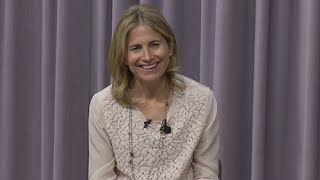
Jennifer Carolan discusses her shift from teaching to venture philanthropy and the New Schools Venture Fund's approach to edtech investments. She explains why teachers matter most in technology adoption and what makes an education investment worth backing.
Chapters
So, Jennifer, we met a long time ago, and I thought maybe we'd start by you maybe telling everybody, how high were we when we met? And some of you are going, what? What kind of question is that? Do you remember how high we were?
We were 11,000ft.
We were at 11,000ft. Make sure you note that to your parents. Okay? Where were we and when was it?
I actually don't remember the year, but it was in Yosemite, backcountry, High Sierra camps.
It was. We were hiking across the High Sierra camps. And I just would like everybody in our audience to know Jennifer was the first person ever to see Drawn in the sand, the beginnings of the lean Startup. When I was trying to explain it to anybody who would pass by, including these random people I didn't know I was drawing it in the dirt with a stick. And in fact, it was you and your husband who in fact renamed it from market development to customer development. So we've known each other for a while, but you've had a really interesting career. You were a teacher for seven years, and then you came back to Stanford and got your MA in teacher and Curriculum development, and then you went off and joined a seed fund for education. What was that connection? How does an MA end up as a venture capitalist?
So just a note on where we met in Yosemite. I'm pretty certain that I wouldn't be doing this job today if we hadn't literally crossed paths. You're in the back country of Yosemite and you were on your mules. He had his two daughters with him, and they were like, you guys literally were on mules. And we were hiking in the backcountry.
Because people have called me an ass before. It was very appropriate.
And it was my first kind of real exposure to the concepts of customer development and entrepreneurship. So it really sparked something in me in that experience. But to your question about how I ended up here. Yeah. A lot of people ask, how does a teacher end up running a venture philanthropy fund? And I had taught for seven years, loved teaching, but felt I had plateaued and really wasn't meeting the needs of my students very well. I was teaching US History, and then my last year, I actually taught teachers, differentiated instruction, and for what age groups? Middle school and high school. So I felt like I had plateaued a bit, decided to go to grad school, came to Stanford, got my master's in curriculum and teacher development, and I started hanging out a little bit at the business school. And I saw Kim Smith speak, and she was the founder of new school's venture fund. And she talked about this idea of hybrid teams bringing educators together with MBAs and entrepreneurial people and people that had more of a business and technical background. And I was really taken with her vision of there's a place for me in this world of entrepreneurship. So begged her for a job. She hired me on as a part time research assistant and I worked there for. I've been there. This is my ninth year actually. And so after my. So really kind of learned how to do this job by shadowing, basically like apprenticeship, shadowing the partners. At the time, I had great mentors. And then three years, three years ago, my friend and I wei. We actually launched this seed fund to formalize the structure of ed tech investing at new schools.
So let's back up. You've raised some really interesting questions. One is this idea of Kim smith had what, nine, 10 years ago or even further, that was something unique. I mean, what was the unique insight and what were people doing before and what changed after New schools ventures show.
Sure. So she had this. So she founded New schools with Brooke Byers, venture capitalist, and John Doerr, another venture capitalist. And they came together and they thought, can we bring the venture model into education? And can we bring the kind of rigor and discipline of investing in early stage entrepreneurs and support them? But the difference between our model and a traditional venture fund is that we prioritize impact. So we're looking for sustainable, scalable, strong businesses, companies, but we are above all else, prioritizing impact. So that was the first difference.
So what does impact mean? Are you doing charter schools or software or.
Yeah, teacher training. We have this belief that there is sort of no silver bullet for education. So the answer is not charters or ed tech or teacher development, that it's really a complex system that requires entrepreneurial energy across all of these different sectors. So we do invest grant money to nonprofit charter schools. We have close to 400 charter schools in our portfolio.
Wow.
Yeah. And we invest in teacher training programs. And then I focus on education technology investing through the seed fund.
So really. So the idea of the fund covers all these ways to change education. And what you're focusing on is tech. Is that ed tech?
Exactly.
And so what's an edtech?
So we started investing in edtech. So New Schools was founded 16 years ago. And we started. Our first investment was actually Great schools, which is still around a really great company. And we have always invested in ed tech. But we started about three, four years ago. We started seeing some kind of differences out there in the funding environment, there was a lot more angel investing and our schools were absorbing technology like never before. So we thought the time is right, let's formalize this fund. Now. We moved our headquarter to or our office to Palo Alto and we started investing in seed stage ed Tech. And I think ed tech is like a catch all for this intersection of education and technology companies. And it can be companies that are focused on students, that are focused on teachers. Most of our investing actually is targeted at teachers.
And you said though that one of the goals of new schools was impact. Is that still true for the edtech investing you make?
Yeah, absolutely.
Is it impact or is it profit or is it these 501 non profits or.
Yeah, so we have. So we're agnostic if it's non profit or for profit. So new schools will say, what is the best way to get at the impact goals?
Wait a minute, you're a venture fund that would fund a non profit. I've sat on boards where I've decided they were nonprofits, but that was by accident, not on purpose. So you actually fund them on purpose?
We have some of those in our.
Portfolio, but at least you could say, oh, we meant you guys to be a nonprofit.
No, no, we actually have some for profits that are closer to nonprofits.
But you can make that decision on day one as a fund that these are something that's worth funding in any case.
Yeah. And I think that's what's unique about this space, is that we have amazing nonprofits in this space. Khan Academy, CK12, Reedworks, that are strong, scalable, sustainable nonprofits. But we have them side by side, top tier venture backed ed tech companies that we co invest with. So we are again, it goes back to this idea that there is no one single solution. It's a complex system that requires like, you know, we need hardware in the schools, but we also need software that teachers can use and that students can use. And these things work together. And we kind of see that's what I think is really unique about new schools is that we see this whole system, we touch all different parts of it and we can see where the needs are. So our fund is really need driven, thesis driven. So we ask our teachers, we ask our school leaders, you know, what's preventing you from, what's preventing your students from reaching high levels of student achievement? And then they will tell us, this is what we need. We need a better way for teachers to share lesson plans. We need a better way for students for teachers to be trained on the spot. And we will go out looking for those solutions.
So before we go through some of those solutions, which I want to hear about, you said something earlier that I thought was really interesting is that the adoption of new technologies has accelerated in the last couple years in schools. Is that true?
Absolutely.
And what's driving that? Or is it legislation? Is it iPads? Is it something it's now time where students have more tech than the schools? I mean.
Yeah, there's quite a few factors, I think. One is that I would say this ed tech revolution has been led by the teachers and they are the ones adopting these solutions, bringing them into their classrooms and using them.
That's a big idea. Why do you think that is?
Well, 40% of U.S. teachers, there's 4 million U.S. teachers are under the age of 30. So they're young, they've grown up with technology.
I see.
And this is the way, you know, they're banking online, they're shopping online, they come to school and they get, you know, in most schools, this is what you get your file cabinet, your textbook and your, you know, your paper grader. And they're saying, no way. We want technology tools that are as good as our consumer technology tools.
So that's a big change. So teacher driven because the outside world for them is computerized and they're going back into something that looks like the Little House on the Prairie schoolhouse.
Yeah.
And what else? Any impact of legislation or no Child Left behind or is that all orthogonal to what's driving school?
No, it's not. You know what actually this is. So three years ago when we started this fund, what was really a driver of the change was the budget cuts, actually, and the severity of the budget cuts. And they were faced with do I. One of our schools that we funded, KIPP la. Do we not open the school or do we open it with more technology and a greater student teacher ratio? So that was, that's been one driver of getting the technology into the schools. And then there is a lot more devices. Right. Like there's 9 million iPads in US K12 schools. We have 2000 schools are one to one now. And we expect that number to be close to 100% of schools to be 1 to 1.
What does that mean?
Sorry, I fall into the education lingo. One device per child.
Oh, really? You mean they assign somebody an iPad?
Yeah. So when you register with school, you get your textbook, you get your iPad, you get your.
And who pays for those devices?
It varies. So sometimes the schools pay, sometimes the parents pay. Some of the funding for this is being covered by Title 1 funding for low income schools.
Wow, that's really interesting. And have the entrepreneurs changed in the 16 years or are they the same? Their motivations or their technology or their goals, or are they the same that you've seen?
Yeah, thankfully they've changed a lot. So, you know, I think that technology used to come to come into schools. Innovation came, you know, in a car. So the salesperson would drive up and have some CD ROMs and show the IT specialist, there's Oregon Trail or whatever the software was. And the IT specialist would purchase that technology, often without talking to teachers and without having any data on the efficacy of this product. And then they would roll it out to the teachers, kind of top down, force teachers to use it. And that's the way technology was came to our schools in the 90s. But now, thankfully, the way it's happening is that these teachers are adopting the technology into their classroom. They're using it, they're understanding how it works with their students, they're getting efficacy data, doing kind of mini research in their own classrooms, and then they will kind of pitch their school leader to purchase the software license.
Wow, that's a real shift.
It's huge.
It's like the difference between PCs entering the corporation versus mainframes being controlled by a single department and a CIO.
Yeah, same ideas, like consumerization of it. Right?
That's a great insight. But have the entrepreneurs themselves changed? I mean, do they all have the same vision that they had in the 90s or are they more savvy, less savvy? Same problems. Different problems.
So yeah, you saw two of them up there. I'm biased, of course, but I think they're amazing, these entrepreneurs are. We have more entrepreneurs coming from engineering and from the consumer tech sector coming into education. So the first guy that you see.
I mean women, you don't stop them at the door and send them away. So if there's some engineering students and some tech entrepreneurs, you'll let them actually go pitching?
No, we welcome them with open arms. We love them in, in education. Love them. So the Krishna, he has students or he has students, he has children that are in school and he wanted his kids to be able to learn coding, computer science early on. So that's why he had built Tinker. But he had two successful companies in consumer tech prior and he then decided.
To go into edtech because he had kids. Is that sometimes a motivation for.
Absolutely, yeah. Roughly. Across our portfolio, we have 46 ed tech companies in our portfolio and 45% of them have been founded by teachers.
Interesting. So tell me about the portfolio and tell me about the types of deals you see. And in fact let me ask the canonical question. How many deals do you look at or get pitched or get thrown over the transom a week?
This is, I think we're really lucky because New schools has been around for 16 years and has a name and presence in the space. So we get 20 to 30 companies coming in our pipeline per week.
A week?
A week.
About 1,000 to 1,500 a year.
Yeah.
Do you read them all?
No, not anymore. I used to.
So what's the first give me the characteristic for anybody watching or here. What is kind of a good first order pass for an ed tech deal to be looked at for you and new schools.
So like the space or both the.
Space and the entrepreneur. And how do they. Then we'll ask you know, what's your email address? So they could email you personally.
But my email's on LinkedIn. It is open, it's out there.
But first of all, the space, what do you currently look at? How do you sort through these thousand to fifteen hundred? As a venture capitalist, but a venture capitalist in a very specialized niche. What should people be watching or listening think about when they're thinking about pitching a deal?
Sure. So we focus on K12 first. So education market covers kind of pretty pre K through higher ed. We focus on K12 and then we're thesis driven. So we've identified some of these problems which I mentioned earlier.
What are they again?
Yeah, so these are problems mostly identified by our schools that we are investing around. But I also want to say that we are not dogmatic about following our investment areas because I'm continually surprised by the entrepreneurs that come through our doors and show us what they are doing with technology. And that is so we're open to breakthrough innovations that entrepreneurs bring us.
But what are the thesis?
Okay, so the thesis are I think first is that we focus on underserved populations. So we are looking at companies that are going to service special education students, English language learning students, first generation college going students. So these are areas that have been terribly underserved in the past. So the tools that teachers have in these areas which are heavily compliance driven are just terrible. So we are looking for innovation in those sectors.
Give us some examples.
Okay, so actually our first investment out of the seed fund was a company called Gold Book. And this guy is amazing, Daniel Yu. And he was a Oracle coder developer and then he became a special education teacher in Ravenswood. So he had this really unique mix of engineer and teacher. And so he had coded up a solution for teachers to create individualized education plan goals for their students. So if you are a special education child, you have these IEP goals.
Which means what?
Which are goals that the teachers and the parents and all the people that are supporting that child are working towards. So everyone's on the same page.
So he automated the process.
Exactly. So he automated that process, but he also brought great research into it. So he infused this research coming out of Boston into the goal making.
So that's an example. One thesis, Special Education Underserved Community. Next thesis.
So another thesis is Tools to Help Teachers Differentiate learning.
What does that mean? Boy, that sounds like an education phrase.
Yeah, so. So differentiation is actually the number one topic of professional development requested by teachers and has been since the early 90s. So basically the idea is that our school system is one size fits all that. We are in a mass production school system. We kind of batch kids through our school system, which worked really well when we were preparing kids for factories during the industrial age. But now we have demands of very high skills economy, and that does not work anymore. So the idea is we're moving closer to personalized learning. And differentiation is a set of strategies that a teacher would use to help personalize instruction for children.
So instead of breaking them in separate classes, it's how does one teacher actually personalize the content for each class of learners? Exactly.
So just give you a real quick example on that one. There's a company we funded called Newsela and they bring current events into the classroom. So they have partnerships with like New York Times and Washington Post and they bring great journalism into the classroom. But they level it. 5 different Lexile reading levels for students.
You'll ask me. And they do what?
So they level the article. So there's an article that you're getting from New York Times.
They kind of rank the complexity of the article.
Exactly. So they. There's actually a standard Lexile, it's called. And you can level any text for different reading abilities.
I see.
So the idea is that all students in the class can engage in the same article, whereas before they would split kids up and then you'd have names like this is the Bluebird group and they're reading really interesting text. And then you have the buzzards that are reading C Spot Run because they're struggling readers and it's very stigmatizing to kids. And the idea now is that you can engage in the same article and then they can have a discussion around that.
So that's another thesis.
Yeah, yeah. So that's a differentiating instruction then. We're really focused on STEM science, technology, engineering and math. So we're trying to build the STEM.
Pipeline for K through 12.
Yeah.
And examples.
Tynker was one of them at coding. We have three coding companies in our portfolio. Tynker, CodeHS and Codenow, which is a nonprofit.
Got it. Another thesis or is that.
So then we have underserved stem. We do a lot of digital. Oh, big data. Big data is actually a really important one. So this is basically tools that extract data from student learning and provide a really nice visual dashboard for teachers or decision makers that are making decisions about a child's placement or even like what they're going to learn tomorrow. And we have four or five companies in that portfolio.
So this is decision management for administrators and teachers.
Exactly.
Be more effective about utilization of teaching resources. Yeah, okay, got it. And so with those kind of the general. So how many companies a year do you fund?
So we fund 12 to 14 companies.
Let's see. Let me do the Math. That's about 100 to 1. So for every hundred plans you see, you fund one. So I see somebody in the back writing up 100 plans right now. And what's the filter? How do you kind of decide? I mean, how do they get. Is it personal introductions or what's the best way for your fund to connect to an entrepreneur?
So there's easy ways to reach anyone at new schools. We do have. My email is on LinkedIn and available. And people do email us directly. I get at least one or two per day from.
Do you ever fund any of those?
We have funded one.
One.
We funded one of them.
So what's the more effective way other than spam? You.
That's a really awes company. Brightbytes, MIT guys.
So you never knew them before. It was a cold email.
It was just cold email.
So one out of a couple hundred. But what's the other way that they should get all of your fun.
So usually they come in through warm introduction through. So entrepreneurs are a great pipeline of referrals of companies.
So they should be spamming your portfolio. Right?
That is right.
For an intro. Is that what you're suggesting, is they should be meeting the CEO?
That is one way, yes.
But that's just a natural way that venture capitalists tend to feel.
Yeah, I mean, it's not that different, I guess, than other venture capitalists.
If someone vouches for someone that says, this is an interesting company, this is a Great entrepreneur.
Yeah, you listen up. Yeah, exactly. I mean, we really do try to be open because we believe that especially in education, some of these great ideas are coming from teachers that are toiling away in their classrooms and building solutions. And they may not be connected to anyone in Silicon Valley. So we want to find them too.
So the standard model for certainly here at Stanford and if somebody's watching online or listening to podcast, is everything needs to be a billion dollar company. Is that the goal of these ed tech companies? Do they need to come in and prove to you that they're going to get 20 million students in year one? And is there a different model for what you saw?
Absolutely, yeah. No, they don't. So because we prioritize impact, we're not looking for.
So say that part again.
Because we prioritize impact.
Big deal. So you're not looking for the little graph that looks exponential. Like Facebook, though. You wouldn't throw them out.
Right, right. Because there's some, you know, there's a reason why that data is going up into the. Right. And so we want to understand why. But I actually looked this up just today, that there's been 11 ed tech companies since I think it was 1998 that are considered like ed tech unicorns. Billion dollar valuations.
But that's not what you're looking for.
Yeah.
And so what do you look for when they talk about scale and business or whatever? So besides a great idea and you think it's interesting, what are the other things you're kind of filtering out?
Yeah, I think that this is one of the things that we have gotten. We make a lot of mistakes too. I should say that. Like, I don't feel like I have, you know, some magic, you know, see into the future that all these companies are going to be successful because.
Are you sure you're a venture capitalist?
I mean, we are coming in at the earliest stages when they're. These ideas are raw. Like many times they are just a feature. They're an idea.
Because it's a seed fund.
Yeah, because we're at the top of the funnel. It's. It's a seed fund. So we're doing a lot. So I think the most important thing that we're looking for is authenticity. So is this person authentically driven to solve a problem? And that authenticity could look lots of different ways. It could be a teacher that was like Daniel that faced a problem in his classroom and so he built a solution for it. We have a great company called Nored Inc. This teacher in Chicago, actually, Chicago he was at Chicago Public high school and he was tired of grading papers, and so he found a developer on Craigslist and he actually created this solution, no red ink. So he was very authentic. Like, here's a guy that's just driven to solve a problem. So we are looking for what is driving them to start this company. Is it authentic? And then we're looking for courage, too, like starting a company, as you know, Steve intimately, that it takes a lot of courage and a little bit or.
Stupidity, one of the two. Right.
And we're looking for the courage side of that spectrum.
I never would have gotten funded. And so courage, authenticity, and then impact on the specific theme.
Yeah. Kind of align to one of those. One of those themes.
And do you give them some examples? Is there stuff on your website they should look at?
Or we have a link to steveblank.com.
I was thinking about, is there a list of your portfolio companies up there?
Yeah. Yeah.
And so what mistakes do the people you fund in edtech, not just the ones to get into you, but the ones that actually are funded. Do you see some common mistakes of entrepreneurs?
Yeah, we do. This is an interesting one because I think it's two sides of the same coin. We see companies that don't think of themselves as technology companies, so they think of themselves as an education company. They have a lot of great former teachers that are starting this company. But then I say, where's your tech team? Where's your developers? I say, oh, we outsource that to wherever and we built our product and now we're going to sell it. And that is sort of a red flag to us because that hearkens back to the technology of ed tech of the 90s, where they build this product and then they just blow up this huge sales force and just go sell it to schools. And then the product.
What's wrong with that?
Well, the product wouldn't have literally would go 10 years and not be changed and not be improved. And they can't respond to user needs. They can't. They're not getting out of the building and talking to their teachers.
So you want to see a whole team.
So I want to see a hybrid team of educators and technologists.
What other mistakes do you see in ed tech?
Yeah, so on the flip side of that is sometimes we see heavy technology teams that don't have any educators in the leadership team. And I see those are problematic too, because I think it is really beneficial to have somebody that understands schools and education deeply to be helping guide the company and Then I'd say maybe one other big mistake companies make is that they, because there's so many teachers adopting these products and they are the ones that are really driving the traction that they build this product for the teacher but then forget that the payer is the administrator and that there's a whole different set of processes and needs that administrators have.
So that's interesting. So you mean they kind of confused that there might be a multi sided market in dealing with users and payers and that they might actually know that the users are passionate but might as well be a non profit because the payers don't care. Is that.
Yeah, I would characterize it like that. Yeah, they, there's a lot of companies that have figured this out and have done a really amazing job of capitalizing on this user base and actually using these teachers to kind of upsell to principals and administrators. I think Wiki Spaces has done a really good job.
But as your point, that should be a strategy, not an accident.
Yes. Yeah, exactly.
Interesting. And without naming names, are there some spectacular failures that you now kind of think back to and I don't, you know, everybody likes to bury their dead and leave them dead, but you wish you knew, you know, what you now know about. I should have seen these happen and that are kind of education specific.
Yeah, definitely. I've got some of those in our, in our portfolio. But there's one that I think that it really frustrates me that we invest in this company because this is one of those I mentioned. You learn this job by doing, you learn it by making mistakes and you learn it by seeing lots of companies and by actually doing the work. And this one company that we invested in, this is early on, the cap table I sort of didn't look at closely enough. Cap table is the capitalization table that basically says who owns the company, how the shares are divided. And what I didn't realize is that the founder, his share of the company was actually like super small. And he had come out of this incubator, this accelerator that owned most of the equity of the company. So he basically felt like hired help to run this company and it played out that way.
So what would you do different now? Or what do you do different?
Different. I look very closely at the cap table. I try to understand who all those people are and cousins and uncles on the cap table. And then I think it goes back to data like pattern recognition. You get better at looking for that authenticity in.
So you want the founder engaged and the ability to.
This has got to be his he or she, they're going to create this company with or without us no matter what. They feel strong conviction for this company. So that's what it's one of the most important things that we look for.
Good. And any other lessons that were expensive or interesting.
They'Re ongoing. So many. Yeah. I think there's another one that I learned that I sort of projected my vision for a company onto this company and I was so excited about this vision and it was really like when I think about it, it was my vision, it was not this founder's vision. And so we just sort of had. There was a lot of friction there, interesting direction the company should go.
And let me just kind of close this with trying to understand the context of your fund in the funding ecosystem. You're a seed fund, right? And that implies what. And for, for additional funding, where do you fit and what happens in a successful path for it?
Yeah, so we're very active edtech seed fund. So we were the number one most active ed tech funder the last two years.
So what does seed mean?
So first Generally it means first money in sometimes it's after an accelerator, an incubator. So we are pre series A investor.
And is that like $5,000 or $500,000?
So our ticket size is usually like 150 to 200,000.
Ticket size, is that Visa speak for something?
Yeah, investment.
Investment is how much?
150,000 to 200,000.
Great. So that is a seed round, enough to get you started. And what do you expect them to do with that money?
We co invest with other angels.
I see. So how much is the seed round?
This is interesting. So when we first started the seed fund, average seed rounds were about 750 in ed tech and now they're about 1.5 million.
And what do you expect a startup to do with a one and a half million dollar seed round?
So our companies, we bucket them into three categories and one is you're going to get to sustainability on your seed round alone. So goal book is a company that achieved profitability on a million dollars.
So sustainability means make more money than you're spending.
Yeah.
Okay, that's bucket one.
Second bucket would be you're. You're a good candidate for foundation or other type of impact financing for follow on. So you're not VC profile, but there may be impact investors like Gates or Gates Foundation, Dell Foundation.
Got it.
There's a lot of angel investors that.
Are interested in impact.
Yeah. And then the third is you're getting ready for a VC round of financing.
And a VC's are actually interested in this space.
Yeah, very much so. Last year there was 452 million invested in K12 Ed Tech in one company across a number of different companies. But yeah, there's like Bessemer is in Kleiner Perkins, we've co invested with Excel is in two of our companies. So yeah, quite a few.
Great. And so they go then down the traditional venture path.
Yes.
How interesting.
Yeah.
And so what would you tell entrepreneurs who were interested in ed tech today? What should they do or why should anybody be interested in ed tech? Those who haven't even given much thought about this area?
Yeah, I think that this is such an important sector, such an important area as all of us sitting here at Stanford know that we have. Our education system is really, is really suffering right now, especially for the low income students. So in our, in our country that if you, if your parents did not graduate from high school, then the chances are that you will get to get to college and get through college are about 5% and in other industrialized countries that's 23%. So education, which used to be this amazing escalator of opportunity for people in the United States, especially those lower income people, it's not the case anymore. And yeah, there's lots of stats that I can tell you around that, but it's, I think it's ripe for innovation and the time is now to be building ed tech companies.
So is the way to think about this if there's more to life than 140 characters, you should be thinking about giving back in ed tech. I mean there's nothing wrong with social media, but this actually affects people's lives a little differently than other things you could be doing with your time. And by the way you mentioned us, is that where your funding is is the focus on just us ed tech companies?
You know, we're being drawn more and more outside the U.S. but we've invested in two Canadian companies and we are across the portfolio about 15% of users that are using the companies, the products are outside of the U.S. will you.
Look at deals outside?
Yes, definitely.
Oh, interesting. And so you seem to be committed to this.
Yeah.
And why personally? Yeah, I mean you now have enough, you know, like points in the game to kind of go to any venture fund. Why are you doing this one?
You know, I think if I were to sort of play armchair psychologist with myself and think why am I drawn to this space? I think it goes back to I grew up outside of Chicago and I grew up in a Suburb Glen Ellyn and it was a western suburb and very middle class community. And my sophomore year we moved into the city and I went to Chicago Public High School and it was just, it was just vastly different experience in the quality of education.
Better or worse?
A lot worse. A lot worse. So long term subs just the teachers were not high quality, just the opportunity that was offered to the kids is not the same. So we moved back the following year into the suburbs. But I consider that year like a real gift in my life and understanding that opportunity is so important for people and schools. Our education institutions are incredibly important to make that opportunity happen. So I think human potential is everywhere. It's not just in Palo Alto and Silicon Valley. And we need to make sure that we have schools that can really tap into people's potential.
So it sounds like you're on a mission.
Could say that.
So is there anything I should have asked you? What question did you wish I would have asked? No.
We can maybe open it up to.
We will but no, no, no. You're blushing already so there must be a question. You're either happy I didn't ask or you wish I did.
I think maybe this path may sound like it's been, oh, easy. I kind of was a teacher and then I popped in to see Kim Smith and then I went to New Schools and now I'm investing in education and. But it's been a steep and long learning curve for me. And when I came into New Schools I was a researcher and I didn't have an MBA and I was surrounded by these Harvard and Stanford MBAs who would talk about leverage and value proposition and level five leadership and all of this fancy MBA talk and I was so intimidated by that.
They didn't know what it meant either. So no worries.
But now I.
Now you use these words.
No use that. I'll drop leverage a couple times a day now a couple more times this talk. So I think that I was and I did feel when I first started at New School, so this is my ninth year, very intimidated by that. And I guess if I could give as you guys don't need advice, but if I could offer something that I took away from this experience. Experience is that to value what you bring to the table and value your skills and what your experience and what you have done because I feel like I undervalued my education. Experience. I was the only teacher at New Schools at the time that had taught more than two years that was a non TFA teacher and I feel like I didn't value that enough in myself.
And it turns out you were the only one who actually knew anything in the building. So I think that is a great way to kind of end the conversation. But I want to thank you for your time and I learned a lot and so thank you, Jennifer. So do you want to take some questions for the audience? So questions. Do we have a mic or we're going to just do this. If you could repeat the question.
In working in the field, how have you seen companies looking towards making their product have a large impact because technology is so expensive?
Have there been any innovative ways that.
They look towards getting this across a wide breadth of people in schools that don't have the private school or charter school funding? Yeah.
Can you repeat the question?
Okay. The question was, how can you grow your company inexpensively? Is that right? Well, so now things have changed and there's great ways. There's distribution channels into schools. So we have the App Store, which teachers use on the iPads. There's 9 million iPads in our schools. We have the Google Chromebooks, the Google Play for Education store. There's Edmodo App Store. So I think that that is a good first sort of first line of getting your app out there and getting your feedback and growing from there. I mean, I'm amazed actually, at some of these companies. They put their app up there and they grow. Like ClassDojo is a fantastic company. ClassDojo spent $0 on marketing and grew to 45 million students just through the App Store. Yeah. And having like a. They have a blog and they have some social media presence, but mainly through these things without. The other thing is that teachers, word of mouth teachers love to tell each other about great products and they will. And so there's a natural virality in education. Thank you.
Right there.
Do you find any mental health or emotional health companies related to students? The question is social emotional learning or social emotional health? Yeah, we are looking into that more and more. Actually. We're doing diligence on a company right now in that space. So I think it's really important. And we know that those qualities are predictive of student success in lots of different ways. So, yeah, there's more and more companies out there in the space.
Next. Yes. How do you justify to your clients investing in nonprofits? And also, can you give us some examples of ways to measure your impact?
Sure. So the question is, how do we justify nonprofits, investment in nonprofits? Yeah, it's a good question. So we have invested or granted money, I should say, out of this Seed fund to six nonprofits. And because we do not provide returns back to our limited partners. So the money that comes into us to invest is philanthropic capital. It's donations.
So you use the profits to kind of evergreen the fund. Meaning reinvest in more companies.
Exactly. So we've had several exits. Some recently engrade we had this year Wireless Generation, Carnegie Learning Blend space and profits from those returns are recycled back into the fund, which we then happily invest in other entrepreneurs. But you had a second question.
Oh.
How do we measure impact? Lots of different ways. So we care about. We collect metrics from our companies every quarter. And we care about retention. Retention is very important for us. Are teachers using these products? We measured net promoter scores of the products. We look at student achievement gains when we can.
Next question.
Yeah, just out of curiosity, I just want to know, do you ever take input from different education models in different countries around the world? Yeah. So the question is, do we look at other education models in other parts of the world and take that into account when we're thinking about our investments? No, in general. Yeah. I was in China two years ago visiting the schools in Chengdu. So we do, we do look. We should do more of it. But we do look at other models and we certainly look at the international rankings of schools, student achievement across the countries.
Other questions, how come this side of the room hasn't asked anything? You guys are like all in detention in school or. There we go. All right. This is kind of close to that side. Yes.
What sort of things would you like to see? Assuming you had like any power in Congress in terms of education reform based on your own experiences? Yeah, that's a good question.
What was the question?
The question is, if we had endless bank account to change education or to, to reform education, what would we do? I think I would want to move us away from this system that is based on essentially seat time. So you kind of move through the system grade by grade and move it to a mastery based system so that it's based on you're mastering different concepts and you're moving more fluidly through the system. I think it's the system that we have right now based on seat time is very constraining to schools.
Does anybody run that experiment?
Yeah, there are schools that are doing mastery based learning where you can spend.
Variable time in the school.
Well, you spend. You kind of work through a set of objectives at your own pace. Right.
And so if you like finish it fast, you're out. And if you're not that fast, you're still there.
Yeah. I'm not sure what happens when you finish all of the objectives if you're actually out, but there's schools in Alaska that I know that are doing a lot of work on that front. And there's lots of schools around here too that are more tech enabled. I think that's a big one. And just the way that teachers are trained and the way that teachers are like I went to the school of Education and if you go into that Cubberley Library, you see that all of these research journals, hundreds of research journals, which essentially hold all the secrets to how we best teach kids. And those are inaccessible to teachers that are in the classrooms teaching students. It's just ridiculous in this day and age of technology that teachers are not given access to the latest research on how best to teach students.
Sounds like a startup in there.
Yes, we'll fund that.
Fund that one right there. Anybody else? Yes, I was just curious, what exactly are your firm's specific goals? You talked about master education. I was curious, what else would you like to see? What end goals do you want to see achieved in the student United States education system?
Yeah, so there's what the goals are. Oh, so he was asking what are our firm's goals? What are new school's goals? Our mission is to transform public education through passionate ideas, powerful ideas and passionate entrepreneurs, especially for the most underserved kids. And so we are really focused on this achievement gap which has gotten worse and worse over time. So since the 1960s there has been. The gap between affluent and poor students has grown by 40 points and now it is double that of the achievement gap between black and white. So, you know, wait a minute, say.
That last part again. So class is now important, more important than race?
Absolutely.
U.S. educational attainment. Really?
Yes. And the research has been done by Sean.
Well, you all ought to like think about that for a second. That's a big piece of data.
And the research has been done by professor at Stanford, Sean Reardon. And yeah, it is more of a predictor.
Class is more important than race in educational success.
Predictor of educational success, which also is.
A predictor of income.
Yes. And what is scary is that now 48% of students in our nation's public schools are eligible for free and reduced lunch. So almost half of our kids and it's majority in some areas of the south are eligible for free and reduced lunch, which is a proxy for low income. Those race and class are not necessarily mutually exclusive. So I mean one can define the other one. So does that piece of Information tell you anything. Yeah, I mean, you can see that. So there's a great piece in the New York Times about this actually that talks about. Has a bunch of graphs was race and income are not mutually exclusive. Yes. But they're not completely overlapping either.
Right. That's the surprise. Other questions on that side, you get to ask two because you're representing the entire side of that auditorium.
Yeah. Just building. What you mentioned about goals. Would you be supportive of goals that you know, such as like online education replacing physicality in schools altogether? Would you be supportive or would you endorse those goals like, you know, I complete my entire high school requirements online or my university requirements online and save on so much money building physical school, maintain them. Would you be supportive of those? Yeah, it's a good question. So the question is, would we be supportive of virtual school? 100%. Yeah, 100% online education, virtual schools. So it's an area that we're looking into quite a bit now because it's the fastest growing subpopulation of schools in the US now and it's growing 11. The best research that I have tapped into is 11%. It grew last year and it's growing almost twice as fast as charter schools. So it is a very important, very important sector to think about. We have not made many investments in that. Any investments actually in that space. We have made investments in blended learning models that are still focused on teachers being the coordinator of learning in the classroom. But you know, there are a lot of. Just to be honest here, there's a lot of bad providers in that virtual learning space. K12.com is one of them. It's a billion dollar company and we would love to see some disruption of the dominant players in that space.
And why are they not optimal?
Their results are bad. Their results around helping students learn. When you look at student achievement, results are.
Then why are they dominant?
I think that they're the market leader and there's so few alternatives right now and kids are opting out of the traditional school system and are going totally online.
So it sounds like you're asking for some business plans in this area.
Yeah, yeah, that.
That would be looked at kindly if people were pitching you those ideas.
It's a hard space to get into because you have to create a very comprehensive product. It's not like some of the other products that you can kind of wedge into with a little product, a little mvp. You actually really need a comprehensive soup to nuts product that you're providing and that's difficult to create. That's yeah.
So we have time for one or two best questions all the way and back. No, that's you. No, don't defer to the guy. Smack him. He like interrupted you. Unless you're related to him, then smack him twice.
After you make investment in a company, what does your relationship with them look like? How long do they remain in the portfolio? How do you continue to support the founders, et cetera? Yeah, it's a good question. The question is once they're in the, once we make the investment, how do we support these companies? So we do, we believe that we have a hands on role with these companies after we've invested in them. And so they're seed companies so they don't necessarily have a board. Most of them don't have a board. I am on seven boards though of companies that have now grown up and are, have raised their series A and invited me to the board. So we actually, we have a set of supports that we provide. Actually our director of portfolio supports is here. She's in the back. Eva. And we have some kind of scalable supports. So we have great strategic partnerships with Google and Apple and Edmodo that we're able to support our companies through. There's a lot of kind of inter, portfolio convenings that we do. We bring our portfolio together, they share best practices with each other. We do a lot of, you know, I'm constantly texting and talking with our companies on different problems that they're having. So we support them in very kind of traditional ways that a seed fund would. But I think that we bring an education lens and we have a great network in the education space and we have almost 400 schools that we, that we are close to.
And I've seen this, it's an amazing, amazing interaction support.
Yeah, we held it at Steve, who.
Has a quick best question. Quick best question right there. So in the last few years there's been a lot of concern about the costs of technology in terms of shortened attention spans and distractibility. There's actually an interesting quick what's the question? Not the lecture, what's the question in the New York Times today? Well, what's the question? Seriously, we're running out of time. What's the question? What's your opinion on the downside of.
Technology.
Particularly in light of like all schools of children being issued.
Okay, so question was like what are the downsides of. So we have focused our investing on schools, institutions and really focused on teachers. So we haven't, I don't mean to dodge the question, but we haven't really had to deal with the early, the very earliest ages, 0 through 5 of children using technology. And there's definitely, there's more and more research out there. There's recommendations from the American Pediatric association about screen time and things like that. But I have three kids of my own, and I can tell you that this is really hard. We vacillate between giving our kids iPads so we can get something done, to banning technology for months on end. I think we really got to get better at figuring out what is the balance of the technology in the classroom.
So, Jennifer, thank you very much.
More from GHION.AI


O processo de reconhecer limites, mesmo quando a vida parece exigir sempre mais.





Depois de tantas histórias, aprendizados e pausas necessárias, o @interior_iza está de volta



