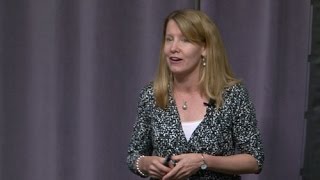
Jennifer Morris talks about her early experiences in Japan and Namibia and how they led her to shift careers toward public health and natural resource management, eventually joining Conservation International.
Chapters
After I graduated from college, I spent a year in Japan teaching. And then I decided that I wanted to go into public health. And I also was very interested in Africa. So I went to the country of Namibia and was a volunteer with a program through Harvard called World Teach. And I lived in a little community next to a clinic, and I spent my weeks teaching women English. Maybe it just become independent from South Africa. And English was now becoming very common. And all the women who hadn't had access to formal education in English were anxious to study the new language of freedom, really, of Namibia. So I went there thinking I was going to go into public health. So I spent my weekends teaching during the week, and my weekends I spent in the villages with mostly women and their families. And we spent probably about 90% of our time collecting water and collecting firewood. Because in countries like Namibia and many others throughout the world, there's no access to electricity, there's no access to water, unless you actually go out and fetch it. And of course, wood is really critical for cooking in these communities. But these people living in this area, which is an increasingly arid area of the world, it's very arid already. But because of deforestation, these resources are becoming harder and harder to find. So these women, instead of going to school or working, were spending most of their time actually just collecting basic natural resources for their survival. In addition to that, when they're out in these places collecting firewood and water, they're subject to malaria. There's a lot of malaria in this area. But when they're out deep into the woods collecting water and firewood, they're more prevalent to disease. This whole community that I was living in had a lot of diseases which were really natural resource related. So I started thinking about my career path and said, you know, I'm actually really interested in the drivers of poverty and the drivers of natural resource or health issues, which really were related to natural resource degradation. So I decided to change my career path and instead think about the intersections between human development, especially related to women's issues, with when women are not able to take advantage of educational opportunities because they're spending all their time just trying to find fuel, wood and water to support their families. So this sort of interconnection between natural resources, poverty and development and health became very important to me and led me then to Conservation International. After I went back to school, I went to Columbia and studied business and economics and then found my way to CI.