Jocelyn Goldfein: Deep Inside Facebook [Entire Talk]
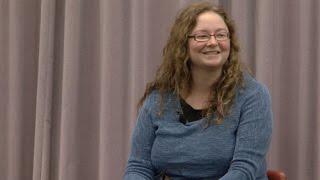
Jocelyn Goldfein, a director of engineering at Facebook, talks about her path from Stanford to Facebook, the company's open culture and decision-making, and her experience as a woman in engineering and management. She reflects on balancing career and family.
Chapters
So, Jocelyn, welcome. Thank you very much. Why don't you start out by telling us a little bit about your career path from Stanford student to a director of engineering at Facebook.
Boy, I could probably spend the entire lecture just answering this question. Well, when I was a student, I really had absolutely no idea what I wanted to do when I grew up. And I had majored in computer science because I loved programming, I loved the logic and the sort of analytics nature of it. But I didn't really have a super clear idea of what being a software engineer was like, even after multiple summer internships. And so I joined straight out of college. I joined a company called Trilogy that was based in Austin, Texas, mainly because Trilogy had a very different recruiting pitch than a lot of the other big software companies. Most of the software companies were saying things like, well, come work for us and just make software. And Trilogy was like, well, come work for us and do a little of this and a little of that and we'll expose you to a lot of things. And and so I went and it was kind of true. It was a very chaotic company, but I made great friends and just was sort of put in situations where it was a very entrepreneurial environment actually, because you just kind of had to figure out what to do and deliver and sort of not know any boundaries. There was not a lot of structure or processes to follow. You just had to figure out what to do to succeed. And I made great friends there, including three with whom I went on to co found a startup which was again, I wrote code, I tested the code, I wrote documentation, I supported the customers, I deployed the software, I did everything, I hired people, I hired the front office manager, I stocked the fridge. So it was really terrific. And somewhere in there I also started managing people. And I found that when I was managing engineers, it sort of finally plugged in for me that this was actually my right career path because I've been always fascinated by people as well as by technology. I was actually a minor in symbolic systems. Terry Winograd was my advisor. I concentrated in hci and so I was taking tons of psychology and linguistics classes at Stanford. You want to blow your mind, Take a linguistics class. The same class, you take the same quarter, you take compilers and you will find you were studying the same thing but from different sides. And so being a manager, I found was a lot about social engineering and it was a lot about understanding what made people tick and what made teams tick. And they were just really interesting, difficult structural and systems problems to solve of the human kind as well, as of the technology kind. So it was like, yes, at last, every neuron in my brain is firing. And I'm also just motivated to bring my A game by other people, by my teammates, by my colleagues. The reason founding a startup was amazing was because I was working 120 hour weeks. I was working in crazy town, but I was thrilled every minute because I was coming through for my team and they were coming through for me. The startup, though, did reach sort of a point where we were doing a major strategic pivot and I was ready to move on and I was ready to come back to Silicon Valley. I also married a Stanford grad. We were another computer science major. And he and I had kind of made this pact that we would be in Austin for no more than two to four years as two Stanford CS grads who were obviously destined to be based in Silicon Valley. We had been in Texas for over five years at this point. What would the startup end? And so we decided to come back to California. And in California, I ran into a really good friend of mine from school, Jeremy Sugerman, who had joined a startup founded by one of our professors, by my OS professor, actually Mendel, and it was called VMware. And Jeremy had. I tried to hire Jeremy for my company. He wouldn't come. He went to Mendel's company instead. And so this was a couple years later. VMware was now 350 people, still pretty small. I'd only pulled an A minus in the OS class. I had been doing nothing related to operating systems since. But I said, what the heck? I went in to meet VMware. The recruiter told me, boy, if I had found your resume on my own, I would have thrown it in the trash can, basically because you have no operating systems experience. And that's what I've been told to look for. But on Jeremy's recommendation, they talked to me and we just clicked. So I joined VMware as a manager. I dusted off my operating systems textbook and remembered what Scatter Gatherer was all about. And When I joined VMware, I kind of got on a rocket. VMware does not have maybe the consumer brand sex appeal of a Facebook or a Google, but they absolutely were doubling revenue and head count every year. And they proceeded to do that for four or five years in a row. So I joined in 2003 when it was 350 people, and when I left in 2010, it was over 10,000. And I really grew up with VMware. And I still had that same quality of Wanting to come through for my team and of taking no prisoners, of really just wanting to have the most impact I could have. And something that was really exciting about being at VMware was our customers were all geeks, and they loved us. They loved VMware. We were transformative for what they were trying to do. It was like science fiction because they could solve problems they couldn't solve without us. And so that was just an amazing feeling that we were building something that was changing how people worked and making their lives better. But as VMware grew to over 10,000 people, I guess my career rose. I should talk about the fact that when I joined VMware as a manager and I left as a vice president, but I never really thought, you know, there was never a moment where I walked into my boss's office and said, where's my next promotion coming from? I was always just thinking about, how do I have the most impact I can have on the company, on my team, on our users? And I think that by just trying to have impact, my career kind of took care of me. And so it was. I never really thought of myself as consciously managing my career. But I left VMware finally when it was over 10,000 people, and I decided I was ready for another really big shift. And I wanted to make the jump from enterprise to consumer. And where better to discover a consumer than Facebook? And I actually originally planned to go to a very small company, and I was not looking to join a company even then. Facebook was almost 2,000 people. I'd never voluntarily joined a company that big. I had joined companies that were a few hundred people or started my own. And so really kind of just talked to Facebook as a really kind of just to get aware, to learn more about the space. And Facebook's head of engineering, Mike Schreffer, was a classmate of mine from Stanford, too. He was a fellow 97 graduation fellow, section lead, too. So we had lunch, and I just kept talking to startups around the valley, and I kept talking to Facebook, and I would go sleep at night and I would talk with my husband. And Facebook had more of the qualities of a startup that I was looking for than the small startups I was talking to. And there was no question after I met him that Mark Zuckerberg was by far the most impressive founder of all the founders I met. Which is sort of a trite thing to say in hindsight, sort of a duh. But Mark was amazing, and Facebook had the culture of a startup. And so I gritted my teeth and said, well, this doesn't match any of the. It doesn't check any of the boxes I said I had other than consumer, but what the heck? This is clearly what I want to do in my gut. So I went to Facebook. Have been there three years, have had an amazing, amazing run. I've gotten to work on really just great products that I use every day. Photos, news, feedback, now our mobile platform. So I couldn't be happier.
So let's drill down. You said the culture of Facebook was amazing, and you walked in and it felt so comfortable. Can you paint a picture of the culture of Facebook? I mean, imagine we're all visiting. What would we experience?
You would experience unfinished ceilings, concrete floors, desks everywhere. No offices. Not even Mark has an office. And writing all over the walls and posters. And you would see company slogans like, this journey is 1% finished. Or move fast and break things or fail harder. And Facebook was born out of disruption and was born out of trying things and seeing what happened and it not working out and trying again and trying harder and never being. Never being daunted by failure doesn't mean we set out to fail. It just means, like, we're not afraid of it and we're willing to keep taking risks. And the entire environment is meant to keep you from feeling complacent or comfortable or like, we've won. We never want to feel like we've won. We always want to feel pretty hungry and like, somebody could come eat our lunch tomorrow because somebody could. And. And we never want to take it for granted. And so it's the most humble, successful company I've ever known. And it may sound strange to say that Facebook is a humble company, but it really is. We really don't take success for granted. And we think that our users are choosing to be there, and they could just as easily choose not to be there if we don't deliver a great service.
I love the fact that the first thing you said when I asked you to describe the culture was described the space.
Yes.
Now, it's something we spend a lot of time thinking about in the classes I teach on creativity. And certainly we're in this really remarkable space here at Stanford. How important is the space to the culture there? And I know I've spent time at Facebook, and it's really interesting, especially with the new buildings. What sort of things did people think about in creating this space?
Oh, it's very deliberate. It's absolutely deliberate. Culture. You cannot just think of the culture you want and then create it. Culture arises from so many small things. Someone actually a Stanford professor, gosh, I wish I could remember his name, but from the business school, once said something that really stuck with me, which is, culture is the behaviors that you reward and punish. At the end of the day, people look around and they mimic the behaviors that they think will be successful, and they try to avoid the behaviors they think will be unsuccessful. I think that's really true, actually, and deeply true. But you've also got to try to show people what behaviors you want and what behaviors you don't want. And the space is one of those things that just sort of sneaks right past all your sort of human defenses and cynicism and processing, and it just goes straight to the hindbrain and tells you, and you understand it on a gut level. Like when you walk on those concrete floors, you know, oh, we're not finished. We're not luxurious. We're not taking it for granted. Like, we're scrappy. And the open space is another huge one. You guys are all, I think many of you are probably computer science majors. Hopefully you've all taken 106, if not take 106 before you leave Stanford. It's the best opportunity of a lifetime. And you know, if you've programmed that, you need focused attention, right? You need flow time. And you know that even small interruptions like it takes you a long time to get back into the stream of things. And so the idea of having programmers sit out in open space at open desks, with desks all around them, and talking in conversation in foot traffic, that's controversial. For many years, the gold standard in Silicon Valley was to have offices. Engineers are housed in offices, preferably a single office, sometimes two people per office. That's what VMware did. And when we took over the campus from sun, it was all offices. We told the builders to actually start by knocking down every wall that wasn't structural and make as big an empty space in the buildings as we could, and then we'd sort of fill it in from there. And why, why was it so important to us that we would actually sacrifice engineer productivity, which is what we're doing, to have everybody out in the open space like that. It's not density. It's not to save money. Well, it's because one of the key values of Facebook is be open. It's what the product is for. The product is for sharing and communication. And that's also really fundamental to our DNA as a culture, too. It's actually that we expect every individual to be informed and in the know about what's going on and that empowers you to make good decisions. And so we sort of set the expectation that everything's out in the open, everybody's plugged in, everybody's aware of what's going on. And then we put headphones in the vending machines and try to create lots of private spaces where people can hide and give everybody a laptop and have a pretty loose work from home policy. So we do everything we can to mitigate the productivity impact of that openness. But ultimately every time we have to choose, we choose openness.
So what is the onboarding process? I mean, somebody gets hired and you can't just plug anyone right into this type of culture. What happens to take a normal person off the street, plug them in, and they become a Facebook employee.
We call it Boot Camp. Literally it is a six week onboarding program and everybody goes into it. I was a VP of engineering at VMware. I had not written code in seven years. When I got to Facebook, they said, here's your desk, here's your laptop, here's your Unix account, and here's five bugs that are assigned to you to fix. And you spend your first six weeks at Facebook fixing bugs and implementing small features all over the site and attending lectures. You have a bootcamp mentor who is a full time software engineer whose job is to help you. They'll help you get code reviews, they'll help you figure out what tasks to work on, and at the end of the six weeks, they'll help you find a team. And I think that Boot Camp is so is such a good program for so many reasons. I actually give one of the onboarding, I actually give Facebook's introduction to culture for Boot Campers. And one of the many great things Boot Camp does is it builds empathy. Before you identify with a particular team, you identify with Facebook and you fix code. And even if you walk in determined to do back end services, we'll make you write some web code, we'll make you fix an issue on mobile. No matter what you're going to do, we're going to give you at least the tools to inspect, to investigate, to know about what's going on in other parts of the world. And it really sends the message we want to send, which is everything connects. All engineers are connected to one another. The Facebook employees is just another subset of the social graph. And so in Boot Camp, you hook up your social graph to your first set of co workers who then spread out to the four corners of engineering and give you connections in every part of the company. But you know a little bit of something about everything after boot camp, and that's an incredible asset for a new hire.
So for six weeks, you were just doing boot camp?
That's right.
So what are you looking for when people are coming to interview? I know that the standards are incredibly high, and it's one of the most attractive places to work in the world. How important is technical skills, as well as other things like creativity and being able to work on teams? What are you looking for?
The number one thing we're looking for in hiring a software engineer is the ability to write code and is the ability to reason and to be analytical and to find mistakes and fix them quickly and to analyze the running time so that when you're later on building systems, you demonstrate that you have the potential to think about hard systems issues. If you are a new grad, frankly, that's the primary thing, is that ability to write code. We also want to make sure that you're not a jerk. We definitely want people at Facebook who are nice, and we will reject people who have great coding skills just because they seem like they would be appalling to work with. But we want people who have enthusiasm, who have a fire in their belly, who are not going to take no for an answer. We want people who are not going to be afraid. We want people who are going to attack making software with gusto, and we are looking for creativity. So we've meddled with the interview process a lot. I've actually personally hacked on our interview process a lot. Another reason you find so much graffiti on the walls at Facebook, actually, we invite our employees to write on the walls is because we want people to feel like if there's something at Facebook that you don't like or that you think should be different, like, pop open the hood, like, the cement is never dry. You can mess with it, you can change it. And I've messed with our interview process. And one of the things that I did is I noticed one thing that made engineers really successful at Facebook was when they had just really good intuition for what would be a good feature or a good product. We obviously have designers and product managers that we work with, but the way we work is so iterative. Like, we try things, we test them, we try something else, we test them. And so the difference between a good intuition and just trying things and testing them, you might try three things or try 10 things and save months if you just have great intuition. And so we started interviewing, consciously interviewing for that. And we won't hire you on intuition alone, if you're not also a great coder. Or we might in product management, but we wouldn't in a software engineer. But it turns out to be something that distinguishes good from great software engineers. So we started interviewing for that.
So, obviously, we all know about Sheryl Sandberg's book Lean In.
Okay.
And I want to ask you, just between you and me, is Facebook culture designed to be supportive of women? Really?
I don't think it's designed in that way, but I think it is supportive to women, and I think that it's supportive to women because everything happens out in the open. Like, everybody is talking live. You see how decisions get made. There's no sort of secret back room. And so there's not a. What do I want to say? It's. I don't know. I don't know. I can't say I've ever worked in an environment that I found super unfriendly to women. So it's hard to contrast. But I just feel like at Facebook, we're having the conversation much more, and we're also going out of our way to structure relationships and social bonds between the women in engineering. Like, we're talking about it. And I think that's partly because Cheryl is there and is writing books like Lean in or giving her TED Talk, but we're vocal about it. We have a great community of technical women at Facebook who are sort of. And the range of opinions span widely because women aren't all the same. This is one of the things men are always coming to me, like, what should we do to make Facebook more friendly to women? I'm like, well, I'm devastated to tell you that women don't all want the same thing. We are not all alike. And being friendly to women does not mean any one thing. But I think it is fundamentally a meritocratic environment. It's an environment where ideas win. It's an idea where. It's an environment where code wins arguments. Yeah, I found it an extremely great. But probably the best thing about it just is the fact that we are so open about having this conversation, and it's so welcome to talk about it. Whereas I think it was a little bit. It's just kind of taboo in a lot of places. You don't talk about it. If you bring it up, you're a whiner. Right. And at Facebook, we talk about everything.
So have you personally made any choices that have allowed you to. To have a very intense professional career and also to have a family?
Have I made choices?
Well, how about has your family made choices?
Well, I think I just. The best choice I made by far, I didn't even know I was making and that was who I married. I mentioned I married a fellow alum. And, and my husband has been incredibly supportive of my career. And after we had our second child, he actually made the decision to be a stay at home dad. And the fact that he is home with our kids really does enable. It brings a balance to our lives and it allows me to hit it that much harder in the office, in the workplace. But I think another choice I made coming back from Texas to California when we did, part of the reasoning for that was because we were also starting to think about having kids. And I thought, you know, if we have kids, I want to be near my mom. And my mom happens to be here in Palo Alto. And so in some ways it's just dumb luck that I have, you know, that I happened to marry a guy who was going to be willing to be a full time parent, that I happened to have my mom living in a location that was like the best place in the world for my career to be. So I do feel like I won the lottery multiple times, Let me be clear. But that support that I've had from my mom, from my husband, definitely. I mean, women make it work. I know a woman who's also a VP of engineering at VMware, who's a single mom of three in Cambridge, Massachusetts, and I'm in awe of her. But I think that my path has definitely been easier because of the support I've had.
So is there other advice you would give to young people who are looking ahead? I mean, this is often a discussion I have with my students. They're really struggling to figure out how.
To have it all. Yes.
You know, how do I end up having a challenging career, you know, wonderful friendships, have a family. It all feels like these are full time jobs.
Yeah, I mean, I mean, I will tell you what I did. I mean, I think I did luck out in who I married, but I think you should absolutely be looking to marry someone who's supportive of your career, who believes in your career, and who is going to be supportive of the home life, because it does take two people. I think you should hate housework. I hate housework, actually. And I can't tell you the number. Seriously. And you are a community computer science major from Stanford. Your earning power is incredible. An hour of your time is so valuable, you can pay someone to do the dishes and the laundry. We do not. Because my husband is psycho and doesn't want help in the house. And so he does the dishes and laundry. But that's the deal. Like, I would pay someone to do it if it were my job. So I can't say how many women I know who share my husband's view that they don't want household help. And I think that why the things in my life, like, I love my job, like, you should pursue work that you love, that you're passionate about, because otherwise it's not worth it as a trade off. And you should have a family if you're excited about having a family and like, those things that you should be passionate about. And then you should just like, ruthlessly eliminate from your life time spent on things that you're not passionate about. Whether that's like, I've always chosen to live close to work so I have the shortest possible commute. Time in the car is dead time. And I outsource housework. If my husband didn't want to be doing the housework, I would be paying someone to do it. I just think that if you want all the great stuff, then be ruthless about not wasting your time on stuff that doesn't matter. And housework really doesn't matter.
So let's go back to the culture of Facebook. I love the fact that there are all these mottos around. Move fast, break things.
Yes.
Okay, what happens if you really break something? I mean, it's really nice to have it on a nice poster around.
Yes.
But can you tell us some stories about some things that have actually broken and what's happened? Because we all know that people are watching. As you said, it's kind of like a big game and the incentives are there and people see what happens. If someone sees that someone does something and it doesn't turn out and they get punished, they're not going to take a risk. So can you give us some examples?
So I think that was just a poster on the wall for me until I broke something big myself. So I'll tell that story. This was when I was in boot camp. It was week five, so I was brand new to the company. Nobody knew me from Adam. And I noticed that my first few weeks in boot camp, I was assigned a bunch of bugs to fix. And it turned out that three out of the five were obsolete. Someone had already fixed them or the code had been refactored and just wasn't an issue anymore. And so I realized that there were actually a lot of bugs in the bug database that were kind of. That were cruft. Basically and if you like, bugs don't sound like a very sexy thing. But if you are determined to ship high quality software, one of the things you need is information about what is your state like, what is the state of my software? And a bug database can be a faithful representation of the state of the world if you are really scrupulous about your bug hygiene and about closing out bugs, about triaging your bug. It's about looking at every bug and about closing out the ones that aren't relevant, including ones that exist but you're never going to do anything about because they don't matter. At VMware, I had built a name for myself by being this monstrous triager of bugs. I triaged probably 1,000 bugs in my first month at VMware. At Facebook, I was walking into a much more mature environment that already had a lot of bugs open. And I also had sort of reflection in hindsight that it's just not what I did at VMware didn't really work for me, but also wasn't incredibly scalable. And so I wanted to try something new. I wanted to try automating bug triage in a way, and writing a script that would essentially, if a bug had been untouched for three months. At Facebook, things move so fast. If something's been untouched for three months, it's a pretty good sign that it's irrelevant. And so after three months, it would sort of just post an update to the bug saying, hey, is this thing still relevant or can you close it out? And that would trigger an email to everybody cc'd on the bug. And then if another three months went by and nobody responded to that or updated the issue, then it would just auto close it. So I was building this, I called it the Task reaper. And I was writing this script and I was testing it and I wasn't careful enough in my testing, and I accidentally just was moving some code around. It was copy paste error, and I moved something out of an if block. And you're probably guessing where this is going. I accidentally ran the test on live data and it pinged 14,000 bugs. Because the first time you run this, there's a lot of untouched bugs. It pinged 14,000 bugs, and that means it generated email to Everybody on the CC list of all 14,000 bugs, which meant I basically launched a denial of service attack attack on our email infrastructure. So this brought the bug system to its knees, but it also brought email to its knees for the whole company, which is like a pretty big deal. I mean, it doesn't take the site down for users, but it means our sales team can't interact with customers. Engineers can't do code reviews. Email is kind of the lifeblood of the company, even more so in those days. We use Facebook itself more for communication now. And so I was just kind of blankly terrified, like, what have I done? And I really expected to be tarred and feathered for this. And there was definitely a vocal company response to what just happened to me. Why do I have 200 emails from the task creeper? But what was really visible to me, two things were really striking to me. One was the exchange team and the bug tools team. The people I expected to be most mad at me actually just sort of rolled up their sleeves, waded in, and started fixing the problem. They spun up another process to process the emails faster. They threw extra capacity onto the server. They just got in the trenches, and they had my back. And I was a stranger. They didn't know me. I had no right to be messing with their systems. They just had it. And then on the flip side, the communication from the company, there was no one saying, how dare you? You're a noob. Why didn't you ask for permission? Nobody said that. People were saying, what was the point of this? And they were saying, could you maybe send a digest email instead of an email for each one? And they would be like. But no one acted like I didn't have the right to try. They clearly didn't like the result that their email was down, but they didn't act like I shouldn't try. And it was like a light bulb went on in my head. I realized, oh, my God, this is what lets this company still innovate, even when it's already. At that time, it had just passed half a billion monthly users. And if any company, it was just successful, I'm like, why does Facebook still have appetite to mess with this thing that is so successful? Why do we launch complete redesigns of the homepage when the homepage is already the most trafficked piece of property on the web? And I sort of got it in that moment. It was because we are willing to take risks. We are willing to face up to the consequences of failure. If it was in the spirit of trying for something, of trying to innovate. So that was just like an amazing experience for me. And I think it's not that you can come to Facebook and be incompetent or do things wrong all the time. I mean, I think there's a lot of feedback and actions if that's happening. But we view it as every employee's right to try things, to take risks, and we expect you to deal with the consequences of your failures. But we also rally and help you and have your back when you fail. And we expect you to rally and have our backs when we fail. So it was kind of a magical introduction to the company.
How long had you been there when this happened?
Five weeks. Five weeks. Okay, great. Thank you.
So I guess you've now had opportunities for other people who work for you to make similar sorts of errors.
Yes. Yes. I tell them this story. It makes them feel better.
Yeah. Does it make people want to try more things? I mean, do you find that there is a boldness that comes from seeing that this type of.
Yes. Oh, I really think so. I mean, writing be bold on the wall is one thing. I think that's helpful. But actually seeing that you can try things and have them not work out and then still thrive definitely contributes. What I tell boot campers in my onboarding is, listen, innovative ideas, by definition, look like bad ideas. If they looked like good ideas, they would be obvious ideas. And so to be innovative, to be unobvious, something about them has to look stupid or dumb or impossible. And so what gives people the courage to try dumb ideas? Especially because for something like, what's your expected success rate? I mean, if you're a VC, you're going to fund 10 companies hoping that one of them will be a huge success and the other nine may not. But that's a great portfolio strategy, right? You'd rather fund 10 companies trying bold things with the outcome that one of them is 20 fold successful than do 10 kind of incremental, easy things. And if you're a company, you actually have exactly the same calculus as a company. You would rather be trying 10 things and having nine of them fail and one be 20 fold success. That's just good ROI for anybody who owns the portfolio. The problem is it's bad ROI for the actual individuals on the nine things that failed. And if you're a human being, I really think the biggest thing that kills innovation is not that companies suddenly wake up one day and say, oh, I don't want to innovate. Companies all want to innovate. They want their employ to be bold and to try risky things. The problem is innovative ideas are going to fail at a pretty high rate. And if you're a human, you hate failure. You are going to try something like the task reaper, have a horrible experience and not try it again. Maybe if you have exceptional grit, you'll Try two things that fail, but you have to be willing to try 10 things in a row that fail if you're going to be a successful entrepreneur. And I do think that's what distinguishes successful entrepreneurs is that particular brand of insanity that is ready to keep trying and keeping. Keep trying in spite of failure and keep believing in yourself, but ordinary humans do not. And so I think that you just have to provide incredible cultural back pressure to support people in that instance of failure if you want them to keep trying. Crazy ideas.
That's terrific. So let's imagine that you are flashing back in time and you're now a student here at Stanford. Again, what advice do you wish someone had given you? I mean, imagine you were sitting in the audience watching someone who was in a position at the director of engineering at a really impressive company. What things do you wish they had told you that would have had an influence both on your career path, but also on your mindset? Oh, man, is that a hard question?
Yes. What advice would I have given myself? You know, you hear this all the time, but be brave like the world is your oyster. Like you really don't have any bad choices right now. You cannot go wrong. Now's the time in your life to take a lot of risks. I think that I would have said don't. I wouldn't have listened, but I would have said, don't worry about what you're going to be when you grow up. Just be, and it will come and find you. You know, I feel like when I was in high school and college, so many people were like, follow your passion, follow your dream. And I was like, how do I find my passion? How do I find my dream? No one had particularly good advice for what to do to figure out what you're passionate about. And so I would say, it's okay not to know. Just keep trying things and. And you will find stuff that you are passionate about and excited about. I would have told myself not to be afraid of writing code for a living. I was afraid of that. I was afraid that other people would be better at it than me. I was afraid that I would be buried in detail and not get to be strategic and above the fray. And I learned over time that writing code is actually one of the most strategic things you can do. And every time I meet a college student who wants to skip being a software engineer and go straight into product management, I'm like, oh, it's not that you won't someday want to do those things. Want to be a manager or a product manager? Or a designer. But you learn so much from writing code that the devil is truly in the details. The what is possible, the what is feasible, the systems thinking. Just embrace it. Relish it. You may or may not. You may love it so much that you do it forever. You may not do it forever, but every minute you spend coding is going to make you 1000 times better at being a manager or a product manager or anything else. Your time is better spent even if your goal is to do something else. Your time is better spent writing code as preparation for it if you want any career in software, any career, even CEO or sales or whatever it is. So I would not have been so anxious to figure out what was after software engineering. I would have spent just. I would have lived more in the now, I guess. Or I would advise myself to live more in the now. I would have had trouble taking that advice.
Well, that seems like a great segue to open up the questions to the audience. So who would like to start?
Great. So I definitely like what you said about Facebook being flexible and kind of adaptable to handling failure and encouraging innovation. But where do you guys really draw the line between, you know, when, okay, great job, you're doing bold things, you're making some mistakes, but that's fine. Versus, like, this is terrible. Like, you need to stop doing this. Like, how do you guys distinguish between those? Because it's definitely a gray area. From my perspective, the question is, where do you draw the line? It's one thing to say, you know, you encourage people to fail, but where do you say, okay, this is too much, dial it back. So I think that first of all, there's some bright lines. I mean, there are things like ethical violations that will just get you walked out the door. Right? So there are certain failures that are not, I tried something innovative and it didn't work out, but that are just like, I did something wrong. That are just wrong. So I think that when we think about sort of buoying people in the event of failure, we definitely think about helping them solve the problem. We try to actually encourage people to fail fast. Right? Like, we don't want you to spend. Like, it's terrible to spend a year developing a product and it's the wrong product. It's much better if you spend a week or even a night at a hackathon, throw a prototype together, and we can see on face value, hey, this is not great. Let's course correct. Let's try something else. I think if the failures, Some of it is repetition too, right? If you make the same mistake over and over again. That's just a problem if you're bringing the site down because of a careless error that again wasn't because you had an idea and didn't even. My error was not that the task reaper was a bad idea. My error was like, I failed at execution. I made a mistake in how I was testing it. If somebody was making that same error over and over and over again and wasn't learning each time. Like, life is feedback loops also, right? Like, you learn and grow by doing stuff and seeing what happens and taking information and then trying it differently the next time. Like, life is iteration, life is spirals upwards. And so you gotta be making different mistakes each time, not just repeating the same failure over and over again, I guess, right?
Yes.
So you obviously were a very successful manager at VMware. That's why they made your manager. Then going back and now being engineer, you have. And you also have the benefit of time. So where do you feel your talents are most suited towards managerial side, towards the engineering side. And if Facebook wants to promote you to be a manager, do you go there or do you stay in engineering? What's your. Well, I am a manager at Facebook. So as a manager, I spent the first six weeks in boot camp. Just everybody does that. But I mostly manage at Facebook. But I will say, oh, and I failed to repeat the question. The question was, is your time better spent as a manager or as an engineer? And how do you decide? I will say that at VMware, at the end, so I was always in the engineering department and I rose to head of engineering. And then in the last year and a half at VMware, we decided we were going to have a business unit structure. And so I became the general manager of desktop business unit instead of just the vice president of desktop engineering. And being a general manager meant that in addition to managing engineers, I also managed product managers, marketing people. I owned a P and L and I visited lots of customers to help sell our products who are buying desktop products. And one thing I learned from that experience is I love building stuff for customers and talking to customers. I don't love selling to customers. And I consider myself a good manager. And I think I can manage people who aren't engineers. But at the end of the day, engineers are my people. And I love managing engineers better than managing marketing people because I think at heart, I want to make stuff. I want to create things. That's just what drives me. And even as a manager, I want to make teams that make stuff. And so that's what I love to do the most.
Back there.
Yes. Can you talk about the decision making process at Facebook and how that fits into the corporate culture? Talk about the decision making process at Facebook and how it fits into the corporate culture really depends on the decision. I think that if you code, you know that you make decisions with every line of code that you write. And so Facebook is an environment that has the expectation that everybody's going to be making a lot of decisions. And so our job as a management team is actually to plug every individual into as much information as possible about what's going on so that everybody can make the very best decisions. It's a very distributed decision making environment and Facebook takes that a little bit. That sounds like pretty good. That sounds mom and apple pie, right? But Facebook takes it a little bit to an extreme in the sense of we've worked very, very hard to avoid, to give teams, small teams, a lot of autonomy to pursue their own destiny. And so we've kind of eliminated a few of the checks and balances that are more standard at other software companies. So you generally don't go to other teams. As you get larger, more teams have a stake in what you're doing, but you generally don't go to other teams and ask their permission. You generally build stuff and test it and then if that manifests as problems for someone else, then you work it out and fix it. And so I like to say it's a try catch model of decision making, not an if then. And so that has for the most part served us very, very well because it means that just people operate a lot faster, we move a lot faster, and even if we're heading in the wrong direction, we figure that out and course correct faster.
Can I just ask you, how involved is the senior management like Mark in decisions that are very granular? We know of companies that have a tremendous amount of tops down control. If a button gets changed its color, the most senior person is looking and saying, I'd rather have it blue than yellow. How involved is Mark in all of those decisions?
Mark will definitely give you advice about pixels. And when I say advice, I mean make decisions. So Mark has organized the company so he can spend the bulk of his time on product and product strategy. And he has very able lieutenants that allow him to do that. And he basically has set up his calendar so that each day of the week has a theme and the theme is one of the departments. So one day might be mobile, one day might be platform, one day might be whatever. And Then there will be a block of four hours and just teams rotate through that block and. And just present stuff to him and talk stuff through with him. And it's amazing because he's probably the most gifted product thinker in the company, and maybe in the Valley, maybe in the world, that's probably stretching it, but certainly in our space. And so having a half an hour of his time is just amazing. But you do have to learn because he can operate at so many layers of abstraction at once. Sometimes he will say, yeah, that's not going to work. I think we should try it this way. And you have to kind of unpack and figure out, like, is it your CEO? Is he wearing his CEO hat when he's giving you that feedback and that's because of strategy and how you're going to impinge on some other part of the product? Or is he wearing his designer hat or his PM hat, which is about how users are going to receive the feature or how it looks? And he will jump between those layers of abstraction and you just have to try to follow him and just make the most of it. Make the most of every second of his time that you get. So, yes, he will be very involved, and he has structured his time to be involved, but he can only pay attention to so many things at a time, too. And so if he's not paying attention, he doesn't expect you to sit around and wait for him. He expects you to run forward, actually, while he's not looking. And if he sort of comes back to you a month later and finds that you haven't moved from where he left you, he'll be pretty disappointed. Great.
More questions back there.
Thanks. I think Facebook's culture of move fast and break things is really admirable, but at the same time, I think for the average user, Facebook hasn't really changed that much in the past few years. You know, its photos, its chat, its status. So I'm wondering how much the kind of culture of building things is focused around building new things at Facebook versus changing and improving what's already there? That's a good question. The question is move fast and break things is admirable, but it seems like Facebook hasn't actually changed that much in the last couple years. So how much is it incremental versus sort of big new disruptive things? We certainly feel like we've changed a lot in the last few years. I definitely think we have sort of drastically improved on things like photos and messaging, and we've tried in a lot of ways to drastically improve. We've tried two new UIs for the news feed, which is one of the bolder things that we do because changing the home page always makes people mad. Actually, one of the biggest places where we've innovated a lot is in our mobile technology stack and how we're delivering mobile products. And I think, actually, I don't know if you've had a chance to try it yet because it only runs on a few Android phones so far. But we delivered a product called Facebook Home, which is a really social take on the phone experience. And it sort of takes the phone and it turns this on its head and puts humans at the center of the phone experience and tasks, makes them more secondary.
I think we feel like that was.
Pretty innovative and is still very much 1.0 and has a lot of work that needs to be done. But I think we feel like we tried something big there and we feel good about it. I do think it's a good question because we have got to always push to do some of both. We are serving a billion users and so on the one hand we don't want to neglect them. We want to keep sort of. And we don't want to take anything for granted. We don't want to feel like, okay, we can ignore photos now. We've been there and done that because photos upstart could come out of nowhere and eat our lunch if we're not kind of constantly striving to make the photos experience better. So I don't know. Yeah, I think we just try to do both. Great.
Another question. Yes.
So what are the next things, big things in mobile? What are the next big things in mobile? Well, Facebook Home, I think will be the next big thing. We haven't yet done it. I mean, we've shipped the first iteration and from here we have to iterate until it's really awesome. You know, the other interesting thing about mobile is that mobile growth's enormous. A lot of it is happening in the developing world and so users are flooding onto smartphones. In the next three years, we're going to have orders of magnitude more smartphone users than we've had in the past. But the interesting thing is the smartphone that those folks in Latin America and Asia and Africa, the smartphone they're going to be using is going to be a gingerbread phone. It's like a three year old version of Android. And so I actually think the race there is not who can do the snazziest, richest, craziest feature on mobile and it's actually who can Deliver the most streamlined, speedy, lightweight, light, touch, smooth experience on a very low end, low power device. And you got to be like, in this country, data is basically, I mean, you pay for your data plan, but then once you've paid for your plan, you don't think hard about how much data you're using. When you pay by the minute. When data is as large a part of the spend as it is in, in parts of the developing world, you're pretty. If we do overfetching in the newsfeed in the US it just doesn't matter too much. We send a few extra stories so that your feed loads faster. It's slightly suboptimal. You don't really care that happens in Africa. We're costing our users money when we send too much data. So thinking about how to do that and then we just think about phones as the mechanism by which a whole next set of billions of people are going to get online and are going to get on Facebook because frankly, lots of people are going to have smartphones and feature phones that have never and will never have a computer. And so what does an entirely mobile centric Facebook experience look like that isn't a second screen device, a second device in addition to your laptop. So those are things we're thinking really hard about.
Can I ask you a question about privacy?
Yes.
I'm sure nobody in this room cares about privacy.
Right.
I mean, this is always an issue about what people put on Facebook and how who gets to see it and how that information gets used. I think a lot of people, I've had many, many conversations with, people who are extremely conflicted because they so want to have this social experience. They're drawn to it and then they're also afraid of it. They're afraid about when I put something out there that feels really personal, who's going to see it? How is it someone going to monetize that?
Yes. Can it be reshared? Exactly. I want it. Yep. I think that's. I don't want to say that's. I think it's really hard. I think there are no textbook answers. I actually think it's one of the most fascinating product challenges that Facebook has. And I think most other companies have not bellied up to that challenge fundamentally. Right. Most of the products that we think of as social networking, like a Twitter or a Pinterest or even an Instagram, have an all public model. There is no privacy model. You go in knowing that whatever you put on there is public for all to see. And I think Facebook is different in that we are trying to create a private or a semi private sharing model where you can control the audience. And that's like a really difficult thing to do. And it's very hard to hit the sweet spot between what will people understand, what's usable, what's easy, easy. Every time we sort of try to dial up and give lots of privacy settings, we find ourselves in this quagmire where we've given users controls that they don't want or can't use or that paralyze them. And so I think that it's just a space where we need to continue to innovate. And I think others have tried innovating in the space, I think and have figured out that, oh, it's not that Facebook is dumb or ill intentioned, it's actually that this is really, really hard. So it's one of like a very sort of fundamental hard design problem. How to help people understand the difference between audience and distribution, how to help people understand who sees what. And you know, I think we've just got to keep trying. And I think to the extent we are successful, we create value for our users that they will see in the world. I will say I think sometimes it's overblown. We do surveys like a very large proportion of our users use the privacy settings. The idea that somehow like the unwashed masses just don't know how to use Facebook and don't know how to use the privacy controls, that's actually meaningfully not true. Like how many of you in here have never changed the privacy defaults on Facebook? All right, so that was like one person. So how many have changed the privacy defaults on Facebook? All right, how many of you have never used Facebook? Okay. One, two, three. All right, that's good. I'm counting. So I think there's your answer. Right. I think actually people are quite savvy. They do care very much about privacy. And that means it's one of the most important features that we have and it's one of the most important products that we have. And it's something where I think we're just not done innovating. But it's not that we aren't trying, it's that it's hard.
Great back there.
So how has the culture evolved or changed IPO Question is how is Facebook's culture culture changed since the ipo? And the answer, I think, surprisingly is that it has not very much. This is actually my third IPO. A company I worked for in Texas went IPO VMware of course, went IPO while I was there, sort of twice, actually, and now Facebook. And I think the difference and the IPO caused real change at those earlier two companies and not so much at Facebook. I think part of it is that Facebook was simply larger and more mature. I think Facebook's really pretty unique in how long we waited to go public. And so we were pretty gelled as a culture, as an organization, as an executive team. I think that, honestly, there had been. Because of that long wait, there had also been a number of opportunities for employees to sell equity on the private equity market. And so there were a set of people who already had great wealth from Facebook equity. And so it wasn't like sort of overnight people started phoning in. And I also think, actually we have optimized for hiring people who are not there for the paycheck. It's a company that handsomely compensates people. But we're trying to hire people who really care about what they're building and who are at Facebook for the opportunity to touch a billion people and to make stuff for them, and we get to keep doing that. And that hasn't changed. I want to say the milestone of hitting a billion users actually got as big or bigger hoopla than the IPO itself. So I think we were really worried about that. And actually, it's been kind of not that big a deal. Facebook's engineering is very centered in Silicon Valley, especially compared to other companies that have local engineering centers around the world. So what's Facebook's approach to kind of Silicon Valley or central engineering versus having local development centers around the world? Especially regarding proliferation of Facebook's culture, which is a strong component. What's Facebook's question is, what's Facebook's approach to regional development centers? We're very Silicon Valley centric, especially in contrast to other tech companies. This is true. We have only three other engineering offices outside of the Bay Area. One in Seattle, one in New York, and one in London. The New York and London ones are pretty new, and we are looking to grow all four of those sites. But I would definitely say that we would rather have a few large sites than many small sites. It is very clear to us that working across long distances, geographic distances, is just hard, because making software is fundamentally a team sport. There is no software of significance ever that has been built by a single person acting alone. You know, Facebook itself, like, you know, Mark enlisted his roommates within a week. Right. And so you're. And this is one of the areas in which college will kind of mislead you actually, because you're taking a lot of these CS classes where it's actually cheating to get help from somebody else. And then in real life, what we expect you to do is get help from other people. And it's really hard to collaborate with someone who you can't look in the eye to resolve a dispute or just a miscommunication. And it is really, really hard to communicate with someone who is in a distant time zone from you where your overlapping hours of awakeness are not that many. So Seattle was our first remote office and we deliberately. It's the training wheels of remote offices. All right. It's like exact same time zone and it's like a two hour flight. So you can get up there for a day trip if you have to. And our strategy is basically to go slow, to travel a lot between offices, to throw lots of money at all the parts you can throw money at, like having really good B.C. equipment that's readily available. But we just want to see it be super successful first in the places we're at. What we don't ever want to do is have an office in a region for the sake of saving money. We will just never hire an engineer. Like that just won't happen. So the regions, I mean Seattle, New York and London are obviously not low class locations. We are there so we can bring more talent to the company. But I think we're aware that working at a distance from headquarters is hard and we need to do more to support the folks in those offices.
Is it important to have offices in other places for. For just regional specializations so that you understand your customers in different parts of.
The world.
Or do you find that you can develop a product?
I feel like I should say yes to that, but honestly, no. We actually did throw a few engineers into Japan. We found Japan a really hard market to crack and people just were using their phones in very different ways and wanted to use social networks in very different ways. And so we did establish a small Japanese engineering team and product team around really cracking into Japan. That's the one country where we've ever had to do that. I think for whatever reason, Facebook just connecting and sharing with other human beings has ended up being kind of a universal value proposition. If I didn't see it myself, I would have said it's impossible to make one piece of software that is used by so many people from so many walks of life. But no, we have not needed to sort of physically visit every region of the world to develop product for the whole world.
Another question yes.
The early stage measures of success in Facebook were quantified. You as head of RP at Facebook, how do you do a deeper quantification? Success. How do we measure success? This is an excellent, excellent question. We are a very metrics driven company. It's actually quite interesting because we're sort of a vision led company, but also a metrics led company. We just mix both. And as a product team, you'll always have two sets of goals. You'll have some that are just milestone goals. They're just like we're going to do X because we believe in X and we're going to deliver it, we're going to launch it. And there's a user, usually goals about launching a new product and then you have a whole bunch of metrics that you are tracking and that you are trying to drive up and to the right. And it very much depends on the product. So Facebook as a whole used to measure monthly active users. Now we're measuring, now we pay more close attention to things like daily active users or a metric that's even harder, which is L6 of 7, which is a term we made up which measures how many people are coming back to Facebook at least six out of seven days of the week. And that's an actually even more difficult number to reach than daily active users. It's a smaller number than daily active users, but still a large absolute number. And then it breaks up team by team. So the photos team will have goals. We've had different types of goals. We've had goals around volume of photo tags or volume of photos. We have goals around the number of people Participation rate, the number of daily active or weekly active people uploading photos photos per uploaders. Messaging similarly has goals along those lines participation rate. We're probably more interested in reaching spread than volume per user. I'm more interested in 40 people uploading a photo each than I am in one person uploading 40 photos. But it differs at different points in time. News Feed we spend a lot of time thinking about clicks, likes and comments as measures of engagement. And we also measure time spent. That's a big one for us. And on mobile, we're looking at more quality measures. We're looking at things like crash rate, memory consumption, star ratings in the Play Store and the App Store. But I will say that a lot of the time when it comes back to decision making about product features, we're very often more metrics led than I think outsiders realize. A lot of the times when we're trying to decide to go one way or another, and you sort of sit out there and scratch your head and go, facebook, why did you do that? It's because we tested both options on our users, and we figured out which one drove the metrics up more. And we have this very interesting philosophical debate inside Facebook often, which is, how do we know we're really doing the right thing for users? And I think that one thing we do deeply believe is that ultimately we can't be too didactic. We have to be a little humble about how people use to choose the site. And if people use the site to share funny cat videos, then it's not quite our place to sit in judgment on that and to decide that that's bad. But baby announcements are good. Or definitely in this room, probably people would say, baby announcements are bad and funny cat videos are good. College students maybe have different values. But I think that at the end of the day, we look ourselves in the eyes and say, more people spending more time on the site means we're creating more value for our users. And if we're not doing that, then we're failing our users. And if we are doing that, then we're probably doing right by them. And that makes certain things tricky, especially when we get really conflicting, like when, on the one hand, your gut or your intuition or even what people say with their words is telling you go this way, and then where people are spending time on the site is going a different way. And I think you've got to kind of let go of your ego and. And say the users actually are not children. They're operating in their own best interests. And if what we were doing was really bad or it was like a guilty pleasure in sucking them in, that doesn't retain users over time. If you create an addictive experience that really sucks a lot of time out of people, but it's ultimately bad for them, they'll leave. They won't stay with you. I really think people are adults. And so I think if we were out to sort of create experiences, when we create experiences that are bad for our users, it's very visible. They stop coming back, they spend less time, they leave. And so we really. I think we really have every incentive in the world to just deliver a lot of value to our users. And at the end of the day, the fact that we can measure it, the fact that we can see, hey, I shipped this feature or I fixed these crashes, and now users are able to spend more time, you get that very. It's like a hit. It's like, you did something great for them, and you can see it in the numbers.
I'm sure you'll agree that this was absolutely fascinating. Please join me in thanking Jocelyn.
More from GHION.AI


O processo de reconhecer limites, mesmo quando a vida parece exigir sempre mais.





Depois de tantas histórias, aprendizados e pausas necessárias, o @interior_iza está de volta



