John Hennessy: Great Leadership Can Be Learned [Entire Talk]
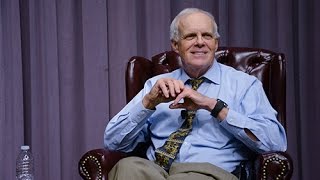
John Hennessy, former Stanford president, argues that great leadership is a learnable skill, not an inborn trait. He covers entrepreneurship, the challenges leaders face, and how education needs to evolve to prepare people for an uncertain future.
Chapters
So here we are at this entrepreneurial thought leader lecture series and all of these folks sitting in the room here and the folks who are listening online are interested in entrepreneurship. And people come to Stanford because they're interested in entrepreneurship. Help us understand what entrepreneurship means to you. Is it just about starting companies?
Not at all, Tina. I think for me entrepreneurship is, is about transforming things by initiating, by taking new ideas, by seeing them from concept into practice, so that the impact of the idea is larger than it would be, let's say, if you just wrote a publication about it. So I think that it's finding creative ways to solve problems, to do new things, and I think that's what it's about. So I think entrepreneurship can happen inside universities. I think we try to think of ourselves as an entrepreneurial university. We take risks, we try new things. And I think that's an important asset for anyone who wants to lead an organization or lead change.
So people come here from all over the world wanting to feel the heat, get the secret sauce, understand how to build an ecosystem like Stanford and certainly like Silicon Valley. This morning I talked with a group of folks, educators from uae at lunch I was with the folks from China. I know we have a group from Chile here today. What is it that's magical about this place? And is it something that could be replicated in other parts of the world?
Well, I think there are a couple of things. Everybody wants to replicate it. What they fail to understand is that replication is a 30 or 40 year effort. It's not an overnight transformation and it takes that long because the educational institutions which serve as the source not only of many of the great ideas which are transformed into new things in the valley and, but also of the talent base. So you need talent. It begins with great people. And one of the remarkable things about the Bay Area is, as you pointed out, it brings great people from all over the globe to this incredible place. It's built an environment over time that while it's not a perfect meritocracy, it's as good as any place I've ever seen. And it's a welcoming place for people from all walks of life. You can come from anywhere in the world and find people in the valley that speak the language you spoke when you were born, that eat the kind of food you really enjoy. And that makes it a very welcoming place to bring talented individuals, you know, flat management structures. There are a lot of things that happen, a passion for doing new things and an acceptance of the risk that's involved in any time that you do something new. So those are all part of the cultural milieu that I think has made the Valley and Stanford for that matter, a successful, successful.
So you've had an opportunity to participate not just as an academic, but also to be in industry. You left for a couple years to start a successful company. MIPS came back. You're on the boards of lots of very successful ventures. What has your experience being in industry, especially these very fast paced entrepreneurial endeavors, how have they influenced your leadership at Stanford?
So I think in a couple different ways. First of all, in any startup environment, time is money, prolonged decision making, long cycles of waiting for things to occur. Is death to a startup company one of the challenges that exists in a university? It's a very complex organization with multiple constituencies. If you took every problem that came to the president's office and put it through an academic decision process, we'd still be waiting to build the arts district, we'd still be waiting to build the engineering quad, we'd still be debating whether or not the business school should stay where it is or should move. So you've got to put some value on making decisions and be comfortable making decisions when everything is not black and white. Because if that's what happens in any complicated organization, and that's something you learn in a startup company, you also learn how to go through the cycles that occur naturally in a startup company. I did my worked on my first layoff when I was at mips and learning how to do that there made it a lot easier. When we had to go through a financial crisis in the university, I learned the most important thing about dealing with a crisis. The faster you can move through it, the better and quicker the organization heals and moves forward. So completely contrary to the way universities usually think about budget crises, they think, well, let's see if we can just hold out and wait for this to go away and maybe things will get better on their own. But of course, when the endowment dropped 25%, things were not going to get better on their own. Overnight, that was 100 or $200 million worth of income to the university every year. We had to solve the problem. Having done it in a startup company, it's a lot easier to think about how you do it in this environment.
So let's dig down on this question of different constituents. Having been in an academic department, I know that there are lots of points of view and I'm going to guess it's multiplied many, many times. When you have different schools, all with very different goals, how do you balance that what is the process that you use to gather information, to understand different people's interests and then make some decisions?
Well, certainly, first of all, you have to agree on some key goals for the institution as a whole. Right. So we're an institution that has two roles in the world. We do research and we educate people and that's what we do. Right. And that's our core constituency. And we have a dedication. We have a few underlying characteristics which we try to ensure are preserved. Right. Probably first and foremost, an emphasis on excellence. So whenever we think about something going on in the university, the first question we ask is, if we go do that, can we be world class in that field? Because Stanford is a place, given the limited resources we have and the breadth of fields we cover, we shouldn't do something unless we can be really world class at it. So we're constantly trying to think like that is the direction a school wants to go, or two schools want to go. Is it going to produce something that's really world class? Are there opportunities to do something that's really attractive because of the fact that we have a great engineering school across the street from a great medical school across the street from world class science departments, does that almost unique advantage in academia, does that give us an opportunity to do something really unique? So we think about that kind of opportunity and then I try to. I'm a believer in organizations which are not very deep. I want to get. If we're going to go in a new direction, I want to hear from the people who really believe in that direction. I want to talk to the faculty, I want to mix out with them and see what's in their mind. So there's a lot of this process that's management by walking around, interaction with people, those sorts of ideas, I think, that come to play.
So I want to let you know, I'm going to open it up to questions later on. So please consider this an opportunity to ask the question you've always been wanting to ask President Hennessy. So I'm going to ask another one, though. So obviously you can't do everything yourself. You're quite talented, skilled. No matter how many you know, how brilliant you are, you can't do everything. And you obviously have to build a team around you. What are the things that you look for in the people you hire? Is it talent? Is it experience? Is it certain set of skills? What are the things that you're looking for when you're trying to build your team?
So I think starts with trust and integrity. Because if somebody's part of your team. You've got to believe that they act with integrity. You've got to be able to trust them. You've got to be able to interact with them. Then I look, then I think after that talent and experience, it's very hard to be perfect in everybody you hire. I once asked Charlie Munger, Warren Buffett's partner, how he picked such great CEOs for the Berkshire Hathaway companies. And Charlie said to me, I don't pick great CEOs all the time, but I fix my mistakes quickly. And I thought that was an interesting insight. You don't get all your hires right. You do get better. You learn how to judge people better over time and really look at their experiences and what they've accomplished, because I think it's hard to judge some, whether or not people are prepared. You also learn lessons. One of the lessons I learned along the way is that it's very hard for people to skip multiple rungs in the ladder of what you might envision a person going through. So it's very hard to take somebody who's never been a department chair, for example, and turn them into a dean or somebody who's never had a major financial responsibility and hand them that. They just. They're just paralyzed by the responsibility they have, the difficult decisions they have to make. So you've got to figure out how to bring people through and then really hand them the reins. And as you pointed out, I'm a big believer in delegate. I delegate. You have to delegate. Yes. Not everybody is going to be able to do the job as well as you might do it, but you don't have the time to do it well. So you have to learn that process of delegating and trusting the people you work with.
So how has your leadership style changed? Obviously, I mean, I've been very fortunate to be working here for the last 16 years and watched your, you know, this amazing impact you've had. Can you define how you changed over that time?
I don't know. I think some things. I started with a notion that the role of the president is not to direct the future of the university, but to try to collect primarily from the faculty, but students as well, drive a collective vision of where the university wants to go. And certainly I've worked hard towards that. Other things change over time. You become more comfortable with decision making. You become better at deciding who you really need on the team in order to become effective. And I think those are things you learn along the way, and you become more comfortable answering Difficult questions because they happen all the time.
So what's the most challenging thing? I'm sure you get asked this all the time. What's the most challenging things that have happened, defining moments of the last 16 years? You go, that was a really difficult one. And I'm sure that that time was punctuated with some few key challenges.
Certainly, I think going through the process of the general use permit, which was when I was fresh and new, I just started, that was very difficult. I had never had to go through a political process, a process that was largely political before. It was extremely challenging. Things were said about the university that I thought were untrue. You become a personal target. It happens. Anytime you represent a university, you become a personal target and people decide they're going to go after you. You have to be prepared for that. Right. You lose personal privacy. Throw it out the door. Throw it out the door. You become a public figure in so many ways. You have to be. You then have to be very careful. I think sometimes people in leadership positions think, well, I'm going to take off my jacket and tie now. And what I say now should be kept separate from my position and my representation of the university. Doesn't work that way. You always are. Any position, any place you're in, you're representing the university, and you are essentially speaking not only your personal opinion, but on behalf of the university as well. So that requires you to learn to master different things than you would have had before. And I've certainly encountered that situation. The financial crisis was hard. Once we decided what we needed to do, we just had to get everybody on board with that process. So those become difficult situations, I think, but you can manage through them.
I'm going to guess that each day things bubble up from the rest of the university that land on your desk, and they land on your desk when they're problems that someone else couldn't solve. Right. The easy problems got solved by someone else.
Easy problems got solved.
And the big problems land on your desk.
Correct.
Who do you go to to get insights on how to solve these problems? Do you have a cabinet? Do you have a war room, like the President, United States?
No, no, no, we don't have a war room.
How do you. No, but how do you.
We're peaceniks. We avoid the war thing whenever possible.
No, but what do. What do you do?
I do have a. I do have a. What we call the Tuesday AM group. So it's my senior staff, my vice presidents and people who are in the inner core. My special assistant, the Provost, Special assistant. The provost and I work very closely. We bounce a lot of things back and forth. I have an interaction with my senior group where everybody was comfortable saying, don't do that stupid thing. Hennessy, stop. So I invite them to push back. We throw things out and bad ideas, good ideas. And that makes for a much better working environment because now I'm relying on the brain power of 10 really smart people rather than just one.
Well, I often think about the fact that, you know, everyone in this room has the same 24 hours in the day. Right? You can spend that 24 hours a day doing something little or doing that 24 hours doing something big. How do you spend your 24 hours?
You know, it depends on the situation. There are certainly, there are certainly crises that arise that require attention and require you to take time, that are simply unavoidable and they're part of the job and you have to do them. But what I try to preserve is sufficient free time to think about the long term direction of the university. A lot of that comes in summer, just because it's a more logical time that it can occur. And I can call a group meeting, we can brainstorm about where do we want to go, what do we want to do. It's very hard during the year to find those empty brain cycles that I use anyway to do creative kinds of things, just because there's always something on the agenda, there's always a meeting coming, there's always something you're doing. So I try to preserve that time. Summer, maybe Christmas break, well, I'll be able to take a walk and think about something or meet with colleagues and talk about how we might organize it.
So, speaking about the future, thinking about the future, what about the future of education? We are at a really interesting time where people are now really galvanized around this question of what should the future university look like? You know, the whole MOOC experience really got everybody very excited about thinking about this. That's had some surprising and interesting results. But where do you see if you, you know, You've been here 16 years in your role as president, but on the university for twice that long, right? What, you know, looking ahead 20, 30 years, what is the education, higher education going to look like?
So I think, I think for undergraduate education, the residential experience will remain the jewel in the crown. It may become less and less accessible, particularly outside the United States. It may not be an opportunity for many people living in developing parts of the world simply because it's, it is more expensive, but it's the Gold standard. And so I think it remains. I think we'll see a little more shifting about whether or not students do that in a contiguous four years or do it over a longer period, or take a year or two years or three years off to go do something else and then come back and finish the degree. I think we'll see more flexibility in how the degree is composed and what the experience is. I think the other thing that will happen on undergraduate education will be a growing emphasis on experiential kinds of opportunities. Right. The kinds of. Of things that you and the venture group here, the entrepreneurship group does. That's the future. Because that is a learning opportunity that's very different, that can't be captured watching a video and doing an online class solo. At least not quite the same way. I think the grad. Then let's take the jump to the other extreme. Continuing education, lifelong education is the future. People are going to have multiple careers. They're going to change what they do. They're going to come back to school. Not necessarily in a physical way, probably not in a physical way. More and more that will shift online for the simple reason that people are way too busy to physically come into a place every time. And the valley is simply too crowded to allow all that commuting to go on. So we're going to have a different model where people engage through long periods of their lives. Right. Including. Including keeping their brains active and keeping themselves interested when they get to retirement. So I think we'll see that and graduate education will probably blend the two. Maybe you come for a master's degree, but maybe you don't. Maybe you do part of it online and you do part of it in presence so that you can, if there is an experiential component, you can be present for that and the rest can be done online. And I think we'll see models like that continuing to evolve. My view of thinking about online is that we ought to think about as a way to enhance the quality of education, not simply replace what we currently do, but enhance what we currently do. You can think about a model that says, well, I combine a traditional, more traditional set of classroom teaching together with online. And what the online replaces in some cases is a textbook. And that's another way for students to master material. So I think we'll see. We need lots more experiments. We need to do lots more experiments with different methods and measure and see how students are learning.
Great. Well, so that's looking ahead. Let's look back. Let's imagine you're now 20 years old, 23, 25, you're sitting, God bless you, you're sitting in this classroom, you're listening to someone who's lived a very successful life and you're thinking, how am I going to get from there, from where you are to where you want to be. Are there things that you wish you had studied, things you had done something? Obviously your path has been pretty successful. But if you had gone back, is there something you would have done differently?
If I had taken a course from stvp. I mean, the truth is I started a company not knowing the first thing about the business of running a company or the finance of running a company. I mean, here I was. If you asked me what percentage of the company budget should go to engineering, I'd say 80, 90%, of course, come on, they're in the stores. And if you had asked me, well, what about sales? I would have said this product is so good it will sell itself. So that was a real learning experience for me and I could have been much more successful with that first company. We could have gotten the job done with probably 25% less investment and a year less time which obviously would have resulted in more stock in the hands of the employees. So that was a live and learn. I learned that the first time around. Obviously I did better the second time around. So I wish I had had that, that basic grounding along the way and probably more, more management skills as well. I mean I kind of learned that by seat of the pants in that setting. I was, you know, I was, I was the accidental entrepreneur. It wasn't my goal to start a company. In fact, we kind of got pushed by some other famous computer entrepreneurs who said, you've discovered a technology that's going to change the world. The existing companies are going to be too reluctant to deploy it because it's going to obsolete all their products. You can't just publish papers, you have to go do something with it. And he persuaded us that that was the right thing to do. So we did it.
Great. And the rest is history. The rest is history. So what are you going to do now? I mean, after you. This is a big job.
I'm getting promoted from president to professor. But I'm looking forward to that promotion. I'm going to do what I came to the university to do, to teach and work with students. That's what I came here to do. It's what my first love always was and not that I've loved being president. It is a mind stretching job of remarkable proportions. You learn More about more different things than you could in virtually any other leadership position in the world. But I'll enjoy getting back to what I came here to do.
I must say. I have a confession to make. I drive through campus often and I think about you and I think. I know. I think about what it would be like to run an organization like this. And I think, does President Hennessy know what's going on over here? Does President Hennessy know what's going on over here? You know, it's quite a challenge. How do you keep up with all the things that are happening?
So I'm a voracious consumer of information. I read a lot, I consume a lot of information. But then I meet with people I've been doing for the last 15 years, lunches with faculty all across the university, and I work my way across the entire university. Takes between four and five years. And then it's like painting the Golden Gate Bridge. You get to one end, it's time to start paint back the other way. So I just go around and I invite every single faculty member to come to lunch. And that gives me an opportunity to hear what they're doing and stay in touch with them and find out what's going on.
Great. In a second, I'm going to open it up to you guys. So get your questions ready.
What.
What do you want to be remembered for? When you look back over this period of time, are there a few things that you say this was? These are the things that were really the most important contributions?
Well, I think you actually touched on most of them. I think maintaining access to the university for the very best students, irrespective. That, I think is kind of a core value for the university and was increasingly being threatened by rising costs, diminished capability of families to afford it. I think we obviously put a lot of energy into building this core of multidisciplinary and interdisciplinary research. I think we did that because from the beginning we had the vision that this was something that a was important for the future of solving big problems in the world, but also because Stanford was a unique position of being able to do it well, given our incredible breadth and excellence across campus. And then the campus does look a lot better than it used to look. You know, I got my start on this side of campus in a building that, thank goodness, exists no more, but was one of the ugliest things that was ever built on campus. And this whole side of campus was unbelievably ugly. And it looked like engineers should be banished to the wasteland of campus. I thought that wasn't a good idea. And I think restoring, getting great buildings here and getting something that reflects the wonderful architecture that Frederick Law Olmsted gave us, I think was really something we wanted to achieve.
Thank you. We all benefit. Yes, exactly. Exactly. I sometimes wonder how did we actually exist without these buildings? They're so utilized.
I know, I know, it's remarkable.
So who has a question? Great. Over here.
I was just wondering, what are some of your short term personal hopes for Stanford in the next five years?
My short term hopes, I'm going to repeat them because we don't have the audio. What are your short term hopes for Stanford the next five years?
Few more Nobel Prizes, maybe? I think, you know, we have a few things we've been working on as new directions. A major new effort around neuroscience and an effort bringing together multiple schools to look at interaction between human health and chemistry. Some sense. I think this is driven by a vision that human health comes down to what molecules in your body do. And chemistry is a science of molecules. Right. So I think those are both important opportunities for Stanford to go forward. You know, I think we've come a long way in the arts and I think we want to continue to build strength there. That's very, very much an area that's growing in importance. And finally, we're building a new vision for public service at Stanford that involves opportunities for students to be much more committed to public service and have a much greater in depth experiential opportunity. And I think we were leaders. Stanford was a leader in public service when we started the Haas center more than 25 years ago. And I think it's time for us to think about ways in which we can engage our students in thinking about making the world a better place. Great.
Way in the back. Use your big voice. The fellow in the very back.
I often hear people around here say that this place is a bubble and not anything like the real world. But you've been here for 16 years, so can you explain how this place is relative to the real world?
So the question is, are we living in a bubble? How does what we live here compare to the rest of the world?
Well, it's definitely nicer than the rest of the world. And if the rest of the world means globally, the weather's a lot better. I think it's a place where standards of behavior around personal respect for people, their ideas, their experiences is a core value. Now that's true in other parts of the world, but I think not nearly as strongly as it's true here. The appreciation for diversity and what people can contribute. It's better on campus than it is in the real world. The real world can be cruel and tough and that happens on campus too. It's not perfect, but in general things are a lot nicer, they're a lot more empathetic than you'd find outside in the real world. And that's maybe the biggest change. I mean, many of the other things that exist are true here. Maybe one other thing I'd observe, this is an intellectually rarefied atmosphere. You are not going to ever have the opportunity probably to be with so many smart people at once. And that is an incredible, incredible opportunity. And I think something everyone should treasure the woman here. So what I wanted to ask you. I'm very impressed with the way Stanford is led and managed and the long term vision of Stanford. This is a question about leadership and why leadership, whether it's in a multinational corporation is not as effective. I think leadership's broken around the world. I think right now leadership is broken. It's broken in our political system. It's broken in many corporations. If you look at what's happened, the set of things that have played out in corporations in the last few years, you think where the CEO knew about what was going on, it's broken. It's broken. I think partly it's broken because people don't like to tell the truth when the truth is difficult. They don't like to tell the truth when the truth is difficult. It's easy to tell the truth when it's easy and it's not hard and you don't have to contend. It's harder when it's a difficult situation. And I think we have to learn how to do that in a way that is empathetic, still very human, but also tells the true story. And this is something I had to learn along the way. When you get asked a question as president and often that question involves, can you do something for me, Kevin? Give me resources. I only say yes when I mean absolutely yes and I say no when I mean no. And if I say maybe, it means I'll do my best, but there's no guarantee. I never say maybe when I really mean no. And there's no chance it's going to happen. But I'll tell you that a lot of people who mean no say maybe. And a lot of people who mean maybe say yes. And I don't think that does any organization a lot of good.
Great.
I'd like to turn that into the academic side for leadership. So When I was department chair at a different university, people would often say to me, oh, I'm sorry, what did you do to deserve that? And I feel like oftentimes in academics, we're not growing our next generation of leaders and we almost discourage it as, oh, that's the place you go when your science failed. So how are we going to change that? How are you going to bring in the next person and who's that going to be to replace? Yeah, so I agree with you. There is a void. The question is about leadership in the academy and the bringing along the next generation. I think the key observation you made there is a void of systems to prepare the next generation of leaders in the academy compared to what happens in industry. We get an F. So I made this observation a number of years ago, primarily extracting from my experience on corporate boards and seeing how much effort went into preparing people to come up the leadership chain so that you had, for any given position, you had two or three internal people who could assume that position most of the time, not 100% of the time. And after we had gone through a number of decanal searches and VP searches where basically we had no internal candidates in the university, I said, we have to fix this. So we built a leadership academy. We built an organization whose purpose is to take people who are potential future leaders and help prepare them, both by everything from coaching and helping them learn how to have those difficult conversations, to trying to construct interactive problem solving groups that could look at various problems around the university. It became so popular that the staff across the university broadly said, we want something like that for other levels of staff. So we built that opportunity out. And one of the other reasons I think we learned this was important, if you want a diverse leadership core, if you want diversity in your leadership, you need to provide opportunities for people to have that experience, to have the opportunity to learn something about how to become a leader and educate them along. And by creating a set of leadership programs and getting a diverse set of candidates in there, then you can get a diverse pool of future leaders.
So why don't you give us a little tutorial on how the process of picking the next president is happening? It's quite complicated.
It is complicated. So first the search committee gets appointed that has trustees, faculty, student representation, an alum and a staff member on. So it's a fairly large 19 people or something committee. The committee runs silent, runs deep. They basically interview not only a group of people in leadership positions in the university. They talk to groups of student leadership. They then talk to Various alumni groups. They then talk to various academic leaders across the country about their perspective. From that they derive a set of characteristics that they think the next leader of the institution should have. Then from that derive a list of candidates. From that winnow the list of candidates down to a short list and interview some small number of people and then make a selection.
Yeah, I was under the impression that all 19 have to agree.
They do. They basically work to a unanimous conclusion for the decision.
And then the smoke we get.
And then the smoke.
Great. Okay, here we go. Yes.
Hi, my name is Lawrence.
I'm a visiting researcher. I see Stanford as a successful product or community ecosystem and as a successful thing. How do you think about scaling, growing it? How has the growth been until now? And where do you think, do you think it could go? 10 times?
No, I don't think we have thought some about growing Stanford. The graduate side has grown over time significantly. Right. We used to have a graduate program smaller than the undergraduate program, and today it's 30% bigger than the undergraduate program. We have thought about having a distinctive growth of the undergraduate program, but fairly modest in size. And that's driven by a lot of things. First of all, the pool of available candidates to join the faculty is simply not that large. We could not double our faculty in most disciplines and retain the same quality of faculty. And we are a research intensive university. We want to hire faculty who are both researchers and teachers. And that's a core value for much of what we do. So we think we can grow some in the undergraduate. We'll probably get some more organic growth in the graduate programs depending on where the opportunities are and where faculty see funding opportunities. Because of course that's driven partly by the ability to fund those activities. But I anticipate that it'll be a slow growth model. We might at some day in the future have to. Well, today. So today we probably have about 16,000 students. Might in the future have 20,000, but I don't think we're going to ever have 35,000, for example. Great. Yes. So in the beginning you were talking about recreating the culture of Silicon Valley and Stanford at a different place. If you were actually able to start from scratch, what are the things that you would like to be different and how should they be different? I would have had the good sense to buy all the land in Palo Alto. So, you know, I don't know that I would necessarily structure the university quite as rigidly as they're structured. I think a lot of the issues in making interdisciplinary things work and in allocating resources become more difficult. Now we're blessed with a fairly poor structure, but lots of institutions don't have a poorest structure and have a structure that's extremely rigid so that these kinds of collaborations or moving resources back and forth become more difficult. But I would, starting from scratch, I'm not even sure I would have academic departments. I might have affiliations around fields, but maybe I'd have schools. But the schools might be structured quite a bit differently than they are today. I think the biggest challenge for a new institution that's starting is to figure out exactly what it wants to be and to derive a plan to get there in a credible amount of time. The problem is many, many people who are starting a new institution say, well, I want to be a great research institution, but I want to have 10,000 students tomorrow. Well, the cost of educating 10,000 students with a faculty that is also leading researchers is phenomenally large. Nobody. I've never seen anybody who's willing to write a check big enough to create that kind of university. So you've got to decide what your goal is. And I think some, there are a few institutions that have chosen. We're going to be a small graduate institution, but we're really going to be world class in research, or we're going to be a large undergraduate institution and we're going to do a great job on that, but we're not going to try to be a leading research institution. I think it's really a question of choosing what your vision is and what your mission is and then focusing on that.
Okay, great. The guy in blue. Yeah.
Can you comment briefly on the amount of students that are starting to enroll in the engineering school and whether you foresee that being a problem going forward?
So the question is, we got lots of students who are declaring engineering. Is this a problem or an opportunity?
It's both. I mean, it's, it's, it's. I think it reflects somewhat the uncertain economic environment that students see out there, but it also reflects the incredible job that our engineering faculty do in creating really compelling curricula and courses and what people see as the rising importance of some engineering fields. What I'd like to see is an evolution. For example, we have a lot of students doing computer science. Some of them will go into core tech firms, but a bunch of them are going to go work at companies who are using technology, but in fact have another interest. Maybe it's, maybe it's political science, maybe it's economics, maybe it's some other discipline. I'd like to see a different way of thinking about those kinds of majors. In the same way that everybody that uses mathematics doesn't become a math major, everybody who uses information technology should not become and use it on an everyday basis doesn't need to be a computer science major. There's a loss of opportunity when we don't have students pursuing some of the incredible majors we have in this. And there's also a communication information thing. People think, well, my economic prosperity will be great if I'm in this, and they'll be terrible if I'm in something else. So it turns out that 20 years out from graduation, one of the highest compensated majors at Stanford is philosophy. Philosophy. Now that's a bit counterintuitive. Now, the first thing I have to share with you is that not many of those people become professional philosophers. What happens to them? They go to law school, they go to business school, they go to medical school. And that's the way one should think about a liberal arts education, is that it is a lot more than about your first job. It's about forming a foundation for your entire life. And I think we need to communicate that message clearly.
Great. Tom Kosdick.
Tom Kosdick. John, you're very interested in things international. And there's something that Stanford has with respect to the undergraduate program that limits the percent of undergrads that can come from countries outside the U.S. could the leadership of Stanford change that if they wanted to? If somebody outside the leadership were willing to write a large enough check, how large would the check have to be? About $300 million. I think that might. Anyway, I don't know the limits, by the way. We've had a target to get up to 10% of the international population, and we've now managed to get there. It's a bit cobbled together and it probably is a class of students that is slightly more from affluent families than we'd like, but it could be fixed over time, I think with some help. When you make that step back up to teaching again, what will you be teaching here?
So when you go back to teaching, what are you teaching?
Yeah, what am I going to teach? That's a good question. You know, I've taught a freshman seminar from time to time, and I love teaching that, so I would probably go back to teaching that. And beyond that, I haven't thought about it a lot. I mean, I'll have to figure that out, I suppose.
Are you trying to figure out what you're going to sign up for working on your course? Okay, great. I'm trying to focus on students, just so you know. Great. Yeah.
Okay.
Finally. Thank you. Professor Finiti, I have a question regarding O2O education online to offline education. Because we see that in the past few years the online education MOOC has developed very fast across the world, but the completion rate is not that good.
It's a bit not that good. It's abysmal, you mean.
So we are investing private university in China, but we don't have the faculty as good quality as here in Stanford. So some juniors have suggested us to adopt EDX or Coursera course online and complete the online half with the offline half. We offering we train our faculty to focus on tutorials, studies and interaction experiential learning. So do you think this way it may work in the higher education arena?
That's a good question. I think the simple answer is the one thing we know about online is that flipped classroom models work models where there's online material, but there is also an instructor and students meet with the instructor, they do problem solving, they do experiential learning, they do all that. That model with high quality videos, not with talking heads that talk for 55 minutes without break work. In fact, we learned two things. The half life of student attention in watching a video is six and a half minutes, which is about the half life of a student in a large lecture hall listening to a lecture. So they're similar. Right. In one case Facebook comes up, in the other case the video window falls behind. Right. So it really students, we really know that people learn better when they interact with people that motivate them to think about the material, try out things, interact with it. And so I think the flipped classroom model works very well. And I think you probably could come up with a blend where the people leading the personal sections that interact with students personally are not don't have to be quite the same caliber as the people who give the lectures. And therefore you can find some way to get efficiency in the system. And that's the experiment that needs to get done significantly in lots of places. Thank you.
So do you think Stanford would be willing to replicate his success across the other places?
Sure, sure, sure. Great. Yes. So you say that good leadership involves making good decisions and which I think is something that's not very easy for anyone to achieve. So what do you think or what thing are about your personality or character allows you to achieve that?
So the question was making quick decisions appears to be very important. How Tell us about your character. What prepared you to make really thoughtful but quick Decisions.
You know, being forced to do it in a startup company probably helped me learn how to get comfortable doing that. So I'm, you know, a lot of decisions involve some multiple parts. You can create an analytic framework, you can figure out what the numbers are. If you're comfortable with probabilities, you can think about a probabilistic analysis of what possible outcomes are and how much emphasis you should put on the downside, how much you should worry about it. Those are all. That's what I call the quantitative framework of decision making. It doesn't always lead you to an answer, but it often prevents prunes. The space of what the possible answers are. And then you have to go with your gut at some level and you have to say, and you have to remember something else, which I think is something people forget. You cannot do very many things at the same time and do them all well. So where are you going to put your, as people sometimes said, put the wood behind one arrow. Where do you really want to put your emphasis? Because you're going to get a small number of things, big things anyway that you can do and really see them accomplished well. And I'd rather have a small number of really significant accomplishments than a long list of things that are mediocre and don't make a real difference.
Let me just build on that. I want to ask you a follow up question. I'm also going to guess that sometimes when you make a quick decision, it might be the wrong decision. How can you give us an example of something where you went, oh, I can think of one actually right now. Okay, the New York City campus. Can you talk a little bit about that?
Sure. Well, I'm trying. Ok, so the wrong decision. This was. So does everybody know? We kind of got involved. New York City put out a bid for a campus that was going to go on Roosevelt island and gave everybody way too little money and gave them a site that had contamination on it and things like that and tried to persuade them to take this thing off their hands and build a campus there. So that's basically the gist of the deal. It was attractive because they wanted a highly entrepreneurial institution there, best of breed. And it was an opportunity to put a footprint in another interesting area of the world where we thought we can attract great faculty and we can attract great students, students as good as here. But from the beginning we said, this is not an A B. We're not going to have Stanford prime and Stanford Subprime. It's got to be world class. There's got to be a department of computer science. It's got to hold the same standards whether people are in residence in the New York campus or the Palo Alto campus. That's a very high standard to achieve. But we felt that was the only way to really do something world class. I think what we. And there was another key ingredient to this. There was a very dynamic mayor who was able to do incredible things in the city of New York that had never been done before. I think what basically happened, and we were assured that the process would not become political. Well, the process absolutely became political. And we just decided that wasn't a game we were interested in. We were not going to play a political game game. We were not going to sign an agreement that had conditions we couldn't live with and then said, wink, wink, you know, so that was a, that was a parting of the ways. And I told the trustees it was a high risk probability. It was a high risk venture. And I also told them that if we didn't get the agreement we wanted, I would pull the plug. And the day came to pull the plug. I called the chairman of the board, I said, I'm pulling the plug. I told deans, I'm pulling the plug. We pulled the plug.
Well, I have to say, seeing it up close, it was very impressive. Yeah, because there was a lot of sunk costs that went into the proposal.
We spent a million dollars trying to figure this all out. There was a lot of enthusiasm once we figured it out, that we could really do something that was transformative and unique and I think probably would have pushed distance education and online education in ways that would have moved it much faster because we would have had to solve that problem and really make it work. So that was an opportunity lost in that sense. But it wasn't going to be the deal we thought we were getting. And I think you have to be prepared. Even though you've got some cost, you've got intellectual commitment to it, if it's not what you want to do, you have to be prepared to say that's it. Great.
Another question back there.
So you said that one of your roles was to get a collective vision of the university. So in your experience, what are the best ways to really engage students to get their opinions?
So the question is, how do you really engage the students to get their opinions?
Yeah, well, I think that comes in a variety of different ways. I mean, when you try to collect a vision from the bottoms up across the university, you're engaging lots of people and you have to engage it at the department level. And various levels like that. But there are other for doing that, whether it's through various elected student bodies or student leadership groups who will help us think about the future of the university. The challenge quite frankly becomes that students timeline and horizon for thinking about doing something is very different from the reality of the university. My vision of this is don't start anything in the university unless you're committed to spending at least 20 to 30 years on it. Because not me personally necessarily, but unless the university is willing to make a 20 to 30 year commitment to a new academic initiative, it shouldn't bother. Because it takes about 10 years for something in the university to get up to full speed and really become productive. And if at the end of 10 years you decide to shut it down, it takes another 10 years to shut it down. So you're stuck for 20 years on anything you do. So try to think and then add to that tenure and students and various other things. So you have to try to think long term. And that's something. Getting students engaged and getting them to think about long term goals is really critical.
Great.
We're a research university here and sometimes the best researchers in the world don't always make the best educators.
Educators.
How do you resolve that when you're looking at new faculty members? And how, I guess do you educate researchers to also be excellent professors?
So the question is about the tension between people who are fabulous scholars and researchers and great teachers. How do you make those choices when you want to be a teaching institution as well as a research institution?
So first of all, I think you can help people become better teachers. And a conscious investment around helping people to become better teachers is of part, part of the key solution to that. Because you're absolutely right. Lots of people come in with relatively little training in how to be a great teacher. They certainly have the ambition to be a great teacher and you can help them. So I think first of all, creating an organization which for us is the center for teaching and learning, that really helps people improve their teaching skills. The other part of that is that we can afford to be very picky. We have if you ignore the medical school where a lot of the faculty are in clinical activities, got about 1000 faculty. You have to hire 1000 world class people. You can hire 1000 world class people who are good research, great researchers and also great teachers.
Great over there.
Your comment about when you were at MIPS and they said you need to stop continuing your research and deploy a product resonates with me.
That's what.
And I wonder, do you in your current position have the time right now to ever look at dissertations or at.
So the question is, when you were given this advice, you need to leave and go commercialize this technology. Said you need to bring to the world. This is world class. This student says he's in a situation where people are telling him the same thing. Do you ever look at and evaluate plans? And also I guess I'm going to add a second half to your question is when should you leave and go spin something out? This is especially when you're an academic.
Yeah. So I think for any new venture to be successful, you can't just be a little bit better than other people. You have to be a lot better. Factor of two might barely be enough. Might barely. If everything goes perfectly. If everything doesn't go perfectly, it won't be enough. So you need a big discontinuity if it's a technology based innovation because it's going to take time to develop that to get it out there. And guess what? Once you start getting customers, all the big companies are going to come in and try and crush you. Right. So you need to have a significant technology advantage and that's your protectable advantage. If you've got a significant technology advantage, you have something, whether it's patent or knowledge that you have on how to do something, that's the significant advantage and that's what you can run with. And if you don't have that, I have lots of students who come, I want to start a company, blah blah, blah, blah, blah, and say, tell me about your technology. Well, I don't quite have it yet, but I want to start a company and I know I can be great and things like that. I said, okay, think about what the technology is and why it's going to make a difference in the world. And remember that when you think about starting a company, there are three big risk hurdles. A, does the technology really work? B, does the market love it? Do the dogs eat the dog food as we sometimes say? And C, can you build a team that succeeds, executes and that people think? They tend to ignore the team thing. Believe me, the team thing is hard and sinks just as many companies as get sunk on other things.
So what do you think about students starting companies in their dorm rooms? Is that correct?
It's a fine educational opportunity.
Great, that's a good answer. Okay, next question. Any students back here? Okay, yes, there. Please stand up so we can hear you.
Do you think empathy should be included in higher education and if so, how that should be structured and tolerated.
So should we be teaching empathy? And if so, how?
Yeah, I mean, I think. I think one of the great things that happens in a residential institution is students live together, they work together, they play together. And in that role, I think it's fairly difficult not to develop skills of empathy and appreciation for different people. You know, I remember a clause, a little piece that's in Nelson Mandela's autobiography, where he says one of the reasons that they were so determined to have apartheid was so that white people in South Africa never met black people. Because if they met them and they found out they were people with the same hopes and thoughts about their lives, it would break down the barrier between the two races. And then he relates this to what happened with his own jailers and how he became friends with his jailers over time as they got to know him personally. I think it's an incredible insight about the importance of getting people together in an atmosphere of respect and appreciation for difference and helping them learn how to live together as a community.
So I'm going to ask the last question.
Go ahead.
What was the most surprising thing about being the president of the university?
The good thing or bad thing?
Whatever you want. It could be both.
What was most surprising, the most surprising thing, actually, was that we have an alumni body of about 200,000 people who absolutely love this place, who think their time here was one of the most transformative and incredible times of their lives, who love to be engaged with the university, who love to come back, who love to hear from faculty, who love to be. Who had a transformative life of their mind while they were here and want to continue to have that kind of experience. And it's something you don't always see when you're submerged inside the university, but you've seen it, Tina, when you've been at various Stanford outreach events. And it's one of the most remarkable things because it means you have a network of 200,000 people, highly educated, highly accomplished, around the world, helping Stanford be better in lots of important ways.
Well, we are so fortunate that you have been our president for the last 16 years. Thank you. And so happy you've joined us today.
Thank you. Thank you. Thank you all. Thank you.
More from GHION.AI


O processo de reconhecer limites, mesmo quando a vida parece exigir sempre mais.





Depois de tantas histórias, aprendizados e pausas necessárias, o @interior_iza está de volta



