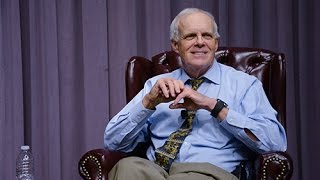
This content was created by GHION.AI . This content was uploaded by GHION.AI . This is a YouTube video titled "John Hennessy: Leaders Must Be Honest" featuring a discussion from February 8, 2016, with John Hennessy, who has been involved with the university for over 30 years. The conversation explores the future of education, including the role of residential undergraduate experiences, the evolution of continuing education, and the integration of online learning to enhance educational quality.
Chapters
What about the future of education? We are at a really interesting time where people are now really galvanized around this question of what should the future university look like? You know, the whole MOOC experience really got everybody very excited about thinking about this. That's had some surprising and interesting results. But where do you see if you, you know, You've been here 16 years in your role as president, but on the university for twice that. What, you know, looking ahead 20, 30 years, what is the education, higher education going to look like?
So I think, I think for undergraduate education, the residential experience will remain the jewel in the crown. It may become less and less accessible, particularly outside the United States. It may not be an opportunity for many people living in developing parts of the world simply because it's, it is more expensive, but it's the gold standard. And so I think it remains, I think we'll see a little more shifting about whether or not students do that in a contiguous four years or do it over a longer period, or take a year or two years or three years off to go do something else and then come back and finish the degree. I think we'll see more flexibility in how the degree is composed and what experiences. I think the other thing that will happen on undergraduate education will be a growing emphasis on experiential kinds of opportunities, right? The kinds of, of things that you and the venture group here, the entrepreneurship group does. That's the future. Because that is a learning opportunity that's very different, that can't be captured watching a video and doing an online class solo. At least not quite the same way. I think the grad. Then let's take the jump to the other extreme. Continuing education, lifelong education is the future. People are going to have multiple careers, they're going to change what they do, they're going to come back to school. Not necessarily in a physical way, probably not in a physical way. More and more that will shift online for the simple reason that people are way too busy to physically come into a place every time. And the valley is simply too crowded to allow all that commuting to go on. So we're going to have a different model where people engage through long periods of their lives, right? Including. Including keeping their brains active and keeping themselves interested when they get to retirement. So I think we'll see that. And graduate education will probably blend the two. Maybe you come for a master's degree, but maybe you don't. Maybe you do part of it online and you do part of it in presence so that you can, if there is an experiential component, you can be present for that and the rest can be done online. And I think we'll see models like that continuing to evolve. My view of thinking about online is that we ought to think about as a way to enhance the quality of education, not simply replace what we currently do, but enhance what we currently do.