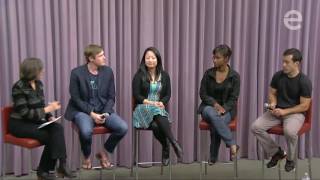
This content was created by GHION.AI . This content was uploaded by GHION.AI . This is a YouTube video titled "Jonah Greenberger: Building Culture Alongside Products" created on November 2, 2016. It features a discussion about company culture, focusing on staffing decisions and the importance of fostering a problem-solving mindset within a startup environment. Jonah Greenberger shares insights on how culture impacts team dynamics and productivity.
Our company culture is actually probably defined by a staffing decision we had to make very early on, which was that a couple years ago, in order to execute the VR pipeline as we needed to, it was still fairly technical. So we had a choice. We could either hire engineers and teach them the language of football and put them on football fields, or we could go the other route, which is we took people that knew football and we could teach them to do the engineering.
We.
We decided to go that route, which meant that for a long time, I was teaching recently released NFL linebackers how to do basic computer skills and to teach them to do some of the engineering skills that we needed, which definitely made me a much more patient person and involved a lot of extensive professional development. But I think it was great for us in that we decided and we knew that the clients that we had, they speak football first, and that was what was most important to them. And so we needed to kind of cater our company and cater our employees to be able to do that first. And so that was what we kind of decided. And now we've kind of become culturally defined by that.
So when I was first learning about startups, people talked about the team is so important and the culture is so important. I didn't really understand what that meant until I started Bright. And just to make it really concrete for us, culture is kind of like how you feel about the company when you're there. Like, do you have fun in your interactions with other people? Is it frustrating? And then the rules that govern that. And so I think, you know, in the first year or first six months before I really understood what culture was, it was unintentional. And as a result, you know, people didn't show up for work in time, they didn't show up for meetings in time. Interactions were really tough. And the number one thing that now kind of defines our culture was everyone would always raise issues. They'd say, oh, no, we can't do that. Oh no, we just have to wait three months for the bank account to open, because that's how it works. And everyone just raised problems. And there were so many problems you could find. But then, because honestly, that just wasn't fun. And I didn't want to go to work every day and hear what problems we couldn't solve. I just started becoming really intentional about saying, okay, we're not a company where you can raise a problem without raising a potential solution. And you don't have to have the solution, but you have to present a solution. Because that habit of just getting in and thinking about what could be the answer then becomes something you take into every single thing you do. And then all of a sudden, instead of saying, and engineers are really good at this, saying, oh, no, that won't work for this reason. Because you can always find the smartest minds can find a reason something won't work. But that actually doesn't build a company, and it doesn't make it fun. And so everyone just started saying, oh, no, we have this, like, you have to come up with something. And we would just wouldn't respond to emails if they didn't have a solution. It got harsh. But now it's one of the things people value most about Bright, and it makes everyone's life way more fun. So that's kind of a concrete element of culture that we think about.