Kevin Weil: Unfiltered Insights From Instagram [Entire Talk]
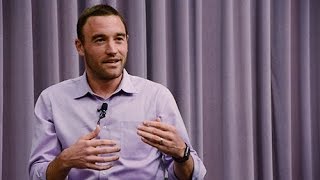
This content was created by GHION.AI . This content was uploaded by GHION.AI . This is a YouTube talk titled "Kevin Weil: Unfiltered Insights From Instagram [Entire Talk]" (posted 2017-05-12). It is an interview-style presentation featuring Kevin Weil (then at Instagram) speaking with a moderator (SPEAKER A) and taking audience questions. Weil recounts his path from studying physics at Harvard/Stanford to working at startups, Twitter and Instagram; explains product- and company-level thinking (analytics, product management, experimentation, Instagram Stories, Facebook/Instagram relationship, global product considerations), team and culture building, work‑life balance, and advice for students and entrepreneurs. The format is a public talk with Q&A rather than a diarized multi-party conversational transcript.
Chapters
Today we have a really special guest. I've known Kevin Wheel for many, many years.
He came to our wedding.
I know, but we'll keep that— we won't talk about that today. And it is really special to have him here to share his story. Since we're going to be doing an interview today, I'm not going to do a formal introduction, but I'm going to let Kevin tell you a little snapshot about his story about how he got from where he was sitting as a student seat to here sitting in the front of the room.
Sure. So, well, I grew up in Redmond, home of Microsoft, and my dad was there for probably 20 years. So I learned to program when I was young, but then got super into physics and math. So I went to Harvard for undergrad, studied physics and math, came out to Stanford where I thought I was going to be a physics professor for the rest of my life. Like, I was studying theoretical physics. It's all I wanted to do. Then met my now wife who was a Mayfield Fellow here at Stanford, was part of this world, and she kind of opened my eyes to the whole, to everything that is Silicon Valley around all of us. I really just had blinders on and had no idea, and I kind of got hooked. The idea that I could join a company and start creating things and shipping things, So I jumped out, started working at a couple startups as an engineer, got the opportunity to join Twitter, started working on data and analytics back when Twitter was about 40 people. Somehow in the middle of all that ended up moving to the product side and the fun parts of working at a small and fast-growing company, somehow ended up running the product team after about 7 years and then moved to Instagram a little over a year ago. So it's been a wild ride.
So let's flash back to when you were at Harvard. You were at school there at the same time as Mark Zuckerberg. What did you think about his decision to leave school to go start a company?
Yeah, I'm going to embarrass myself. This is the part where you realize you're all way smarter than I am. I was at— so I'm a year older than Mark. So we were at Harvard at the same time and he dropped out after a couple of years. So he'd started a couple things at Harvard, got in trouble for a bunch of them, then started building Facebook. It took off like wildfire throughout the campus, and he came out here I think for a summer maybe after his freshman or sophomore year and then didn't come back. And so I think that was after his sophomore year. I'm a junior at this point, and I'm sitting here going, everyone knows him, he's kind of infamous on campus. I'm sitting here going, he's giving up a Harvard degree to go work on some company? What an idiot. As I went and continued and got my degree and now 12 years later, I'm working for him, so.
Well, yes, but let's think about— you then came here for your PhD and you left your PhD program to go into industry. How hard was that decision? Why don't you talk about that calculus?
Yeah, it was a weird decision actually, to be honest, 'cause I was so invested in, like I was studying theoretical physics, I wanted to be a physics professor, 'cause like what else do you do with a theoretical physics degree? And then I met my wife Elizabeth, who was very much, she had paid her way through college basically working at startups, and it kinda just opened my eyes to this whole new world where in physics, especially in theoretical physics, you're lucky if you make a contribution over a lifetime. And it's fascinating and the contributions are fundamental when they're made and they advance human knowledge and all sorts of amazing things. But then I got this taste of like, oh, or I could go to a company and between 9 and 5 I could ship something to millions of people and I could create and I just got hooked and it was sort of, I got, I passed my quals, got my master's degree, felt like I had done just enough and went and and join the workforce. I actually joined a company called Tropos Networks. Does anybody remember Tropos Networks?
Nobody in the room.
Oh, wow, nobody. It's all right, it's all right. It was doing municipal Wi-Fi, and the interesting thing was it was founded by a bunch of PhD physics dropouts. So it was about as smooth of an entry into the workplace as you could have imagined, 'cause I was working with a bunch of other dropouts like myself.
Great, well then when you joined Twitter, there were only 40 people. I'd love to know about your decision to do that and also how your role changed as the company grew.
Yeah, it's, so my job before Twitter, I started working on this technology called Hadoop. People are probably familiar with Hadoop. A few more hands than Tropos maybe? All right. Anyways, sort of big data stuff and I'd seen this, it was back in maybe 2007, it was early. And I saw the power for this technology to change the way that we asked and answered questions about our business at this company I was at. And I got the opportunity to go to Twitter and start the analytics team. So at the time I was the first engineer who wasn't carrying a pager and you remember Twitter back in 2009, it was up and down, we were growing like mad and the service was constantly having scaling issues. So I was the first person that got to come in and try and understand what the data looked like. How were people using Twitter and how could we understand it to help us build a better product? And yeah, it was 40 people, so we were all kind of figuring out as we went. I'll tell you one quick story from back then. So I was literally the first person that was working on the data. Everybody else had just been trying to keep the service afloat as they dealt with massive growth. And about 2 weeks in, they had a board meeting and someone said, hey Kevin, you're here, you're the analytics guy, can you go figure out how many users we had this quarter? And it meant I had to go do this SQL query and it was a particularly expensive SQL query 'cause I had to look at the number of distinct user IDs that had used the service over the last 90 days. And at this time there was no, offline data store. The thing that I had to query was the same thing that was serving Twitter, which by the way was the same thing that was basically on fire because we were growing so fast. So I had to come into work at 3:00 AM, which was as off-peak, as low usage a time as we had, and do this SQL query and watch the rest of the servers across Twitter and make sure that I wasn't delaying them too much. As I did this query to get data for this. So that's kind of where Twitter was and that's where you are as a company of 40 people trying to grow really fast. But the exciting thing is we, there was so much opportunity as we grew. We went from 40 to about 4,000 while I was at Twitter. I started doing analytics and then as we kind of built that out and we got to a place where internally we knew how Twitter was growing and what led to success on the service, how people were using the product, and what we could do to make it better for them. We started realizing there are a lot of businesses and other people that are using Twitter for their livelihood. What if we could use analytics to help them understand how Twitter was helping them and how they could use it better? So we started working on that. It was just me and two other engineers, and these two guys were far better engineers than I ever was. So as we started thinking, well, we're building a product for other people, we should probably go ask them if we're on the right track. One of us had to not be writing code for a little while to go ask the potential customers, and they were so much better than I was at what we were doing. It was way better that I took some time off than they did. So I started doing this and going out and talking to customers, trying to understand if what we were building made sense for them, and that was kind of the first point where I transitioned a little bit from being an engineer into being more of a product manager. And I was still writing code, but But doing some of that and over time I started doing more of the product management, less of the engineering, and eventually became a product manager. That product turned into our ads product. As we started thinking about building products for businesses, one of the other things they want to do is they want to get more reach, they want to use the service to reach potential customers. So that turned into our ad product, and I didn't know anything about ads, but I was the guy that was there, so there was an opportunity to start working on that. And then I was fortunate to get to grow with that product and that team as it grew. So we took that product from $0 in revenue to about $2 billion in revenue over 4 or 5 years. And I got to grow with the team as it grew. And I spent my last maybe 18 months overseeing the rest of the product team as well. So not just the ads and business side, but the consumer product and then things like Vine and Periscope. So just, I mean, I could have never in a million years predicted that I would have taken that path, that I would have gotten the opportunity to take that path, but I think that's the fun of joining a small company and seeing it through a lot of growth. You know, opportunities come your way, people took bets on me and I worked really hard to try and make those bets good.
[Speaker] So how did your thinking have to change as that role changed, right? As an individual contributor writing code to then leading the product team, How did your thinking about the product and the company shift?
Yeah, it's a really good question. I don't think I noticed this at the time. It's more of something that looking back I have realized, but there's a funny thing when you're an engineer, you know how all the systems work, and then when you're a product manager, you're not really responsible for knowing how the systems work. Your job is to be the voice of the customer. You're supposed to be thinking about what jobs your product is hired for, like why do people use your product, What are they trying to do? What problems does it solve for them and how can you solve those problems better? But coming from an engineering world where I knew how the systems worked, it was actually, in general it's a strength, it's good to be technical because you're still building products, but the challenge I think that I had to overcome at least was because I knew how the systems worked, I would sort of short-circuit certain ideas because I knew they'd be harder than other ideas. I had to learn to actually not use that part of my brain or part of my history, because it's way better if you can think about what problem you're trying to solve and why, independent of whether it's easy or hard. Figure that part out later. But you want to sort of keep the purity of thinking about the problem you're trying to solve and not be like, well, I know this one's easier, so maybe we'll try and go in this direction a little bit, because we can do that faster. So I really had to sort of try and to shut that part of my brain off. And then it kinda happened automatically, 'cause as we grew, I'd actually seen less and less of the code as time went on, but in the beginning, I really had to work at it.
Right, so you could throw it over the fence to the engineers and say, figure out how to make it work.
Well, no, it's definitely not that. Definitely not that. I think it's really important to be able to work directly with your team, but you just don't want to be, you don't wanna be throwing out certain solutions just 'cause you know they're hard. At the end of the day, you do absolutely work really closely with your engineering team and maybe the perfect solution is actually not feasible from an engineering perspective and you find the sort of 80/20 value proposition that you can actually build. You just don't want to be throwing things out at the beginning. You want to do that sort of towards the end once you figure out what the right thing is with the team.
So you then chose to leave Twitter to go to Instagram. Can you talk a little bit about your thinking about that? How did you evaluate that opportunity and why did you choose that as opposed to going to another startup?
Yeah, I had an amazing 7 years at Twitter. It's a great company. I think it's important for the world. But it was also, I worked at a couple small companies before that, but Twitter was really the only company that I had ever seen at scale. Certainly the only company I'd ever had any amount of responsibility at. And I kinda wanted to see how other companies did things. Some of the things Twitter did, it did really well. Some of the things, other companies do better, and I didn't have any sense of that. So I really wanted to see other companies. But after 7 years, my intention was actually to take like 6 months off. So I had quietly resigned and was sort of finishing out my time at Twitter when I happened to have dinner with Kevin Systrom. He's a friend of my wife's and we'd known him for years, and he just came over for dinner. And at the end of dinner, he was like, hey, we have this role open, would you ever think about it? And I was like, no. I work at Twitter, I couldn't work at Instagram. But then I was kinda like, wait, why would I not learn more? Instagram is an amazing company, Facebook is an incredible company. So I went in and just got to know the team a little bit, loved everybody I met, and also realized Instagram is, it's a company of about, now it's 400 or 500 people, at the time I think it was maybe 200. So it was a company of 200 people with an audience, the community of hundreds of millions at the time. Now it's over 700 million people that use Instagram every month. And I don't think there's any place in the world where you have the value of being a small company. You can be nimble, you can move quickly, all the good things that come with being a small company, and yet you have the impact and the opportunity to make a difference that a large company has because we serve an audience of 700 million people. So that combination to me was just, I don't think there's anywhere else in the world that you can get that. And that together with the people I'd be working with who I adore is just too much to turn down. So I've been loving it.
[Speaker] Great, so let's just talk about Instagram for a minute. There have been lots of photo sharing apps out there and Instagram has just really I mean, been the dominant player in this space. What do you attribute that to? What's the key to that success?
I give a lot of credit to Kevin Systrom and to Mike Krieger, who are the two founders. I think there are a couple things. They have this, one of the values we have at Instagram is to do the simple thing first. And I think it's an incredibly valuable thing take with you through life. Systems only get more complex as they grow, so you have to start simple, 'cause if you start simple, it will get more complex. If you start complex, you're in trouble. So the idea of doing the simple thing first is boiling down the problem you're solving to its most sort of essential pieces and making sure you get that right before you worry about all the other details. You can also use it when you're trying to build something. We have a lot of ideas, not all of them are good ideas, but you don't know at the beginning as you're starting to think about it which is which necessarily. And so doing the simple thing first means sometimes also building the simple thing first, seeing if your hunches are right, seeing if it resonates with the people that use Instagram. And if it doesn't, because you built the simple thing first, you can throw it away and you haven't invested too much time in it. If it does, you can continue to build on it. So it leads to this sort of quick iteration cycle where you test ideas rapidly and you hopefully converge to the right thing, to something that's meaningful for people quickly. The other thing that I think they do insanely well is focus. It's, Kevin and Mike are very good at saying no to things and sort of through their modeling of this, Instagram is very good at saying no to things. So there are so many opportunities that we say no to because we're trying to focus, we're trying to do fewer things really well. There's a, the CEO of Under Armour has this, there's a story that I love. Under Armour started out as a small company, they're now a competitor to Nike, so they're doing shoes, they do everything, right? In his office there's a whiteboard and there's a million things written all over it, but in the center, surrounded by a bunch of empty space, it says, remember to sell t-shirts. It's through everything else they're doing, remember to serve the customer, remember why you exist, and keep that the focus. All the other things that you have to do to build a successful company, you do them so that you can fulfill your mission, so that you can build a great product for all the people, in our case, all the people that use Instagram. And I think one of the things that makes Instagram special is we keep that at the center of everything we do and we don't let the other things be their own purpose. The other things are in service to building a great product.
So can you talk a little bit about the relationship between Instagram and Facebook? It must be quite interesting. How integrated is it and how independent are you?
Yeah, we're very independent and we get a ton of value from Facebook, and those two things don't seem like they mesh immediately, but it's the best of both worlds and I— I've never seen anything like it. Mark Zuckerberg and Kevin Systrom deserve a lot of credit for how they have set this thing up because it really is the best of both worlds. So we rely heavily on Facebook for things like infrastructure. They have data centers around the world. They have scalable systems that we can just begin using if they meet our use, if they meet our needs. And that means we can go faster. We leverage their sales team, so if you're an advertiser, You can use the same interfaces you're already using to advertise on Facebook to advertise on Instagram. If we need business development contacts around the world, Facebook has teams around the world that we're able to use. And so we get all of that value, but then from a product standpoint, in terms of what we build, in terms of what, how we evolve Instagram, we're totally independent. So we do what's right for the Instagram community. Facebook does what's right for the Facebook community. And as a result, we get to be this tiny company that has superpowers from being a part of Facebook, but we get to move fast and build what's right for our product, which is not always the same as what's right for Facebook or for WhatsApp or for Oculus or the other things that are a part of overall Facebook. So it works really well. It isn't obvious, like sometimes you end up doing the same thing, sometimes you end up doing different things, and in the same way that that somebody else within Facebook wouldn't tell us, oh no, we're building that, you can't build it. We don't tell anyone else that either, so we work pretty independently, but we look for ways that we can help each other if there are opportunities.
So you talk about focus, but of course you have to keep innovating. So where do ideas come from? Do they come from inside, do they come from customers, do they come from looking at the competitive landscape? Where do ideas come from and how do you then evaluate them?
[Speaker] It's a great question. I don't know that there's a formula for it. My personal belief, good ideas come from everywhere. Then that means good ideas come from folks internal to Instagram. Good ideas also come from folks outside of Instagram. There are a whole lot of smart people, a whole lot more smart people outside of Instagram than there are inside, right? So good ideas come from everywhere. We try and do a lot of research. We try and actually sit down and talk with people and understand why they're using Instagram and how we could build a better product for them. We also are looking at data all the time to try to see what sort of latent trends there are and what people are showing us that they want to do. And we have a sense of what we want Instagram to become. We think a lot about how Instagram strengthens relationships through shared experiences. So you're closer to people in your life, to people that you know, to your friends, because of Instagram. You're also probably closer to the things, the interests you have, the passions you have, sports teams you care about, musicians you care about because of Instagram. You're seeing what they're doing in their life through the Instagram feed, you're watching their Instagram stories, you join them when they go live. You're closer to the people in your life because of Instagram. And so internally we think about how we can build products that continue to strengthen relationships with the people and the things you care about.
So can you talk a little bit about experimentation? So let's say an idea comes in, you think it's kind of good, what happens and when do you know if it works or if it doesn't work and what do you do if it's not working?
Well, you don't see the ones that don't work for the most part. Maybe 1% of you do for a period of time and then— Can you give an example?
Let me just maybe— that would be helpful.
Gosh, an example. I mean, we try so many things. We're probably running 50 experiments right now, and they are everything from bigger things that, some things that are successful that you'll see launch in the coming days and weeks, to algorithm changes and smaller things that may be totally behind the scenes but that change what surfaces to you on Instagram and how things are ranked and how we prioritize what you see and who you could follow. So it's across the board. I think one of the things that really does separate Facebook and Instagram is the speed at which we can experiment, the tooling around it. Everybody can launch their own experiment. It doesn't take, nobody has to go ask me or ask Kevin Systrom if they can do an experiment. If it's very user-facing, of course we think about the impact it'll have, but most experiments are smaller. You know, if you're testing changes to the new user flow, for example, does changing the order of these things or does asking these questions in a different way help people understand what Instagram is and become successful users faster? People can just launch experiments like that at all times, and then data automatically gets tabulated, and without anybody doing work, you can see which experiments make meaningful differences in our metrics, and it happens very quickly. Lots of small learnings like that add up. A percent here, a percent there, a percent here, a few times a week, suddenly over the course of a quarter you're 40% better than when you started. I think it really is meaningful. Press writes about big product launches and those things are very important, but I think what people miss is the daily, just getting a little bit better every single day that Facebook and Instagram are better at than anybody I've ever seen.
That's terrific. I know that the product is used quite differently differently in different parts of the world. How does that affect your product design and development, and is the product actually different if you go to different places around the globe?
Yeah, it's one of the hardest parts of building a product from here in the US. Our audience is global. We have 700 million people around the world that use Instagram, and maybe 20-ish percent of them are in the US. So 80% are outside the US in a different country, A lot of those people are in very different circumstances. They, in many cases, I bet most people in this room have iPhones. The majority of people using Instagram have Android phones. We all live on good networks. There are a lot of people that use Instagram around the world on bad networks, on no networks. You need to think about things like downloading things while you're on Wi-Fi because you can't depend on a cellular connection. So there are very different, sort of physical circumstances, there are also different social norms. People think about privacy very differently. You and I, maybe if we get a follower on Instagram, we're like, oh cool, one more follower. There are people in the world who, when they get a follower, they think, why is that person following, I don't know that person, why? And there's a, so you have very, very different contexts around the world. We try and do a lot of research, we try and actually get out and talk to people all over the world as a way of getting a better sense of what their needs are and how they think about Instagram. We send product managers, researchers, designers, engineers to different places in the world because there's no substitute for actually getting out and talking to users.
So is the product actually different in different regions, or is it the same product that you have to figure out how to sort of walk that narrow line between these different cultures?
Fundamentally it's the same product, but sort of in small ways it may act differently, it may emphasize different things. But there's not a different tab in a different country or anything like that. There's nothing hugely significant like that.
Well, one thing that's always really interesting to me is about how organizations build a culture. And I'd like to get your take on what the culture is at Instagram and what sort of levers you use with your team to reinforce that?
I think one of the great things about Instagram, like I talked about, one of the reasons I joined was the size. Our PM team is now 30 people, and we all fit in one room. And so a big part of it for me is building a team that feels like family, where we all know each other, we all know each other well, we have a lot of trust in each other. Part of that means being comfortable enough to give each other hard feedback as well, to be able to say what you authentically think. Because when you can do that, it builds trust and it brings everybody closer. You kind of have to do that when the team is small, or when the team is large, you're never going to have that. So we have that opportunity, and I think the culture— again, Kevin and Mike deserve all the credit for this because it was true long before I got there. It's a company that feels like a family and I— that sounds cliché, but it's a group— great group of people and it's a group of people that I think are really motivated by the mission of like bringing people closer together around the world.
So in a few minutes I'm going to open up to questions from the audience. I've got a few more questions here, but you can start thinking about the really hard questions you can ask Kevin. So let's— I want to talk about your personal life. You have a lot going on. You are an ultra-marathon runner. You've got 3 little kids, 2.5-year-old and 6-month-old twins. How do you balance all of that? I mean, this is— that sounds pretty complicated. You've got a big job and you have a lot of other things going on outside of work.
I mean, balance is a very generous term for what we do.
Do you sleep?
Not much. That's mostly what we sacrifice. No, I mean, my wife Elizabeth talks a lot about having something, like a handful of things in your life that are non-negotiable, that you're gonna stick to no matter what because they're important to you and to who you are. For us, for both of us, fortunately, running is one of those things. So it's just, I need my morning run every day to sort of level set and no matter how little sleep I've gotten, if I get a run in, I'm good for the day. And so the morning is spending time with kids and getting a run in. Then we both go to work. Thank goodness we have an incredible nanny who we deeply trust and who's wonderful with our kids. And then you get home and it's insanity for like 2 or 3 hours. You're all welcome to come over and witness it anytime. We'll take any help we can get trying to get 3 kids fed and to bed and all of that. So life is insane basically from like 6 to 9, and then we either try and spend a little time with each other or go back to work kind of depending on the day.
So being a long-distance runner, has that training been helpful for you at all in thinking about what you do in an entrepreneurial environment? Is there any— is that a metaphor in some way that you can apply?
It's interesting. Let's see. So, if you're, I like running long races, 50Ks, 50 miles, things like that. And there's not a lot of tricks to running a 50-mile race. You kinda start running and you just keep running. And you go through some ups and downs, you go through some periods where you feel good, you go through some periods where you feel bad, but you just keep running. And that's actually the key to success. I think there is some analogy in this, which is like every company has ups and downs, every product you work on has ups and downs, every class you take, everything you do has ups and downs. I think people underestimate the value of just fighting through it and staying determined, staying the course, and coming out the other side stronger. I said one of the things that I think Facebook and Instagram are good at that people don't recognize is getting a little bit better every single day, and that comes in training for races and stuff as well. You put in your 10 miles at 5 AM when no one else is out on the roads and you get a little bit better, and maybe nobody sees it, but you get a little bit better. I think that's very true of your work in companies. It's easy to get discouraged or to sort of ride the ups and downs too much, You stay focused on getting just a little bit better every single day, and you may not notice it from like Monday to Tuesday to Wednesday to Thursday, but you definitely notice it from 2016 to 2017 to 2018.
Great. So let's flash back to when you were a student. Imagine, I mean, it's not that long ago. When were you in graduate school?
It's like longer than I, than I realized. Grad school? 10 or 11 years?
Yeah, I was going to say 10 years, it's only 10 years ago when you were sitting in this room listening to talks, right? And what do you wish you had learned then that would have made things easier, essentially helped you in ways that you wish you had known then?
This is maybe personal, this is my own answer to this question, but I think people are everything. No one actually creates anything in a vacuum. No one actually does anything on their own. Everything that you accomplish, you accomplish with teams. And success is surrounding yourself with other great people who are smarter than you, who push you, who are better than you at lots of things. I think academically maybe I realized that, but you don't, now we've lived it for 10 or 11 years, everything you accomplish you do because you're surrounded by great people. So finding ways to surround yourself by the best people you possibly can, the smartest people, the people that push you to be better, is probably the best thing you can do. It's also, as I grew within Twitter, every job that I had was the biggest job that I'd ever had. I was managing more people than I'd ever managed. I had more responsibility than I'd ever had before. Before, and it was happening really fast and it was intimidating. It's always that question of, well, I figured out how to do this job, but now I've got this responsibility, like, uh-oh, I'm not sure I can do this. You go talk to other people and you realize you're doing this job, but there's somebody up here who's doing this, and if they can do this, I'll figure this one out. So people also give me, personally, people give me a lot of perspective. And they, I don't know, I feel like the more I've been exposed to different ways of thinking, different approaches to the world, realizing, I don't know, I don't think I would have been able to do the things that I have if I hadn't focused so much on learning from other people and being around people who are better than me in every possible way.
Cool. Who has a first question? Great, over here.
So I'll ask a question I asked a Facebook interviewer and I didn't get a very good answer to. So just warning, gird your loins. So I'm curious what frameworks or guidance or codes of conduct you employ within Facebook and Instagram around how you employ consumer behavior psychology to nudge users in one way or another in a way that you feel is appropriate, conforms with your values, and is ultimately ethical to some standard? So I'll speak about Instagram, 'cause that's the only place I've worked. You know, it's a good question. I'm not sure that it comes up, and that's sort of an abstract way of thinking about things, and we tend to approach problems much more pragmatically. So, I'm just trying to best answer your question here.
Well, let me ask you, let me see if I can sort of phrase it in a way that might be easier. Sure. Do you have an ethical code of— that ends up influencing the way the product gets shaped? Does that—
Yeah, sure. I mean, so we try and go back to our mission as much as possible because I think when you— if you have a mission that you believe in and you try and use that mission to guide decisions, then you're going to make decisions in a consistent way and you're going to make them with an eye to the future that you're trying to create. So our mission is to strengthen relationships through shared experiences. So we think if we were making a decision, feed ranking, for example, is a place where you can think about these kinds of problems. If you're gonna, you follow a bunch of people on Instagram, you follow brands that you care about, you follow sports teams, you follow musicians, celebrities, and you follow some of your closest friends. It's a hard problem figuring out what you optimize for when you're trying to when you're trying to rank the feed. And if our mission is to strengthen relationships, we think a lot about, you know, how do we bring you closer to the people that you care most about? And one of the things that we have thought a lot about is that leads you to making sure that you see what your friends are up to. I'm trying to give a good answer to your question. I'm not gonna say it doesn't, I guess I haven't felt the tension at Instagram that maybe you're referencing. Instagram, we're trying to create a product where you feel safe, where you feel comfortable, where you don't face harassment and abuse, a product that, that makes you happy because it shows you great experiences that your friends are having or the people or products that you care about, brands that you care about, athletes that you care about, experiences that they're having. So it's a really good question. I'm not sure my answer is very satisfactory, but I'll just say we haven't felt that tension, I guess, in everyday life. And when it comes to running experiments, we only run experiments that we think we would ship. So we don't tend to do at Instagram abstract learning experiments of maybe of the kind you're referencing. We try and run experiments around things that we actually think make Instagram fundamentally better for the people that use it.
Great.
More questions?
Thank you.
Yes.
Could you talk a little bit about the decision-making behind introducing Instagram Stories.
So I want to repeat the question. So the question is, talk about the process of decision-making around introducing Instagram Stories.
Will you give me license to talk for like 4 or 5 minutes about this? 'Cause I think the backstory is really interesting. So the tension in the question is you've got Snapchat, which has a Stories product, and here's where we were about a year ago. Instagram was a product for your highlights. It started out, if you go back to the very beginning of Instagram, as a place where you would share anything. You share all the moments of your life. But as the community grew, more and more people joined Instagram, more and more people follow you, you start to feel like, well, the last thing I posted got 30 likes. Is this one gonna get 30 likes? I don't know, maybe I just won't post. And the, the quality bar that was required to post on Instagram kept going up. People's self-imposed quality bar kept going up. And it meant that Instagram became a place not for all of your moments, but for your highlights, for the absolute best things that happened in your life. And that means it was a great product to consume, 'cause what you were seeing was literally some of the greatest things that were going on in your friends' lives. But how many highlights do you have in a week? 2, 3? It doesn't happen all the time. A product that's just for your highlights, that wasn't what we set out to become. So we wanted to get back to the world where Instagram was a place where you felt comfortable sharing all of your moments. And when you think about, so if that's your goal, you think about, well, why aren't people doing that today? Well, you're probably not gonna share, if you're gonna share all of your moments, you're gonna share more of your raw, daily, here's what I'm doing. This isn't anything super special, just here's what I'm doing. Your friends care about that, right? Because they care about you. If you're gonna share that, you're probably not gonna share that 10 times a day to a feed, which is the way Instagram always historically worked. Because there are social norms around a feed, right? So rather than being feed-oriented, if you're gonna build a product that people share to consistently multiple times throughout the day, it needs to be more person-oriented than feed-oriented. Another reason that people don't share all the time is that the quality bar, like, is this gonna be good enough? This thing just happened to me, I kinda wanna share it, but like last time I got 100 likes. Am I gonna get 100 likes on this? I don't think, I'm just not gonna share that. So people self-censor because the feedback is public. They don't wanna post something that gets 50 likes when their last one got 100. So if you want people to feel comfortable sharing all the time, you don't want public feedback, you want private feedback. And then the other thing is people's Instagram profiles are sacred to them. It's a representation of who they are. You can go to someone's Instagram profile and get a sense of who they are, how they represent themselves, what their life is like. And so if you want them to share 10 times a day, rather than it being permanently posted to your profile forever, you probably want ephemerality. Because again, frees you up to feel comfortable posting more. So you end up in this world where you want a person-oriented format, you want private feedback, and you want ephemerality. And so this was sort of the logic that we went through, and as we sort of got to this place, we were like, oh, you put those three things together, that's a Snapchat story. Oh, that's why the Snapchat story format is so powerful. It has those things and they work together to make you feel comfortable sharing all these moments in your life. And when we realized that, we were like, we feel like this is a valuable thing to exist on Instagram. There's no reason to call it a different name. We don't need to give it a different label. It is a story. And because stories, we felt like it was going to be a format that people adopted in the same way that A mobile feed didn't used to be a thing and a hashtag didn't used to be a thing and now you see them everywhere across lots of products. Snapchat was the first to create the story format and more power to them, they did a fantastic job, but we felt like it was a format that was gonna be powerful in a lot of different products and so we adopted it and it's been the fastest growing product I think I've ever seen. We went from zero to 200 million people using it every single day in about 8 months.
Wow. Great.
Does that make sense?
Yes. Back there.
Looking back on your path coming from a Harvard undergrad with a concentration in physics and then coming out to Stanford to continue further research in physics and then kind of getting the tech buzz and the energy that's part of Silicon Valley and deciding to throw all that away or put that on hold and jump into the tech business, what advice do you have for kind of the undergrads in the room, the young entrepreneurs who are very excited about the energy but also really want to focus on their studies and become experts in a given field?
So the question is about the tension between being a student and really excelling at that versus looking at opportunities outside in industry and when do you decide to jump ship to go and pursue that opportunity?
Yeah, I think just if you keep sort of following your nose and doing the things that are exciting to you, good things are going to happen. So if you're— If you're really into CS, go deep on CS, and that will only yield good things. If you're really into entrepreneurship, you are at the best place in the world to understand entrepreneurship. People start companies at the same time as they're going to school. You can learn so much from this environment. I talked a lot about surrounding yourself with good people. I mean, look at this place. You are surrounded by some of the best people in the world. Learn from them, take every advantage of it. There's something really magical about being at an institution like Stanford. I miss it. In a lot of ways I wish I could come back, maybe someday.
You're welcome anytime.
Oh, thank you. So I think there's, you can learn so much about anything you want to learn about while you're at Stanford, whether it's entrepreneurship or going deep in CS or like studying Russian Lit because like you're never gonna get to study Russian Lit ever again, so why not I don't know, I think you can sort of do all the things while you're here, and you should take advantage of it and do that.
Nina.
Hi, so I have pretty much exactly the same educational background as you, and I am so impressed by my peers at school, but I find that teamwork is somehow not good even though there's group projects, not as effective, or some people slack off, even though the students are all independently really brilliant. And you spoke about teamwork being the way that you succeed in the real world. I was wondering if you have any thoughts on how we could bring this like startup teamwork model or companies teamwork model into the classroom where we could actually benefit a lot more out of these group projects.
Yeah.
So the question is, how do you really prepare students to be great team players in companies and how do you bring the sort of the culture of teamwork in companies into classroom settings?
You know, I wonder if part of it is motivation. I think the best companies have a mission that inspires people and everybody comes in to work hard and fights through the hard parts of a startup and the great parts of a startup because they believe in the mission. That's certainly been true of the best companies I've ever worked at. And there's a lot of research that shows if people are motivated by other things, if they're motivated by money, if they're motivated by a grade, like that's, You don't get the same quality of work out of anybody. So I wonder if part of it is figuring out why you're doing what you're doing and making the motivation something much bigger than getting a great grade in a class, but making it about learning for your future, making it about whatever it happens to be that's something bigger than just the immediate classroom setting.
Is that on the teacher then to create that culture in the classroom?
I wouldn't put it only on the teacher. The question was, is it on the teacher? And I think maybe great teachers can start to do that, but if that's not happening or if it doesn't resonate with everyone, then great students can do it as well.
Tap into your internal motivation.
Yeah.
Great. Super.
So what advice would you give to a startup in terms of organizing? Organizing the company? And here I'm talking about, you know, what— now you have— you mentioned that everybody could experiment, you know, it's not going through any kind of hierarchy, you know, leadership teams and things. So are there good advice for— is it just going to be a flat structure or—?
So I guess the question is how might you organize a startup to inspire this type of innovation?
Yeah, I don't know that there is a single answer to that. I think it naturally changes as you grow. The way you organize a 5-person startup is very different than the way you organize and operate a 50-person, is very different than the way we organize and operate Instagram today at 400 or 500. Kind of every time you double, things change, and by the time you've 10x'd, things definitely are different. So I think it's natural when you're really small to be a lot more founder-led, where things do go through the founder. You don't have the bandwidth if you're 6 people to have people running different experiments and other things. You want to have a very, very crystal clear goal and operate entirely around that, like trying to find product market fit. I think it becomes different once you've found product market fit and you're growing and trying to scale. It starts to become more and more important for the mission not to just be in the founder's head, but for the mission to be something that everybody can repeat. For the most important, like you should be able to go around to your company as it scales and ask anybody, what are the 3 most important things we're working on? And if people give different answers, then you've got work to do. Everybody should be able to give the same answer. Everybody should be able to talk about the mission and how those things that you're doing, the 3 most important things, relate back to the mission. And so the more you can get everybody focused on the same things and understanding the mission, the more you can distribute decision-making down into teams and hopefully move faster in parallel with everyone going the same direction. You don't want to move faster with everyone going different directions at all times. You want to move faster with everyone going in parallel, and that's what the mission's for.
Great. Another question? Back there. My question's about competition.
So Silicon Valley is littered with incumbents who define a product category, as your company does, and small scrappy companies come up with disruptive innovation and knock them off that perch. Does competition keep you up at night? You talked a little bit about how you've dealt with Snap. How do you as a company deal with that kind of competitive—
So how do you think about your competitors?
You definitely think about your competitors, but you don't let it drive why you do what you do. I think you're silly if you say, oh no, I'm not gonna think about it at all, I'm just not even gonna know, 'cause your competitors, if they're doing well, it's because they've tapped into something. And I think the important thing is to understand what that something is, understand how or if it relates to what you're trying to do, and if there's something that you can learn from it. But it's really important to stay focused on what you are trying to accomplish in the world, the mission of your own company, and not get too distracted. But if you're not learning from what's working, if you're not learning from how people are changing and evolving and finding different use cases for things like sharing experiences, then you're silly. So it's sort of, It's knowing what's going on, but then understanding how or if it applies to the goal that you're trying to solve. Right. I was wondering, how does fake news impact Instagram and how is it being addressed?
And how is that problem similar or different from what Facebook faces?
So, you wanna repeat the question?
Yeah, so how do you deal with fake news and do you have the same sort of issues that Facebook has?
Yeah, it's a very different problem on Instagram, and a lot of that is because of the structure of the product. So on Instagram, we don't have links. The best you can do is you get one link in your bio, but you don't get to attach a link to the post that you make. You also can't reshare things on Instagram. So if you post on Instagram and I see it and I love it, there's no way for me to take your post and share it to my friends. It reduces virality. That's intentional because we want Instagram to be a place where you feel comfortable sharing your experiences. And it's less about you being able to take someone else's experience that they shared to you and share it to all your— it's more about experiences and less about sharing a link. And both of those things are key to the way that news, real or fake, spreads on platforms like Facebook and Twitter. So it's less of a thing. That isn't to say that we don't think about it, but it's a much less, it's a much smaller issue on Instagram today, in part because of the, or in large part because of the way the service works.
So let me ask you about this. You talk a lot about using Instagram to connect people together and to build communities. Today happens also to be the day that Facebook released their quarterly results, which is all about making returns and return on investment. How do you think about monetization as you're developing the product?
Yeah, Mark has a great line about this, which is Facebook and Instagram as well exist to fulfill our mission. For Facebook, it's about making the world more open and connected. For Instagram, it's about strengthening relationships through shared experiences. You make money, you build a business so that you can keep the company going and do a better job of fulfilling your mission over time. You will not be able to fulfill your mission if you don't also have a strong and growing company. So revenue isn't the purpose of what we do, but it does power what we do, and we certainly couldn't do it without having a business. Also, the model that we, the way we make revenue is through advertising. Advertising appears in the Instagram feed. It appears in between Instagram stories. So it appears with the content. It's part of the consumer experience. And so we hold it to the same bar that we hold every bit of the Instagram experience to. It's no different. So the ads products for us are products in the exact same way that any other product we build at Instagram is. We don't live to build ads products, but they're a critical part of what we do and we wouldn't be Instagram without it. Cool.
Another question. Any students back there? Stand up really tall. [INAUDIBLE] able to excel actually in your role and pretty quickly get to the top.
Can you share a little bit what were the most important things that helped you with that switch first and while you were excelling in your position?
So the question is about you really trained as an engineer, as a scientist, as a physicist, and then you ended up doing really, really different things. What allowed you to excel when you changed into this new role?
Yeah, can I actually go back to the last question for just a second? I left out something important, and then I'll get to this question, which is you talk about strengthening relationships through shared experiences and the way that monetization weaves in. Products, we all have brands that we love, and we all have products that we love, and it's actually a big part of our lives. And so I think the thing that I left out is realizing that Instagram wouldn't actually be complete if we didn't give businesses an opportunity to reach out to the people that they that care about them, the people that use their products and love their products. And so for us, revenue advertising at its best is showing you, is introducing you to brands and products that you love, that you buy, that make your life better. And that's sort of the ideal that we strive for. And that's also the way that incentives get aligned. Advertising content to be great content. Advertisers want to create great content because that's what leads to consumers ultimately buying their products. And because we want Instagram to be full, to be a great experience itself, all these things weave together and if we do it right, the incentives are totally aligned and we can make ads that are also a great product. I think it's an important, when you think about finding a business model for the startup that you work in, whatever you're working on, You want to find ways to align the incentives of your varying customers, because if they're mismatched, you're going to run into problems down the road. And advertising is a great business model because the incentives between the people who use Instagram and the advertisers who want to reach those users are actually aligned. Users want to see great content and advertisers want to reach the people that, that love them, that buy their products. So, yeah, back to the other question. So let's see, the switch, you asked first about switching from engineering into product. It wasn't so purposeful, like it was kind of accidental. It was a thing that's, and this will be the metaphor for the answer to your entire question actually, the fun thing about being at a company that's growing quickly is is you kind of don't know all the things you're gonna need until you run into them, and then you, there are always way more things to do than there are people to do them in a growing company, and that means that it leaves a lot of opportunities for people who want to dig a little bit deeper, who want to try something new, who want to look for another opportunity to do that. So for me, somebody needed to go out and talk to the businesses that we were building for as we were starting to think about building analytics products at Twitter, and I volunteered, it seemed interesting, and anyways the rest of my team were better engineers than I was, so I felt like I was maximizing productivity by doing it too. And then as we grew and as that product turned into our advertising business and that team grew and grew, I didn't always, you know, it wasn't a linear path. At various points there were managers that were brought in above me Sometimes that's disappointing, but you also look to see like what can you learn from each of the people that you work with? What do they do better than you do and like how can you understand that, how can you make yourself better so that when the time comes and you get another opportunity, you're ready to take it? And so I was lucky that the business kept growing, which meant there were more opportunities sort of every few months there were new opportunities. And like I said, I had a few people that took bets on me and I worked really hard to to make sure that I made those bets good ones.
Great. Yes.
Hi, so one of the things that you talked about during your discussion was Instagram's strength lies in its ability to stay focused, but at the same time, how do you say no to ideas in a way that doesn't discourage employees from continuing to give out ideas? And then my second question is kind of related to what you said earlier about how everyone in the company everyone should know what the 3 most important things are, the mission of the company, but as you scale your company, how do you make sure that you're communicating those values properly?
So there are 2 questions. One has to do with if you've got a culture of being really, really focused, how do you not discourage people when you say no to their ideas? And then we'll get to the next question.
Yeah, well, it's— I mean, we all are users of the product too, so people come forward with great ideas that we just can't quite get to yet. and we're right there with them. They're like, I would love that. I wish that existed on Instagram. You're totally right. Instagram would be better for that. We just have to do these 3 things first because they are more impactful. They're going to be better for the community if we do. It's very rare that someone comes up with an idea that's just like, oh no, I don't think that's right. It's usually, that's a great idea. We just need to do these things really well first. And so if you do those and if you do them quickly, often you can get to the other ideas over time.
So the second question had to do with how do you actually communicate the values so that everybody in the organization is really marching in step?
You say it over and over and over and over and over again. It's— none of us remember things the first time we hear them. So I think it's important to get— to find different ways to remind people of what our mission is as Instagram. Why are we here? Why do we do what we do? Why is that so important to the world? And also to reference priorities as often as you can. If you listen to Mark and Sheryl, for example, when they talk about Facebook, if you go listen to the earnings call today, they'll get asked questions and they do a fantastic job of saying, well, our mission is to make the world more open and connected, and so, and they answer the question. And it's just like, you do things like that that remind people It's not just giving an answer to the question, it's reminding you why you're here and then that also usually helps you answer the question. If you think back to what is the mission, the mission often will help guide you towards the way you would answer the question.
So I want to ask the last question. Okay. Obviously you have had a really incredible career run in this 10 years since you've left school. What closing advice at this stage in your life would you give to the folks who are sitting in the room?
Oh man, spring this one on me at the end. I think I would go back, honestly I would go back to what I said about people. And this is my own personal answer, it doesn't need to be your answer, but my favorite thing is being surrounded by people that are smarter than me, that push me to be better, that teach me, show me areas where I could be better, whose strengths complement my weaknesses. And I feel like the more I'm in rooms like that, the happier I am, the better things that we build, the bigger stuff that I get to be a part of. It's like, I think it's, I've learned that it both makes me the happiest and leads to the biggest successes, I think. So surround yourself with amazing people, people that are better than you, people that are smarter than you, people that push you to be better. Fabulous.
Thank you so much. Please join me in thanking Kevin. Thank you.
More from GHION.AI


O processo de reconhecer limites, mesmo quando a vida parece exigir sempre mais.





Depois de tantas histórias, aprendizados e pausas necessárias, o @interior_iza está de volta



