Kristina Johnson: Energies that Power a Career [Entire Talk]
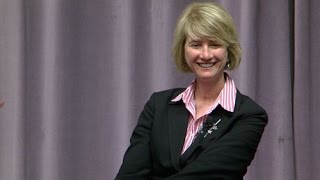
This content was created by GHION.AI . This content was uploaded by GHION.AI . This is a YouTube video titled "Kristina Johnson: Energies that Power a Career [Entire Talk]" from May 31, 2012. It features a talk by Kristina Johnson, discussing her career journey through academia, government, and entrepreneurship, with a focus on leadership, innovation, and energy policy. The conversation is moderated by Tina Seelig, and it covers topics such as leadership in academic institutions, transitioning to government roles, and starting a venture in the energy sector.
Chapters
So we're going to talk a lot today about change making and leadership in these different types of environments.
So welcome. Thank you. It's great to be here. Great.
So I want to start out talking about these different types of environments, about what it's like. Let's start in academics because the folks in the room here certainly are familiar with academics as they're. Most of them are students. What is it like to be in a leadership position in an academic institution? I always love the fact that Jim Plummer, our dean of always says that leading faculty is like herding cats and all you can do is move the cat food. So talk a little bit about what it means to be a leader in an academic institution.
Well, it's a great question. First of all, the best job in academics is being a graduate student. All right. Yes. Well, that was. It's true, actually. And then the second best job is being a professor. You have all the freedom and some responsibility. You have to go to class, you have to show up to class. You have to really pay attention to your graduate students and your undergraduate students. And then. So when I was a faculty member, I was telling Tina earlier, I swore I wouldn't do three things in my life. I would never be a dean, I would never start a company, and I'd never write a book. And I have the title for the book now. So never say never. I think the most important thing starting out not so much as a faculty member, but really as a dean or a provost. It's probably true in any organization is to get to know people. Because as one of my graduate students told me, people want to know you care before they care what you know. So when I started out as dean of Engineering at Duke, actually, I went to one of my roommates in college who ended up being CEO of eTrade. That's another lesson. Stay close to people you know here, because you never know. And she said, look, the first thing you ought to do is sit down with every single faculty member and just ask them, what are you passionate about? And that way they'll know you want to get to know them before you have an agenda. So I got really interesting answers. Like, one faculty member was very passionate about golf. So we talked about golf for about an hour. And another faculty member was very passionate about engineering education. And we talked for two and a half hours and. And I finally said, look, you can go to dinner if you want with me, but I gotta eat. So I think that was my biggest lesson, was what Kathy Levinson, who retired as CEO of E Trade took them public, told me, is sit down and get to know people. So when I went to Hopkins as provost, we had many faculty members, over 2,000. So I couldn't sit down with everyone, but I sat down with all the department chairs. And the way I did that was I just had lunch with the provost. And that had some unintended benefits, which we'll talk about later. But. But great.
Anyway, so then moving from academics into government, I mean, I don't know how much experience the people in this room have in government, but I have none. And I can imagine that it has to be totally different. That political environment, were there skills that mapped onto it? And what were the biggest surprises of being a leader in that type of environment?
The biggest challenge, I think, when I became undersecretary was that how many of us are faculty members or have taught at one time? Okay, so. Or maybe even graduate students. I don't know about y', all, but when I would go to a conference and write a talk, usually be on the plane on the way out there. So the biggest change is that everything that every talk had to be approved. So I'd have to write four days in advance what the talk is and send it through, you know, the administration to make sure I wasn't making policy, because that's one way you get fired is by making policy, because that's for the President to do. So I managed not to do that, which was very good. So that was. But I think, you know, seriously, one of the things that I learned in government is the amount of preparation. Again, going to meetings. I had a briefing book every night that was about that thick. And I would work from basically 6am till 10 at night. I'd get dinner, and then I'd do my briefing book, and I would have it be this thick. And I'd have all the view graphs. And I had a great staff that would write position papers and say, well, this is the issue. This is the issue. These are the considerations. This is what you need to look at. So. So that was very, very helpful in terms of knowing it. But we had, as under Secretary, we had a budget of $10 billion, which was all the energies. So fossil energy, nuclear energy, renewable energy, energy reliability, and then environmental cleanup. And then we had $36 billion in the recovery Act. So there was a lot to manage at that time. And then, you know, things would happen like the BP oil spill, right? And so all of a sudden, you're cranking away at all these things, and these emergencies come up that have to be dealt with. So I think being very flexible was really a skill that I learned in academia, and it certainly was very helpful in government.
So then you go from academics to government, and now you're running your own venture, which is in the energy space. So maybe you could tell us a little bit about what it is so that everyone knows what you're focused on now and then what skills you gained from these places, these different past roles that have affected you and influenced you.
Now, one of the things that I think a thread that went through, whether it's academia or government or industry, is really trying to take an organization and make the whole greater than the sum of the parts. So one of the things that we looked at is in terms of energy policy, oftentimes you'll see fossil people look at fossil energy by themselves. The nuclear people, wind or solar or geo or hydro. They look at their little piece together in energy efficiency. We ran a strategic technology energy plan called Steel Step, and we had 100 different people in Department of Energy working on this. And the goal was to see how do these different pieces work together. And it's really important to take, as the President just announced even a week ago and has said consistently throughout the administration, you need a portfolio. There's not going to be a silver bullet. And if you look historically about how energy has migrated over time, you know, wood was our main energy source until a few hundred years ago, and then we migrated from wood to coal to oil. And each one of those migrations has taken anywhere between 60 and 100 years. Well, we don't have that kind of time now if we're going to address some of the really pressing energy issues facing this country and the world. So we did this plan. It was a portfolio approach. And when I left the administration, I was real committed to carrying out the plan. And so part of the plan appeared in the President's State of the Union address a year ago, which is what's the pathway to get to 80% clean electricity by 2035. So I started a company called Enduring Energy. Our focus now is enduring Revenue. I hope that resonates with all the entrepreneurs in the room. And we're looking at what pieces of that energy plan that we could really undertake and make a difference. So the first step is looking at hydropower. A lot of people don't realize that there are already 80,000 dams in the US and 97% do not produce electricity. So they're there for navigation, they're there for recreation, they're there for flood control. But many of these could be powered and produce dispatchable energy. So what I mean by dispatchable is it's there on demand when you need it. So what happens when you put up a wind turbine and the wind doesn't blow or you have a solar panels and the sun isn't shining, cloud comes over or at night the diurnal variation. So hydropower is one set of reliable energy that allows you to fill in and create other sorts of services which I can get into or not. So a lot of our consulting work right now is helping companies expand their hydropower and look at ways of exploiting really clever ideas in energy efficiency. And one of the most clever ideas that I've found is right here at Stanford. Not unusual. And one of the professors in electrical engineering, economics, Professor Balaji Prabhakar, has done some really clever work about how to move people and provide incentives towards changing the way they commute and healthcare. And we're looking at maybe there are other avenues in energy to get because this is a big problem, it's going to require all of us to contribute. So we're working across a bunch of these different fields within the plan. So that's what we're doing now.
Well, we teach our students in our entrepreneurship classes that the bigger the problem, the bigger the opportunity. Yes, I saw that. And we certainly have a lot of students on campus who are passionate about alternative energy and energy in general. They look at this as a place where they can make a contribution. Where do you see the biggest problems slash opportunities for them?
Well, in our step plan, if you will, we looked at really five pillars, if you will. And the first one is decarbonizing the electric sector and then electrifying the transportation sector. So right now if you look at the electrical sector, half of the electricity is produced from coal, about another 30% from natural gas. So renewables are about 20% of which. Well, I'd say clean electricity, including nuclear and renewables share between 20 and 30%. About 30% I think. So nuclear is roughly 18, 19%, hydropower is about 8% and the rest is wind, solar and biomass. So that's a real critical one is trying to do a flip on that is to say have 70% of our electricity from clean sources and that can also include carbon capture and reuse natural gas and then 30% that doesn't have those sorts of capture mechanisms. So that's the first pillar. Second pillar is after you decarbonize the electric sector, then electrify the light duty vehicle fleet. I can almost say that. And that's really important. I think accelerating the adoption of electric vehicles, hybrids, the CAFE standards, getting more for the mile for our petroleum and then for heavy duty and aviation, which is a smaller part. The aviation is I think about 9% and heavy duty might be 30ish percent, if I remember that correctly, is doing fuel switching. So having that move towards more of another source of fuel, whether it's biofuel or other things. So the third sector is a smart grid. Why Whereby you can do more clever things around energy efficiency. And I think that's really important. Energy conservation. I think this is a really important distinction that I certainly didn't appreciate before I became undersecretary. And there's a difference between energy efficiency around appliances and lighting, for example, and energy conservation. And what I mean by that is with lights, I actually for holiday gifts, I give my friends CFLs now I'll give them LEDs. You may not want to be on my holiday list, but that's what you get. And what I noticed is I was visiting a friend who I'd given all the CFLs and they were leaving them on at night. I'm like, why are you doing that? Oh well, they're so much more efficient now I can just leave them on all the time, which means they're using more energy in some sense, depending. And so what we found is that there are some really interesting studies about lighting over 700 years going from the efficiency change from a candle to an led. And the efficiency factor is, you know, I'm trying to remember, it's thousands and thousands. But the energy use actually taking into account the population change is many more thousands. And I forget what the difference is. And so there are certain things where the money you save is being reinvested into buying more. How many have been in a home that has two refrigerators, one in the house, one in the garage? Well, you know, refrigeration is one of the classic examples of how standards have really moved the needle in terms of size, cost and efficiency. But then people buy two. Now where I think energy efficiency and the investments in really pay off are in buildings, both commercial sector as well as residential. Because for about $5,000 investment you can save about 30% of the energy. Well, you're not going to save enough to buy another house. So those savings with that money you may reinvest in the economy, which is fine, or you may save it. And we spend about 10% of our GDP on energy. So you do get an impact. There's. So I think it's appreciating and understanding how energy efficiency and energy conservation trade off. And then there's a fifth pillar which if I could remember it is very important. I might have already ripped through them all. But anyway, those are at least four of the five that are important.
One of the things that's really interesting in this sector is that the government and policy plays a big role. So if you're an entrepreneur in this sector, what do you need to know about working with the government? Obviously the government has certain levers in terms of laws and policies and standards that can get set. I mean, that must be both a huge opportunity, but also a barrier for entrepreneurs in this space. Talk a little bit about what that means.
Sure. Well, I think so. Entrepreneurship in the energy sector, well, it's critically important and I really encourage. Doesn't fit exactly into any previous model, if you will, in my view. So you can look at sort of a traditional VC model that's been extremely successful in IT and biotech and in the energy space, it's harder because as I mentioned before, it takes a long time to develop some of these technologies and a long time to migrate from one energy use to another. So I think that what we need is a new model which is patient capital. It's actually a model that I'm thinking about exploring with the venture that I have, where you have an opportunity to have a mix of investments in things that will have a near term payoff to keep your investors at least happy. Happy investors are a good thing. I'm sure that must be be a principal in EPI at the same time when you have time to invest and then create the kind of change that you can see happen almost immediately in some of the IT revolution. So I think that's different. I think that really you need capital investment more in the 10 to 15 years rather than the five to 10 years. And so finding sources of capital that are patient I think is really important as one thing. It's also in some sense a very conservative industry. And I think I had the opportunity to sit down several times as Under Secretary Tom Friedman and he made a very good point at the first breakfast we had, which is, here's the challenge in clean energy. I'm going to give you a light bulb and I want to charge you more for that light bulb. And you say, but Tom, I already got light bulbs. I can already have them. And he says, but I give you this box and in this box you can communicate with anybody, anytime, anywhere in the world and it costs you 1000 bucks. This is the true story of the first cell phones, many of you are too young to appreciate that, but they used to be analog, used to be very big, and they used to be very expensive. And so over time they migrated, but they gave you a new functionality you didn't have before, and people bought thousands of them, even though they were much more expensive. And that's the challenge we have in energy, is when you need to provide in order to make a change. And I've been trying to study change movement, what does cause people to change. Hence I found my way to Balaji effectively and to do that kind of investment, even though it might be against your economic interest to do that.
Well, clearly you are an innovator. I know that you have 129 patents in the US and internationally, that you've won the highest award in engineering, the Fritz Award. So you're passionate about coming up with new ideas. Where do you see in these different places that you've been, whether it's in government or academics or in industry, the places where innovation is more fertile because we clearly need all these different pillars for things to move forward? And where do you see innovation being the most vibrant?
I think it's vibrant in each one of those sectors, but it's very different, clearly at the very. I would say fundamental. Both. I think fundamental research can be both basic and applied. All right, so the opposite of basic for me is not fundamental. I mean, you have fundamental engineering research, you have fundamental scientific research. So it's the nice thing about being in a university is you can come up with all sorts of ideas and nobody ever has to buy them, you know, because that's not the purpose. The purpose is to be in a supportive, nurturing environment with great leadership like you have at the engineering. Actually at the university with President Hennessy, who's a faculty member professor of mine when I was here, and Dean Plummer that are visionary leaders that put together great, attract great people to work with, students who provide the kind of resources. I mean, this entire engineering quad was not even a glimmer in our eye 30 years ago when I was an undergraduate here. So and pretty provide a nurturing environment. And something else I notice is good coffee in the area, very important. And so you've got all the elements by which to be great innovators. What's nice is, and this is why I think that I had the time of my life as a graduate student here and as an undergraduate, because I didn't have to hit a bottom line. I was here. I could invent things and learn how to do that without having to worry about bottom line. However, I did have one invention when I was here. Matt Sheeran?
Yeah, please.
Okay, so I was an undergraduate student making holograms. My faculty member was Professor Joseph Goodman, who just retired. Fabulous man. Ended up being my PhD advisor and we made holograms. So holography, you know, three dimensional pictures as opposed to two dimensional pictures. Everybody has knows what they are now. They were a little more innovative 30 some years ago. And I thought about inventing a puzzle where the pieces would be equal, they wouldn't be interlocking, but you couldn't on a 2D surface distinguish them. But they had 3D projections and in an image plane hologram you just see one piece of the puzzle, but from three dimensions. So we made. I got together with an art student. There was a reason I want to raise that. And we did. Holograms of the King Tut exhibit was up in San Francisco the first time around in the 70s. And so we made one of the King Tut masks and then we cut it up into little pieces. We took it to the Office of Technology Licensing, which was Nils Reimer, if you know who he is. Classic great guy in a trailer behind Branner with one assistant that was all OTL was. I mean this is like 76 before Bayh Dole and I brought him the toy. He said we don't do toys. Go back to my dorm room, you know, put it in the drawer and then continue to kind of work. Actually the first time I went to him was 76. When I came back with the prototype, it was more like 79, 80 because that's when the exhibit was. Now we'd had the Bayh Dole Act, 8081. We'd had a lot of the DNA, patents and other things and this was a big deal. Now we have a whole floor of Encina Hall. I'm thinking this is cool, we do puzzles now. So we went all the way through patenting and went to the patent office, tried to get it through. Never did get a patent on it, forgot about it, came back to teach and I was at Colorado my first year, 4A optics. I showed them the puzzle and one of the kids in the class brought in the next day exactly the prototype that was being sold not of King Tut but of some other things on the mall in Boulder. So clearly, I guess the message there is twofold. First thing I learned at Stanford was be very cross disciplinary. I found great artists that worked with me to create a really compelling puzzle. Second thing is, if you Think you're onto something good? Stay with it. You just gotta stay with it. It's your idea. No one's gonna ever be more passionate than you about your idea. So that's sort of why I've still been teaching all these years. We had actually a deal from Mattel Toys on the table to buy the patent if we got patented, but we never got a patent issued, so they never bought the technology. So that's why I'm still working for a living.
Well, I'm curious. So we certainly know that being in an academic environment leads to tremendous freedom to explore lots of different topics. What about in the government? I mean, how free are you to come up with some wild, crazy idea and to say, you know, can we try this? Or what about that? And let's say you come up with the new hologram equivalent, you know, what do you do with it?
Well, you know, it was a really kind of a magical time coming into the administration with a new president, the Recovery Act, 36 billion. You can do a lot of good things with that. And so we did have the opportunity because there were certain parameters around the funding. And some of that was the 1603, some of that was manufacturing, some of that, it was all into buckets. But within those buckets, the first thing that I noticed and one of the reasons I got very excited about hydropower was there was no funding for hydropower because most people didn't really think of hydropower as renewable energy. In fact, it was left out of the production tax credits, I think, until the 2005 or 2007 Energy Act. So we were able to, within the understanding of the spirit of the particular legislation, get a grant out there in hydropower, a solicitation. And so we had people apply. We had 77 shovel ready projects in hydropower. It was amazing. We could only fund seven. So that was one innovative thing. Something else that may be near and dear to your heart is that having been involved in entrepreneurship before, I looked at the SBIR program within DOE and actually was part of an industry, industry, administrative wide panel to try and look at reworking the SBIR program specifically to create jobs. So within the Department of Energy, we started a thing called the Accelerator program. We took $50 million from the recovery act and we set up a process so that we could. There's many valley of deaths. Everybody's heard about the valley of death, crossing the chasm, et cetera. There's a big valley of death in the SBIR program. Particularly the way that we were looking at it at doe because you'd get your proposal funded for six months and then you'd have to write your phase two. And if that took another three or six months, what do you do for those three or six months? I mean, you've got to keep your team together and you have to, to fund it. So what we did is that we would put together a fast track process by which you would apply for your phase one and phase two at the same time. So as soon as you finish your phase one, assuming that you hit all your milestones and targets, you could immediately start into your phase two. And then we did this accelerator program where, you know, it was a real important vision that I was pretty passionate about, which was job creation. I mean, with unemployment heading towards 10% at that particular time, fortunately it's much lower now. I thought that seeing how we could create jobs would be very important. That seemed to be what the president and people were really focused on, the secretary. So we looked at could you find in the country 30 to 40 of those sort of small companies that had 4, 5, 6 employees that had a product and that what they needed was staying power. And I have a few slides on this I'll show at the end where you know, the staying power to stay in business for a couple years to figure out how not to just make one offs, but to create a manufacturing process so they could create hundreds of thousands or tens of thousands depending on what the market would bear and reduce the cost of manufacturing so that they could actually attract customers and clients and create a viable business and grow the business. And so I have a couple slides on the first quarter we did set up the solicitation. I don't remember how many hundreds, maybe many, many hundreds of people applied. We awarded 33 companies from 250k to about 3 million over 3 years, given staying power to develop the manufacturing process so by which they could scale up and then create the opportunity to hit a mass market, create more jobs. And in fact, what it shows in the first quarter of that program, which will run for three years, is that the employment of these companies has grown by almost 15%. The cumulative revenue over five years is going to be a billion dollars improvement they expect. And the number of careers, not jobs. So very important thing that I always looked at was, you know, if you have a job for two years, that's fine, but really, how do we create careers? So if these small companies are able to grow their employee base, those are careers that could potentially stay in business for 10 years or 20 years or 30 years or longer. So we're looking at being able to get almost a 3x improvement in, with that funding in the employee base and grow from say about 1500 employees to almost 5000. So it was a pilot. And what I ultimately wanted to see happen was that that pilot would then be perpetuated or permeated through the administration. So we'll see what happens. But we're still doing that.
Well, that's impressive. So I'm curious, I want to start talking a little bit about your career in general and sort of lessons learned. You're not very old, but I'm sure you have some big life lessons you want to share with us. One is how did you make decisions about taking on these very different challenges along the way? I mean, as you said at the beginning, you said, boy, I would never be a dean. And then you ended up a dean. So I'd never start a company or start a company. So what were the decision making processes like when these different opportunities presented themselves?
I think part of saying that I'd never do something was really a confidence. I had a great dean at the University of Colorado. Dean Cbassi subsequently passed away, unfortunately, and he was fabulous and great leadership here. I never thought I'd be a professor. And then you become a professor. So I think it's putting in place the steps by which you can step up and step up. So I think part of it is, I mean, I think you gotta trust your heart, trust your gut. Right. I mean, I once heard a speaker at Stanford when I was here as an undergraduate saying that they had done some wonderful things in literature, that they'd be more scared to be a Stanford student than they would be what they ended up doing, which I thought was hilarious. So I think that, you know, every new place can be intimidating. It's just getting used to the environment. So I think just following your heart, you'll know.
Right. And sort of growing into these different roles that seem really daunting when you look at them from afar.
Right.
So I'm going to ask maybe about 10 more minutes of questions. I'm going to open up to people in the audience. So feel free to start noodling on what questions you might want to ask Dr. Johnson. So let's go back in time to when you were a student here. Knowing what you know now, are there things you wish you had learned in school or opportunities you had taken advantage of or things you had wished you had remembered? Whatever it is now, looking back on your academic experience?
Well, I wished I would have seen the whole it Emergence. I mean, to have been here in 75 through 80, oh my gosh, we were working on vac 70s we were doing talk, right? Which was like im. You could talk. And it was so crude from terminals that when you do the backspace key, you'd see it erase the letters. I wish I'd had the vision to appreciate what that could be. We used to get around even in the 70s. We'd sit around and we'd think about, well, what cool companies could we start? And we said, wow, this software thing, I think it's going to be big in education, maybe we should do something in that. And so I think that invariably how many of you have the experience that you think of an idea and you don't think it's very good, and then you see it published under somebody else's name and all of a sudden you realize, oh, I guess that was a pretty interesting idea, you know. So I think that there's some ideas that we had that probably were worth pursuing, but just I was very focused on the goal and getting a degree. Having said that, you know, I wouldn't have changed really much of anything. I mean, I think one of the things that I learned at Stanford was the real cross disciplinary nature of this place. I mean, 30 years ago, this was really a striving, aspiring and inspiring institution as it is today. I mean, people used to say that we're the Harvard of the west or Harvard was Stanford of the east, but people didn't really believe it 30 years ago. You know, it's a different place now, obviously, you know, so I think that, I think probably one thing is if I would have been able to see the future and realize that you're all sitting next to the future leaders in whatever field they pick, and the most important thing is to take those relationships with you now with Facebook and everything else, it's easy to do. It was a little harder back in the day without the technology piece. So just stay in touch.
Well, looking on paper, your career looks as if it is completely and totally pristine and that you have made these monumental leaps that are, you know, from leaps from tall buildings in a single bound. Are there any failures along the way? I mean, are there any things you go, oops, I probably shouldn't have done that, or that was something that, you know, you wish you would have done differently.
Well, you asked a question just a minute ago about, you know, what I wished I had learned when I was here. I was pretty focused in the technology place and I took as many technical classes, math, science, Physics, engineering. And I wished I would have appreciated more the humanities. I did take some signature classes from some of the great profs, but not enough. And so I didn't start reading, I think the books you'd find in the self help part of the bookstore. So things like the Four Agreements. Has anybody read the Four Agreements? Okay, so a few of you, right? So, you know, I mean, it's just simple things about. They're very simple concepts. But I can tell you if you can master these, you could run any institution in the country. So don't take things personally. Always do your best, be impeccable with your word and don't make assumptions. And I think it's the last one that I would drill down a little bit on. And that is, although I think, fortunately, because of my sports background, I had an instinct about people. But when I went to Duke, best advice I got was from Levinson, who, we used to call her Levinson Levy, who said, sit down and talk with people and get to know them. And I did. But I must say I made some assumptions that fortunately I was able to resurrect. And one was about a faculty member who was very different than me, had taught 100 semesters at Duke. Lovely man, gorgeous guy. Charlie Harmon, just passed away this year. Fabulous guy. And I thought, you know, we have nothing in common. You know, I'm on this young upstart, first female dean, and I made an assumption that he and I wouldn't get along. And as a result, we didn't really talk much for the first year. But then we started to build the largest academic building that had been done at Duke up to that time, which is very similar to the biodesign project called the CMAS center for Interdisciplinary Engineering Medicine Applied Sciences. And Charlie came to me someday and, you know, he said, you know, my background's in mechanical, and 50% of the cost of your building is going to be in the AC and the mechanicals. And I thought, charlie, would you help me? And he goes, absolutely. And we formed a bond.
And that was surprising.
You know, I think it was, and it was very special. But I think it taught me that you really need to have a. Like a kitchen cabinet. And he became my kitchen cabinet. So he'd come to me and he'd say, you know, I think this faculty member needs a little bit of care and feeding, you know, would just stop by his or her office and it's really important to have folks like that. And sometimes if you make assumptions, you don't see that.
So I want to Ask a question about women in engineering and science, because if you look around this room, yes, we have some women, but I would say the vast majority are men. And here you are, this incredibly accomplished woman in the world of engineering. And why is it that we see so few women in science and engineering? And what can be done to change that?
Well, you know, it's a great question. So at Duke, one of the things that we had is a. For a long time actually is the first accredited biomedical engineering program. And so some of the research that's been done at NSF has said that women will stay in technical fields if they can align their career with a social good. And so biomedical engineering is 50% women at Duke, I'm sure at Stanford. Now, I know you have a very graduate program, and I'm sure maybe by now an undergraduate program in bioengineering. So I think that you'll see across the country that bioengineering is very. Even men and women. Same in environmental engineering. And some of the areas where I think that this study by NSF has borne out, I think all of us being social beings, I mean, the number of times I've talked to women and men that left engineering to go to when I was dean of engineering, you say the dark side. I've since learned that arts and sciences would not be appropriate to say anymore. As provost, I learned to not say that anymore. And I don't feel that. But I would do it as a joke. But who would leave engineering was because they didn't want to sit in front of a computer all day. How many of us in our job sit in front of a computer all day? I mean, you have your screen on all the time. So. So I think it's a perspective that perhaps engineering is not a welcoming field, and it's a fabulous career for men and women. And I think it's actually an issue for attracting our best and brightest into engineering, men and women. So I think that that's something to look at. And we talked earlier about how do you get retention. When I became dean, 60% of the students would leave engineering. And of the students that would graduate, many of the best and brightest were going to Wall street at that particular time. So in terms of the future of our country, I think if we're going to rebuild the middle class and invest in our infrastructure, we need to have more engineers and more individuals that know. I mean, what does an engineer do? Right? So when I was an undergraduate here, you ask any of my professors, I used to go to class every day almost with the same T shirt on that I didn't wash as often I should have. Which unfortunately on the front you, but fortunately on the front would say I'm an engineer. And on the back would say, what's your problem? That's what engineers do. They solve problems that are important to society. And that's why I'm so passionate about engineering for women and men, because it's really important. And it's about project management and we manage projects and we know how to take a big problem and break it down into little pieces and then put it back together again. I mean, I am an unabashed chauvinist for engineering. And so I think that's one part of it is the alignment of careers and social good. I think the second thing is having role models. So I'd ask kids and mainly women that would come into Duke because it was about 30% women, 70% men, why are you an engineer? And invariably it was because a parent was an engineer. So we don't, I think as a society in the same way value engineering as internationally as some of the other countries do. I mean, I remember going to a program in Mexico in 1980 and you know, all the hot guys were engineers. I mean, you know, that was just the hot thing to do. And I mean I was sort of interested in. Well, anyway, getting back to focus, where were we? What was the question? Can we erase the tape on that?
So let me ask you about, and this is my last question before I open it up to all of the audience for their questions. How did Stanford prepare you for this career? Because, you know, students here come to the university with the hope that this helps them launch, you know, into the world, prepared to take on big challenges and solve problems. How did Stanford do that for you?
You know, I think that Stanford was very much ahead of the game when it came to understanding that big problems require cross disciplinary solutions. So how many of you are not technical engineering that are here? Okay, so I mean just the fact that it's spectacular. So I think that's the first thing is that my PhD program was involved a industry partner which was Lockheed Martin. It involved the radiologists over the medical school and involved engineers in the information systems lab, you know, Al Makofsky as well as Joe Goodman. And so that was the culture I was brought up in. And so it never occurred to me that engineers would just do engineering and mathematicians would just talk to mathematicians and physicists would just talk to physicists and chemists would just talk to chemists. And on a very Personal note, the interest of full disclosure. You know, I was diagnosed in my first year in graduate school with Hodgkin's disease, which, you know, fortunately I was diagnosed in the 70s and not the 60s. But, you know, prior to Henry S. Kaplan, who was a radiologist who worked together with the physicists here at Stanford and Varian, where they took slac, the Stanford Linear Accelerator, and shrunk it down to something in the size of a hospital room where they could deliver high intensity X rays to kill the particular Reed Sternberg cells. You're learning now more about Hodgkin's disease than you wanted to. It was a fatal disease. You had two years to live. So that was a very, you know, that made a big impression too, as the cross disciplinary. It was a place that brought people together across disciplines to solve big problems. And so I think that's one thing. I think the second thing is it attracts the very best. I mean, look, the guys and gals in this audience, you are the very best. And with that comes, of course, a lot of responsibility. And I think that what I found at Stanford was a very supporting atmosphere where everybody wanted you to succeed. You know, I was thinking today, just in case you asked that question, not that I had it ahead of time, because that one I didn't. But anyway, when I did my PhD exam in the front row, there were three Nobel Prize winners. That was pretty intimidating. I walk in, I'm looking down and then several that probably should have won the Nobel Prize, and I'm like, oh, my gosh. But they were there because they were. I'd been there forever. Been there eight years, undergraduate and graduate. But I felt the support and it was a very nurturing and also competitive environment. In the last place, it's Stanford's a place where if you have a dream, people will help you try to make it come true. And I think that's what's so unique about it. Great.
Well, that is wonderful. I want to open it up to questions from the audience.
Yes, usually the first, full disclosure. I recently retired from Halliburton Energy Services and I will not ask you about what the President said at the State of the Union about the inventing shale gases technology in the US Government. But I do want to ask you about invention and intellectual property in your new career. Yes. There's the American Invents Act. It's kind of changed the rules of the game. How does one deal with intellectual property to the advantage in your business side? Well, I did some work with the State Department on intellectual Property before Copenhagen, because that was one of the hot button issues, you know, in Copenhagen at the climate change talks. And I think that as an entrepreneur, you need to have a competitive edge. If you're going to get people to invest in you, you need to have something there. And so usually people look at your intellectual property and that could be, know how, it could be trade secrets, it could be patents. So I think that that's really important to be able to have something that gives you a little bit of barrier to entry. But, you know, that barrier to entry isn't going to be forever. And so I think that although it's important, I think that oftentimes people get a little bit too hung up on it. And I think the important thing is there are a lot of excellent ideas out there. It's actually the innovation of reducing them into something that people will pay you for. Right. Or they will adopt. And I think that's something that we underrate and it's very difficult to protect that. And I think that comes back to how do you put together a team of people that are going to take the hill for you, that are going to want to work with you and be together as a group until you realize the particular outcome? And I think that is coming back to it. If I were to take classes here, I would look at organizational behavior and ways of working and practicing on how you treat people like they wish to be treated. And, you know, that's the soft side answer to that. Great. So that's actually a question following up on that. You really got a great technical background here at Stanford, going off the way to your PhD, but how did you, or what resources you find most useful in getting those leadership skills that you would use later on in academia and government and now in your own venture? I think that's. Yeah, that's a great question. So I think some of the, in terms of leadership, the first one, which we talked about a little bit, is really getting to know people and build relationships. Because when you do have those stumbles and everybody will have the stumbles and everybody will have what they call failures, the people that you treat well will be around to help you get going again, and you will help them. So I think that that's really important. I think the second thing is I did do a lot of reading. I read an awful lot of the management and leadership books and really I learned a lot. I mean, this may sound, I hope, interesting, but it's absolutely true. I mean, at Duke. Well, at Stanford, I went to, there was a seminar series A little bit like this, but even back then, and we had leaders from Silicon Valley companies come in and so I went to those and I looked at people and I kind of tried to understand what they did to get there. When I went to Duke, I looked at who were the, you know, who were two of the most high profile recruiters because my job is going to be recruiting people. And it was the basketball coaches. So I went and I interviewed both the basketball coaches and I adopted their techniques for learning where the best and the brightest were. So that because they were getting the number one recruiting classes in the country year after year and other people were saying, well, how are you going to get people to move to Durham? I said, well, they figured it out. So I think it's looking around an organization and being open minded and flexible enough to take advantage of the experts, even if they are dressed in sweats, you know, and so I think that was it. And then they turned me on to books that I could read and so I tried to do a lot of catch up that way.
You mentioned that you were an athlete. Can you tell us a little bit about that and how that has influenced you? Because I know we have a lot of students, athletes at Stanford and I've always been very impressed with what they bring from that experience to the entrepreneurial ecosystem.
Right. You know, it's funny, when you asked what was my failure, the one that was the most difficult to get over really was my athletic one. So I played field hockey here and was on the varsity team. Didn't play as much as I would have liked because truth be known, I wasn't that talented. Having said that, it's taken me a long time to admit, but it's true. What I realized was that, and I realized at the time, and it's important about knowing your role. So in different times, in different places, you either will carry the water or you'll be the star. And what's important is to do each one of those jobs very well. And so I knew what my role was and it was to make the kids that were Olympians better. And so I did and I worked hard and I made sure that every practice those kids didn't dog it because they couldn't be shown up by someone who wasn't as good. And so I think that was a lesson that the athletics taught me. And then I founded the women's lacrosse program here, co founded it and that was a sport I actually could play better. And that where I was a little bit more a leader there I had to Learn how to lead in other ways in a sport that I was not as gifted at. So I think that's one thing I'd recommend everyone to do. And going back to your question again is leadership, also is having persuasive oral and written skills, being able to communicate your ideas. And I wish. One of the things I wish I would have done is written for the Stanford Daily or blog or, you know, I was writing for a newspaper then. That's so 20th century. But just to start writing, write, you know, just get it published, get it written, do blog, because that really will. Will be something that will serve you well.
Great. Other questions? Yes, tell me what you did learn.
From the recruiters, the athletic recruiters at Duke that you were able to take with you. Okay. So the question was, what did I learn from the athletic recruiters at Duke? So, you know, as a dean, I didn't have NC2A violations. Right. I could do as many home visits as I wanted. So the number one thing is, you know, you want to show people it's got to be genuine and from the heart, but that you respect them. And so the first thing I would do is I'd do home visits. So if the dean would go out sometimes, I'd. If we were trying to recruit someone, say, that could be in bioengineering and have an appointment in the medical school, an appointment in the engineering school, I would get the dean of medicine to go with me on a trip. And almost invariably every time I'd go to a trip, I'd take the family, I would tour the labs, I would then take the family to dinner, get to know each other. And you learn a couple things that way. One is when I would walk down the hallways, and I did walk the hallways here at Stanford a couple times, I walked the hallways at Georgia Tech. So often I got banned from the campus. No, that's sort of a joke. Sort of what you learn is you see how people respect themselves. You see how I was recruiting faculty members, you'd see, do they look at their graduate students and do they smile? How do the graduate students view them? Right. Are their labs clean? Have they ever been in the lab? Do they know how to turn on a piece of equipment in the lab? I mean, there are little things you pick up. And I think being there and showing them that you're interested in spending time with them is really, really important. That's probably the biggest thing is the whole concept of the home visit and really just a personal touch and getting more people involved in it. So that Was that was key. Great. Yes. Andrea Rossi has developed an energy catalyzer which utilizes cold fusion to produce heat energy. And if the United States takes full advantage of this technology, it can displace most of our need for fossil fuels. Why isn't the United States investing in this sort of technology? Well, I'd love to hear, you know, read more about it. So if I could get some information on it, that would be great.
Any questions? You know what? Yes, back in the back.
My name is Robin. And you've been involved in business, politics or policy and education, academia.
Which do you think is the most.
Effective way of enacting, like, climate change or renewable energy change? And how do you think is the best way for somebody to get involved in that career? Wow, great question. You know, I think that, and I'm glad I didn't go to my slides because this is much more fun and interactive, but I think that it requires everyone. And I'll tell you why I say that. It requires each sector. So each sector has an advantage in some sense. The government has funding and opportunity to move the needle. But you have Congress that appropriates as well as does policy and appropriates working with the executive branch. And I think the one thing that we don't appreciate is the power that each one of us has to influence in a very positive way their representatives in Washington. They do listen to you, they do respond to their constituents. And so I would really recommend everybody to be very active in letting their voice be heard. Then I think about the university, and I think you've got an army of talented, bright, enthusiastic individuals who have one other thing going for them, and that is they don't know that they can't do anything. I mean, let me put that in positive. They haven't failed yet. I love undergraduate and graduate students because they'll try to take on, I mean, it's sort of like the old saying, what would you do if you knew you wouldn't fail? You try and solve our energy problems. You try and solve the climate change. You take on great things, and students have taken on great, great projects and been very successful. So one of the things that, you know, I wanted to be part of the advisory board for EPI because I thought that, you know, this is the right place to engineer pathways to innovation to solve important problems.
So let me give you a little background on that. We just got a National Science foundation grant to transform engineering education across the United States to make undergraduate engineers in all these engineering schools more innovative and entrepreneurial. And Christina Johnson has agreed to be on our advisory board. So we are very appreciative of that and really look forward to getting your input and guidance as we move forward. We just launched a couple of months.
Ago and the last piece is what companies allow you to do, especially if you're running them, which is hopefully helpful. I mean, maybe helpful too is really you could be an all out entrepreneur because you're really unfettered just by your ability to convince people that adopting your technology, your approach, your process will help them. And so it's very, very, very simple. I mean, how many of you heard of Dean Kamen? Okay, so, you know, fabulous national resource, been very innovative, did the Segway, did the, I think the kidney dialysis machine and portable insulin pump. Here's what he said to me. I said, dean, how do you generate business? How do you figure all these things out? And he goes, it's really simple. I sit down at the doc and I say, what's your problem? And I thought, oh, wow. And then they tell me my problem and then I solve it. So that's a lot of freedom, you know, as long as you can get someone to pay for it.
Great.
My name is Anton. I came from Russia to discover some possibilities of Silicon Valley in solar energy. Actually, briefly, we have technology which can improve energy conversion of solar panels by up to 25% of any manufacturer. And I think the most important skill of the entrepreneur to find the right people to talk to. What can you advise how to find these people? Well, that's a great question. And first of all, I'd love to read both technologies that have been mentioned today. So please, if you follow up, I'd like to do that and then I might be able to be helpful in terms of giving you contacts. I think doing what you're doing here, networking is very important. I also think that with a lot of the Web 2.0 tools, I looked at developing a set of software in a company that failed, actually. But it was a great technology of how to connect people based on their ideas. So I won't go into details there. So maybe we could talk for a few minutes afterwards.
So let me ask you, where do you see your career going from here? I mean, you've sort of done all these very interesting things with, you know, very large goals and big challenges, and you're launching this company. Where do you see that going? And is there something in the future that you imagine that you'd love to try?
You know, for the last year since I left the government, I've really enjoyed sleeping. I mean, I can't tell you when I worked in government, we really, everybody works really hard in the government. It's exhilarating. And you will never, I mean you'll never have another job like it. But I would come home at night and when I'd get four or five hours of sleep, I was just like, oh, this is so nice. So I've enjoyed the last year just getting, you know, like seven hours. So now that I've reached that goal, I think, you know, I'd like to do. I'd like to potentially raise a fund where we could, you know, that would be focused on energy but would have a little longer term horizon than a typical fund. I think that would be really very exciting and to try and really what I want to do is there's a tremendous amount of capital to be brought off the sidelines and I'm trying to figure out how to match that capital with some of the opportunities. And it wouldn't have to be just people with large amounts. You know, here's a hydropower plant will run for 50 years. We saw one in Hawaii that's been continuously running since 1904. This is crazy. And the kind of returns that you get on something like that far out beat an average of the stock market over the same period of time. Right. So how do you provide the opportunity for investors to invest in very safe, reliable, very old technology? But that's been modernized now. There's fish friendly, easy for me to say, turbines and it's really great technology. And I haven't quite figured out the financial model model yet. So I'm probably intrigued by that. Great.
So the next career is a VC.
Or a running.
Okay, great. Yes.
I have a question about all your transitions that you've had. Yes. Have they been more about your desire for change or more about kind of taking an opportunity that's come before you? You know, I think that's a great question. No, I was a professor for 14 years and I was definitely in the lab working really very serious about the academic enterprise and graduated close to 20 PhD students and really was very, very serious about that. I think that the ability to have change then and to expand the impact on next scale up as a dean so I wouldn't just be in optics or electrical engineering was very attractive. And I felt that I had done the one career long enough and I'd figured it out. I think I do remember one day waking up thinking, okay, now I know what the rest of my life will be like. That was a little scary, you know, so becoming Dean, I also, I didn't want to do it for more than 10 years. You can either get a job done in 10 years or you can't. So I was there for eight and we did, you know, set out some goals and carried those out. You know, provost is a very challenging job. I think Stanford has a fabulous provost, etchemendi, and it really takes a special kind of person. Provost was something that I enjoyed in terms of being around faculty and doing some of the cross disciplinary programs, but it isn't generally. I knew it wouldn't be a position I was going to stay in for a long period of time. But, you know, you make a decision and you move and then you find another opportunity. And so I never thought I'd go into the government, but what a. It was incredible. It was just an amazing opportunity. So I guess the advice I would say is just watch, keep your eyes open and be flexible. And sometimes you'll have to move in order to. And that's hard. Change is tough, but it's very rewarding, it's very worthwhile. So expand your network as much as you can. Dr. Johnson, I was just wondering through the conversations you had with faculty and different people you've worked with throughout the years, what's the most valuable thing you've learned about people and how you interact with them? You know, that's a great. So the question is, what's the most valuable thing I've learned about people and interacting with them? Wow, that is a big question. So can I give you a short answer? But someone once said to me, when you look at somebody and you say, nice to meet you, is to say nice to see you and look at them right in the eye. And I think it shows that you're invested in that person as who they are and what they can do and what they can be. And I think that's the most important thing is to show, you know, people respect that you care. And you know, I'm not perfect at it, but I know in my heart that that's the most important thing you can do. So I see you. Thank you.
Last question over there, please. Say it loud.
Just following up on that.
It's one thing to say, hey, I care about you and your career. It's another thing to have a thousand faculty members have trade offs. How do you make those trade offs and how do you show that you.
Care even when you can't deliver on what they. All right, so the question is, it's great to say you care and it's easy to do that maybe if I could paraphrase one on one. But how do you do that when you have thousands of people? So it's. First thing I think you do is by example. Let me give you a short little story. I went to visit John Chambers, is an alum of Duke, a couple years at Duke in West Virginia, and I went to go visit him. Deans tend to find their most, how would you say, successful individuals and just make sure they are connected. Right. So Mr. Chambers came down to meet me in the lobby. The door opened and there was a delivery man struggling with a box. Before I could even look over to get there, he was already there opening the door, helping the guy carry the box in the door. Now, that simple thing tells you he cares about people. He never knew that I'd be giving a talk at Stanford, be talking about. Frankly, neither did I, but I think that's really important. And so to show by example, when I first went to Duke, there was a lot of trash outside the engineering school, you know, because there was a road and people would throw trash for whatever reason. It wasn't just specific to Duke anywhere. It would be. We closed down the road and we built our building. But I used to carry a plastic bag. Was plastic. I would never do that again. I'd have a recyclable bag. This was ten years ago. Okay, anyway. Yes, exactly. I'd pick up trash, and I never thought anybody noticed, but all of a sudden there was no trash out there because other people were picking up the trash. And that goes back to Joe Keller. Does anybody know who Joe Keller is? All right, Joe Keller, fabulous math professor here. He used to come in and the whiteboard. Because we had not whiteboards, we had chalkboard. The chalkboard would be filled with equations every day. And he would talk about his professors, which were, I think, hurlbut and I mean, famous courant he took classes from. And one day he told this story about how one of his professors, a student, came to him and said, why are you erasing the board? This is as he's erasing the board, right? And Karan said, well, you know, I have to erase the board, you know, but you never had to do that in the old country. And he goes, yeah, such is the price of freedom. After that story, when Keller came to class, he never had to race the board again because we took it upon ourselves to make sure that board was ready for our class and to race it. So I think that the power of really being an example and being disciplined. So the other thing that you'll see great leaders do is that you always make time in your schedule to have walk ins. Right. So we would have coffee at 3 o' clock on Wednesdays, always had office hours for students and faculty so that people could get in. And I think that's just important. You've got to make time in your schedule. Even though you don't have any time, you've got to. And that sends a message. Do.
Well, you've sent us some wonderful messages. I want everyone to join me in thanking Christina Johnson.
More from GHION.AI


O processo de reconhecer limites, mesmo quando a vida parece exigir sempre mais.





Depois de tantas histórias, aprendizados e pausas necessárias, o @interior_iza está de volta



