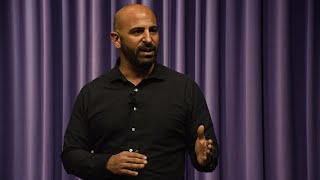
This content was created by GHION.AI . This content was uploaded by GHION.AI . This is a YouTube video titled "Lead by Listening First" created on November 7, 2018. It features Adam Pisoni discussing his approach to understanding the education industry by listening and learning from experts, emphasizing the importance of humility and thorough research before proposing solutions.
Chapters
I want to talk a bit about how I did my research, because I think it was. I kind of stumbled into it. This wasn't a genius thing I did out the gate, but it was something I accidentally stumbled into that I think is a really good model for how to understand an industry that you may not fully understand. But the first thing, this is very important. Silicon Valley has a horrible history of arrogantly going into new industries or industries it doesn't understand, what with incredibly surface level insights that are really not that meaningful and starting companies that then fail and angering the people in those industries who see this as just sort of arrogant problem solving, or worse, only solving problems that apply to a narrow set of people. There are so many opportunities to solve problems. There are so many problems we're solving that are outside of your realm of understanding. And if you take the time, you can understand those industries, you can understand those people, you can. You can understand those problems and find huge opportunities. So what I did was I started by just talking to people. I mean, the one superpower I had after I had sold Yammer was everyone would return my phone call. That was my superpower. So I could talk to senior people all across education. And actually, I started by saying, hey, I'm Adam. Here's the thing, I sold this company. Whatever. None of that means anything. I would tell them, and then I would apologize. I'd say, look, I'm from Silicon Valley, but I'm not here to tell you I know how to solve problems. I'm really here to learn from you, because you know this better than I do. Will you help me understand education? Help me understand the system? Where are the problems? And I spent about six months talking to the first set was over 100 people. I'd say, who else should I talk to? And just asking them questions and taking notes. And I never attempted to interrupt them with, well, here's what I think. I think that, you know, the problem is learning isn't fun. So we need math games. You know, like, I just asked questions and I just wanted to understand then what I did. I realized I'd done this for about six months, and I had taken so many notes, I mean, hundreds of pages of notes. And I said, you know, I'm beginning to feel like I'm sensing a bigger picture, like a model of the system. So I began to write that model down. And then I would, on my next set of calls for the next, like, four or five months, I said, okay, listen, I've been talking to hundreds of people across the space and I think I'm beginning to understand it. So instead of just asking you to tell me about the system, what I want to do is I'm going to tell you what I think I've heard and you tell me where I'm wrong, because I'm assuming I'm wrong. And so I began to then sort of reflect back to them what I had heard, and they would tell me, oh, you totally missed this particular actor in the system or this tension or this constraint. And so they would give me that back. Now, what this allowed me to do is only incorporate new information. It allowed me to take a poor model and improve it over time. So I wasn't just collecting information anymore. I was really constructing a whole model that would help me understand where there were gaps. When I knew that I was onto something, when I knew that I had figured out that I understood the system well, was when I could get on the phone over and over and over, say, let me explain what I think I've heard, and you tell me where I'm wrong. And. And they would listen and they would say, oh, you know, that's really interesting. I hadn't thought about that. And there was fewer corrections. And then I was like, okay, I can talk to experts in the industry and they're correcting me less. I understand this better now. And it was through that process, essentially, that I came to understand enough to find the solution that we're solving. So, real quick, I don't want to spend too long on this, but I found the craziest problem in K12 that I kind of wrote here. It's hard to explain, and you won't believe me, because what I found, again, insanely enough, is that 90% of the people in Silicon Valley who start K12 companies have this misconception that K12 is classrooms, that the way to impact K12 is to go and do things in classrooms. Now, classrooms are obviously really important. That may be even a confusing statement to you, because what else is there but classrooms? What I discovered talking to district leaders, school leaders, policymakers, funders, is that over 50% of the decisions that impact an individual student's outcome are made outside the classroom and cannot be made by that teacher or student. At least 50%. It's completely. It's madness. And so all these people are creating new curriculum. There's 1,000 math curriculum solutions and 1,000 classroom management solutions. And they're pushing its strings a little bit because so many decisions about how students are grouped or labeled, how resources are divided, who has access to what, how they're marginalized and put off to here or there have more of an impact often than who their teacher is or what their classroom is. That's a controversial statement that I was able to reflect back to the leaders of schools and have them say, that is absolutely correct. You understand something now that's unique. And through that process, I learned that there is a established process that every single K through 12 school does in the entire country, whether they're large or small or urban or rural or elementary, middle or high or district or charter or private, that they call master scheduling. And does anyone know what that term means? Really? All right, one person. It's not calendaring. It's ERP for schools. It is the way in which all change enters schools. It is the way in which, if you have a program idea, you want to teach stem, you want to introduce a new equity initiative that will be done through a master scheduling process that takes six to nine months, senior leadership of the school and the district, hundreds of hours. I found this entry point that they understood it was a true bridge, because I found I could call any principal or district leader in the country and say, hey, I'm working on master scheduling. And they'd say, oh, my God, we have to talk. And so I don't have to educate them on the problem now. I'm building a bridge because I want them to change dramatically from where they are, but I realize I have to meet them where they're at. So that was sort of my process that led me to this. I have. I can't tell you the number of times I've talked to senior district leaders in the country who say, how did you find this? You didn't even come from this space. I approached it with humility, and I just asked a lot of questions, and I tried to make sure I didn't start until I had something really meaningful to give.