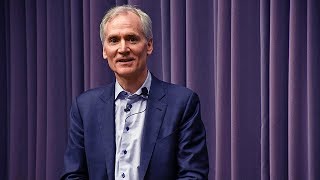
Marc Tessier-Lavigne argues that leadership is fundamentally about talent management: hiring exceptional people, empowering them, and holding them accountable. At Genentech he oversaw 1,400 staff in a hierarchy; at Stanford he works with 2,200 faculty who are effectively his peers. Good leaders foster independence and intervene only when necessary.
Chapters
It's all about talent management. It's about hiring great people and enabling them to do their work. That's true in the private sector, it's true in the academic sector. And that's the role of leadership, first and foremost is to hire great people, enable them to do their work and, yes, also hold them accountable. Right? So that's what we do. So in that sense, it's very similar in other ways. It's very different. At Genentech, it is a hierarchy, right? So I was the boss of 1400 people. At Stanford, there are 2,200 faculty, but that means I have 2,200 bosses, right? It's not that I'm the boss of 2,200, but in the end, so in a sense, in the private sector we would discuss things and I could at the end of the day say, you know what, I've heard you all, but we're just going to do it this way. You would never do that. People who are great don't want to work for someone who will just be autocratic like that. So. So in fact, the management smile is not that different. If you strive to hire great people who you want to empower and you want them to be independent and function as a team, you have to treat them the same way you would treat faculty, which is to say, you're the boss, right? I'm going to enable you to do your best work. Yeah, we're a team. And yes, I do have the final word if it's necessary, but you never want to do that.