Leah Busque: Do Something You Love [Entire Talk]
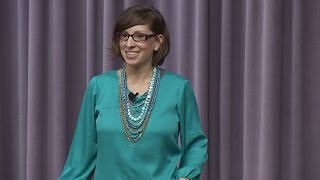
Leah Busque, founder of TaskRabbit, talks through her path from IBM to building a marketplace for local tasks. She covers the early days of the company, how she grew the user base, and what she learned about scaling a business globally.
Chapters
So, hello everyone. I am incredibly excited to be here. This is my first time at Stanford. So thrilled to share with you a few lessons I've learned. I'd really like to just kind of share my story. I think that it's maybe somewhat non traditional. My style and my personality is very casual. So if you have questions as I'm going through this, please just raise your hand. I would love to engage and keep this really discussion oriented and dynamic. So I'll jump in. I'm going to share my story and really focus on sort of the early days of TaskRabbit. Actually, at the time it wasn't even called TaskRabbit yet. It's called Runmyerrand.com and I'll share that story with you too. But it wasn't until we came out here in 2010, a couple years after I started, that I raised venture capital funding and participated in an incubator program that Facebook fund was running. Just really took off from there. So this is me at IBM. I was a software engineer at IBM for about seven years. I worked as a C programmer. I worked on a product called Lotus Notes in Domino. How many of you have heard of Notes in Domino? All right, I love this. So this is a product that literally millions of people around the globe used every day on a daily basis. It was an amazing experience. I loved my team, I loved who I worked with. I got to work on really interesting things. But I always felt like I was missing out on something. I felt like there were other skills I had that I wanted to explore and do on a daily basis. And it got really amplified one time a year, every year. And this was when we held this massive conference called lotusphere. And they would invite customers from all around the globe. It was about 20,000 people would go down to Orlando, Florida and IBM would rent out Disney basically for the week. And it was the one time a year that they let the engineers talk to actual customers. So it was very exciting for me. This is me and my team at lotosphere. And this was set up in something that they called Meet the Developers Lab. And so literally customers would come in. I remember this one woman, she worked for I, a bank, a massive bank. She was the IT person there deploying notes and domino. And she was having this problem with one of her users and email archiving. And I was in charge of this email archiving feature in the product. And so she came in with her laptop and she was like, I have this user's actual email file on a USB disk. Can I Show it to you with. Will you debug it right here for me? Can we find the bug and fix it? And I was like, yes, let's do that. That sounds amazing. And so literally in this meet the developers lab, I was like coding, patched her product, sent her new version and she was on her way. Now, this was at a time where a typical software life cycle was about 18 months. We burnt CDs, packaged them up, mailed them out to customers. There was no agile, there was no weekly Spirit Sprint planning, there was no deploying every day, every night, which we do now at TaskRabbit. So it was really exciting for me to actually meet this customer in the real world, know that she was having a problem that I could fix immediately for her, patch her system and sent her on her way. It was awesome. And so I always knew that I wanted to do something more entrepreneurial at some point. And the TaskRabbit story actually starts with a dog, not a rabbit. This is my dog, Coby. He lived till he was 13. A hundred pound yellow lab, amazing dog. My husband and I were sitting at home one night, we were getting ready to go out to dinner and we called a cab to come pick us up, take us across town. And we were living in Boston at the time. This was about February. I remember because it was cold and it was snow snowing outside. And we realized we were out of dog food. And Coby was over £100. We kept him very well fed, very responsible doggie parents. And my husband Kevin is also in technology. In fact, as a quick tidbit, we're high school sweethearts and we would spend Friday nights building computers together. And so we were always involved in technology. I know it's really geeky, really nerdy. We would go to computer shows and buy motherboards and put them together. So that's how he wooed me. It was very exciting. So Kevin, also in technology, also a total nerd. We'd always have these very geeky conversations in the house. And that cold winter night it turned into, wouldn't it be nice if there's just a place online we could go, say we needed dog food, name the price we're willing to pay. We were certain that there was someone in our own neighborhood that'd be willing to help us out. Why not, right? There's gotta be someone at the store at this very second. And why can't I connect with them now? This was February of 08. Just a few months earlier, the iPhone had come out. All of the sudden people had These mobile devices on them 24, 7. Isn't it funny to think just like five or six years ago, the iPhone came out and Facebook was just breaking out of the college scene and becoming more mainstream. And so as a technologist myself, I got really excited about this idea of mashing up social networking technology, location based systems, and then mobile to create something that connected real people in the real world, to get real things done. And so literally, my husband Kevin and I were talking before the cab came to pick us up. I grabbed my iPhone and I went to GoDaddy.com and I said, you know what, if such a site existed, what would it be called? And I just immediately thought of runmyaran.com and it was available. And domain names are never available. So I took it as a sign. I bought it on the spot. And 20 minutes later, I hated the name, by the way. So it's a whole other story we'll get to, but it got us pretty far. It got us pretty far. So we rushed off to dinner. We were eating at this restaurant in Boston called Masa, wonderful Southwest Tex Mex sort of restaurant. So literally over margaritas and tortilla chips, we're like, okay, what does this product look like? What does this site look like? How do we leverage these technologies to connect people? And so at the time, I was an engineer at IBM. I knew that I could build the product myself. We weren't thinking, like, this is a company. We weren't thinking, let's go launch a massive company that is going to have global appeal. We were like, this product should exist and I know I can build it. So how do we make that happen? So a few months later, I walked into IBM and I asked my manager if I could have 10 minutes of his time. And I quit my job. And it was really nerve wracking. I mean, I had been there seven years. I loved the people I worked with. I really was happy with what I was working on. I felt like I was still learning. Not to mention I felt like I had this massive career in front of me. I mean, seven years into IBM, people stay there for decades and really build their careers there. And for me, I think particularly as a female engineer, I felt like IBM's like one of the top companies for women to work for. Like, do I really want to throw all of this away? But I was so passionate about this product and about what I was building that I decided to take the leap. So Kevin, my husband and I, we got together and we thought, we looked at our finances. We owned a house in Boston at the time. And we're like, okay, if you quit your job today, how much Runway can we give ourselves to actually make something happen with this site? With run my errand. And what I did is I cashed out my pension from IBM, which was like, I don't know, $20,000 that I had accrued over the course of the last seven years. And I was like, okay, what can we do with $20,000? How long will that take us? How much can we. How much Runway will that give us? And so we basically figured out that we had about six months. This was June. Now it was four months after I had the original idea. So by June I'd quit my job at IBM. We had said, ok, by the end of the year, by December, by Christmas Day, we've got to have something happening with this product. Otherwise you're going to have to go back. You might have to go back and grovel to your boss at IBM and ask him to take you back or you're going to have to go find another job. So what did I do? I locked myself in this room for 10 weeks straight. This is the second bedroom in our house. This is where really run my errand and where TaskRabbit was born. You can see the little doggie bed under my desk there. That's where Coby would sleep. But literally I had my computer, I had my dog warming my feet and I had that whiteboard and a lot of post it notes. And I basically just started coding now at IBM I coded in C, little bit of Java at the end, but that was it. I'd never done web application development, so I started to research what sort of languages would be interesting to use. At the time, Ruby on Rails was becoming really popular. Literally did an on Lamp tutorial one weekend and was like, okay, I got this. I'm just going to start coding away and see what happens. So every morning I would get up, I'd roll out of bed into this room and I would just get lost in what I was building. So for about 10 weeks straight, started developing this concept, this minimum viable product, this prototype I was calling it for TaskRabbit. I took it out to as many people as I could, early on, as many customers as I could. I spent a lot of time at our local coffee shop as well. Once I had this sort of beta version prototype built, it was more like an alpha version actually. And I'd show it to people and I'd say like, hey, would you use a service like this? What would you use it for how much would you pay? I talked to people that could be possible taskrabbits. And I said, are you looking to make money? Are you looking for work? What sorts of jobs would you want to do? And I was trying to understand if there was really a marketplace here, really a way to match both sides of the marketplace at the same prices for the same category. So that was a big question early on. I was like, I don't know if people, one, will want to use this, but two, that we'll actually be able to match interests and pricing and location all at the same time. That seems pretty complex. So the first lesson learned really came down to being able to tell everyone I met about the idea. So, you know, sometimes folks say, oh, I was nervous to share my idea with people because I was afraid they were gonna steal it. Here is some news for you all. I am not the first person to have this idea. This is a very simple idea, right? Connect with someone else in your neighborhood around you that can help with a job. Definitely not the first person to have this idea. And people come up to me all the time and they're like, I had this idea like 10 years ago. I'm like, I bet you did. It's a great ide, right? And I'm like, tell me about that. Why didn't you do it? Why didn't it work? It all really comes down to execution. So I'd say, one, never worry about being afraid that someone's going to steal your idea. There's just so much value in sharing your idea with as many people as possible, getting feedback early on and then developing it from there. As an example, I was out to dinner one night. Here's another restaurant we were eating at. It's a place in Cambridge called Ten Tables. And we were out to dinner with my husband, one of his co workers, and a couple of other friends. And we're just chatting, and I didn't know them very well, and I was like, hey, I'd love to share this idea with you, get your feedback. So started talking about it, and her name is Ag. And AG says to me, you know who'd think this is really interesting? My buddy Scott. And I was like, oh, yeah, really? She's like, yeah, you should just email him and just email him. And she gave me his email address and, you know, just tell him about your idea. I think he could find it really interesting. Now. I didn't ask too many questions. I was like, okay, cool. Another person I can get feedback from. I didn't realize her Buddy Scott was Scott Griffith, the CEO of Zipcar. So, yeah, ignorance is bliss sometimes, because I literally went home that night, it was like midnight on a Saturday. And I was like, dear Sky, Scott, my name is Leah Buskey, and I have this idea. And your friend AG says that you will think it's really cool. You know, I'm like, if I could have 30 minutes of your time, I'd love to tell you about it. And to Scott's credit, he wrote me back the next morning on a Sunday morning. And I see his email signature. I'm like, oh, shit, he's the CEO of Zipcar. So he was very, very nice, and he said, you know what? Why don't you come into my office, tell me about what you're working on. I'd love to give you feedback and talk about it. So I went over. Let me see what the next picture is. Okay, this is actually us at Zipcar. And I'll get to this in a second. So Scott and I met. I remember being so nervous the night before our meeting. I didn't sleep at all. And I went into the Zipcar office and I sat down in his office. And he's like, okay, tell me about Run My Errand at the time. So I told him about social location and mobile and how I thought all these technologies could be mashed up to connect real people in the real world, in real time, for real things. And he was like, cool. That's actually a lot what we're doing with Zipcar. We have cars in these neighborhoods and we're getting people to share resources to live more efficiently together. So he got the vision immediately. And we just got into this really engaging conversation about what the vision of Run my errand, what TaskRabbit could be, what it could grow into, where Zipcar was going. And he just became an early mentor of mine. And so I spent as much time as Scott would give me with him at his office, and we talked about our go to market plan and how the product was coming along. You know, he. He was the one that started introducing me to other people, other mentors, investors, angel investors. I had no idea about raising money. I didn't know about angel funding. I started reading a lot of books, asking Scott a lot of questions, and just tried to just try to get ahead of the steep, steep learning curve that was ahead of me. I literally didn't even know about how equity worked in a company. I was like, okay, so these investors, they write you checks, but then what if it doesn't work out? Do you have to give the money back. What happens? I don't understand. Just to give you a sense of where I was coming from. Huge learning curve there. But I learned quickly and I had amazing people like Scott being able to mentor and guide me along the way. So when I quit IBM, Scott offered me desk space at the Zipcar office. How amazing is that, right? And this is our first employee, Brian Leonard, who's our chief architect at TaskRabbit now. He and I worked together at IBM for five years. And so actually the day I left IBM, it's funny, there's a group of us, a small group of us that were sort of of the same, same peer group. And they took me out to lunch on the last day and Brian was like, what are you doing? And I told him, oh, I'm working on this new product thing. And he's like, let me build your mobile app for you. And I was like, okay, cool. And so that next summer, he was coding away because he just wanted to play with iOS. It just come out. So once we got into the Zipcar office, Brian came on board full time and I was able to hand over a lot of the engineering brains to him. The first thing he did was throw away all of my code. Literally. You can ask him, he was like, this is crap starting from scratch. And he did, and it's much better. So I was happy about that. So the first lesson of just telling anyone who'd listened to me about the idea, that's how I met Scott. I mean, there's no way it was so serendipitous that I got connected to him and that we really hit it off. And you just never know where different leads are going to take you. And if you can just be really open about what you're working on, open to feedback, open to connecting with people, just never know where that's going to take you. So that was definitely the first big lesson. The second lesson is really around. And this builds off of my relationship with Scott. Just creating a network around you, of mentors and collaborators, of people that you can rely on for guidance, that you can ask really stupid questions to. And they won't. They'll be okay with that. Just people that you're comfortable with. So I don't. You guys might recognize these two, John and Logan, who run a little company called Lyft. Anyone? So they started out with a company called Zimride. And this is us at Facebook fund in 2009. This was a 12 week sort of startup boot camp run by Dave McClure. Which I think was a speaker here as well. So a lot of, you know, Dave and Renmyern and Zimride. Funny that we both have different names now. Both participated in this summer program. It's funny because as at the time, I was still in Boston, I was working out of the Zipcar office, and I had heard about this Facebook fund program actually through Scott, and he was telling me about it. He knew about it because he was doing a deal with Zimride. Zipcar and Zimride were doing a deal together. He actually introduced me to John and Logan. John had flown out to the Boston area to wrap up the steel with Zipcar. I met John at the Zipcar office. He and I hit it off. And then all of a sudden they're telling me like, you've got to come out here to Facebook fund. I'll talk to Dave McClure. I'll vouch for you. This will be great. And so again, another just serendipitous connection there. So Facebook fund was a great experience because Dave really ran it as a startup bootcamp. And I remember day one, who walked in. This was my first time on the west coast at all, ever. I mean, I stepped off the plane into Palo Alto. I'm like, ah, this is heaven. I love smells like trees and redwoods and it's so great here. And walked into the Facebook fund office, which actually was Facebook's first office over in Hamilton Ave in Palo Alto. It was a really cool space. And Dave is like, okay, Great. There's like 20 companies here. You all are gonna get up and you're gonna give us your five minute pitch. And I'm like, okay, I got this. Like, Scott had prepped me, coached me. I'd been pitching to a few angel investors by that point. And so I was one of maybe, maybe the first to get up and go. I wasn't the first, but after every pitch, Dave rated you on a scale of 0 to 10. I know you can imagine where this is going. And so I got up and I gave my pitch and I had it memorized, and it was full of all this marketing lingo, and I felt really good about it. And Dave's like, that was a three. He's like, that sucked. He's like, you've got a long way to go. And I'm like, oh, my God, I've got so much work to do here. But you know what? The next week, I gave the pitch again, and it was an eight. And so again, I just learned very quickly. And I really appreciated all of the learnings that came out of Facebook Funds, the mentorship that came out there, and the amazing people that I just got to surround myself with and work with. And it really accelerated my growth as well as an entrepreneur and accelerated run my errand's growth as a company. And we're getting close to where it became TaskRabbit actually. So one of the interesting days at Facebook Fund was I was flying back and forth between Boston and San Francisco and I would spend one week in Boston, one week in San Francisco at Facebook Fund, back and forth, back and forth. And I had my weeks planned out. And on a Friday night, I had just landed from San Francisco back to Boston and I get an email from Dave. It's an email to everyone in the group and he says, hey, just so you know, Tim Ferriss will be here on Monday. There's 15 minute slots. You can sign up to meet with him. Tim is the author of the Four Hour Workweek. He is a New York Times bestseller. He writes a lot about how you can live efficiently, live productively. Outsourcing. I was like, oh my God, I need to meet Tim. I knew who he was. I read his book and I thought, you know what, if anyone would be another great advisor to add to TaskRabbit, it would be Tim. But I had just landed back in Boston from San Francisco on a Friday night. And so I looked at flights and I was like, okay, if I went back out on Sunday, how much would it cost? This is last minute. And the ticket was like $800. And I'm still bootstrapping this startup by myself. $800 is a lot of money. And I'm like, what could I do with $800? I could fly your whole neighborhood and do all kinds of scrappy marketing things, or I could run some Facebook ads or Google Ads or something with $800. But I was like, okay, if I could turn this $800 into, I don't know, like a million dollars, then it'll be worth it. That's literally what went on in my head. And I'm like, okay, if I book this flight, I'm gonna go out there, I'm gonna get Tim as an advisor, he's gonna help me close a round of funding and that is the only way this is going down. And so I decided to book the flight on the way out there. Sunday night I reread Four Hour Workweek just so I was up to date and familiar with everything and met Tim at Facebook Fund there on. So we each had a 15 minute time slot. And I was like, okay. My goal is to just get him to agree to a next meeting, because in 15 minutes, I can't really convince him that he would be the perfect advisor to me and to run my errand. And so I just need to wow him enough for him to be like, okay, we'll chat again and I'll give you another meeting. So I walk in and I'm like, tim, will you sign my book? I'm a huge fan, really excited about how you think about the space. Would love to tell you about run my errands and helping people live more efficiently, live productively in a neighborhood. And he's like, okay, great. And I'm showing him, like, the homepage, and he's like, you should tweak this on the homepage. I bet conversions will increase. And I'm like, okay, awesome. I'm taking notes and writing things down, and I'm watching the clock. And I'm like, okay, it's getting to, like, a couple minutes left. I'm like, so, Tim, is there any way you'd be willing to spend more time with me? I would be so appreciative. You know, I just feel like there's a lot of synergy between what you're writing about and my business. I would love to get more of your thoughts. And at this point, he probably thinks I'm a crazy woman, because I'm like, I, like, roll in there. I'm like, sign my book. Look at my website. You would be a great advisor. And he hesitated, and he's like, okay. He's like, email my assistant and we'll see if we can set something up. So I'm like, great. So of course I leave, and the first thing I do is I email his assistant. I'm like, hey, Amy, I just met with Tim. You know, he said that he'd be willing to spend more time with me. Can I grab an hour with him sometime next week? And she wrote back really fast. And it turns out Tim was using this virtual assistant platform. Of course he was, because he's super efficient. So she said, you know what? He has some availability next week for a phone call. And I'm like, ah, phone call. I just met him in person. I feel like if I could get him in person again, I could really convey my passion around the business and really tell him the story and get his real feedback. And so I was gonna be in Boston that week, and I said, you know what? I'm gonna be in the area anyway. I'm gonna be in the Neighborhood. Like, if he's available, can we just set up lunch or coffee? So I kind of pushed her on it, and I said I was gonna be there, and she's like, okay, you know, he agreed to do a lunch. And so Tim and I met over at Osha Thai restaurant for lunch in Glen Park. And by that point, I had sort of my demo, my pitch deck sort of outlined, but I hadn't really started talking to investors out here yet. And so I wanted to get his feedback on that. So over lunch, we're kind of going through the deck, and he's asking me a lot of really great questions, and we're having a great conversation. And at the end, I'm like, okay. So I'd love it if you would consider coming on as an advisor. I just feel like there's so much value you can add. I feel like the work that we're doing has a lot of synergy. And he was like, all right, let's do it. And I was like, okay, this is step one to the million dollar prize. And so the first thing he did was send out a couple emails to a few friends of his that were investors. And one of them was Ann Marico. You guys may recognize her. She's a professor here. And Ann and I met over breakfast one morning. This is at Palo Alto Creamery. We recreated the moment for a photographer in a magazine one time. We had a lot of fun, but this was a recreation of our first meeting, and Tim had introed me to her. Tim also sent an intro to Steve Anderson at baseline. Ann and Steve do a lot of work together, and they ended up leading a million dollar stories seed round for Run My Errand at the time for TaskRabbit at the end of Facebook fund. And so I was like, okay, success. I have created this $800 ticket into my seed financing. Felt really good about that, but it was really risky. I mean, it was really taking that leap of faith. So Ann and I met over breakfast, really hit it off. She got the business immediately, got the vision immediately. And she. At the time, I was still in Boston and sort of flying back and forth, but Facebook fund had wrapped up. The last time I flew back the last week of Facebook fund, I said to my husband, I said, all right, I think we should sell the house. I think you need to quit your job. I think we should move west. I think that's where things are happening, and we got to be there for it. And to his credit, he was like, all right, let's do it. And he did It Ann led a million dollar seed round for us. We packed up and we drove across the country and we moved here. I wanted to be closer to Ann and the seed round investors. I also wanted to get San Francisco open as our second market. So at this point it was still Run My errand. It was still only in Boston. I still hated the name and I was like, okay, we gotta get San Francisco open and like this is when we're gonna switch over to a new name, to a new brand. So we packed up the car, we threw Kobe, the 100 pound yellow lab in the back and drove seven days across the country. It was the trip of a lifetime. We had such a great time, so many great memories from that trip. And we got here to the Bay Area and we set up an office in Soma. And this is Cobie at our first office space here in San Francisco. So how did we go from Run my errand to TaskRabbit? So basically I knew that the name Run My Errand would only take us so far. And I felt like it was great because it really expressed what the site was at the time. Like I needed dog food, I needed someone to run my errand and. And they did it and it all made sense. But I felt like as we built out the product and we got it launched in Boston, we were starting to realize that this actually was a big business. This actually was a company. This was actually something that people around the globe had started emailing us about and were really excited about. And then I thought, this name Run My Errand, it's only going to take us so far. It's such a small sliver of the vision for the company at this point. And I also felt like it was a little demeaning, like Run My Errand just felt like a command and I really didn't want it to feel that way. I wanted it feel like this community, this network, this neighborhood feel. And so we came up with hundreds and hundreds of names. Just like so many names. It was such a grueling exercise. We had naming parties at our house and we like brought our friends over and we had like pizza and beer and we're like come up with names. Really bad ones we came up with were, could you. I don't even know how you spell that. TaskRabbit was like in the mix. There was another one that was like Blue Crew, I don't know. And at the time it was like Sears was running those commercials with like the Blue Crew and there was like this service thing. I don't know, so there were some really bad ones, but there were also some really good ones. We came up with this top five list, and TaskRabbit was not my first choice, actually. It didn't really resonate with me. I was not sold on it. My first choice was Red Rover. We'll send someone right over. It had the dog theme. I fell in love with that name. But what we did to decide is at that point, we were live in Boston for about a year now. We had a pretty good community of people utilizing the service. And we asked them, we said, okay, if you could rename and rebrand the service, which name would you vote on? And we had the names. We had sort of placeholder logos so people could visualize the way we were thinking about the brand. Like, little Taglines, too. And TaskRabbit just was like a runaway success in that poll. Everybody loved the name, TaskRabbit. That. And I could not get the domain name for Red Rover. This woman in New York owns it. She makes dogs, dog collars. And she would not sell it to me. So I was like, okay, everybody loves TaskRabbit anyway, so I'm just gonna focus on that. We literally, I think we spent $700 on it and bought the domain, rebranded the whole site. So this was. Remember I told you Brian threw away all my code. He started from scratch, and he started building up what would then become TaskRabbit. And we got that site launched in San Francisco. At the same time, we switched the brand in Boston. So now we're live in two cities under this new name, new product. And this ended up being by like the summer of 2010. So the timeline here is left. IBM, June 2008, almost decided to close up shop by the end of that year because we hadn't raised money yet, but decided to do Facebook fund incubator program. In the summer of 09. That took us to the end of raising the seed round with Ann. And then by the following summer, we got out here to the Bay Area finally and got San Francisco launched as our second market. So the importance of just surrounding yourself with amazing advisors and mentors, people that can help you along the way, people that can be a sounding board for me was what made or break made or broke the company in the early days, having Scott involved, having Tim involved. Funny story about Michael Eisner getting involved. He saw a segment that we ran on Diane Sawyer's World News Tonight, and that team had approached us and were like, we heard you're doing really interesting things with TaskRabbits. And you're fixing the unemployment problem. And so they ran this whole segment on us. Michael Eisner saw it, his team called us and was like, we want to help. What can we do? And I was like, michael Eisner. Anyone remember the Disney Sunday night movie? I don't know. Okay, maybe it's a different age group, but I remember watching Michael Eisner on Sunday nights, and he was, like, friends with Mickey Mouse. Like, this guy was my hero. And so we got him involved in 2011, and he and his team have been an awesome help for us down in the LA area as well. So I wanted to talk a little bit about one of. Out of all the things I've had to learn, from raising money to marketing to product design, engineering, teaching myself Ruby on Rails, I've got to say, the hardest one for me, and I think one of the most important ones is just building the right team, just finding great people that you want to work with that are smarter than you, that can take the concept to a whole other level. And for me, I feel like those early days were a real struggle, particularly because we didn't have any money to pay people. So you really had to convince them that this was something to join because they were just as passionate about the idea as you were. Over time, we've been able to build such an incredible team. But some of those key team members, and this is our coo, Stacy, right here, Took a really long time to actually meet and get involved in the company. So I'll tell you a little bit about Stacy. She worked at Google for 12 years, and we were running a COO search. And I had met Stacy about a year, 18 months before she came on board to Jaskrabbit. And I met her, like, five weeks after she had had her first baby. And at the time, I was just meeting awesome people, trying to build out the team. She had just had her sweet baby, Emma, and was like, this is not a good time for me, but I really like what you're doing. Let's stay in touch. We stayed in touch for a year and a half. Finally, the timing was right. She came on board a TaskRabbit as our COO. And that partnership between Stacy and I has just been awesome. I wanted to find someone that was just as passionate about the business pieces, the scale pieces, the operational pieces, as I am about engineering and product and design. And so the partnership that we've built has been such a great balance. But again, you just never know where those relationships, where those connections are going to Take you. And it literally was a year and a half before the timing was right to get Stacy on board and to have her come work with us at TaskRabbit. But it's been an amazing partnership. So the last lesson learned is, and this may seem obvious, but I think for me, because I started from a place where it was just like I wasn't looking to build a company. I just was really passionate about this product. I wanted to get it out in the market. I felt like there's a lot of people that could use it and it could be helpful. You have to be so passionate about what you're doing and love what you do every day because there's so many ups and downs and crazy things you have to learn and do. People think startups are so glamorous and it's just like, oh my God, it is not glamorous at all. It is just grueling. But if you love what you do, if you're passionate about what you do, it makes it all worth it. For me. I knew that we were onto something massive when I heard this story from our community. And this happened pretty early on. There's a mom, we're only launched in two cities and there's a mom here in San Francisco and she has a 20 year old son living in Boston. And those are the only two cities we were launched in at the time. And unfortunately, her son, 20 years old, was going through chemotherapy treatment at Mass General Hospital and she is a librarian here. She didn't have the money, the budget to fly out there to be with him throughout his treatment. So she went on to TaskRabbit. She found someone that could go visit her son every day in the hospital for a week, bring him a healthy meal, a cozy blanket, sit with him for 30 minutes every single day and then call her afterwards and just give her the update. Like, how is he really doing? The person that picked up the job in Boston was actually another mom. And the mom that these two. The bond that these two moms formed across the country was incredible. And I realized that what we had built wasn't just about getting dog food, it wasn't just about running errands. We were actually redefining who your neighbors are, who you can rely on. And so when stories like that come through, you love what you do, you realize the impact that you're having. And it doesn't matter the tough day that you've had or, you know, that next round of funding that you're not sure you're going to get. It's like, this is why you do it. This is what makes it all worth it. Another quick story that's one of my favorites. And because I'm clearly a dog person, I have to end on the dog note. There is a scene, a visually impaired person living in Boston, and she needed someone to walk her service dog for her, just, like, get her some extra exercise. And so there's a task rabbit that goes every day and walks the service dog for her for an hour, gets him out, gets some fresh air, and brings them back to her every single day. And so it's again, stories like this that you just realize the platform that you've built, the company that you've stumbled on and discovered and created, is actually impacting people around the globe in a way that you only hoped was possible. And it is. So the thing that I'll leave you with and then I'm happy to just dive into any areas or answer any questions is, you know, I think that because I wasn't looking to start a company, I felt like this idea I had for TaskRabbit that so many other people had before me, again, I wasn't the first one to have this idea. It really was a discovery. It really was a creative process of asking the right questions, of understanding where the pain points are for the user, how we can make these connections through. Through technology to connect real people in the real world in real time. And so it's really about having this idea and discovering that it can actually be something bigger that has so much impact on a global scale. So I'll leave you with that, happy to answer any questions you have.
Could you repeat the question? Let me ask it.
Yes, right there in the back, red shirt. Thank you so much. That was a great presentation question for you.
How did you build your user base?
When you started early on, how did you slowly build your user base?
What were the challenges? How do you scale up?
That's a great question. The question was, early on, how did I build the user base? What were the challenges? How did I scale up? Great question. Because when I first launched the service in Boston, I launched it in one neighborhood, and it was the neighborhood I was living in at the time, Charlestown. Not only did I only launch it in one neighborhood, in that neighborhood, I went to the Charlestown Mothers organization, which were 600 moms in one square mile. And I thought, moms are really busy now. I know because I'm a mom myself. But then I didn't just figured they were busy. And I said, I've got these 600 moms. If I could find like 30 taskrabbits to fulfill the needs of these moms on this site, that will be a good start. So I started there, did a closed beta with that moms group and then it just really started to amplify from there. So started to open it up. Moms started telling other moms in Cambridge and Brookline and Beacon Hill and Back Bay and I started having to recruit taskrabbits in those areas too. And so I would say one of the big challenges we even see today is you have to go. For us, it was helpful to go really narrow with our focus. In the early days it was this moms group. Now we even still see actually a big working mothers demographic that we market to, that we build product around, that we build messaging around as well. And I would say making sure that your tracking those customer demographics, customer analytics all the way through will really help you decide where to focus. Yes, yes to the TaskRabbit in the front row.
So what are your plans to go global and then what barriers are you facing right now in going to different countries speaking different languages?
Good question. So the question is when do we think about going global and what barriers are we facing? So we just opened London as our second market late last year and we did that because we felt like it would be sort of a great jumping off point to the rest of Europe. It's also English speaking, although actually the language and localization is very, very different. Any American company that thinks they can launch in London with US English, it's crazy, they get very offended. And so we actually built out this whole localization platform and for English speaking UK and launched there. So now that we have the localization, the infrastructure and architecture built into the product, it would be fairly easy for us to go as far as like translating to other languages to other places. I think the key thing that we're going to have to deal with challenge wise is that every country has different labor laws. So for example, in France the labor laws there are completely different. They're really stringent. You actually can't terminate an employee ever. It's really hard to do that. I'm not even kidding. People when they leave jobs have to give like nine months notice. It's so different. So culturally I think there will be some differences in labor laws we'll have to think about. For now we can do a lot of cities in Europe pretty easily. We also have big waiting lists in Sydney, Australia and then in Canada would be easy for us to do Toronto and Vancouver. So we'll probably be looking at Those sometime in 2015, I think. Yeah. Yes. What kind of metrics or traction did you have when you did your million dollar round? Good question. So the question was, what sort of metrics or traction did I have when we did our first seed round? So I'll say a couple things about that one. It was a very different time than it is now. So I quit my job at IBM June of 2008, launched the site in September of 2008. The stock market was crashing, people were getting laid off left and right. I was like, oh my God, what did I just do? Leaving this cushy job at IBM, started trying to raise money and it was really, really hard. People were not writing checks at that time, did Facebook fund. And so by that point I was launched in a bunch of neighborhoods in the Boston area. We were looking at metrics like match rate, close rate, the unit economics per task. So on average, we take 20% cut of every transaction that flows through the site. So we were making sure that those unit economics worked. The numbers were still very small at the time and we knew that we needed to get to more cities to learn faster too, about what sort of product needed to be built. So I would say early on it was really focusing on what are the key metrics. Not necessarily like, how good do they look, but then what's the path forward and how fast can we prove those things? Yeah, straight in the back there. I was wondering this morning in the.
New York Times, there was an article about Instacart and it had two main points. One was that Instacart is another one. It's an online grocery shopping similar to TaskRabbit, but it is specializing in grocery shopping. And I'm wondering a, to what degree, to what extent do you think that the market has all these different little niches where you can have ride sharing, you can be sending out people to do your grocery shopping, there can be a separate company for sending out people to do your laundry. Or do you see TaskRabbit as you think we're gonna out compete these guys? We are the umbrella company for this. And then the other point that the.
Article had was that.
These companies are offering a solution, like you said, to the unemployment problem. They're creating a new section, a new class of jobs, essentially. And I'm wondering again, to what degree do you believe that that's really true and actually end up becoming a full employment tool?
Yeah, so great question. So the first question was about, well, they both came from this New York Times article. And the first question was basically, if I just kind of boil it down, it's really about a horizontal play versus a vertical play. Do you agree with that? So this is something that we debate all the time. And there are these vertical players that have popped up in grocery delivery and house cleaning in certain verticals in certain spaces. And it's kind of like, are you going to have an app on your phone for 10 different things or are you going to create the brand and the platform that people go to whenever they need anything done? Our approach has always been this horizontal play. I think what we've learned is that we're really good at things around the home and that these home services categories are definitely something that the majority of people are posting. So it's high volume for us already that our taskrabbits really enjoy doing. So we have the supply side of the marketplace sort of locked down in those categories as well. So I think that you'll see us start to focus in and around the home. But I believe that the opportunity and the power and is in building a horizontal platform that can service a lot of different types of categories. I mean, I can see us down the road in the future sort of moving up the chain even into more professional services, skill based services. To me, that's the interesting piece. And I think it's because I started with sort of a product mindset of I wanted to solve this pain point and this problem. I didn't want to create a dog food delivery company, you know. And so for me, the opportunity is in having the impact that we see that we're having with the two moms with the service dog. And so that's the company that we're building and that we're excited about. Second question was around employment. Yes. So that is a very real thing. So the question is like, are we really helping the unemployment percentages? And the truth is, yes, we are. So we have right now 30,000 TaskRabbits across the country that are active. I mean, how many companies, let alone startups, can say they found work for 30,000 people in the last five years? That's huge. Out of that group, 10% of them are doing this full time. They're making all of their income from TaskRabbit. They're cashing out something like $5,000 a month. They're doing two to three jobs a day. 75% of the community relies on TaskRabbit in some way to make their monthly income. So it is a very real problem that we're solving. One of the little tidbits, I'll say too, is early on in Boston, I thought, boston's a great college town. We're going to get all these college students that want to become taskrabbits, that want to make money. But that actually was my first big learning, because that was never the case. We had such a wide variety of people that wanted to become taskrabbits, that wanted to become involved in the community. I think, honestly, part of it was timing. I launched in September of 2008. I was getting teachers that had just been laid off, lawyers that had just been laid off, pharmacists. All these folks were looking for work to take them in between jobs, in between careers. But even as the job market has improved, our interest in becoming a taskrabbit in the supply side has only improved as well. So I also think there's this notion of empowering people to build out their own businesses on the platform, to be their own bosses, this idea of Micro Entrepreneurship. These TaskRabbits get to set their own prices, say who they want to work for, say what jobs they're good at. They really have control of their own destiny. And I think that flexibility is something that they really appreciate about the service as well. So I'm excited to continue to see what we can do to help unemployment in this country and many others around the globe as well. In the gray shirt. Yes.
In another course that I'm in, one of the professor's favorite services to kind of put down is Amazon's Mechanical Turk. Because of how low the price point for many tasks are. Does TaskRabbit have an infrastructure in place to ensure that the payments agreed upon are reasonable?
Yeah, great question. Something we think a lot about is the. The question was in the example of Amazon Mechanical Turk, the prices are so low. What sort of infrastructure has TaskRabbit built to ensure what I would call fairness in the marketplace and that people have agreed on pricing? So one of the interesting things about the model is that we don't claim to be the cheapest service in many categories. We are not the cheapest service. Our TaskRabbits set their hourly rates per category. They say what they're good at, they say what their time is worth. And on the other side, the clients who book jobs who need to find help, they can look through these profiles, they can look through ratings and reviews, they can see how experienced TaskRabbit is in a certain category and decide if they want to work with them or not. So we ensure that people are setting fair prices. One thing, we don't allow people to book TaskRabbits below minimum wage. Just flat out it's not going to happen on the service. And we encourage taskrabbits to set the prices that they're comfortable with. I think you see a lot of other companies right now, particularly in the peer to peer space, in the sharing economy, that it's almost becoming a race to the bottom because they're so competitive in nature. And I think frankly this is happening in transportation. We see this with the competitors in the space. They're all undercutting each other. Undercutting, undercutting. And what's important to us at TaskRabbit is that we empower people to build out their businesses on the platform, that they feel good about finding work on the TaskRabbit community and that they feel like they're getting paid a fair wage. It's super important. Yes. In the middle there.
Nice presentation, Leah. I wanted to know whether or not you have a marketing budget and what your like top three methods are for both acquiring your customers as well as finding those.
TaskRabbit. Great question. So the question was, what type of marketing budget do we have? What have been like the top three things that have worked for what we call clients and taskers. So we've tried a lot of things early on. In the early days, there clearly was no marketing budget except for my credit card and I literally would like fly your neighborhoods and just do really scrappy guerilla style tactics to get the word out. As we've matured as a company, as we've raised $40 million to date, we certainly have budget now dedicated to marketing. I will say that to this day, 75% of our clients, of our users come in via word of mouth in pr. They're unpaid. We are still testing paid channels. People are searching for things like house cleaners in San Francisco. And so some of those paid keywords in SEM have worked well for us. The other interesting thing recently that we just tried that worked well was the first time we did this, what's called out of home. And we have these bus ads running in San Francisco on the Muni. I don't know if any. Has anyone seen them? You guys are probably mostly down here, but if you go to San Francisco, look at the Muni buses going around. They're kind of everywhere right now. We ran three different ads. One of them was highly targeted to this mom demographic. And the campaign was mommies need nap time too. Find a TaskRabbit to help you with your stuff. Another one was moving sucks the life out of you. And so it was really targeted to a specific category that we see that's really active on the site. And so those out of home bus ads actually drove a lot of traffic. And we were able to track it because we set up separate landing pages for them and then we attract users coming in through that landing page. So the CPA on those, the cost per acquisition was a lot lower actually than we saw for SEM and online. So that is an interesting tidbit. I'll say that on the Tasker side, on the supply side, that is the easy side of the marketplace, there's no shortage of people that want to earn money, that want to become Tasker rabbits. In fact, we have huge waiting lists of people all over the country, even all over the world that we sort of have to add into the community as demand spikes and increases in certain zip codes in certain categories. So there's a lot of analytics. Green shirt. What was the question? Prevention. Crime prevention. Okay, great question. So what do we do for crime prevention? So from the very beginning, even when it was just me in that second bedroom of my house, one of the first things I did was think about this. And the peer to peer economy hadn't even started yet, but I knew that trust and safety and a really strong vetting platform was going to be super important. And so even back in those days, 100% of the Taskrabbits that were part of the community went through background check. We did that from day one. And I mean, I remember just researching all the different background checking companies, understanding how I could build this into the product in an automated way with some APIs to make it really efficient and scalable. Today we have a whole vetting program and includes a series of background checks. It verifies your identity, it looks at criminal background as well. We also put all of our TaskRabbits through a training program. We're testing an in person training program now as well in San Francisco that's been going really well. From there they build up their reputation in the community and so there's this whole reputation engine as well that's really important to the trust and safety on the site. So you can see how many jobs a TaskRabbit has done. You can see their ratings and reviews. They can actually level up on the site and earn different levels of activity. Rosemarie is one of our top elite taskrabbits in the country. She's here in San Francisco. She does a bajillion house cleaning tasks and is like a level 33 taskrabbit. That is the highest I've seen on the site. You start out at level one and it's this logarithmic equation of level 33. So she's pretty awesome. So, yeah, since day one, that's been super important. I think any of these peer to peer marketplace companies, it's just something that's table stakes now that you have to get right and you have to be thinking about. Thank you.
More from GHION.AI


O processo de reconhecer limites, mesmo quando a vida parece exigir sempre mais.





Depois de tantas histórias, aprendizados e pausas necessárias, o @interior_iza está de volta



