Michael Moritz: Follow Your Instincts and Find Your Path [Entire Talk]
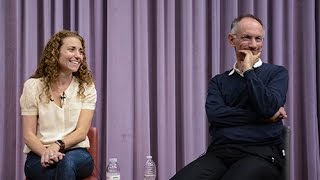
Michael Moritz, a venture capitalist, talks with Popsugar founder Lisa Sugar about leadership and entrepreneurship. They discuss how Popsugar grew, the role of instinct in decision-making, and what venture capitalists look for in founders.
Chapters
So we're super lucky today to have a double bill. It's very rare that we get both the venture capitalist and the entrepreneur in the room at the same time. So we have Mike Moritz, who is a legendary venture capitalist on his own, and one of his favorite entrepreneurs, Lisa Sugar, who runs Popsugar and all the brands associated with it. I know most of us women who spend a lot of time on it are excited to hear from her. I wanted to start today by asking a particular question inspired by Mike's book called Leading, which was published in September 2015. In your book, you say that leaders know that success comes from making a few big decisions correctly rather than spending a lot of time being involved in many small decisions. So I wanted to ask both of you to introduce yourself and talk about some of the few really important decisions you've made in your life that have made you who you are.
Oh, I get to go first?
Unless. Yeah, all right. Never being bashful on these sorts of topics. I'm happy to go first, Lisa. So I think whether you're running an organization or whether you're trying to wend your way through life, as you look back, there are only a few things that matter. And I grew up in. I work at Sequoia Capital. I've worked at Sequoia for a very long time now. And when I think of the things that mattered in my life, they're probably professionally two decisions I've made that helped bring me to this classroom today. The first was deciding to emigrate from the United Kingdom and come into the US and the second was being fortunate enough to be hired at Sequoia in the early 80s. And everything else rippled out of those two. If I had done neither of those things, none of the rest have my life would have worked out as it has.
How did she make the first decision?
It was probably very about leaving Britain. It was probably very similar. Just looking around the room at the decision that lots of people in this room made and certainly the decision made by the gentleman who gave the money to finance this center, Jensen Huang, which is that there was far more opportunity in America than there was in our respective home countries.
How about yourself?
Hi, I'm Lisa Sugar. I started Popsugar with my husband. So that is one of my big life moments, was actually finding the man I was going to spend the rest of my life with, who I then never thought I would actually work with. But starting the company with him, and I would say also moving to San Francisco, because we're born and raised on the east coast and that's in our blood. And so being now here over 15 years, I wonder what life would have been like if we did not come here because I don't know if Popsugar would have ever existed. I think it was the opportunities that were obviously out here on the west coast and seeing the entrepreneurial spirit and the opportunities out here to be able to start a media company on the west coast was because of where we were and that move.
So knowing that you have a media background as a media bias and this love of writing these articles that eventually became your passion in your company, and knowing that you have a journalism background as well, having written two books, one on Steve Jobs, one on Leah Iacocca. Three. Sorry, sorry. Three. And more, hopefully. Was it love at first sight when you met?
That is a very sexist way of asking the question.
No.
Our decision about Sequoia's decision to invest in Popsugar was like every important investment decision that we make where at the beginning, I think when we first met Lisa and Brian, it was just two or three people and so it was trying to imagine what would be possible if good things eventually happened. And that's always a huge leap into the unknown and, and a decision to get into business with founders who you don't know all that well at the beginning, but who you hope and expect great things of. And we'd had some experience in these sorts of media related businesses on the Internet and so that certainly helped inform our judgment. But you know, it was a gradual process, it's not instant, but there was clearly, at the time that Lisa and Brian started the company, an opportunity to create a new Internet based property that was tailored to women, sort of in the, you know, 18 to 40 year old demographic. And so that's what. And we thought there was a big opportunity there and so that's what led up to the decision.
Cool. Very cool. And yourself, you must have been looking for multiple different partners for your series A. How did you decide upon Sequoia and Mike?
Yeah, I think for me maybe it was a little more love at first sight. I think, you know, knowing his track record and hearing wonderful things about people who have worked with him. But the media thing was huge for me. I mean, this was, you know, my dream was to build a media company and to know that Mike's background was in journalism and that he had a core attachment to that. And then just even coming from New York and where media is everything and the celebrities there are the editors in chiefs and the people who run the TV networks And knowing that Mike had known a lot of these people, it was something I kind of looked up at that.
You were a first time entrepreneur when you were raising Series A?
Yes. No, my husband was not. Yes. So he had.
He was a serial miscreant.
He has had some early successes, which was great. So in the beginning, we really, we were just writing and building, and I started Popsugar on my couch. And I just felt there was a void in the marketplace for a really fun, female friendly, always updated, always needed something new. I was like addicted to writing really, really fast. And I knew that our audience was coming back often, so I wanted to give them new content constantly. So the more I saw the numbers going up, the more I kept writing. And it was Brian who had come from great companies like Kmart and J. Crew and Estee Lauder, and he saw how fast Popsugar was growing and he said, okay, I'm quitting my other job and let's go create a figure.
But start. But you started it. If memory serves me, you write just by, as a hobby, writing to your friends.
I wanted to get in the habit of writing every day because I loved media. I loved getting access to TV pilots for free and every magazine for free. But I really wanted to start getting my own opinion out there and started to write. So it really was for fun for myself and to train myself. And in the beginning, I wasn't even telling my friends I was really doing it. So when I was finding this whole audience coming to me and I knew it wasn't my core group of people that I knew who knew I was doing this, it was very flattering to see how quickly it was growing and it just fueled the fire for more.
So you saw the market opportunity. What did you see in Lisa and Brian? What character traits did you see in them that gave you the confidence to invest?
What we see in a lot of other successful founders, which is a real sense about the product or service, in this case that they wanted to build and a real connection with, in this case, an audience. But other times you'd say customers or, well, consumers. And so that they had a real sense and purpose and they were able to explain, as Lisa just did, the sort of product that they wanted to build, why people would, and why they were confident that there'd be lots of people that would care about it.
I'm going to ask a slightly more pointed question. You write about finding the people who are obsessed. How do you. How do you determine if somebody has an obsession?
It's a good point. And it's one that I wrote about with Sir Alex in this book. And I think it's a characteristic of the most successful entrepreneurs, which is that they certainly, at the beginning of their company and often for a very good long time, are able to shut out the rest of the world and just devote themselves to what they're really interested in doing and shut off all the other distractions. Because there's really only one thing that they care about, and that care is deep and it's genuine. And it's the sort of thing that they go to bed, you know, go to sleep thinking about, and they wake up in the morning thinking about it.
Do you agree?
I do. Our first tagline for Popsugar was insanely addictive. And after some marketing team folks came in, they said, no one wants to be insane or addicted, but we just felt it really worked. And I think it was, you know, what fueled just to be able to write about all the other verticals, you know, to keep going and figure out what people wanted to hear from us about and what we weren't covering and what we had in our sight and vision from the beginning and new things that we added in along the way as well.
So it's been 10 years.
Yes.
Congratulations. You're celebrating your 10 year anniversary. You've played many roles from being a founder with two or three of you in a room, series A, with a lot of people now, and many, many more brands, and now you're the president of Popsugar. How have your roles changed over the years and how have you maintained that flexibility? And how has Mike guided you through those transitions?
Yeah, I think what I love about it so much is it has changed. I think actually getting away from the writing was the hardest for me personally, because I really enjoyed writing so much in the beginning. But once all the sites were launched and we were getting bigger and we were launching a sales team and marketing and getting out there doing things like this. This is making sure that I get out and I'm not behind the scenes all the time, which I really, really like to do. I like the nitty gritty of deciding what the next show is that we're going to launch and who the talent is. But those are the new things. Video is something we didn't launch with. And adding video to the business and learning all about how the studios work and how to create content for various places that people are going to consume it, it changes. I mean, every year it's changing for us. So it's the combination of wearing the different hats and working a lot with the different departments beyond just the edit team, which is really still where I spend a lot of my time, it's still near and dear. And the strategy that I want to spend a lot of time with growing that team and keeping the sites growing the way they have been growing.
What have been some of the tough spots along the way in the past 10 years?
I would say we were definitely slower to adapt to mobile. And I'd like to always say that probably every board meeting Mike would pick up his phone and be like, what's next on this? We're like, oh well, they're already reading it on the phone. But really being a mobile first, mobile centric across the board. So whether the site is easy to read, whether we have a subscription box that's a monthly subscription box, whether you can purchase that really easily, all the integration into our shop style site and making it easy to shop from the phone as well as the editors thinking about grabbing you with that headline while you're running down on your morning commute or going to get lunch or in the elevator getting all your news. Really adapting to thinking about mobile first I think was probably the biggest. We were a little slower to that. But we're now 70% of our audience comes from mobile.
So we're figuring that out early on building. We had a distribution partner early on in the company, a sales and distribution partner. And then making the decision making decision to build our own sales force. That was a tough and wrenching decision at the time.
Why was it a tough and wrenching decision?
Well, we were really excited about concentrating on the content and building the audience. But then you want to have revenue, right? And we really wanted to be a profitable company. And so we wanted to bring sales in house. And that's an expensive undertaking to build a sales team, but one that has been wonderful for us. And we are profitable, so have been for five years. So yeah.
And how has Mike, what has your relationship been like? Because we oftentimes don't talk about. We celebrate when a round is raised and then we celebrate that. What has the relationship been like in the past 10 years along the way?
Mike is a wonderful.
It's the first time we met in 10 years right now.
We had a board meeting yesterday.
So we're all actors.
No, it's been great. We have, you know, lots of board meetings, but not too many, you know. And Mike is always there in between any official meeting for advice that we need. Helping, you know, helping recruit talent, you know, helping connect us to people that we Want to work with all wonderful ways.
But make no mistake about it, this is Brian and Lisa's company and they deserve 110% of the credit for this.
He's very supportive, as you can see.
That's important. So what's next 10 years? What do the next 10 years look like?
Well, I turned in a book today. So that was a big project that I was very excited to be working on. And again seeing how Mike has been successful with his books and talking to an audience of 1834 year old women and the needs that they come to us for, we wanted to get a book out there to talk to them about a lot of the stuff that they, the advice that they want.
So when's that coming out?
Hopefully by September.
Title?
We're still working on it.
Send ideas to Lisa.
Yes, I'm aiming on Work hard, play nice, which is kind of our mantra. And basically how to power your happy. Power your happy is another theme. We talk a lot about our content powers, a lot of people's happy. So kind of that. How to find your route to living your best life. And yeah, so the book is a big thing. Video is still really big for us. So looking at other places to have video distributed, creating scripted, going on Netflix, something down that route. We have another business called Shopstyle which is an amazing search tool. If you guys are ever looking to buy anything specific, you go to it, you say black and white pumps and I get every shoe from Saks, Nordstrom's, Forever 21, Neiman's, J. Crew and then you can get sale alerts. It's very, very easy to use for men and women. Men and women, yes. And children and furniture, pretty much anything. And we have excellent retail partners. We send a lot of traffic to the Neiman's targets of the world. So building out that business and making it even easier for you because we all know we want the Instacarts and the Amazon Primes and that instant gratification. So making it even easier. And also our editors are writing stories all day long about what you need, whether it's the latest gene or some new hot trend that's happening. So just to integrate it all in and make it seamless is our goal.
Tell me a company that you really admire.
Oh, I love Disney. Disney is one of those companies. I just think going back to our mantra even of powering youg're Happy.
It's.
There's a lot of overlap there and I think what they do, whether it's the experience of actually being in the park or Them creating content to merchandise. They figured out lots of ways to make money and stay true to their vision and their mantra and their values. And I think that that's a company that I look at that does a great job.
I love what you had to say about work hard and play nice. How does that get implemented day to day? You're the founder, you're the president, you're the head of this company. You and Brian have run it. And how do you make sure that that is lived out?
I mean, we're in it. We're in it with everyone. You know, we sit with everyone. Brian's favorite thing. You know, I would like to think it's a nice family vacation, but it's really like a hackathon. I mean, if you sent him away to just go and code, he's the happiest man. So really just being in it with everyone. And, you know, as we grow, we're 450 people now, like, really still trying really hard to have a company culture that feels like a family. When Mike walked through the door 10 years ago, our daughter Katie was born, like, the first day, she came two weeks early, which was really the first day of training at our house with our founders. And I went into labor, and she came to the office with us for.
The first three years.
And so that whole family culture that we have and the fact that Brian and I are there together every day, we really try to have that feeling go through. But at the same time, we are obsessed with this job in this company that we're building. So we are always on and working really hard, and we expect the same from our team and finding people who are really passionate to join the team and be a part of it and help us grow.
I also read that POPSUGAR is 60% or more women.
75% women.
Oh, I'm sorry.
We are a lot of ladies. Yes, we're 75% women. Our exec staff is. We're 50. 50 engineers are 30% women. Women have a longer time with us. The tenure is longer with us. So, yeah, a lot of girls. Poor Brian. We have three daughters, a female dog, and he gets to work with 75% women. So one of the reasons we changed our colors from pink to blue.
But.
What are your hopes and dreams for POPSUGAR in the next 10 years?
That it continues, as Lisa said, doing what it's doing, and as it's done very steadily and predictably for a good long time, carving out a larger position in the evolving landscape of media, focused on the demographic that the company's long been dialed into.
You've acquired a lot of companies in the last 10 years. How do you look for great companies to acquire to become part of your family?
That's a good question. Brian is definitely more. That's like a more fun project for him, I would say, than myself. But it's finding same things that Mike had mentioned earlier. Finding people who are really obsessed about something, filling a need that we might have. So whether it's great technology on the shop style end and finding engineers who are doing great things from the shopping search capabilities to. We bought a company called Circle of Moms years ago because our audience is really young, and we knew that the mom audience is really great for sales. And so bringing them into our fold was a great audience builder for us. For moms.
Awesome.
Yeah.
Well, before I open up for questions from the audience, I have one more question for you. You have 500 students sitting in the audience. Think back to when you were in college many, many years ago.
Like me, I couldn't get credit for just sitting through a leisurely afternoon without a notepad, you know, checking out my Facebook feed.
Touche. If you were sitting in the audience, what would you tell your younger self if you could go back to that time and give yourself a piece of advice.
Three words.
What's that?
Three words.
Three words.
All right.
Follow your instincts, which is very easy to say and incredibly difficult to do.
A little more context.
Everybody, when they're wondering about what they should do after college or after university. You have the weight of expectations on your shoulders. You have college bills that you might have to pay. You have parents who have expectations for you in a particular direction. And whether you like it or not, subconsciously, you carry all that stuff with you. And if you want to go in a different direction from what you've spent the previous 20, 25 years of your life almost being programmed to go and do. That's a very difficult thing to do.
How about you, Gusa?
I think for me, it's more that it's just okay if you don't have it figured out yet. I mean, when I left college, the Internet barely started, so the job that I would create for myself, there's no way I would have known that that's what I was going to do. And I didn't know 100% what I wanted to do yet. So I think really it's also, it's trying new things and just getting yourself out there and experimenting and figuring out what it is you're gravitating. Towards and, and liking and then follow that direction.
Thank you. Well, I'm going to open it up to the floor for questions. Do we have a mic? Is that how it works? Ok, speak loudly and clearly. Let's start with the front row.
I have a question for Liza. So I believe Popsugar wants people to be really engaged with the website. You want them to come back. You want more people coming back to your website. Right. So internally, how do you figure out the user behavior? Like how can you keep them more engaged? How do you internally figure out what's the mechanism? How do you figure that out? That 20% of my audience like this kind of stuff, 30% like this? How do you figure that out?
I think we definitely do a lot of deep dives on content. We're looking at what people are excited about when they come, but then even just engineering the page appropriately to have related stories and bubble up content around it that they would be interested in having. Never ending galleries so they can go right into one story to the next. We also have more of what we're calling a push strategy this year as opposed to a pull. So a lot of us are getting a lot of our audience to come to us through search and through social. So we're pulling them in, but now we want to push out to you. So email's been around forever and existed, but even just push notifications. So getting more people to download our app so that we can give you news alerts throughout the day on your watch and your phone is something that we are constantly testing.
Now actually, I think a more particular question would be do you guys do big data analysis on the comments that users make on your website and articles?
So yes, he wants to know if we do big data analysis on the comments on the comments. So I would say each editor is looking at all aspects of their story and, and they will go in and look specifically at what people are reacting to and we'll follow trends and we have lots of ways that we can look at that. On the shop style side we can definitely play more with the big data and what people are searching on and where they're clicking and go down that.
Okay, so you manually actually do the big data analytics. So if I wrote an article, you manually go and check it like what people are commenting, right? Something of that sort?
Yes, if it's a story.
Thank you.
Question for Mike Sequoia aside, what do you see the role of venture capitalist tweeting and posting on social media and that connection to that activity to the.
Firm'S Success question is the connection between a venture firm being active on social media and its success. It'll be quite a long time before anybody's going to be able to answer that question because social media as a marketing platform is fairly recent in the grand scheme of things and obviously Sequoia was around a long time before the web came along and social media and mobile and everything else. I think it's easy to get distracted by the sound of the trumpet and that what matters eventually is the quality, the investment decisions that are made and the acuity with which those are made. And it's somewhat similar to the analogy that people used to make when newspapers were read more frequently than they are today, which is not to get sucked up into believing, believing your own headlines. And so I think, especially in this sort of today's era, humility also goes a long way, particularly in a business as humbling as the investment business or the venture business, which if you don't make the decisions correctly, can hand you out a right royal spanking, no matter how high your public profile.
Let's do the one in the back. Red shirt with stripes, loudly.
Hi, my name is Matt Dorey and I was just obviously not a sophomore here at Stanford, but I was intrigued that you had mentioned that you. That Disney's a company that you admire. Our Firm's had a 30 year relationship with Disney. Actually. Ann Sweeney, who is the. I don't know if you know Ann or not. She's actually my daughter's godmother. If you'd like that introduction, I'd love to meet with you afterward. I'm sure about to meet you.
Thank you. Thank you.
Let's do one more from the back.
The young man in the white shirt.
You mentioned that popsugle was late to mobile, but it sounds, Michael, like you are pushing them to go there. Are there any innovations or trends you're seeing that you'd be pushing media companies to get on?
Do you have a relative you can introduce me to? Well, one thing we talked about yesterday when we all met Popsugar, is what we're doing to address this huge phenomenon of, you know, Twitch game streamers. And there's a big, you know, that is not a masculine preserve. And so that's an audience and an activity that is enormous and growing and, and I think Lisa and the other editors agree that we could be doing more on that. So I think staying alert, just as the company's done over the last decade, and not getting blindsided by a new trend like this that just seemingly comes out of nowhere in the last 18 months and getting on it very quickly and just remaining. The most important thing to do is to remain vigilant about these new sorts of opportunities, because it's easy to fall asleep at the wheel as they pop along.
Cool. Please, Professor. Yes.
Tom Kuznick. Michael, thank you for everything that you've done for the Valley since you came here. I'd say no more than that. I met Michael the first time when he agreed to be interviewed for a case about Yahoo, accepting his first round of capital. Then him, dazzling Masayoshi son, who said.
Well, how do you.
How much do you think Yahoo is worth? And Michael said, $500 million. Masayoshi's son was flabbergasted. I guess these days people would say 500 million. Is that all? But you have been guiding entrepreneurs for a long time, and I just want to thank you for that.
Well, thanks, Tom. It's not me, it's Sequoia. I'm lucky enough to be part of Sequoia.
But now, could I jump to Lisa, did you go to ces?
I did not. Brian, my husband, did. I went last year, who was riding.
The Uber, because there was somebody who looks like it might have been you riding the Uber.
Now I know that Uber.
Herbie, a little electric scooter.
Oh, it's definitely not me.
I was wondering, the general question is, when you're trying to think about what's happening, is CES interesting? How do you figure out what's most interesting? Because the article that you wrote is quite interesting.
So we have editors. How do we think about CES when we go and is it interesting to us?
CES is a Consumer Electronics show, because not everybody knows that.
Yes. So the consumer. We have covered it from an editorial point of view, how do we look at the Consumer Electronics Show? Is that something that's important to popsugar? And we look at it two ways. We send an editorial team who is covering the trends and the products that are there and how they would relate to women 18 to 40, and how we'll be excited about new things that are being introduced into our lives. So female journalists there in a predominantly male space. And then we also go from a corporate perspective, where, I mean, it's now just a meeting ground where all CEOs and teams are meeting and talking about trends and doing panels and so on. So Brian and I sort of divide and conquer. A lot of times, there are key things that we do go to together. Last year, I did go with him, but this year I let him. I Said, you go to CE this year. So he handled that.
See the lady with the red and black shirt? This question is. I guess we're both.
But primarily for Lisa.
What are some of the ways you navigated the challenge of running a profitable media company in the Internet age, when the mentality is that high quality content.
Should really be free for everyone? Yes, we are definitely. We like to still run like a startup, which I know is hard as we are, as large as we are. We have a wonderful CFO who actually attended this school and he likes to. He's cautious and he wants us to be able to take risks and invest in stuff. But there are times when we definitely have started a project and realized this isn't for us. We shouldn't go down this route anymore. And let's just concentrate on the core, which is the content and our great shopping tool and make it as wonderful as we can for our audience. Try not to ruin the experience by taking too many ads. You don't want to ruin the experience for the reader on the side. Yes.
You.
As a vc, as an entrepreneur in general, what has been the power dynamics between the two of you and how could you resolve the differences?
Well, it's two against one, so there's never. I never stand a chance.
No, I think it's been very amicable.
Okay, let's go to the back. The man in the light.
Hi, my name is Nicholas. Yeah, so just a question here. Do you believe that there will be another Steve Job that will happen in the next five to ten years? And why? No, any more than I believe there'll be another Larry Page or Mark Zuckerberg or Bill Gates. They're each very distinctive personalities. Now, if the question is, is there somebody whose name we don't know today who 20 years from now will be very well known because of a company that he or she started? Absolutely, yes.
Yes. Earlier you guys talked about making big decisions that you've got.
Right. I'm just curious, could you tell us.
About a big decision that you think you got wrong?
Big decision we got wrong?
Well, I can think of investment decisions that we got wrong. Too many to.
As far as, like, I mean, when we started the sites, we had an original vision of 12 sites that we wanted to launch. And we realized shortly that there were certain verticals that weren't an everyday read. So I would say that there were certain things that we restructured to make the content packaged the right way. That's not really.
Actually, I'm curious, Mike, if you would talk about an investment decision that went sideways like Webvan or.
Oh, thank you for bringing that up, Emily. The two syllable company that's going to haunt me. You know, Webvan, we invested in this company, Webvan, and sometimes people say, well, you know what's going to happen in the end? I always tell people I'm going to get cremated. And they say, why are you going to get cremated? Because I said I don't want to have a tombstone that reads here lies the idiot who invested in Webvan. Yeah, so that was fortunately, however, we got one thing right in the Webvan investment 17, 18 years ago, which is the incredible insatiable consumer demand for delivery at home for groceries and fortunately have recovered from that. And now, many years later, very, very happy investors in a company called Instacart, which serves this area down here. And if you haven't tried it, you should because it's everything that Webvan wanted to be and more 17 years ago. And as Lita, who is a very happy customer, said softly just then, and far more because of the acuity of the founder, but also the advances in technology, but Webvan is the investment that will always haunt me.
So when you say that not all bad decisions are bad, there's a silver lining to some of the bad decisions that were made.
There's learnings.
There are learnings.
Yeah, yeah. There is nothing worse to investor's ear then this has been a learning experience because what that really means is this has been a really costly and expensive experience.
All right. In the orange shirt.
Thank you.
I'm Lawrence. Thank you for being here. Lisa, what do you think about the new generation, Generation Z and Mike? What, what are your challenges? What do you think or what would you like to do better?
I love the next generations. I love hiring youth and studying them. I think that, huh.
As users, I mean.
Yeah, I think it's fascinating. I think the idea that they consume a lot more, they share a lot more, they're just very fast. Instant gratification, relatability, personalization, all that stuff. A lot of that is a lot of the core of what popsugar started with. When we started and wanted to be a in the know source that came across as a girlfriend and not in the know and. Or not a know it all. So in the know but not a know it all. And I think that that's how they want to be talked to and they want, you know, I love how diverse it is and how open people are to all shapes, sizes, colors, everything. It's great. And I think that it's only going to get better. So we're totally embracing it and love it.
Red Stanford hoodie.
Thanks for the talk to Michael. I'm wondering, what would you say are the less obvious reasons why Sequoia is still at the top of the venture capital world? And by obvious I meant, correct me if I'm wrong, but maybe you would say team and network. Are there some other reasons that you see that keep Sequoia up there?
Well, that's a very nice question. Thank you. The question was why do I think Sequoia is the preeminent venture firm? I don't. I think I always feel we're always one step away from going out of business and that we can never take anything for granted and that we're only as good as our next investment and we can never be good enough.
Wow, you have a lot of fans. Second row.
Yeah.
Thank you.
Question.
So a question came up earlier around what does the next 10 years look like and how do you what, what happens when a company, a wildly successful, profitable company, wants to remain private and independent? But for a venture firm that has a 10 year life and has to return capital to its limited partners, how do you think about, you know, that next 10 years if you been involved for already 10 years?
The question was, does a company like Popsugar, where we've been invested for a long time, does the design of a 10 or 12 year venture partnership mean that we have to sell our shares? Fortunately, the investors in Sequoia entities that we call limited partners, they're very relaxed about it. And so if we feel that there are companies where we want to continue holding the shares inside the partnership, they're very comfortable permitting allowing us to do that. And we've done that on a number of occasions because I think all of us, the limited partners in Sequoia, realize that pressing full quote, liquidity at inopportune times, or when the future is remains looking very bright and there's no reason for the company to go public. It's not in anybody's interest. So it's not a big issue for us.
Maroon shirt.
Yes.
You.
Speaking of liquidity events, how do you see venture funding evolving with higher interest rates and market crashes like this week in the next two years.
Question was, what happens to venture funding when interest rates go up? It's no accident that in the world of alternatives, doesn't matter where you look. It can be the oil and gas industry, it can be the venture industry, it can be the real estate industry. The flood of capital into the private portion of those businesses. Since Interest rates have come way down, has risen, because everybody, Everybody's looking for returns on their investment. So as interest rates move up, the capital will retreat. And if you're asking me when is that going to happen, I have no idea. But obviously, as interest rates go up and people feel that they can get reasonable returns with far less risk or perceived risk, then the money will retreat out of the private markets.
Okay, I'm gonna have three more questions, so second row. Yes. Hi.
So you've always advised college freshmen and pretty much everybody to follow their instincts, but do you think that's more of, like, an intuitive thing or. Or is it something that can actually be built up with experience or taking risks?
The question was the advice I offered. I don't know whether it's good or bad that people should follow their instincts, whether I could say a little bit more about that. I think it helps if you try and enter an environment where you think you can learn a lot. And whether that's inside an organization doesn't have to be a company, it can be some other organization or around people that you particularly admire that you can learn a lot from. And I think that just helps expand one's horizons and also gives the individual a sense of what excellence is really like. If you pick the right setting or the right set of individuals, and done right, it's a transformative set of experiences and massively expands your horizons and, and the sense that you have. Of all the wonderful array of opportunities that lie in front of you.
I'm curious, actually, Lisa, do you agree?
I do. I think that.
That.
Yes. Surround yourself with great people and try new things. Absolutely.
Front row, in the purple.
Thanks, Sir Michael. What would Silicon Valley executives learn from Sir Alex?
So the question was about this book that I wrote recently with the manager of Manchester United, Sir Alex Ferguson, and what the lessons are that people in the valley could take from a figure who is the most successful coach of a professional sports team in history and, And. And vice versa. And as. As I got to know him and as we were writing the book together, it struck me that the sort of attributes of leadership that he has and demonstrated for so long are very, very similar to the attributes that you see among the very best company founders in Silicon Valley. And it was also pretty apparent to me, and this may sound too bland for everybody, I wish there was a bigger surprise that the characteristics of leadership is embodied in an individual. Whether you're running a soccer club in the north of England in the rain or a technology company in Cupertino in the Sunshine are very, very similar. There are some differences. Obviously. I think hiring people in his pursuit or retaining people in his pursuit is a lot easier than it is in Silicon Valley. His business, the business of soccer, is a much slower business moving business than the world of technology. So there are some differences. But I sent the book to. There's a very, very famous. He's one of my heroes called. He was an early, the leader, one of the leaders of the first generation of venture capitalists who invested in Apple and Intel. And he was the first investors in the early investors in both of those companies, a gentleman called Arthur Rock, and He's in his 80s now, and he wrote me a very sweet note last week and he said, I just finished the book and I would hire Sir Alex Ferguson to run any company in which I was an investor.
Very cool. All right, last question in the white.
Perhaps a bit too specific a question, but based on your experience, how realistic do you think for a startup to be able to do B2C and B2B.
At the same time?
And this is an early stage startup.
How realistic is it for a company to do B2C and B2B at the same time? I'm sure there are examples of companies that have pulled it off. I just think right at the beginning you have to concentrate on doing one thing super well, and once you've done that, the second thing becomes easier, particularly if you're dealing with. It's one thing to sell precisely the same product to both audiences. And if you can do that, bless your heart, it's a good thing to do. But I think it's very. If you've got to tailor the product differently, I think that's a very dangerous thing for a company to do right at the start. You know, it's no coincidence, obviously, that Apple under Steve Jobs was not prepared to compromise, change and alter its products to please corporations. They would build products and if corporations wanted to buy them, so be it. But they weren't going to come up with special products. And it was, it was an approach that obviously served them very well. And then, as you know, there are plenty of examples of other companies that have over time, succeeded with two different sorts of distribution channels. Plenty of examples of that. But at the beginning, I think simplicity is a virtue.
All right, we're totally out of time and clear. There are more questions, so feel free to come on up afterwards if you want to speak to the two of them separately and we'll see you next week.
More from GHION.AI


O processo de reconhecer limites, mesmo quando a vida parece exigir sempre mais.





Depois de tantas histórias, aprendizados e pausas necessárias, o @interior_iza está de volta



