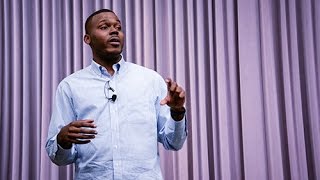
In this interview, Michael Tubbs recounts how his upbringing in poverty, a single‑parent household, and an incarcerated father shaped his deep concern for inequality, mass incarceration, and community violence. While at Stanford he pursued elite opportunities—internships at the White House and Google—yet felt disconnected from his hometown of Stockton, California. A White House internship exposing him to local leaders sparked the idea that meaningful change happens at the municipal level. The murder of his cousin on Halloween brought the abstract issues of homicide and youth loss into stark personal focus, compelling him to confront grief, family tension, and the need for community safety. After a series of setbacks—including not receiving a coveted fellowship—Tubbs realized that his purpose was not tied to prestigious accolades but to returning to Stockton to serve. He resolved to run for city council, viewing his pain and setbacks as the driving force behind his passion for public service.
Chapters
If someone would have told me my freshman year at Stanford that I would be a city council person in Stockton, I would have looked at them and told them they were crazy. I had no intention of coming back to Stockton. I was kind of upset. Stanford was so close to home. I wanted to be as far away from home as possible. And it's not because home was a bad place or a place I didn't love or didn't have people I liked, but it's because home was difficult and challenging. But I realized at Stanford that a lot of my passions came from sort of the pains. Growing up in poverty with a single parent and incarcerated father made me really, really passionate about things like inequality, things like poverty, things like mass incarceration. And I realized even before I ran for office that sort of my pain points were leading me to what I think or thought my passion or purpose might be. And then my junior year, I was interning in the White House through the Stanford government program. And my job was when the Office of Intergovernmental affairs and I was supposed to work with mayors and council members nationwide. Crazy foreshadowing. And I hated it, which is also kind of foreshadowing. I'm joking, but I hated it. I spent 12 hours a day Googling what the mayor of Laredo, Texas, was doing or Googling what Cory Booker was doing in Newark or what King Reed was doing in Atlanta. And it was so, so, so boring. But it opened my eyes to how people were making big changes at a small, really local level that no one really knew or cared about. So I remember talking to my boss and saying, you know what? One day I'm going to support people in Stockton because Stockton is my hometown. It's my community. It's the place in need of good governance. I thought I would be the donor, the funder, and then someone else could do the messy work of going to the meetings and dealing with people who you may or may not like. And then around the same time, on Halloween, one of my first cousins was murdered at a house party in Stockton. And sadly, in Stockton, even today, we made some strides. But for far too many young people, especially young men of color, homicides or premature death are almost a fact of life. But it was the first time it was someone in my family. So it hit me really personally. And. And I remember flying back home for the funeral and dealing with the pain and the anger and the frustration. Like, how did this happen? I remember having to console my aunt and my mother and my cousins and how to squelch beef and make sure people didn't retaliate. And I realized that all the great time I was having at Stanford, whether it was interning at Google or being in the White House or having access to great speakers and lecture series like this, had to be for much more than my own personal fulfillment. It had to be so much bigger than me getting the degrees and making a lot of money that for some reason that my part or the stage which I was supposed to play my life meant that I would have to go back to Stockton and run for office one day. So I told my mom, you know what, Mom? One day when I'm 30, 34, 38, 42, 50, I'll come back to Stockton and help out because the city really needs help. But then my senior year, I was applying for fellowships and jobs and I didn't get what I thought was mine. I was an entitled Stanford student. I had good grades, I had worked hard, I had the best recs, I had the best resume. I thought for sure that was my job and my purpose in life, to be a Rhodes Scholar. And that's just what was going to happen for me. So I put all my eggs in that basket. And then it didn't work out for me. So then I remember being so upset, so hurt, like I thought I found my purpose. This is what I'm supposed to be be doing, and now I can't do it. And I start with that, because it was in all these Valley experiences, all these low points, whether growing up in poverty or losing my cousin or not getting the fellowship, that really clarified the path I was going to take.