Mike Rothenberg: Blue is Where You Should Be [Entire Talk]
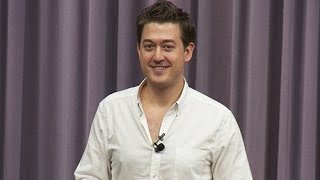
Mike Rothenberg gives a talk on why blue is where you should be. The presentation was recorded in 2015 and offers his perspective on this topic through a full recorded speech.
Chapters
Hey, everybody. Yes. As Tina mentioned, 31 years ago today, I was the greatest achievement of my life. To that moment I was born. And on my birthday today, I'm very excited to be sharing my reflections on those 31 years with you. That's in general, birthdays are a special moment for reflection and I'm extremely excited to be here to do that. We have a lot of ground to cover in a few minutes. And so I want to kind of start off by saying Even though I'm 31 years old, I'm a fiduciary right now for about 150 people, have about 25 people working in our company that I have to help make sure we make payroll. And then we have about 80 companies with one or two founders each. So somewhere around 120 founders that we're supporting. So some of the responsibilities I feel like I have sometimes are more like a 51 year old. But I'm 31 and most people tell me I look 21. So this is kind of my story. And of Rothenberg Ventures, which is only three years old. I want to first say that I can't really overstate how powerful and important Stanford has been in my life. It was, this is just, it's not just a cradle of innovation. It's an incredible group of people that are constantly building each other up here and after. And there is nothing that I could have imagined that happened in the stories I'm going to tell you after I started at Stanford that can even possibly be disaggregated from Stanford. And I'll talk again about Stanford in a little bit. But it's an incredible thing to be here and be able to talk to you guys in particular, not just the students who I still work with. Some people that I've. Tommy was my roommate and Brandon ran some basis things with me. And so we still get to spend a lot of time together. But a lot of the professors that were here left long and lasting impressions. And one of the reasons why it's so special to be here at ETL is because some of the professors that made the biggest impact on me, like Tina, and I'm not sure if Tom and Tom are here. Oh, hi Tom. But this experience of being able to be in this environment of optimism and practicality, but also the individual attention that was afforded, it's impossible to overstate. So thank you very much. And then what I'm going to try to do is I'm going to try to tell you what I'll tell you, then tell you, then tell you what? I told you. So we have a few things to cover. I'm going to start with context because I think it's safe to say that the vast majority of you have no idea who I am or why you should care. So we'll try to establish some of that. And then there's a little bit of risk and adversity in everybody's story. And I want to touch on that. Without touching on that, it's not going to get us there. Then I'm going to talk about how we invest, because we invest through networks. And I think that although we're not the only ones who invest through networks, perhaps our approach will be interesting to you. And then I want to talk about our actual company, sort of how we do some of the things we do. And so there's some, just for the sake of making it easy to remember, we'll call that the people and then the principles and the processes. And so we'll kind of talk about some of those things in case there's some stories and takeaways that we can leave you with. Then I want to talk a little bit about strategy. In that particular section. I've got some things to say that I've never said really to anybody outside of maybe some people in the front row. And it's an exciting time to do that. And then I'm going to end with a little bit about virtual reality and what we kind of see in the future. And to that point. This is a virtual reality camera rig. We do a lot of things in real time. It's not that big a deal that we kind of set that up as we go. That probably is a good metaphor for what we do anyway. There's five Red Dragon cameras there that are stitched. This is a custom made rig. And what we can do after we film with this is we can stitch it into virtual reality experiences like the ones that some of you were just trying with the headsets up here. And to that point, we'll have those afterwards as well. We have a lot of these kinds of headsets so that you can actually experience what VR is, but we'll kind of end with that. And so just to kind of. Just to kind of jump in, one of the things that I'm really excited about today is I did get a chance to think about for a number of years what I might want to share if I ever was on this stage with people who were sitting there. Because I'm sure I sat through about 100 of these in these seats and never got tired of it. And so today I'm going to share some things that I have never said publicly, in part because I believe that the way to do that is with the Stanford community. And there's some things here that because our firm is so young, there's some things here that are completely unproven. So there will be a little bit of a leap of faith here for you guys, because one of the debates that I sort of had with some people who are really close to me about what to share here is that I don't put a lot of stock in what people say until they've done it. And on the other end of the spectrum, it's really important what people are trying to do and what their mission is. And so I'm going to share some things that it's safe to say we haven't done yet with the hope of inspiration. And I hope you'll take that leap of faith with me on that, because to some extent, it's going to be a philosophy. All right, so for context, who am I? I'm Mike Rothenberg. Hi, guys. I was born in Texas. That was exciting. And the town, Georgetown, Texas, is safe to say, pretty much only known for having Varsity Blues film there. Great movie. And so what happened was it's a pretty, I would say, pretty normal town and not necessarily that exciting. But I was really fortunate to have parents that cared a lot about education. And so my mom tells me I showed interest in math. And so that was. I'm sure I probably did. And so that was licensed to do tons of math problems. So I did probably Malcolm Gladwell's 10,000 hours of math. And that got me an invitation to this institution, which is incredible. When I came here, I learned that some of my favorite things about math were actually pattern recognition and problem solving. The actual solving of math is one manifestation of that. But here I learned many more. And in particular, entrepreneurship is an incredibly exciting place to apply pattern recognition and problem solving, because those are unsolvable problems. You're trying to figure out what you can build that's meaningful in the future, and you have only your pattern recognition in the past. You have only your problem solving to try to do it. You will never completely do it. The world is always changing, and you're always going to be dealing with people who are unpredictable, unsolvable, and incredibly exciting to work with. And so that was here, really, in the equivalent of this classroom, is where I transitioned fully from a math focus to an entrepreneurship focus. I went to the School of Engineering, and that led to essentially where we are now, which is a lot of exciting early stage seed companies that we get to work with every day on the order of probably someone in our company is having a touch point with as many as 100 companies a day. They're all trying to solve problems that haven't been solved before. And so at Stanford, one of the most impactful things I did was I got to learn from other people. And in this particular room, I got to help run this seminar series with some folks here. I got to start a company. And then when I graduated, there were a lot of doors open for going to Stanford. And so I spent the next few years doing things like management consulting at Bain & Co. And some time in private equity and at Audex. And so I had this resume. It got me into Harvard Business School, which is a great place to learn and reflect. And here we are, I'm 28 years old and I'm at Harvard Business School. It was a phenomenal school. Now what. So this is where it gets interesting because a lot of times we have an opportunity to present ourselves to people, and it's very hard to do that except in a resume fashion. And so what I just gave you was a resume. And everybody is more complicated than that. And whenever you think that somebody's just a resume, you definitely don't know them. There is nobody that I have encountered who is just a resume. And partly what this moment is here is for me to try to explore some things that are harder to talk about than a resume. And at Harvard Business School, like Stanford, it was an opportunity to reflect and take stock of what was going on. It was, you can kind of go up a level and not be in the fray. And it's a wonderful opportunity to actually think about what I was doing, because it's very hard to do that if you don't pull out and think about it. And so when I was 28 and in my first year, I went through a divorce and it was incredibly hard on me personally. And there's an intense personal. There's thing I'm going through and it was very hard on me. And then on a career front, I didn't necessarily find the things I had been doing to be fully fulfilling. And if you listen too much to people outside, what they'll say is, that's a good job. And they mean that because there's a lot of things about those jobs that I mentioned and things like them that are good. But what you have to decide is what are your values? Are they good for you and are they really what you should be pursuing. And in a place like a classroom is a good place to reflect on that. And so what was interesting is I wasn't finding it to be very fulfilling in the jobs I had done or the jobs I was considering. I had worked for and received an offer to go to a hedge fund and live in a place that I didn't necessarily care to live in, but be able to pay off student debt expediently. That's always attractive. So if you have student debt and you have these jobs that other people call good, it's just very easy to go down that path. And there's really nothing wrong with it. But I really want to kind of encourage people in the spirit of entrepreneurship to question that, though, in terms of make sure that it aligns with your value system. And I had a value system of mentorship. My first company I started here was a tutoring company. I had 25 of my classmates. I was coordinating to tutor half of Palo Alto. And it was. It was fulfilling. I really enjoyed being able to coach and mentor and train. And I wasn't really doing that in my professional services jobs. I really cared about innovation. I really cared about things on the cutting edge. I wasn't really doing that in these jobs. I really cared about exploration, creativity, and trying to help people at scale. And I wasn't really doing all of the things that I really wanted to do. So what's really great about something that's perceived to be public failure, such as a divorce or not being satisfied in your job or things, is that it does allow you. It gives you permission to reset when maybe you didn't give yourself that permission because you're already there. You're already at a place of public judging. And so now you say, fine, if that's going to happen, then let me just go ahead and figure it out. One thing that I started doing in earnest there, that I haven't stopped doing and hope to never stop doing, is I started asking everybody that I trusted, really what they think and being relentlessly open to feedback. And one interesting thing about feedback is the first time you ask for it, even from somebody you really trust, is that they will tiptoe. If they're a good friend, they'll tiptoe. Because it's really hard to tell somebody go for the jugular the very first time, because you're not really sure if they mean it. People are like, can you give me feedback? And you say, yeah, sure, your shoe's untied. And they're like, okay, what else and then you have to kind of tease it out. And then finally when they say it, when you get to the thing that's like really maybe different from your worldview at the time, but they say it in a loving way, they care about you, and they're right, then that cognitive dissonance is the moment where you need to actually embrace that. And that is hard to do, but you have to say thank you. And so what I learned to do over those few months is to ask people in my life for advice on all kinds of things, personal and professional, and to say thank you and then really think about what mattered and resonated. And one of the things professionally I got advice from, including people who are professors, including people I'd worked from in the past and stuff is you should you have a good eye for entrepreneurs. One of the professors at Harvard said, how many of your friends that you were friends with at Stanford are Now entrepreneurs and CEOs of venture backed companies? He was trying to get data to help coach me. I said, More than 50, maybe 100. He said, that's not very normal to have made friends with people. And then they did that. And then he said, you may be an entrepreneur, talent scout, you may really like the kinds of things in people that help them do that. And these are people who stayed in my life. And so he said, you should at least try this if this is what you love and this is what you're passionate about. So I hadn't really thought about being a venture capitalist for one minute of my life until that. And so then what I did was I, unfortunately, I didn't have really almost any money. And so that's a classic entrepreneur problem is how do you figure something out without resources, but with limited resources, you never have no resources. And so what I did was I sublet my apartment so I didn't have to pay rent, and I spent pretty much all of the money that I had on plane tickets to go around and reconnect with people in my life. And it was a dual purpose of being able to bring people back into my life and really listen to them on the personal side and also to, to ask some of the folks that I had built relationships with about this idea of starting a venture fund and would they support it. And the very interesting thing is that, well, the easy story to tell is that after that, 50 people invested $5 million and then I got to be a venture investor. That's factually true, but there's a little more to it. So by the end of the Summer, I had just enough money for two chances to try to check and see on the IP side if I could name the firm certain things. There's all these copyright protections and things. So I tried two things that I thought looked like they could work and paid the legal fees and stuff. And neither of them were. They were both blocked. And so I ran out of money completely. And I didn't have any more money for flights, for this that the other. And so it turns out that you can call the firm your name and nobody can block you. So Rothenberg Ventures is actually called Rothenberg Ventures because I ran out of money. And I did get advice from a couple of my LPs. They said, you're 28 and you have no venture experience. Why don't you, if you're Mike Rothenberg of Rothenberg Ventures, people will listen to you more than if you're Mike Rothenberg or something else. And also there's only one of you, so you might as well just own that. So I did, and so now I'm Mike Rothenberg Ventures. And then the other thing is because I ran out of money, I had to start the fund then because that's really the main reason why it's like a $5 million fund, because I kind of ran out of time and money. So the day I started the fund was the day after I ran out of money. So there I am. Now I have a $5 million seed fund named as Rothenberg Ventures, and I'm still a second year student at hbs. And just as a side note, it is one of the worst pitches in general you could possibly give to say, I'm going to be by myself, I'm going to be a full time student. I'd like to go into a very complex, difficult industry that I know nothing about. Would you like to give me $5 million? Not a good pitch in general, but what people I think were investing in was actually the relationships and the networks. And there's a lot more that goes on just than making a pitch. There's kind of the ten years before that. All right, so that's how he sort of got to the firm. Now the other thing about having an idea or I guess a startup, I've always run this more like a startup than a venture firm. And we still do. I'll talk about that too later. But what's interesting is that you have to have some sort of thesis and idea. And so I want to talk about the seed investing landscape because while I was fundraising and things over the summer, I was actually doing first person primary research. So another thing Stanford afforded was open doors to, and I was a student at the time, remember because I was at business school. So when you're a student and then you have this network that started here at Stanford, then people will talk to you and it's just a wonderful pass. And so I got to ask questions that really could have sounded quite stupid if I didn't feel the full permission as a student. And in fact, the more stupid you feel asking a question, the more you need to ask that question immediately. Don't ever hide that. That goes for everything. So what happened was I formed an opinion of the seed landscape, seed investing landscape, from an outsider perspective, because I had never actually done it. And so although there's a lot of problems with that, meaning not having that experience, then what you can do is you can bridge that by talking to experts and really listening. And so that's what I did. And I'm sure I talked to 500 people and I talked to investors and people who are venture backed and people who invested in me and I began to form a thesis. And so what I believe is really interesting about the seed investing landscape and I'm sure you've had some other people talk about ventures, so I won't go into the whole thing, but it is now for five or 10 years, it is now way less expensive to build a technology startup than ever before. And that is largely due to the variabilization of most costs. So where in the past there could have been a tremendous number of fixed costs to buy things like server farms, thanks to folks like Amazon and so on, almost everything you do can be variableized. And that's incredible. That's incredible. That means that you can run very inexpensive tests from school or dorm rooms or anywhere, and then if they start to work, then you can scale up with your company. And that started to happen probably eight or 10 years ago and then it's been accelerating. And that does also mean that for a couple million dollars for a company to be able to actually have credibility to grow into a large scale startup was not really even a viable thing up until then. And so then there were some early pioneers in seed investing, but even that took a little bit and so it's still only been in the last, I would say five years tops, where people really started to dive into seed investing. And that's been just an explosion. And seed companies and so on the seed company side, there are at least 10,000, if not 20 or 50,000 different startup ideas, people starting things that you could, as a seed investor, invest in. And they're all around the country, and by definition, they're kind of undiscovered. And that's what it is. This is a new problem. This is a problem that people were not solving 10 years ago. How do you parse through 50,000 startups that aren't even necessarily something that you can see or find or touch without? Well, how do you do that? And then the other thing is that as a seed investor, you have less capital to deploy, by definition. And so now you have way less capital than bigger VCs, and you have way more opportunities and things that you have to distill. And I would posit there for this group that that's a relatively unsolved problem. The one thing I can say that does not work is the venture model. That does work if you have $500 million and a team of 25 people in a finite world where you're the next institutional investor, because then you can look at what's already been backed, and that's a finite world. So that business model makes a lot of sense. If you're a big fund, and if you're a small fund trying to parse down 50,000 companies, it actually makes no sense. And so there's a few different ways that you could attack that, I think. And one is hyper specialization, and that could work. And the other one is differentiation. And there's not much of that in the early seed for the reasons I mentioned. Fortunately, if you're really trying to distill down how to reach, how to figure that out, There is a pattern that great founders do all have in common that is actually, that's actionable and visible, and that is great. Founders are amazing at getting support. They are amazing at getting support from people who can really help them. That is what entrepreneurship is, is getting support outside of what you can currently control. And. And so because of that, you can observe who are good entrepreneurs by who they're building relationships with. That is called a network. So the network is the only thing that matters in seed. It's the only thing that matters in seed. So how do you build a network? Well, there are a lot of ways to do it, but one thing to keep in mind is that it must be authentic and it must be engaging, and it must have alignment. The people who are in your network must also benefit from it. Everyone must benefit from it. If they're not benefiting from it, it won't be rational for them to do it. And so you have to structure it correctly. One of the things that we've done since the beginning is actually find the people that we really want to build those long term networks with and people we respect and people who could advise us and advise our companies and all of these things and actually see if they will invest in us. Because if they won't invest, then they're not really sold, obviously. And so that's the real test. And the beautiful thing about trying to find out if somebody will invest is if they won't invest, they will often tell you why, if you really mean it, if you ask and mean it. So we have 150 investors and the vast majority of them, well over 100, are founders and CEOs and execs at big tech companies, professors and accelerator heads and venture capitalists. They are experts. And by doing that, then we kind of tap into the bigger network. And individually these folks have incredible networks. And collectively it's comprehensive. And so building that network is really difficult, but maintaining it is also difficult. And so I'm going to talk about that in a little bit. How do you maintain a network like that once you have it as an investor, you do have to make choices. And these do come through in our case, these come through our network in pretty much every case. And at the very beginning when it was just me and 50 LPs and no reputation at a school, then some of the first choices that you make really matter a lot. And one of the most powerful signals that you can have is who you personally know has a track record of walking through walls. And so here at Stanford I met a few amazing people. In fact, one of the investments that we invested in is ZenPayroll. And Josh Reeves was here and he also led this seminar series a number of years and that was amazing. In fact, we're also investors in Planet Labs. I believe that will, will be here soon. So that's exciting. And then some of the first investments we had were companies like Revel Systems and Chubby's and Robinhood, all of which are Stanford founders and have this sort of relationship. Now we do. I would say we've definitely gone beyond just those kinds of networks. But getting started is really important. And, and when you're around people who are founding companies like those, you're in incredibly good hands. Ok, so now I want to talk about people, principles and processes because this is a little bit tactical and sometimes when you're listening to somebody stand up here and tell you things, you say what can I do with it? And what are my takeaways? And so I'd like to tell you some of the things that we experiment with. Here's an interesting thing. So when you're trying to decide if you want to be an entrepreneur or if you want to be an employee, and it's of kind, kind of a classic challenge for people who have entrepreneurial instincts, which is pretty much everybody, what's really interesting about that choice is that entrepreneurs are so driven about what they want to do that they will actually make what appears to be an irrational choice to do it because they care so much. And that's because on an individual level, when you put years into something, the outcome range is too spread out. It's a very low probability, even if you're a great founder, that you have some sort of outrageous exit. And then you may have some sort of good outcome. And it may be the case that you take a low salary for years and then never get any equity either. And so you've got these three kind of outcomes that can happen. And it may be more rational if you could have a really good expected value as opposed to this kind of thing, because a lot of people that I know that are building companies are doing it because they're driven to do it. And so the financial trade off is very strange because you have this like crazy payoff system for one person. And I mean, I suppose it's great to make a billion dollars, but like, what if you had a way higher chance of making 20 million? I mean, there are sort of rational decisions that are kind of messed up with entrepreneurship. And so what happens is you end up with the people who are the most insanely passionate doing it, because otherwise it doesn't make that much sense. Then when you're an employee, usually the trade off you're given there is, we're going to tell you what to do, we're going to give you a paycheck. Not a lot of upside, but at least you're going to get a regular paycheck. So your downside is kind of protected from a cash flow perspective that can become rational from a practicality standpoint. So now you have these two extremes. At Rothenberg Ventures, we do believe that there could be a best of all worlds. We generally believe that about everything. And just because if you believe that, then you might as well. You can probably try to figure out how that works. And let's just say that you could get the expected value of an excellent group of entrepreneurs, but you could also build something that you really cared about, maybe also with infrastructure. And even better if you had a lot of autonomy. Remember Even entrepreneurs do have bosses. They have investors and they have people sit on their boards. They have other people. So nobody doesn't have a boss. The question is, who do you want to be weighing in on the decisions that matter to you? And so we're building a platform for entrepreneurs. We're trying to make it rational here for people who want to build something that they're very mission driven about, to actually be able to be in an environment where they can build that without a lot of red tape, without a lot of friction, that can be very mission driven, have the resources of a firm, the stability of a paycheck, and the expected value upside of a venture firm, because that's where you can have pooled upside down. And it is fairly unique, if not completely unique to our firm that everybody at our firm who works full time is eligible to receive carry upside. And so what that does is that means that everybody can actually be working for the same thing. And that's also alignment with our LPs and our founders. And without that alignment, it's very difficult to talk out of both sides of your mouth. If you don't have that alignment, you don't have that alignment. And so that's what we have. And when we work together and pull together, then you can have an expected value that is like a venture firm and therefore can be more rational for the individual. But you can be working on something that's really important to you. So we are working on so many different kinds of things, but there's different people working on them that you can imagine a scenario where there's 20 different projects, 20 different leaders of them, and then when they need to flex into a group of 20, they've got 19 more entrepreneurs, problem solvers, who can actually help out and support so that you can do crazy things. And one of the crazy things we do is we host about 200 events a year. We host about 200 events a year. And to do that, you have to tackle an insane number of logistics. And these do range from anything from dinners and speaker sessions, not unlike this, to puppy hours where we have puppies in virtual reality. And during the cocktail hour last Monday, we rented out at and T Park and we had 500 mostly founders come and share small group sessions, learn from luminaries, try 20 virtual reality demos, and hit baseballs from home plate. And so that ties back into before about how do you engage a community. You actually have to be doing things that people care about and you have to do it on a regular basis. And if you are working with high opportunity cost people, people who are building firms, and it's incredibly hard to do that and have very little free time, and people who are maybe a little further in their career, but they still have a lot of options in front of them. Then it's really hard to get people too excited to spend their most valuable asset time, unless it's amazing. And so you have to create amazing opportunities and get people very excited. And then you have to bring something else that's hard to bring, which is the future. You have to be able to show people something that they haven't yet seen. And so at all of our events, we try to show what we believe the future could be. And then we have some say in that because we're investing in the future. And that's where some of the I promise I'll get to virtual reality, but that's where some of that is. So then on the principal basis, I think that we have a couple of principles that I want to touch on before moving on. One is we have a culture of improv. And it's the whole culture. It's actually not just like one thing we do. One of the best classes I took at Stanford was improv. If you haven't taken that, please do. It is so insightful when it comes to business and life. And they teach you some very basic things that you should never, ever not do. One of them is say yes. You can actually always say yes. You don't have to let people manipulate you or, or make you do something, but you can find the good in what anybody's saying. Because you should first of all be dealing with people that you have some modicum of trust for. And therefore there's a basis there. And when people say something, even when you want to say no, you can find a way to say yes. And so what we do is even when we have an instinct of saying no, we'll say yes. And we'll try to find the truth first and then we'll try to explore. And it's wonderful to the human ear to hear yes, and it's really a grating to hear no. So I encourage people to find the yes and in everything. The other thing is, with improv, what's really cool is that you are having to figure things out as you go. If it doesn't go perfect, that's still the world you're living in. So you might as well still adjust to that and move forward. If you're talking and trying to share a very intimate moment to a lot of people and somebody's phone goes off. You could actually not be happy about that or you could say that happened. Now we're going to make a lesson out of it, laugh together and move forward. That's true with almost everything. And so we believe in improv and we believe in supporting each other. It's very rewarding to watch people support each other. That's why that's such a lesson in improv. And when the attitude is how do we help each other, but everybody actually has that attitude, then you are way bigger than the sum of your parts. The other thing for principles is structuring things for alignment. It's very difficult if you find yourself in a one shot game. So in terms of game theory where there is nothing afterwards because then it's just a matter of how do you divide up the pie, Whatever the pie is, whatever it is, time, money that you're trying to split up. So my first piece of advice is don't be in a one shot game. Just don't be in that game. And secondly, if you are in one, there's way more opportunities to turn it into a multi shot game than you might imagine. So what you try to do is you try to find a reason to do business again with somebody. I'm talking about a business standpoint, but this should just apply overall. But if you're in a situation with somebody where you believe it's a one shot game, then try to find a way to make it a multi shot game. So we were in a position a couple weeks ago where we got to there was a large financial organization that kind of pulled out from supporting a cause. It was the Global Citizens festival in Washington D.C. and they had a partner that said they were no longer going to help out. And there was only a few days notice. And because we are built on improv and sort of just in time principles and things and we have friends there, then they said is there something you might be able to do to help us out? And so that's really interesting because that could have been a one shot game where maybe we give some financial support or some time and then we're done. Or we could say yes, actually, let's look at the whole thing. Maybe we could film this in virtual reality. Maybe we could help you out with that. But maybe our capabilities of hosting so many events, we could host one of your events for one piece of that. Maybe we could also bring the virtual reality demos and people could actually experience that and love that. And maybe your next event, we could be part of that too. Now we Just turn that into a relationship and a multi shot game and there are win wins everywhere. And that's actually really true. So when you're looking for alignment, try to either be in a multishot game or create a multishot game out of it. The other thing is, oh, everyone is rational. That's not necessarily what I believe for a long time because it's too easy to say because they're doing that, that's not rational. Actually everyone is an incentive creature and we all are. And when you think somebody's acting irrationally, you don't yet understand them. Be really careful what you do when you don't know why what somebody's doing is rational. And then if you have this general philosophy that everybody's acting rationally for them, they're acting with their worldview, their incentives, what they believe and then that allows you to be empathetic and you try to understand what is that. And if you work hard to be empathetic and really understand where they're coming from, what that perspective is, that will allow you to find the win wins and create the multi shot games and structure things for success. So we have a very strong focus on trying to make sure that there are win wins everywhere and we're aligning ourselves like that. And that ties back into building the network as well. So I already touched on the processes. One of the big ones is people, principles and processes itself. Because everything we do we want to identify who's doing that, what are the principles, not necessarily the rules that we'll do, what are our goals and what are we trying to follow. And then outlining what the process is. And process is almost like coding. It's like you do this and then basically if then, then that, then if, then, then that. And if you do things enough times, like whether it's hosting events or investing in companies, you should be able to create a process that is general enough to work in situations. You're always going to use judgment, you're always going to use people. But processes is more fun than you think. Especially if you come from an engineering background, you to try to say actually what is the world of environments. And then you see if people can break your code and if an event doesn't go the way you want it, your code got broken, how do you fix that? If you have a team of entrepreneurs, the people thing is on lockdown. And then if you have principles that do things like be nice to people and give as much as you can and say yes, then that solves a world of problems. I would Love to live in a world where everybody's doing that always. So I'm going to end here before Q and A with strategy and virtual reality, the strategy component. This is where I'm going to say some things that I haven't said publicly. I'm testing this out and it won't be fully baked, but I'll try. So the first part of strategy, which is kind of how we started doing this, is it's a blue ocean versus red ocean strategy. And for those of you who don't know, this particular thing came about in a Harvard Business School class where we sat through a strategy class. And there's 900 people per class at Harvard Business School who will largely do a lot of management and leadership. And that's fair because you really kind of go there to do that. And they're pretty good at selecting that. And then people really do that afterwards. And so they say, ok, you're going to be managing things and leading. And so it turns out that at least 95% of the world is a red ocean. By that I mean a lot of people know about that particular space. People are operating in it. People are competing with each other. It makes sense to focus on that because that's about or at least 95% of people in jobs and things are. So what we did is we spent probably 95% of our time in red ocean. So they'll say, okay, in a red ocean, you have to out compete. You've got to get your processes down. You really need to be fast, you need to be a little bit faster, you need to be a little bit better, a little bit better recruiting. You know, it's really hard to differentiate in a red ocean because everybody understands what's going on. I think it's red ocean because it's a bloodbath. And so it's like everybody knows and you want to get the 2% got to beat the market. The market's doing this, you got to go 2% higher. And that's actually a fair characterization because that's really the way most of the world is. And so, you know, everybody's taking notes and like trying to prepare for the test and all that stuff. And then like near the end of the class, they said, we want to talk a little bit about blue ocean. So when you're in a blue ocean, it means that it's kind of a new market. It hasn't fully developed and people are not yet sure where it's going to go. But everybody wins because it's a blue ocean. And Everybody's gathering the opportunities. And now back to red oceans. Rewind. What did you just say? In a blue ocean, everybody can win until it becomes a red ocean. Then the question then becomes, how do I get to a blue ocean? Stop this red ocean nonsense. There may not be very many of them. I should be focused on blue oceans. Let everybody else deal with the red oceans. So the reason why blue oceans are hard is because people haven't discovered them yet. So you have to be an explorer and you have to be on the cutting edge of innovation and things that are interesting, and that's why the future matters, is because the future is where the future red oceans is where the blue oceans are today. So you have to care about that to find them. And it's really important to be in a blue ocean, even if what you're doing is joining a company, advising a company, support whatever you need to be part of blue oceans. And the way to find the blue oceans is to talk to other people trying to find the blue oceans with a history of finding them. And one of the things that we do is we have been experimenting with virtual reality for two years. We have been investing in things like electronic currency. We're investing in drones and space travel. And these are all potentially blue oceans. Now, blue oceans start as blue ponds. So it's difficult to see the growth rate that a blue pond can turn into a blue lake and be in a blue ocean, because if you're in a blue pond, it could actually dry up. It could turn into a blue lake and stay a blue lake. It could turn into a blue lake and go back to a blue pond. And so it's not as easy as saying, oh, that's blue. It may be blue, but you have to also be seeing the rate at which it's growing. But if you're there and you're in a blue pond and you see it rapidly turning into a blue lake, and then it turns into a blue ocean, you may have just found something great for your career. And if you're in a red ocean, I really urge you to find, just swim to the blue pond. It may seem like it's smaller, it may seem like it's not as great, but it is the proverbial be a big fish there and try to figure out not only where it's going, but help build where it's going. It is the fish in the blue ponds that build the blue lakes. Okay, so here's one of my favorite points of the talk. I saved it for 45 minutes in not on Purpose. Okay, so what's. I'm going to tell you my strategy. I debated this a lot because it's not something you really are taught to lead with. Here's what I'm planning to do. Because you may not do it right, you may not fully. There's a lot of ways that could go wrong. So it's better to tell people what you did rather than what you're hoping to do. But here I'm really trying to also inspire and I'm trying to get support. We're trying to build a network and a community. So if I am very forward about what we're trying to do, then maybe we'll attract the kinds of investors to us, the people that we can invest in, people that we can have on our team, people who generally support us. If you are on board with that. And so here's our strategy. Step one, if you want the platform of entrepreneurs, you do have to have essentially a venture capital business model if you're trying to get the pooled up side of an entrepreneur. And so in venture capital, because the seed stage, as I described before, is really an unsolved problem. It's really a blue pond that turned into a blue lake, but there's a lot of people swimming around and they're trying kind of red ocean strategies in a blue lake, because that's the way that this is, that's a great place to be trying something different. So the only way you definitely lose in that blue lake is if you're doing the same thing that everybody's doing in the red ocean. So as long as you're trying something new, you have a chance of success. And so we're in a blue lake experimenting with the fact of building a network to try to invest in the best founders and seed companies there are. And if you can pull that off, then you should be able to continue to build a network, get great founders, great support, and then continue to complete the ecosystem by working with them even after they finish as advisors and investors and so on. So step one, try to build some sort of venture model, but do it in a blue ocean or blue lake. So that's the main thing that we do, and that's the core of what we do. That's why we've invested in 80 companies. Step two is give people a reason to care. And for us, we created a brand called river, which is still the same team and still all of us, and it is the brand for everything. Awesome. Yeah. Yeah. What does that mean? You know awesome when you see it and you Care about awesome because it's awesome. And I'll give you some examples. 200 events where we're engaging people through things like virtual reality, renting out at and T Park and having people hit baseballs, but all along, being able to interact with people who are incredible and learning things, that's awesome. And if you want to pick a cause to support there, then helping a shelter and being able to play with puppies while you're there and talking to people is awesome. And being able to watch great sporting events is awesome and things like that. So events are awesome. We believe that virtual reality is awesome. So we create experiences like that. We actually have a production studio. It's the same team. We also do investing. We create VR experiences and then we share them. We found that people think that that's really awesome. And we do have a racing team on the Global rallycross Lights division. There's a river racing team that is us and it is a brand for everything. Awesome. That also helps us engage our community, keep the dialogue going, have VR experiences. And it turns out that both founders and investors like being at racetracks and riding in race cars and having that experience. And it's awesome. And it helps us engage our community. And that leads us to step three, which is the most awesome of all. Philanthropy is really awesome. And the difficult thing about philanthropy is that the value that it can add is way bigger than anything else. And the economic ratio is the most off, so it's a cash drain. And philanthropy is really incredible because that is what gets us the closest to health and life and things that really matter. And all these other things we do can be really important. Creating jobs is important. Building products and services to make people's lives better is important. But actually having people get education when they didn't have it is a step function. People get things like clean water and food when they didn't have it is awesome. And people who have qualities of life when they didn't is awesome. Those are the step functions most awesome. Those are the same people who have the most trouble paying for it now. And there's something really interesting though, which is that a lot of the people that I want to work with and people that I know want to work with all care more about those types of issues than all the other things I've been talking about. And that's what makes it incredibly awesome. And there are win wins in places that you may not know. And so if you do think that someday your firm will be profitable, and I don't know why you're Doing it. If not, then don't wait 10, 20 years to actually start building off philanthropic capabilities, which some people are tempted to do separate from their company. Do it now and do it authentically for what you can do. So that's what we believe. That's a value for us to give back in small ways and bigger ways and in ways that we have some differentiated advantage. So we are working with organizations internationally and domestically to film virtual reality experiences for nonprofits to be able to create that empathy machine. And we will do a lot of that. And we will be telling stories, not just telling stories of places, bringing it here, because virtual reality is that medium, but also taking it there and showing other people what lives can be like with education and with hard work and things like that. And so that's authentic to us because we can do that now. And my very explicit dream, and I think it's shared by a lot of people on our team, is that we can continue to invest in great companies. We can build and create awesome experiences. People care about that. And then we can actually work on the biggest problems that change the world. And that's awesome. That helps employee retention, that helps employee recruitment. This is not a small thing. This is the biggest thing. The best people in the world will only work at a place like that once it exists. So if you have that capability, it's not that you're. Don't focus on the amount of money that you're losing or spending. Spend what you can lose, what you can, maximize that and make sure that you are attracting the best people in the world to do that. So that's the three pronged approach. I hope it works. I really hope it works. And then I'm just going to end with a quick thing on virtual reality so that we can do a few minutes of Q and A. I took a lot of time here. So virtual reality is really interesting because it's been around for decades. It's not a new technology. Even as Recent as the 90s, the Matrix is a virtual reality movie about virtual reality. And then there have been tons of experiments and a lot of them have failed up until now. And that's because it's been really hard to create a virtual reality experience where as you move your head, your goggles could render in real time. So it's about a tenth of a second. If you can't have your screen render as fast as you can move your head, at least process it, you get nauseous because your brain says, I must be concussed if I can't Keep up with what's going on here. And it's a jarring experience. The other thing is that the computing power is very expensive, and then the screens have to be very high quality. And so it was really the mobile movement that made this possible because that allowed manufacturers such as Apple and Samsung and things to be able to figure out how to build screens that are really high quality at a very affordable price. And the CPU is the same thing. And so what happened, really, I would say in 2014 for the first time, is that this mobile device that so many of us have became a virtual reality machine. Everyone has a virtual reality headset. Who has a smart mobile phone. You might be a $5 accessory away from actually creating the experience, but this is a virtual reality headset. You all have them. When people are wondering about adoption for virtual reality, you have them. And it's viral. And when you try a great experience, you want to try more great experiences. And Samsung made this super clear in probably about October when they came out with their Gear VR and said, put this phone in here, you have a virtual reality headset. And the experiences are incredible. And we had already been investing in virtual reality for a couple of years because it was a blue pond and then it turned into a blue lake. And then when we saw that, we said, this is going to be a blue ocean. The Internet in 1995 is like virtual reality is today. It's not fully there, but it's very obvious where it's going. It's nascent, but it will be ubiquitous. We hope that you try virtual reality with us. With that excitement, we looked for where the center of the ecosystem was for virtual reality. We realized there wasn't one. We're entrepreneurs. We said we need to create that. So we built a program for virtual reality companies. And we announced publicly we were going to invest in at least 10 and put at least a million dollars across the 10, if not more. And we're going to do it in two months. And so then we put out that signal. Turns out there are hundreds of virtual reality companies. The venture community up until that point had really not considered this too strongly. So the vast majority were not venture backed. And we were able to get hundreds of applications and pick 13 companies, which we created the first, we called it river because River's awesome. And so then they just graduated a few days ago and gave their presentations. Actually, there's a meetup called SVVR that's near here where you can. It's a two day meetup on the 18th and 19th where you can actually see those demos and you can see the presentations. It's really incredible. And. And you can see where the world of virtual reality is going. But at Stanford in particular, I would encourage people to invest in learning about this building. This. This is the bluest lake I've ever seen. I would encourage you swim there. That's it. Innovation's a permutation problem. Take great ideas and put them together in new ways. I started out as a mathematician. I don't think I've changed. Try them out, test them rapidly, See what works. And please don't remember that execution is vastly more important than ideas. Everybody has ideas. Execution is very hard, and it's tangible. And you can see it swim to the blue lakes. Try virtual reality. And I'm ready for questions. Can you please discuss the process of finding the 14 LPs that you raised $5 million from to start with? How did that process go? Okay, the question is, can you please describe how you found your first LPs? Can you? Yeah. The question is, how do you. How did you find your first LPs? It's got to get the sound check right, so we're. The audio has to sync. Thank you. So how do you find your first LPs? Actually, this is a great question for how you find a startup, your first LPs, anything that you're trying to mobilize out of nothing. It's your last 10 years of building relationships. It always is. It's just not smart for people to invest in somebody that they don't ever know or know anything about. Because then their question should always be, shouldn't it be the people who know you the best who do that first? The answer is yes. And if none of the people who know you the best will do that, then you're not ready yet. And then you have to build those relationships. So my pitch may have taken a summer, but it really took 10.
Years. I'm going to ask you a tactical question because I know a little bit about Rothenburg Ventures and what makes it unique. And one of the things that I thought was very interesting is your philosophy of not taking a board seat on any of your companies. Could you talk about why you do.
That? Yes. Well, we'll take board seats in interims when the companies really need us to. So the philosophy is really more about being supportive of the founders in every way we can, but also trying to align incentives and trying to find the best overall outcome. So if you take yourself out of the equation and you're investing in a company, then the Real question becomes who is the right board member. Of course you need governance. Maybe not necessarily in the first year or so when everything's so hectic and crazy that you have to mobilize. It's not that you have to form a board immediately or even though I'd recommend that, but as soon as you start taking on people's capital from the outside, you are a fiduciary. And when you do that, then it's pretty smart to have great advice and governance. And so at that point, the question is, who are the best board members in the world for this startup and how do I get them to do that? And it is people who have experience in particular in that industry. So you get kind of your investor for free. We're venture capitalists. We're going to help you anyway. We're the most aligned with you. We gave you a bunch of money, we care a lot, and we built up an ecosystem to help you. So you get us for free. So why put us on your board? We're probably not the right ones. And there's almost certainly many people in our network who are better at advising us, who've built this before. And so that's how we approach that. The problem is who's the right person. It's not usually us. And it could be if the company is so small, in an interim period where they really need that advice. And in that case, we'll help them out in the interim until we find somebody better. The answer to this question is probably another lecture, but we talked about the last 10 years. Can you paint a thumbnail of what the world looks like to you in 10 years time? Okay, so the question is, what? What do I think the world's going to look like in 10 years? I'm a process person, so I'll kind of tell you how we'll approach it. We don't really spend a lot of time actually worried about that because we're worried about how to be there at the right place in the 10 years. And so we're kind of working on our stroke instead of trying to look at crystal balls. And so what happens is, what is guaranteed is that there will be a lot of innovation and people will create all kinds of crazy things and it will come out of nowhere. And that's why the blue oceans come out, because nobody saw them coming from the blue ponds. And so what we'll do is we'll invest in the blue ponds and then more in the blue lakes and even more in the blue oceans until they turn red and so as that happens, we want to want to be there. So to answer your question though, more directly, virtual reality is such a big deal because this will take at least a decade, probably way longer to play out. And it is there in terms of hardware, software and content, it's really half amazing and half imagination. And so when you're trying, you got to kind of see where that's going. That's going to take a while and it's really interesting. So I do see that the experiences and how we engage with almost everything around us will be affected by that. Everything, every industry. So that's why that's so interesting. And then will space travel matter? Yeah, I mean people will hop on, do that occasionally at the high end and all that stuff. So there's all these other things that kind of matter. You can see what we're investing in, in our portfolio to see the clues on what we think is going to matter in a few years. But people will still be people, there will still be massive amounts of problems. We're going to need philanthropy more than ever and we hope that there are as many companies as possible. Please let this be a call to action that actually simultaneously take care of profit models, try to create something interesting and awesome for people to engage with and then use all of that community and support to actually work on philanthropy in a for profit situation. Because with the same team, so that you can take all the learnings you have in the for profit sector, pay people like a for profit sector, solve problems like it's non profit. I hope that there are a lot of companies that are doing that in the future. We don't know that that's going to be the case yet, but maybe this talk will encourage somebody to do.
That. This is so wonderful. Please join me in thanking Mike and wishing him a wonderful.
More from GHION.AI


O processo de reconhecer limites, mesmo quando a vida parece exigir sempre mais.





Depois de tantas histórias, aprendizados e pausas necessárias, o @interior_iza está de volta



