Minnie Ingersoll: A Drive to Disrupt [Entire Talk]
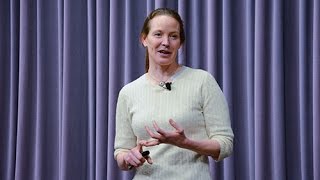
Minnie Ingersoll, a former Google product manager and Harvard Business School graduate, talks about building Shift, a used car sales company. She covers what she learned at Google, why she left to start a company, and how networking shaped her path.
Chapters
Great, thanks. So I wanted to talk about being a product manager at Google for 11 plus years and then my experience starting my own company a couple years ago and growing that to 200 employees now. And just some of my life lessons more generally. But first I thought I would talk a little bit about what I did at Stanford, my time at Stanford. So I was a computer science major. I graduated in 98 and I entered Stanford. I took 106, 107, 108, 109, some number of those courses. It was great. I became a Stanford section leader my sophomore year. I then became the TA for CS198, sort of the TA program. And it was great. And I loved computer science. And then by maybe my senior year, it started to get really hard and some of the programming, operating systems classes were fairly daunting. I was working extremely hard and I wasn't sure. Do you guys still talk about the duck phenomenon? Right. So here I am playing Frisbee, right? Stanford was great, but there was definitely the duck phenomenon where on the sort of surface level, you're playing Frisbee on the oval, but underneath you're paddling really, really hard. And that was a little bit of especially sort of the end of my Stanford experience. So let's see. So some of my CS198 friends were Steph Hannon, who's now the CTO for Hillary Clinton. Adam Nash and I shared an office. He's now the CEO of Wealthfront. He was best friends with John Lilly, now partner at Greylock. Mike Schrepfer, CTO of Facebook. Marissa Mayer, just one of our friends. And so now looking back on my Stanford experience, I think that maybe some of the reason that I was feeling like, oh, I'm not sure I can really keep up. I'm going to blame my friends, right? It was, I think, my friends making me feel like there was some. It wasn't competition, it was just a very smart group of friends. So I guess one of the things I'm trying to say also is that your friends, 15 years later, your friends are going to be extremely. They're going to be running major parts of the economy, really, and professors too. So stay in touch with your friends and your professors. And this is something else I didn't quite realize when I was at Stanford, is that in 15 years you're kind of the same age as your professors. I know that doesn't quite work out. And actually I didn't graduate 15 years ago, but approximately your professors all of a sudden are sort of your peers now. And so staying in touch with a lot of my friends has been obviously one of the great things that I have taken from Stanford. Things that didn't exist when I was at Stanford, the D school, the Gates, building, big data sprints, growth. It's sort of interesting just to look back on this. So growth, we only had marketing, and it wasn't measurable, really. And to me, growth now is. Let's look at our whole funnel and let's say, how do our sellers convert, how do our buyers convert? Let's measure each step of the funnel. And at the time, we just sort of had marketing. We kind of learned how to put a big billboard up. And that was. That was marketing. I hadn't heard of growth, really. And then the final thing I'll say on sort of Stanford life was having a degree. Being a female in the Valley with a degree in computer science is wonderful. It opens all sorts of doors. I have no regrets about doing that, especially from Stanford. But I also think it's important. I see a lot of people kind of getting this superiority complex. Like, I'm an engineer, right? And I see a lot of people also who have a little bit of an inferiority complex. Some of my friends who don't have engineering degrees, and they'll be saying, well, my BD guy will be talking about he wants to do a partnership with someone, but in order to do the partnership, they need to talk about their APIs. He's like, I couldn't possibly talk about an API because I don't have an engineering degree. I think that's actually also the wrong approach to take. So I have a degree in computer science and I learned programming in Pascal. And it doesn't actually mean that I'm any better equipped to really talk about today's Internet architecture, right? So I think it's important kind of to take everything in context. And so I graduated from Stanford, didn't really know what I wanted to do with my life. Vaguely thought that maybe I didn't think that I wanted to be a hardcore engineer at this point. I was like, I was headed. Had been kind of daunted by the end of my senior year. So I said, I think I want to be a successful business person. So I went to McKinsey right out of undergrad, and then actually I went to a startup after McKinsey, and we IPO'd in March of 2000. The economy was going bad, so I ended up going to Harvard Business School. This is Harvard Business School. Brings back memories for me. My Thoughts on Harvard Business School, if it's interesting. So business school was really fun and it was good for my self confidence. So I'd sort of, by the end of Stanford, I was like, I don't know whether I can hang academically. It's really hard. And business school was different academically. I speak English as a first language, which is helpful. And I know basic sort of math, statistics, that sort of stuff. I can definitely do formulas in Excel, so. So business school is great on those fronts. One of the things Heidi, you talked about remembering from business school, one of the cases I definitely remember is the used car case. And I'm now in used car sales, so I thought it was appropriate to talk about this. So approximately what happens in this case is you get paired up with a partner. Everyone gets paired up. One person's selling a car, one person's buying a car, and you negotiate the price for the car. And everyone comes back then to the class and talks about what price they settled on. And it's this huge disparity, different prices, everyone comes to a different negotiation. And what I remember about this is the guy who really screwed his partner, the guy who came back, he got the best value in the class just by lying through his teeth, right? And I remember that guy. And that's what stands out to me. And I have no idea whether I did well at all on this negotiation, but that's what stands out. And the other thing, so that's a very distinct memory. The other big thing from business school, the people that I really remember are what we called the gunners. You probably have this at Stanford as well. But someone will ask a question and the gunner raises their hand and follows the professor across the room like, I've got the answer. And the gunners stood out in my mind very much so. Really, to sort of get ahead in business school, you have to talk a lot. And so you're so eager. But again, your network is so important. So if the people you remember from business school are the gunners or the guy who won at the used car case, I guess my lesson is your network's really important and sort of think about how you're interacting with your peers. And so I use the HBS network a lot. Like it comes up a lot. Whenever I'm traveling, I look someone up who's HBS my year. That's one of the things I commonly do. Oh, who can I visit? Who can I connect with? And I said, it looks good on the resume. But then I put an asterisk and I had to think about what looks good about Harvard Business School on your resume. And I think there are a few things. So one, I think it looks really good. If you didn't go to, like, a tier one undergrad school, then you go to Harvard Business School, you've got Harvard on your resume, and I think that looks good. But if you went to Stanford, there's really no way to go up from there, right? So it's tough. So that right there is kind of difficult. I did not get into gsb, actually, so that's why I went to hbs. And I think it also looks good on your resume. But a big caveat in Silicon Valley for me right now is I do a ton of interviewing. And that's one of my big jobs right now is growing our company and interviewing people. And so I interview a lot of people from 2006. For some reason, I keep getting resumes from people who graduated from undergrad in 2006. And if they went to business school, I count them as a 2007 grad. I give them one year. I take away one year of experience because I think that going to business school for two years is kind of like working in the real world for one year. And that's just my calculation. I know people do it differently, but it's a good experience. But I think being out in the working world, I certainly learned a lot more, or I have learned more. So again, I graduated and going to business school didn't then clarify for me exactly what I wanted to do next. But here's Larry and Sergey. So 2002, I graduated from business school, and I knew that I was eager to move back to Silicon Valley, so I was looking to join a startup. At the time, Google is the largest place that I was looking at. And I ended up sort of networking my way into Google. As I said, Marissa and I were classmates at Stanford, so I had definite connections to Google. So I was. The next slide is right. So a couple quotes, actually, I wanted to bring up. I guess so. One was Eric. Eric says something like, if you're offered a seat on a rocket ship, this is Eric Schmidt, CEO of Google, or no longer, sorry, chairman of Google. If you're offered a seat on a rocket ship, don't worry too much about which seat. And then Josh Reeves, who's the founder of ZenPayroll, said something like, if you're thinking about what startup to join, find a startup that it's a place with people who you want to become. And I think both of these are good advice. I personally believe that joining a startup, one of the best startups to join is one that is printing cash. And if you go to a startup that is printing cash, you will be bound for success. There is some part that sort of the rising tide lifts all boats. And so that would be one of my best pieces of advice is, yes, jump aboard that rocket ship when you find it, because it'll do great things. And actually, this is my next point. So I said I was a successful product manager at Google for 11 plus years. And my question is, or my thought there is, okay, so what does it take to be successful at product management for more than 11 years? And one huge answer to that is, you have to stick with it for 11 years. And I think that sometimes I interview people, especially kind of coming out of undergrad, and they are looking for something extremely fulfilling in their careers. And I think sometimes they don't quite realize that, especially straight out of undergrad, there's a lot of grunt work involved in the work. And ultimately you need health care and it's a job still. Right? And so Google is. Everyone always asks me, isn't Google the greatest place to work? This was the question I got a lot. And definitely it is an amazing place to work. And they'd say, you've got a sushi chef and you've got a masseuse and you take a helicopter to work and you're met by your concierge on the helipad and this, that and the other. Right. And isn't it the greatest place to work? And there would be times someone would ask me that and I'd think, my product is currently five months behind schedule and my tech lead hates my manager and I have to go to work on Monday anyways. Right. And so there's just a little bit of that that I think Google treats its employees extremely well, but you kind of have to stick through things. There's still going to be grunt work, especially when you start early in your career and you kind of have to stick through the ups and the downs and kind of ultimately keep riding that rising tide. And let's see, what else did I want to say about the product management time? I think the other thing that's tempting to do sometimes that I've seen is you're tempted. It's sort of the Facebook phenomenon where you compare your insides to other people's outsides and you look on Facebook and everybody has smiling kids at the beach and their clothes are always clean and all that. And the truth is you're looking at your insides and Your family life and you've got oatmeal all over the floor. And I think that we do that in our careers as well. So you look at your company and how it's going and, and you see some other company think, oh, that's gotta be way better. But actually just kind of don't know what's going on on the inside. So anyways, that was my successful product management for 11 years required being there for 11 years. And I thought I'd also just talk a little bit about what I did as a PM and how I've seen product management change and different stages of product management. So product management to me, and I think it's changed a lot, but I would sort of talk about product management in three main chunks of product management. Where the first part of product management is defining the vision, defining how do we fit in to the market, what is our addressable market, how are we going to be differentiated? So sort of traditional strategy exercises and then figuring out, okay, so that's where we're going. And then phase two is let's. And this is how I think about it. Phase two for me was, okay, so what product are we going to build to reach that vision? Sort of what is the MVP? What is the minimal viable product? What is V1, what is V2? What is sort of our roadmap there? And this is where when I was doing product management we all wrote prds and a PRD was our product requirements document. We wrote that and that was kind of our three to six month plan for what product we were going to build. And then phase three was execution. And so phase three, we've agreed what we're going to build in phase one. Let's make sure that we hit our milestones, deliver on time, on budget, that piece of things. And I found that different people often played very well in different parts of the phases of product. I particularly like the last phase when things are kind of well defined and we can go just execute on things. But I think a lot of product managers actually maybe think that the sexier part is the upfront piece where you're defining what's going to be built. And almost the UI work that I think is now often done by designers. Design wasn't a big discipline. When I was starting my product management work, the product managers often did a lot of the design. So three of the main projects that I worked on, products that I worked on for many years, I worked on the billing system. I loved working on Google's billing system. Not an extremely sexy consumer product at all. But this was Google had to pass an audit. And essentially Google was a multi billion dollar company in 20 cent increments. And how do you close the books every month at the end of the month when you you're getting server, the logs on servers are all over the world and one server in Hong Kong is down and it's been serving traffic for Chinese users and Japanese advertisers and one server's down. How do you figure out what you actually owe and are charged or are owed at the end of the month? So I like that project. I transitioned into Google's Access team. The Access team started, started really a little accidentally. We were talking with Gavin Newsom, a friend of mine and I were about municipal WI Fi and Muni wifi at the time was a very new idea, new technology so that you could have multiple radios and you could be talking to one radio on a lamppost, it could be talking to other radios and essentially you could cover a whole city with this free uni wifi. And we tried to launch this in San Francisco and it just became my project because all of a sudden it was 100% of my time was trying to launch free Muni WI fi in San Francisco. And essentially we had a bunch of people who knew on my team, we knew a lot of people who knew about signal propagation, but we didn't actually know how to navigate city government. And it's a very different skill set it turns out. And so we were shot down and did not manage to launch Muni WI fi in San Francisco, but we did launch in Mountain View and then that parlayed into other access initiatives. Google's mission is to provide access to information to everybody. And we became, our access team became focused on getting people higher speeds and lower cost Internet access. So this became access to spectrum. So that actually playing in WI fi, free WI fi wasn't a great way of launching a reliable network. So for all of you who are thinking of fundraising at some point in your careers, I was trying to remember, I had to go to Google's board and ask. I believe it was for 4 billion, but it might have been for $5 billion, which is a different level of fundraising. When you're asking, you know, I think we need like $5 billion for this initiative and this was to actually purchase spectrum. And when we were trying to purchase spectrum, the way you buy spectrum in the United States is this very iterative, round by round process. And so you start by bidding like a billion dollars and then each round which is a multi Day, multi week process. You have to maintain your eligibility, so you have to bid more each round. So each day we were entering, okay, that's 2.3 billion. But let's make sure we really got the zeros right. It was an exciting process. And then we ended up working a lot, I ended up working a lot on Fiber to the Home, which is still a big initiative for Google, launching gigabit ethernet connectivity to people across the United States. And then this pivoted a bit right at the end of my Google time into Google Ideas, which is sort of Google's think tank, although they like to call it a think do tank with a big emphasis on the do. But it's sort of Google's think tank focused on getting access, having people get access to information where it's really being restricted. So on my next slide, so here I was sent to. This is Tahrir Square in Egypt, right at the beginning of the Arab Spring. And we are, they are. The government of Egypt has just shut down cable tv. So they shut down Al Jazeera, which is actually where a lot of the Egyptians are getting their news. On my right, if I've got this correctly, on my right is someone from the Egyptian military. On my left is someone from the police. The two factions weren't agreeing, the military, the police, and Google is trying to figure out, can we help in this situation? Like, is there something Google can do to help people get the access to the information? They just didn't know what was going on on the ground. No one did. And so one of the things we decided to do was let's see if Google can start streaming al Jazeera on YouTube. Let's try just streaming 24. 7 live Al Jazeera. And so we came back to Patrick Pichette, was our CFO at the time at Google and said, I don't really know. There's a business case here. It's going to cost a lot of money. And do you think we could do it? And one of the things that he said that really stuck with me was he said, I want you to think about Google and as half public company and half movement. And we're here to do something good in the world and it's not just about making money. And so we ended up streaming al Jazeera on YouTube. Okay, so that's where I left off trying to solve access to information, freedom of expression, big ideas at Google. And I ended up leaving to start a used car sales company. So that's where we are now. So I started this Company Shift with some of my co founders are here in the room today for a variety of reasons. But one of the reasons was there just isn't a good way to sell your car right now. And you can, if you have a car to sell, you can post the car yourself on Craigslist and try to get good value for your car and it ends up being much more difficult than most people think. Or you can go to a dealership and you actually lose a lot of money going to a dealership, right? You lose a few thousand dollars and there's gotta be a better way, right? And so my co founder and our CEO, he was telling me this, he was telling me this. And I was hearing him, he worked at Google. And then I actually went to sell my car myself on Craigslist and I said, you know, this isn't gonna be that hard. I can sell my car on Craigslist. And first person who showed up canceled the test drive on me. Like he was gonna come to my house and he postponed. And it was just a mess of a scheduling and the next person was super creepy. And like, you don't know, someone shows up at your house and you're like, I am not sure whether I'm supposed to get in the car with this person or whether I'm just supposed to hand him the keys and let him drive away in my car. I went through a couple more test drives and I ended up just giving up and selling my car at a used car dealer. And so thus began my involvement with Shift. But in order to. Well, actually one of the things that also happened was then I decided, okay, let me really dig into the numbers here. Let me understand how big is this market? Talk me through what are sort of the unit economics that CarMax has. Is this something that makes sense as a business? And so first, actually I invested in shift. So as I said, I was friends with George, our CEO. And so I was an early angel investor in shift, which made sense to me just as an investment, but I actually wasn't going to leave my job at Google. So Google was a really good place to work, as I said. And I was also, I think I just had my first child. And so Google provides this amazing five month maternity package. But I also kind of felt like at Google I was doing a lot of making decks to explain why we should do something that really made sense we should do. And then I had to make another deck to explain it to someone else. And I wasn't actually getting to do as much. I wasn't really Launching stuff as much as I was really hoping, but it was nice. And someone summarized it really well for me, which is they said, okay. At a big company, when someone joins the company and starts kind of doing your work, you're like, whoa, whoa, whoa, hey, hey, that's my work look. That's my vertical. You know, I've got that vertical. And someone else says, you know what? That's my horizontal. I'm doing that. Someone else says, look, I was assigned to that. And then at a small company, someone joins and starts doing your work, and you're like, oh, my God, please start doing my work. Thank you so much. I've got way too much going on. And I think that that was a big difference for me coming from Google to Shift was it was just a different level of engagement and a different level of launching stuff. We're just able to do so much, so much faster. So I started at Shift actually when I was on maternity leave. I just started helping out a little bit, and then I just got hooked. It was really exciting to be launching stuff, and it was also just really amazing to have customers be so appreciative. So when I talk about SHIFT now, it's a small enough world that people tell me, look, I sold my car with Shift and it was great. Thank you so much. And especially in the early days of Shift, I got to know a lot of our customers and they were just like, look, thank you for dealing with this. I've been meaning to deal with the car in my garage and I just didn't know what to do with it. So that was really exciting. And what I wrote here is a car company with Google DNA and what Google taught us a lot. Every day at Google, they say, what are you doing for the customer? How is this better for the customer? Are you providing a better customer experience? And I don't think that the car dealerships of today tell their salespeople every day. When you think about this, think about, is this the best experience for the person who walks in the door? Make sure that they walk away with a great experience. And I think that that's a really important thing. We talk a lot at Shift about every car you sell. Would you sell this car to your younger sister? Make sure we're just treating people with that level of care. So that just seemed like a huge opportunity. And then again, choosing Shift is a lot, like, even more than I knew, it's about choosing your co founders too, when you're starting a company. And so it's a little like when you choose Someone to get married. Everyone talks about this. It's like, who are you going to get married to? But you end up knowing their parents, you know, their spouses. Like George, our CEO who's here in the audience. Like, I know what time he goes to bed, I know what time he wakes up in the middle of the night because he often wakes up in the middle of the night and starts sending me emails. I know what time in the morning he wakes up. I pretty much know what he eats for breakfast, whether he works out, whether he's got date night that night. It is really a level of engagement. So choosing your co founders is also like choosing people who you want to be enmeshed in their lives, right? And it's a, do they have a stable home life? Do they agree with you on the hours that everyone should be working? So for us, we have a lot of our employees have little kids. So we're this extremely family friendly environment because a lot of us have little kids. And so people leave at 6, 6:15, and people often come back online around 8 or 8:30. But people say, how do you make a family friendly environment? And I don't think it's easy to make it family friendly if you don't actually know what it means. If a lot of people have little kids, it's going to be a family friendly environment. So choose your co founders. There we are. So George is on my left, he's in the audience. I'm actually quite pregnant in this picture, but the flag is conveniently placed over my belly in that. So let's see. So talk a little bit about fundraising. So we started just with us as co founders and then we were, I'd already invested, but we were still trying to raise more money, raise seed funding. And someone said, okay, you might think that you want to go find rich people that you know in your network and ask them for money, but actually one piece of advice we got was look. Go look for people who've written similar checks. So if you go to like Crunchbase, Insights or one of these sites that tells you about people who've written similar checks and you're going to start an online marketplace, look for people in San Francisco, in Silicon Valley who've written checks for 50k 100k to fund online marketplaces and that person is likely to be the sort of person who's going to want to write you a 50k 100k check for your online marketplace. Now, the same person who gave us this piece of advice also gave us advice on raising from Sandhill Road. So I don't know if this is completely true, but this is what I was told. Now, caveat is, I've been at Google, so I really didn't know anything about raising money from Sand Hill Road. But what we were told was, OK, take the fund size and divide by 50 and then ask for that much money. And that was the math. And so they said, look, the partners, they don't want to be on tons of boards, so they want to fund like 2530 companies from their fund, but they want to fund 2530, but they want to have some money, so they want to give enough money so they have some in reserve just in case. And then once you've asked for that much money, then multiply by five and that's your valuation. So I'm not saying this is perfect advice, but this is what we were told, right? So it's none of what I learned in business school. Business school is about your cash flows and net present value. And this is, oh, just take the fund size, divide by 50, multiply by five. That's how much your company should be worth. So, anyways, I thought that was interesting. I also learned a bit about just how Sandhill Road works and what my role is supposed to be as coo. So our CEO George, does this. He had to lead this all, and I was very thankful that he got to lead this all, but there were intricacies that I didn't understand. So you meet one of the partners and that partner becomes your partner. Right? And Emily Melton is also in the audience and she is our partner from dfj and she is fantastic. But generally, I don't know that we actually met Emily first, but she generally you meet one partner at a fund and then that person takes you to the Monday partner meeting, in a sense. And so it's not always Mondays, but it seems to be a lot of Monday partner meetings. And that partner sort of preps you for the partner meeting and tells you they go through your deck and help you get ready. But if you meet some other partner first, it's kind of hard to switch partners if you're not happy with the person you first met. So then you try to go to the Monday partner meeting and you try to do this with like 5 people on one day to go to, like, you know, Sequoia, Andreessen, dfj, Highland, all at once. And we did a little bit of that. And George actually ended up taking a nap in his car at one point in between the partner meetings, because it's a Kind of grueling day. But we ended up raising 20 million in our Series A, 50 million in our Series B. We just raised at the end of last year from Goldman. So, okay, so once you raise all this money, what happens? You have to grow your team. And so this is a snapshot of us, I think, right after we raised our series B. And so I thought it might be interesting to talk a little bit about interviewing because that was then became sort of one of my main jobs was interviewing folks. So get the interview was the first tip I have. And the thoughts there are people who are really persistent often do end up getting an audience. And so at Google there's very defined roles. But at a startup, one of my friends calls me, Adam Nash calls me, let's say, and says, hey, I've got this incredible friend, you know, you must meet him. I don't know what role you have, but he is so good and I'm kind of inclined, I will probably take that meeting. Right. And so people, you can get an interview. Don't lob in your resume, but get an interview. Do lob in your resume, then also have your friend make an introduction to someone and then continue to be persistent. We have some of our sales team are amazing sales guys and one of them, I think launched 10 point drip campaign to get an interview with us. And he just understood our model so well and he kept thinking about our business and kept lobbing in suggestions on how we could do our business better. And eventually we gave him an audience because he was persistent and he was smart and the stuff that he was emailing us was point on good tips for our business. The second thing I would say is the recruiter is your friend. I hadn't quite realized how much the recruiter really is your friend when you're interviewing. Essentially, we set quarterly and monthly goals for everyone at the company. And the recruiter has quarterly and monthly goals that are based on how many people we hire for the most part. And so the recruiter is very it is in their incentive to make sure that you come off on your best foot. And so if you're interviewing somewhere, make sure you can ask the recruiter just easy questions like what clothes should I wear? Obviously, what sort of questions will I be asked? What about the people will I meet? Like, anything you can tell me there. Like if you don't want to meet for six hours on one day and you'd prefer to split that into two days, talk to the recruiter about that. Like the recruiter is there to handle all of that and then know the questions you'll be asked. So there's a couple questions that we always ask. We always ask, why are you interested in shift? Like you are going to get asked that question. And so there's no reason you shouldn't be really good at answering that question. And then what questions do you have? For me is something I ask everybody. And so sometimes people have no questions for me. And I'm like, come on, it doesn't seem like you're really that interested. Right. And if you don't have a question, the question I would say you should always make sure to ask is know everything you can about the financials. If it's a startup, maybe there aren't going to be extensive financials, but you can ask a lot about. I mean, in our case, ask about the unit economics, ask about the fixed cost, variable costs. Because if you follow my advice, which is find a company that's printing money, then asking about the financials is one of the most important parts of really understanding whether this is going to be a successful startup. And then negotiate and don't worry if you're rejected, that's still part of the negotiation. So sometimes George and I will both meet someone we might reject. I might reject someone because they don't share my view on product. They sound too much like they share George's view of product. So you might get rejected just because you agree with the CEO and not with me. And I was the one who interviewed you. You know, it's not necessarily a reflection on anything personal. So interview a lot because you get better at it. And then don't worry if you're rejected a lot because it might just be, you know, you might be sharp, you just might be the wrong thing. And then if you really are convinced that that is the place for you, you can still be persistent. Right? So I have people who said, look, let me come work for you for free for two weeks. Let me do a consulting project, let me be your summer intern, just hire me on as a contractor and maybe you'll keep me. So all of that is still on the table, especially at a small company. Okay, so I told you a little bit about what we do, but let me just tell you briefly about some of running the company and what we actually do. So I wrote, I have a career coach. This is me. I do think it's important to take time aside to just think about, kind of take a step back from the day to day. And so that's what my career coach. That space for me is just I've reserved an hour to think about the bigger picture. About two years into the job, I did ask my career coach, what does the COO do? So what I learned, actually, he said, well, there's many different things that the CEO is supposed to do. But he said, you're supposed to be sort of like the VP of Operations, the VP of Miscellaneous, and you're there to make the CEO successful. So I learned a little bit about that. But a lot of what I do in the sort of maybe the VP of Miscellaneous is try to set up some structure for running the company. And so we do 360s. These are our reviews at the end of the course quarter that we do for everyone at the end of the year more extensively. And so we've just copied Google's. And I think that it's hard to be at a startup if you haven't actually been somewhere that has a lot of structure that you can copy. So we've just copied Google. Google spends tons of time thinking about what are good ways of setting your quarterly goals and what are the good ways of doing reviews. We just copy all of that. How to run good meetings. You take action items after every meeting. Every meeting needs its notes published with action items. And then at the beginning of every following meeting, you have to then review your action items from the previous meeting. All of that get to yes is really important. This is just. It's easy to shoot down people's ideas and we try to say, let's just find a way to get to yes. And then finally, well, not finally, it's a marathon, not a sprint. And I think this just applies through all of life. But you gotta make it through for a long time. And so for me, this means I get my seven hours of sleep. So at 10 o'. Clock. Because I go to bed at 10 o'. Clock, at 10 o', clock, I say, oh, I'm done with my work. And it doesn't really mean that I'm done with my work. It just means that I'm going to bed. Because it has to be something that you can sustain, right? And that's through everything. And then setting the culture of the company. Two things that I really care about are setting a positive place to work. I just think life's too short to not have people waking up feeling good about coming to work and then winning. So I think it's also. It's not a positive place to work if you're not actually winning. Okay, my next slide. But things. Life can be hard. And I want to make Sure I save some time for Q and A, but these are just my life lessons. I stopped out of Stanford my sophomore year, stopped out for a semester because things just got too hard, too stressful. And I am so glad that I then came back and I didn't want to come back. I'd gotten really depressed, I'd gained 40 pounds. I was like, just didn't want to be sand, didn't want to get out of bed and I just had to keep going forward. And like that is just the gotta show up, tell the truth, hope for the best and just keep going. Because I wouldn't have then had the next phase of my life which was very positive if I hadn't just kept going. And 95% of stress is self inflicted. I don't know where that comes from but I think it's so true. Which is like your stress is all internal. And I'm out there running a race or something. I'm doing like a, I've been doing races and I start to feel bad at mile three and I start to think, oh my God, the next 10 miles are going to be horrible. I'm running a half marathon. But the truth is it's just in my mind and right now I'm ok, I can keep going. And just remember right now I'm fine. And so this goes to the 204060 rule, which I love. Heidi used this in her talk, I'm copying it. But at 20 years old. So first off, I'm much happier at 40 than I was at 30, than I was at 20. Just the place that I'm at. But at 20 you're so worried about what everyone else is thinking about you. Ah, it stresses you out. And at 40 you just don't care what people think of you. And at 60 you realize that no one is actually thinking about you. And I think it's so true. Like no one actually wakes up and is like I wonder If Minnie gained 10 pounds. No one else wakes up thinking about that. Right. But it still stresses me out. And so I like that advice. Do wear sunscreen, don't do drugs, do have babies. These are really important to me. Don't do drugs. I had a lot of friends at Stanford who were like the daily weed smokers. And they'd always tell me like it's not addictive, I just smoke every day. And you know what? Those were not my friends who were Adam Nash, Marissa Mayer was not like a big when she was in college. Right. I don't think that the stoner half of my friend group actually really was able to realize their full potential. So that's just my two cents there. And do have babies. And what I mean by that, those are mine. What I mean by that is not that you need to have babies, but don't feel constrained in having babies. If you want to have babies, have babies. There's never going to be the perfect time. And so I have a startup. I started my startup, I was totally pregnant in my startup and we were just raising our series A when I was about to have my second kid. And you know what, you can make it work if you really want to. So I just want to say one last thing on women in tech, because I always get the question. So I'm not a big evangelist of more women need to be in tech. As I said, it served me really, really well. But my current mission is actually just to make tech and make business kind of just a more friendly place for women. So just to have boardrooms and management meetings and Sandhill Road stuff just to be a little less aggressive. Sometimes I'll be in a room and someone will be coming after me like what are the numbers? What are the assumptions? And I'm not good in that environment. But that said, I'm really thankful to the women who have come before me and have helped me out. So Heidi and Tina for asking me to be here. Emily Melton, thank you so much for being an amazing board member. And Emily sits on our board and sometimes nudges me and says, speak up, speak up. And I do appreciate it. And then finally most of all to my mother who's here in the audience today and is my rock. And I am so thankful. And that's it. So you have time for some questions and if you could just repeat the question. Sure. So I have time for some questions and I can repeat the question. Yes. Does anyone have questions? Great, go ahead. More specific about shift.
As you guys are growing really quickly, what do you find scales.
Well.
And what do you need to localize?
So I'd say as we're opening new markets, what is central and what is local? And I think one of the premises we've tried to operate off of is if it can be central, have it be central because it just makes for a more consistent experience. It allows us to sort of control things more. So that's hopefully an answer to your question.
Yeah, I was just wondering how you've addressed investors concerns over the fact that your company is entering a pretty crowded marketplace.
Sure. So how have we addressed concerns about entering a crowded marketplace? I Think it's important to differentiate yourselves. Right. And I didn't talk a lot about the shift model, but our model is we, unlike a dealership that has a physical location, we have no physical location. We actually come to the seller's house and evaluate their car, and then we bring it back to where where we do a mechanical inspection. And then when a buyer wants a test drive, we bring the car to the buyer. So that's actually a fairly different model. And I think in investor speak, they would talk about your moat. But I would say that that sort of operational complexity is very different than just selling a car online. And a lot of our competitors are sort of more like e commerce sites who are selling cars online. I would say that that operational complexity is sort of our greatest strength and greatest weakness, but it differentiates us for sure. Yeah.
All right, so I find it interesting that you worked at McKinsey and then at Google for 11 years. At McKinsey you got to see the insides of a lot of different businesses. Granted, only for a couple years. And then at Google, you spent 11 years in one business. Which do you think is more beneficial to you as you created your startup?
So which is more beneficial? Sort of the McKinsey experience, seeing a lot of companies or the Google experience? Really just seeing a lot of one company. I don't know that I can quite say one or the other. So I'll just tell you a little bit about my experience and you can decide which sounds more valuable to you. One of the things that I look for a lot when I'm hiring is my ideal candidate. Or for a while we were trying to hire someone with two years of McKinsey experience and two years of startup experience, or one year of startup experience, something like that, because it really blended both. And so the thing that I love about someone with two years of McKinsey experience is McKinsey has trained them in some of the analytic, strategic, structured thinking. They know how to look at a market and come back with some insights. They know how to look at data and sort of pull through some analysis. So I love that McKinsey teaches you sort of the fundamentals of business. But I also like someone who's seen, seen the inside of a startup, knows what that's all about, and then is eager to do it again for me at Google. So I started, there were maybe 500 employees at Google, and now there are more than 50,000. But maybe when I left, order of magnitude 500 to 50,000. And so I really did get to see many, many different phases of Google, which was extremely valuable. And I liked, actually I very much liked seeing the different structures that Google put in place. So that was kind of what I talked about. Just how does Google think about doing snippets and coordinating departments? And it was also very interesting for me to see how it has evolved. Both are extremely valuable experiences. I think a mix of both is great. I actually think that it would be very hard for me to. I wouldn't go start a company straight out of school. I just don't think you've seen enough. But that's also me. I think some people have a different, it's a different personality type. But I think that for me seeing something else has given me some foundation to then build upon. Are you building a global company right now? We are just building a national company. Yeah. Question in the back.
So a couple quick points you talked about when you were at Google. Somebody said to you that when you were in, in the Middle east about making a movement, who was that person? Second of all, how did you find your career coach? And last, Steve Blank talks a lot about that. People who work in startups who are successful tend to have a very high chaos threshold, but they can deal with a lot of shit and uncertainty. Can you comment on that?
Okay, wait, so let me make sure I remember. Okay, so the first question was, was when we were doing Google ideas and who said that? Google. This is Patrick Pachette, who's our cfo. And so he's the guy who's managing Google's numbers and he was the one who said think about Google as like half public company, half movement. And I think that that's the Google DNA. Right. Is to really care about what we're building, not just because it's a business, but also because it's playing an important role in the world. Your third question was about startups having a high level of chaos. Right. And I think that's kind of my point about pacing yourself, which is it is a huge level of chaos and it's a huge roller coaster and that can be extremely stressful. And I interviewed a little bit, I talked to someone, it was more of a coffee, but she was saying something like I said, I'm not sure maybe I could join your company. She had a hundred person startup and she said, oh, you're a domestic animal, you couldn't handle the wild, you couldn't go into the wild. The wild being the wild of a startup environment. Because I'd been too cushy, been too cushy at Google and that was her perspective on joining a startup. What was your second question?
How did you find your career coach?
Oh, how did I find my career coach? So I think I underestimated now, ok, Emily Melton is in the audience. As I said, she sits on our board. I underestimated the value of really great board members and also that they will also kick your ass when necessary. And so I do think that if you don't have a career coach and you need one, your board will probably tell you that you need one and they will probably even make some recommendations on who your career coach might be. I, I think in my case I actually found my career coach myself because I wanted one. But actually my career coach is Steph Hannon, who's Hillary Clinton's cto, One of the people from one of my Stanford friends. She's one of my Stanford friends and a really close friend of mine still she recommended one of her friends as a career coach. So that's how I found mine.
One more question.
Sure, one more.
Yeah, you say that in order to gain experience you have to be at the same job for 11 years because that's just like the way to build it up. But how did you still.
Being able.
To be passionate about doing even that? You are doing these different roles but you're still working for the same company. And do you feel that you were making a difference? And I mean, I don't know, you're thinking in retrospective. Well, I was 30 and now I'm 40 and then. So is it worth it?
Yeah. So the question was staying at Google for 11 years a little bit of like how do you stay motivated? And I didn't mean that you have to stay anywhere for 11 years. I did just mean that there are times where you go through hard times and it's not always. My advice is not always to bail during the tough times, I guess and because especially if you can see that it could be better. And so one of my things is show up, tell the truth, hope for the best. In my household we often say smile and nod sometimes and I do think there's just a if it's worth getting through, kind of suck it up for a little while. And so it's not that you have to stay for 11 years, but just realize that sometimes smiling and nodding and just kind of getting through that will let you come up and see the next high that's coming up. So I'm all about sticking it through and yeah, good things will come. Well, that was fantastic. So please join me in thanking Minnie. Thank you. So much special. Thank you. That was lovely. Thank you. That was lovely.
More from GHION.AI


O processo de reconhecer limites, mesmo quando a vida parece exigir sempre mais.





Depois de tantas histórias, aprendizados e pausas necessárias, o @interior_iza está de volta



