Modernizing the Shipping Industry [Entire Talk]
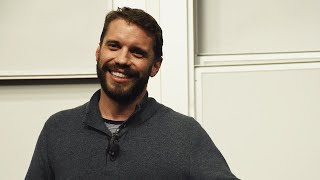
Ryan Petersen founded Flexport to fix the broken shipping industry. He explains how global trade relies on outdated systems, why technology alone won't solve it, and what it takes to modernize an industry that moves trillions of dollars.
Chapters
Who you are defines how you build. Do you all know that every single time you see these big ocean container ships out here in the bay? And did you know that every single time you ship a container, there's a piece of paper that's actually flown across the ocean to serve as title to the goods? Think about this for a moment. It's madness that there's actually. Because every time you ship a container, there's a new owner on the other end of the ocean. And we're actually flying pieces of paper around the world to serve as title. Still, thankfully, we're starting to change some of that at Flexport and others in the industry where we're making it possible to use the Internet for what it was made for is to do commerce across the world and fulfilling the original purpose of the Internet. I first discovered that when I graduated from Cal Go Bears, I couldn't find a job. It was 2002. I didn't really know what a job or a company was at that time, although it was the middle of this dot com boom. My interests were much more around global trade and economics and why some countries are poor and some countries are rich, some people are poor and some people are rich, and there's not a lot of jobs in that space. There should be more, but there are not a lot at that time at least. And so I got a job working for my older brother. Actually, my first job out of school was my older brother ran this business buying motorcycles in China and selling them on the Internet as well as through live car auctions in the United States. And I moved to China, spent two years working for him and working, sort of joining the company, doing everything as an entrepreneur does. We didn't sell. That's a Honda bike. My marketing team made that. We didn't sell Hondas. We sold a Geely, which Geely bought Volvo a few years ago. Geely is a Chinese car company that bought Volvo. And at this time, this was in 2005 when I was living in China, Geely made motorcycles. And they were not great motorcycles. I still have some guilt on my conscience from selling these crappy bikes without enough spare parts, et cetera. One of the things I learned, however, was that trade is just broken, that it is so hard to ship something and you have a really hard problem. If you're an entrepreneur, you have very hard. Any business actually has really hard problems, I call them. You could categorize them simply as supply and demand. In supply, you have to make a great product at scale. If it's a physical Good. This likely means manufacturing in a lower cost country. More and more it means making a differentiated product, which is almost impossible. Look how many smart people are in this room. And if you want to stand out, how are you going to do that? And think about all the people in the world. To stand out is so hard to make a good product. So that's the supply side of the equation. Demand. You have to find customers, you've got to make more and more. That means building a following, having a brand, a community, all of these things. So you've got supply and demand. My fundamental belief is that if you solve those two problems, you should have a good business. And we found over and over again, even when we hadn't solved those problems, even when something wasn't going right with our supplier, we didn't have a great brand, we would still get hung up on the part in between of how do I get these products from the supply to the demand. It was super hard. We had complicated compliance. Customs, like what documents do you need? It's very confusing. You need to trust your freight forwarder, your customs broker. These freight companies, and they're not the most trustworthy gang, let's say. There have been even since I started Flexport, numerous criminal arrests for price conspiracy. What do you call it? Price collusion, Fixing prices. It seems every couple of years the industry can't help themselves. They all collude and make the fuel surcharge the same for you. See it on your airline tickets sometimes. So you couldn't really trust the people. Once they have your merchandise, it's in their possession and you can't get it back. So they can then charge you whatever they want. It was a very frustrating experience as an entrepreneur because here I am, I didn't have any money. What we would do is actually buy the container of goods and in global trade you can basically place a down payment, you can pay 30% down and then they'll just ship the stuff to you. And you owe the 70% once it's on the boat, but the boat's already moving, so really you don't know the 70% until it arrives. So you've got like a three or four week window to sell as many of those things as you can get cash and then pay your factory. And so we were very bootstrapped and lean and entrepreneurial running these cycles, always a hair away from bankruptcy. And so then when the freight forwarder would hold your merchandise and not release it over some document that was flown across the country or across the ocean and the wrong you didn't get the right people to sign the document. You need to send it back. It was a real nightmare. This was in 2005 and six is when I was living in China, running the supply chain for this company and realized at that time that it was broken. Now, I didn't start Flexport to solve that problem. Flexport's designed to solve this problem for companies, make it easier, more transparent, give people data visibility, control over their supply chain. I didn't start flexport until time 2013. As Ellen mentioned, in that window in between, there was like an eight year period. And that's a period I would like to talk about for a minute because I had seen the problem, I had experienced the problem firsthand. It made me mad and I didn't do anything about it. I think that's a pretty common experience and one that might be avoidable if we just let ourselves get a little bit more pissed off sometimes that it's not. When something is not right and it's broken, you should let yourself get angry. You should be like, hey, this shouldn't work like this. This should be easier. I was guilty of what Paul Graham, the founder of Y Combinator, my first investor, my friend, what he calls, he has a great essay called Schlep Blindness. It's a great Paul Graham essay. You should read it if you haven't already. A schlep is a Yiddish word for an arduous journey. And schlep blindness is when a problem seems so big and overwhelming that your conscious brain just shuts down. It's like, there's no possible way I could solve this. And you don't even think about it. In the essay, his example is Stripe, where anyone who ever sold anything on the Internet, who sold something on the Internet before. So if you had sold before, did you use Stripe or did you use some platform? If you had run a website before Stripe, you had to set up what's called merchant processing. And these were done by banks usually, like Wells Fargo was my merchant processor. You had to apply, and some three months later they would give you permission to charge people credit card fees. To charge people money with a credit card, you had to get permission. You had to apply. Please let me sell something. What's interesting about this is that every Internet entrepreneur in the world went through that process. By definition, if you sold something on the Internet, you had to go through this process. So all of us saw that process, saw how painful it was, and then went on about our business and sold cookbooks, or in my case, dirt bikes or Whatever else you sold on the Internet, you saw the problem, it stared you in the face. This is way too hard to accept credit cards. And it's now, I read today, a $20 billion market cap company. There was this idea that just stared everyone in the face. $20 billion. And we all saw it. Every single entrepreneur on the planet saw it and didn't seize that moment. And Paul's new favorite example, at least in private in an email that he sent me, is Flexport, which is anyone who ever imported anything, which, look around, almost everything got imported from another country. And every single one of these businesses and entrepreneurs saw this, experienced this, it's way too hard to ship stuff and just went about their way selling stuff instead of saying, maybe I could be the one to fix this. I think that that's a very important lesson whether you're starting a company or working for a company, that you take that and say your brain is going to shut down when it sees a problem. Being too big doesn't have to be in a company by the way, you see it every day. If you live in San Francisco, what are we going to do about homelessness or other causes, other problems that we have in society? You should get pissed off about this stuff and know that if you're not going to solve it, who is? There's not someone else that's going to come and solve our problems in general. So I was guilty of this as well. I learned about the problem of how hard it was to ship stuff in 2006 and I didn't start Flexport until really made it my full time job in 2013. In between, I didn't do nothing. I discovered that that same document that's being flown across the ocean, turns out it's a public record in the United States and no one had done a good job collecting all of these, making it searchable and accessible. And they're full of valuable data. Can see every single product that's imported into the country, who made it, who sold it, where is it coming from and going to. So I, between sort of 2007 and 2013, I built this business where we collected now 400 million of those documents, digitized them and sell subscriptions to the database. Now that business has, it's a good business, actually. It's a very valuable product, but it has a bit of a problem and that the data's, maybe you can identify it for me. We sell subscriptions to a database of public records. There's a key word in that sentence that's challenging, which is public and that means someday it'll either be free or someone else government will make it actually searchable or it'll just go away. And it's not very defensible, let's say. So if you're talking about those core problems of supply and demand on the supply side of that business, are you differentiated, maybe not. Is it defensible? And if you don't have a defensible business, you're likely not to have a business at all in the future. So I lived with some degree of paranoia for a number of years about. I remember when Obama launched data.gov that I almost had a heart attack that day before I realized that they had not put these public records on data.gov yet. And so I started working on what are the other problems in this space. I really love this space where the Internet meets trade. For me, it seems like the original core purpose of the Internet, the commercial Internet, the dot com portion of the Internet, was to allow commerce, the idea of a seamless web of commerce that any two people on planet Earth could trade with each other. Global trade often gets a bad name because it's usually done by big, anonymous, faceless institutions. And we all know you make kind of most stupid decisions are made in big groups. And yet if you were to have one person, say a basket weaver in Guatemala selling her baskets to someone in Iowa, who would look at that and go, oh, this is horrible. And so when you bring humanity to the problem, I think you realize much more how powerful trade is as a vehicle for entrepreneurship, for opportunity. You can look at the stats in Asia over the last 30, 40 years, especially in Asia, but around the world, we've lifted almost a billion people out of poverty with free market economics and allowing people to participate in the global economy. And so I look at that and I learned about that at Cal. And afterwards, you look at that. On the one hand, here's a force for good. One of the greatest forces for good, I would say the two greatest forces for good are trade and, and the Internet. And we've got on the one hand this incredible powerful thing and I've witnessed firsthand how hard it is and why couldn't we make software to make this easier? So I came to realize that I could spend a lot of time, that it would be a very meaningful way to spend time and that there would be a great business for it. And I'll walk you through a little bit of the story, but I want to talk a little bit more about trade and how important it is to humanity. We know there's evidence of trade that goes back at least 40,000 years older than the evidence for art or language, for more or less it is. The thing that defines humanity to a large degree is that we trade where the animal kingdom does not trade. Adam Smith has a great quote about this that no man ever saw a dog trade a bone with another dog. And yet here's this thing that's the essence of humanity, that's extremely powerful. We know that no two countries, I still believe this is still true with a McDonald's, have ever gone to war with each other. Commerce, the ability to connect the global ecosystem, is good for peace. Anytime that you have two countries that are engaged in a dispute with each other, a conflict, you can be certain that the trading communities, those who are involved in business and doing trade with each other, will be passionate advocates for peace between those two countries. Because it's not good for business when you have conflict. There's a famous paper called I Pencil. It's an academic paper from the 60s where, I presume an economist, showed how there is no human who knows how to make a pencil. That to make a pencil, you have to know first off how to make wood. How do you make wood? You need to be able to chop down trees. How do you chop down trees? You need to have steel. Now all of a sudden you need metallurgy. How do you do that? That's a very complicated thing. I couldn't begin to tell you how to do. I think I know how to make a pencil. I don't. That's just for the wood. You haven't mentioned the graphite, where you have to go underground and mine it, the rubber. You have to know how to grow trees. Great. Robert. Maybe it's synthetic these days, but how do you. There's no human, there's no one human that could make something as simple as a pencil. And so trade is how this all comes together is that we exchange not just the object, but the ideas that go into that object every time you engage in trade. So here's something that's core to humanity, and it's just pretty broken. I've lived it firsthand. If you ask any family members who have been involved in trade, trying to ship something, they will regal you with stories about what a nightmare it is. So I started thinking about this when my last business was causing me a degree of paranoia and wanted to experiment to see if, in fact, other people would. If companies would buy if I built this service, Would anybody buy? There's a. Entrepreneurs are. There's an idea that entrepreneurs are risk takers. And that's not. It shouldn't be true. I don't see myself as a risk taker. In fact, I want to make sure that before I take any risk that someone's going to. That it's going to work. I want to have a very high probability of success. So I built in. I want to say it was in 2010, well before I truly founded Flexport. I built a company. I built a website, just a marketing site offering an online service to help people clear customs. They help companies clear customs so allow you to file the paperwork needed to get a product into the country. I let that website run for a year. I was still running my other company, but I built this on the weekends. And during one year of this website operating, I got 300 companies to sign up, including Foxconn, which is the maker of the iPhone. Cargill big ad company. And then one day Saudi Aramco signed up for my website, which is the largest company in the world. The Saudi national oil company signed up for my fake website. It was just a marketing site. I didn't know how to ship anything. I just wanted to see if this existed, would someone buy. And that was in 2010 or so. And so it took me the better part of three years to get learn how to ship stuff, how to do customs, get licensed, heavily regulated industry. We had to learn a whole lot of things. I think this was even I don't remember when that book the lean startup came out, but Flexport is the ultimate lean startup that we have been from the start. And I think we're now the world's largest lean startup that we are constantly experimenting. Would someone buy this if it worked? If we could do this, would you buy? And that's the art of sales. And sales is very underappreciated as a science, as the core driver of business. The ability to sell something, the ability to convince someone and entrepreneurial sales means that you never get a no, ever. You get a yes if and then it may end up being no because the if is impossible. But you always get a yes if yes, I would buy from you if you could clear these oil tankers, which I couldn't do. But at least I got a yes if from Saudi Aramco. And this is really underappreciated. There are currently only three universities in the United States that offer a major in sales, probably 20% of all the jobs in this country. And an important part of every job. Even if you're a scientist, you need to be able to persuade people of your ideas. And we only have three universities. Florida State, Baylor and Weber State in Utah are the only three universities that offer a major in sales. I guarantee you graduates of that program are going to make a lot of money and go on to be very successful because it is something you can study and learn. And so those of you who are engineers here in this program, don't discount the role of sales. You have to get out there and talk to users and find out what is it, what is your problem? Sales is get a bad word, right? We think of like the used car dealer. That's like the image that you have as you think of a salesperson and it's just wrong. A salesperson's job is to understand customer's problems and figure out can I solve that problem? And if you can solve it in a way that allows you to make money, you've succeeded. This is purest problem solving. I don't know if I'm a great salesperson, but I value sales very much. And Flexboard has always been sales led, always will be sales led because that means we're customer led. We're customer obsessed. Going out to find customers and help them with this important problem of shipping things and making it easier for them. It's a massive industry. Freight forwarding is what we call it, the art of shipping freight across the world. To ship one container across the world, I mentioned that piece of paper. But to move a container across the world, you're going to have as many as 15 companies involved in this chain. It's basically a relay race of unstructured data being handed off from node to node by human information brokers. People are going to look at it. It should be called freight email forwarding. You take it and you say, okay, what do I do next? And then forward it to the next person in the chain in a relay race. And what we've said is what we are doing is building a platform to structure all of that data, make it reusable, connect all of those companies together to a single platform and allow them to do business together, bring everybody together and make it seamless from end to end. In the process, we make freight cheaper to ship while giving a better user experience. And if you can be cheaper and better in a 2 trillion dollar market, you can grow quite fast. And I'll show you some of our. I do have a revenue graph in here somewhere. But our mission as a company is to make trade easy for everyone. I've mentioned already why I think this mission is really important and the way we do it is technology. So we've got a platform that connects all the parties. This is much harder than I thought. Thankfully I didn't understand how hard it was when I originally started the company. I was just thinking about my own problem. It's too hard to ship stuff. And I didn't know why that was true. I could tell they weren't using tech because there were pieces of paper being flown around, but I didn't really understand that there's these 15 different companies in a chain all depending and any problem upstream results in all these problems downstream. I learned that once we got started. And so what our technology platform looks like is interfaces. Whether it's a web interface, mobile apps now for truck drivers, a lot of it is APIs and older standards of data interchange technologies to connect all these companies together, let them do business. The mobile app's probably one of the more interesting aspects of our tech, where we now have over 4,000 trucks that we connect via mobile app to allow these trucks to us to dispatch the trucker so we don't have to call every time a container arrives in the port. We can just dispatch a trucker. We didn't have that when we started. We started with a nice little clean ui. When we were talking, it was like here a little bit of a one man band. But I can build an application that helps you as an importer, as a brand manage your freight. And all the stuff on the back end we were doing manually and we've been going step by step building the apps for the different parties. So tech helps a lot. But tech is not enough, at least in this business because there's a huge amount of infrastructure required. We're talking about real infrastructure. Warehouses, trucks, planes, ocean carriers, ocean ships, trains. We ship by all modes of transport. And how do you connect that in? Some of it we own, we lease. We now have four warehouses and one 747. That Flexport's logo on the side is pretty cool. But a lot of it we don't lease. A lot of this is business development. It's going out and finding the owners of those assets of that infrastructure and understanding their needs and treating them as a customer and saying, okay, how do you make money? You make money. When your ship is full, you make money. And how do you fill your ship? How? Having predictable customers who will show up with the freight that they booked. And so we've had to go out and make those partnerships. I think this is something that a lot of technologists are afraid to do. It's part of why this opportunity was still available is still available because technologists think that you can sit in a room and build technology and change the world. A lot of the world's problems you can't deduce from first principles at a whiteboard in a room. You actually have to go out there and talk to people and learn how it works. Because it's not built on logic. Not logical that you fly a piece of paper across the world. That's just how it is. And you could get geniuses in a room and they wouldn't be able to solve this because you've got to go out in my case and drink whiskey in Hong Kong until 4am until you convince them to give you some space on their container ship. And so it's not just tech, it's also infrastructure and business relationships that go into that. And it's also expertise. Clearing goods through customs is something that technology just won't do. Until we have real AGI, you're not going to be able to classify a product by customs code. It's very difficult. It requires a lot of judgment because this is the law and the law is built on human judgment. It's not built on algorithms yet. So it is the combination of these three things that makes Flexport special. That you're actually pulling from multiple disciplines. Being cross disciplinary is super important, that you have to go out and pull the best ideas, use tech, but combine it with human expertise and combine it with real world infrastructure. And I like to sometimes say that Flexport is a bit of a decathlete in that sense, that we're not probably the best technology company in the world. We're not the best at infrastructure and I don't think we have the most expertise. But in the unique ways that we combine that, we can create a lot of value for customers. And what are customers trying to do? They're trying to ship freight, they're trying to have visibility over their products. When I was a kid, it's not that long ago, I graduated from Cal in 2002. There was no wifi, which meant there was no point in having a laptop. I used to go to the library to use computers because what was the point of a laptop if it can't connect to the Internet? There were no cell phones. This is weird. It's not that long ago, I don't feel that old. And yet the world has changed dramatically since then. And one of the big changes is that customers are now in charge. Consumers are in charge. When there was only three television channels when I was a kid, Brands could get away with three weeks shipping the Sears catalog, mail order. It took three weeks to get your stuff, maybe six. If you offer that today, nobody will buy your products. It's two day and more and more. It's two hour delivery is the expectation. When there was only three channels, there were only two brands, Energizer and Duracell. And you had to choose. You want the Energizer Bunny or the Copper Top? There weren't infinite proliferation of SKUs. Amazon, now you've got 80 million SKUs. I think on Amazon the customer has so many choices in real time, on demand. What does that mean for supply chains? How is that relevant to this talk? Well, in the old world, if you have three week delivery time, you can get away with one warehouse in the middle of the country and serve the entire population from that one site. In the new world that we're heading into and that we are now living right in the midst of, you've got. If you want two hour delivery, what is that? You need little small caches of inventory everywhere you're going to see brands. There's probably an Amazon fulfillment center within 20 minutes of here. How else could they do two hour delivery? They're not like leaving the warehouse for you, they're running milk runs. So if you're going to have small tiny pockets of inventory everywhere, you can't manage that the old way with emails and pieces of paper, you'll go crazy. It's just not physically possible. So that's what we're positioning ourselves for is like the world where you have small little bits of inventory everywhere and you have a dashboard to control it all. And you have AI deciding when to buy things, where to buy them, where to position them to be ready for the future. So like if I was to flip this light switch, I'm taking a risk here. I don't know if it'll come back on. Did I get it? Try. You can imagine had I turned off the lights. There we go. When I did that in real time, I just activated a power plant. It just got a little bit hotter in real time, on demand. This is an incredible, most interesting thing I learned last year. I don't know much about physics, but you flip the light switch, you are controlling a massive machine. You personally, it's responding to your demand. And that's not the way it works in commerce. In commerce, you place an order on a website and there's a bunch of people making phone calls and duct taping wires, shuffling paper. And three hours later you get some electricity. Think about how much poorer we would all be in that world, how much less power you would use. And that's the way our commercial infrastructure works right now, is you place an order on a website, the factory does not receive any signal about that order, like ever. Many months later, somebody with an Excel spreadsheet is deciding how many goods to order next quarter. And so what we're trying to do is say, okay, let's build this network. We onboard all the world's brands and every time we get a brand right now we got four factories on average. This is where the 10,000 number comes from. We've got about 10,000 factories in China on the network. And when a customer gives an order, it's sending a signal back to that factory to queue up production for the next good and decide when to ship it, how to ship it, and where to position it to be ready for future demand and start being predictive about. This is a great application for machine intelligence, by the way. Humans should not be making these decisions too hard, too many variables. And so it is that combination. And what's very interesting about this, this is our biggest rival in the United states called ExpediTers. ExpediTers.com they were the flex board of the 80s. And you can see our growth. We did $500 million in revenue last year and our first revenue ever was in 2014. We did $2 million in revenue. So we've had just the last four years. We've been crazy at Flexport. And why is that? How are we able to just grow so fast? It's because people are already used to buying freight. If you build a brand new piece of software and you have to sell software, you've got to convince someone that they need something new in their life. And that's hard. It's hard to get people to change and want something new that they've never done before. But if you're a company, you already have a budget to ship freight. You ship freight every day, spend trillions of dollars worldwide on freight. So if we're just a little bit better, you should get the whole market. I think we're a lot better, but you should get the whole market just by being a little bit better. By taking that combination of adding technology to this infrastructure and expertise problem, you can grow super fast. I would look very much my working framework for how to find good problems to solve. Not everybody has experienced firsthand these problems. Where should you go? Look, of course, in your own life, look for the problems and get pissed off about them. But one Good framework is just take that global GDP pie chart and look at the segments of it. And I would actually just take the GDP pie chart and divide each section by the number of hours of computer programming that have been applied to it. And you have a pretty decent framework for like, where do the opportunities still remain? I think there's going to be huge opportunities in parts of the world that the Internet hasn't quite turned upside down yet. Because you got to expect that software and the Internet and these technologies are going to touch every single aspect of our lives. It's quite interesting to even look around. We're in a pretty tech enabled place. I see a lot of devices that are tech, like connected in some way electronic. But if you actually just like did a mental calculation of everything in my field of view right now, not counting all of you people, what things are connected to the Internet? What are the objects that are connected right now? There's not that many. Like this carpet's not connected. That feeling's not really connected. And you should expect that in the future every single thing is going to be connected all the time. And so that's the world that we're heading into. And there's going to be tons and tons of opportunities to find problems. And when you find an area where people are already doing something but software can make it a little bit better, you just create huge opportunities. So this is something I shared with my team. They didn't make this slide just the way I wanted them to. I should make my own slides. But on the left you have seashells, and the next column over is limestone. So seashells, when they are buried into the bottom of the ocean and they get pressurized and crushed by the weight of that ocean, they become limestone. There's also some microorganisms in there and calcium carbonate, but it becomes limestone when that seabed, when that seabed floor is submerged by plate tectonics. If it's at the intersection of two plates like we are here, one of them gets subducted and the pressure of that it bakes it into marble. And that marble can be built into something beautiful. And so I use this a lot at my company to talk about how much pressure we're under. If you go and start a company, it's going to be really ridiculously challenging. Cause a lot of anxiety in your gut. It is not easy to get something going from nothing. And you have to make sure as your team that if you're working with a team, you can get ripped apart by this pressure. You could get in fights and really rip each other apart. So I try to bring this to my team and say, look, we have to use that pressure. It's so hard. We have 1,000 employees right now at Flexport and we're five years old. Can you imagine, like five years ago it was me in a garage and now I have a thousand employees looking to me for guidance. And I try to use this metaphor and say, okay, it's going to be really hard. And we have to use that to make ourselves stronger as a team and bring ourselves together. So those are just a few of my remarks. They asked me to leave time for Q and A. So I would love to be available to you to think about how many people here get planning to start a company. Raise your hand if you want to start a company right when you graduate. Few of you. And how many. What are some of the reasons why people would want to start a company? Who raised their hand right there? What is the reason why you want to start a company? To have some independence and to be able to build your own thing. To have independence and build your own thing. Yeah. Any other? Like, what are some good reasons why people would want to start a company? Childhood dreams. Childhood dreams. Dreams of what? I don't know, being the boss, Fame, fortune, whatever. Fame and fortune others solve into a problem. To solve a problem. Yeah, that's where I would focus completely all my energy. Even if it is fame and fortune that you seek, Nothing wrong with that. Fortune's probably better than fame, but. And there's nothing wrong with that. Money is awesome. And trust me, I used to have no money and now that I have a little money, it's so much better. But there are some things in life where the more you want it, the less likely you are to get it. And if you focus on the money, nobody wants to give money to people like that. You know, they're like greedy and self centered and not you. You're cool, but it's not the best way. Like it's not. You give money to people who solve your problem. And so even if what you're after is to solve money, to be independent you have to focus on what's the problem? How do I create value for someone else? If you're creating value for someone else, you'll get money. It's one of the great. I've always been enthralled by this paradox because I also want money. Less the fame, but more the fortune. And I wanted money, but I realized the more you focus on the money, the less likely you are to get it? There are some things in life that are like that and those are the really interesting things. Love is probably one of those things. Like the more you want it start being creepy and stuff and nobody's. So you focus instead on like, whoa, how could I make someone love me? Maybe I should hit the gym or learn, be more interesting, work on my jokes. And so that would be my biggest piece of advice for those of you who are in this entrepreneurial mindset. It's all, there's no better way to learn about the world and solve problems than in starting a company. Entrepreneurship. You learn about every aspect of the human experience in starting a company. It's not the best way to make money, frankly. Go try and get a job at Google. You'll make more money on a risk adjusted basis. But you probably won't learn as much because if you're an entrepreneur, you are every day having to learn something new. You've got to learn about leadership and persuasion and sales and accounting and finance and marketing and technology and all. It's like the amount of things that you're going to learn in entrepreneurship far outweigh any other field, at least in my experience. And so I would focus on that is like, how can I learn the most. That's true for any job. Even if you want to start a company, you might not be ready yet. Because I couldn't have done this if I didn't know about how hard it was to import stuff. And I couldn't have deduced that without going out there and getting a job and doing things and learning about the world. So even if you want to start a company and you're not yet there, that's cool. Go and focus on how do you learn the maximum amount of stuff because you never know where you're going to find out and then let yourself get pissed off when you learn something that's just wrong. So that would be my big advice for you, all my big parting words. But I would love to take some questions from the audience. Who has a question? Yeah, thank you.
In the back there is this recent Hacker News interview with Vinod and he has this concept of building a zero billion dollar company over a zero multi million dollar company. Basically give like 15% of your equity to your first three founders, even if you hire them after. I was wondering if to hear your thoughts on.
Wait, say it again. So it's building a zero billion dollar.
Company so the talent is like that high of a caliber and you carve out most of your equity versus a zero million dollar company. Basically the engineers you can find to help you build it.
Is the idea to give more equity to better found. I'm not sure I'm saying yeah, so.
Like basically hire the first few employees that are on track that will stay and fit the whole rapid growth that you were anticipating.
Hiring talent is like. Thanks for your question. Hiring talent is incredibly hard, especially when you're nobody and convincing people to come on board. I highly recommend that you not use as an excuse that you can't find a co founder and that you just get started and do it yourself. The same is true like if you need investment money and you can't to get your business off the ground, you need an investor. Maybe you should. Maybe there's a different business that doesn't need an investor because there's a lot of problems in the world and they're not all. And you can do. I did. Flexport's my third business that's worth talking about. The third one that generates profits and well, it doesn't generate profit yet but third one that generates some real revenue. I didn't use any VC for the first two. I had co founders for the first two and Flexport I founded by myself, solo founder in part because it's so much easier. The number one reason that startups fail is that founders get in a fight. So if I'm getting a fight with myself, then we have a different problem. But then what I did, I basically have co founders at Flexport. I got thing off the ground, got some traction, even raised some money, got some customers and then I attracted talent, co founder level talent. But it was four years they didn't get the title co founder because it was four years later. The first four years was me in a basement. But I was very generous with equity for them. And I think that yes, you shouldn't. Owning a big piece of something that's not worth very much isn't that valuable. So I would recommend getting started, getting some traction. Nobody's going to join you if you're just talking and you have a PowerPoint, they'll join you. When you've got customers and the customers are saying good things about you, then you'll get much better people for less equity. My co founder, one of them was a partner at Boston Consulting Group. My co founder, my coo, he was partners at Boston Consulting Group make a lot of money and he walked away from that because I had a lot of traction. We had a lot of trust amongst each other, but I had gotten somewhere. If I had tried to recruit him in the Beginning he wasn't going to quit that job to join a guy with a PowerPoint. So I don't know if that answered your question exactly, but right here. So how long did it take you to get real money from customers for this company? And how did you bridge? How did you get that far? Yeah, so the question was how long did it take me to get real money from customers with the company? I think we got our first revenue about six months after I made it my full time job. There was that period where I was signing up people. But it was just a marketing website. It wasn't a real company yet. Once we got licensed by Department of Homeland Security and actually started a business before that it was just a website. It didn't really exist. It wasn't even a business entity. Once we were off the ground six months to build an MVP of the product. And then what I figured out was that on Google AdWords I could acquire a customer for $40. And there were several thousand dollars in my estimate at that time, even the smallest one. So Google AdWords and we just increased our AdWords spend exponentially whenever we needed to raise money. One thing I noticed is over the past 100 years it's been primarily businesses that's been trading cross country. We're seeing now that consumers are doing it may do it more than businesses going forward. How do you see the industry changing with that trend? So the question was over the past hundred years it's been mostly businesses doing trade and now you see consumers starting to participate in trade. Well, I think the difference between a consumer and a business is blurring. And you shouldn't import something as a consumer. You should set up an llc. It'll cost you like not much money and boom, now you're a business on some level that distinction isn't that real. The real thing is, wow, it's so easy to start a company and participate. And the Internet's made it so participatory. In the United states, the top 1% of companies import as of 2006. The last time I've seen this data, the last data I have, the top 1% of companies import 80% of all the merchandise. Instead of 80, 20, it's 81, 1%, imports 80%. That was in 2006. I would love to see a refresh on this data. The economist who did was a paper from 2006 and I got to commission him maybe to make it to update it. But my hypothesis is that now that long tail because of Amazon, because of ebay, because of the Internet more broadly, it's now possible for anybody to participate in trade. My own story is that when we were importing goods from China, we found all of our suppliers on the Internet. We go on Alibaba and other websites and identify suppliers and we found all of our customers on the Internet. You couldn't have done that business without the Internet. So, yeah, the Internet's bringing us closer together. It's so amazing that almost every human. What's our mobile phone number now? It's like 4 billion or 5 billion people have mobile phones, which is crazy. If you knew the number, you could call almost everybody on planet Earth. You could just have a conversation with them right now and what is that going to do for us? And the idea that everybody in the world has Wikipedia and all the knowledge there. So, yeah, I think there's going to be more and more trade. We want to enable it, we want to make it possible because those big companies have the resources and the knowledge and the know how of how to trade. And the individual shouldn't have to think about it. They should focus on making a great product and finding customers and then like all the operational stuff in between. Make it easy. You spoke about how Flexport is the ultimate lean startup. Could you maybe like expound on how you came about going from customer discovery, product development, to actually having a product and selling it to your potential customer? Yeah. So the question was around Flexport being a lean startup and how we went from doing customer discovery, getting out there and talking to customers and convincing them to try us out. I call it entrepreneurial sales. There's two kinds of sales. There's regular sales and there's entrepreneurial sales. Regular sales, your goal is to get to know as fast as you can because then you can move on to somebody else who will say yes. Entrepreneurial sales, you can never get a no, you got to get that. Yes, if you. Yes, I would buy from you if you could do this. And what we would actually do is go on site. We'd convince people to take a call, take a meeting, get on site with them and add a whiteboard. The best example was the world's largest watchmaker. We got their head of supply chain. He responded to a cold email, like a spam email, basically spam. Hi there, Roy. And so we would get him, we got him to agree to take a meeting and we put it at a whiteboard and put him at a whiteboard with a marker and said, draw for us your ideal supply chain dashboard. What would you like it to look like? And he Drew it. Okay, I want to see on a map, every dot, all the icons for all my products that are in motion. And if any of them is going to be late, it should turn red. He's going to be more than 24 hours late, have it turn red. And I forget what else he asked for. And we came back a month later and we had built that. And he was like, whoa, I got to ship some freight with you. You guys turned me into a computer programmer. I didn't know I could do that. And then he said, okay, I will ship freight with you if you can hit this price. And the price that he asked for was half of what we were buying freight for. Like, almost there. We then took. But we got his commitment that if we could get that price, then he would ship freight. So we took that to the ocean carrier and said, hey, I'll bring you the world's largest watchmaker if you can give me. It wasn't a crazy price. It was just way lower than our price because we were nobodies. But the ocean carrier was happy to have their business, gave us that price. And so it was like going back and forth. And it's a lot of chicken and egg problems that need to be solved with creative thinking and getting the yes from one side and then yes, if from one side and then seeing if you can solve that if and recognizing that you should not try to solve every if. People ask for crazy stuff. Right. But bring that back. So it's a bit dangerous for a startup just to hire a salesperson, because regular salespeople are used to trying to just turn through the lead and get to the one that's going to say yes and ignore all the ones who say no. This is what's very special about salespeople, is that they can handle rejection in a way that would be brutal for the rest of us. But a salesperson is like, I don't care. They're very happy, they're very self confident, and that's a little bit dangerous. What you need is an entrepreneurial salesperson, someone who's really creative, thinking on their feet. And this is your job as a founder, is to be that person. Most of the time it's going to be you and be able to get in front of the customer and really listen to their needs and understand it, and then be able to bring it back to your team, explain it, and say, could we solve this problem or not? Most of the time it'll be not. Yeah, a couple more. I won't have time to get to Everybody, how about you right there? Do you have any numbers to show what difference Flexport has been able to make in terms of cutting time down for its consumers as well as making things cheaper? Yeah. So the question was whether we. How do we measure. I think, how do we measure the impact that we can have and the value that we create for our customers? Lots of different ways to measure it. Our biggest customer is one of the world's largest paper makers. And we eliminated 60,000 emails from their supply chain team in their first year with us. And we did that because they sell raw paper materials to their customers. And we actually. This is again, a very entrepreneurial salesperson at Flexport. Her name is Julie. And she convinced the. She hacked our system basically and onboarded 75 customer service reps. We're not customer service software. But she realized that if their problem was their customers were calling them, asking, where's our containers? And they were having to email their supply chain team, who would then email a freight forwarder. And then it was taking them four days to get a response to tell the customer, where's their stuff. And Julie realized she's now a vice president at Flexboard because she realized if you could onboard all these customer service reps, they could just answer that question in real time. So it's like being super creative. Like, whoa. The platform actually does things it wasn't designed to do. It's always a good sign when people start abusing your platform to do different things. That's one really good example. Another one, one of our customers sold to Amazon last year for over a billion dollars. At the time they sold, they were doing hundreds and hundreds of million in revenue. I don't know the exact figure. With only one person in their supply chain team, and a comparable company would have had seven or eight people. We know because we meet comparable companies with similar revenue, they would have had seven or eight people there. It's not like this company didn't hire faster. We didn't displace these jobs. These people are working in other parts of their company, but they're not doing bs. They're creating value, finding customers, or making the product better. And so there's a bit of an AWS analogy there where in the old days you had to run your infrastructure, you had to run your own servers, DevOps and all this stuff. And now it's like, just don't worry about that part. There's lots and lots of metrics. Transit time is another one. So when freight flies on our own 747, we go two days a week from Hong Kong to LAX and one day a week Hong Kong to Chicago. When it's on our plane, we do it in 2.2 days, door to door. And if it goes through someone else's plane, in someone else's warehouse, and all the confusion in that process, it takes five days. Doesn't seem like much, but let's say you're a giant phone maker and your phones are worth. What is this thing? What did I pay for this thing? Like $1,500. And so if a 747 will hold a couple hundred thousand phones, so think about three days worth of 100,000 phones times $1,000. This is a lot of money sitting there. So it's real money. And if you can speed up a supply chain, you sell those products faster and put cash back on their balance sheet. So it's another way to measure the impact that you can have is just like giving them back money. And people love you when you do that. One of you keeping time for me so I don't run too far. I'm very happy to stay and talk, but I want to make sure. Okay, cool. Over here. Hi. What sort of legal barriers did you.
Encounter domestically and internationally, and how did you overcome them?
Yes, what sort of legal barriers did we encounter and how did I overcome them? Lots. We are licensed by the Department of Homeland Security, Customs and Border Protection specifically. So the first one was getting that license that took two and a half years, including an FBI background check, which I passed. We. We've got a license by the Federal Maritime Commission to sell ocean freight. Can't sell ocean freight without a license. We're licensed by IATA for selling air freight now licensed by the Chinese Ministry of Commerce. I forget the name of it, but licenses all over the place that are required to do this business, heavily regulated for good reason. Because this is, on some level, we're the front lines against all kinds of stuff. Drugs, terrorism, counterfeit goods. You have an obligation to report things to the government. And they want to make sure that there's no bad actors in this very sensitive part of the world economy. And we're not like there are other startups that are. I call them test cases, like Uber and Airbnb and these startups that they're sort of operating in this gray area of the law to test case. Should you be allowed to sell the backseat of your car to somebody else? I believe you should, but the law is not on it. There's a little ambiguity there in the law. That's not us at Flexport the law is very clear about what you can and can't do. Sometimes it's hard to understand, but it's not gray. It's black and white, and you have to learn it. And so we have to take compliance super seriously. That's probably our biggest risk as a company. And our industry, the tech industry doesn't have a great reputation on compliance. So that's something that we have to overcome. Okay, I'm going to do just one more question. How about you right there? How did you make them wait and.
Believe we will have a good one?
I didn't. They signed up and then nothing ever happened, which is okay. So I went to business school. I have an mba. And I remember in a marketing class in business school, the professor was asking, how would you know? How do you know how to price your product? And everybody, they had all these complicated matrices and survey methodologies, and you could do different algorithms to test what someone. I was like, what if you just listed it for sale at two different price points and then see which one sells more or see which one generates more revenue? Or what if you listed a fake product and see if they would buy it before it exists? And I was literally laughed out of the room as though it was a joke. Like, this was like, they laughed at me. They said, this is the dumbest idea ever to list a fake product to find out what price you should sell it at. And then turned out that's what we did. And it worked. So the Internet's a beautiful thing because there's no cost to creating a page. If you were to do that in a retail store, you couldn't. How would you do it? You'd have to have the prototype. But Photoshop is a beautiful piece of software.
More from GHION.AI


O processo de reconhecer limites, mesmo quando a vida parece exigir sempre mais.





Depois de tantas histórias, aprendizados e pausas necessárias, o @interior_iza está de volta



