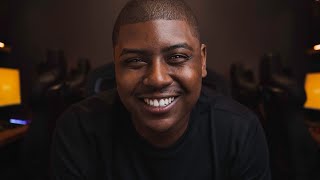
Delane Parnell talks about being a black entrepreneur in tech and gaming, the racial bias he's faced, and why representation matters. He discusses how black and brown women struggle even more to find supportive investors and partners in business.
Chapters
First off, I'd like to say that I'm extremely proud to be black and to be a black entrepreneur and to represent the black, you know, brown community in tech, in gaming, where there's few of us. And I feel privileged and humbled and motivated to succeed, given that I'm, you know, one of few people who raised this much money at this age, you know, from that community, and it had this much success. And so, look, I think, you know, it's certainly, you know, more difficult, I'll say. And frankly, I think, you know, even for me, I think that it's not as difficult as it is for black women. Black and brown women. I think, you know, black and brown women probably face the toughest challenge in, you know, building companies, certainly raising capital, because they sort of get hit with the double minority, right? They're women and they're black brown. And for me, at least I get the privilege of being a man, which there's some privilege there. But look, it's difficult. And luckily I'm able to have investors who care less about the color of my skin and partners, by the way, as well, who care less about the color of my skin and just more about my intellect, my drive, the things that I'm working on, and also just my integrity and character. We've had some challenges, you know, in our business just given, you know, the audience of stakeholders where, you know, some folks have not worked with us because they've said that, you know, a black person runs the business, and that's obviously super challenging. And this isn't from like a for profit side, but, you know, we face this, you know, you know, with stakeholders on the. On the education side of the business. And I think that that's. That's obviously tough. And we don't lean super heavily into that. And we don't even talk about that a lot externally. We sort of push through it, but I'm proud that the team continues to support me and support each other and continue to dedicate themselves to our mission and never let racism get in the way of what we're building. And we're a majority minority company. Most of the people who work at our company are either of color or women or some form of minority. And so we're super excited about that and we want to continue to hire people that represent my community and other communities to help us bring this company to life. But yeah, I mean, that was a very general question, and so hopefully that's that general response also.
I appreciate it, and I think it's a difficult thing to talk about. Also, just because you. You only have one perspective. Like, I can't wake up in the morning and not be Indian. That's sort of what I am. And so it's a hard question to even ask to compare. But I also think that makes it even more important for us to have these dialogues and these conversations, especially these stories around. If you have people that choose not to work with you because of the color of your skin, I don't think that that is something that people realize is still persisting, or at least certainly I haven't. Is there anything else or what else don't people realize that you think about the experience of being black or just being a minority in the process of entrepreneurship that we should be shedding more light into? Is there anything else that you can share?
Look, I don't think that there's, like, a laundry list that, like, you know, I could sort of recite. Like, there's just inherent bias that, you know, that I face that other entrepreneurs who look like me have faced because of just who they are. I mean, I've had. I've been in meetings, you know, with my team where people would dismiss me and sort of, you know, revert back, back to someone else on the team who may be a white male. Not knowing that it's ultimately my decision. I've had potential partners that we've talked to who we've been able to uncover are racist, who said, I don't wanna be on the phone if Delaine's on the phone. There's been a number of incidents that we've had just given the nature of our business that are just frankly unfortunate. And. And I think the first time it ever happened in this business, it sort of got under my skin. But, you know, this guy last, who was Cuban, in fact, and was one of our earliest employees, he's no longer with the company, started his own company. But I remember I, like, walked from my desk. Cause, like, this happened. We're in a conference room and we kind of took a breather, and I walked from my desk and I was just, like, taking a walk because I was thinking, and. And I was just so, like, I forgot. It felt like for me, we had so much success so quick. I forget that this could be a factor in the business that I was trying to build, given the audience that I'm serving, which ends up being this really broad audience. But there's a subset that exists there that we have to deal with, and they have that opinion of black and brown people. And last walked up to Me. And honestly, I had tears in my eyes. And he said, yo, no one can build this company but you. And I'm like, I'm on the journey. And from that moment, you know, I've never. I've never let it. It obviously bothers me, but I've never let it get under my skin. And we sort of just keep moving at the company. Like, we don't. We don't. We don't even hold it against people. We don't. We don't. We don't even, you know, you know, fight it. We just. We just sort of keep moving forward. But. And we do our part, too. We try to do our part at least to make sure that, you know, the people following us either, you know, in the gaming space or other entrepreneurs, you know, of color who are trying to build companies, given the responsibility that we have, given how much capital and success that we've had, we recognize that responsibility. We try to do our part by delivering so that they get the negative opportunities. And we try to make sure that the people we associate with, at least from an investor level, they represent the things that we believe in. When I raise capital from Foreplay versus in our Series A, I. I didn't take a term sheet from any investor who wanted to lead unless they could accommodate. Two things, two contingencies. One, they had other black founders in their portfolio, and I was very direct in asking them that even in our earliest conversations. And then two, they were okay with us having a woman represent the independent seat on our board when it came time to fill that seat, and you had to be okay with that, and you had to be willing to even write that in for me to take a term sheet from you and consider you even to be an investor. And so, you know, we try to surround ourselves with people who believe in the things that we believe in, and for those that we. That we encounter, who don't, you know, you know, we recognize that, and we sort of. We sort of, you know, keep pushing forward.