Radically Pragmatic Insights [Entire Talk]
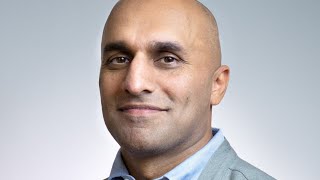
Qasar Younis, CEO of Applied Intuition, talks about his path to founding the company and what he learned along the way. He emphasizes how experience and timing matter in entrepreneurship, and how founders need to deeply understand what the market actually needs before building.
Chapters
Welcome to the Entrepreneurial Thought Leaders Seminar at Stanford University. A seminar for aspiring entrepreneurs at Stanford etl, as you all know, is presented by stvp, the Stanford Engineering Entrepreneurship center and and Basis, the business association of Stanford Entrepreneurial students. I'm Ravi Balani, a lecturer in the Management Science and Engineering department and the Director of Alchemist and Accelerator for Enterprise Startups. And today we have the extreme pleasure of welcoming Kazar Yunus to etl. Kazar is the co founder and CEO of Applied Intuition. How many people know about Applied Intuition before today? Okay, terrific. For those that don't, Applied Intuition creates software solutions to help automakers, Tier one suppliers and companies in the trucking, construction and agricultural industries transition to next generation vehicles. But there is a reason why Kasr is here in the engineering school. Kasr grew up in Michigan and he got his Bachelor's degree from Kettering University, known as the General Motors Institute of Technology in Mechanical Engineering. For all of you mekis out there. And then really spent his first seven years after graduating in 1999 I believe working in automotive engineering. This is before automotive AI and automotive engineering all became sexy. And that's an interesting thread line that you'll see from some of our more successful leaders is the depth of experience that they bring to the table. I want to go through his background just because there's so much to lead to this moment that you're going to see today. But Kassler spent seven years working in GM and then Bosch in automotive engineering. He then transitioned onto the business, onto the business side by getting his MBA from Harvard Business School. And while in Harvard Business School he started his foray into entrepreneurship. He started his first company which was a consumer crowdfunding company called Camisa, which didn't become a success but he spent two years there. Then he went to Sears and Finance to I think get some more cash to start his next venture and also learn about retail. And then he jumped back into the entrepreneurial ecosystem by starting Talk Bin, which was an SMB, a small and mid sized business focused company that Google acquired the just 10 months after we started it. He then joined the Google team. So he's also worked at Google for three years as a Product manager on the Google Maps team. And then he worked at Y Combinator for three years as the former Chief Operating Officer, the COO and a group partner at Y Combinator. And then in 2017 he started Applied Applied has since raised over $600 million, I think is most recently valued at $6 billion and that's focusing also on B2B or enterprise side sales. So Kasr has touched almost all aspects and seen almost all types of varieties of entrepreneurship. And so with that, please welcome Kazar to etl.
I follow up Sam everywhere. I just did a talk at Harvard. Sam's the next speaker. Sam was president while I was CEO at yc. So every time I do one of these, I'm kind of like his warm up act. You know, I get some of the ideas primed and then he comes in for the real thing.
10 years. I think in a few years it's gonna be flipped potentially. Well, Kaz, just given your background, I wanted to, before I dive into any questions, I want to sort of open it up if you have any, you know, general thoughts or philosophies that you really want to share or impart to our students. Before I jump in with my.
I don't, I don't. But I do have some things my team always tells me to say because every time this stuff is recorded, I say like really aggressive things. And so I have strong opinions which are loosely held. So if you're watching like old videos of mine, I'm saying like contradictory things. You know, that's my, that's my weaselly way out the talk. Also, I mean, I'll answer questions for essentially Stanford students sometimes, you know, I'll have like, especially I did many talks at YC and, and a middle aged man from China will say, well, this wasn't relevant for me. I know this is specifically for the people in the room and not for all entrepreneurs in every situation. And so you specifically in this room have some privileges that you can use to accelerate your entrepreneurship journey. And there shouldn't be awkwardness about that. You should embrace that. So I'll have some opinions just specifically for you. And then I'm a single data point. Everything that we do, whether it's in. If you're an engineer, software engineer, if you're in business, there's always nuance. And so take me as one data point. Take Sam, take everybody as one data point. You can't just copy and paste these things and then the last thing. Kind of like Jim Lehrer, he's a famous journalist who said he has these rules of journalism. And one of his rules is I'm not in the entertainment business. And, and I'm not in the entertainment business. I'm in the business of starting a company and running a company. So I will share ideas with you, but they're primarily as just a sample and then from there you take it and if you laugh and stuff that's good, but that's not my primary objective. So that's my preamble. First time I'm doing it. I wonder if the company, when they watch this, will give me feedback if it was good or bad. But we'll go from here.
Okay, let's dive in then. So, Kazir, you know, with that introduction that I gave, there is. I don't. I don't know if we're going to have another speaker that has the variety of experiences that you've had. And also you're at a certain point in your life when you're starting a company. I'm curious, and I know this is sort of a general question, but are there any salient misconceptions for all of our. How many people in the audience, in the class are aspiring founders, just who want to be and how many people are current founders? How many people are working on a startup right now? Okay, so for the aspiring founders, can we talk about the salient misconceptions of starting a company? What's the reality versus the myth?
Yeah, the first thing is I've done a lot of things because if it's not obvious, I'm old. So that also, that is an important point. So I think probably one of the first misconceptions related to that experience matters. I think there is certainly yc you know, you evangelize this view that anybody can do entrepreneurship at any point with just enough ambition. And that is not true. And the example that I would use here is, you guys know this, like, weird stat that if you're over seven feet tall in the US there's a 17% chance you'll be in the NBA. So roughly one out of. So you hit seven feet, one out of five chance you're going to be a millionaire throwing a leather ball through a hoop, you, you know, for entertainment purposes. And that's like, kind of mind boggling, right? But so if we were. If you asked me, hey, Caster, who here is going to be an NBA player? And I would say anyone who's 6 foot 5, stand up because you have a better shot. The same thing exists with entrepreneurship, but it's just not obvious. It's not this physical indicator of who's actually, well, you know, well formed for that specific task. And so the first thing is the way that you. But unlike being tall, you can actually get better. So experience is a really important component there. And the misconception, I think, is that if you're not like starting a company at 22 or 25 or 27, that you've kind of lost the narrative. The reality is at YC the median age is 30. So half the founders getting funded at YC, which is a seed fund, are going to be over 30. And then if you actually look at the top YC companies, you hear about the Patrick and John Carlson's Stripe, you hear about Alex Wang at scale. But it's the German proverb, the exception proves the rule. The rule is actually people with experience and a network and understanding hiring, firing these things better. There's a recent Stanford graduate. So at Applied we recruit. This is for me also a recruiting event at Stanford. At Applied we recruit from Stanford, Berkeley and MIT specifically because these schools, there's just raw intelligence and they like startups. And we had a recent Stanford grad, the company, seven years old, as mentioned, Stanford grad, who had been with us a couple years and said he's, I say 24 years old or something. So I'm going to leave, I'm going to start a company because, and I said, you know, and I'm just not self serving, very earnest, like I don't think you're ready to do this. Like there, there's a, there's a, there's a huge. If you're a chief executive officer, that means you have to know all of those functions really well. So it's not enough that you just know you're a good software engineer or you're good at sales or marketing or HR or like there's like a dozen different functions that you have to really, really know. So this Stanford alum says, but you know, you've said in talks that you can't learn being a founder other than just doing it. And the analogy that I used is me and Peter Ludwig's my co founder. Peter and I are standing at the foothill, you know, at the base of Everest. We're at base camp and we're ready and we know the challenge that is in front of us. We're sober and we're aware and you, and you're walking up with flip flops and you can't say, well it's just about climbing a mountain, right? And if I fail, it's okay. So there is, so there's a window you're trying to hit. You also don't want to wait too long because if you wait too long, the momentum of life takes over. You fall into the American system, which is you buy a house and you get a car and this debt takes over and these obligations take over. Relationships happen and kids happen and Suddenly you're not in the ability to go start a company, which is a fairly high risk venture, generally speaking, for people in this room. It's not that high risk because venture capitalists are gonna give you money. So if it doesn't work out, you're not gonna be homeless. You just don't make a return for some rich people. So generally the risk is lower. But so what's the risk when you're 35 to start a company? It's ego and it's opportunity cost. So at that point you're like, hey, I can do a bunch of things. And the market actually doesn't care if you have experience. So you're taking the same amount of risk as somebody who's 25, who has a lot less knowledge. And so you have to find this window. So what I'm saying here is there's misconceptions all around, from your experience to timing, and you should be extremely careful in reading Startup Entertainment, TechCrunch, Hacker News, whatever your, you know, your fill is, and extrapolating and saying, well, that's because I've heard lots of young founders do it out of Stanford, I should immediately do it. It's like you should really objectively say, can I lead a group of people to build a business? And that's what we're talking about. And we're all on the same page. A business is revenue minus expenses equals profits. You need to know all those components. It's not just, I have a good idea, let's do it.
But even if you do work, you might not even have the DNA to lead a group of people to actually build a business. And so, and many of the students.
But the counter is also true, which is sometimes the people who are bad employees are good founders. So that's also kind of a weird thing, right?
So then how do you know? Because I think, you know, I think many of the students here are going to wrestle with one. Do they join a Google or a big startup like Applied, or start their own companies? And they're all, I think, wrestling with that to a certain degree. How do you actually know? Is it something which you just have to be a certain age, you have to be old enough to be wise, but still young enough to be dangerous. Or are there certain skills that you can self assess when you're ready to actually join and be a CEO of a startup?
Yeah. So I was at Stanford a long time ago, as in two days ago in the scottitorium, talking to some founders. And I'll use the same framework That I think has helped me understand career decisions, which is all your career decisions fall on a spectrum or all jobs, I should say fall on the spectrum. One end of the spectrum is being a founder. On the other end of the spectrum is joining an institution like Google, joining a venture capital fund, joining McKinsey, Goldman, whatever that thing is. And so you as somebody who has to make a decision, you're coming out, you can go to grad school or not, that's slightly different. But now let's say you're going to go into the working world. The closer you get to this end of the spectrum, you will learn things that are more relevant to being a founder. The further, other end, the things you'll learn to be an employee. And so while that's okay, so what are the trade offs here on each end, on the institutional end, you go to work at Google, the things you will learn, you will actually become a software engineer. Believe it or not, when you graduate, you are not a software engineer. You have not written software and deployed it in production and dealt with the reality of a product and software specifically. It's like a living organism. And how do you manage and curate, especially at scale. Google Maps is an incredibly complex product. So you learn, you literally learn. And you have this misnomer because you come out of a Stanford that you actually know what you're talking about. You don't. And that is something that you see a lot in the Valley. There's a deep arrogance, you don't know much. That's just the reality of the situation. I'm not saying you can't learn. That's the, that's the process of life. But when you join in, so what's the downside of joining a Google or Goldman or McKinsey or whatever is you are the cog in the system and you pay through frustration. Your manager is generally incompetent. They don't see your genius. You went to Stanford and they did, they went to some random place or they've been at this company for 15 years. How dare. That's so dumb. Why would they do that? They must not have been ambitious. And so there's this frustration that builds up that maybe your talent isn't being correctly tapped or you're not learning enough or you're on the wrong project, you're in the wrong team, or you're at the wrong company. Whatever it is, it's frustration. On the farther end, you decide, you know what, I'm not going to do the Goldman, I'm not even the McKinsey I'm not going to do Google. I'm going to go start my own company. So how do you pay for that way? Well, you pay for it through fear. Because once you go out, you get out to that wide ocean. Suddenly this whole life that you've had, this brand train, that's this term that I think we talked about at YC all the time and it really sticks in my head is a lot of folks, especially in this room are on that brand train. You go to top tier high school, Andover, whatever, tj, you get into Stanford afterwards, maybe you go to Harvard or wherever for grad school and then you go to Google and then what's the next brand? YC or starting a company, that's the next brand. And so the reality is once you actually jump off the train, this brand train, the starting a company is actually not linear at all and you're just out in the ocean and that's difficult and it's scary and that's fear.
And can you build that skill set by doing a bunch of functional roles or is it something more meta like building resilience and learning how to throw yourself into uncertainty?
I don't think you can build resilience. I mean, it's one of those things. Yeah, that's really tough. It's a really tough thing. I mean this is like a controversial, you know, strong opinion, weekly held example where it's like I think people who go through everyone is marginalized to some degree. Every single person, even the most privileged person has. It's not that. How do those people then relate to setbacks? So sometimes people who actually grow up in very adverse conditions don't actually deal with setbacks very well either. So it's not black and white. So I think the resilience point is that's kind of set through many, many years. But to be very clear, to answer your question, can you just do a bunch of functions and learn? Yes. You're going to have a better likelihood of being successful as an entrepreneur if you've done a number of functions.
And do you think, you know, just these are. I know the broad questions. I'm only asking you this because you've seen so much and so many very old.
Yes, I can. No.
Also, you know, being the CEO of Y Combinator, you've seen all these different companies go through, you've seen lots of volume of patterns. Do you think the most significant cause of startup failure is due to business deficiency from the founding teams or engineering deficiency?
That's a tough one. At yc, typically the market trumps all. And what I mean by that is if the product is not demanded. John Doerr had this great line which is like the four risks of starting a company. This was documentary in the 90s. It's like financial risk, team risk, technical risk. All those things can be isolated with venture capital, like dollars raising money. But the thing that you can't isolate is market risk. You make some dog food, does the dog want to eat the food? Right, that analogy. And I think it's such an abstract thing, so it's applied, knock on wood. The company's doing really well and has performed or a multi product company. And so we have to find this product market fit again and again. So if there's a thing that you really want to get an experience in, if there's one that if you say, you know what, I'm not going to have the patience to work for eight or 10 years, but I need to get some experience. How do you get that understanding of.
Product market fit and you crossed over from being very technical to being a very successful CEO on the business side. We have a bunch of engineers here that are also aspiring double threats that they're going to be engineering engineers, you know, almost CTO CEO types. If the one skill that they need to learn is you can call that product market fit, you can call that go to market, you can call that sales motions, people, you know, and I'm sorry I'm being a little long winded but there's, there's a four letter word in academia which is sales. We don't talk about sales. I don't know if you think that product market fit or. And then, and then that's different than sales. But I guess what I'm wondering is what are the one to three tactical skills that you would need to learn as a technical, coming from a technical background to become a success.
Yes, specifically from technical background. So yeah, product market fit and sales is slightly different. So we don't need to go down that rabbit hole. I'm sure like Gemini or ChatGPT will tell you the differences in terms of what are the skills if you're, if you're an engineer, if you're technical, I would say number one that I see people struggle with is understanding people. And another, another German proverb which is something along the lines of like the success in life is understanding the other person. Like that is all. You can boil all of life into that reality. And I think there's some real truth in that. And I think there's like that emotional component like, you know, like sales is a very emotional thing. Even like cold hard sales of like I have three options and which one's the cheapest. There's still some emotion, emotion in that. I think engineers tend not to, they tend to under emphasize that. I think secondly this happens as you know, I did an MBA at Harvard. When I talk to hbo, like classmates of mine who are starting companies who are non technical, they'll say something like, I'll say, okay, you know, what do you want in your co founder? Like I just need a coder. It's like, okay, what is that mean? Like there's a huge diversity of engineers. You can be, you can go from mechanical engineering to robotics to front end, back end mobile apps to AI. You know there's so there's a huge diversity of what is, what are engineers. Engineers have the same problem when you talk about, when you talk to engineers, say what do you need to come. I just need a business guy. So what does that mean? Like does that sales, marketing, There's a huge diversity. And so it is that human notion that it's like, it extends all the way to race, you know, where people think that their own group is very diverse and the other group is kind of simplified. It's just the way that the brain works. And so if you're an engineer you have to get exposed to that other group. And I think school is one way to do that. But sometimes actually doing jobs which are non technical forces you to do that. And I do think one of the things I've gotten super lucky in is seeing both sides of that fence and therefore that product market fit question. It's both sides. Like it is the product and it is the market and you need both of those things. And so if you want to specifically start a venture backed software company in the Bay Area, I think you'd want to have both of those skills.
Okay, terrific. Yeah, you know, I know that I'm going to open it up for questions in about 10 minutes gang. So start thinking about what you want to ask or five to 10 minutes. I've heard that your zone of genius functionally is in building organizations. I don't know if you think that.
I wouldn't equate myself with genius, but yes, it's something that I think about a lot.
So I'm wondering if we can leave the students with something tactical from the talk, which is, is there a treasured insight or tactic that you use when it comes to building organizations that you can share that people could use for their.
Yeah, I mean the old Charlie Munger line about nobody. You'll never meet somebody who's really successful who isn't reading a lot. And I think if you read and you know, and I wouldn't read again, like the startup entertainment thing. Like I wouldn't read airport books. I would read the, you know, the older the book, the better. Is kind of the.
Can you give your top three?
I can't do top three. But like, you know, the ones that just come top of my mind. Guns Germs and Steel by Jared diamond is a fantastic book. Yeah. Really understand people. Sam Walton. So we read books as a part of our company as well. So we recently were reading Made in America by Sam Walton, an amazing book. The founder of Walmart wrote this book on his deathbed about Walmart, ironically called Made in America because so many things at Walmart are not made in America. And then, I mean there's a bunch. Autobiography, Malcolm X, phenomenal book. There's a lot of books. The general point would be you want to read things which are actually outside of technology and then you are applying those lessons. And so if you read enough outside, you start seeing patterns of human behavior and all the way from like no More Vietnams by Nixon to McNamara's book on Vietnam. In retrospect, what does the Vietnam War have to do with starting a tech company? You understand how organizations are built and how people function with organizations. One of the things, probably the key thing that applied that we think about in organization, we have an internal software team that just builds software to run the company. So we take it very seriously is you're always just working against human nature. Create a leveling system. People are just going to game that. They're not going to think about customers. You create a comp system that optimizes X, Y will be manipulated. Just the human nature of. And so I think it's like being honest. Organizations that are honest and are trying to build honestly against the realities of human nature, I think tend to be more successful. Sometimes people use that word, they say transparency or directness or whatever, whatever. Your verb, whatever. A word that you want to use. But I think it's like being. Yeah, it's being. It's. It's being all of our values, our company values can be summed up as radical pragmatism. Like that's our view. So we really have lots of debates when we're making organization decisions. Like, what's really the truth there? So what's truth? Like the most fundamental question, what is truth? Truth is what stands the test of time. In the Gandhi line, truth is what stands the test of time. So when you keep repeating the same thing, you will ultimately get the pattern that keeps coming. And that's the, that's. That's the truth. And so in organizational development, it's like the truth is, you know, people will, as the organization gets larger, will become more selfish. That's the truth. The truth is that people who join and applied at 6, 700 people versus applied at 50 people are different. So you have to build an organization that deals with different types of people. So it's just having those very open conversations and trying to find that truth.
That's great.
Yeah.
Thank you. We'd be remiss not to talk about automotive AI, and so I want to talk about applied and the markets that you're in. You're seven years into now applied. I don't know if that's gone by quickly or slowly, but I'm curious right now, just if you had to give yourself a rating on a scale of 0 to 10 in terms of where you're at versus where you envisioned when you started the company, how have you. 10 is exceeded your expectations, 5 is met expectations.
Yeah. My expectations were the company was going to fail, so exceeded my expectations. I mean, it's a profitable company, which is, you know, does hundreds of millions in revenue. I mean, that's, that's just hard to do. And I'm very fortunate that the company that I started is in that.
Do you really honestly say, did you really?
No. Really?
You really.
Leaving? Yc YCCO is a great gig, by the way, if you can get it. Like take the job. It's like you work with smart people, Sam, like all the YC people, Paul Graham, amazing people. And leaving. I'll leave the VC's names out of it, but there are people like John Doerr, Marc Andreesse. I'm the Illuminati, the true. Not just your average vc. I mean, the tip of the top. And I asked these people, should I do a company? And they said, hell no. That's so stupid. You can write any. You can get any job anywhere in the Bay Area doing anything you want. You have this product background, you have this venture background. You're still young enough to go run a firm. You know, like, a lot of times there's firm succession questions like venture funds need people to run them. And the fundamental reality is it was never going to be in recent Horowitz, Eunice. It's never going to be Kleiner, Perkins, Eunice. And in my heart of hearts when I grew up poor. And so I always thought that I did this company thing to not be poor because I'm cynical. There's some part of my brain which is deep. It's that radical pragmatism.
Had you made enough money at that point where you could retire if you didn't want. So you'd made enough before you started applied, you had enough money where you didn't.
That is when like this truth like that, you know, like self revelation happens, which is like, oh, actually this is the thing that I want to do. And even boiling down, why do I personally want to start a company? It's because I have strong opinions and I hate mediocrity and I hate, I hate working with people who are just okay with a B plus job. And by the way, there's a cost to that. There's a personal emotional cost to it. You work a lot and it's. It's satisfying to do things at a high level, but it ain't free. It takes a lot of cost. And so I think for me it was just making that decision of like, am I willing to pay that cost? And to me, yeah, like, I don't do anything else. This is all I do. You know, that's another thing I think you talk about, you know, the question you asked, like, what's not founder? It was not often talked about founders. Like, being obsessive to some degree is, I think, a requirement.
I just want to make sure we didn't lose that gem because so you made this decision, you had enough money where you didn't need to work a day again in your life. You had ample opportunity to do whatever you wanted to. And the decision to do this wasn't because you even expected the company to succeed. It was because you loved so much the idea of performing well.
There's insecurity. There's a fundamental insecurity there at yc. If you're giving advice to people. And my first company failed like other company wasn't even a year old and Google bought it. There's a certain level of insecurity which says, why am I giving Tony at doordash advice? Like, that's. That doesn't make sense. And it's great to talk to Sid from Gitlabs company I was first investor in went public. Right. What right do I have to give Sid advice on organizational development? And I remember saying this to other YC partners and they said, that's okay. That's just the name of the game. We're looking at patterns and I think it's true. I don't think you have to build a huge public company in order to give advice on it. But there was some insecurity in me which felt. And also I think it took me 20 years. I feel like I'm pretty self aware about my motivations, but it still took me 20 years to really realize that fundamentally I don't see myself as an engineer, as a business person, as a vc. I see myself as a founder. And so you have to figure out what's your own identity. And the unfortunate reality is when you're in this environment, your peers heavily influence you. So you think you might want to be a founder, but it's actually not your calling. And you might waste 10 or 15 or 20 years discovering that actually that's not the thing you want to do.
What is that hidden insight just in case it's not clear about what makes you a founder versus the other roles. How do you know if you.
For me, I don't, I don't know what it is for everybody else, but for me was I just can't deal with other people's bad ideas.
Like that's like, I hate to say that.
Yeah, it's, it's, it sounds so arrogant. And I assure you in my own brain, I don't think like I'm some, you know, I have all the answers. But when I do have specific viewpoints on product development, on whatever the thing might be, places like Google, you get along to get along. It's a giant organization. Part of it is like shaking hands and being agreeable. And in this job I don't have to be agreeable, which is such a wonderful thing. Yeah, exactly. And what I like today. Watch. This company will fail and it will age very poorly. The company's doing well now. And so it's like, yeah, I was right. Those ideas were not completely wrong. And there's like something deeply satisfying about that. And I would say, sorry, I know these are rambling answers. Also. It's hard. It's really hard. So there's a parallel universe that I go into art. Like I really like photography and the kind of fine arts. And I think in my mind I thought that's not hard enough. The way that I rationalized it is, I'm poor, I can't be an artist, I need to go into engineering because that's, that's the right thing. But I think there was another nugget below in that psychology subconscious, which is like, this is hard. Like this is the ultimate. Like even if you're successful. You have a multibillion dollar company. We're in the Nvidia auditorium. Like there's like the bars are so high that you can spend your entire life in this endeavor and never reach the top. Even in hike and mountaineering and lots of other fields, you actually getting there is plausible. In business, I think, or starting companies, starting technology companies specifically. There's maybe no limit. And I like that.
You like that. Okay. And you get energized.
Yeah, exactly.
The other heuristic is that you're getting energy from.
Okay, sorry, sorry for these rambling answers.
No, I think they're terrific. They're honest. It's radical pragmatism. So I do want to create space for the students for the questions that you have.
All right, thanks for the great talk. And as the question states, when should.
I drop out or should I drop out?
No, you should not drop out. I'll give you very specific advice there. It's funny, I'll actually, like I've done throughout the talk, the real person who said this is Paul Graham. It was in 2013, late night, YC founders had gone home. It was like, I mean, late night. It was like two in the morning or something. We were doing demo day prep or something like that. And we had some drop. We had some people in the batch who had dropped out of Berkeley, which is a school in the Bay Area, in case you guys don't know.
And.
And I said to Paul, oh, you think these, you know me thinking Paul. Paul is like, you know, the alt. He's the high priest, right. So he's like, he's going to be really evangelizing. Everyone should do startups and drop out. And he said, no, no, I think think it's a dumb idea. And I was like, well, that's not the answer I expected. Why? And he said, well, you're only in this environment at this age at a certain time, and you're learning a lot about life. You're learning about relationships, you're learning about how to deal with conflict, being your own person, cleaning your freaking room, all these basic 101 things, going to sleep on time, exercising, eating healthy. You're really the. The puppet strings are off. The puppet strings sometimes can be just. It can't be. Maybe not your parents. It's just the social environment that you grew up in. And now you can be somebody who you want to be. And the reality is you take yourself out of that at 20 or whatever and you go do a startup. The statistical reality is it's not going to succeed, and you have to really emotionally absorb that. One of the things on leaving yc, I personally had. I remember thinking this thought. If the next batch has the Google and I start a company and it fails, can I emotionally deal with that? And until I could be at peace with that, I didn't want to leave and start a company. And once I could be at peace with that, like, then I could start a company, and then you can operate almost more freely. So. But back to. Back to the reality of you leave, you statistically, the company failed, and you.
Got at peace with that because you got in touch with your true self.
And your true motivation. I just thought, do I want to do YC the rest of my life? I mean, and it's like, Google and YC are phenomenal companies. I mean, it's like it's. It's such a privileged, you know, almost arrogant kind of thing to think, but it's like, I'm healthy. I have the means, the. The real. It's ego. That's all the thing. It's like, it's ego is the thing you got to put online, you know, put on the line. And. And I was like, if I fail, whatever, nobody knows me anyways, so I get like, you know, so, by the way, there is some value in also being quiet. Yeah, yeah. And keeping your cost low. Like, all these things help you become a better fighter. But just to answer that question, you leave this cohort of people that you're learning from, you come back to campus at 25, 28 or something like that to finish that degree. If you do, it's not the same thing. I think that experience is extremely valuable. So I agree with Paul Graham. In that view, I would strongly recommend not dropping out. And then it's like, you know, it's controversial because people are like, but college is no longer needed, and I can learn anything off of YouTube. Yeah, maybe. Or maybe not. Because the thing that you're learning here or you're getting here is relationships with people. That's the thing you're getting. It's not the classes. It's these people that then they're creating a certain image of you. You're creating images of them. And so when you need to start a company or you need to call a vc, you're going to trade on that image, on that brand, whatever you want to call it. Yeah. So I wouldn't. But you do whatever you want. Life is short.
So after all that, now that's the bar.
Yeah. It's the thing you say before you make bad decisions. Life short.
Okay, we'll go to the next question.
First of all, thank you Kazir for coming today. I liked your analogy of using the spectrum of founder and an employee where if you join Google you're an employee but if you join a startup you're a founder. I think Applied is really huge with like 400 plus employees. I personally think that. But that many employees, you still have the same level of bureaucracy and I think you still end up being an employee rather than actually being a founder, rather than actually wearing many hats. So I'm curious to hear your thoughts on that. Yeah, so that's like technically incorrect because people that applied own equity in the company. So you do own. The word by the way is that spectrum is an ownership spectrum more than anything else. So you want to be in a situation where you're owning the thing that you're working on. And you can own most Bay Area venture backed companies. You can. Most companies outside the Bay Area, you don't actually, you're at General Motors, you don't get GM stock, you're just getting paid, paid for the time. So I asked startup school 2016, I was interviewing Mark Andreessen, where was it? Flint center, it's on YouTube somewhere. And I asked him this question. This is before I started applying. I said what would you do? You're 22, you lose everything that you and the fact you created the web browser and all those things. And he said I would join a high growth company because that's where you're going to learn the pattern. I'm not saying this to be self serving, it does sound it but you do learn at a company that's doing well and there's like it's a Vince Lombardi line. You know, winning is a habit. So you hang around people in a winning company. Elad Gill has this great career decisions post is one of our investors and I think also he's MIT grad and he has this line which is when you're making career decisions you should optimize for network and like being on a winning team and learning like that's that, that's what the Bay Area is about again, specifically for the Bay Area. So I think again it's on the spectrum. If your long term goal is to be like a senior engineering leader and you don't, it doesn't matter if it's a small organization, large organization actually companies like Nvidia are actually great places. They have formal programs. If your long term goal is to be a founder, you want to go down that spectrum as far as you can. The thing is, once you get to like the 20 employee companies, 30 employee companies, there's no training happening. Like you're just in the fight, loading ammo boxes, running up hills, you're a rebel battalion, there's no uniforms, there's no movement, there's no equipment. You are just trying to not, you know, get killed. And so you do learn that way. By the way, it is a way to learn. But I've definitely seen people who've been in startups for 10 years who don't have basics. They don't run a meeting, they don't take notes, they don't know how to write or release notes. I mean they just like the most basic things they don't know. And by the way, also like working for founders who've never like, you know, you work for a 22 year old founder, what are you going to learn from them? That's also like a component of it. So on that spectrum you want to figure out what where is for you, the optimal risk and learning. And the thing, the good thing in the Bay Area today is you can get pretty compelling comp at startups. There was a time and place where if you work at a startup, you're making less than six figures. And that's the reality Now. A lot of startups are pretty competitive in comp. They might not be FAANG comp, but again you learn as well. So that's kind of the. So if you have debt, you got to go to the FAANG or something to pay off debt. If you don't have debt then you can take more and more risk and more and more learning. My advice actually would be find a team that you really like, you feel you're going to learn from, that's doing well, not just your friends, that's doing well, that's probably the optimal thing. Regardless if it's like precede or B or C or something like that. I think once you start getting de, it is getting a little bigger. But even then like you take applied, we have a formal management training program, we have a formal tech lead and training program. Those things you don't get and then you see like this company has 15 different products that have figured out product market fit. So you can go to a product which is very nascent or product which is very mature. Those things you can't get in a young company that only has one or two products. So that you just got to figure out the right answer for yourself.
Yeah. So you are in the autonomous vehicle Space and recently Tesla has been known for ramping up their autonomous vehicle availability with full self driving. I wanted to ask what is your.
View of the future technologically?
What should we be excited and afraid of? Because this technology obviously enables a lot of cool things to happen. But do you envision a future where maybe this limits freedom or enables government surveillance, that sort of thing limits.
If the government wants to surveil you, they can. It's not the self driving car that's preventing them. The heart of fear is the misunderstanding, right? Once you start to learn a subject well enough there is. And it's like when people get afraid of like large language models and you know, once you actually work with them, you realize their limitations in autonomy. Just, just a 2 cents there. The general autonomy ecosystem is falling into two broad categories. There's gross generalizations, but it's the Waymo way and the Tesla way. Tesla 12.3, incredible product, but it is not full self driving in the sense of it literally cannot operate without a human. You need to have a human there, eyes on the road, hands on the wheels. That is required. That's not the case with Waymo. You can have driver out. The constraints roughly are Waymo is geographically constrained and they are over the next five, 10 years are looking to see how can we expand that geography as fast as possible to get the most addressable market. Right now you have to be in Phoenix or some parts of SF which to experience. Tesla on the other hand, again, gross generalizations or the OEM path, the passenger car, personal private ownership of the vehicle is the highway system works, you can go everywhere, but you just can't do everything. And you have to be in the loop. The human has to be in the loop, like giving commands. So the trillion dollar question is what is going to be the prevalent way? And I think you can make arguments that's extremely heat. I think you can make arguments both ways. I think personal car ownership is not going away anytime soon. When you buy a car, people, a car's lifetime tends to be 15 years. So even if every car was an EV that was autonomous, it would still take a generation for all the old cars to actually come out of the system. So that's just the reality of the situation. In terms of risk, I mean, I think we're now at a part in the industry if we're having this conversation. 2017, when we started the company there was a big question like will self driving happen? It's definitely gonna happen. It's no longer a research and development problem. It's Moved over to the engineering side. Engineering is the full line is. It's a, it's a cost problem. It's an engineering cost. So what, how do you get this to be as cheap as possible? So it's generally available. By the way, if you go back in technology, mobile and a bunch of other technologies, they appear the same way. Even automobiles are not generally available immediately. Mercedes invents the car in 1876. The first stop sign in the Octagon form is 1930. And then the first time it's the Department of transportation is 1960. So it takes a long time for these things to emerge. You can say, well today technology grows faster, et cetera, but it's going to take some time for autonomy to get over there. But it is no longer research and development problem, problem like that's solved now we just got to make it cheap.
And is the vision For Applied in 15 years what you actually market Applied as today?
I think so, roughly. The mission of the company is to accelerate the world's adoption of safe and intelligent machines. That's a. So autonomous vehicles. Is that construction? Mining. We had one of the biggest mining companies on the planet at our office earlier today. The things that they deal with is these large dirt movers fall over, they literally tip over and people die all the time in mines all the time. You just don't hear about it. And so the little bit of intelligence can actually make it much safer. So safety I think is the low hanging fruit. And then one day safety will be completely solved. I think that'll probably take a generation. And then it's cost and convenience. Yeah, a small company, co founder, current CEO. We've been working on mission values and all those things and all of a sudden we came across, okay, what's next? And I wanted to know if you've, if you've come across that point, how.
Do you get people behind?
I've read a great book by Simon Sinek. He talks about a just cause. Do you have one for your company? How do you go about that? Yeah, typically companies, again, gross generalizations are mission oriented or values oriented. Our company historically has been a very values oriented company. Values is another way of saying operating principles. This is how we run the company on a day to day basis. When the company was about 10 people, we had $10 million of business, which was kind of unbelievable to us. It's still unbelievable to me now. And we decided, hey, let's codify what's working. So as the company again building an organization against human behaviors, we'll have A framework to work against. We codified those 10 values. If you would know anybody who works at Applied, like those are the operating principles that we run the company by and those have created a type of person that is attracted. There's a self selection. It's even in our recruiting process which is like this is the type of person that we want who wants these types of values in their day to day work. For example. This is not a value but it's an output of values. We are a five day in office company which by the way used to be norm pre Covid but now it's like an exotic, you know, reality. We are a truly international company. We have eight offices globally, we work truly globally. And so you find people who self select in and out of that. Obviously we're a Bay Area AI company so there's people who are attracted to that technical problem and so the values help with that. I think when companies get really larger and you look at like Elon Musk and his companies, there's this broader mission thing. What I would say to you as a small company, none of that matters. You know what matters? Making sure your product is accepted by the market. All this other stuff, this is like, it's like decorations, you know, on a, on a car. Your goal is to get the engine to turn on and to start moving the body. And so I would say spend zero minutes on your values and missions and try to get an operating business going. And when it does, then reflect on why it is and then codify those. Because the values are different for each type of business. The consumer business values are different than enterprise business.
On that I have to end it. Thank you Kazir everybody. Let's give a round of applause.
Thanks for having me.
Next week gang, we'll be joined by Sam Altman, the CEO of OpenAI. But you can find all the events at the stanford on the YouTube channel or at Ecorner Stanford.
Eduardo.
More from GHION.AI


O processo de reconhecer limites, mesmo quando a vida parece exigir sempre mais.





Depois de tantas histórias, aprendizados e pausas necessárias, o @interior_iza está de volta



