Redesigning the CEO [Entire Talk]
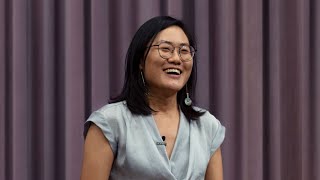
This content was created by GHION.AI . This content was uploaded by GHION.AI . This is a YouTube video titled "Redesigning the CEO [Entire Talk]" from October 9, 2019. It features a talk by Sarah Nahm, discussing her journey from a Stanford student to becoming the CEO of Lever. She shares insights on entrepreneurship, leadership, and the importance of diverse role models in technology. The talk covers her experiences at Google, founding Lever, and the challenges of leading a company in the competitive HR tech space.
Chapters
Who you are defines how you build. You know, I don't know about any of you, but, you know, 10 years ago, I feel like Stanford actually was a really different place for entrepreneurship. You know, my freshman year was the first year that Facebook was available to incoming students. And this kind of notion of, like, the young entrepreneur, like, wasn't even really a concept. And very quickly in that period, we went through all this incredible transformation in the tech industry. We obviously saw the rise of the hacker in a hoodie. We saw just this incredible transformation of a whole bunch of industries. We also saw the 2008 bubble come in for tech. And really, I think coming out of that, we had a lot of really incredible mythologies about technology. I think the whole world was looking at Silicon Valley, and they saw these paradigms, these tropes, these stereotypes, dare I say, of what it meant to be a successful entrepreneur. There was, I think, a prevailing idea that you were a coder, that you had a ton of confidence, that you walked around with this vision that propelled you into the future, and you didn't care what anybody else had to say or think about it. And, you know, I think now when you scan the headlines, there's a really different story about that kind of entrepreneurship. And, you know, I'm super excited to be up here because I personally feel really passionately that we, as stewards of a technology community, we need to create a much richer and more diverse set of role models for leadership. And that's not said lightly because, frankly, following a pattern of success, like the pathway that others have created, that's actually literally the way that venture capitalists make investments. That's literally why a lot of you are probably showing up to hear from someone like me, to hear about the wisdom and the knowledge or the people that came before you. So it's scarier, and it's harder to invent a different template for success. Right. It's actually riskier, and it puts more of yourself at stake to actually go out there and try to lead in a way that is different. And I've had that tension and conflict in a lot of my key moments that I've had leading up to where I am today. And I'm hoping to share some of that with you overall. But, I mean, if I were to just describe what my journey has been, it's very much been about learning to reinvent myself, but to actually kind of have ownership over that. It's been learning how to believe in others who believed in me. And then lastly, I think it's about learning how to kind of tie my own success to creating success for others. And that's really like been the three chapters of my journey to get to speaking in front of you today. So if that's what we're going to cover, I do want to at least do like a little bit of an introduction. So, you know, if 11 years ago I was sitting here at Stanford, where was I to get to that point? So I grew up all over the US you probably wouldn't guess where I'm from. I'm from Birmingham, Alabama, Deep South. I was one of two non white people in my high school in a deeply segregated community. I think growing up there taught me a ton about respecting kind of differences in the world and the different points of view. And by the way, in Alabama nobody went to work in technology and nobody certainly went west to California to go to school. So when I found my way out here it was so interesting. It was the most diverse community I've ever been in. And I think when I came to Stanford there was just so much coming together in terms of ideas, different people coming from different places. I ultimately found a home and in the design program here and oh my gosh, design was so much, you know, it just, I felt like I was using all parts of my brain. It was like, you know, you were, you were combining technology and engineering with business and then also psychology and art. And for me that was just like a huge kind of transformation for me, which I can talk about later. And then, you know, ultimately graduating from Stanford, I thought I was for sure going to go down this kind of design path but kind of took me by surprise. Ended up in technology and spent my first few years out of college at Google during big growth period for them, doing a lot of different things. I was a speechwriter for Marissa Meyer and then went and spent a lot of time doing growth for the Chrome browser and quit Google, much to the chagrin of my parents. Spent a few years wandering in the wilderness to eventually found leverage. A lot of people ask me how did I found lever really founding a company is for me at least it was something that caught me by surprise. And I think that probably the first thing that I would impart to you is how you make choices in your life really is such a defining characteristic of your leadership. For better or for worse. Every time I face a juncture in my life, I look down one path and, and you can see it really clearly. You can see it all mapped out, you know exactly how it's going to go. And then there's this other path, and it makes no sense and you can't see anything about it. I always choose the second path. And so I had been pretty comfortable at Google. I'd been growing a lot in my role. I'd gotten to work with some incredible people, and then I chose to leave. And I think I chose to leave because I didn't know what would happen. And I knew that at that point in my life, having been on this straight and narrow path of Stanford and then Google, I wanted to put myself in a position where I'd have to take real agency over my choices and over my life. And, you know, I don't know if any of you have had that chance to really be put in a position where the only thing nudging you forward is going to be you taking that step and you kind of making a concrete decision. And so I cut myself off from all the paths and in doing that, really discovered a lot about myself. And I think that probably the number one skill that I discovered about myself was how to design myself and how to redesign myself. And that has been a skill that I use constantly because as CEO at Lever, I have to reinvent myself and my job every six months. And so what it was like in that period was really trying to understand what I valued, what I saw in the world, what resonated, and I think more than anything, the people that I gravitated to and the values we might share together. So at that time, I was working with a lot of different entrepreneurs in Silicon Valley on a lot of different problems, just putting myself in situations. I had to see how I'd react and see kind of what I would end up gravitating to. And I ended up falling in with some old friends of mine, some folks I knew from Stanford and Google, and we had kept in touch through the same Burning man camp who would eventually become my co founders at Lever. And there's all these mythologies that exist about how companies get founded and all these super honest, like, none of those myths applied to us. When we kind of found ourselves together, we were really just three people. We didn't know anything about what we wanted to do. We didn't know anything about some big vision that we had for the world. But we did know that we were really attracted to a change that was happening in the world. And really for us at that time, the change that was happening in the world was inside of every organization. We saw this really big shift where you used to kind of work at a job to get paid, and then suddenly people were working Jobs to make a difference, and they were working jobs to have impact. They were working jobs to grow. I basically would have conversations with all my friends and more often than not we would talk about whether we were fulfilled in our work. And that's a huge change from our parents generation, the generation before that. And really, I think if I zoom out and talk about it from a macro cultural, macroeconomic standpoint, what we had stumbled upon was there was a literal generational shift happening in the workforce. Millennials were entering the workforce with a completely different set of cultural values. You also saw the nature of work really changing as technology transformed every single industry out there. You know, the types of work that was happening out there. Airlines were now software and logistics companies, you know, like hotel chains were now actually experience companies. Work was really changing and the people doing the work was changing. And you know, that's essentially the kernel of what would become Lever. So for those of you who don't know, Lever is a company in the hiring and recruitment space. So we build the software that other organizations use to run an entire end to end talent strategy. Of course, if any of you have ever looked for a job, you might have actually used Lever. We power a lot of the job pages that are online. So when you apply to a job, that's just the tip of the iceberg of all the software that we have behind the scenes to help an organization run the entire process that it takes to bring talent into the organization. And I think what we decided to think about that problem differently was to recognize that this wasn't a transaction. It wasn't like you post a job and you hire somebody. But there was actually kind of the relationship that people were having to organizations. And it was getting more complex and it was getting richer. And nobody had really entered that space to create what would eventually be like a talent relationship management solution. And long story short, we saw an opportunity there. So that's a little bit about Lever. But really I think what I'm telling you all this is to tell you that's the glossy kind of story. What it felt like at the time was completely different. We had no idea what we wanted to do and what we ended up doing. And maybe this is the design program at Stanford influencing us was to go learn from other people what it was all about. So our first nine months as a company, we spent embedded inside of hyper growth companies, mostly technology companies, watching them as they went through incredible amount of scale. So we were really employing kind of like user research methods and sort of like almost like anthropological style, observation to make sure that we weren't the entrepreneurs that were just saying this is what we think is happening in the world, and then, like blindly following it. We chose instead to actually observe and watch kind of the entire. The entire process of what it really took for an organization to hire and study that patiently for nine months in order for us to even get an inkling on what we wanted to do or how we were going to disrupt something, how we were going to be different. And in doing that, I think we founded the company on a premise of really debunking this idea of the startup founder that has this idea descending from the mountain and really kind of embracing the humility of being innovative through listening and being innovative through empathy and being innovative through our ability to believe in other people's ability to see the future. And I think that's why, for me, believing in other people is a huge mechanism where I have entrepreneurial success. I think that a lot of our mythologies about startup founders tell us that these are people that are just relentlessly in pursuit of some sort of inner vision that comes from inside of them. But I personally have really embraced multiple times in my career, the idea of drawing from others and being more connected to others being the strength of my superpower, so to speak. And certainly when it comes to literally innovation and literally coming up with new ideas for founding a company or building a new product, we found that embedding ourselves inside of organizations and studying the way that they hired was in fact, a really, really profound way for us to start the company. So we got our start in roughly 2012, formed the team in 2013. We sort of actually found our own offices, exited that research period, started building the company, and really, I think those early days, it's really fascinating. So I said that reinventing yourself is a huge part of what it takes to be a successful entrepreneur. I think that early startup days really reveal why. So nowadays we say that I'm the founder and CEO at Leverage, but actually neither of those things were really true at the beginning. When I first joined Lever, I actually just joined as a team member. I was a designer. That was my title. I had business cards. We thought we were very fancy because we had business cards. And as a designer, I obviously was a huge part of that process of doing the user research and of that process of creating a sense for what our product would be and what we would build the company around. But actually, my co founder, Nate, was our CEO, and he very much embodies kind of the stereotype or the myth of what A great startup CEO looks like he is a engineer who is very dapper, tall, he's very tall, white guy, very charming, very persuasive, very confident. He's actually also really awesome. I do really love my co founder and we kind of had all the markings of a great stereotypical engineer, Google pm, like male CEO. But I think what ended up kind of happening in this period is really revealing. And I think for me, what I would impart to everybody is I hope it stands to show that leadership in many ways is what you decide to do and what choices you make, rather than kind of being born into it. So we started working quite a bit on developing the product. And of course, as a designer, I was literally doing design at the time. But then since I knew our early users, I also became kind of like the first person to, once we got people on our actual platform, make sure that we were closing the feedback loop, making sure that we were hearing how is it going, were they the next things that we could build, partnering with them? Since I knew our early customers, then I went and found more customers. So I quickly found myself building out our very early go to market engine. And this is around the time that there were about six, eight people really hustling. But we hadn't really taken down any serious funding yet. So everything's just like racing to get to the point where we've built enough of a business that we could actually raise some serious venture capital and become like a real business. So we were like all hands on deck, pounding super hard trying to build this business. And then my co founder, who's our engineer, Google pm, kind of co founder, super mired in all the feature requests that we had to deliver on for our customers. So we had that rhythm of me running the business, him running the product. We had the whole team around us, obviously. And then when it came to fundraise, it was sort of funny because my co founder was the CEO, but he didn't know anything about our revenue, about our numbers, about our customers, about any of the things that the investors ultimately would care about. So we decided, all right, let's go after this together. And we fundraised together. We got several term sheets in a competitive round from our Series A. But it was really fascinating because that whole period I still had my business cards that said designer. And people would be super confused, like, why is this designer in the room and why is this person here right now trying to basically pitch us? And even in some cases when I would be on email threads with Nate, they would think I was his EA when he would CC me, so they would just sort of be like, oh, yeah, my calendar, blah, blah, blah. And it was just such an interesting experience because at the end of the day, Nate and I knew what we were doing, and we would be driving all up and down 280, going from San Francisco to Sand Hill Road. And. And he really gave me a lot of sanity, really partnered with me in acknowledging that that was a super weird thing. Why wouldn't a designer be welcome in the room? Why wouldn't someone who wasn't the CEO still be able to legitimately lead the business? But this really all came to a head for us when really around that same time, you know, my. We had all these. We were lucky. We were able to actually successfully get, you know, several offers from VCs. We did ultimately kind of pick one and we started to work with them. And between signing a term sheet and actually getting the cash in your bank account, there's actually this period where the lawyers are doing stuff. So we were in that period. And it's a really happy period. Because you're planning for the future, you now know that you're going to be scaling the business, growing the business. So Nate and I were locked basically up in this, the one conference room that our office had and planning all these things for the business. It was a really great time. And I had it in my head that, oh, we were going to hire a head of sales, and I'd hand off all this business stuff and then go back to being a designer. But then our third co founder, Randall, who had the segment at our company, All Hands for a number of years, called Getting Real with Randall. So you can imagine what kind of co founder he is. He was always sort of a guy who spoke to truth and he had this wisdom about him. So Randall kind of comes into this conference room to interrupt us and he goes, guys, there's something wrong. And I think if we don't fix this, the company will probably fail. And if the company fails, we might as well not take the money. Blah, blah, blah. We were just like, randall, we're listening. Tell us what's wrong. And he goes, the wrong person, CEO. And, you know, I think what Randall was speaking to is just this, like, this choice that we had as a company, as a founding team, as a culture, frankly, about whether we would kind of continue in this model, call it like the Sheryl Sandberg to the Mark Zuckerberg model, or whether we would just write, you know, like write this situation and actually just sort of make this switch. There's a lot of companies where engineers and technical founders are like the CEOs of businesses, but we were a B2B SaaS software company. And for the most part, building the business is kind of like the job definition of being CEO. And it was really decisive moment for us. I think as a company. It was probably our first diversity and inclusion moment. It was sort of the first time we had to really ask ourselves, what kind of culture do we want to be? What kind of values do we want to have? And frankly, Nate, it took him like 30 hours, but he came in, he's like, I think it's the right thing. It's the way to go. And for me, it took me like 10 days, which in seed stage startup time is like infinity of kind of wandering around in this, like, weird headspace because I had never saw myself being a CEO, being a founder, being a leader. All of this had happened kind of incrementally over time. And I think that's where I kind of come back to this idea of believing in others that believe in you. I think for the people that already know they want to be founders of companies, entrepreneurs, CEOs, great, that is awesome. But there's more people out there who can be those leaders that don't think of themselves that way today. And I was once one of them. And I think in that moment of, like, wandering through this, like, metaphorical desert, trying to figure out this choice that I had to make and what it meant and what I wanted and what I was going to do, you know, I kept ultimately returning to the people around me and how much I valued them and their beliefs and the things they had sacrificed, things they had, like, put on the line. The, you know, the team that had joined and, like, had signed up to work on this, like, what wasn't that much more than an idea with their passion and their talents and their skills, and then also our customers, like all the people who lived, like, rationally should not have been our software and relying on it to do all their recruiting. They had backed us and they had thrown their weight behind us because of how much they believed in, literally in us as people. And I think a lot of people ask me, so what was going through your head? What made you decide to say yes? It wasn't because I saw myself in that role. It was because all these people around me that I trusted really profoundly saw me succeeding in that role. So 10 days later, I shuffle into the office and I tell Nate and Randall, ok, thought about it, let's do this. Here we go. And they thought, obviously it was a great idea. Their support as co founders really meant a lot to me. And then, of course, we had to tell the team. And that was a big milestone. So we hemmed and hawed about it. We tried to figure it out and eventually sort of got everybody together and told everybody. And the team was just like, oh, yeah, that makes sense. Okay, and went back to it. We were like, okay. But then we actually were still in this period, right, where we had signed the term sheet, but we hadn't gotten the cash. So we had to tell our investor. It was Dana Stalder. He's a general partner at Matrix Partners. They've been in the VC business for over two decades. Really fantastic person, really fantastic firm. So we had to tell Dana. And actually we were like, oh, no, this is like, material information. We really have to tell people this. But is this going to basically blow up the deal? Is this going to make him kind of question, what else are you hiding from me or what else do I not know or have you not told me? We had another moment where, like, okay, maybe we should just wait and not do this now. It was again, one of those critical choices where deciding what kind of a company we were going to be and whether this was the right thing to do or whether it was just another one of those moments. And we ended up just saying, like, fuck it, we have to be this kind of founding team, and this is the decision that we have to make. So not knowing whether this would completely blow up the entire company and everything we'd worked for, we invited Dana over. We sat him down in the one conference room. We had this whole thing prepared. And so we sat him down. We all told this whole story. Da, da, da, da and Sarah should be CEO. And it was one of those moments that I don't even remember well. I think I blacked out a little bit because I was so stressed out. But, like, time just, like, stretches out that sort of thing. But what ultimately happened is Danny kind of looks at me, feel like he's seeing me for the first time, and he just leans over and he goes, girl power. High five. So needless to say, for us, at least, it was the right choice. It was the right choice, and it was the hard choice. Like, harder for me. I think stepping into that was really me making a huge choice about choosing to see myself in a way that I couldn't see myself on my own and choosing to redefine my idea of who I was and what I could contribute in a way that I hadn't before. And I think that's the beauty of entrepreneurship. I think that's what attracts talented, smart, driven people to this painful, nebulous journey of being an entrepreneur. Because it sucks. Like, just saying, in many ways, it totally sucks. You make sacrifices. You make sacrifices with your time and your wellness and your sanity. And to some degree, if you're lucky to actually have levers now, 225 people, we have two offices in San Francisco and Toronto. We have over 2,500 customers. We've raised 73 million in capital. We are all in all, really on a path to success. And I definitely have to say, like, once you have that, I mean, then, you know, there's so much responsibility that comes with that and there's, there's a lot of pressure and there's a lot of sacrifice. But why we choose to still be entrepreneurs and why we choose to still be on that journey is because there's just no other way to put yourself in these definitive moments where the choices that you make are just so clearly creating who you are. And I think that for me is again coming back to kind of my maybe passion or the thing that I really care about a lot nowadays is I think there's more stories to be told in entrepreneurship. And I think it's all too easy to tell the story that the world wants to hear and tell the story where you just woke up one day and you knew you were going to be the effing CEO of this game changing, disruptive startup. And I actually, my experience, the experience of a lot of founders, a lot of CEOs that I know is just so much more complex, so much more human than that. And I think what I would hope for all of you to take away from my story is really that at the end of the day, it doesn't matter nearly as much your ability to see yourself in your destination. And I think what matters more is to put yourself in a path where you have to take risks and make choices. And, you know, in many ways, like, we're so fortunate to be really in the heart of Silicon Valley, where there's so many people to learn from, where there's classes like this, where there's, you know, other people you can look to as mentors. But truly my experience has very much taught me that there's nothing that can replace your ability to put yourself in situations where you're not sure what you're going to do and where you're not sure what's going to happen and where you have people around you that you can trust to help you see bigger and more clearly and where you push yourself to actually, I don't know, I guess be something more than you thought you wanted to be, or to do something more than you thought you wanted to do. And I think that to me, that's what authentic leadership is. And to me, I think if more people not only made those choices, but shared the story of their choices, we would pave the way for a lot more people to find their way to leadership and for a lot more people to be role models for the generation that will come after us. So I'm happy to take questions and talk about pretty much anything. Do you think if you would have founded the company not in Silicon Valley, but somewhere else, you would have had the same results? Should I repeat the questions? The question was, if we had maybe gotten started or incubated outside of Silicon Valley, would we have had the same question? Would we have formed the same company with the same results? I literally know. I think the situations you put yourself in really influence you and the things you choose to study and the models and templates that you're exposed to matter tremendously. So absolutely not. I think if we had exposed ourselves to different inputs, we would have gotten a lot further. However, as we've scaled as a company, we have very consciously brought in influences from other types of. Of organizations, other types of customers. We've tried to mix in a lot of our influences, so to speak, to consciously broaden who we're serving and the impact that we can have and the solutions that we imagine are possible. We obviously continue that design thinking kind of methodology in the company today to do all of our ongoing R and D and to some degree, even influencing other parts of the business. So we are really conscious about diversifying the models and the customers and the problems that we're exposed to so that we can keep enriching and broadening the solutions we can deliver. Great question. Yeah. What has been the hardest part in building your company and how did you manage the hardest part in building my company? Let's see, people. I have a feeling you're going to hear that from a lot of the entrepreneurs in this speaker series. But there's kind of this idea about technology companies in particular that, you know, it's kind of all about these, like, systems and structures and like these, these kind of science y things. But, you know, a lot of it is about people. And I think in particular, as a CEO, you are. You are the storyteller of the business. You're trying to tell the story of your company not just to your prospective customers, but to all the people inside the company. You have to tell them what you're doing in a way that's, that's simple enough that everybody can actually see themselves in it and can run as fast as possible in the same direction. Simplicity is really a superpower. It's one I'm still refining. It's one I'm still working on. So I think the hardest part is being able to be a leader to larger and larger and larger sets of people who have greater and greater kind of diversity in what their jobs are, what they care about, or the tensions between them, and to keep a company simple so that everybody can actually run in the same direction. That's definitely the hardest part. Yeah.
When you and your co founders started the company, was the idea that you were inspired by the space you were talking about and so decided to do something about it, or did you kind of want to. Did everyone want to start a company and then look for the closest. The space they were interested in?
Does that make sense? Yeah. I mean, so the question is like, did we, Were we inspired by the space and then made the company? Were there other ways? Like, how did we, like, end up? And the answer is like, yes. You know, like, I think I tried to convey this, but maybe not vividly enough. It's confusing at the beginning. Like, you don't really know what you're doing. I think, like, the most important thing you're doing is you're exposing yourself to a lot of interesting ideas and surrounding yourself with the people that really draw out the kind of creativity and ingenuity in each other. I think the most important thing you do in the early, early stages is you find the people you want to work with. And in many ways, finding the people that mesh with you does involve some degree finding the problems in common or passion for problems in common. We all, for example, loved working on the future of work. That was something we were just naturally passionate about. It drew us together. It was something that was really obvious in a time when everybody was building mobile apps and companies that ended in ly. We were all about B2B software and that was pretty rare and special. And I remember that being a huge draw for why my co founders and I loved working together. But yeah, in the very beginning, you don't really know what you're doing. But the most important thing is to find the right people to go through that, like, exploration phase together with. Yeah. Hi.
I have two questions. One is that HR Is like a highly competitive space, entrenched space with like big players. And so I was curious, like, what do you think made you guys successful? And two is like, do you think you would have been successful if you had just like bootstrapped? Or do you think actually getting funding was. Because ultimately you care about getting customers money, but like, do you think you would have, do you think getting funding actually got you in also with certain customers as well?
So it was a two parter. So the question was, with HR being a competitive space, what made us succeed? And then the second question is, do I think venture capital was necessary for our success? So, you know, jury's out. We haven't succeeded yet. We're on this path. I mean, I guess I'll caveat with that. HR is an interesting category. I actually think all categories, there's some degree of, There's periods and waves of evolution. I think actually HR technology is going through a wave that this happens every 15, 20 years in every technology category. So timing is really huge for picking when you focus on an area and whether or not, you know, you have a chance at success. So I think for us, what helped us break through in a category that's very old, like ever since there's been software, there has been software to do our problem. We're therefore in a replacement market. And so we're selling something better, a next generation version of something people already have, not inventing something out of the blue. So what helped us were these macroeconomic factors. I mentioned that there's a new workforce, that actually there's been this massive digital transformation of everything we do. So you used to, believe it or not, give a paper resume to an employer to evaluate them. Obviously we digitized that into software and we digitized job ads into monster.com and indeed and these online platforms. But there was another kind of wave of digital transformation where truly one to one relationships, the rise of the relationship was definitely a concept that was driving and fueling a completely different way for organizations to actually proactively reach out to people, send them emails, send them LinkedIn, send them text messages, in some cases to proactively engage talent instead of just posting a job and getting applications. So for us, there were these macroeconomic factors that had changed about the world that had triggered this category to go through one of these transformations that do happen every so often. And then whether or not venture capital was critical to our success. I tell a lot of people there's a lot of ways to scale a company and they're just really different and certainly if you go for a VC backed growth strategy that's going to drive and determine a lot of your priorities, a lot of the decisions you make down the road. I've enjoyed working with venture capital. I can't even fathom a day when you would mortgage your house to be able to pursue like an idea. I think venture capital gets a bad rep sometimes because there's all these stories about the fact that they're capitalist. It's in the name people, venture capitalists. It's a clear relationship. I think it's all about being as selective with the VCs that you partner with as the people that you co found your company with or the people that you hire. We have always had the luxury of choosing who we want to work with and we've optimized for choosing with people that feel, feel like people I want to work with for a decade. And I think that makes a huge difference. So I personally have felt that we have liked being on that high growth, venture backed path. It's not without its challenges. You do feel a little bit like you're on a treadmill. But I think the key to making that successful is remembering that don't go for the brand names or the sexiness or whatever. Evaluate those people just like you would evaluate, you know, anybody that you were going to work with. Yeah, so you mentioned design clinically like you said how you did Stanford's design program in leveraging this design. So how, how have those skills helped you through your career? Oh my gosh. Question was how has design thinking helped me in my career? Gosh, I could do a whole hour long talk about that. So I can't help but be a designer. Right. It's like so much of how I formulated my way of solving problems, my way of looking at the world, my way of interacting with others. It's what I try to bring to my CEO job, to being a founder. I think in a way I don't get to literally design the product anymore much to my single tier, but what I do do is use basically the same skill set in designing my company. So instead of user research, I'm doing research but my employees and my customers and my users. And instead of the product being the product, the product is our strategy, the product is our culture, the product is the company. And so I actually use the same skills I try to use. I feel like a lot of design thinking is about how you listen to others and listen both to what people say and what they don't say or what they're trying to express. Identifying needs, both explicit needs and latent needs, and being able to actually articulate needs, not necessarily solutions. Because as soon as you anchor on a solution, it's the whole difference of I need a ladder versus I need to reach something on a high shelf. Right. So I think being able to separate out needs and solutions and then being able to actually lead a lot of people in generating lots of solutions, different solutions, alternative solutions, that process is so huge because when you have cash limitations, bandwidth constraints, like when you don't have that hire with the explicit skill set, you got to generate a lot of solutions because basically you don't have any ladders around. And so being able to think as creatively about our team and our culture and like how we solve the problems that we have with the people and skills that we have, that is very much a design thinking exercise. And I think the other thing I take away from design thinking is the importance of storytelling. I kind of mentioned this earlier, but in many ways giving people the capability to see something that doesn't yet exist. Such a huge part of the value that I can drive and the value I can give to the team. And I do think something I love about design thinking. If any of you have the chance to take design classes here at Stanford, you should. It changed my life. No promises for you, but I would definitely say that there's just this critical need to inspire other people in that design thinking discipline, and that is just so valuable to entrepreneurs. Yeah. How would you say that your work with Google maybe kind of helped you? Or what are your thoughts in terms of working in a more stable, stable position? So the question was, what was it like working at a kind of corporate environment before going into a startup? I feel really lucky that when I was in Google I had a lot of really diverse experiences. Some of them were very much being a part of a big machine. I was part of the team that took Chrome to market and that was a big effort and we definitely had some amazing people. That whole initiative was led by Sundar. And so I got to see just like top notch people at the top of their game. But my first ever job at Google was a great lesson in entrepreneurship because it was essentially speech writing for Marissa Meyer. She was the VP of Search and User experience at the time. And nobody had ever had this job and they had no idea what it would be and I had no idea why I was doing it or why I had been selected to do it. And it was this great experience for someone who had been at Stanford and had just been on this achievement path for such a long time to. To suddenly be in a job that was entirely subjective, that you could not succeed at, no matter how hard you tried. Coping with ambiguity was probably the most valuable thing that I got to experience early in my career. That I think was hugely fundamental for my success as an entrepreneur. And I think you can do that no matter what environment you're in. If you're in a corporate environment, just seek out situations where there isn't a path. They're everywhere at lever we have them everywhere, and people just have to pursue them. So I think it's more frame of mind, and I would definitely say why I went to Google, is just following great people. So if you follow great people, no matter what types of companies or environments they are, I think you will learn a lot.
More from GHION.AI


O processo de reconhecer limites, mesmo quando a vida parece exigir sempre mais.





Depois de tantas histórias, aprendizados e pausas necessárias, o @interior_iza está de volta



