Reid Hoffman - SIER Distinguished Lectureship: A Candid Fireside Chat on the Entrepreneurial Journey
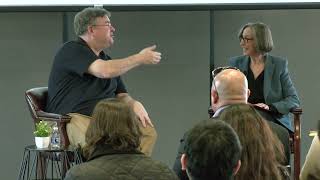
Reid Hoffman discusses his book Super Agency at Stanford, covering risk-taking and resilience in entrepreneurship. He explores how AI is reshaping society and what it takes to build companies that last.
Chapters
Good afternoon. So my name is Alan Young. I am the Li Ka Shing professor of Cardiology in the School of Medicine here at Stanford. So welcome to the first annual Distinguished Lectureship with the Stanford Initiative for Entrepreneur Resilience and well Being for short seer. You know that Stanford without acronym is there's nothing, right? So we have to make one up. So this is an Initiative launched about nine months ago with a generous donation from my mentor, Mr. Li, Li Ka Shing and his foundation and also Selena Chow foundation as well. Both Mr. Lee and Ms. Chow have long been champions of cutting edge technology and providing strength and resources to entrepreneurs and women in tech. So one question when we sit down we have been sort of constantly pondering about is that what attributes help entrepreneurs be resilient and endure hardship can stand up again after failure while maintaining a healthy mindset. So this question actually it was inspired by many stories, including alumni such as chloe, a Stanford 2013 graduate in computer science. Like many, she entered entrepreneurial work and with high hopes, but faced significant challenges along the way. She experienced disappointment and discouragement as a young woman in tech and had to make hard career changing decisions. Her story is not unique. When we talk to our alumni in Stanford or even in Asia Pacific, for example, many of them face a similar challenge but never talk about it. So our core inquiry become what makes someone resilient and how can we leverage this knowledge to help others achieve similar success and strength? So in answering this question, SEA put together a spotlight on resilience as the capacity to adapt, recover and grow stronger from stress and adversity. Our initiative is designed to bolster entrepreneurial responses to hardships, turn challenges into unique opportunities for growth and innovation. Collaboration, as you know, is the key to success. And at Stanford we have obviously many choices. And SEER basically unites the expertise of the Stanford Moussalam center for Biodesign under Professor Josh Macauer and the Stanford Technology Ventures Program SCVP under Professors Tom Beyer, Chuck Easley, Rita Somewhere Back, Rita Katila and Mike Lepak. So, both centers are renowned for their contribution to teaching innovation and entrepreneurship. Each is now focused on researching and developing programs to enhance resilience and well being, empowering entrepreneurs to navigate their journeys with strength and confidence. So today we are privileged to host a special fireside chat between two remarkable individuals who epitomize the spirit of entrepreneurship and resilience. This discussion will offer invaluable insights into the entrepreneurial journey and the resilience required to navigate it successfully. So to introduce our guests, please Join me in welcoming the Frederick Emmons term and Dean of the School of Engineering at Stanford, Jennifer Windom. Thank you.
Thank you very much and welcome everyone. I wanted to start by mentioning that this year is the 100th anniversary of the School of Engineering. We're very excited. So in all of that hundred years, engineering has been a hub of innovation and entrepreneurship. Go back to the invention of the cloud in 1937, which led to Varian Associates, which was the first business in the Stanford Industrial park, now called the Stanford Research Park. Close on its heels, William Hewlett and David Packard. They're among the best known, I'd say, entrepreneurs in the school. And since then we've had thousands of students, faculty and alumni launch businesses from the ideas they developed here in the School of engineering. In the 30 years I've been here, the companies that have been launched included Yahoo, VMware, Google, Tableau, Coursera and many others. And the original vision of the school 100 years ago was to provide a curriculum to develop engineering leaders. They didn't use the word entrepreneur at the time, but I feel that was already there in the DNA. And consistent with that vision was in 1997 the founding of the Stanford Technology Ventures program. That was one of the first entrepreneurship education programs in the United States in any engineering school, probably in the world. It was also one of the only to include research as part of its mission. And today I think we recognize that entrepreneurship requires more than just bold ideas and ambition. And that's where SEER comes in. So in addition to wanting our entrepreneurial minded students to succeed, we also want them to thrive. So it's my pleasure to introduce Sears inaugural distinguished Lectureship speaker Reid Hoffman and this afternoon's moderator, Tina Selig. First, about Reid. He's Stanford Class of 1990 in Symbolic Systems, but we like to claim him as an engineer anyway. Honorary engineer, obviously. A very accomplished entrepreneur, executive and Investor. He founded LinkedIn and co founded it in 2003, joined Greylock as a partner in 2009 and most recently in 2022, co founded Inflection AI. He currently serves on numerous corporate and nonprofit boards. They range from Microsoft and OpenAI to Kiva and the New York Academy of Sciences. At Stanford, he's been quite involved chairing the Human Centered AI Advisory Council. Thank you for that. And is also involved in the Chan Zuckerberg biohub which is very active here at Stanford. He hosts a couple of award winning podcasts, Masters of Scale and Possible. And he co authored five best selling books, the Startup of you The Alliance Blitz, Scaling Masters of Scale and Impromptu. And I guess we think maybe it'll be six in the not too distant future. I think you all received a copy of this book that is officially published next week. So that's Reid and we all look forward to hearing from him. Tina Selig is also a Stanford alum. She got her PhD in neuroscience from the medical school, but will also claim her as an engineer. Why not? Currently Executive director of the Knight Hennessy Scholars Program, she is the former director of STVP and a professor of the practice in the department of Management Science and Engineering. She's taught many courses around the university in leadership, entrepreneurship, innovation in Management science and engineering in the D school as well. She bested read as an author 17 books. Wow. Including Ingenious Creativity Rules and what I Wish I Knew when I was 20. So please join me in welcoming Tina Selig and our distinguished guest, Reid Hoffman.
What a treat to be here. This is amazing.
Thank you.
First of all, congratulations on the launch of this amazing new center that's gonna be so important. And Reid, it is such an honor to get to talk to you about your new book. I actually just finished it this morning. I did my homework and it's very well marked out.
It's bleeding red. You can see.
It is a stunning book. I walked away at the end really convinced, I'm convinced that the subtitle is true. What could possibly go right with our AI future? That we need to think about that. In fact, that is the theme of the book. That we can essentially have innovation alongside safety, that instead of leading with we're concerned, we're concerned, how does that work? How do we navigate that or thread that needle between innovation and safety?
So as you know from having read the book, there's a chapter on innovation as safety. And part of the thing that people don't track is that innovation, yes, there's risks in innovation, but the future, the features that you're getting in the future are not just features that are like new product quality and other things. They also can be safety features. And the car is a very good way of looking at this. If you said, hey, I'm going to launch a 2 ton DEF machine and we need to make it perfectly safe before we do that. It would have never launched. And then all of the things that come out from the automobile revolution, anything from the reconfiguration of cities, the transport, mobility that affects the growth of industry and everything else doesn't work. So what you do is you start by launching the Car. And then you go, oh, we need bumpers, ah, airbags, ah, seat. Well, wrong order, seat belts, et cetera. And you go through that as a form of iterative development. And so you're innovating into the future as you're doing. And this is the pattern that we want for most of our kind of general purpose technologies. Because it's not just that the future features are necessarily risky, we should navigate those. It doesn't mean that you shouldn't also think about the risks in order to navigate, but you want those features that will both be amazing in terms of how do we have AI make our superpowers of human future, but also can help you with safety.
Great. Now, in the book, you present a very steady framework that I just love. It is the Doomers, the Gloomers, the Bloomers, and the Zoomers. And once you understand what these are, you won't forget them either. So can you tell us a little bit about these different.
Yep. So just so no one thinks that I'm kind of throwing anyone under the bus, the Doomers actually do describe themselves as the Doomers, So it wasn't me trying to be rhetorically mean. Basically, Doomer's view of AI is that artificial intelligence coming is like the Terminator. It should be stopped. There are, there are even people who've argued that, you know, AI labs maybe need to be bombed, et cetera. I mean, it's, it's, it's, it's really like that. The new artificial intelligence technology is only bad for humanity and we should do anything possible to stop it. Terminator killer robots. Next group up is the Gloomers. This is probably a lot of the general discourse around AI, which is, you know, we can't stop it. It's going to happen. Multiple companies in multiple countries around the world are building it. It'll get built, but it's probably going to be a real problem. It'll probably be a problem with jobs. It'll probably be a problem with misinformation and democracy. It'll probably be a problem in privacy. It just. The future is going to be worse because of it, but you can't really stop it. The Zoomers are the folks, some of whom we have here in Silicon Valley. And we have Bloomers, too. I'm a Bloomer, so I'm going to go last. The Zoomers are like, everything you can do with the technology is good. We should build as fast as possible, maximum acceleration. Let's go. And Bloomers are close to Zoomers because we think, hey, the future, like when I Think about AI I think about a medical assistant on every smartphone that's available by 247 to everybody insured, not insured, et cetera, as ways of doing that. It's just one instance of how you elevate humanity. So we want to accelerate to that future because the slower that we get to that future, there's a whole bunch of kind of suffering that happens before we get there. But on the other hand, let's be thoughtful, let's avoid the potholes, let's slow down at the turns, let's be in dialogue about what some of the risks are. And you want to kind of say, okay, what are the really, really key risks that you address in advance? Very short list. And then what are the other risks? And we see it as we do iterative deployment. And so that's why I identify myself as a bloomer. And, you know, there are people I literally have had some interviews with, people who are like, I'm a zoomer. I'm like, okay, great.
Well, I love the title of the book, Super Agency, which becomes clear when you read the book what that means and how one gets to this super agency. Can you help us understand what it is? Because it's probably not a term that people have used before.
Yes. So one of the things when I was thinking about, because I'm also a participant in our various public dialogues about what AI is, and I see all the worries and the fears and the pessimism, and I was trying to. Trying to figure out what are the kind of core anchors of it, in addition to the fact that, by the way, every single time human society encounters a new general purpose technology, this is the discourse. If you went back to look at the discourse around the printing press, it looked very similar to the discourse we're having around AI if you went back to the mainframe, it's very similar. Some of us can remember the Internet, very similar. And so. So that is the common pattern. But I was trying to think of what are the things that people have as they worry. And it really does come down to this anchor of human agency. Because it's like, well, if I have job transition, that's a loss of agency. If I have an inability to be a functional citizen in a democracy, that's a loss of agency. If I cut concerns over my privacy, that's a potential loss of agency. And so, so human agency is kind of a good thing to kind of focus on and figure out how do we navigate this? Now, the reason why we coined super agency is human agency is kind of Like I have some control over my life, some control over my choices, some control over my environment. A bunch of it's collaborative with other people, but like I have some presence and some of the things that I care about and try to make happen matter in the world. And social media. Super agency is what happens when millions of us all get access to this general purpose technology at the same time. And not only do I get superpowers, but I benefit from us getting superpowers. And again, think about the car. You go, well, I got a car, I can drive somewhere. I have mobility superpowers. But not only do you have superpowers, but actually, in fact you're gaining them too. Prior to the automobile, you couldn't have a doctor come to a home visit. You had a sick child, a sick grandparent. It didn't happen that way. You had to bring them in. You can have friends, just come visit. There's all of these things where other people's ability also to have the mobility superpower elevates the entire society. And that kind of joint of everyone getting superpowers and everyone getting enhanced agency or many people, it doesn't have to be literally everybody is what super agency is great.
Now. I taught a class for five years called Inventing the Future. And what we did in this class is every week we looked at a different frontier technology and we debated the utopian and dystopian consequences. And it was really important because it was motivated by the idea that everyone comes out of Stanford as a bloomer or a zoomer and we need to actually inoculate ourselves against the potential downside. I assume that you do have some things that concern you and what are the things that keep you up at night when you, if you had to debate the dystopian consequences of this very swift rise in AI.
So a lot of public discourses around X risk, existential risk, which we can come back to, that's not the thing that keeps me up. But if you want to come to it, just ask it again. I'm happy to go in. Existential risk, the thing that I'm most concerned about is we as human beings are really terrible at this transition. So take the printing press, for example. Without the printing press, no scientific method, no medicine, much fewer, much less prominent institutions of learning, probably no high school, et cetera, et cetera, because it just doesn't work, work that way. And so you go, it's clear that the printing press is a great foundation for everything that we've made in society. On the other hand, at the time of the introduction of the printing press, we had nearly a century of religious war because we as human beings adopt to these new technologies, you know, badly. And part of the reason I wrote the book is to try to say, let's try to do this, this kind of transition because it's, it's, I think akin to the Industrial revolution, another one that was very painful, the cognitive industrial revolution. Let's try to do it with more humanity and grace. It'll still be painful, it'll still have a lot of challenges. So my principal worry is how we as a society integrate it and how we evolve and adapt and it's getting that dialogue on how to do that well. And what kinds of things are the things we need to do, either as a society or as technologists, and what are the things that facilitate that? That is probably the principal thing that worries me because the possibility that we get into conflict about this is very high.
Great. Now let's switch to the utopian future. What are the things you are most excited about?
Well, I mentioned one already, which is it's literally line of sight to how could you have a medical assistant that would be better than the average GP? Doesn't mean the GP's got to work. There's all kinds of ways the assistant and GPS can work together. It's not a jobs thing. That's 24 by 7. That runs for, call it well under $5 an hour. That's huge. You think about massive amounts of the population, even in the us, but in all around the world that are uninsured, don't have access to a gp. Other kinds of things. That's really important, by the way, even if you have a GP, you're like, it's 11pm, it's Friday night, I'm curious, I can talk. Oh no, you should go to the er. Okay, that's useful. That's a useful thing. So it's useful across the entire stack. Another one is a tutor for every. Again, anyone who has a smartphone, a tutor for every subject, every age. I myself use mostly chatgpt in this case, but you know, I play with PI inflections, PI and clodson and all this. It was like I started thinking about quantum computing a lot. And so now I take the deeply technical paper of quantum computing. I put it in a chatgpt and I say, explain this to me like I'm 12, right? It's really helpful. If you haven't tried that, try it. And by the way, if you want some variation, explain it to me. Like I'm five. Explain it to me like I'm 18. And it gives you different answers. It's actually like super interesting to look at. So the tutor is also line of sight. It's there already. It's just a question of how we productize it, how we build it, et cetera. Then, as you begin to get to what I think is going to be developed effectively this year probably, and maybe starting to deploy next year, is a lot of. I think the AI labs are all working on coding assistance. I think we're going to see a lot of amplification of how kind of like a coding copilot works. And on one hand say, okay, well, you know, by the end of this year, probably, if you're a software developer and you're not actually familiar with, you know, multiple copilot, you know, development agents, you're probably behind the curve on your learning. And so you need to be doing something with that. But the more interesting general one is all of us, even those of us who are not honorary engineers, you know, not engineers or whatever.
Yeah, faux engineers.
Yes, faux engineers will have an engineering copilot, a software engineer copilot on your phone and your computer that will unlock massive new capabilities for how that can help you be an informational GPS about how you make decisions, do analysis and kind of all kinds of things. I mean, think about everything from how you might actually construct and maintain a household budget, how you might think about things, these kind of like being able to code the engineering for it to be doing scenario planning. And you say, well, what happens? Obviously, huge tragedy in la. What happens if there's a fire? What would that mean? And I could then do scenario analysis because I have essentially coding capabilities for everybody. And I think that's just the beginning about how everyone's capabilities, both in decisioning and life and work, starts getting amplified. And that's part of the reason I think it's the cognitive industrial revolution.
I love that. And I have a really personal question, and I think it's probably a question a lot of people here are asking, is if I use this, is it going to dull my thinking? If I use ChatGPT to help me write a paper or to write a poem for my friend's birthday or for any other thing that I'm asking to help with. Am I essentially dulling my creativity? Am I dulling my imagination?
So the short answer is it depends on how you use it. If you use it as a lazy person. For example, last year there was a lawyer who used, I think it was chatgpt to file a legal brief that he.
Yes, we know this story.
Yes, yes. Who didn't even read it, so didn't realize that ChatGPT was inventing the citations. There was no such case law then. Yeah, that counts as a dumb doofus move. Now, I'm not sure that that person was doing that much critical thinking in the first place, but you can obviously use it in a way to try to be very lazy. But like, for example, I think it's very easy, both in how you use it and in the nudge kind of things that we do in the designs of these things to make it actually, in fact, very good. I find that I think better because of it. One of the things that I think is kind of, as you begin, probably most people in this audience have actually at least engaged. But one of the things that I think is very important to do is to think about what's the position of expertise that I want to be in dialogue with about this thing that I'm working on. And then you ask the agent to say, okay, for example, when I'm writing Super Agency, I say, all right, you're a kind of a deeply scholarly historian of technology. And then I load the right chapter and I say, critique this chapter, right? And I look at it and I kind of. And obviously, as we all know, when you write a book and you're kind of making a quick point about electricity, the two to three pages, you're not being as in depth and scholarly and everything else. And so frequently it's like, well, this is too simple, and this is too simple. But for a book like this, you go, that's fine, right? Because we're trying to get the general point. We're trying to make the point. This kind of. We think about this in a society level, not. We think about like, well, actually the actual deployment of the steam engine happened in the following way or the actual thing. So. But that gives you that ability to do that, and that hones your thinking. Because one of the simple ways to. To use these agents is say, here's what I'm arguing. What's the counter argument? And if you're doing that on any kind of regular basis, you're getting sharper in your thinking.
Great. I love it. In fact, I think one of the things you refer to in the book is the fact that there's evidence that it actually raises the bar that the people who need the most help get better and those people who are already skilled are not going to be decreasing their abilities.
Yes.
Okay, we're Actually here to talk about resilience.
Yes.
But I thought we couldn't walk away from talking about your exciting new book. So you have been involved with the foundation and founding of so many companies, and companies are all basically trying to die every day, right? I mean, there's so many things that have to go right, we're trying to.
Die, but we might die.
Yeah, yeah, yeah. But they sort of almost might feel like they're trying to die because there's so many things that have to go right, right? There's the product, there's the market, there's the team, there's the competitive landscape, and on and on and on. What do you think are the most challenging or the most difficult aspects to get right?
So part of the thing I think is really good about this resilience initiative is that it's not resilience. So that you can say, how do I work a 40 hour week? Because you're not going to work a 40 hour week in a startup. Or if you are, the highest likelihood is your startup is going to die. But speaking of the early thing. So that's not the point is how do you get to 40 hours? The question is, when you're working maybe about as hard as you've worked in your life. So, for example, one of the things that I used to tell people around when I was part of the founding team of PayPal was I said, I've never worked, so I've never learned so much, except for maybe between the ages of 2 and 3 when I'm going through the startup is literally there were things that I wish that I had known on Monday, on Friday, and it wasn't like, oh, so and so won't return your phone call. It's like, no, this is the way you do that. This is the way you make this analysis. This is the kind of way you make this decision. And that's part of the intensity of it. But the importance, and this is part of the reason this series, I think is a really excellent contribution is startups are these weird paradoxes of both intense sprints every week and also a multi year marathon. Success is you're still working really hard at year five and year eight. That's what success looks like. And so how do you have the resilience to do that? And that's of course extremely important, especially because most of the time, another thing I say about almost all startups, I mean literally almost all startups have what I call one or more of the valley of the shadow moments, which is like, why did I think this was a good idea. I know, I thought it was a good idea. Why are we doing this? And, and I think that the key question is how do you kind of navigate and endure through those? And there's a whole bunch of things that I expect we're gonna talk about as part of that, but some key elements on that kind of resilience is not like, okay, go do 50 mental push ups every morning. That's fine if it works for you. But it's kind of like what are the kinds of things that allow you to be balanced kind of making good cognitive decisions. Like one of the things that people do sometimes, some people say, oh, sleepless for the week was, I remember one of my engineers telling me, and I was like, no, no, no. Good decision making is for the strong, right? And by the way, having sleep correlates with good decision making, right? Because you have to, you're making constant decisions throughout the day and throughout the week. And so the question is, how do you build in that sense of presence? Now for me it's kind of like, how do you build your network around you? It's a question about how you handle things when there are challenges. Like when I started my first company, a friend of mine from eWorld emailed me and said, welcome to where 15 minutes is the difference between exaltation and terror. And it's like, we're going to rule the world. Oh shit, we're going to die. And startups really have that kind of feeling. And so how do you have the kind of, you expect that that's the kind of chaos that's coming and it's kind of, how do you build your team around you, what your culture is, what your personal network is, what your questions of recharge are, how do you make sure that you are working as hard as you've ever worked, but doing so in a sustaining, resilient fashion.
So what specific advice do you give to the founders of companies you're involved with, especially if this is their first time venture?
Well, it really depends somewhat on, there are different ways of doing it, right? So it really depends kind of on what the nature of the company is, the nature of the team is. So for example, when I, as just one instance when I started LinkedIn, about a third of the people had kids. And so one of the things we said is, well, look, here's what we're going to do. We will make it an entire company wide policy that everyone goes home for dinner because we wanted to make sure that the parents would get home and have dinner with their kids. And then it was also an entirely company wide policy that Monday through Thursday at 8:30pm you got back on your computer and you were working. Right. So it was the kind of like, how do we both accomplish the human goal of, wow, we have a bunch of parents here and if they're just the ones going home, they're going to feel a lot of pressure to not go home. They're going to be left out of decisions. All of us will essentially by default go for dinner. And it could be, sometimes it'd be, well, I'm going with one of my co founders and we're talking about something, it's fine, but it's the office breaking apart, but then all of us are back online and working for the next couple hours kind of going, okay, here's how we're getting ready for the next day. And that's one instance which, in a company where you have a bunch of people who have families or other things, that's a good thing to do. Sometimes it's, here are my 10 doormates and, you know, we're living here and we're cooking here and that's not the right thing. I think one of the things that I most often give advice is to basically build your. There's two angles of building your network that are really important. One is your personal network, which is who are people you can talk to about the difficulty of this, because you will go through, not just your company will go through valley of the shadow moments, but you will go through valley of the shadow moments going, oh, God, should I be doing this? I'm working so hard on this, I'm not sure it's going to work. Boy, the thing that happened today was a real setback. I don't know what, you know, what to think about it, et cetera, et cetera. So it's useful to have some people. And this is actually part of how, you know, like, I ended up being part of the founding team PayPal because I was playing that role for the PayPal founders. It was kind of like the, okay, we're having this challenge, what should we do about it? And frequently when you're on the outside, I was doing social at the time, and then when PayPal got going, I moved from Social to PayPal. When they'd call me at 11pm and go, oh God, does this mean we're going to die? I'm like, no, no, no, no, it means you might die. It doesn't mean you're going to die. Right. And here are the kinds of things to do in order. And that's part of the value of having a personal network that kind of helps you through this stuff because it's very important. The second thing may be a bit of, kind of somewhat atypical advice for building these companies, which is frequently you'll get from professional organization, is don't hire your friends. And the reason is you don't want to put the stresses of the startup on the friendship. And that's a real thing, right? Because it's like, oh my God, we have to. We're playing this intense game together where we might fail. And I'm feeling like you're not doing the right thing or you're not carrying your weight, et cetera. That can put a lot of pressure on a friendship. On the other hand, these are people that you're spending 80 to 100 hours a week with, and you are much happier if these are people that you kind of feel like you want to be talking to on Saturday morning. That even if you have some disagreements about how work, how this specific game is working, that you have respect and trust for each other. My advice is, generally speaking, try to build not just an intentional culture when you come company, but try to build, as it were, a culture of general friendship. Because I think that really helps now. Doesn't mean don't have the hard conversations. So when I hire people who are friends, I tend to have a specific conversation with them to say, look, we will always be friends. Sometimes I might have a difficult conversation with you because I'm your boss about it's not working out right. And what you get as a friend is you will get that conversation. The moment that I start thinking it, I will come have that conversation with you. That's how I'm honoring the friendship. And then we can try to navigate, but it doesn't mean that you're guaranteed the job.
Great. Well, obviously you've learned a lot of these things by trial and error, right? You have had some failures that have been these lessons. Can you share with us a failure? Something that you go, one of those moments where you walked out and say, wow, that didn't work. And I learned a lot.
So one of the things I'm somewhat known for is coining certain aphorisms, like if you're not embarrassed in a consumer, in a product, by your product release, you've released too late. All of those aphorisms came from a failure, every single one of them. And so that one was when I started My first company, SocialNet, I had this great Idea about how the Internet was transforming the world of social space away from the constraints of the physical space. And so you'd have multiple applications, you'd have dating service, you'd have a professional networking service, you'd have a kind of a sports and entertainment service, you'd have a roommate service, you'd have all of these services. So I spent nine months building that product behind kind of closed curtains, doing the classic kind of entrepreneurial thing where I was going to pull back the curtain. And I was expecting everyone to go, wow, that was amazing. And pulled back the curtain, people said, huh, what? What's that useful for? I'm sorry, I get the dating one. But these other ones, what are those? Right. And so we literally spent nine months not getting consumer feedback, believing my own genius. And, you know, socialnet ultimately sold for return on capital, which, you know, great. You know, but that's not a success. And so. And then. Do you want me to keep going down the list? I'm happy to.
Well, I want to. I want to make sure we cut the right topics. But that's a great example. Right. And I use. I quote that all the time. So now I know where it came from.
That's where it came from. Because I literally was like, D'oh.
That's great.
Literally every single aphorism that you have for me, there is a failure story.
Behind each of them. Okay, maybe that sounds like another book.
Yeah. Oh, gosh. Too early, too soon, too soon, too soon.
I know. So I want to ask how many people in the room think they're risk takers? How many people are risk takers? Okay, lots of hands go up. One of the things I always think about is that risk taking is not binary. Right. There isn't just I'm a risk taker or not. There's financial risk and social risk and emotional risk and physical risk and intellectual risk and ethical risk. And we need to really understand our own risk profile when we're going to go into a venture, because not only do we become clear about what type of risks we're going to take, but also how we complement that with the other people around us. I'm curious if you think about this and what your risk profile is and how you balance that with other people on your team.
So I'm probably amongst the most intentional risk takers of people you run into, because I typically think within a business strategy or a personal strategy that taking an intelligent risk that other people don't take is a competitive advantage. And so I'm specifically identifying risks that I think will waive off competitors or have them make the wrong decision that if I'm right, about gives me a real edge. And so I tend to be the person who's most often driving a risk decision. Because it's like, no, no, I think we should take this risk. Because now you can make errors in risk on either side. You can make errors and risk. It's just like, we just have to take the risk. We take it blindly. I never take a blind risk. So my very first book, the Startup Review, is advice that I give entrepreneurs to repackage for individuals. And so, for example, the ABC planning framework, where you have a plan A, you have plans B, you have a plan Z, that's part of risk mitigation. It's like when I do something, I take a risk, I have a plan on the risk, I have some kind of like, well, if it's not working out, maybe I try this, I try this, I try this, and if it's not working out at all, I shelve it and I restart. That doesn't necessarily mean restart the company might be restart the project or something, or restart what I'm doing. And so I have a very risk on approach to how I take things. Now, what that means is I need people in dialogue with me who collaborate well within that framework. Doesn't mean that they have to be less risk takers than I, but they have to be the. If they come and they say, hey, this is risky, they go, here's a risk that I think you're not evaluating for the right reason. I don't think you have a plan B that can potentially match this. What do you think that should be doing? What do you think we should be doing on that? As opposed to, this is risky. This is risky. It's like, okay, that doesn't really help you. You also need people who are like, sometimes, look, we don't have time for the full analysis on this risk. We just need to hit the accelerator. And that's. It's more risky to not be taking this risk, even though we haven't built up a sharp plan on it, than do taking it. So you want to build those people kind of around your network, whether it's you personally or you as a company. And so those are the kinds of things I do now. There's obviously lots of different kinds of risk, market risk, technical risk, financing risk, et cetera. So that echoes through all of those. And it's one of the reasons why in blitzscaling, I think one of the rules that we put in there is letting fires burn. Because sometimes you go, I know that's a risk, but I don't have time to get to it right now. Like I'm going to let it burn because I think I can survive letting it burn while I'm working on these things. Bad parallel given L. A but you can't put out all the fires at the same time. And so you focus on the one that you think you can and then you take the risks on the other ones.
Like a technical debt that you have.
Yeah, almost all startups go into real technical debt at multiple times.
Right now there's a question I get asked a lot and I'm going to guess you do as well. And it's a really, really hard question about when to quit. Because the question is, when are you just in a local minimum that you're going to be able to get out of it and escape and escape velocity? Or when do you say, you know what, I'm not going to throw good time and money after this and it's time to to reboot.
So I have a precise framework, although it's sometimes hard to cash out in the specific circumstance, which is this ABZ planning framework. You start with some of the things you think are really good ideas. Sometimes as you're discovering the development of your product, your startup, your product or service, you discover better ideas. That's great sometimes because you get stymied in something like for example, PayPal was encryption on mobile phones. It ends up with a email master merchant payment service. And that's a much better idea. But frequently you're encountering problems and then you have another idea to solve the problem and another idea to solve the problem. And that's kind of when you're going through these kind of plans. B part of the thing that I measure both as a kind of founder, as a CEO, as a board member, are the new ideas substantially worse than the earlier ideas? Like if the new ideas of what you're trying to do are like, yeah, you're writing it down, I would have invested in that idea. We did. I wouldn't have invested in this idea. And once you've been in that for some time period now, the time period might be only a couple weeks. It's certainly before you've run out of cash or about to run out of cash. Like the real failure moment is when you were kind of surprised by the fact that you got to the end and you didn't actually in fact see there was a high probability that coming and there was things you were Trying to navigate in order to do that. Sometimes it happens. You're going to play out the plan A just because it's the only one. But the question about evaluating the quality of this idea versus the quality of that idea, I approach it with an investor's mindset, which is, okay, clearly I invested in that idea. Would I invest in this idea? And it's kind of just the idea itself, not necessarily the whole history and all the rest. Because if so, then it may be time to massively restart, shut down, you know, the drastic actions.
Right.
I'm reminded of, you know, don't fall in love with the solution, fall in love with the problem. Right. Because if you fall in love with the solution, you end up often going in the wrong direction. Now, I'm curious. One of the things I think about when I think about resilience is what mental models people have of what happens when they hit bottom. And I do an exercise with my students where I have them actually say, what is the bottom made of? For them, and for many people, they say, it's concrete or it's flaming lava or it's quicksand. And if I get in it, if I fail, I'm gonna die. And other people say, it's rubber, it's a trampoline. And I hit bottom and I bounce back. I'm curious, and I'm sure that everyone in this room could quickly answer what their mental model is, even though they've never articulated it to anyone else. I'm curious what your mental model of failure is. What is the bottom made of?
Well, the fully optimistic view is the trampoline. And that was the first answer that occurred to me. But I think it's actually, you know, those. Those, like, kids castles where you have all the little balls in them and you're kind of thrashing around? I think it's that.
Oh, yeah, like a ball pit.
Yeah, a ball pit.
Yeah, I've heard people say that, too.
I think that's. That's what mine is.
Great. Wonderful. And it's really interesting to think about it. I've been doing some work with the women's gymnastics team team at Stanford. And I was their meet this last week, and I realized, oh, my gosh, they have to bounce back in a second. And so I started asking them about this and realized they trained for this. They trained for being able to bounce back instantly because if they mess up at the beginning of a routine, they need to still figure out how to stick the landing. And I was been thinking that that's a really Interesting model for us to learn about how they master this skill. And asking one of the gymnasts who now is a surgeon, she said, absolutely. It translated into everything else she was doing in her life once she learned it in gymnastics.
So what are the key things they do to train it?
Well, they, first of all, they have two tracks going on in their mind. The physical track of what they're doing and then a mental track. And so when the physical thing doesn't work, they can quit quickly, get the kick started with the verbal track. And the other thing they do is they bring in all these people to distract them and to try to get them to mess up. They'll get the volleyball team to come in and throw things at them or heckle them, and they just get really, really good at weathering those storms.
So I think a parallel for that at startups is the importance of red teaming and kind of thinking about what kinds of things, like when you're kind of avoiding risks and so what kinds of things could go wrong? And so I think there's actually some direct parallels. And like, for example, the physical and mental could be, what's the mission of the company? What's the kind of plan of that and kind of what plan are you on anyway?
Very interesting. So I am very curious about the role of luck in entrepreneurship and what levers you have to increase your luck. You know, is luck something out of your control or is it something you can make?
You know, one of the things with these questions, these kinds of questions, this one specifically is it's both. It's both out of your control and something you can improve. And it's, it's not quantum, it's not like Schrodinger's cat, Schrodinger's luck. It's. It's both. You can say, how do I navigate and plan in a way that I'm more likely to be lucky? And that's important because it's like, hey, if I take these shots on goal, part of the reason why you might say, hey, I'm going to try these five different initial customers is because even though you're kind of being very careful in serial, you're kind of saying, well, maybe I was wrong that this was the initial customer, but this is. And I find something to double down on. I'll give you an example from. From early in PayPal, which is the theory of PayPal, when it launched, was a payment service that was reflecting the physical world into the Internet world. So Palm pilots, for whoever remembers what Palm pilots, Sure.
I love My Palm, yes.
And then synced with Internet service two days after we launched ebay, users started using it all the time. And for the first time, the first week, the dialogue at PayPal was, oh, we need to shut these customers off. These people aren't as designed. And then I was like, oh, wait a minute, maybe these are our customers, not the Palm Pilot people, these are our customers. And by the way, that's part of the kind of leaving room for opportunity. I'll give you a LinkedIn example. One of the things my co founders and I debated a lot when we launched LinkedIn, because it is meant to be an invitation service, it is meant to be people you're connected to that you know well enough to recommend to other people, you know, on a case by case basis. Not this person for everybody in all circumstances, but enough. I say, oh, Tina, this is a person I met at a conference. They actually had a conversation. Really smart. I think you might enjoy them. It might just be that. But I can say something about why, you know, this person, she or he might be worth your attention. So one of the debates we had was, do we allow people to sign up cold? Do we allow people just come to the website and sign up cold because, you know, they won't necessarily get the ethos of what we're trying to do. And ultimately because of kind of a, kind of a similar, kind of like having different options kind of point of view, I said, let's, let's, let's turn it on and see and maybe we shut it down at some point and that kind of thing. Well, we were measuring where the user base was growing from. And by month two, two thirds of the user base was from derivatives, from cold signups. And I was like, yep, we keep going, right? So anyway, so that kind of thing, I was up. You're playing for the possibility of serendipity. Don't be overly certain about what you're doing. For example, when you're an entrepreneur, one of the things frequently is people say, hey, my idea is my special precious thing. I don't want to talk to anyone about it because that's what's special. That's not what's special. 99.999% of the time, what's special is you're in motion on it. You're gathering intel, you're building a network, you're, you're building team, you're getting financing, you're getting advice. So part of, again with serendipity, is anyone who's smart that is willing to talk to you about the idea. Talk to them. And what's more, don't talk to them. What do you think about my idea? Because then they're hearing, oh, you want me to tell you it's great, right? Oh, you want me to be reinforcing? No, no. What do you think are the challenges for the idea? What do you think could be improved? Because then you might find that, you know, literally this person that you like, the friend of a friend you just happen to be having coffee with, knows something, has an idea, has someone to connect you with, that kind of thing, and that's, that's part of where you're making serendipity. And so it is possible to make, now, that being said, successful entrepreneurs, then I go, manifest destiny. I knew from the very beginning LinkedIn was going to be really successful. I. I knew it all the time. If they really believe that, they're nutty. And the right position, which, for example, I had, was when I told the first team, the founding team was about 15 people, I said, I think today we have about a 25% chance, and our goal is to grow how good it is and what the percentage chance is. And here's the things we need to do in order to grow that.
Yeah.
Well, I love the fact that you say, talk to everyone, because when you see people who try to hold their idea so close to their vest and you're like, the most likely thing is that someone is going to help you. The least likely is they're going to go scoop you. I mean, everybody is busy. This is not their idea. This is not their passion. Right. No one's going to go write your book. If you say, I'm writing a book on AI, no one's going to go, oh, that's a great idea. I'm going to go write that book on AI. Right. And so. Exactly.
Or it's because you're in motion, it's because you're doing it. It's because you are making it happen. And that's part of the reason why, as an entrepreneur, the grit, persistence, and you're in motion.
Yeah.
I also think there's another aspect of luck that I've been playing around in my head is it's not just those things that happen, but then being able to pull on those threads, it's like you got those users, and then what do you do next? And what do you do next? Right. There can be some lucky break, but unless you actually keep adding some more gasoline. I'm kind of mixing metaphors here, but in case you Know, you have to keep adding, and then all of a sudden it's an inferno.
Yes.
What do you think?
I think that's right. But it's kind of almost like it's adding the dynamism and discovery of new things as you're going. And sometimes you will part of that, you know, kind of staying in it. Even during the valley of the shadow moments. That was part of, like when Peter and Max were calling me and saying, oh, God, does this mean we're dead? It's like, no, no, it might mean you're dead, but let's play it out a little bit and see where we get to. And then you go, oh, this will work great. Let's do that. And so that dynamism and adding things into the. You know, if you use fire as a metaphor, although mixing it with gasoline might be challenge. But anyway, you know, adding those things in is really important. Adding fuels in is very important.
Yeah. So we do know that there can be some really low times when you're an entrepreneur, and they can. We don't always bounce back. It's not always bouncy balls and trampolines. There are times when you really hit bottom. What do you do and what do you recommend that people do? Like, what kind of support systems do you need? What sort of things do you need in your life to help you get through those really difficult times?
Well, let me start with kind of you as an individual. So when I wrote ABZ Planning and Startup Review, part of it was to have a plan Z. Like, what happens when it doesn't work? Like, what can you do? And kind of like, what's your regroup plan? Like, goes boom. Doesn't work. What's your regroup plan? And hopefully once people think about that, they don't think concrete, they think something else. It could be a carpet, not that. Or could be trampoline, whatever. So you want to think through that and then you want to kind of identify what are the times have pre thought when are the things where I need to go trigger my plan Z? Because by the way, ultimately what you most want to be able to do do is play again. Like, almost like serendipity. It's if you can keep playing again, you're maximizing your chance at serendipity. So that's kind of one, two is when you're doing the risky things around founding a company, joining a company, you're kind of thinking about, like, okay, so what's my thesis about why my theory of the game, why this company might work? I'M kind of updating it as we're going. That's again, kind of the plans A, B and Z I'm talking to other people about may be lots of people, it may be a few people, it may be a couple people that you're at work with. It may be a couple people that you're. That are advisors to you or the company or something. And I think that's really useful because then when, for example, you're in a lower, those are people you go talk to because you're like, okay, kind of what's working here? And I've sometimes gone and had that conversation with people when I did something that didn't work. And they were like, yep, that was dumb. We told you that was dumb. When you were doing it, I was like, okay, thanks. But I think that the fact that you have. That it's not purely lonely, that you have people that are with you on this very stressful journey, I think is quite important. And then it's something of, you know, kind of that's part of the reason why the cultures of these companies are important to build. Because you want a certain esprit de corps. The work that we're doing matters. Right? It's like one of the aphorisms that's used in the Valley is. And it's partially true, like most aphorisms is missionaries build huge companies and mercenaries build medium companies. And it's that shared mission of what we're doing here matters in the world. Because then that causes a look, if we failed, we failed at trying to do something that was really important. Right? And so that mission is also sustaining. It's like as a way. And it kind of is the esprit de course. So it's kind of. I was going kind of from the individual to your network around you to the company as what do you do to try to build in the kind of the. What actions you take as resilience, which is talking to people, trying again, et cetera, when you're hitting difficulty.
You know, what I was just thinking is that the mission you have is a little bit like the gymnast having the voice in their head. You know, that gets you back up, right? It's like, so you physically fail, but that mission gets you back on the balance beam.
Yes, exactly. That was exactly the parallel I was going, oh, that's really interesting. Is physical, mental is like individual company.
Exactly, exactly. So I looked it up today. It looked like you wrote the startup of you a little over 10 years ago. And I'm wondering what things you might do say differently in there. Like over the last 10 years, is there anything that you'd go, oh yeah, I wish I'd put that in there because I now know this. I mean, think about it. The world was really different. You'd say invest in, you know, in LinkedIn, but do I say, you know, what would be the things you would put in there?
Well, I was trying to not make the book. LinkedIn did exist at the time. I was trying to not make it. It does share a worldview with LinkedIn, but I was trying to make it an overly LinkedIn pitch. I mean, there's a bunch of stuff about LinkedIn in there. What I would say is everything in the book is still right. Right. So there's nothing I would redact because it's basically, if anything, year by year, decade by decade, your careers are becoming more entrepreneurial. Like, it doesn't mean you have to necessarily start a company. Maybe many of the people in this room are thinking about that, but they kind of like, I join big company x as a 21 year old and I work my way up through the organization through 65 and retire. There's fewer and fewer and fewer of those paths. Not only do you just change companies, but also industries change and all the rest. So you have to adopt kind of a much more entrepreneurial mindset, even if you're not planning on yourself ever even joining a startup, let alone starting someone. But it's a good set of frameworks. Now, the things I would add one of the things that when I was kind of glancing at the book, I was handing it to one of my godchildren and I was glancing at the book to kind of remind myself what I said and I was like, oh yeah, I would definitely update this book. And like, for example, one of the things was it didn't actually have any throughout the throughput on how to think about what your strategy around technology should be as an individual during your career.
Interesting.
And like, for example, when that was actually eight years ago now, that was like, oh, clearly if we were writing this book today, we would at least have a couple pages on the gig economy. Right? Because here's a technology pattern and what people engage in today. You'd be saying, how should you be learning artificial intelligence? What kinds of things should you be doing? What skills and experiences should be doing with that? How should you be using it as a competitive edge? And the general thing is I would add a chapter on thinking about because technology is a driving force for changing industries, changing societies. You as your Individual careers, navigating that. What's your theory of technological change? What are you doing personally about it? And then of course some of the other elements of the book will tie into it, which is you use a network in order to decipher like say well, I'm not really sure what I need to be learning about AI. Well, go ask five of your friends, right? You know, so you know, that kind of thing. I think the technology is a really central one. One of the ones that I think we did cover, but I think I would even emphasize more is generally speaking in career decisions and this is hard for entrepreneurs, but you want to put as much as possible the wind at your back, the tide at your back. So you want to, for example, if you're starting an entrepreneurial effort, you want it to be in an area that's going to grow and be big. Like for example, if I came and pitched you now and said I'm starting a new movie studio in the old fashioned, you'd be like, oh God, that's a really bad idea right now I say I'm starting a new movie studio with AI because they're not going to adopt AI. I'm going to do AI then okay, that's maybe interesting but like you know, the startup movie studio in a 1970s style that is very unlikely to work. And so you choose things that have some at least theory of the game inertia behind you. And that's also true in how you choose which company, which industry. Like for example, too often advice that's given is like, well, which industry are you passionate about? Right? And you go, well, I'm passionate about journalism. And you're like, okay, that's an industry that's got a lot of problems right now, right. And you can be passionate about it, but you've got to have a really risk on theory about what you're doing and how you're going to do it differently. Generally speaking, choose the industries paths that actually have some energy behind them because that'll make it, that gives you maneuverability room. And it's one of the reasons why, for example, as an investor, almost always when I'm investing to make money, I invest in software because that software gives you all this maneuverability. I will sometimes invest in hardware things or, or nuclear fusion or other things. I always write it to zero in my book because I don't know, it's a much harder thing to do. I just think the world needs it, so I'll do it.
Well, I love the fact that you recently made an AI version of yourself when you were. How long ago was it? What was it? It was very clever.
It's about a year ago, I think maybe.
No, no, no. But what was the age?
Oh, the age was.
You were like talking 35, right? Talking to your 35 year old. And it was so brilliant. I hope other people would take a look at it because that was one of the things that was really interesting is you fed in all of your old business plans and then were able to have a conversation with your 35 year old self. What an amazing thing you can do.
It was a little awkward, but it was good.
It was great. Well, this has been so enlightening and congratulations on your new book. This is so wonderful. We are so appreciative. Thank you for including us and huge congratulations on the launch of the center. I'm now delighted to welcome Tom Byers, who's going to close us out.
Hey, good to see you.
Thank you for that. Okay, everybody, join me in thanking Reid Hoffman and Tina Seelig. Reid has graced us in the past at SDVP in the Thought Leader series and other events and he's always just amazing. But to see him team up with Tina, who I had the joy of working 20 years with at STVP, it's just been amazing. Can you do another hour?
Maybe another day?
Yeah, I don't think that will be work out too well because I'm sure there's some important place to go, but I hope you feel the way we do. This was an important place to go. This new initiative on innovation and resilience, it's caught people's imagination. I mean, just look at the turnout this afternoon. And we're just getting underway. This partnership between the medical school and the engineering school is really phenomenal, Alan. And so on behalf of the leadership of stvp, we're so glad to be in partnership with biodesign. And so we got something for you, Reid.
Thank you.
Oh, yeah. So let me explain it. It's from us now that's stuck on the podium here. Okay, so it's data today, of course. You are our inaugural distinguished lecturer. We plan to have this lecture series. How about this? How about five years from now, let's book them right now and see how we do in 2030. And see how the zoomers and the bloomers, you know, zoomers and the zoomers. Bloomers, how they're doing. But it'd be great to have you back. But it says here, illuminating the path to entrepreneurial resistance. And you see how many students are in here today, too, which is. This is a really, really important topic for us. So as our first distinguished lecturer, I get to come over and give this to you and take some photos. So how about that?
Yep.
All right.
Awesome.
More from GHION.AI


O processo de reconhecer limites, mesmo quando a vida parece exigir sempre mais.





Depois de tantas histórias, aprendizados e pausas necessárias, o @interior_iza está de volta



