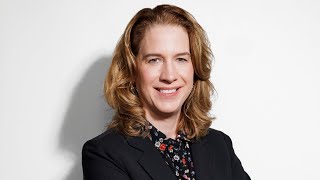
This content was created by GHION.AI . This content was uploaded by GHION.AI . This is a YouTube interview titled "Reimagining and Funding Better Treatments - Margo Georgiadis (Flagship Pioneering & Montai Health)" (recorded 2024-05-08). The excerpt features Margo Georgiadis speaking with an interviewer (Speaker A) about applications of AI in drug discovery and healthcare — including digital twins, clinical-trial acceleration, molecule discovery/optimization, and using large-scale molecular/pathway data (e.g., RNA‑seq) to enable precision diagnosis and treatment. Georgiadis outlines a long-term, audacious vision for amassing biological knowledge to eliminate trial-and-error care, and discusses practical funding challenges and strategies (de‑risking targets, demonstrating validation points, Flagship Pioneering as a long-term lead investor, and how to convince VCs by showing multiple high-value targets).
What would be a competitive advantage that can help a company clear out uncertainty in this field?
Yeah, it's really interesting. There's so many different ways it can be applied. There is a lot of work going on right now to begin to solve these problems. There's everything from digital twins and clinical trials so that we make it easier to do trials. There's stuff as we're doing on the front end to try to discover or optimize molecules more efficiently. There's many, many different applications. I think if you're really interested in the space, right, it's thinking about what areas you really have passion for. And I think there's many applications of AI that are really just, in my mind, automating what we do today and making it more efficient. What we really need is to do things that enable us to reimagine, like what if we can combine 2 or 3 different things like we're doing, the chemistry, with the AI and understanding of pathways to fundamentally— and going back to my hairy, hairy audacious goal is that if we can amass the world's largest understanding— now you can see my Google coming in— of all this chemistry that's been in the human body and all these pathways and how all those things connect, in 10 or 15 years, we could actually build the knowledge to take your detailed RNA-seq data and know exactly what's wrong with you. Because what I find really crazy, having gone through this in my own family, is treating people is trial and error. You go to the doctor and they're like, well, if I look at your symptoms, I think this is what you have, especially in a lot of these chronic disease. Try this. If it doesn't work, they call it steps. You try that. If that doesn't work, they give you something else and you go through this. That's crazy. We should be able to take your detailed RNA-seq and say what's exactly wrong with you and what is it is most likely to get to that outcome, not have to go through all those steps. But unless we amass this knowledge, we have no chance of getting there. And so we have to think about— but if I went around to investors and said I was doing that, they'd think I was crazy. It's like if we'd said YouTube was going to replace linear television. We said it inside Google. We did not say it outside Google.
And that's exactly— I love this. And so if you have that vision, which is a beautiful vision of having how healthcare really should occur, and how do you solve the chicken and egg problem with funding? So if you go to VCs and you have a big, hairy, audacious goal, they're going to ask you to come up with more validation points before they're going to fund, but you need the funding to get the validation points. If you're not in Flagship Pioneer and you don't have $3.4 billion of capital to use, how do you overcome that chicken and egg?
So I mean, as I said, I am benefited by the fact that I have a benevolent long-only lead investor. So Flagship will lead every round. They're still the largest investor in Moderna. After, what, 15 years. So that is a stability crater when you're trying to do something really audacious. But it's not that there aren't other people that are equally audacious in their thinking, but we still have to raise money from outsiders by the time we get to our B round. And by then we have to— and that's one of the reasons if I have clinically validated targets and literally every one of my targets is on the hot list for every pharma company, So if an investor looks at that, they say, oh, and then I can show comparables that any of those could easily be sold for $4 billion apiece. So I got 9 of these moving. You're taking a bet if I can't make— if you believe in what fundamentally I'm doing, you got 9 shots on goal and any of those would be worth $1 billion. Would you like to give me a little capital? And you've shown enough proof on the way that you can actually— enable that to occur. So you do— that's why I said you have to take some risk off the table. If I said, oh, I'm exploring pathways and I'm finding these new innovative ways to treat drugs and I'm doing all this new chemistry into it, they'd be like, come back. Come back when you've figured out a couple of these, right? And so there's a lot of good ideas that don't work just because there's so many things that have to go right that they run out of money before they can prove that.