Reimagining Meat [Entire Talk]
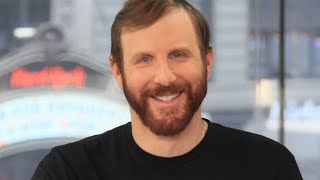
Ethan Brown, founder and CEO of Beyond Meat, talks with Toby Corey about building a plant-based meat company. Brown discusses the challenges of the industry, how Beyond Meat creates meat from plants, and the environmental case against traditional meat production.
Chapters
Who you are defines how you build.
Hi, I'm Toby Corey and I'd like to welcome you all to the Entrepreneurial Thought Leadership series. As you know, it's presented by stbp, the Entrepreneurship center in the School of Engineering and Basis, the Business association of Stanford Entrepreneurial students. Today, I am incredibly excited to welcome Ethan Brown to etl and let me share his background with you guys. Okay, so Ethan is the founder, president and CEO of Beyond Meat. Amazing product, amazing innovation. And by shifting consumption from animal to plant based meat products, Beyond Meat aims to positively impact human health, the climate, natural resources and animal welfare. The company's raised more than 145 million in capital, as well as placements at prominent grocery and restaurant chains like Whole Foods, TGI Fridays, and before debuting on the NASDAQ Stock Exchange in May of 2019. Now, Ethan began his career with a focus on clean energy and the environment, serving as an energy Analyst for the National Governor center for the Best Practices and then joining the team at Ballard Power Systems, a hydrogen fuel cell company. He's the recipient of the Henry Crown Fellowship from the Aspen Institute and he holds an MBA from Columbia University as well as a Master of Public Policy degree from the University of Maryland. Ethan, welcome to etl.
Thank you so much for having me. It's a real pleasure to be here. I look forward to our discussion. It's going to be fun. Awesome.
Well, we've got a big interview to get into right now and so let me just start out. Where did the idea come from and what was the problem you were trying to solve?
Sure. So I think for me, this was not a aha moment type of idea. I had begun to think about this issue in fits and starts as a child in terms of not being comfortable with animal agriculture. And what I mean by that is I grew up in Washington, D.C. and in College Park, Maryland. But my father, who is a professor entrepreneur himself, had time on his hands on the weekends in summertime and never really wanted to be in the city. He grew up in the country, as we were discussing prior to the broadcast. And so every chance he got, he would take us out of the city into nature, and we bought a series of farms. And the one that had the most impact on me was the one we still have today in the western part of the state of Maryland. And so we would spend a lot of time out there. And it was supposed to be a place to recreate, but being entrepreneurial himself, he also started a dairy operation there. So we had about 100 head of Holstein cattle I got very familiar with animal agriculture, but more importantly, I just loved the ecology around me. The animals in the streams and forests, as well as the animals in the barn, as well as those in our house. And I began to have some trouble making a distinction between which ones were units and which ones were pets and why that one was afforded certain rights and the other wasn't. And so that kind of stuck with me as a young person. I didn't do anything about it per se in terms of career. I did become vegetarian, but I really felt strongly about some other issues as well, climate and particularly climate, and so focused my career on energy. But this kept coming back to me that there was something here that I wanted to address. As I got further into energy, I began to realize the impact that livestock had on climate. And, you know, my company was a terrific company, Ballard Power Systems. We were spending over, you know, about a billion dollars developing fuel cells and the sector developing many more lithium ion batteries, solar cells, etc. To address a certain amount of carbon and greenhouse gas emissions. And yet this other sector of livestock was going largely unchecked. And there was almost no discussion of it at the time when I was working on this. And so that started to also bother me. And so there's a sort of confluence of my own personal ethos around some of these issues. And then ultimately the work I was doing professionally started to point me in this direction. And so I asked a very simple question, which I'm glad I did, which is, do you need the animal to produce meat? And I was never interested in a meat substitute. That's been done for hundreds and hundreds of years in Asia, particularly with the Buddhist temples. What I wanted to do was to understand whether you could build meat directly from plants. And that's the journey I started out on that ultimately led to beyond meat.
Yeah, well, that's a really big vision. And having also traveled the entrepreneurial road, lots of times when you get started with especially a really big idea, there's tons of detractors. I know raising money is one of the hardest things. I know you put your entire life savings and everything on the line to get this company off the ground, but you had a lot of no's and people telling you that it wasn't a good idea, this would never work, and this and that. How did you keep your confidence, keep your focus, and reconcile a lot of the detractors?
It's a great question. I mean, I think the most important detractor probably at some point was myself, and it was convincing myself that this calling and really urgent sense of urgency within me was something that was worth listening to because for years I was on a really good track. I mean, I rose through the ranks at Ballard very quickly. I reported to the CEO. It was a great career and I enjoyed it. It was meaningful. And to my parents and my friends and everything else, it was, this is what someone like me should do. Right. And so stepping away from that and starting a food business was sort of. I was anxious about it and I felt almost odd doing it. And so at the point I started the business, I had just had young kids, so probably the biggest detractor was that voice in my head saying, you know, is this really the right idea? But. And it wasn't a heroic moment that took me over the edge. It was fear. And I'll tell you about this because it was fear that if I didn't do it, I would not be able to live with myself. Like I would look back on my life and say I knew there was a problem and I just didn't address it. And so ultimately that became so loud for me that I went for it. And so after I resolved that my own mind and my own sort of spiritual, anyone could say anything they wanted like I was going to do it, you know, and so I did. I got a lot of. I can remember one very interesting discussion with a neighbor of mine who was an attorney, and this is sort of in the late 2000s, and I was talking about what should we call these things? And we talked. I said, well, how about plant protein? And I wasn't the first to use that, but it hadn't been very much popularized at all. He said, well, that sounds like fish food. And today, of course, it doesn't. Right. It's something that's very desirable. But when you're at the beginning of something like that, you, you do have a lot of detractors and you have to have the mental fortitude to get through it.
Yeah. Did you ever through that process have any self doubts at any juncture or was it really. You had that vision, it stayed with you. You had the fear of failure. But were there any moments in time? Where is this really going to work? Did I make the right decision here?
Right. So I think like anyone, you know, multitudes, and there's moments of fear and self doubt and then moments of confidence and they all blend together to make up who you are. And I never had. It's interesting, I've been asked that before. I never worried that this was going to fail. I just didn't know what form it was going to take. Right. I knew that I could make something work. Right. And I guess if I didn't, if I was going to fail, I had failed before. So I knew what it was about. And I, you know, I was fired from. I started a nonprofit. I got into dispute with my board when I was 26 and was fired as a result. And so I knew that feeling of like, holy moly, did all this stuff and it's gone. So it didn't bother me that much. But I can remember there was a. We had a large facility. Sorry, we had a sort of lab and a kitchen in a very large building up on a hill across town from where my house is. And I could see, as I was driving down my street, I could see the building. And I used to say to myself, I will either succeed or fail in that building. Right. And the wonderful thing for me is that that building ultimately was torn down and we're still here, you know, so.
Yeah, I know that journey. I know when I was raising money, I at least had 100 no's from Venture capitalist. And yeah, yeah, I believed in the idea. And I think although you, you have some. May be thinking a little bit about it, but that doubt just never, never seems to crawl in. And you know, when I used to wrestle in college and I remember my coach used to say, you know, practice hard and leave it all on the map. I think a lot of the entrepreneurial journey is really all about that, is putting everything into it and making that dream and that vision a reality. And so much is just state of mind and just sheer willpower.
Right. So willpower is incredibly important. You will find a way. So I always say this, that I do work best with my back toward the wall and against the wall. And because your mind is just firing at that point and you really figure out a way to get through something.
Yeah, it's all mindset, man. Okay, so was there a particularly impactful technical or product breakthrough that you can share? Something that really made beyond meat. Click.
So I think it was two things. One, it was this mental concept. We knew that there was a massive issue with the amount of livestock on the earth's surface, Right. Enormous. Right. And go to any great land grant university in the United States and they'll have really good meat. Science departments and those textbooks in there and those professors there will focus on how do you increase the efficiency of the model. Right. And you can continue to tweak it and try to make it more efficient, but at the end of the Day We, I think, have reached the point of diminishing returns in that. And in fact, the consumer is rejecting efforts to make animal agriculture more efficient, whether it's gestation crates or other means, and of course, the crowding and all the things we know now about disease. So you had to take a step back and say, okay, we don't just want a faster horse. We want something entirely different. And so you had to rack your brain about that. And I've talked about this before. If you really want to be useful in something, marinate in the problem. Just get into the problem, let it consume you. Think about it all the time. And I've quoted him many times, Edwin Land, he's very good at this. You have to lose yourself in this issue. And if you can kind of get it to the point where it's taking up all your mental energy, your brain often will find a novel way to think about something. And so what started to occur to me was that we were fixated on the origin of meat, right? And we said, it has to come from a chicken, cow or pig. That's what we know as humans or some other animal. You know, the history of agriculture, 12,000 years, that's kind of been what we've done. History of meat consumption 2 1/2 million years before even the Homo sapiens and our predecessors comes from an animal, right? But what if we just asked what meat is? Right? And meat is. Is a knowable entity. It's five things. It's amino acids, it's lipids, it's trace minerals, it's vitamins, and it's water. None of that stuff is mysterious. Actually, if you think about the origins of life, amino acids and lipids are everywhere. If you think about primordial soup, that's kind of what that stuff is, right? And so it's all around us. The animal is simply a way of organizing it, right? So you can't get hung up on. It has to come from an animal. You can start thinking about its composition. You make a breakthrough. And so then you had to start looking for, okay, what's the technology I can use to create a piece of meat directly from plants? It turned out that some guys that I connected with the University of Missouri were doing something very interesting with some pretty established technology, which was high moisture extrusion. But what they were doing was varying the inputs of heating, cooling, and pressure, the parameters rather of heating, cooling and pressure, to restructure the animal protein, sorry, the plant protein, into the same general structure of animal protein. So they were converting the Architecture of plant material without adding any chemicals or anything. Just using heating, cooling and pressure into the structure of muscle. I said, what? That's what I wanted. And it was very nascent and they hadn't, you know, commercialized it, but they were willing to work with me. And that was a godsend.
That's incredible. What, what an amazing innovation. Now, so from that, that initial innovation, how's the company evolved and then now you're about a year old from a successful ipo, right?
I mean, I think it's been something of a journey for sure. You know, what began with like many companies as a shoestring operation. We've gotten to be a very established enterprise. But for me, the same pulse has to run throughout the organization. And we have a program here called the Beyond Meat Rapid and Relentless Innovation Program. And the purpose of that program is to make sure that we are innovating faster than anybody in the world. And that's really important to me because trade secrets and patents and all that stuff will help you, but not that much. And so you gotta just move faster than everybody. So if you can, you know, and this is one of the things that, you know, I loved about BusinessWorld and I went to one that I think was really beneficial and I enjoyed it and everything else. But the one challenge I'd have with some of the coursework is this idea. You have to have a moat to start a business. I just can't. That sort of seems to be something acceptable. That's not true, right. There were a lot of people doing plant based, kind of vegetable proteins and things like that when I got started. But it was that different approach of building it directly from plants using. I'd come out of the energy sector where there was so much money being spent on technology and science. And then I walk into the food sector and I'm sitting across the table from folks that are very large food companies. They're interested in licensing some of our technology back in 2011, 2010 maybe. And I said, how many people are working on your, what they were calling meat substitutes, which I don't like to use that term. They said, we have one half of one research person assigned to it. I said, well, okay, let's just pretend that the fate of the world is at stake in terms of climate. Is that the right number of people to have working on a problem like this? So go back to energy. We have the best students coming out of all the best universities going into energy. Right. Why wasn't that happening in food? And so the idea was, let's take that same model, get the best scientists, the best engineers, the best managers, give them significant resources, give them the very clear goal, which is to build meat direct from plants and kind of get out of their way. And that's what we've done at Beyond Meat. We've done it year over year and we've tried to institutionalize that rapidity of motion and iteration and failure and success and just continue to move forward. And some humility. We know we're not there yet. We understand that, you know, it's going to take many more years to get to the point where we're indistinguishable from animal protein. But we're getting closer and that's something that's super exciting to me.
Yeah, I couldn't agree more. I think that's the right way to think about how to not only solve the problem, but take it to the next step and make it super defensible. So now I'm sure your detractors are going to tell the world that plant based meat isn't healthy or it's over processed.
Wouldn't say to those critics, I mean it's something that we really need to address because it's unfortunate and certainly the incumbent industry has taken a lot of ads out and spent money on that message. And to me that's a shame because I don't feel adversarial at all to the animal protein markets and the families that are behind those farms. Our farm in Maryland that I mentioned, it's one of my favorite places in the world, if not the. And on either side, my neighbors have grown beef cattle and I like my neighbors and I'd like to go back, be greeted nicely by them. And so, you know, I don't like the adversarial nature of it all. I view this as I get it, I understand why they feel threatened. But for me, if you think about our basic value proposition, we use 93% less land, we use 99% less water, you know, 90% fewer emissions, half the energy, et cetera. That's efficiency. If we can bring that to the American agricultural sector, we can create the next revolution in agriculture by making it so much more efficient, they can make more money. So it shouldn't be approached with fear. Right, but there is fear. And so there's this propaganda and many foodies too, unfortunately come in and say, well, you should just eat quinoa and kale all day. What are you doing with this? So we have to fend off both of those perspectives. And here's my Answer to it. It's naive to think that it's just one process. It's a tale of two processes. So our process is one where we're taking protein and fat directly from plants, and we're running it through this system of heating, cooling, and pressure that organizes in the form of muscle. Stop. Full stop. Then there's the process of raising crops, running those crops through an animal. And it depends on the animal. You know, if you're talking about, like, say, a steer, you know, it's. It's a certain amount of time, Maybe up to 18 months. You're talking about a chicken, maybe eight to 12 weeks. Talking about a pig, it's about six months. All that time and energy is spent. All that water, all that land, all that energy. But all the antibiotics, all the hormones. Right. You know, the USDA has a program called the residual program. You wouldn't believe what that's designed to do. It's designed to try to keep out things like arsenic, dioxin, all these things that are in the commercial meat supply. Right. So that's also a process. And so it becomes a question of which process do you want? And we are very proud of our process. So our current goal for 2020 was, until COVID 19, was to help educate people about our process. Anyone who's listening to this can come to our facilities and knock on the door, and we will give them a thorough explanation. They can see how our food is being made. And we think that's really important. Transparency in food is really important. But I ask they also do that of meat processing facilities. They won't be allowed. There's something wrong with that. Let's let people see how their food is being made. You can come anytime to our facilities in Missouri, and we will give you a tour. That's really important to me. So we're proud of our process. Now on ingredients, we made a commitment a long time ago to not use any genetic modification and to use nothing that was artificial. Because there's two consumers in the world that are probably the biggest consumers of beyond meat, and those are my own kids. And so I'm not going to experiment on them. You know, we've had too many silent springs in our lifetime. We've had too many unintended consequences and things that we just thought were sound. And I think nature has taught us to stop messing with it. And so we use ingredients that exist in nature. We think that if we look long enough and hard enough, we'll find what we need to build meat direct from plants. So there's nothing artificial and there's nothing genetically modified. So I'm very proud of that ingredient list.
Yeah, I think you guys done a fantastic job. And I know that, you know, I look at what you've done there, and I contrast that with Elon's done at Tesla. You know, he's transformed the transportation industry. At the end of the day, it's just a better product, and that's really it. Right? That's all that matters. At the end of the day, it's a better product, just happens to be electric.
Yeah, so it's a great point. We call that hedonistic altruism, you know, and your product.
Yeah, and your product as well. It's just. It's a better product. It happens to be better for you and better for the planet. Right?
Yeah, that's the hope. And I appreciate you bringing up that comparison there, because that's a company that I do admire, and we've had our own share of production problems, and so have they. And I was speaking there a couple years ago when they were in the midst of theirs, and I said, thank you for making me feel better, because you guys are even worse at meeting demand than we were at the time. But he made electric drive sexy. So if you go back to, let's say, layback, go to, like, Carter, put. Put a sweater on, take a bus. People don't want to be preached to. Americans love their cars. They love their meat. So this is not about telling people not to do what they love. Bad idea. If you're trying to build a business, it's really about how do we enable people to continue to do what they love, but do it in a way that's better for them and better for the Earth, and, by the way, better for animals. And so if we're successful, we will continue to occupy that space in people's minds where they're saying, okay, I want satiating, delicious center of the plate protein. I want to consume meat. But I'm very comfortable consuming meat that's been built directly from plants.
Yeah, I think it's brilliant. And at the end of the day, you know what? Satisfying your customers is all that matters. And the product tastes amazing. I've been eating it now for quite some time. It's healthier for the human body and it's healthier for the planet. So I just think you've done an awesome job. So, anyway, let's shift gears a little bit. You know, the entrepreneurial journey is fraught with lots of obstacles, big, small, and medium. But one of the Most challenging issues is really raising money. And you've had several different types of funding, you know, vc, late stage equity, and then of course, your ipo. So the first question I want to ask is, what was your strategy overall as you look to how to capitalize this really big idea?
So, you know, you have so much experience in this. This will sound extremely familiar. So I started first with my own money and went through that, and then friends and family. And then I sent a note out. I think it was October 2010. Tesla wasn't a big deal at that point, at least not in the circles I was in. And so I think I touted it Prius for the plate. And I sent it to all these different venture firms, right? And I said, we have this technology, we can do this and it's really important to focus on this. And I got a couple good responses. But it wasn't until Time magazine ran an article, and this is a great story about Midwestern values. And we didn't know what we want. We didn't want to publish a patent on the technology because we didn't want it to be reverse engineered, essentially. And I have that concern about patents in food anyway. And so we're still sort of struggling with what to do. We had a handshake. Myself, Dr. Fu Hongsheh and Harold Hough, the two gentlemen in Missouri. And somehow Time magazine, through their media and PR arm at the school, decided to write an article about what we were working on, but did it in a very generic way and just said, this is a new way to form meets everything else. And then their phones were blowing up with venture firms and with companies that wanted to license the technology. Big, big food companies that were so much more established than me. And they just said, no, we already got our guy. And they didn't have to do that. They could have wiggled out, they could have figured out how to get out, but they didn't. And so from that process, I connected with Kleiner Perkins. And I had a good friend who had worked together with a Ballard who had done a deal with Kleiner at Amyris. And he said, even if you go with Kleiner and you fail, it'll still be a good decision because they can connect you with the right people. And I happen to get involved with a senior partner there who I cherish, Ray Lane. He since left. He started Great Point Ventures, but he was absolutely instrumental in this journey. And a junior partner, Molder Spondy, and they really, you know, made the connections they said they were going to make. And so we were able to then go from there to raising money from Gates and from Biztone and Twitter guys and everything. And so it was that careful decision. I turned down other venture firms to go with them. And I don't regret that. You know, the other venture firms offered me more money for less equity. But I was really focused. And you see, this is my whole strategy. You try to go align yourself with, with the sort of very best and market players. So when we go into grocery, we go into Whole Foods. You know, you've seen me obsess over certain QSRs and I want to go with the best in class in each category. And I think that really helps your business.
Yeah, that's awesome. One of the things that I noticed while I was doing some research on, on you and your company was that I think you have one of the widest and most diverse cap tables that I have ever seen. I mean, you've got people like Bill GATES and former CEO of GE, Jack Welch in there, Leonardo DiCaprio, Candice Bergen, just to name a few notable investors. But I've never seen anything like that. What are the pros and cons of managing a really large diverse cap table?
Yeah, so I mean, I, for me, it's been great. You know, I, I. One of the things that I think is really important is to have divergent views around the table. You got to be decisive and take the view you want and go for it. But listening to divergent views first is really important. And so when you have Don Thompson, who's been very helpful to us, the former CEO of McDonald's, and you have Humane Society rowing in the same direction on the same boat, that's an exciting thing for me. And so we've tried to pitch a huge tent that accepted many, many different perspectives on industry and on life. But you also get so much help when you do that. So DNS Capital is a good example. I've worked with Michael Parker now for years and just take advantage of people around you. They're there, they want to help you. And the best board members will wait for you to ask. And when you ask, you get this great thing going. If they're there telling you and quoting business books and stuff like that, try to get out as quick as you can. Anyone who's going to quote Jim Collins to you, just, I'm out of here.
So if you look back in time, so two part question A, what would you do differently? And then more importantly, what advice would you give to student looking to raise money? What kind of advice can you share.
So what would I do differently on the capital raise side, if anything? If anything, yeah, I think that was. I've made a ton of mistakes in this business. My goodness. Like literally, I'm not just false humility there. I made a lot of mistakes. That's probably not one of them. Like, you know, maybe. Maybe I raised too much a little bit too early in my first venture round. And that led to some aggressive behavior in terms of expansion that I maybe shouldn't have done. Things like that. I went too heavy into food service before anyone was ready for it. And I really regret that because, you know, I hired people out of really good positions at established meat companies and ended up having to let them go, which I hated to do. Was my mistake, my fault. Awful experience. But on that front, I didn't see many issues. But in terms of raising capital for people who are starting get a track record together. I also did a lot of things to conserve cash very early on, before I did venture. So I used grant programs quite a bit. I had two really good grant programs through the state of Maryland, through the Maryland Industrial Partnership program. That's an absolutely fantastic program. So you give 10 grand to the university, and the university then matches 90 grand. So you have $100,000 where faculty and students can do research on your behalf. So I use that program twice to help continue to put the technology together and commercialize. That really helped me a lot. And then the second thing, this is really important, actually. I'm completely against these boy bands that get set up where like a venture firm comes in and says, I'm going to get so and so from such an industry, this, that it doesn't work right. It just sees so many examples of that failing. So if you have the passion to build this thing, go out and start the business maybe even before you get venture money, if you can. Right. Like, for me, one of the greatest gifts I had was I wasn't hiding in a lab for five years working on something. I had to make money because I was running out of my own money. So the revenue that was coming in from the business was really important, allowed me to pay people and to try to expand. And so I was in the aisles at Whole Foods myself for many years, talking with customers, handing out samples, but not just in areas where I was going to get great reception, but in like Kentucky and parts of Pennsylvania and Ohio. And that was a really good experience. It taught me a lot of things around what the product needs to do. Really important about ingredients. Like you couldn't pay Me to put genetic modification in. After I talked to a number of moms, I talked to in supermarkets, Right. And the notion and also the way we market that came to me through this process. So women would come up to me in supermarkets primarily, and they would say, I need to get this because I need my husband to cut down on red meat consumption and he will eat this product. This is good enough for him to eat. Right. And so I started to think a lot about that. And growing up, I was interested in milk because of the business we had, but I also love sports. And so the Got Milk campaign made a big impression on me as a kid. So when it came time for me to market this product, from the very beginning, having talked to people in the supermarket all the time, I said, I need to convince people that they're not only going to be as robust and as vital by consuming plant based meat, but potentially even more. And so I called up the architect of the Got Milk campaign, a guy named Jeff Manning, who's the first sponsor on the California Milk Board. I hired him and he and I built this program together called the Future of Protein. And later we called it the Go beyond campaign, brought in a woman named Beth Moskowitz, who really helped me pull it out. But the important thing was it was through that dialogue and engagement with the consumer that really allowed me to make the right choices for the brand.
That's awesome. Steve Blank must be doing cartwheels right now. The fact that you get right down there, meet with customers, engage with them.
Yeah, gotcha.
Yeah, yeah, that's, that's such a critical element. It's surprising how many CEOs and founders don't do that.
So have some. It gets back to humility. Like, just have some humility. Understand that you can't see everything and that you're here to serve the consumer.
Yeah, that's the right methodology. So I tip my cap to you. Okay. One of the other significantly difficult challenges is getting to the mythical, what's called product market fit. So it's called, you know, one, you have a new idea and there's usually been kind of convince a couple people, they're, they're finding that early stage and then you're in a valley of death. Is your product going to work? Can you identify the right target market? Can you make money out this and all of the work that needs to go through that. So could you share a little bit of how you got to that kind of product market fit? Critical milestone which continued to allow you to capitalize your business.
So I think we had to do some pivots to get there. So I started a business with beef that I was importing from Asia while I was working on this technology with Missouri. And then the technology from Missouri really afforded itself. First to chicken structure. It had that quick twitch muscle kind of structure, which actually happens to be longer. And so that was a great technological solution. But was that the problem for the consumer in terms of health? We just talk about this. What do people pull away from first? They pull away from beef first. Right. And so we had this great innovation in chicken, and it did well enough within vegetarian communities and things like that that people were excited about it. Mark Bittman did me a big turn. Wrote an article in 2012 that was on the front page of the Sunday New York Times, the review section, that was glowing about it and everything else. But we knew as we progressed that if we were going to meet the mainstream and get through that valley, we had to focus on beef and apply the technology to beef. And so we spent many years doing that. And we came out with a quirky product in 2015 called the Beast Burger, which was good and it got a really good following, but it didn't break through to the mainstream. So, okay, back at it. So we got to go back at it. So then the worked, worked. The Beyond Burger comes. And the Beyond Burger did create that breakthrough for us. But it's that notion of don't be satisfied. Have that humility to know that you're not there yet. Have the hunger to get there. Right. And then push everybody as hard as you can. We come to work if you're going to be successful. Beyond me, you come to work like you're preparing for a game. You're here like you were a wrestler, right? You don't. Right before you're wrestling, you didn't load up on whatever frosted Flakes and, you know, carb heavy stuff. Maybe you did, but back in the day, I was cutting weight. Yeah, exactly, cutting weight. So you're trying to get your Adam's apple to shoot and all. Okay, so. So come here. Be intense and keep getting better. And that's what I love about sports, and that's the mentality we have here. And so you'll get through that valley. If you keep improving your product, if you think you have something that satisfies, someone's going to make it better, and hopefully that's you. But if you. If you're complacent, it'll be somebody else.
Yeah, I love that analogy. I think you're spot on with that. So, you know the three primary reasons why businesses fail. One, there's just no need for the products. They never get a product market fit. They don't get the product right, they don't get the market right. We talked about that. Second reason is that they just run out of money. You weren't able to capitalize that company. And perhaps the most important piece of it is the talent that you can bring in and keep and retain. So especially starting out with a one man band there, tell me about how you were able to recruit and retain the talent there to pull off what you've pulled off.
I've been really lucky there. I think I care a lot about the people who bring into the company. And once you prove to someone that what you say you're going to do, you're going to do, they feel very comfortable introducing you to other people in their network. And so that's kind of how this business grew. In fact, Jodi Puglisi, who's on the faculty there at Stanford, was very helpful to me in building out our scientific program. And I wanted to build something that was great. I wanted to build something that had the very best scientists in the world. Early in my career, I had spent about a year at the Department of Energy's weapons complex. I was in Rocky Flats and in Hanford and all these places where we built, built the bombs that both won the Second World War and then continued in the arms race, Oak Ridge, et cetera, and that. I read all of Richard Rhodes books while I was doing this. I was doing it for an environmental project. But I became really interested in the process of building a tremendous scientific program. And so that had a big impression on me. And our research center here is called the Manhattan Beach Project because we're near Manhattan Beach. But more importantly, I wanted to evoke that sense of bringing together the very best in science. It's really important. Remember, it wasn't just Oppenheimer and all the other scientists, it was General Groves. So you need the best scientists and the best managers. And so that was the mentality I took. Where do I find them? And then you create a network of people that can help you get them. And so whether it was Raylane early on and continuing or Jody or so many others, it's hard to mention I use their networks to bring in people. And then if you have a vision that's compelling enough, and I believe so strongly in this vision, we have to be the generation that separates meat from animals. If you look at the growth in livestock, 80 billion animals slaughtered a year. That's just too many animals on the earth's surface. We have to address that. We somehow have to decouple the ratio of animals to humans or at least dramatically shrink it if we're going to make it. And so if you have the resources and you have the vision and you have the technology, you can get great people to come work for you.
Yeah, I would agree. That's a great strategy. So you've already talked about how you have had this process to stay close to the customer, which I think was is awesome. But lots of other companies have good products but they don't know how to go to market and they fail miserably in that area. So obviously, brand new category, brand new innovation. What, what would you go to market strategy. And how's that evolved over time?
Yeah, so as I mentioned, I had failed initially in that. We went to food service way too early and people told us, very established marketers told us that you need to build a brand first in food. It doesn't work that way. I said, oh well, we're different. We're going to overcome that. And we really didn't. We did struggle in food service when the product wasn't ready and two, the brand wasn't well known. And so we had to sort of pivot and go into retail. We were always in retail right from the very beginning, but we had to put emphasis on that. And so we stopped for a little bit pursuing that dual approach and emphasized more going into retail. And I had a lot of help here. Seth Goldman is a close friend and really good advisor and chairman of my board. And he built Honest T that way. And so I think there are a lot of synergies between how he built that brand and what we were doing going into the natural food channel, first working with the best in that category and then proliferating out into conventional. And that was a really good go to market strategy for us. But the other piece was really important is where are you going to place the product? Are you going to put in the meat alternative section? That's a penalty box. No one wants to be there. So we insisted that it go in the meat section. We wouldn't sell it to grocery stores unless they put it in the meat section. We got a ton of no's. A huge number of people said, well, okay, good luck to you. But Whole Foods, particularly a guy named Tom Rich, who's become a close friend, raised his hand as executive there in the Midwest or in the Rocky Mountain region rather, and said, I'll do it. And he did it. And that really changed the course of our company.
Wow, that's awesome. Well, we got about 10 or 15 minutes left. We have a number of questions that have come in from our students. So let me start to tackle a couple of those. So first question is what set your company apart from your competitors and your company's product from similar meat alternatives? In terms of growth, what is the greatest lesson learned from the idea conception to the ipo?
Yeah, so we do get asked that what differentiate us and I think really two categories. I think about one is competitors that have tried to do something similar to us. And there's one in Redwood City there that has done something similar. But in that case we differentiate quite a bit in terms of Strategy. We're in 94,000 locations today. We're in 75 different countries. I'm obsessed with getting to the consumer. I really have a hopeless addiction to market share. Like I just care so much about it. I want to get as many consumers to eat this product as possible. So I'm going to move more quickly and I'm going to iterate with the public. I'm not going to put out a product. I mean it has to be really good. But I know that I can get better the next year. But I don't want to wait for that. I want to have the consumer develop this with me giving me the feedback, everything else. So we, we moved very quickly to get really fast, really broad distribution rather while other companies were more interested in a kind of contained less public sourced innovation model. Our ingredient choices around non gmo, nothing artificial I think allows us to move very quickly into every category in terms of, you know, natural stores and different countries, et cetera. So that's a big difference. And then there's the big incumbents that are supposed to be taking us down. And you know, that hasn't happened and it won't happen for a number of reasons. But the best story on that is if you want to be a great entrepreneur, one thing to do is read other entrepreneurs. So like Jeff Bezos book, he didn't write it, but the everything store about his journey is fascinating. There's a scene where he's speaking to a class like I'm doing now at Harvard and one of the students kind of goes after him about you got to sell to Barnes and Noble, they're going to crush you. Why didn't they crush him? They could come up with what he did. Right. But it's that singular focus. So just stay focused and you'll beat them. And we don't have an incumbent supply chain, so a lot of things that allow us to move more quickly than the bigger companies, a lot of decisions we made early on about listening to the consumer that allowed us to maybe move more strategically than some of these startups. So.
Yeah, well, it's funny you say that because you. Most CEOs suffer from knowing what not to do. I mean, we could get in a big conference room, fill whiteboards of really cool ideas. And I remember when I went back to Apple, reading his autobiography. It's 186 projects going on. When he went back and went to Hawaii and came back, there was only 20. Set a clear vision for the company. That's just huge. And knowing what not to do is a tough skill to have, so. Well, you and I both know that true character emerges during challenging times. So one of our students wants to know, what traits do you think distinguish the kinds of leaders who can successfully weather a crisis like we're currently going through?
It's a good question. I think optimism. You know, you just. Leaders need to be optimistic, you know, showing a lot of anxiety and things like that, you know, being pessimistic. I just think that people don't want to follow that. And, you know, so I think by. Not by choice, I'm just. I'm just an optimistic person, you know, so I think I looked at this challenge and we set up very quickly offensive defensive measures in the company. We call that offense strategy, defense strategy. And how do we get through this? And I'm, thankfully, I'm surrounded by the best, you know, so we just set out this path to say, how do we get through this? And in fact, we may, you know, be better off at the end of this than we were going in. And. And that wasn't by design, but it's sort of survive in advance, you know, just. Just stay in the ring. Stay in the ring. Don't go down, and good things can happen.
Yeah, I think, again, I think that having that, that mindset is just a reoccurring theme in this talk that we're having today. And then that mindset coupled with, you know, think creatively, the ability to focus, and the ability to execute really, really well. So I would agree. Okay, another question came in here. So creating a shift in human behavior, eating meat is challenging. How is beyond meat contributed to society eating less meat? And what has been the impact beyond meat has had?
That's a great question. So I think if you, you know, look at our environmental footprint, for example, you know, don't want to spend a lot of it. But the six I gave before, you know, 90% fewer emissions, et cetera, 93% less land, 99% less, less water. Those are impactful, right? And, but then you look at the health issue, right? And you look at whether it's, look at the, you know, not a quarter goes by where there's not a study that's released by whether it's NIH or, you know, Stanford Self or USC or pick your favorite university back east. The public has been bombarded with the notion that there's an association between the consumption of animal protein, the levels that we're eating it today, and disease epidemics such as diabetes, heart disease and cancer. Now we don't have to be doctors, we don't have to be experts. It's just let's serve the consumer as they start to get more and more knowledgeable about what they're putting into their bodies. And so if we can help advance the state of health in the United States or globally, we're going to feel really good about that. But it's not just about preventative medicine, by the way. So Chris Paul has become a good friend of the brands and of mine. He's a player in the NBA and I have a clip which I won't be able to show, but in the 2020 all star game. So the guy's maybe six, two catches this just amazing dunk at 35 years old now. And what's happening for him is that he has become completely plant based. So the inflammation in his knees has gone way down to the point where he forgets to ice sometimes after practice. Right. So you're getting these benefits as an athlete and that's something we market so much about, talking about changing human behavior. How do we go right at the notion that you need to eat animals to be strong? Right. That's just not scientifically accurate. Right. What you need are amino acids. Right. And you need healthy fats and things like that. Right. That's what we deliver and that's what we need to communicate. So that's why we see us use so many athletes, because they're just living proof. Right. And by the way, they're serving a dual purpose there. They're performing better, but they're also helping the communities that they're from, their parents, et cetera, learn healthy eating habits.
Awesome. Well, I know you're 65 and you played basketball in college. Can you beat Chris Paul one on one?
No. And that would be generous. It's very generous of you to Suggest that, but not a chance.
All right, let's get a more serious question. You're gonna love this question. Literally obsessed with your products and love the company's approach to sustainability while balancing the taste that consumers know and love. What's your advice to those considering investing in the food sustainability business? And what do you see are the challenges facing your business business in 2020 and beyond? Pun very much intended.
Sure. Okay. Thank you very much for the kind words about the company. You know, it's tough to pick winners on the investment side. I think for us. If you look at. I think you look at the trends, first of all, for us, we have this amazing thing going on where our household penetration, although it's extremely small, is growing, right? Then you have the buyer rate of each household is increasing, so more households are buying our product, and then each household is also, on average, buying more of our product, Right? So those are really healthy rates. Look for things like that in the food industry that's occurring. That's a really rare occurrence. Right. Then if you think about things like the number of SKUs we have, we have a total of eight SKUs in entirety in our retail channels, right? And some stores basically probably have two to four of those. Right? So if you look at a Tyson or a Purdue or any of these more natural meat companies, they can have 20 SKUs, right? So we have a huge growth within the grocery channel. There's 650,000 restaurants in the United States. We're in a very, very small fraction of those. Right? So we have so much growth ahead of us. Look for companies like that. Are household penetration increasing, buyer rate increasing, huge upside in terms of distribution. And I think you'll. You can. You can find winners.
Yeah. We got time for two more questions. So let's see here. This is a really good one. I'm curious to hear your thoughts on how to efficiently conduct market education when you're defining a new market and changing an entrenched consumer behavior.
Right? It's so. So it's so. That's a great question, and I'm endlessly fascinated with that, because the fate of my brand depends on doing it right. And so, in fact, I don't believe in marketing books about that anymore. Reading a great book called Behave, which talks about why we do as humans from a neurological perspective, why, as humans, we do what we do in the moments leading up to what we do in the days before and hours before. And so this is a deep psychological question. You know, how do we get consumers? So there's many things we do today that we just started doing. But there are few things that over the course of our evolution we've done consistently. And literally before we were human, we started to consume animal protein.
Right.
It's one of the things that led to this big brain we have. Our brains when we first started eating meat were about 600 cubic centimeters, about 1300. Now that happened because our stomach shrank and the energy was going to our stomachs essentially started to go to our brains because we're getting more nutrient dense food in the form of meat. So meat gave us a big service, did a big service to us, but it also gave it a brain to figure out how to not use it anymore. Right. And from an animal. And so barbecues, you know, holidays, it's ingrained in who we are, at least in the western world. Right. And so how do we occupy that part of the brain that says I want that satiating, delicious protein, but do it in a way that's come from plants? And that's where I get back to this Got Got Milk campaign and the Go beyond campaign. Let's take all the trappings of meat and apply them to material that is meat, but just meat from plants and help the consumer get there conceptually and mentally. And I think that's working.
Yeah, well look, and I think too look at the end of the day and the parallels between what you're doing in Tesla are really interesting in that you just create an amazing product that your customers love and you keep innovating. And you know, I've been eating your product for quite some time and I'm proud to tell people of that and try to convert people and you get this really great network effect and you know, you have your customers that are so loyal, the product is so good and you keep innovating and that's the way you change the world. So you've done an awesome job.
So thank you very much a lot.
Last question. All right, so go back in time and what advice would you give your 20 year old self? We got a lot of 20 year old students here on today's ETL talk. So what advice would you give your 20 year old self?
I'd do two things, I think. One is have the confidence to go in the direction that your heart is telling you. Just have that confidence. I mean, that doesn't mean you should become pain in the butt for your parents and never get a job and stay at home because your heart told you to make candles all day or something. But within a realm of reasonable choices, go with what Your heart is telling you. I, too often at that age, listened to what I thought people wanted me to do, right? And that was. That set me back in terms of what I really wanted to do with my life. And they weren't doing it in any way that was nefarious. That just. That's the way it was. So I think, listen. Listen to your heart. And it sounds corny and, you know, but if you chase the money, you're not going to catch the money. You might, but you're not going to be very satisfied. If you follow your heart, great things can happen. And so that's the first thing. Second thing is, this is something my dad did for me when I was getting out of school. No, I was actually still in school, and I was in his office at the university, and I was kind of complaining about wanting to have a little more fun and not working as hard. And of course, that was music to my dad's ears. Not at all. And he said to me, what do you want to do with your life and your career? And I said, I'm not sure. He said, well, what's the biggest problem in the world? And I thought a lot about that. And I came back and I said, well, I think it's climate. Because if the climate is destabilized, everything's destabilized, right? And so you could be a great doctor or a great lawyer or something, but if the world is really unstable because of climate, that's a big issue. So that's what I care about and I want to go do. And thinking about my career in terms of a calling was a really important step for me because I've never lost that juice or that energy about wanting to go after something really hard because it's more than a job. And combining career and calling is a really powerful thing to do.
More from GHION.AI


O processo de reconhecer limites, mesmo quando a vida parece exigir sempre mais.





Depois de tantas histórias, aprendizados e pausas necessárias, o @interior_iza está de volta



