Resilience is Everything [Entire Talk]
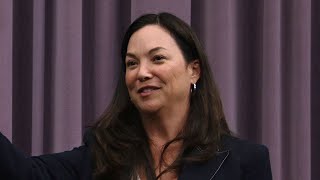
A recorded talk about resilience. No speaker is identified in the available information, and no specific claims, stories, or examples from the content are provided to summarize.
Chapters
Who you are defines how you build. I'm really excited to talk to you about what I learned. You know, if I go back to 1989, the fall— I know people are like, 1989, oh shit, that's a long time ago. 1989, in the fall, I was a freshman at the University of Michigan in Ann Arbor. We were not as well dressed as you all seem to be because it was cold that time of year. We would be in 4 layers of clothing. Sometimes it could snow in October. A few of you are nodding, might have been to the Midwest before. And we didn't have classes on entrepreneurship back then. It wasn't really a thing. I mean, you had classes on business, you had classes on calculus and psychology and all the normal freshman weed-out classes that you took. So I first just wanted to recognize Stanford and many of the great universities that I've been involved in for investing in this concept that is entrepreneurship because the world needs more entrepreneurs. The world needs more people who are willing to look at a set of problems that maybe are becoming more important than we think they might be, maybe have just not been well solved in the past, or that maybe by solving we could change the world together. And so I'm thrilled to see that this is a well-attended popular course as was advertised to me when I was asked to be here. So I appreciate you all making the time. I wanted to start and just talk a little bit about how you get from 1989 Econ 101 in Ann Arbor, Michigan as a freshman to CEO of public SaaS company in Silicon Valley because it's probably not as straightforward as you think. I mean, when I finished high school and got to college, I thought, well, I'll make sure I pick the right major and I'll take all the right classes, I'll get the right grades, then I'll get the right first job and then I'll get the right second job and then I will obviously be a CEO one day. Like, that's how it will work. My journey or adventure as I like to think of it couldn't have been further from that. So I am, I'm sort of the epitome of middle-class Midwestern average. I'm 5'4", that's the average height of the North American woman. I got average grades. I went to— I took classes in the liberal science and arts sort of part of Michigan, which is pretty average. It's what you do if you don't know what your major is going to be. I was a reasonably good student, but not great. As proven by my average grades. And I came from an average family, which at the time there were 4 kids in my family, that was pretty normal back then. So nothing exceptional at all about me. And when I think about how someone like me gets from there, you know, 1989, sitting in a room like this with, by the way, no laptops, no iPads, number 2 pencils and notebooks, to where I am today, It starts with grit. And so how many of you read or at least looked at this book by Angela Duckworth? I sent— yeah? Oh, good. Smartest people in the class. This is a great book. I don't know Angela. I'd like to meet her someday. But what I love about this book is it's a book about the science of perseverance. And if you want to be an entrepreneur, if you want to disrupt a category or disrupt a company or business, if you If you want to create something that doesn't exist in today's world or change something that you don't think that works about today's world, then you better be prepared to be tested over and over again. And I don't mean hard freshman weed-out classes. I mean people testing your conviction time and time again, testing your vision, testing your philosophy, testing your approach, your tactics, the people you choose, the category you choose. What you choose. And what I like about Angela's book is it's pretty straightforward discussion on the difference between being hardworking and being smart and being resilient. And when I think about our employees at PagerDuty, we have about 700 employees. When I think about the employees that really stand out, when I think about the leaders that I know in and beyond Silicon Valley, in tech and in, other categories or companies that I'm affiliated with. I'm on the board of Estée Lauder, for instance. I think about Fabrizia Freda or William Lauder, like what's different about them? It's that no matter how many times people told them no, people told them that was a terrible idea, people told them they were a failure, people told them they didn't do well enough, etc., they bounced back bigger, better, stronger. That's grit. And I'll give you another example. People who are not gritty, People who are not resilient will have a bad day. Any of you have a bad day today? Yeah, it's okay, like we all have bad days. They have a bad day, and if you're kind of a normal average person, you'd say, "I've had a terrible day. Geez, I really hope tomorrow is a better day. Please, Lord, give me a better day tomorrow." A gritty person will say, "Damn it, I am going to make tomorrow a better day. I resolve that tomorrow will be a better day." Gritty people own their own destiny. Right? They plan, but if the plan doesn't work out, you recover, you learn, you figure out what didn't go well. What am I responsible for that didn't go well? What do I need to do differently? How am I going to execute a different plan tomorrow? Right? But you don't give up. I think that's a really important part of it. So I hope you'll find an opportunity to read this book because There's a lot to like about it and it's very instructive. And I don't think that you have to be born with grit. I think you can learn to be resilient. I think you can teach yourself to apply a growth mindset. How many of you know what a growth mindset is? Okay, see that's a big Silicon Valley thing. Everybody knows what growth mindset is. I didn't. I was raised in an environment where it was more important to demonstrate that you knew the answer or try and pretend you knew the answer as opposed to ask the questions and learn the different ways you could answer a question. And so when I was younger as a leader, I would often fake it. You've heard the term fake it till you make it? Problem with faking it is you don't learn anything, right? Because everybody thinks you know everything. So now today, I'm the dumbest person around the boardroom. I often ask the most questions. I try and ask the dumb questions that I know people are afraid to ask. That's a growth mindset. It also demonstrates to other people that learning out loud is okay, which I think is super important. So when you think about, okay, what does it take to get from 1989 Ann Arbor to CEO of SaaS company, let me tell you a little bit about that journey. So I wasn't really sure what I wanted to do. I kind of thought I might follow in my father's footsteps. My dad was a hospital administrator. And so I kind of had this plan. I would go to school. I'd do the pre-med thing. I'd get my MD. Then I would get my MBA. And then I would start running hospitals. I got through like the first 2 science classes freshman year and was like, this medical thing doesn't seem like it's going to be a good idea for the next 8 years. I don't think I'm good at this. I don't think I belong in this community. Like, I got to come up with something different. So I went back to my counselor and said, I got to find a new major. They're like, well, what do you want to do? I'm like, I don't know. What should I do? They're like, I don't know. You know, you got to figure that out. Well, what do you like to do? So that was my kind of first lesson in like, this thing's— this plan that I had, it's not going to work. We got to come up with a new plan. So that person helped me pick a few different classes and I started to realize I really liked psychology, but I couldn't figure out how I would turn psychology into a career that was meaningful for me. And I really liked business. I liked econ. I liked— there was this class called Calculus for Business, which was basically business-associated math. It was awesome because everything was story problems and I understand story problems. So it was a great opportunity. And I realized like, is there a way I could put psychology and business together? So my undergraduate major ended up being organizational psych and business management. Turns out really good areas to study if you're going to boss people around for your entire career, right? So now, like, I've basically taken this interest in, you know, that I studied in school on how do groups work, what are the dynamics of a group, how do you lead people to do things that they otherwise might not do on their own. What is it that makes certain teams more successful or less successful than others? That has actually become my job. My major actually sort of became my job in a very roundabout way. I still thought I was going to go into healthcare administration after college. And I played golf at the University of Michigan, quite in an average way. I was not the best golfer. I was an average golfer on the golf team. Any student athletes in here? We got a couple up the back. Awesome. One over there. So for those of you who haven't been a student athlete, basically you're going to undergraduate and doing a full-time job at the same time. Right? And you're squeezing in practice, training, sports, et cetera. What playing golf and going to school at the same time taught me how to do was manage multiple priorities. And again, I didn't know that I was getting training for being a leader, for being a CEO at the same time. When I got to my senior year, I sort of thought, okay, geez, I better apply to that master's in health program or whatever that's going to get me into healthcare. 'cause otherwise I don't know how I'm gonna get a job in doing that. And so I did that. I did all the right things. I filled out the forms, you know, did my interviews, got an opportunity to go into a master's of public health. And then a really wise professor that I am grateful for to this day said to me, are you really sure? Like, why do you wanna do that? Are you really sure you wanna do that? I couldn't give him a concrete answer. It was like, well, I, It's always what I wanted to do. Well, why? You ever heard of the 5 whys? Simon Sinek's 5 whys? When someone, like, if you're trying to figure out if you really understand something about yourself or something about somebody else, ask them why 5 times. Well, why do you want to go into healthcare? Well, because it's something I always wanted to do. Well, why did you always want to do it? Well, because my dad did it and I appreciated what he did as a career. Well, why did you appreciate it? Well, you get further and further and suddenly I realized there wasn't a lot of depth sitting behind what I thought my life's calling was. So this wise professor said, look, why don't you just interview with a few companies that are coming to campus and kind of get— it's good practice anyway, get the hang of it and see if after you do that you still want to go get your master's in health. So I was okay. So I interviewed with Procter Gamble. They were my first on-campus interview. They were apparently very picky. I didn't even know I was invited to interview with them because they thought I had some kind of leadership quality or something. And in talking to Procter Gamble, I was entirely like impressed and besotted by the people that I met. Really bright, super capable, high integrity, very articulate, knew their business, super like charming and engaging. I thought these are the kinds of people I want to be around. The same week, I went to orientation for this Master's in Health program and met people who were really quiet and really studious and very not so engaging and kind of self-centric. And I thought, okay, there's this pot of people over here and there's this pot of people over here. I fit with this pot. So I decided that I would continue the interview process with Procter Gamble and accidentally landed myself a job as a person in their leadership rotation in, I guess this was now 1993. It was quite possibly the best accident in my life because Procter Gamble is what I think of as a leadership academy. So back then, you had companies like General Electric, IBM, P&G who would spend between $250,000 and $500,000 a person training you to be a manager, teaching you how to manage people, how to lead people, different leadership models to learn and try and practice and demonstrate yourself. And so that was almost 20 years ago, maybe 30 years ago, long time ago. And I sit here today in my day job using lessons that I learned at Procter Gamble in 1993 to 1998, right? Because they took the time to educate me. And the reason I point that out is you may all go off to start your own companies. But if you don't or if you have time to intern between now and then, you should really think about working with a company that will build and develop your leadership skills, that will teach you what a good manager looks like, that will help you understand the fundamental basics that you need in order to be a great builder, a great leader of people, a great manager. And by the way, there's a difference between a leader and a manager. Right? Because it's not easy. It doesn't come easy to everybody. The growth mindset will get you part of the way. But if you can get somebody who knows how to formally instill fundamental foundational skills in whatever area you want to go into, it will give you a massive head start that will stick with you your whole career adventure. So at P&G, I learned lots of things because they have you work in sales, they have you work in marketing, you work in R&D and logistics and— all kinds of places. I was 21 selling Pampers for a living. I could barely even hold a baby and they're like, yeah, you could— can you work on the Pampers brand? I'm like, I don't know anything about diapers. And it seemed like a terrible idea at the time, but it's where I learned about brand management. It's where I learned what a leadership brand looks like. It's how I understood the hierarchy of needs of a consumer. It's how I learned to deal— work in a very competitive environment because Procter Gamble and Kimberly-Clark are like, I don't know, like deadly enemies, right? I mean, it's like the nemesis and the arch nemesis between the two of them. And when you're starting up a company here, when you're innovating, you often are the first person into a category and you have no competition. And if you're successful, you'll build a great category that other people will follow you into. And that transition of being uncontested to being contested can be a really hard one. If you've never built, delivered products into market, dealt with customers in a highly competitive environment. So again, like a really great foundational education at P&G. You know what the problem with P&G was? It was not a technology company. The pace wasn't fast enough for me. I learned about myself in my second job that I really love a culture of innovation and a culture of experimentation. I'd rather like have people not see the skid marks when you go off the cliff. So to speak, than do something incrementalist week after week, month after month, day after day. So I left P&G to work at my first software company, which was a company based out of Dallas, Texas called I2 Technologies. And I2 was a supply chain automation company. It was doing what a lot of companies do. It was taking an archaic analog process and automating it. So if you think about supply chain, like you've got a whole bunch of different organizations that have to work together to get from raw materials to the sweatshirt that you're wearing today, right? And in the old days, that would all happen inside one company. Now it happens across big supplier and customer networks within a business. And so at iTunes, one, I learned how to work in a very disruptive company, in a company that was changing the rules of its category. And we were basically taking business from more traditional manufacturing providers out there, more traditional manufacturing software companies. And I learned how to get over fear because when ITU hired me, they thought they were getting a marketing expert from Procter Gamble. I was like 12 years old. Most of the time I didn't know what I was doing every day at work and I was the most knowledgeable marketer in the place. And the next thing you know, I'm running marketing for a public company, right, which is kind of like this holy shit moment every morning. You know, they're like, you literally— people, you've probably all heard of imposter syndrome. Like for me it was worse than imposter syndrome. Like I was like, first of all, these people must be idiots that they don't know that I don't know how to do this job. And yet— so that in and of itself was a little frightening. And then at the same time, like, and yet they're still trusting me to bumble along and figure it out. Right? Took me a little while to get over that fear. One of the ways I got over that fear was to take a lesson I learned from Procter Gamble and apply it there, which was surround myself with the best people I could find. Every person I hired into that team was better than me, smarter than me, more experienced than me. Most of them were older than me. I think I remember looking around the management table and every person in that room was older than me and had been at their particular job for far longer than I ever had. And I would just have to wake up in the morning and give myself the sort of courage and be perseverant to continue to lead them even when they push back. So, Jen, you're asking me to do this, but it appears you know nothing about this particular area, demand Jen. Why do you think I should do this? Why? And I'm like, by the way, with adults in the workplace, because I said so doesn't work well. It doesn't work well with a 14-year-old anymore either. So I learned a real lesson in leadership in that job because I was constantly challenged by my team. Constantly challenged. But I succeeded because of my team. And so if you take nothing away from that stint, it's the people who you surround yourselves by are the key to your success. Right? And the weakest link, the lowest common denominator, will also define where your ceiling is. So to speak. So I think often people will— there's an old saying, the B team hires the C team. That's because if you're threatened or worried that if you hire someone who's as good or better than you, they're gonna hire somebody who's not as good as them, and they're gonna hire somebody who's not as good as them, and the next thing you know, you have a suboptimal team in a big way. If you have the courage to surround yourself with people who are better than you, with people who are smarter than you, The chances are you're going to get better. Right? It's— I mean, and I've seen this play out time and time again over the last 30 years. So that was a huge lesson for me. I also learned there that winning isn't everything. Because there was a period of time where we were winning, but in a way that felt out of control, in a way that felt potentially sometimes lacking in integrity. And back then you could announce a software product. You could say, we're building this amazing whizbang widget thing and put out a press release, but it didn't have to be delivered for days, weeks, months, and you would ship it on tapes. This is a long time ago. You would ship it on tapes, the customer would install the tapes, and then they would determine whether the product did what you actually said it was going to do. That's not how SaaS is now. In software as a service, It's like Uber. You try the app, it either works or not. You can tell if it works or not. You decide if you're going to use it again. Right? But back then, there was a little more wiggle room. And I felt like we were often getting over our skis. That we would announce this big, great vision. This is where the term vaporware came from. You ever heard of vaporware? Came from this idea of people painting a picture of what a product could do, but not being able to truly deliver on or demonstrate that the product actually did that. And I wasn't sure if we were starting to kind of come up against that edge. And so I decided I needed a change. And I had kind of worked nonstop for, I don't know, a decade at this point in time. And decided I needed to take a break. And so I did what everybody does. I walked in, quit. Walked in on a Monday, quit my job, packed up my bags, and went to Australia and got into yacht racing. Like everybody does. I had this— little side story. I am a little adventurous. I like to try new things. I like extreme sports, especially those associated with water and frozen water. So I also really like skiing. And so I went to Australia because I asked a few people, like, if you want to learn how to sail, if you want to learn how to race, where's the best place to do it? Where's the fastest, most efficient way to do it? Because remember, my first software job was supply chain, all about efficiency, all about how do I put something in the front, get more out the back, do it in less time at a lower cost. I'm going to do that with yacht racing. Right? So I— the first thing I did was find this happy crew of people with a yacht and I delivered a 28-foot sailboat from the top of Australia all the way down to Sydney over 32 days with 3 dudes I'd never seen in my life before. It's a great way to log a lot of nautical miles, which you need to get your certification as an offshore skipper. Right? So 28 days straight of just sailing out in the wide ocean, That's how I learned how to sail. So I kind of threw myself into it. 3 dudes I'd never seen before, but all smarter than me, more qualified than me, more experienced than me. Right? And there I just learned the love of seeing the land from the water, the perspective that you can get when you zoom out. Right? Sailing is this really interesting sport. Any of you sail? I saw a rower. There we go. What I love about sailing is it's a combination of engineering and physics and teamwork and nature all at once. And if you're on a great yacht, skippers on great yachts, on performance sailing yachts, there's no yelling. Everybody knows their role. Everybody knows what to do no matter what happens, whatever unexpected thing happens. And so I'm in Australia and I'm yacht racing and I'm doing all this stuff. After a yacht race, I get in an argument with these guys from another boat we were racing against over a ruling call. And that's how I met my husband. And my husband is Australian. He's from Darwin, which is like the northernmost part of Australia. It's actually a territory, not a state. He is truly a frontiersman. One of his claims to fame is he will pick up a mud crab with his bare hands. Mud crabs can clip your fingers and hands off. They're kind of dangerous. But so he and I met. He was living in London. I was living in California. We were trying to figure out like how are we going to make this all work together, right? And we ended up commuting for about a year and a half. We could not agree where to live. He wanted to live in Europe. I wanted to live in California. So we put 3 M&M's in a cup and let a stewardess choose and we moved to Sydney. I'm not lying. This, people, is how big decisions get made. So I moved to Sydney, which again was a great career decision because I learned to see the world through an un-American lens. And by that, I think that when you are— if you grow up in the heartland, you go to school in an American university, you're trained by a stalwart American company, etc., you see the world through one perspective. And it's nationalistic and it's patriotic and that's great, but there's this whole huge world out there. So I ended up spending what I thought was going to be a 3-year trip to like live in Sydney and do some fun job in Sydney. I ended up being marooned on the island for 12 years. It's a good island. If you're going to get marooned, I highly recommend that versus the one Tom Hanks ended up on. But I would tell you that in that 12 years, I learned to see the world through a different perspective. I learned to lead my teams. From the perspective of what does this mean for our global customer base? What does this mean for the culture across our company in different countries? Like if we do this today, what impact is it going to have on the team in London or the team in Ecuador or the team in New York or the et cetera? So lesson there is if any of you have the opportunity to get quote-unquote international experience or what I like to think of as truly global experience, experience, do it. And do it early because the world, the boundaries in our world thanks to technology are going away. But the cultures are still very different. The way a person makes a decision to invest in you, the way a person decides to buy, the way a person chooses a partner, etc., can vary wildly from one culture to the next. So get that experience and don't kid yourself that the country that you're from is the best. 'Cause no country is the best at everything. No culture is the best at everything. And we build great companies and great products by bringing the best of lots of different communities, cultures, experiences together. So that was a great lesson for me. In Australia, I did several jobs. I ended up working for a private equity firm. I started being a board director there. So I took my first board seat in 19— well, 2000. I guess. Being on boards has been a part of my career for a long time. It's really helped me as a leader to always have a second perspective on how to think about the strategy from a zoomed-out position as opposed to the operations and the tactics when you're in it. It's made me a better leader in my operating company, and being an operator, I think, has made me a more productive board member when I'm in a boardroom. When you think about who you're gonna bring into your personal board of directors, or your board of directors if you're to start a company, make sure you look for someone who's gritty, who's failed publicly, who's had rough times because the people you want on your personal board of directors in your boardroom are people who know what it's like to make a mistake and will have empathy for you as an entrepreneur when that happens and will not panic when the shit hits the fan. And it will, I promise you, it will absolutely. So I think thinking about, again, who you surround yourself with, choose your partners wisely. And if you want to build resilience and perseverance, surround yourself with people who have already demonstrated that they are resilient and perseverant. Zach Nelson was the first independent director we added to our board when we were getting ready to go public. Zak was one of the co-founders and CEOs of— or the CEO of NetSuite, which is one of the original cloud companies out there. He worked at Oracle for many years. He and Evan built NetSuite from nothing through over the course of 18 years to a public company and then it was acquired by Oracle a few years ago. Zak has seen every up and down that you can imagine in business. It makes him a phenomenal board member because I can come up with some disaster And he's seen some flavor of it. And he stands back with an even perspective and says, okay, well, have you thought about this? He doesn't go, oh God, that's awful, what are we going to do? He goes, okay, hmm, so not a good day? And then we work through, okay, what are we going to do? Like, what do we do? How do we put the next— how do we put one foot in front of the other after this disaster has happened? So surround yourself with people who have seen who have overcome obstacles, who have had to push themselves through walls to get to an outcome. I left Australia in, I guess it was 2013, to come back to the US. I had been the COO of a venture private equity-backed software company that was acquired by a large company in Europe called ABB, and I wanted to get back into growth. iTWO was a growth company. I wanted to get back into building. So I came back here and I took a public company private with a private equity firm called Thoma Bravo. And that enabled me to learn a different asset class, a different investment style, a different way of thinking about how to optimize a business. So private equity investors, they sort of focus on profitability and cash flow as outcomes. Growth investors, they're focused on growth, pretty straightforward. Venture investors are looking for high growth. You run a company differently depending on what you're optimizing for. My private equity investor in the case of TB, they were fantastic at driving rigor and inspection in everything we did. It was a little bit like having an athletic trainer that you hate because you go work out with them and they make you throw up and they cause you to feel a lot of pain, etc. But then you come back onto the field the next day after training with them and you're faster and you're stronger and you're better. So I learned a lot of operational rigor and a lot about discipline and cadence when I worked with Thoma Bravo. That company was acquired in 2015. And so in 2016, I spent time talking to, I don't know, 51 companies. I probably met with over 150 investors to find my next thing, and that was PagerDuty. And PagerDuty, has truly been a labor of love. PagerDuty was 170 people doing about $40-50 million in ARR, annual recurring revenue, when I joined. We're now public. We're nearly 700 people and doing a lot more, more than $100 million in revenue. We were the first enterprise software company to go public this year. So we opened this IPO window. That you are seeing and continue to perform, I think, very well for a company of our size. What I love about PagerDuty is PagerDuty brings together my experience from all of these different adventures that I've had over my career. So we build products for developers and IT people, and we offer them direct to those people. So we don't build a product that a CIO buys and then distributes to everybody else like they do with ERP. When a developer or an IT person needs our software, they go online and they try it and they just start using it. They can swipe a credit card to buy it. So it's more like a consumer-marketed product or service. It's more like a consumer app. As it grows through an organization, because what PagerDuty does is help people manage unplanned work. It uses machine signals, it captures machine signals from anything that's software-enabled. Detects that there's an unexpected challenge or opportunity happening and routes an insight, an action to the right set of people, the right teams to work on that right away. So how many of you have been online trying to buy something and you get the spinner of death and can't complete your transaction? I mean, I have left abandoned shopping carts all over the world. There's a wasteland of abandoned shopping carts with my name on it because a consumer will only give a brand 1 to 3 seconds to get the experience right. We all have very short attention spans. When it doesn't work, they leave. And 90% of them will not come back. How many of you go back and actually check out those abandoned shopping carts? Nobody. So what PagerDuty does is help close the gap between that 1 to 3 seconds when things aren't working very well to the 4 hours on average that it takes the typical IT organization to identify and fix an issue. And that's important because a typical retailer, a minute of disruption, 1 minute costs them $200,000. And I don't mean the website's down. I mean it's just not working the way it's supposed to. It's just a little disruption, distraction, et cetera. So one of the great milestones in my career has been the process of taking PagerDuty public. We were not excited about that because it's the be-all end-all. We're excited about it because we were able to demonstrate that we could perform with the best of the best in software as a service. And our financials and our outcomes are benchmarked in the top 5-10% of all SaaS companies on the planet. And so we set a very high standard and we wanted to demonstrate to the market that we could deliver on that standard. But it's also a big highlight for me because we did it with one of the most diverse inclusive teams in the tech industry. So my leadership team is gender balanced. Over 60% of my team is born outside the US. We're balanced in terms of where management roles go in the company. And it's very different than it was when I arrived at PagerDuty. My team used to joke that before I got to PagerDuty, the way you would describe the culture was dudes from Waterloo. Because it was largely males that had gone to school at Waterloo University with our founders. And so to drive that kind of change, to build an inclusive culture where people feel like they have an equal opportunity to kill it in their career at PagerDuty is very much about being intentional, about setting the tone from the top. So again, as an entrepreneur, you have an opportunity to set the tone from the top and change the way companies are built and run. So like just delivering great performance, great financial performance or great product is not enough. It's how you do it. It's the values with which you participate in a market. It's the values with which you treat your people every day. And culture is defined by the lowest level of behavior you accept, not by the highest standard you set. So it means that you're going to have to be gritty and perseverant and resilient when people say, oh, we've got to hire this rock star person and we don't need to see any other candidates. Well, wait a minute. I'm not going to approve a final hire unless you can show me that the candidate, the final candidate slate was balanced. And that the interview panel that met these people was balanced. Because if you have a panel of 4 final candidates and one is an underrepresented person, they have a 2% chance of getting that job. If you have a panel of 4 people and 2 of them are underrepresented, those underrepresented candidates have a 51% chance. Of getting the job, providing the interview panel is diverse. So if you have an underrepresented candidate but everybody on the interview panel is in the majority, they're very unlikely to get that job. So setting the tone from the top, living our values every day at work, being unapologetic and outspoken in the market about what we think is important in terms of not just what you do, But how you do it is a big part of who PagerDuty is and a big part of why I like being a CEO. I'm going to sum this up because I want to make sure we have time for questions. But so just backing up a little bit, there's a whole bunch of paradigms out there that say in order for you to do this, you have to look like, be like, act like, come from this. Throw that out the window. It's garbage. Every single one of you in here can do anything that you want to do. If you surround yourself with the right people, if you get yourself the right training, if you are perseverant and when people test your conviction and they test your vision, you keep bouncing back, you keep going back at them, et cetera. I mean, people test my conviction every day. I set a vision 3 years ago for the company. I still got people like, we sure we still want to do this real-time work thing, this digital operations management thing? We sure? Yes, I'm sure. Really? Yep, still sure. Don't you think we need something new? Nope, don't need anything new. Still the same one. Every year I get up at our annual industry conference and the first thing I do before I write my keynote is look at what did I say last year and what did I say the year before and how do I make sure we are consistent and we continue to build on the vision we have because it's a damn good vision. No one's been able to beat us at it yet. But you're going to be tested and be ready and accept it. It's part of the gig, right? And then the last thing I would say is if you want to be a CEO, if you want to kind of run your own thing, remember that it's a lonely job. It is. And again, finding that personal board of directors, finding the people that you feel like you can confide in, that you can share your worst fears with, that you can share your mistakes with before you make them. Most of us know when we're going to make a mistake, believe it or not. You start to feel you got this kind of icky feeling in your stomach about a decision that you're making, about something that you're doing. You just have this feeling that like, oh, it's just like an instinct. Number 1, listen to that gut instinct. It's probably right. Believe in your gut. But if you don't and you go through with it, like air it out with somebody. Like, here's what I'm thinking about doing. I just want to check it with you. I have this funny feeling that it's maybe not the right thing to do. Maybe doing that before you press go would be a good idea. So I think that's a snippet of 30 years, right? But how you go from being kind of average, pretty down the middle of the fairway, to pretty extraordinary set of opportunities. That didn't look anything like the plan that I had for myself in 1989, sitting in an auditorium like this in Ann Arbor, Michigan. And the last thing I would say is, when people ask me, what is it that's made you successful? Like, how did you get here? I would attribute it to two things. Being super open-minded. Like, there's a lot of people tell you, you should do this and then do this and then do that after that, et cetera. Like being super open-minded, open to this sort of odd-sounding adventure or role that maybe no one else has done before, et cetera, but open to trying something different, open to trying something new, right? Being willing to take risks, calculated risks. I've taken a lot of risks in my career and the vast majority of them have paid off. And again, surrounding yourself with the best kind of people and never ever ever give up. No one wins by giving up, ever. So that grit, that resilience, that perseverance, keep coming back. If today is a bad day, resolve to make tomorrow a much better one. Just a sec. Okay, so I'll open it— that's it. Thank you. So any questions? First hand up in the back on the far end. I had a question about you. You were talking about how you were hiring people that are more experienced than you and older than you. How did you make decisions on agreeing or disagreeing with them? Like how did you challenge someone that has more experience than you and you were disagreeing or the other way around? OK, so I think the question is, if you've hired people who are more experienced than you, then how do you challenge them? And if they're the expert, I think what you're saying is, and you don't agree, how do you challenge them and how do you manage that conflict? So one of the other books I recommended for you is The Five Dysfunctions of the Team. And one of the dysfunctions is fear of conflict. And I think one of the other ones is a lack of trust. So I think any relationship in a business starts with trust. Like first of all, if you've convinced that person to join you in your mission, you've already created some basis for a trusting relationship. You must be aligned in some way on the vision, but start with reinforcing that alignment. Like, hey, so here's where we said we want to go. You agree? Yep, I agree. Absolutely. Now, you want to go this way. I want to go this way. Help me understand why you want to go this way. So seek first to understand their position, because most people, if they have a strong point of view, One of the things they really want is to be heard. Now explain why you have a difference of opinion and spend time working through that conflict. Don't avoid the conflict. Like, spend time hashing it out. Go through the 5 whys. See if you can get to a middle ground. If you can't get to a middle ground, which by the way, I like to get to a middle ground. I like my team to come to the answer without me if they can. But if they can't, Then you decide, you say, look, I've heard everything you had to say. I think there's merit in some of the things that you have to say, but I feel strongly we're going this way. We need to disagree and commit. And like after a certain point of time, you gotta end the conversation and you gotta go. And what you're really looking for at the end of that conversation is that commitment. Other people will refer to it as agree to disagree. I don't like agree to disagree because there's no commitment in that. There's just a confirmation that we don't agree. Think about how you get to disagree and commit. But I think if you listen and you understand their point of view and you can articulate why you feel strongly about your point of view, you can get there. You mentioned the importance of grit and resilience, and obviously that becomes self-evident if you know for a while, but how do you assess that in someone when you're, say, interviewing them for a hire or for, say, a board seat? Got it. So I think the question is, how do you assess grit in a new hire? And lucky for me, I have this book here. Chapter 4, How Gritty Are You? OK? And there's actually a little self-assessment in here that I really like. 'cause a lot of people think they're gritty. There are 10 questions that you answer, and I'm gonna read them to you really quickly. And the idea is, the way you're supposed to answer this question is to rate yourself 1 through 5, 1 being very much like me, 5 being not at all like me. And I'll just give you an example of a couple of them. New ideas and projects sometimes distract me from previous ones. Very much like me, not at all like me. I am a hard worker. Very much like me, not at all like me. I finish whatever I begin. Hmm. So talk to people about completion. My interests change from year to year. So here's a great sign of a lack of grit. I get resumes that come in all the time, senior candidates, junior candidates, entry-level candidates, and they will maybe have their average tenure at a job is 18 months. Won't even look at it. If you can't stick with something for more than 2 to 3 years minimum, I'm not interested. Because what are the chances you're gonna stick with me for more than 2 to 3 months minimum? It takes you 6 months to find a bathroom in your new job. It takes you 12 months to start to demonstrate you might probably add value. At 18 months, you're probably adding value. If you've left the company after 18 months, that means you were looking for a job at 12 months. I'm not interested. So also look at people's track record. Have they been able to demonstrate that they have stuck in something long enough and persevered through obstacles? In one of our organizations, we have a lot of ex-college athletes. And what I like about them is they've all been injured. They've all lost. They've lost championships at the last minute. They've been kicked out of teams, et cetera. They are gritty and resilient in most cases. And you can usually— Teach them a lot of the skills that they need, but it's harder to teach that resilience. One more. Okay, so I really appreciate that you want gritty people who fail, but like let's say you have a job for 10 years and you get fired and you're in college as a 30-year-old freshman. Just saying. Just saying. Hypothetically asking for a friend. How do you sell that failure to show grit as opposed to when you're presenting? You sell— how do you sell a failure when you're trying to get a new job? It's a great question. I do want to take one more question if I can after this because I didn't get a question from a woman and I need a question from a woman. How do you sell that failure? You start with what I learned. So what I look for in candidates is show me what you learned. And your last job. Demonstrate your ability to learn because if you're at a company that's growing faster than 20%, 30%, that job is changing every 6 months. The company is changing every quarter, right? So start with, you know, I like start with one, taking responsibility. Here was the opportunity I had in front of me. Here were the things that worked against me, but here's what I did wrong. Like here's what I screwed up and what I learned from that is this. And what I do now is that, right? But I love people who own up to their responsibility in their failures, who can describe what they learned from their failures, and can demonstrate that they're willing to learn again. I had a person come in, a woman that I interviewed, and she's like, yeah, I got fired. I mean, it was devastating. And I really should have been fired. Looking back now, I would have fired myself, she said to me. And she said, the thing is now, like there's nothing you can't give me that I won't see through. I was like, when can you start? Because as a CEO, one of the things that happens to you is people like to delegate all the problems up. And I'm sure you've heard from previous bosses or your parents, like don't come to me with a problem, come to me with a solution. Strangely, people still come to you with mostly problems when you're the CEO. And it is so refreshing. When you meet a candidate that is very solution-oriented, that's battle-tested, right? That is unflappable, that knows how to do their own laundry. And that sounds ridiculous, but you'd be surprised at how many millennial employees I have that have never done their own laundry. Like, life skills matter, people. They really do. But I think it's just really important to demonstrate that you took responsibility for that and you can learn from it. So one more question. From a female. Can you tell us about a decision you made that ultimately went wrong in the optics of the company? Totally. Tell me about a decision that you made that went horribly wrong and what did you do about it? I made a bad hire. So you come into a company, there's a lot of— my company is backed by some very well-known investors. I felt a lot of natural pressure to sort of get everything right. I'm also a little bit of a recovering perfectionist. And I hired someone who looked really great on paper. Like fit to the recruiting brief like nothing you've ever seen before. Charming, effusive, really likable in the interview process. Within 90 days, I knew something was not right. Within 6 months, it was causing positive harm within our team culture and our team environment. And I was miserable. Like, it was bringing out the worst in me, just the issues with this particular person. And I waited too long to make the decision to move because I, one, didn't want to have to go back and recruit a new person for this job. Two, we felt like it was a really important job, and I didn't want to admit the mistake. That I had made and the best thing I ever did was pick up the phone one day and say, I've got to move this person out of the business. And when I say I waited too long, one of the things that I did was I tried to fix it. I tried everything. I mean, I tried everything short of bringing a therapist in every day at work to try and make people feel better. And what it really was, was as soon as that person was removed from the situation, that person was happier and the team was happier. And both people went their separate ways performing more effectively. But I had to own up to it. I had to call my board and say, I've made the mistake. It's not a good hire. We're going to have to do something differently. I had to fill the role with an interim person. I mean, I had to hustle to cover for it. It could have been a disaster. I suppose the piece of good news coming out of it is I got far enough ahead of it that it didn't become a disaster. And I think sometimes our fear of failure will stop us from taking the action that we need to take to get the company to the right place. But one of the first things I did was call a couple of my board members and say, this is a problem. This is what I think I'm going to do. What do you think? And lucky for me, I've got gritty, perseverant, resilient board members who've been through this before. And they're like, yeah. One of them said to me, you know what, Jen? If you can get 60% of your hires right, that's pretty good. I think that was John Chambers' average. That was OK. And I was like, really? Only 60%? OK, I'm not doing so bad. I'm at like 80%. So that's an example. So look, I thank you. Thank you.
More from GHION.AI


O processo de reconhecer limites, mesmo quando a vida parece exigir sempre mais.





Depois de tantas histórias, aprendizados e pausas necessárias, o @interior_iza está de volta



