Reversing Poverty By Giving People Work [Entire Talk]
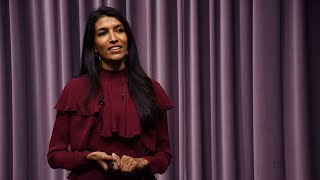
This content was created by GHION.AI . This content was uploaded by GHION.AI . This is a YouTube video titled "Reversing Poverty By Giving People Work [Entire Talk]" created on January 31, 2018. It appears to be a talk focused on addressing poverty through employment opportunities.
Chapters
So you guys are going to have to bear with me because I'm a little bit emotional today. The first reason is that as I was rounding the corner on Via Ortega, I rounded the corner on where Panama and Via Ortega, or Panama and Campus Drive connect. And that's actually the building where I incubated Samosaurus 10 years ago. This is our 10th anniversary year, so it's really exciting to be back here. And sadly, my car hasn't been upgraded much in the last 10 years, which you'll learn. As a social entrepreneur, you get a lot of the moral benefits that regular entrepreneurs don't get, but you don't get a lot of the cash benefits. So I'll talk to you about that. The second reason that I'm a bit emotional today is that this is the first talk I've given in two months. I had a series of emergency surgeries in December and first World healthcare, access to first World healthcare is one of those things that will really make you realize how lucky we are. And also for me, made me reflect a lot on the work that we do addressing extreme poverty. We work at samasource and at Luxmi on the issue of extreme poverty. And though the world, in many ways, is getting better, despite the headlines about terrorism and climate change, the world, for a lot of people, has gotten dramatically better in the last few decades. We've seen a dramatic decrease in the number of people living in poverty globally. And yet still we have a world in which about a billion people are living on less than a dollar a day. It's hard to put that in real terms. So let me humanize it a bit for you, and I'll tell you how it relates to my own struggle. What this means is that we still have about 300,000 women dying in childbirth, 300,000 avoidable maternal deaths. The World Health Organization estimates that 99% of these deaths are sold solely due to poverty. We live in a world in which close to a billion people live without access to clean water, and about two and a half billion people live without access to basic sanitation. The surgery I had was an emergency. I was actually giving a talk at the slush conference in Helsinki and felt a pain in my abdomen, was rushed to the ER, and had I not been operated on within about 24 hours, which had I been in northern Uganda or had I been a citizen of many developing countries living at this income level, I surely would have died. I found that out from the doctors that gave me the surgery. Then I had this infection and I was hospitalized for two weeks. And luckily, my travel health insurance covered the entire bill. But for so many people living at this income level, one catastrophic health event will catapult the entire family into extreme poverty and debt or lead to death. So this is what life is like for a billion people around the world. Imagine that this is completely unacceptable in 2018. I felt that it was completely unacceptable 10 years ago when I decided to devote my life to this. And I'll tell you a little bit towards the end how I got started in this industry, but really briefly. I was living in Southern California as a high school student. I got a scholarship from, of all places, a big tobacco company called Lorillard for community service in high school. And I decided to use it to go and do a volunteer exchange program. I was not so much motivated by idealism as by the idea of leaving school and having an adventure. So I graduated a semester early, and I went to Ghana in West Africa, and I volunteered as an English teacher. And I became really close to people who lived at this income level. And I saw so much avoidable tragedy that as an undergrad, I couldn't ignore it. I kept going back to Africa, and I decided I wanted to do something about this and make a difference in my life through my career. So that's how I ended up here. So these are the stats, right? We have a billion people living in this kind of poverty. And just to give you a more human picture of this, this is someone who used to live at this income level, Ken Quihara with his little daughter Rosaleen. I met Ken about four years ago in Mathare, which is a really awful slum in Kenya where about half a million people live. That's what Mathare looks like. And Ken was supposed to be one of the success stories. Ken had actually gotten lucky enough to get a scholarship to a boarding school in Kenya. So he had graduated with top marks from this boarding school. And you would assume as a Westerner, that after this, Ken's life is secured, Right? He's going to go to a good college. He's going to get a job. He and his daughter will live a happy life. But Kenya faces 70% youth unemployment. Many of the people living at a dollar a day are actually working full time. This is hard to imagine. We think maybe if you're not making much money, it's because you're sitting around and eating coconuts or something. But the reality is that a billion people work full time and still earn less than a dollar a day. Ken was one of those people, after he finished high school, worked really Hard managed to get the scholarship, gets a diploma. No one offers him a job. It's really tough if you come from a poor background and a poor country to get into the formal economy and get an office job. So Ken was stuck going back to the informal economy. He moved back to the slum. And he made a living picking bits of plastic and metal from those junk heaps that you see and selling them to the local recycler, which made him about a dollar a day. Later, he ended up boosting his income. Many of the young men in the slum, young men and women, are incredibly entrepreneurial and run lots of side hustles. So one of Ken's side hustles was actually brewing a kind of moonshine called Chang'. A. And what you see here in those barrels are these guys brewing Chang'. E. Now, initially I thought this was kind of a fun story. Here's this guy selling bootleg liquor to make some good money. Until I heard what Chung A does to people in the slum. They actually mix it with kerosene. And Ken told me that people drink this stuff to forget themselves. This is what people are doing now to earn a living. People working really hard, People who speak the Queen's English, like Ken, probably better English than I do. This is a waste of human talent. This is a massive waste of human talent. I think that's actually the biggest problem in the world, is that we're wasting the most important natural resource on the planet, which isn't gold or diamonds or lithium. It's the talent at the bottom of the pyramid. Now, what is our approach typically to helping someone like Ken in this horrible situation? Well, it's charity. We think life is going to be better for Ken if we build him a school or if we build him a well, if we send food aid, if we send shoes and supplies. And this way of thinking actually started in an unusual way. It started the era of international aid after World War II. It started during the Marshall Plan. The term care package. How many of you have received a care package? Do people still do that in undergrad? Okay, a few who have really sweet parents. Back in my day, when I was an undergrad, people would get care packages from their parents. And I didn't know that the term originated after World War II, when Americans would send food aid to poor Europeans who were rebuilding their countries. And these packages came, they were called care packages. It's an acronym for a non governmental organization that got stuck. Started after World War II, during this era when we were rebuilding Europe. Now this was initially meant to be a short term measure. Right, let's send food to Europe, let's help rebuild these countries and then we'll stop needing to send food. They're going to be able to take care of themselves. But what started as a temporary stopgap became a permanent industry. And after Europe started rebuilding itself, these organizations which had allocations from Congress, started looking at ways that they could send food aid to other countries. And the modern era of international aid began. We sent billions of dollars in food aid and grain and other supplies to poor countries over the years. We've transferred a trillion dollars of development aid from rich countries to Sub Saharan Africa alone in the last 60 years. And yet real incomes for the poorest people in Sub Saharan Africa have remained flat. Something is really wrong with this picture, and I argue, and many social entrepreneurs argue, that there is a much better solution and that's to move away from traditional charity. What often makes us feel good, but doesn't result in long term good outcomes for the people we want to help. People like Ken, and think about ways that we can empower that talent at the bottom of the pyramid and, and give work instead of giving aid. This seems probably really obvious to you that if it's possible, why wouldn't we give someone a job? But you would be shocked at how much our thinking, I think, has been shaped by the traditional charity model. And how often we do what feels good, what might make us get a little dopamine surge because we're giving someone a handout and we see a smile on someone's face, then what actually does good in the long run? And we now have increasing amounts of data that the best thing to do for low income people is not to give them stuff, but to ensure that they have income. There have been a number of studies that have shown that when we give poor families income, they tend to spend that money on all the right things, on exactly the sorts of things that the most successful aid program would design. Especially if we give that income to women. Women are shown to reinvest 90% of their income in health and education and, and well being of their families and communities. So there's really no better aid program than providing work to low income women. So we can give income in two ways, right? We can give it directly as cash. We have a fancy way of saying this in the world of international development. We call it direct cash transfers or better. We can give it in the form of work. Work is beneficial for so many reasons because not only do people get this influx of cash which they tend again, to spend on the right things, contrary to popular belief. There's now lots of data, and if you go to our website@samasource.org, you can find it. But in addition, work gives people stability. Work gives people a community, and work gives people dignity, a feeling that they're contributing as equal partners. When someone earns an income, they're engaging in a relationship, in a transaction. And I think that's a really powerful thing, especially for someone like Ken, who's been denied the chance to work in the formal economy. There's one other thing that work does which is really interesting and not always very intuitive, which is that work builds more stable economies. Imagine if you govern a poor country in sub Saharan Africa, where is your budget coming from to govern the country? Well, in many cases, it's coming from outside the country, it's coming from foreign donors. So ultimately, if you govern that country, who are you accountable to? Well, if you follow the money, you're accountable to people outside the country. You're not accountable to your own people who can't afford to pay taxes. And what this does is it creates a really corrupting influence of foreign aid money. A much healthier relationship between people and their government is built when people earn money, when that money is taxed, and then at least a semblance of a social contract exists between people and government. Now, obviously, we know that that social contract is not perfect. We have lots of issues with it here in the U.S. but even the expectation that government is making money for my income, therefore government should be accountable to me, is really powerful. And I can't stress enough how many people like Ken never get that feeling of empowerment because they perceive that there's no accountability there. So giving work is really important at the individual level, at the family level, and we're now seeing increasingly at the societal level. So let me tell you about a new kind of work that's emerged in the last 10 years since I started Saama. And because we're sitting here in Silicon Valley, this new kind of work is probably more familiar to all of you than it is to most people I talk to. This is a spool of fiber optic cable. So when people say that the Internet is rolling out across Africa, this is literally what it looks like. This photo was taken in 2012 in northern Uganda, where we stopped by the side of the road because women were digging this ditch and laying this fiber optic cable. In the last few years, over 10,000 miles of fiber optic cable have gone in across East Africa. This May not seem like a big deal, but it has been revolutionary for people who were previously cut off from high speed Internet. And this revolution has made an entirely new kind of job possible. A job that's not dependent on traditional infrastructure, but like big ports and big super highways and all of the other infrastructure that you need to build factories and create traditional jobs. This is much lighter infrastructure. If you have high speed Internet, you can ramp people up. Doing data services work, doing all kinds of work in the digital economy that didn't even exist 10 or 20 years ago. And you can do that much more cheaply than building a big factory that requires all this infrastructure and customs officials who are going to make sure your orders get delivered on time, et cetera, et cetera. So it enables a totally new type of work. And as an example, this is one of those types of work. Does anybody have an idea what this image annotation might be used for? Anyone? Exactly. Self driving cars. So there is a massive need in the auto industry for precise image tagging to train computer algorithms to do what humans used to do, right? To train algorithms to recognize objects and images. And obviously not just in the auto industry, but across so many industries. We're building smart hardware in shipping and logistics. In virtually every category of industry. There's a need for lots of image tags to train computers to do stuff that we used to do. And this is exactly the kind of work that we can train someone like Ken to do in very little time. This revolution in digital work in the supply chains of the future, which are virtual, led me to start Samasource. Can't believe it, but it's been 10 years. This year here at Stanford. Sama means equal in Sanskrit. And I started the organization because I had had that experience in Africa. I felt really frustrated the more time I spent working for large development agencies. After I went to Ghana, I came back, I studied economic development. I tried to understand how it was that a country that seemed so rich in human capital, where people were incredibly articulate and passionate, many Ghanaians, when they come to the US are wildly successful because they finally have opportunities to advance in the formal economy. It didn't make any sense to me that this country was living on an average of $2 a day in household income. And so I started digging further and trying to understand why what we had done in the past didn't work. And I became obsessed with this idea of social enterprise. Social business, which is the term that I use to define Samasource. And my other business, lxmi, was really Pioneered as a concept by a guy named Muhammad Yunus. How many of you have heard of Muhammad Yunus? Okay, good number of hands. He's the founder of Grameen bank and the winner of the 2006 Nobel Peace Prize for his pioneering work in microfinance. He, as an experiment in the late 70s, decided to make a small loan to a group of very poor women in Bangladesh. He realized that lots of poor women had no access to capital. If they walked into a bank, they couldn't get a loan. And the reason is that the loan increments were in the thousands of dollars instead of in the tens of dollars. So he said, what if I try giving them a tiny loan? Like, see what happens? Will they actually pay it back? And it turns out that the women paid it back and they had higher repayment rates than many traditional recipients of bank loans. So he pioneered this concept of microfinance, which we've probably all heard of, which has made a dramatic difference in the lives of hundreds of millions of people. And alongside this model of microfinance, Yunus developed a concept which I think is even more world changing and powerful, which is the idea of a company that has a social mission first and foremost. So it's basically a company that operates as a non loss and also non dividend enterprise. Here in the US we don't really have a category for such a company. You can operate a non profit that way, but the idea is that you make a profit, you put all the profit back into the business and you have a social or environmental objective. So that's generally the idea of social enterprise. There's different flavors of it. You can make modest amounts of profit, you can make lots more profit. Personally, I define social enterprise as an enterprise in which people and planet are put at least alongside profit and probably above it. And in the case of Samasource, what I wanted to build was a company that would measure itself based on how many people we moved out of poverty each year and at what cost to donors. I actually started Samasource as a nonprofit because back in 2008 when I launched, I launched, by the way, in September of 2008, which is the worst month probably in the last hundred years to have started a nonprofit. And I started it as a nonprofit because I asked tons of VCs along Sandhill Road. I pitched everyone I could find about this idea and they all thought it was ridiculous beyond belief. They're pretty risk tolerant. But at that time, the idea of building an Internet based business. I'd selected Kenya as the first place, I wanted to work in a place in a country where there was no fiber optic access, where the only Internet was satellite based and where most people made less than $2 a day. Seemed kind of crazy. So I was turned down by all of the for profit funders I could find and I decided to launch it as a non profit because the only people who would give me money were people who wanted to make donations and wanted to see those donations used for a sustainable business model. So that's how we launched and we started. I had a little experiment running in Kenya. I had met a guy who was running an Internet cafe with four seats at the time, so four desks and four computers. And like many Internet cafe owners in developing countries, he wasn't making much money because most people couldn't afford to spend the dollar per hour that his, you know, his costs were running. So he was running this unprofitable Internet business. And I found him through an entrepreneur network in Kenya. And I said, look, I have an idea. What if we, instead of using your computers to rent the space and let people lease the Internet, what if we hire low income people from the slums and do tasks for Silicon Valley companies? Probably the only thing I'm good at is I can go and talk to anyone and get them to hopefully give us a contract. And you're good at running a business in Kenya. So let's partner. And that was our first delivery center. What started as four computers in Kenya has now grown into a global network of close to 2,000 full time workers. We're the largest data services provider in East Africa and we've served all of these customers. And last year we actually became profitable off of our earned revenue working with clients including Google and Glassdoor. So it's been an incredible journey and one that I could never have imagined starting from those very humble beginnings. And I think what's most exciting about the model and how we've seen it grow over the years is that the least of our problems have has been the talent. Everyone at the beginning said, including people at big foundations when we decided to go the nonprofit route said, there's no way that you're going to get poor people from a slum in Kenya to do computer work. Like they need mosquito nets, how are they possibly going to use computers? And I think we have a lot of paternalistic views about low income people that very quickly get dispelled. If you spend time in a place like Islam in Kenya, where people just to survive have to be 10 times more entrepreneurial than we do. If you made it to the point where you're 18 and a high school graduate in a place like Mathari, you have the most robust set of entrepreneurial skills you can imagine. And so we actually find that the least of our challenges is training and preparing workers to do digital work. The challenges are more in terms of infrastructure and logistics and scaling up in environments that are not always built for large scale enterprise. What I'm even more excited about, beyond our presence in East Africa, we now operate centers in Kenya, in. In southern Uganda. This center in northern Uganda, which I'll tell you about in a minute, in India and in Haiti. This center is super exciting because it proves that this can be done not only in an urban location like Nairobi, but in a really rural area. Did any of you see the Invisible Children video that went viral a couple years ago about Joseph Kony? If you have, if you haven't seen it, it's like extremely moving and it'll definitely make you cry. I recommend it, but it's a movie about this warlord who abducted child soldiers in northern Uganda. And there was a long drawn out civil war that went there for 20 years. In this town in Gulu, you will see many more NGOs than businesses. And what this region of Uganda is mostly known around the world for is this civil war. No one would ever imagine that you could walk into a center like this and see people tagging images in a place like Gulu. We got a grant several years ago to build the first data center in northern Uganda. And we used it in an unusual way. We spent it on shipping containers. So we set up this data center inside shipping containers that were welded together with solar panels on the roof. It started out off grid, and we've now employed over 400 people in this region doing all kinds of image tasks. One of the most surreal things that's ever happened to me is walking into the center and seeing a project that we had going for Getty Images where people were tagging pictures of Kim Kardashian and Rihanna for their celebrity image archive. So, like Kim Kardashian's selfie habit is addressing poverty in northern Uganda. Just like really wild. But what's exciting about this is that now this model in northern Uganda is operating profitably. So provided that we have the capital to make long term loans, you could set up a center like this anywhere where you have fiber. And probably increasingly, with all the new technologies that are available, we're talking about 5G now and how Africa will totally leapfrog over the west and not need any of this hard wired infrastructure. This is going to be possible in so many of the places where people like Ken exist but don't have access to traditional jobs. Digital jobs circumvent the traditional mechanism by which people find work and they liberate people, I think from the confines of today's capitalism, which allows money to move freely across borders, but people are stuck within them. Let's talk about the transformation that happens when you get one of these jobs. So on average, our workers are making under a local living wage. It's actually a requirement for our workers when they're coming in that they be poor. We're probably one of the only companies that deliberately screens for low income people in this way, especially in Kenya. So on average our workers are living in poverty. Their household income is around $2 a day. And as I've described, that puts you at risk in many ways. It means you live in insecure informal housing. That picture on the left is when I first met Ken. His beautiful little daughter was playing by what looks like a river, but it's actually an open sewer right outside of his home. He was living in a one room home which he constructed himself. That's the kind of life that you have if you're living at $2 a day. And it's not just that you don't live in a nice house, it's that you're at risk of contracting a number of diseases. Ken was actually orphaned when he was a young man because his mother and many of her siblings died of multi drug resistant tuberculosis. Well, that spreads in places like slums. It puts you at risk of violence, especially for women. Women. Women who live in these environments have to leave their homes to go to the bathroom, often in the middle of the night. They're at risk of all kinds of violence. So it's a risk factor for many things that can dramatically reduce your life expectancy. The second thing we see at this income level is poor nutrition. By the way, this data that I'm sharing with you is not hypothetical. This is actually based on very detailed survey data that we've collected over the last 10 years. And if you're curious, you can look at it@samasource.org impact we actually survey our workers at the baseline when they join Samasource six months in, a year out, and then three years after they've left our program to find out what happens and whether our model actually works long term. So the other thing that we notice with our workers is that they have really poor nutrition. They are Many, many of our workers in Kenya, we found, are actually eating sugar cane as a primary source of calories because it's the cheapest form of calories. So not a balanced diet, obviously that leads to various health problems. And even in terms of your ability to secure work or be happy, your nutrition plays a big role in that really limited educational opportunities. Even if your government offers free education, you still have to pay for uniforms, books, and the opportunity cost of going to school. If you live in a low income family, often your parents need that support and of you going out and selling stuff by the side of the road to make ends meet. And lastly, inadequate health care. I can't stress enough how much me being in the hospital in December made me realize how lucky I am, how lucky we all are to be able to go to the ER here at Stanford if we need to. And how many billions of people are denied that opportunity simply because of an accident of birth in Uganda, in northern Uganda, if you go to the hospital and you don't show up with the equipment needed to perform the operation that you need. So if you need stitches, you have to show up with sutures and sanitized needles, you won't get operated on. That's how bad the healthcare infrastructure is. In many of the places where these workers, people that can live, it's unacceptable. What happens after Sama? Well, on average this is so exciting. We're able to increase people's incomes by nearly 400% and they stay at this income level three years after they leave us. And we found that this is true because they enter the formal economy. Once someone has access to a digital job, this is really different from a traditional factory job. You have access to a world of information, you start googling stuff, you start looking up things like Khan Academy, you start realizing what you're worth as a worker in the modern world. And it's really a transcendent kind of experience to go from being an informal worker where with little exposure to the digital economy, to a digital worker of the future member of the new economy. What do we see materially in our workers lives? How do they change? The first thing they do is they get better nutrition. We literally see a change in the diets immediately of the people that we hire. We see them buying fruits, vegetables and protein, eating a balanced diet for the first time. Obviously that makes a huge difference in their quality of life. We see them move into safe housing. This is a huge one. If our workers have children, if they have elderly parents, just the act of moving your family to a Safer place reduces your risk of disease and violence dramatically. We see them pursue higher education. Many of our workers are funding school fees for younger children in the family. They're saving for their own education. And lastly, health care access and health insurance, which is life saving for the people who enter our program. So a really dramatic shift. And as I mentioned, we've now been able to do this for many thousands of people. We've moved 45,000 people out of poverty in the last 10 years and they've stayed out of poverty. I want to tell you a little bit about what we've done here in the US and it's exciting to me because it started with a really weird story. It started with a guy who wrote me a nasty email. We were running ads on Hulu in the early days and I was showing our refugee. We had a program running in a refugee camp. This guy wrote me an email and he said, I think you're ruining America and you should not have nonprofit status because you're taking our jobs and you're sending them to refugees. So my initial response was to write him a nasty email back. And luckily I slept on that email. I didn't send it. Best entrepreneur advice, by the way. And the next morning I wrote this email and I was like, you know, maybe you have a point, Joe. Let me know if you have ideas about what we could do to adapt our model in the U.S. joe turned out to be a recently laid off factory worker in Ohio. I actually printed out a copy of the email in my book. If you see it, it's really inspiring. And Joe wrote back with this really nice note saying, thank you so much for listening. I've been really frustrated. Maybe there is a way your model could work here. And I'm sorry that I was so insulting in my email. That conversation inspired a discussion with my board about adapting our model here in the US and now we run something called Sama School, which is a program that connects low income people to the independent economy. This is a crazy stat, but almost all net employment growth in the US in the last decade occurred in alternative work arrangements. In other words, independent work, not nine to five traditional jobs. And yet we are not preparing low income people for these types of jobs. If you go through a job training program in East Palo Alto, no one's teaching you about the gig economy well now except Sama School. So our mission is to equip low income people to earn a living wage through this new world of freelancing and independent work. And our trainees are now earning over $20 an hour, which is a huge increase over traditional minimum wage or very low wage hourly jobs. After four months, we see them earning a couple grand in supplemental income, which is a big deal if you live at the poverty line. Here in the US the federal poverty line is a family of four earning $22,500 a year. One in six Americans lives under the poverty line. So a few extra grand might not seem like a lot, but it is life changing if you are living at or below the poverty line. And here's an example of one of our students, Grace. She actually is a military veteran and a single mom living in San Jose. She was able to start doing freelance IT work from home, which lowered her childcare costs and she's now earning over $40 an hour. Previously she was a low wage worker doing part time work. We think this has the potential to impact millions of Americans long term. Last year we trained about 500 people. Now we've partnered with the California Community college system and many city based workforce development programs to roll this training out across many cities around the country. All right, I'll tell you about one other business and then I think I need to go to questions. A couple of years ago in northern Uganda, I started thinking, is there a way I can apply the Samasource model, which is really B2B, to a different industry? And I came across this amazing ingredient called Nilotica. It's a rare type of shea butter and it only grows wild at the source of the Nile River. And I started looking at this product and thinking, God, it's amazing. It comes out into this beautiful butter that if you apply it to your face, absorbs really readily. And women in the region use it to massage onto their infant babies. And I thought, wow, this is such an amazing product. Why has nobody done anything with it? Why are we spending $200 on luxury skin creams at duty free that are not only not good for the world, but actually toxic for our bodies as women benefit any women in the supply chain or any women as owners of these companies. Why are we doing that when we could buy something that's natural and good for the world with a sustainable fair trade supply chain that elevates women in the same position as someone like Ken, but in a place like rural northern Uganda, many of these agricultural inputs, actually almost all of them and certainly all Nilotica is farmed or collected by rural women. So I came up with this idea, I went and pitched my board and they said, okay, we give you permission to start this other company. And I set it up so that Samasource actually owns a third of the founding equity in the business. So we have a really unusual setup where this nonprofit has a big equity stake in what became a for profit social enterprise called Luxme. We launched last year as the first fair trade and organic skincare brand at Sephora nationwide. And I think it's a real revolution that's coming in beauty, the same revolution that happened in food. Consumers are looking for ethics in the supply chains of what they buy, and they're looking for products that don't poison them. So we're building something really similar to what we've built with Samasource, but for consumers in luxury beauty. And we've really tried to reflect the ethos of our brand in the packaging. So a lot of our packaging and materials are inspired by the region in which we operate. The other cool thing I think about the brand is how often do you get to meet the people in the supply chain of what you buy? We actually show you videos of the people who harvest these nuts, and you can meet them on our website. Every product has a number on it. If you type that number into our website, you can actually meet these women. And I think more and more brands are starting to come along and realize that this is what consumers want. They don't want a product made by a nameless, faceless person that they have no connection to. All right, one last note, which is, where do we go from here? What's the next step of this social enterprise movement? Well, this is a stat that I came across in researching my book, which really shocked me, which is that the biggest 2000 companies in the world spend $12 trillion on goods and services annually. 12 trillion. By comparison, the GDP of all of Sub Saharan Africa is 1.8 trillion. This is money spent on everything from the rugs in the conference room, to the coffee in the lunchroom, to the raw materials in the batteries of our cell phones. If we could impact just a little bit of this spending and have it go to social enterprises that actually lift people out of poverty and measure their success doing that, how much better would the world be? We could lift millions of people out of poverty directly by ensuring or by encouraging companies to allocate just a small percentage of their existing corporate spend to social enterprise. I think the potential, especially in B2B, especially with organizations like Samasource, which serve large enterprises, is really huge. And most of the ethical consumption movement has to date focused on consumers. When you look at fair trade brands, for example, most of the emphasis is on consumer goods like coffee and chocolate. When we start thinking about the enterprise, the numbers become astounding. Right. $12 trillion. The entire global aid budget is less than 40 billion annually. So this is where the real money is, and this is where the transformation is going to happen in the next 10 years. It's in the way that corporations do business. We've put together the beginnings of a guide to corporate procurement officers to find ethical suppliers for everything from fibers and clothing, like cotton fibers to chocolate and coffee, that their employees might want. And my hope is that this give work movement really touches more and more people who have the power to influence how corporations work. And I sum this all up in a book. I'll do some signings outside. All right. I'll end by telling you what happened with Ken Quihara since I kind of left him as a cliffhanger. Ken I met four years ago. As I mentioned, he was living in Mathari. He got a job at Samasource through one of our training partners in the slum. The last time I hung out with Ken was in the fall of last year in Beirut. He'd taken his first international trip. Ken was running a pilot program that we set up with the World Food Program to train Syrian refugees in digital work, very similar to what Ken has done. He's now trained over 500 people in Mathari, Kibera, and the Middle east to do digital work. He moved out of the slum, and his daughter's going to one of the best schools in Nairobi. And I think Ken is going to become a pioneering social entrepreneur or political leader in Kenya going forward. This is the transformation that can happen when we give work instead of charity, when we empower people, when we see them as talented producers rather than passive consumers of aid. So I hope that as you pursue your entrepreneurial journeys, as you go back to the companies you work for you, you think about giving work as a viable and exciting strategy for low income people around the world. With that, I'm going to open it up to questions. Thank you so much. And I was going to tell you more about the struggle of setting up the companies, but I think we can do that in Q and A over here. How do you allocate your time being the CEO of two companies? And how much time do you spend traveling the world? Yeah, the question was, yeah, how much time do I. How do I allocate my time across two companies? And how much time do I spend traveling the world pitching people? You sound like one of my board members. Interestingly, I Think, to be honest, it's kind of a terrible idea to run two companies at once. I did it because I felt like there was a moment and no one else was doing it. And I even thought about hiring another CEO and I tried to find people to run Luxme. And I do think there's a sort of magic juice that you have as a founder, especially in the early days of a company that are very hard to transmit to someone else that doesn't have that same passion or vision. I did have co founders in Luxme, which really helped. And I was able to raise capital to hire a team, which I didn't have at the beginning of Sama, which made it a little bit easier. But it's a pretty constant struggle. And I think the only thing that's made it possible for me is that Sama is a more mature, mature company now for me, I said, I'm only going to do this if Sama, the main company that I first started, is profitable. Once we reach that point where we're break even, we're running profitably, we have large enough contracts that are ongoing. That to me was a moment that I could think about setting up something else. But I don't necessarily advise it and I think it's really hard. And I do think that one of the most challenging aspects is that as a social entrepreneur, a big part of what you do in fundraising is pitch the social mission. So it's kind of a non traditional type of funding. When you're pitching impact funds, they want to meet you, they want to hear the story. And so I think it takes more out of you in terms of fundraising than raising for a traditional company. And it does mean that there's more travel involved. So basically very little personal life, a lot of time on the road, and probably not the best idea to run two companies at once. But if you find yourself in this position, come talk to me, I'll give you some tips. How do you train people? You take people from the slum, how do you train them? And what is the supply of people as opposed to the number of spots available in your centers? Yeah, the supply grossly exceeds the number of spots available. The question was, how do we train people in our centers? And we've experimented with various training models. We used to run all of the training ourselves. In the beginning, I would actually go to Kenya and train people. I'd go and get customer requirements from our first customers here in Silicon Valley would give me like, this is how we define the task that needs to be done. They'd give me documents and PowerPoint presentations and I would make that into training materials and I would deliver that training to people in the Internet cafe where we started. Over time that evolved, we started doing more and more web based training and Skype based training. And over time even that evolved and we realized, wait a minute, our core competency is not to deliver training, it's to understand the task and the customer's needs and then deliver quality work. So if we're able to transmit that to another organization that can do the training, all the better. Now what we have are feeder organizations in many parts of the world, like in Kenya and the slum, there's lots of community based NGOs. Many of them now have computing infrastructure, but they have no idea what the market needs are. So they might be training people in computers, but they have no idea what is required to do an image tagging task successfully. So we've been able to leverage that infrastructure and we have a train the trainer program essentially where we teach people in these community based organizations to deliver training and then we hire from that pool. And there's more and more of this that can be automated. In the case of SAMA school, I'm really excited about rolling our training out to existing job organizations. There are workforce development programs all over the country that get our tax dollars. We're often training people to do jobs that went away 10 years ago, or we're training people in valuable skills like carpentry or hospitality, but we're not teaching them how to use those skills with modern work platforms like the gig economy. So we found that being kind of the intermediary rather than being the delivery partner on the ground you is the best role for us. How do you think about automation? Everyone's talking about how they're taking away jobs. It sounds like a lot of people are doing image tagging right now. What happens when the algorithms get good at that? Great question. The question was, how do we think about automation and what happens when the algorithms get better at stuff like image tagging? How do we keep up? Well, at the very beginning of this work, I was doing text based data entry. So the first contract I got was from a Palo Alto based website called bookshare.org and we had this job to take PDF images and transcribe them into text files. And some of you might laugh now because you're like, why wouldn't you just use software to do that? Well, in the time that we had built Samasource, software has totally taken that over. But at that time it was expanded to get that really high quality transcription, especially for images that were a little bit foggy and hard to read. And so at the time when we started, we were doing what is now done completely by software. And what I've noticed is that if you're embedded in a company and you have a good relationship with them and you're a good vendor, you kind of grow alongside the product managers and the technology leaders at those organizations and you evolve with the industry. That's kind of our job. And any services company is going to tell you the same thing, right? Any company that's in our category. I'll say one other thing, which is that this is what keeps me up at night. But every time I talk to a product manager at a major tech company recently I talked to somebody who's at Facebook messenger and I was like, should I be worried about these chatbots? And he starts laughing and he's like, do you have any idea, like, what a shit show. Pardon my language, but what a shit show it is. There's no way that humans are going to get replaced anytime soon in this category. And there's going to be a need for more and more training data as we build more of these algorithms and more categories. And we need more precision in the area of autonomous vehicles. What I found interesting is that as you get sort of closer and closer to very high levels of accuracy, you see how much more work it takes to move up, even incrementally. Right. And what you don't want is for one of these self driving cars to hit someone, right. So it's like the worst fear of anyone working in this category that there's any imperfect data. Which means I think that there's going to be quite a long Runway for tagging in various categories. It may not look as simple as the tagging I just showed you. It's probably going to get more complex. We're probably going to see it extend into many more industries. But I really think that this is going to be a need for quite some time, at least until the singularity happens. Which is like 2045, right, according to Ray Kurzweil. So we have some time. So what do you think should be done to bring on board the full profit investors for social? Great question. So what should be done to onboard for profit investors into social enterprise? Well, there's been some recent movement. Some major investors in the last few weeks have said that all investment should be directed to social good. Which I just like, still can't. I'm like pinching myself to believe that this is actually happening. I think increasingly the consumer is demanding it. And increasingly we forget sometimes that companies and investors are people. At the end of the day, they're people who go home to families, they're people who go to church, they're people who have values. And the more we see the consequences of, I think capitalism that focuses only on profit, I think the more people are moved to do something. So I feel like within the next 10 years, we're going to see actually the majority of investment directed into social and environmental, maybe not social and environmental good, but at least companies that don't do bad. And then the future beyond that is organizations that do good. We're already seeing many for profit investors start mission based funds here in Silicon Valley. There are several. There's more and more capital that as people generate more wealth and don't know what to do with it, that's being deployed in social good. The Chan Zuckerberg Initiative is now a really good example. The Gates Foundation. Many of the large foundations here are making what are called program related investments, which are almost like equity into nonprofits. And one of the most exciting movements I've seen is that it used to be that people who manage the assets for big foundations or endowments were completely divorced from the mission oriented people. Right? So you have like one group of people who's in charge of making tons of money off the assets, who will invest in whatever makes the most money, and then another group of people who are deploying that capital to try to do the most good. And there was like a big wall between those two divisions. Well, that wall is starting to erode and people are now realizing this is really stupid. If we're investing in the very things that destroy the world that we're then trying to solve through philanthropy with the gains on that capital. That doesn't make any sense. So I think that some of the biggest pools of capital are now starting to be leveraged for social and environmental good. And I'll give you one last story on this. I was at a conference last year at the Vatican, and the most moving thing happened. Larry Summers, who used to be president of Harvard when I was an undergrad, he did various things that really pissed us off. He like opposed the student living wage campaign. There was a big student campaign to get contract workers who were not directly employed by Harvard paid living wages. And he opposed it. And he said on stage at the Vatican that that was his biggest mistake as university president. He, he said, I now realize that the biggest power I had was with the Capital that we had as a university and in our supply chain, and that if we could leverage the money that we were spending as a big employer, including of contract workers, to do more good in the community, that's probably the best thing that Harvard could do for the region that we're in. And to hear Larry Summers, an economist, say that, an economist who used to oppose all these super hippie campaigns by the students, say that on stage in front of the Pope, it was really inspiring and hopeful to me. And so I think the people who direct these big pools of capital, like university endowments, are starting to come around, and that's really hopeful to me. Would you say Selma school concept? I'm not preparing to know enough about it, but would you say it's expanded to other countries, and are you planning to expand your work into more countries? Yeah. The question is, do we see the SAMA school concept expanding into other countries, and do we see opportunity to expand our work into other countries? So, as you can probably tell from the three things, four things, if you include the book that I told you about, my problem as an entrepreneur is like, constantly being pulled into different directions. And the problem as a social entrepreneur is that you constantly feel like if you don't do that, you're hurting people. Right? Like you're depriving people of the chance to move out of poverty if you don't move into a new region. So it feels very hard to make those calls and to be focused. What we decided to do as a company was to expand, not through direct service offerings. So rather than set up a Samasource facility in 10 countries next year, we get approached by partners who want to leverage our model locally, and we teach them how to essentially do our model. This is what Mohammed Yunus did really successfully with microfinance, is he at one point realized, okay, I've created Grameen Bank. I now have a bunch of borrowers. I don't want to make grameen banks in 50 countries next year. But what I can do is go and consult to other organizations or other entrepreneurs who want to set up their own microfinance institution. And he created an industry out of what started as one organization. That's what we are trying to do with impact, sourcing this idea that through the digital supply chain, you can move people out of poverty. So we set up a consulting arm. We call it Advisory Services, and we now consult to a range of organizations that want to implement a version of samasource locally. That's how we did that refugee program that I mentioned. Ken was there training a local organization to do digital work. I think there's a really interesting co working model concept. We actually piloted it in Kenya and made it profitable within six months. We set up a co working space. I think it had 10 computers and we said can we make this profitable within six months doing freelance work? So can we train local people to do work on a platform like upwork and pay the cost of running the center within six months? And we made it happen. So theoretically you could then train an army of entrepreneurs to set up these community coworking spaces in places where the economics work and do digital freelancing. There are some constraints, of course. You have to have literate people, you have to have enough infrastructure. But there are hundreds of millions of people who could theoretically do this work. So I think the opportunities are really exciting. Just curious, what's the gender distribution in Samasource? We're about 50, 50. So we do look at gender in our hiring process and we want to maintain gender parity. Personally, I think it's a little bit concerning. There's been a lot of efforts on elevating girls in low income countries, which I think is really important. But if we totally exclude the young men, I think we create lots of issues. So we really try to encourage gender balance and I think it creates a healthier working environment as well. Some of our partners that do the recruiting will focus on one gender. We have a partner that worked with women who are victims of domestic violence, for example, in India. But when they come to the center, we try to maintain balance. That clear? One more. Okay. What is the scale of this problem? In a sense, if money was going to be, how much would it take to solve here? So many people that are $2 a day in this part of the world, what is the number if all the VCs got together, put together this big pot of cash or big pot of work, what would it take to solve so that it. That's a good question. And then there's of course the question of like relative poverty too, right? So like we deal with both poverty in a developed world context, like the United States, people living on less than the U.S. you know, poverty line. And then we deal with people living on less than a global poverty line of about $2.50 a day. And there are about, you know, over 2 billion people living on less than 250 a day adjusted for purchasing power. So it would probably take tripling those people's incomes. And then you deal with the question of what impact does that have on the cost of local goods and services. And if you triple their incomes in dollar terms. Right. That doesn't necessarily triple their purchasing power, you know, immediately. Right. So probably some economist somewhere has done the math. I personally haven't, but it would certainly dwarf the current aid budget. And I don't think that money has to or should come from philanthropy. I think that money is going to, in the next decade, come from corporate supply chains and private investment more and more. And if each of us here decides if we're going to start a company, we're not going to settle for starting a company that, like, makes an incremental change for the lives of rich people. Please don't do that. It's pathetic to me how much capital has been raised and deployed in Silicon Valley, like building. I mean, not to insult this company, building like a smart oven for rich people. Like, okay, great, but like, if you work at that company, don't you want to do something meaningful in your life? Don't you want to make life better for someone like Ken? To me, like, we shouldn't be able to sleep at night knowing that there are people like this in the world and that there's many. So, so much money being spent on things that I think are really not that exciting problems. And I will tell you, you may not make as much money in this kind of work in the short term. I think in the long run, this will prove out to be the most valuable companies will be those that drive the most social and environmental impact. So it's just a matter of time and hopefully we won't be dependent on charity budgets. But I don't have a number. I'm sorry. Thank you.
More from GHION.AI


O processo de reconhecer limites, mesmo quando a vida parece exigir sempre mais.





Depois de tantas histórias, aprendizados e pausas necessárias, o @interior_iza está de volta



