Rich Barton: Empower People with Information [Entire Talk]
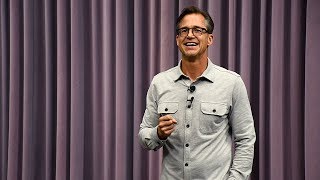
This content was created by GHION.AI . This content was uploaded by GHION.AI . This is a YouTube video titled "Rich Barton: Empower People with Information [Entire Talk]" — a recorded talk/presentation by Rich Barton (created October 25, 2017). The content appears to be a full-length talk/keynote focused on empowering people with information.
Chapters
I graduated in 1989 with an industrial engineering degree, actually a general engineering degree, colon industrial economics, because I went to Florence and studied for a semester and that, or for a quarter, and that took me off track, so I couldn't actually get an IE degree, so I made up my own engineering degree, which was a terrific thing about Stanford. And I took that degree and I, after a short stint in consulting made my way to Microsoft. Microsoft only had about 3,000 people when I joined, so it was a relatively small company. And I was a product manager of DOS 5. Nobody, not even any chuckle of recognition, we don't have anybody who even knows what DOS is, it's an operating system. And it was the first time Microsoft actually marketed an operating system upgrade. Before that, there'd never been an operating system upgrade. And so I was brought in as a product manager to try to sell operating system upgrades to regular consumers with PCs such that they would upgrade their computers. The killer feature we had for DOS 5, does anybody know it? All right, we're not geeky enough. Hand, no. HIMEM.SYS. We broke the 640K barrier of the Intel chip so we could run programs in high memory. Anyway, okay, we're not gonna do any geeky stuff, but the point is I was a product manager and I traveled a lot. I was a business traveler and it was really frustrating for me to deal with the corporate travel agency. I had to plan a trip from Seattle where I was working, I had to stop in Denver, I had to go to Buffalo, New York to Denver, I mean to Dallas and then back to Seattle. Okay, this was a really complicated thing for me to plan with a corporate travel agent and we had to do it on the phone. And I would call him or her on the phone and I'd hear this clicking on the keyboard, okay, of this, I knew she was looking at a screen as she was telling me fares and hotels and everything like that and yet I couldn't see that screen for myself. I knew I kind of wanted to jump through the phone, turn the screen my way and do it myself, okay. This is a, you know, putting barriers between people and information is unsustainable in the world of technology and I recognized at that point that there was a real opportunity to give power to the people and take that system that the travel agent was using and put it in front of people with their PCs. And it just so happens that the internet was, the graphical web hadn't quite happened yet, but the internet was just happening. And there were these consumer online services like America Online, anybody remember that? CompuServe, Prodigy, I was a user of these services. And I knew that consumers were using online services and getting access to information. So while I was at Microsoft and I was a product manager and I was a kind of frustrated entrepreneur, I knew someday I wanted to be an entrepreneur, I saw this problem and this opportunity and the light bulb of an idea for a startup went off in my head. And this is at a time when Microsoft was pretty small. I had opportunities multiple times a year to get in front of Bill Gates. And give him updates on whatever project I was working on. And I pitched the idea at the next meeting of actually building an electronic travel agent and putting that power of information in the hands of regular people as a startup idea to Bill. I actually thought it wouldn't be a software business and that Microsoft wouldn't be that interested in it. I said fund me on the outside and I'll go fulfill my entrepreneurial dreams. And so it was kind of a VC interaction that I was thinking of it as. And he laughed and he said, who you gonna hire? I was 25 or 26 years old at the time, I was pretty young. And so he said, start it inside of Microsoft and if it works and wants to be separate from Microsoft, then we'll think about spinning it off. Okay? And so that was how Expedia was born. When I pitched the idea, one of the things that really Bill liked a whole lot about the idea, one was that we were going to build on PCs what was being run on mainframes in the travel industry and he liked PCs doing the work that mainframes were doing. But he also saw in me that I had a really big idea and a big dream. I went in saying we can one day become the largest seller of travel in the world. Because I recognized that this power to the people technology had the opportunity to catalyze an industrial revolution in the travel industry, a giant industry, and that if we could short circuit the connection between the suppliers and the consumers and put them together one-to-one without anybody else in between, that the consumers were going to storm the Bastille and take over the industry. Okay, and so I had this BHAG, this big hairy audacious goal, that was become the largest seller of travel in the world someday by helping everyone everywhere make and take better trips. That was my big dream. And so in this first power to the people story that I'm telling of this first startup, this was a startup inside the belly of the beast of Microsoft, my takeaway lesson here is the first lesson and that's, this is the Pygmalion myth lesson. This is have great expectations, great expectations beget great results. And the sociologists here at Stanford have a human behavior name for this and they call it the Pygmalion effect. The story of Pygmalion is the story of a, it's a Greek myth and it's the story of a sculptor who sculpted a statue of a woman. And she was so beautiful and he loved her so much that she actually came to life and they were together. Very sweet. There've been lots of movies, My Fair Lady, one of the great all-time '80s geek flicks is the same story. Can anybody name it? It's a kind of a geeky one, Weird Science. These two kids use a CAD, what looks like a CAD program to build a virtual woman and she actually comes to life. Okay, anyway, this is a repeatable myth that shows up over and over again, but the effect is that, the sociological effect is that great expectations beget great results. All right, there is a book called Good to Great that's a business, kind of a business school book by a guy, Jim Collins. Thank you, Tina. Jim Collins, Good to Great, and it is basically this same idea. Aim high, and when you aim high and have big, hairy, audacious goals, more often than not, they are somewhat self-fulfilling because once you free yourself to dream big and think big, you end up attracting people around you and joining teams of like-mindedness and human ingenuity is such that you figure out how to actually make it so. Alright, so that's my little lesson number 1 detour, the Pygmalion effect, and that feeds back into the story of Expedia. And I'll conclude quickly with that story, this first power to the people story, by saying that Expedia is now the largest seller of travel in the world, sells over $70 billion a year in travel. Bill Gates and Steve Ballmer, who was my boss, my last boss at Microsoft, did honor their pledge to consider spinning off Expedia from Microsoft when I went and asked them for $100 million to spend on television advertising. and they said no. And I said, well, the public markets, this was 1999. 1999 was the first internet bubble. Pets.com went public in 1999, okay? Anybody could go public in 1999, including Expedia anybody, and I knew we could raise a bunch of money from the public markets and to spend on television advertising with which we could use to help turbocharge our ride to becoming the largest seller of travel in the world. And that worked. So when we do Q&A, we can talk about the IPO process and going public if you're interested. It's something I've taken more than one company public and been part of many others as they go public, including Netflix. I was on that board when it was private. So for over 15 years. So that's a topic we could talk about, but at that point, Expedia spun off. I was a 32-year-old CEO of a public company. My management team was quite young, all around my age or younger. We were thrown right into the fire and it was a wild time. Expedia turned out to be a fantastic business, so when the bubble burst and everything went down and crashed, Expedia crashed with it, but we had a real business. We were profitable and we grew right We grew right through it. That story will conclude, it was a public company for a few years on its own. It was immensely successful, but it was public and a buyer came along, a guy named Barry Diller who was a media mogul who was getting out of the media industry and into the internet and he came along and made a gigantic offer to buy the company and we didn't have much, it was such a good offer we didn't have much of a choice other than to sell the company for this big offer. This was in around 2003 and at that point we sold the company and at that point I left and started doing other things. Alright, so let me push pause for a sec and relocate ourselves on the kind of map of my, of the non-Q&A portion of the chat, alright? So, my story of startups, there's a common thread through all of them and that is, Power to the people, okay? And this is this kind of fundamental ring zero acknowledgement that freedom is primal, that we want control, we want all of the information we can, we want to make decisions for ourselves, especially ones that are entertaining and ones that are financially important. We want to make these decisions ourselves, okay? There is no industry where we the people, we consumers, don't want to have more information in our fingertips so that we can be better informed, okay. And so Expedia is an instance of a startup that kind of typifies this transparency of information idea and it ended up catalyzing a new industrial, kind of a technology-driven industrial revolution in the travel industry and the travel industry has never been the same since. Okay, so that's module 1. Alright, let me get a little sip of water. Alright, so story 2 is that I went, after we sold Expedia and I left, I had 3 very little kids and a wife and we had been working really hard for a long time. She's a doctor and we decided to take a little break, which is a sub-lesson, I didn't highlight this one. but we moved to Italy for a year and we lived in Florence with our 3 little kids. And you can close your eyes, maybe you've been to Florence or been to Italy, been to Tuscany, imagine the rolling hills, the vines, the glass of wine in your hands, the bowl of pasta right in front of you. Okay. As you build your careers and you guys do things, this right here that I'm trying— this picture I'm painting that you're seeing and smelling and tasting is a really important part of life and success in your careers. You really, really do need to take a breather and give yourself a little space and time to think and relax and focus on other things. I actually find that for me, my very best ideas happen for me when I am on a surfboard or a snowboard or in the middle of the desert at Burning Man. Where I've been with Amy in the front row here. Excuse me? I'm sorry, maybe I shouldn't do that. It's on video. Nobody knows your last name. So giving yourself think space and time sheltered from this incessant barrage of feeds, digital feeds that you all have, that we all now have in our lives. Giving yourself a little shelter from that in space and time to focus wholly on something else, I actually find that is when the best, when I actually do my best thinking about everything. So make sure you make time for that. So anyway, I did that. I tried to find my inner Michelangelo. I took a life drawing class, which was pretty cool. If you haven't taken a life drawing class, do it. It's interesting, you'll find out a lot about yourself. I did that, I tried writing, I wanted to find my inner artist and do something else and pivot my whole life. I was only, I don't know how old I was, 35 or 36 at the time. Turns out I couldn't stop the business-oriented and startup-oriented ideas coming at me and I had a lot of inbound interest to get involved in things and I was involved in some other things. And I really couldn't get out. They kind of sucked me back in. And so I moved back from Italy and immediately started thinking about new things, all right. One of the things I was thinking about was actually becoming a venture capitalist. There are a lot, many people I know and love are venture capitalists. I came pretty close to moving back down here from Seattle and working as a venture capitalist at Benchmark Capital. And at the last minute, I decided not to, but I decided to start up a new company with a friend of mine who I had met at Stanford, a guy named Lloyd Frink. He was a year ahead of me at Stanford. He was maybe '88, from Seattle. We had met at Stanford. He had gone to work at Micro— he went to the same high school, Lakeside, that Bill Gates and Paul Allen, the founders of Microsoft, went to. Although they are 8 or 9 years apart in age, they didn't really know each other, but they'd gone to the same high school and their moms knew each other. And Lloyd's mom knew Bill's mom, and Lloyd's mom said to Bill's mom, "My son likes computers." And Bill's mom said, "So does mine. We should get them together." And so Lloyd, at age 13, Got together with Bill Gates. Microsoft was about 25 people at the time and Lloyd went to work part-time for Microsoft when he was 14 years old actually. Because nobody, none of the guys and gals at Microsoft, it was mostly guys at the time, wanted to answer support calls. It was really support letters and so they had this kid from high school come in and he had to answer the support letters. It was kind of funny. Anyway, so he worked at Microsoft successively every summer after that and then went to work for Microsoft after college. And he was a key part of the team that built Expedia inside of Microsoft. And when I came back from Italy, we were sharing an office. He had left Expedia too. We were sharing an office just brainstorming ideas and it just so happened that like when I was a product manager and planning my trips, we were sharing an office and shopping for homes because he was in family expansion mode and we needed to find a new home. And this is in 2004, something like that, 2005. And it's 2005, the web has been around for a long time now and it was unbelievable to us how little access, how little information on what's for sale and about homes that we could access to make an informed decision. We're like, this is the most important financial decision of our lives. Homes are the biggest asset that most people have if you're lucky enough to have one and yet we can't get basic information to determine what a house is actually worth. What's the square footage? Can I see pictures of the inside of it? What are the tax records for this house? A house is for sale, we would go on the web and look at for sale listings on the web and they didn't even have addresses listed. Okay, so you couldn't even go by and take a look at the house in the physical world and this is all because The people that ran the industry at the time wanted to hold that information and keep it to themselves behind big walls to keep it from people so that they could be the arbiters of the information and they could be the distributors of the information and they could share the information only that they wanted to share. And so we looked at that and we said, well, how lucky are we? There is another opportunity to do a power to the people startup. We can actually tear down those walls, maybe we can tear down those walls and connect ourselves, our sisters, our mothers, all the people we know, connect them with all this information that we know they want so that they can make much better decisions about this most important financially and most dear emotionally decision that they make. Now most of you probably haven't bought a house yet. Hopefully you will someday and you'll understand even more, but you kind of have a sense for how emotionally and financially important homes are. And so Zillow was born. So this is the second kind of power to the people startup and this is in 2005 and our mission there was very similar to what our Pygmalion mission, our BHAG there was very similar to what it had been in travel. We wanted to become the largest real estate marketplace in the world where we would build the most trusted and vibrant marketplace, we'd help people find to buy better homes and improve their lives. Okay, it's been a pretty simple mission. And we wanted to be the largest, and it turned, that was in 2005 that we launched. It turns out today Zillow Group is the largest real estate marketplace in the world. We get about 170 million unique visitors a month to our brands. Our brands include Zillow, Trulia, and StreetEasy. Those are our 3 biggest brands. We also have HotPads, which is a little smaller that some of you may know or run into soon. As you start getting apartments. And the lesson I want to tell about the, about from Zillow, the little lesson is Wizard of Oz. Okay, Wizard of Oz. So Wizard of Oz is not a current movie or play, but most of you guys know the story, right? Wizard of Oz. There are 3 main characters in the Wizard of Oz, all right? And the lesson here is about people and teams, okay? The lesson here is about how do you know you're getting in with the right lot of people as you embark on your careers? And how do you evaluate who is going to be, you know, who do you think exhibits those really rare combination of leadership qualities? And I use this Wizard of Oz shorthand. The three main characters of The Wizard of Oz, were the Scarecrow, the Cowardly Lion, and the Tin Man. All right, and each one was seeking something that they were missing. This was their quest in The Wizard of Oz. They were going to the Emerald City to visit the man behind the curtain, the all-great-and-powerful mighty wizard who was going to grant them each a wish. And the wish for the Scarecrow was that he had— Brains. Brains. All right, thank you. Good, getting some participation. Brains. Okay, so lesson number 1 as you look for people in teams and companies is they're smart, they exhibit brains, they have brains. It seems like a simple thing, it's not actually all that simple and it's not actually easy to discern many times, especially early in your careers. Okay, but this is super important and in the information economy, the economy that most of you are going into, there aren't factories and trucks and trains and there's not as much capital, physical capital and assets for companies these days. All the companies I'm involved with, the assets are all human assets. It's human capital and the work product of people's brains are the assets of the company, code and brands and ideas, okay. And so joining a company and joining up with people who are smart is really super important and having a work environment that takes care of smart people is really important. Alright, so that's Scarecrow, number 1, brains. The Cowardly Lion, what did he seek? Courage. Courage, alright, good. Someone's going to break out into song here soon, I'm sure. Alright, courage. People in teams have to have courage. Alright, it can't be crazy courage because too much courage, like if you have, if these are 3 legs of a stool and you have too much courage and not enough brains, the stool tips over. Right, because you're being stupid. You're being stupidly risk-loving. You want to have courage, but you want to take smart bets, all right, but it's an obvious one. And then the third, and perhaps the most important, is what the Tin Man sought. He was seeking heart, all right, heart. This is the third leg of the stool. It's really important that you join teams of people who care about people. All right. Again, it's people who are driving the new economy. It's the work product of your brains and life is too short to fall in with people who don't care about people. And if you happen to fall in with people who are super passionate about something and who are on a mission to change the world in some unbelievable way, that is even better because we all actually don't really want jobs. We want to be part of something bigger than ourselves to to change the world so that we can put our little dent in the universe, all right? So that we can actually change the world for the better. That is what I mean by heart and passion. And those are the three legs of the stool. As, coming back to the story now of Zillow, as I started Zillow, I was really lucky to have the whole founding team come from all people I'd worked with before at Expedia. Everyone, and including several Stanford grads. Everyone. So our CTO at Expedia became the CTO of Zillow, even though we had zero employees. And there's a long list of people including my partner Lloyd. Okay, so to wrap story number 2 of Zillow and then I'll move on and we'll get to questions. Power to the people story number 2, Zillow did really well. We launched in 2005. We launched with the Zestimate which was an estimated market value of every home in the country that we dropped on every roof in the country. We updated every night. So it had this amazing emotional kind of real estate porn appeal to it. People wanted to see what homes were worth. That was a completely novel thing. Drew so many people on the first day that we launched that the site went over and didn't come back up for a day and a half, okay, which we made a good PR story and said we're so popular it fell over. So everybody came back later. So that was our initial feature and now Zillow is a giant marketplace. We took it, the business grew. We took it public about 6 years ago. So Zillow Group is a public company now. Just like Expedia is a public company. We have about $1 billion in revenues. So it's like a, it's become a real company. I'm executive chairman there. I ran it for the first 6 years of existence. I was the CEO, but then I kind of kicked myself upstairs and I'm executive chairman there now. Alright, and that's an ongoing concern. We have lots of lands to conquer on that one and that's fun. I'm gonna curtail my third story of Glassdoor, the third power to the people startup that I've been lucky enough to put together with a really good friend who was a development manager for me at Expedia. I hired him right out of getting a master's in computer science at Stanford, a guy named Robert Hohmann. He, after he left Expedia, he came to me and said, let's start, you know, what do you got? You got any ideas? Let's start something. I said sure, yeah, let's talk and we had a, I shared with him a story and we brainstormed and we came up with the idea for Glassdoor and Glassdoor is now one of the largest job search sites. If you don't know what it is, you can find out the salaries, it's kind of TripAdvisor for jobs. You can find out the salaries and titles and experience levels of any job pretty much anywhere in the world. And it's all done by an anonymous open survey. So tens of millions of people come into the site and the service and they say, here's my job title, here's my salary, here's what it's like to work here, here are the cultures and values of the company, I approve or disapprove of the leadership and the CEO. So it's an open survey. It's just great, great transparency information, power to the people information. And it's transforming the job business. I'm the chairman there. That one is actually in the Bay Area. Hasn't gone public yet, but I'm hoping to get, the team is hoping to get that public here sometime soon, knock on wood. Okay, I guess my last lesson from hanging off of that story is gonna be Keanu Reeves. Alright, Keanu Reeves. Keanu Reeves has been in, he's such an actor. I mean, the fact that he's never gotten Best Actor, this is just, robbery, I mean Point Break, I mean he should have gotten it for that. But the one I'm referring to here is Bill and Ted's Excellent Adventure, who's seen that? All right, all right, come on, wow, this is one you gotta put on your list, all right. Bill and Ted's Excellent Adventure, which I saw when I was an undergraduate at Stanford down the road here on El Camino, I forget the name of the theater, I saw it for the first time. A really silly movie that actually turns out to be super important, it's full of really interesting philosophy, and the kind of core philosophy for Bill and Ted, aside from their wild stallions and their guitar riffs and their San Dimas High School football rules, anyway, the thing that they said over and over again was be excellent to each other. And it was a haha funny from these two skateboard riding kids who were traveling through time, but be excellent to each other actually is really important. I think especially important now if you're following the news. People's capacity to not be excellent to each other is infinite. Okay, it's infinite. I never put it this way. I've never put it this way before, this be excellent to each other. I always used to say no assholes. I have a no assholes policy. I don't care how smart you are. I don't care how talented you are. I don't care how much drive you have. If you're an asshole, you're not on my team. Okay, we respect each other, we are excellent to each other. And I'm adding, I'm saying no assholes and now I'm appending no scumbags. It turns out there are a lot more scumbags than I had anticipated before. So no assholes, no scumbags, be excellent to each other and when you're excellent to each other it pays huge dividends because people that you're going to school with right now and that you work with earlier in your careers, they come back. They come back around. And each of my stories, but Glassdoor as well, is a story of people that I worked with and I was excellent to and who were excellent to me coming back around and doing new cool things together. All right, so, you know, I never really put this together, but I owe so much to Stanford because so much of the foundation of my network actually was hatched right here. And I guess that's a lesson too. Be excellent to the people right here because a lot of the people you're going to school with and working on projects with or playing Ultimate Frisbee with or whatever it is, these are the people that you may be working with them throughout your career. And there's some really talented people here. There are some assholes and scumbags too, but there's some really talented people here. And so be excellent to each other and it will pay dividends. All right, so power to the people. Pigmalion, the lesson of Pygmalion is great expectations beget great results. Wizard of Oz, which is brains, courage, and heart. And Bill and Ted, Keanu Reeves, be excellent to each other. All right, questions? We can talk about, I didn't talk anything about Netflix. We can talk about that, I know it's really topical. I'm just a board director there, so it's not a company I started. Shoot, but it's one I'm lucky enough to have been involved with for a long time. I'll kick it off. Yes. While everyone else is thinking of their burning questions. So I'm really passionate about what leaders do to build cultures. I mean, you talk about the importance of a culture. What are the levers you have at your disposal for building a culture of innovation and— trust that you use? Okay, so what are the levers I have as a leader at my disposal to build a culture of innovation and trust and respect and success, I'll append to that. The first one is the people point, okay? You gotta get in with the right people, okay? And so when you're small, The people point never goes away. It's really important. But when you're small, you know everybody. And so a lot of the more Dilbert-y processes, kind of big company processes, they don't come into play necessarily when you have a small team of people. Okay, it's when you pass the Dunbar unit of 150 people or thereabouts when you can note you as the CEO, you as the engineer, you as the HR person can't possibly know everybody and know everything that's going on. And now you need to put in place a lot of these what younger people might view as bureaucratic or Dilbert-y. You guys know what Dilbert is, right? All right, anyway, like joking at big companies, processes and infrastructure in place. And part of that is laying out a really well-defined mission Talking about values and then actually living those values in the company and reinforcing them at every possible chance you have to communicate. And so the CEO of Zillow Group is a guy named Spencer Rascoff who's just unbelievable and he has his mission thing that everybody says before every meeting and he has the 6 values of the company, stuff like move fast, think big. And those are emblazoned on the walls and those pervade his communications. That is one technique and if it's abided by, it works really, really well. Another one that I actually like that's kind of Dilbert-y as well is that everybody does this kind of fun personality test, at Zillow Group at least, and every company has some different mechanism. And the personality test ends up, it's kind of fun, everybody likes to answer a bunch of questions about themselves and be told why they're so special and different. And it turns out that no matter what your strengths are, it's special and different and additive, which is true. It turns out a diversity of personality is really important in a corporate environment. And those things are translated into a series of colored bricks that sit on people's desks at Zillow Group. And if it's red on top, that means this person leads with red energy, they're competitive. They want to be told things quickly and then get out of my face. But then there are the people that have the green brick on top, which are, they just kind of want to get along. They want everybody to get along with each other and cooperate. And it's a really interesting mechanism I found for people who are clashing with other people to look at their personality profile and say, oh yeah, okay, that person, Amy's the green on top person, so I'm going to have to actually behave a little differently. These are silly-sounding, corporate-y sounding things that are really important as companies get big. Who else? Yes. In one of the talks, Tina told us that if it's not good, it's not the end. So when you had your times of frustration or maybe feeling lonely and like no one was backing you up, how did you keep going? What did you tell yourself? If it's not good, it's not the end? Yeah. OK. And then how do you keep going? Ricky Bobby, if you're not first, you're last. But I didn't say that. I must have been drunk. Guys, I'm seeing— it's Netflix. I see too many movies. Here's my answer to that. Mount Rainier is in Seattle. Mt. Rainier is a 14,500-foot volcano that looms over Seattle. If you've been there, you've seen it on the right day, you've seen it. It's really astounding the way this giant mountain looms and a lot of people look at it and they want to climb it. We have a human urge to climb the summit and plant our flag and be on top of the mountain. And this is a metaphor I'm going to use to answer your question for the mission of your company or or your project or whatever you're working on. Okay, if you have a clear mission and it's inspirational and you maybe have a team of people or maybe it's just you, you're trying to get to that summit but it's a clear mission and it's good and you understand it. Then on your way there as you're hiking with your team, when it's stormy or you're trying to make a bad river crossing and you can't see the mountain and things feel lonely and bad, Well, if that image of Mount Rainier, the summit of Mount Rainier, is clearly in your mind, you know where you're headed and you know what you want and you know what's good, you get through. It's when you don't know where you're going that when you run into hard times, you end up despondent and you give up. Yeah? Yeah. Thank you for the talk. So my question, one thing I realized is you mentioned power to the people. Multiple times, and I'm like, so you mentioned that people want more information in their life, they want to make their own decisions. But I think lately there's this concept of things like machine learning where convenience is of utmost importance. People want to get fed or want some decisions to be made for them so they can do without the hassle. So is it a fad to you, or do you think that there's this shift in focus since your companies have been launched like quite some time back? Okay, I think I get the question. I'm not gonna repeat it exactly, but I'll paraphrase it and I'll say, you say people want all this information to make decisions for themselves, but they're being overloaded with information, but now we have machine learning and we can do it for them. I like that, that's good. That's next phase, that's what's going on. We are drowning in information, we have too much. And next level stuff, I mean the class before this was Machine Learning 432 or something, which I missed, but we employ machine learning in a lot of my companies. It is to actually synthetically be able to sort, sift, and analyze and make decisions for you. People want really smart assistants and there is such a deluge of data that having intelligent synthetic intelligence be able to sort, sift, and recommend for us and maybe anticipate for us is super interesting. And we want everything really— we tend to want everything really fast. We want it now. This thing has trained us that we can push a button and have it show up right here, right now. You know, the Uberfication of everything. Netflix has done the same thing. I want to watch it now. And I want to watch the next one. And I want my groceries now. I want to buy my house now. I want my job now. OK? And this is what's going on. I think especially for commodity-like things where you're willing to delegate the purchase of things or the decisions of things to an intelligence, that's where it's happening first. But this is kind of the next phase of taking data and turning it into intelligence. And as you guys are looking at opportunities for your career, for your business careers or academic careers, this is a really fertile place to look, yeah. Yes. Do you find that your private companies have different incentive structures than your public companies? That your public companies make short-term decisions to please stockholders at the expense of kind of long-term strategy? OK, do you find your private companies behave differently from your public companies because they're public? Not mine. Not mine. I'm a firm believer that having a public company when it's ready to be public is a huge advantage. It gives you strategic optionality, and optionality is valuable. When you have a public security, you're able to do things with that public security like raise money, do acquisitions, compensate people. That offers strategic flexibility and strategic optionality is valuable. Now the downside to being a public company is you have to report every quarter and a lot of people, especially here in the Valley, think that that's like some awful thing, like some torture fest and we shouldn't pay any attention to these investors and screw them. I'm not gonna do that. They demand all this short-term stuff. Well, for weak companies and weak leadership, for professional manager-led companies, that is the case. But the public companies that I'm involved with tend to be run by founders. All of them are run by founders. Sometimes, as in the case with Zillow Group, we have a class of stock that gives us voting control. And those enable us to behave more like a private company and make decisions for the long term. And the shareholders that know us and believe in us can come along for the ride long term. Even if we have to do short-term things that hurt profitability, they know we're doing it for the long term because we're in it for the long term because we control the company. And so I believe having a founder-led company that, or founder-like-led company that has some control provisions to free these companies up to make long-term decisions is the optimal combination, personally. Yes, yes. You were talking about to be excellent with the people, you know? So how do you inspire your team to be excellent on each other? Any tips you can share or ways? Yes, how do you be excellent to each other? Okay, so I think this is especially true because a lot of you are in tech, a lot of you are engineers, and maybe many of you will go work for tech companies, okay? And there actually is a class of tech company where the engineers kind of rule the roost. And that may sound appealing to you because you're an engineer. And by rule of the roost, I've been in these companies before, and by rule of the roost I mean look down their noses at and kind of disrespect other functions at the company like sales or marketing or operations or IT, HR. These are all just around to support me, the engineer. I'm the god engineer. I'm exaggerating here, all right? But having a company where there is an explicit or implicit class system amongst employees is no bueno. Okay, that is absolutely not good. It can work for some companies for a while, but it ain't a happy place to work. All right, and it's suboptimal now. It's suboptimal. I think about it as spokes in a wheel. A wheel is true and spins beautifully with very little friction when all the spokes are tightened to the same strength and then the wheel turns. It doesn't turn if spokes are missing or they're shorter or what have you and that's kind of how I feel about all of these different functions at a company. They have to all be firing on all cylinders to make the machine really work and I believe as we enter this kind of next phase of technology-oriented company and startup that's being created, I believe that the two geeks in a garage stories are gonna become fewer and fewer. Suffer me. At the beginning of the web, the web was a flat, open, egalitarian space. Two geeks in a garage really could start anything. And as long as they were discovered by Yahoo and later Google, both Stanford startups, magic things can happen. All right? Is that how you feel about the web and opportunity today? Is that the landscape we see today out there? Is it this great open flat web of opportunity? It's really not. It's really not. Massive companies that control masses of eyeballs and traffic have huge influence over what people see and what people do and what ads people see. And they get to decide by and large what companies become successful and what don't. And so when you go into, if you're going into a startup, my advice now would be make sure that, you know, marry a marketer. If you're an engineer, marry a marketer. Have a marketer as a boyfriend or a girlfriend, okay? Have that marketer be part of your company because you're gonna need to be super clever about how to get your product in front of people. And then the next person you should get to know is the money person. And the next person you should get to know is the operations person. Anyway, you need a full team to be discovered. It's much, much harder these days, I believe, to break through the clutter and the noise than it was back when I started Expedia. Which is too bad. Now that'll be the case until something new comes along. Maybe there will be a new web. I can't really envision it. Some people think blockchain, that's what, blockchain is gonna be the basis of a new wide open web and maybe, maybe. I think more likely Alexa and Google Home and these voice intelligences that are proliferating right now, more likely those are gonna succeed. And as those succeed, the choke point gets even narrower for companies to fit through. Okay, consumer-oriented companies, you gotta come through the voice and the voice is not a full screen with lots of links on it. The voice is one answer probably. Okay, where should I go for dinner? What movie should I see? Get me airline tickets. You know, find me a house. Like you get one answer in these things. So I actually think about this a lot. I think power is actually, concentrating in the hands of these mega global distributors now, not dispersing. Okay, I'll get off my soapbox. Find another student question here. So you mentioned a little bit about your time at Stanford. Yeah. And I mean, even today there's a lot of ways that you can spend your time here. So what's a piece of advice that you'd give an undergrad or a student at Stanford about how to prioritize their time? If you're sitting in this class, you're already way better than I was when I was at Stanford. I really, I look back and I like regret, I shouldn't do that, but I kind of regret what a dope I was and how I spent my time. I like played Super Mario Brothers video games for hours and I could have been coming to this class and seeing me. The fact that you're here though says that you're not that person, but I mean I would go back, first of all I think I probably would have taken a gap year so that I would have matured, but we're too late for that here. But being aggressive about squeezing all the juice out of this orange that you have here, you got your hands around a resource you have no idea how magical it is, how much is available to you to tap into. And there was the Stanford golf course. I wasn't a golfer, but I should have learned how to play golf. I like trying to learn now. It's super frustrating. But I had a lot of time as a student here, as you do. I could have gone and played golf on the golf course. What a dummy. I could have gone surfing and learned how to surf. I was from the East Coast, and all these guys were surfing. Well, I don't know, it would have been, I don't know, why didn't I ask somebody to teach me how to surf? Anyway, do more stuff. Yeah? What are your views on real estate in the next 2 to 3 years and consequently Zillow in the next 5 years, where does Zillow stand? Okay, what are my views on real estate in the next 2 years and where is the future of Zillow? Yeah, so, Zillow's like the Bloomberg of real estate information, and I am not the spokesperson for all that data, so I can't give you a great prognostication, but Zillow itself provides you with a lot of good stuff. We're like feeding the Fed and feeding all these industry groups all the data we have. But generally speaking, it's a pretty hot real estate market, you know, especially here. And there are good aspects of that and bad aspects of it, but we're, you know, well above the bubble levels we hit before the global financial crisis. There are a bunch of social dynamic things that are driving real estate prices in places like San Francisco that probably are not sustainable. But generally speaking, the real estate market is immensely healthy right now. For Zillow Group, we have, we're a billion in sales right now. The company's valued at about $8 billion. It's a big company already. We have 3,000 people that work there, but I believe we've just set the table for the main event. Like we've just set the table for dinner. We've brought transparency to this giant industry and yet not much has changed yet. Things have got to change and so we see a ton of kind of the Uberfication of, you know, you've probably never bought a house, but it's like really hard to buy a house and like signing all these documents all this time and all these people with their hands out taking money from you and title insurance and anyway there's all this cruft and software can be a great leveler of cruft in the long term and so that's kind of the next phase and so there's a, we see a ton of opportunity in making the whole process much easier for the buyer and the seller ultimately. Yeah, yes. Why do you think Redfin hasn't taken off yet? Redfin? Why hasn't Redfin taken off yet? It's actually doing okay. It's another Seattle company, but it's a brokerage company, and it's a discount brokerage. I'm not sure. I'm not sure. But they do some pretty interesting things. Brokerage models are inherently more limited from a growth perspective. Zillow Group is a marketplace and platform. Okay, we're an open marketplace. We don't have real estate agents that work for us, so we're not limited to that. So they've chosen a little bit different business model, but it's a well-run company. Yes. First of all, thank you for creating all those products and companies. I am heavy user of everything. Good. And I live here and also I live in in Japan, and I was just wondering if you could share some lessons learned for global expansion. Excuse me, lessons learned from what? From global expansion. Global expansion, yes. If you have any. And maybe one more question is that if you have any insight for real estate market in Japan, or how you do— I guess I don't think you have— We're not in Japan. Zillow Group is just US. But it's my only company that's just US. Well, the wonderful thing about the internet and technology is that it makes the world much smaller. It brings us closer to people around the world in our interpersonal communications and it does the same thing for businesses. It means that the moment you turn yourself on the internet, everybody on the internet can access you, okay? And so these businesses are inherently more global, which, Creates massive, massive opportunity, uncapped opportunity, which is why we see so many of these consumer tech platform companies become so valuable so quickly because the world is their marketplace. Facebook, it's just mind-boggling how big Facebook has gotten, billions of users, and it's because the friction to adding the nth user is zero. There's no friction at all. And so I'm a big believer in taking technology businesses globally. Now there are some places you can't go. North Korea and China are difficult in many ways. Japan is difficult for its own, for different reasons. But global is a real opportunity. I have no, I don't know anything about Japanese real estate. So I can't comment on your second question. All right, yes. How do you know what consumers like? How do you follow and decide and understand what they need? OK, how do you know what consumers like? OK, well, there's some companies that say— so Apple. If Steve Jobs were alive, he'd say it's art. Not science. If Mark Zuckerberg were here, he'd say it's science, not art. I'm right in between. I think it's art and science. I think the art is having user empathy. I only do consumer-oriented companies, okay? This is different for B2B companies. It's not my department. But for consumer-oriented companies, you have to have people that have empathy for the user, who understand or can imagine a real understanding of the problems and opportunities and joys and fears and insecurities of users, okay, and pains. And hypothesize big ideas that will cure those pains and push those entertainment buttons and light them up. And then that hypothesis is turned into a product And the wonderful thing about our technology products is we have tons of data for how they're used and that's where the science comes in. That's— we have art and science and so you got to have great science to be able to look at how products are being used and make micro and macro changes as quickly as possible, cycling through as quickly as possible to figure out how to optimize and how to make these things work. So it's art and science. Yeah. So when you were talking, it was clear that you were mentioning each of your companies has a component of culture, people, and technology. And as you are building your culture and trying to make sure you don't hire the assholes or the scumbags, how do you filter that? What's your secret sauce in finding the right people for your organization so that they find the right people for subsequent companies? —get out the right culture? I mean, I— so how do you find the right people to maintain these successful cultural organizations that can win? You know, a little bit of the Wizard of Oz answer I would give you, but that's not specific, I know. You know, at a micro level, the interview is a really important thing. The interview combined with references, but in a conversation with someone, I always try to get at the passion and find the person's passion. If I can't find the passion, I assume it's not there. So maybe that's unfair. We only have an hour or whatever, but if I can't find it, I don't do a ton of interviewing anymore. But I do for high-level jobs. And I always start in the interest part of the resume. This person likes to golf or snowboard or ultimate frisbee or whatever it is. And I start there and I try to find if that's just bullshit that they're putting down there or if they actually care about those things. If they care about those things, their eyes light up, they lean forward, they start, they become animated. And now we can have a business conversation maybe built around that. So that's one of the techniques I use, but there's no pat answer to that question. You've got to have an organization that continually is bringing smart people in. What attracts the smart people to apply is great Glassdoor ratings. Great Glassdoor ratings and a clarity of mission and purpose and a mission that that person is attracted to. And so that person should come in with that, and if you find that, And there's a fit, give them a try. If it doesn't work out, don't be afraid to say it didn't work out and move on. Yeah. All right. Well, I'm sure that you all agree this was totally fascinating. Please join me in thanking them.
More from GHION.AI


O processo de reconhecer limites, mesmo quando a vida parece exigir sempre mais.





Depois de tantas histórias, aprendizados e pausas necessárias, o @interior_iza está de volta



