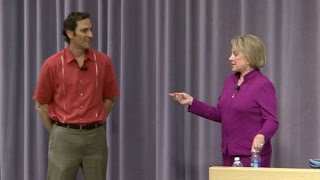
Sandra Kurtzig founded ASK at 23 with $2,000 and no business training, just degrees in math, chemistry, and aeronautical engineering. She competed against IBM, raised two kids while building the company, and priced products by watching customers flinch.
Chapters
The first time around when I started ASK, I was 23 years old, I was a woman, I had no business experience and no management experience, I didn't even have an MBA, and my degrees were in math and chemistry from UCLA and I had an aeronautical engineering degree from Stanford and that was my qualifications and I had no money, I had $2,000 total, which is all I really had to start a company. And my product that I really wanted to do was to do manufacturing and financial management software on a minicomputer. And this was a market that was owned by IBM at the time. So I was going head-in against IBM. Everybody that I talked to with my idea said I was crazy. They said there's just no chance that you're going to succeed. I mean, even my parents couldn't understand it. They thought that it was about time for me to start a family, not be starting a business. And when Andy was born, they were even more astounded that I wasn't going to stay home like most women at the time would stay home and raise their children. And I think my children were probably not quite sure what to make of it when their mother went to work and all the other mothers were at home going to PTA meetings. So my children really had no choice in the matter at the time. And I think that if you ask them now, although I'll let them speak to this, they're probably kind of happy. That I'm a businessperson because when they call at midnight when they want to have somebody to talk to, they'll call me with their ideas and they'll say, Mom, I want you to listen to this idea. And I often have to say, well, Andy or Ken depending on which one is calling, do you want me to answer that question as your mother or do you want me to answer that question as a businessperson? Because as your mother, of course, I think you're wonderful, you're the greatest kid in the world, I think that idea is brilliant. But as a businessperson, I think it really sucks. So you have to sort of give them a chance at this. So where was I? But not having an MBA actually had some advantages because I had notebook sense to really confuse me when it came to sort of looking at my street smarts, if I had any at the time. I wasn't confused by things about product pricing and I wasn't confused about raising money, I just had to sort of go with my intuition. And the first— when we first got our product out, one of our customers asked, okay, how much is it? Oh, I forgot to think about pricing. And so I had no idea because clearly we put our software on a disk. At that time I think it cost $10, now it probably costs a penny for the disk. And so that was our cost of goods. So how do you charge a product that costs $1 or $10 or whatever the price is? So I just sort of threw out a number, I said $50,000. And the customer had no reaction at all. So I said per module. Still the customer just sort of sat there, no reaction. So I said per year. And he sort of flinched. So I said, but you are one of our first customers, we really appreciate your business, so we're going to give you a special deal today. And that was really how we got the pricing. And I know that now at Harvard Business School there is a case And they call Flinch method of pricing a very acceptable method. And I'm sure that if that case is taught here— I think it is, Heidi's shaking her head— Stanford also teaches the Flinch method of pricing. So I guess I don't have an MBA, but I did get some recognition in the pricing model.