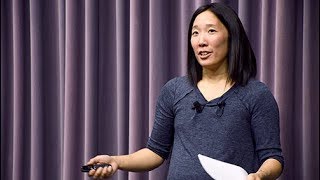
Sandy Jen moved from software engineering into startups, driven partly by watching her husband's entrepreneurial journey. She talks about overcoming imposter syndrome and what it took to make that shift.
Chapters
I graduated in 2003 and this was shortly after the first Internet bubble burst in a spectacular fashion. And if you mention the word startup, people would think you were an evil person who's trying to take their money. And so I landed a great job as a software engineer at a semiconductor company and I worked there for a couple years. And I sit there in my cubicle and I think I'm like 23 or something and I'm thinking there, I'm eating my lunch, I'm like, ok, I got a great education at Stanford. We're taught that we can change the world. I'm five two, sitting in this 20 square foot space surrounded by six foot cubicle walls. And I was like, what the hell? Because I was like, what am I doing? I was having this midlife Crisis at age 22 and I, I've done all this work, I've gotten the good grades, I've gotten the good school, I've gotten a good job, yet I'm not happy. What am I doing here? I talked to my boyfriend who I later married and who's now my husband, and he had chosen a very different path. So he was already doing a startup with his co founder and he had started it when he was still in school. So he sort of graduated and jumped right into startup land. And he and I were talking and I realized when we were talking that he had flunked the same test that I did. He had no business background at all. He had acquired funding in a period of time where it was really difficult to get funded because the startup environment was so bad. He wasn't, I mean he was smart, but he wasn't like a genius. And he was basically as dumb as I was in a lot of ways. And so I was like, well, he did it, why can't I do it? And the difference was that he didn't have that mental block. He said, oh, I'm just going to go do this. As opposed to what I had was there's no way I could do this. And so that was really eye opening for me. And I was trying to figure out like, why was he so happy and enthused and engaged in his sort of. And I was just not happy whatsoever. And so I tried to shut the shy high school kid part of me out and tried to channel the let's go to Stanford me more because that part had been sort of nurturing a little bit more of that brave bravery and courage throughout my college years. And that part ultimately won out. And so I got my butt into gear and opportunity knocked in the form of a partnership with a friend of a friend who wanted to start a venture. And when he asked me if I wanted to join, I was like, hell yes. So which brings me to my next point, which is that everybody has imposter syndrome. And I may have sounded really gung ho, but I was absolutely terrified. I was like scared shitless. I had said yes, but I had no idea what I was getting into. I had no idea how startups worked, I had no idea how fundraising worked. I had no idea how to build a team, had no idea how to do anything. And yet I was like, just keep going because why can't I do this right? And I want to pause and really make this a point because the thing that really crystallized for me was when I saw someone that I could relate to do something that I thought was impossible and so accessible role models is really, really important.