Scaling with Purpose [Entire Talk]
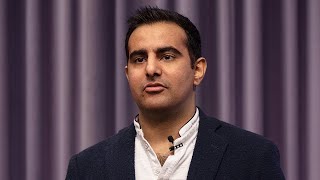
Kulveer Taggar, CEO of Zeus, turned down a Facebook acquisition to start a company providing furnished homes for business travelers. He discusses why he rejected the deal, what he learned about long-term thinking, and how environment shapes success.
Chapters
Who you are defines how you build. It's a pleasure to have this opportunity to talk to all of you today. The framework that I used for the content is what do I wish I had known as an undergrad? And from these lessons that I've learned, how am I applying them today in my role as CEO of Zeus? So this is an email that I wrote about 12 years ago pretty much to this week to Facebook, where I was turning down an acquisition offer that they had given us. And when I reflect back on, I know some of the mistakes that I made in my 20s. One of the things that I realized pretty quickly was they tended to stem out of some form of impatience or just having too short of a time horizon. And you know, for me, if even one of you left this room today with a slightly longer time horizon than you had before you came in, I would view that as a success. I'm actually really intrigued by how things change for you in terms of outcomes when you are sort of thinking on maybe a 10 year timescale or a 20 year time scale versus just a few years. So, stepping back for a moment, I want to share a little bit more about myself and obviously the company Zeus, and then I'll go into these, these lessons. So I, I took a gap year before I went to university. I started my first company as an undergrad. It was a marketplace for college students to trade textbooks and other things. I also invested in my first property as an undergraduate in England. My default path was actually to go into banking, into finance. And again, I remember early on, my motivation seemed to be basically, I wanted to make money, I wanted to get to financial independence as quickly as possible. And honestly, someone had just told me that banking was a good path to go down. And so I sort of mindlessly was on that path when I was in the bank. I remember one day I sort of stumbled upon like the Facebook of all the resumes of all the graduates that were in my sort of cohort and the cohorts before me. And I remember looking at the resumes and being like, wow, these kids are really, really cool. They've done so many interesting things and they're so accomplished. But then when I would see them in the sort of bank environment day to day, they just seem like completely different people. And I sort of had this thought, I was like, what happens between, you know, all these sort of interesting things you've done to get in here? And then like the life you're kind of living working in the bank? And I sort of realized, or my Takeaway was there was something about the nature of that industry and the nature of that job and working with a really large company that kind of was maybe like, I don't know, slowly sucking the life out of you. And. And I had this realization where I was like, I don't want this to be me. When I look back on my life, I don't want to have this goal of wanting to make money sort of override all of the other interests and experiences that I want to enjoy. And so I remember the moment when I had the startup from university. I was in the bank and I had to hand in my resignation. And I walked around with the letter of resignation inside my suit pocket. And every time I tried to sort of like muster up the courage to go to my managing director and say, hey, I'm leaving, sort of chickened out. And I think it was on the third attempt I just brought it out and I said, hey, I'm leaving. And he was super shell shocked. And then I was like, well, you know, I want to work on this startup. I want to see which way it goes. He actually, you know, he was obviously disappointed, but he pretty much sat down and wrote a check for £16,000 and he became my first angel investor. And so that was something that I experienced early on. And after that I did this startup in London for about a year. This was 2006. And the startup environment in London back then was tough. There wasn't a density of angel investors or even other entrepreneurs and it was quite a struggle. And I remember one of the afternoons when I was just sort of feeling frustrated, I think I just googled startup mistakes and I found a Paul Graham essay, which I think it's titled Startup mistakes or top 16 mistakes startups make. And point number three on that essay was location. And he just said, hey, you know, sometimes you have to get to the right spot before you can really make things happen for yourself. And at that point I sort of realized from his essay I discovered Y Combinator, the early stage investor. We ended up applying. This was the end of 2006. We flew out to Boston for the interview. I have a photo later in the deck from that interview. And then we got in. And then January tw 2007, I moved out here to San Francisco. Then, you know, that startup was acquired. It was acquired by a company in Vancouver, Canada. I moved there for a bit. I took a couple of years off after working for the acquirer for a year, I dabbled in acting, I did sketch comedy. I went traveling for a bit and then I think three years passed and I sort of jokingly refer that, refer to that as like, that's how long it took for amnesia to set in and for me to forget how painful startups can be. Before I moved back here in 2012, did Y Combinator again, worked through a few sort of failed startup ideas before I came up with Zeus in 2016. So Zeus, you know, quite simply, we provide furnished homes for, you know, the modern professional, for business travelers. If you think about when you're being relocated by a company, they put you up in temporary housing, or if you're being sent somewhere for an extended period of time, rather than stay in a hotel, you can stay in a zeus. And with 30 day plus. So we're not really a short term operator, we're not trying to compete with hotels and we're in these five major metros today. In terms of our mission, I'm really motivated by this idea of making it easy for people to live wherever opportunity requires them to be. I saw in my own life how when I moved from London to San Francisco, things really changed for me. They really transformed for me. I've also heard stories over the last few years from some of my friends where maybe they're living in New York and an opportunity comes up on the West Coast. But just that friction of moving and dealing with housing, it's so much that they're sort of like, well, actually, I think I'm just going to stay here because I don't want to have to deal with all of that. And it kind of makes me sad because I really believe a lot of human potential is locked up in location. And if you can make, if you can basically increase mobility, then I think good things happen overall. So just some highlights today. We have 3,000 residents living with Zeus. We have 2,200 homes. We passed 100 million in lifetime revenue, I think it was last week. We're at 110 million revenue run rate and our revenue is growing forex year over year and we're now at 285 employees, which blows my mind. Okay, so moving on to the lessons. You know, I touched on this first one about thinking long term. Uh, the second lesson that I have is to really invest in sort of introspection and knowing yourself. And the final one is this idea that your environment impacts you more than you realize. So if I could time travel and go back to when I was an undergrad, I wish someone had told me this, um, and I think it would have really helped me. So in terms of thinking Long term, you know, there's a few dimensions to this. On the one hand, something as simple as if you want to accomplish something, if you want to gain mastery, if you want to, you know, achieve something, it actually just takes longer than you think. It takes actually quite a bit of time to get really good at something. So I was definitely very impatient. And I remember even, you know, I, I went on this entrepreneurial path. I was one of these people that thought that, hey, the best way to become an entrepreneur or to learn how to be a CEO is to just become one. And now I think I've shifted my thinking a little bit. I actually think if you do want to do a startup, eventually it can actually be really beneficial to go work at a startup, a fast growing one, and observe from others and learn for a while before you take the plunge to yourself. I now believe that really what determines, you know, the success of your startup is essentially getting to product market fit and anything else that's not focused on getting to product market fit doesn't really matter. And it can just take time for you to have insights or ideas that can lead you down that path. Now also related to this, I think is the idea of, you know, not really chasing instant gratification. So as you graduate, maybe there are job opportunities that come with a lot of prestige or maybe they come with a lot of money. And then there might be other opportunities that maybe index a little bit higher on what you're going to learn or the network that you're going to build. And I actually think, you know, what you learn and like the network you build that compounds again so much over time that again, I wouldn't sort of go for the, the sort of short term, sort of perceived, I don't know, external success. And you know, when I talk about compounding, I don't really think our brains are super well set up to just really understand the full magnitude of how things compound over time. And especially now with the Internet and technology, I think it's, it's kind of even crazier. So coming back to, you know, the Facebook story I referred to earlier, I wanted to share something. At that time, you know, when they were negotiating with us, Facebook was valued at $15 billion, that that was their market cap. They had just done a deal with Microsoft. I think they were selling some ad inventory that Microsoft wanted to buy for Bing. But I remember at that time thinking $15 billion as a valuation for Facebook was just absolutely insane. You know, we were coming out, this is still sort of coming out of the Dot com crash. But the guys at Facebook when they were negotiating with us, they were like, well hey Kulvir, you know, absolute worst case for us. We're going to end up a company say the size of Yahoo. And Yahoo at that time was valued at about $30 billion. So they're like, there's still a sort of 2x upside to joining our company. And they're like, you know, on the upside, on the best case scenario, you know, maybe we'll end up something like Google. And at that time Google was around, I think, 100 to $125 billion market cap. They had IPO'd in 2004 at about $25 billion market cap. So they'd sort of forexed over four years. Uh, but I remember like, you know, Google was a sort of once in a generation company, pretty much invented the, the best business model of all time. And so that's how they were sort of pitching, pitching the opportunity to us. Um, before I came down, I looked up Facebook's market capitalization. It's now $630 billion. So it was actually 40x what it was back then. And even for the people that were there in it, you know, it's kind of, it was kind of unfathomable to sort of think about it. Um, I actually first sort of heard this advice actually from Mark Zuckerberg speaking at startup school here at Stanford. And he sort of just said that when you're thinking on a longer time horizon, I feel like you just, you end up, you end up playing a different game to your peers. Whether, you know, you think about the competitive dynamic as a startup or even just the choices you're making in your life. I also did some research on Jeff Bezos when I was studying Amazon and I'm pretty sure he went into starting Amazon with like a 20 year horizon. And I almost sort of think like if you're thinking about starting a startup, you know, ask yourself, would you want to work on this for about 20 years. I also have a theory that Obama pretty much had a 20 year plan to become president. Apparently in one of his legal internships he said this. You might sound crazy if you walk around telling people you want to be president so early in your life, but I actually think there are people that sort of work to that timeline. I found this image online. I don't know if you guys know the sort of alleged quote from Archimedes about find me a lever long enough and a fulcrum and I can move the entire world. But I like to think of the horizon that you work on as the fulcrum in this picture. And the longer the horizon you have, the further out you push it and essentially the more leverage that you gain. So how do I apply this to Zeus today when we identified this opportunity in sort of furnished housing? Airbnb obviously exists as a very large marketplace, but it's geared much more towards short term travel. One approach I could have taken to solving the problem is to just create a sort of Airbnb competitor in terms of like a listing site, a marketplace site that was aggregating this inventory for this 30 day plus segment. And actually there was a company started by a GSB grad called HomeSuite that did that, that took that approach. But what we realized when we were digging into the problem, you know, we're like to really actually solve this sort of industry, we actually had to go full stack and be fully vertically integrated and actually build infrastructure around property management and the whole sort of data science structure around it to actually solve the problem for the long term. And you know, it was when again when I was talking to some investors and you know, they want to pick the very scalable approach and so on, it was quite tempting to take some of these shortcuts, but we were very much like, no, we don't want to do that. We want to build a brand. Building a brand means we have to build this infrastructure. It's going to take a lot of hard work, it's going to take time, and after a few years, maybe we'll get to a model that's a little bit more scalable than what we were doing initially. But it, but this sort of attitude definitely informed how I started this company. Another, you know, aspect is the investors that you pick for your company. Now there are investors that might offer you a higher valuation, they might offer you more money, but again, this relationship is, it's so sort of permanent. Once someone invests in your company and they're on your cap table, you have to be really careful about who you get into business with. And you know, again, you sort of reference them, you do back channel references, but if you have this mindset, I think it will really help you. So in my case, for my Series A, I picked Gary Tan from Initialized Ventures, Initialized Capital, and he's actually a Stanford alum as well. Now Gary has been around this startup ecosystem for about 10 years. He was a partner at Y Combinator and I don't think I'd ever met anyone who had something negative to say about him. And I think for someone to be in the startup ecosystem for that long, acting as an investor, for no one to have anything really negative to say about you, I think to me that was a big signal that this person has the character, the, the ethics and the integrity that I want to build my company with. And so that's one of the decisions I made. And they weren't a traditional series A investor, they were a more early stage investor. But we took that path and it's actually really paid off. This final point about business and principal decision, it's actually an anecdote I'll share, an anecdote that I learned basically listening to Brian Chesky, the CEO of Airbnb. So I was at this talk he gave once where he was relating the first time that I think an Airbnb host's home had been trashed by a guest. I think it was around 2011 and 2012. And it went into the media that someone booked an Airbnb and basically destroyed the home. He really wanted to make it right there and then for that host. But then of course, the lawyers got involved and the lawyers started talking about liability and then he started talking to his investors and, and they were thinking about, you know, again, what's the sort of scalable solution? And it took a few days and, you know, Airbnb didn't really respond to this situation and it started snowballing. And then I think about a week after it sort of first, I guess, got out into onto the Internet, they announced a $50,000 host guarantee. And the lesson that Brian sort of relays from this is he feels like he was very much faced with a sort of opportunity to make a principle decision, which was to make the host write for whatever the experience was that they had been through. And then there was the sort of, I don't know, the business sort of optimized decision, which is like, hey, it wasn't quite our fault. Did you have insurance? And so on. And he's like, I made the principal decision and I wish I'd made it quicker and it pays off in the long term. And at Zeus today, we're often sort of confronted with these, these sorts of situations as well. And there are times when it might be tempting to make like the business decision instead of the principal decision. Uh, but we pretty much stick to our guns and trying to do what's right and make the long term principal decision that's best for everyone. Now, I know I've been talking a lot about, you know, having a longer time horizon, planning for the, for the future. I can also understand how this might sound, I don't know, potentially stressful because you might be sitting there thinking, well, I don't really know what I want to do and how can I think in a sort of 10 year timeline if, you know, I don't even know what I want to do like in the next six months. So I actually think, you know, my second lesson of really investing in knowing yourself, this is actually a necessary condition and it's a foundational part to being able to think long term. And I almost think it doesn't make sense to be making these plans for the next five years or the next 10 years if you don't really understand who you are in terms of your values, what interests and excites you, where your sort of curiosity lies. And I think about time again at college as an undergraduate. I actually think it's a really good opportunity for you to do a sort of breadth first search on essentially activities or subjects or I know, even sports that energize you and also in terms of finding the people that energizing energize you, you know, your so called tribe. I think this is kind of a framework that I use where, you know, what, what sort of motivates me and what demotivates me. And at Oxford I was part of the entrepreneur society. So Oxford, in about 2004 and 2005, when wasn't a very entrepreneurial culture, like doing startups was just not a thing. But then this little group that we had at this student society, we started, I remember just being energized so much with like the people who were in the committee, they were ambitious, they were dynamic, they were risk takers. And then I sort of contrasted that to the environment I experienced in the bank and I was like, hey, this isn't actually energizing for me. So I knew it wasn't for myself. I also received advice from one of my professors at Oxford where I stayed in touch. And then after that first startup and I was dabbling in acting, I was like, I'm not 100% sure on what I want to do next. And he said to me, he said very clearly, he's like, kulvir, it's completely fine for you to spend a few years trying something to see if you like it. He's like, it's actually completely fine, you know, if you don't figure out what really, what you really want to do in life, you know, maybe even till the age of 40, for example. And when I heard that, I was like, wow, really like, it might take you that long to find your real passion in life. And he's like, yeah, and that's fine. And he'd been on an interesting journey himself. He'd worked in finance, and now he was in academia. But I think that really sort of took the pressure off for me because I always had this idea that if I spent a couple of years doing something and then decided I didn't like it, like, maybe that time was wasted. Now I'll share a little story about acting. It was something I was kind of interested in from a distance, but not really seriously. And when I was in Vancouver, I took my cousin who was in film school to an audition. I ended up auditioning. I got into this sketch comedy group. I think they only accepted me because I had a British accent, so I was bringing something different to the group. But whatever, I rolled with it. I was really terrible for the first few shows that we did and then started improving, and then I ended up getting an agent and I started doing some acting classes. One of the acting classes I took, it was called the Meisner Technique. Now, Meisner is a guy, I think his preferred method of teaching acting is method acting. And the exercise that I was doing was around, how do you build connection with your scene partners or your fellow actors in a particular scene? And so we did this exercise where I had to sit in a chair opposite someone, and our knees were touching and we were making eye contact. We weren't allowed to break eye contact. And I think I would say something like, I don't know, I feel this. I am happy, or whatever. And he would just repeat it. And then after he would repeat it, I would repeat it, and we would just keep repeating it until one of us had an impulse to change what we were saying. And we did this for, like 20 minutes. And it's kind of weird. And you're just sitting there staring into someone's eyes, repeating this thing, and you. I remember I started feeling angry. It was a really weird emotion. And then we did it. And afterwards, the acting coach came up to me and she's like, hey, Kulvir, I think you might be blocked. I'm like, huh? What does that mean? She's like, yeah, I think you might be a little bit emotionally blocked or emotionally suppressed. I'm like, what the hell? How could you tell from that one exercise? You don't know me. And she wrote down a name on a piece of paper. She's like, I'd like you to go and talk to this person. So I was pretty open Minded at that time, I went and spoke to that individual and it turned out she was a therapist. And I was like, show up. I was like, hey, I just did this acting class. And the coach said, she thinks I'm blocked, so maybe we can talk about it. And it was actually really interesting. I think the sort of stigma around mental health has definitely changed from back then and this idea of talking to a therapist. But I actually realized I had a lot of stuff that I had been suppressing and blocking and. So, quick backstory. My parents separated when I was 7. My father passed away when I was 14. I went to an all boys school in London. But British culture, we don't really encourage people to talk about their feelings. I think generally maybe men don't really talk about their feelings that much. And then also coming from a sort of Indian, South Asian background, maybe it's just my family, I don't know. Like, there's not necessarily a lot of affection, outward affection. There's a lot of love. And so I started thinking about for myself. I remember when my father passed away, I was really sad. Um, but I was in this all boys school environment and there were certain things that would trigger me that would kind of make me want to cry or just like remind me of this loss. And I basically was like, there's no way I'm crying at a boys school. So I would just learn to switch it off. And I got really, really good at switching off some of these emotions. And, you know, eventually I sort of learned this about myself and then I processed it and I started learning other things about myself. And this whole idea of introspection was like kind of alien to me. But that one experience of dabbling in theater and then, you know, finding this process actually really helped for me to set a foundation for myself for like the next part of my life in terms of what I want to do and what's important for me. So I just want to make a quick recommendation for this book. Excuse the headline, there's, I think, chapter four in here. He talks about values and he talks about this process of self discovery as sort of peeling back the layers of an onion. And the more you sort of peel back, the more there is to discover. But I read this book and I thought it was actually really helpful. And I also, you know, I mentioned that I think so Jeff Bezos has this regret minimization framework that he talks about. And I think it's basically this technique of sort of imagining yourself at 80 years old or 90 years old and looking back on your life and sort of thinking, what are the things that you will regret versus what are the things that you're not going to regret? And using that as a sort of forcing function to help you make these decisions when maybe you're a little bit confused about what, what the best thing is to do for yourself. Okay, so how do I apply this today at Zeus? Definitely it was foundational for us in terms of setting our mission. So when I started the second company, I sort of knew that like make trying to make money, it's actually, it's a really poor motivator. It doesn't get you through all the sort of hardships and the challenges that you have to overcome to be successful in a startup. So I went into starting Zeus knowing that my motivation wasn't really about making money. It was much more around personal growth. I think that's one of my key values. This idea that, you know, I like to learn, I like to, you know, meet lots of people, expand my network. I like to be challenged. Like one of my fears is ever is being complacent and kind of stagnating. And I think a startup actually provides you with a really amazing opportunity to keep improving on these dimensions. You have to learn very quickly and you know, every day counts and, and every six months it's a different job. So I went into Zeus with much healthier sort of motivations and a self understanding of why I want to do this. And then in terms of the mission of the company itself, I alluded to it earlier, but I sort of saw for myself how my outcomes and opportunities changed when I moved location and when I was sort of doing life planning as an undergraduate when I didn't really understand how things, how long things actually took. I actually, I remember, I sort of, I sketched out, I was like, hey, 20 to 30 is like make money and get financial independence. 30 to 40, explore other interests potentially around, you know, the creative side. And then 40 plus I wanted to help people and maybe do social work or get, or get into politics or something like that. And so what attracted me to this idea was actually I can just help people through the mission of my company. And even, you know, I haven't spoken so much about the real estate or the property management side, but there are a lot of people that, you know, end up investing in real estate, but then they don't really want to deal with the complexity of it of being a property manager of a landlord. And it can also be quite limiting. Like you feel like you have to be close to your Property to be able to sort of oversee it and manage it well. And so we're also decoupling that on the owner side in hiring. Actually, one of the books I read as an undergrad was, it was called how to Achieve Twice as Much in Half the Time. Again, I look back at that and I sort of laugh. It was all about doing things quickly and it's not one of these popular self help books, but it was very practical and to the point. And in there he sort of really articulates this idea of logic of person and logic of position and so forth. At Zeus, what that really means for me when I'm thinking about recruiting is I'm very open with candidates where I just sort of ask them. I'm like, hey, what do you want to get out of this job? What do you want to get out of joining this company? And you can be really open about it. I've heard of some CEOs who say, I want you to be here for like seven years or some long period of time. And actually for me, if someone's like, I want to work at Zeus for a year or two years because I very practically want to learn this stuff, if that fits into the logic of position, which is basically, what does the company need out of this role, what are the goals of the role and the goals of the company, then if there's some consistency there, then I think everyone's going to be happy, great work will be done and it will be a good sort of partnership. If, however, there's any inconsistency in terms of what the candidate's personal motivations are and what are going to be the outcomes of this role and then I think it's better to just be upfront and say like, hey, I don't, I don't think it's going to be a good fit. I don't think it's going to work. Now for, for the people who are at Zeus, I've tried to build a culture where I allow people to be their full selves at work. I sort of, I used to believe that you have to have this divide between your professional self and your personal self and actually don't think again, that's true. And I don't think it leads to the best way. I think if you can bring your full self every day and be open about who you are and what your motivations are and again, continuously sort of learn, then I think that leads to a better work environment. And we've also touched a little bit on this sort of vulnerability. I Think vulnerability is a great way to build connection and sort of maybe even a bit of intimacy between coworkers which then I think leads to higher bandwidth communication and a closer sense of sort of teamwork. And a lot of the challenges that we have to overcome require a lot of collaboration. And so we really double down at this at Zeus. So final lesson, the power of your environment. And sort of not even though you're kind of aware of this, but just I still think people probably underestimate it. So the first experience I had of this was, you know, maybe going from Oxford to the banking environment and how it was so sort of demotivating and demoralizing being there and then from London to San Francisco and being in, in the startup environment, being in the Y Combinator environment and how sort of energizing and motivating that was and how inspiring it was. Then when I was in Vancouver, near the end of it, I was starting to feel restless. I was trying to make, I knew I wanted to do another startup. I was trying to make a startup happen for me there, but it wasn't quite working. And then I moved back here. So I've had these very sort of vivid experiences where the environment really impacts how you behave and what you're motivated by. Oh, so this was the photo from my Y Combinator interview. I think I included this mainly because my co founder and cousin Hodge looks really nerdy wearing the Superman T shirt and so just poking at him. But you know, it's very easy to absorb the values of the people around us. And now I can imagine in a competitive environment like Stanford, everyone's sort of on potentially, I don't know, kind of like a rat race. And so you feel like you have to be doing the same thing as everyone else is doing. But I would caution against this. I would be really careful to guard against like absorbing values that aren't really your own because I think again, long term that's detrimental. I think, you know, again it starts with just being aware of the fact that your environment impacts you and then being intentional about picking the right one for yourself to succeed. And I also think this applies at all scales. So, you know, at the largest scale, when I, when I took a gap year and I went traveling and now I've lived in four different countries, honestly I felt like I couldn't really understand my own country till I'd lived in a different country. And so if there are some of you who are thinking about opportunities that allow you to live abroad, or maybe you're living abroad by Coming to Stanford. Stanford, I really encourage it because it gives you a different perspective. I believe countries themselves have values and it's quite interesting to see what different things, what different values different countries have. But at the smallest scale, this may be your home, it may be your workplace environment and the people you interact with on a day to day basis. So in terms of how I'm using or applying this lesson today, it's basically the output is basically the culture that we're trying to build at Zeus. So we focused on the culture right at the beginning. The process for us was we decided on what our company values were going to be very quickly. I'll outline them. We picked to be customer centric, to be humble, to be iterative and to be transparent. Now actually I think values in isolation don't make as much sense versus if you communicate them in terms of trade offs. So for example, if I was to pick, hey, we should have the company value of like having integrity, I kind of don't think that means a lot because when would you ever not have integrity? So when we talk to people at Zeus about our values and we say, hey, we have this company value around transparency, we're very clear to say this comes with certain costs. The costs may be, you know, everyone's goals are sort of publicly available. Our metrics are accessible by everyone. Every line of revenue, every line of cost, you can dig in, you can go and question it and sometimes that can be really uncomfortable. You know, if you miss your targets, it's there for everyone to see if you make some bad decisions like it's out there. But what we say is overall we are willing to endure those costs to live up to that value because I think that's in the best interest for the long term. When we talk about being customer centric, I sort of outline two things. One, sometimes you have to forego profit to basically really be customer centric. You may have made a mistake, you want to make a customer whole. Or it can also be in terms of your day to day job description. You have to personally go the extra step to make a customer happy. You have to endure a bit of frustration. And what we say at Zeus is when you're presented with that situation, pick, pick the value and you know, endure the trade off is a photo from one of our off sites where we were sort of doing some, some sort of group exercises. I think again when it comes to culture, you have to measure it and you have to continuously evaluate it. So at Zeus we communicate that we are all co owners of the Culture. Every single person that joins the company is adding to the culture and they're bringing a little bit of their own sort of belief system there. So in the recruiting process we try and be, we, we go really deep on screening for these values and understanding who these individuals are. It's also interesting to just see how the dynamics change as you add people. I remember our culture when we were about 10, 20 people. I remember how it changed when we got to about 50, 60 people, then when we got to 150 and now we're 250 plus. And we're also distributed across five offices because we're a tech enabled player. We also have field and operational staff and there's potentially a different culture between them and the people that work in the office. And so we're mindful about it, we've said that we care about it, we measure it, we screen for it. And I truly do believe that, you know, ultimately culture does eat strategy for lunch and I think it can be a superpower for scaling if you get it right. And you know, we're still sort of in our scaling phase, but we are seeing how these norms of behaviors that you can sort of set in the early days, they persist over time and they really help you. So as part of this exercise of, you know, what do I wish I'd known as an undergrad? It was actually also interesting to reflect on the other stuff which was what was I doing as an undergrad that actually I still do today and has proven to be helpful. I think in my case, like curiosity has just really helped me. It's opened up opportunities, it's increased my understanding of markets of people. And so I really encourage you all to be as curious as possible. I was, I think, innately a risk taker early on. And again in the grand scheme of things, taking some risks in your early 20s, like they're not actually as big of a risk as you make them out to be in your mind. So if, if some of you guys are confronted with a sort of safe option and a slightly riskier option, I encourage you to take the riskier one. You'll probably learn more and getting out of your comfort zone is also quite rewarding. This, this third point about surrounding yourself with positive, optimistic and ambitious people, I, I feel like I can't emphasize it enough. Largely I've done this, but there have been some situations where I've ended up in scenarios where I'm not spending a lot of my day to day with positive people. And actually it can be really, really Draining. And I think if you're wanting to go down the startup path, whether starting something for yourself or joining a startup, I would really like focus on this because people who are positive and optimistic and, you know, you find ways to solve all the challenges that you're faced with. And if your default is to, like, I don't know, look at the, the negative outcome, it, it's, it's, yeah, really demotivating. And final point is reading. Um, I love to read. I read as much as possible. I probably don't read as many books now as I'd like to. Um, my previous co founder on that first company, auctomatic, in addition to Hargers, Patrick Collison, who started Stripe. And I think he's at the extreme of the spectrum of like, reading a lot. He walks around with books pretty much all the time. But I think, again, this all pays off. And even, you know, I wasn't so interested in history really growing up, but more recently I've learned that you can learn a lot from history. Someone recommended to me this book called Genghis Khan and the Making of the Modern World is about the Mongolian empire, which I didn't know too much about. And actually the way it was recommended to me was when I went on this fix of trying to understand Jeff Bezos, people that had worked for him had recommended the book as by saying, if you really want to know him, like, read this book. And I found that interesting. But a lot of history repeats and I think actually understanding Silicon Valley history, you know, the earliest companies here, the semiconductor companies and so on, again, there's a lot of patterns that repeat and I think it can really help you to understand that history. So, parting thoughts? You are more resilient and more capable than you realize. Now, again, as an undergrad, what I've seen happen in my own life and for people in my cohort is having these crazy goals. They seem crazy, but then actually as you grow a little bit older, your capacity to handle them just increases and stuff that you thought was really, really challenging over time. It's actually not that challenging, or maybe you just expand in your capacity to deal with it. So, yeah, I would just, you know, you guys are in a, at an amazing institution, surrounded by amazing people. I would love it if you guys think really big and if you think, you know, on a, on a longer time horizon than you were before. Thank you. I think we have time for questions. Sure. I just want to thank you for being so vulnerable and honest about your journey about knowing yourself. I'm also a South Indian and I resonated with quite a bit. Could you connect a little bit more with how learning about yourself through that process kind of helps you in your next venture? Yeah, I think so. I'll repeat the question. How did the process of knowing myself help me in my journey in Zeus? So I think first and foremost, when I started having that feeling of I want to do another startup, like when I was in the first startup often I was like, man, this really sucks. This is such a struggle. Like every day there's some setback. There's so many sort of things that can go wrong. It was really, really tough and draining. And maybe that's why we took the early exit on that one because we're just like, this is sort of too much to handle. So I think that original motivation, we were just trying to make money in the first startup, that's like a weak foundation to build the sort of motivation for doing a company on. When I realized that actually what I'm more drawn to is that fear feeling of being challenged, being an underdog, not being complacent, being forced to learn quickly. That's actually what's really interesting to me now. And on the one hand, when I look at myself, maybe I can categorize myself as one of these high achiever types. On the other hand, sometimes I think I'm really deep down quite lazy and I could sit down and play FIFA on the PlayStation all day. And my way doing a startup and getting myself into these sorts of environments are ways to almost battle my own sometimes perceived laziness. And so I knew that a startup was basically doing a startup was really consistent with my core inner value, which was growth. And then I knew that I wanted to work on something much more long term than I had previously. And, And then also maybe the sort of vulnerability piece was it's okay to sort of ask people for help and to get help along the way, and getting a coach, getting a therapist, openly sharing more with your co founders and people you work with. And so I sort of went into the next startup being like, hey, I'm going to do this one differently. I'm going to care about the culture. So in our first startup there were two British guys, I think three British guys, two Irish guys. We would crack a lot of jokes every day. We had a very jokey, bantery kind of culture. And it was very interesting to see how it quickly sort of slippery sloped to at times being kind of unfriendly and toxic. And I was like, hey, this is My own startup and how did I let the culture sort of become this way? So knowing, I guess to some knowing what was important for myself and what I wanted to get right really gave us a good foundation for starting the next company and, and increasing our chances of success. Yeah. Yep.
Can you talk us a little bit more on like your background of being from coming from policy to working in a technology startup in Silky Valley.
Right.
And being among the initial founders, like that thought of like not be from a computer science background. What is the value in the founding team? And then how did that translate into data on figuring out your strengths and figuring out what to do next?
Cool. To repeat the question. I didn't have a computer science background. How did I think about getting into startups? What I read at university may not have been directly related. How did I deal with that? And then what was the last part of the question?
After that startup, you wanted to kind of get to know more and get into acting. What was that phase?
Yeah. Okay. And then what was the final phase when I sort of got into acting and other stuff. So okay, if I play things back? I think when I was growing up, I originally wanted to be a pilot and then I became short sighted. And back then in England it was like, if you don't have perfect eyesight, you can't be a pilot. So that plan was shelved. I was really into soccer. I wanted to be a professional soccer player. Wasn't good enough, so that plan was shelved. And then I sort of had this like, well, I really want financial independence. Because after my parents separated for a period like, you know, we didn't have a lot of resources and I got this scholarship to a private school and I think I developed a bit of a chip on my shoulder where, you know, I was the, the kid who was a little bit different to a lot of the other students there. So I approached thinking about university in my 20s with this mindset of how do I make money? Someone had told me banking was a good thing to do. And actually from that someone had said, oh, you should read PPE at Oxford. That's a great degree to get into the city. And it's actually politics, philosophy, economics, it's not policy. So I went and studied ppe. I was good at maths and sciences growing up. And then when I got to Oxford, I realized I picked the most essay based, reading based degree out there. And that was also a big adjustment for me. So I tried to pick the more technical topics. When I did the banking internship, I met someone called Sachin who he was also a gap year student. He had started a business when he was 15. He was building computers and selling them. And that was the first time that I'd encountered this idea that maybe I could be an entrepreneur and start a business. I had not encountered that at all growing up. I had never thought that was an option for me. And so when I saw him doing this business I was like, oh, actually why don't you know, that's a thing that I could do. At university I was exposed to this entrepreneur society. I joined it and then I felt this pain point where I was spending a lot of money buying stuff that I was like, hey, I know there's other students who have this to sell. Why am I buying at retail? And probably once I'm done with it I could sell it. And I just sort of had this spark. I was like, well why didn't I create a website? I was familiar with Craigslist, we didn't really have that in England. So when I reflect back on my degree I actually think what was valuable from doing it and being at Oxford was I learned how to learn quickly. And I think actually that's the skill that you need as a, as an entrepreneur. You never really have to become the specialist on everything or like the full domain expert. You can end up hiring those, but you have to learn various things to a certain standard before then you can get people to solve it. So I don't really think what I studied was so much of a constraint in what I wanted. Going into startups and going into technology startups specifically, um, when we applied to Y Combinator, at that point I had realized that I should learn to become somewhat technical and I was learning how to code and I actually think that's what helped us get into Y Combinator. Because Paul Graham really had this belief that a lot of leverage essentially lies with engineers. And so when he found two sort of like business kids from, from England saying, hey Paul, we're learning how to code because we realize that's what it's going to take to, to be successful, that helped us get into Y Combinator. And again now I don't necessarily believe that as much. I think really finding the right idea to work on is the most important thing. Whether you have technical skills or not. I think you can like work around that, uh, the quality of your co founder and, and like again their values and do they jive with you, That's a really important thing. And then to the, to the final point, when I had this opportunity to, I Think Tim Ferriss refers it to taking a mini retirement. A lot of people work so hard in their careers and they think, hey, when I get to 60, I'll travel and I'll do all of that. And he's actually an advocate for taking these breaks during your career when you can. Maybe a few months or a few years. I was like, sure, I'm going to do this. Being a soccer fan, I went to South Africa for the World Cup. I traveled, I dabbled in this acting, for me, honestly, it was just exploration. I was like, hey, I have this opportunity that I've never had before to have unstructured time, to try various things. Let me try and see what I, what I get out of it. That was my mindset again. There was a little bit of like, you know, you don't necessarily feel like you're being productive or working to some grand goal, but I knew I was again being challenged, learning something new. That buzz that you get from being on stage and entertaining people and making them laugh, it's, it's, it's quite addictive actually. And the process of creating a show, there are some parallels to like creating a startup and again, you collaborate with a team and so on. So I just, I was open minded. I tried a few things. Honestly, some of it felt a little bit random and accidental how I got into it, but I had this sort of period where I could take this moment to step back. And then, you know, I started with, through that acting coaching and met this therapist. I started working on understanding who I was and what motivated me. And then I sort of realized, yes, I want to do another startup, I want to give it another go and I want to move back here. And honestly, I miss the environment of the Bay Area. I know San Francisco today as a city has a few of its challenges and struggles, but overall, the density of smart, ambitious people that you have in this part of the world, it's unrivaled anywhere else. And even within America, yes, there's New York and so on, but I think the people that are here in the seven square miles in the city, it's quite special. And you can be ambitious, you can move quickly, you can take risks. I don't really know of anywhere else where you could do that. Probably in China, there's something similar going on right now that's similar, but I'm not as familiar with it.
More from GHION.AI


O processo de reconhecer limites, mesmo quando a vida parece exigir sempre mais.





Depois de tantas histórias, aprendizados e pausas necessárias, o @interior_iza está de volta



