Sharon Vosmek: The Path to More Inclusive Innovation [Entire Talk]
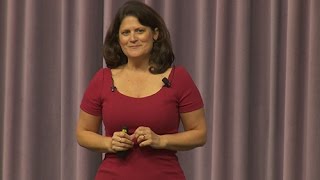
Sharon Vosmek, CEO of Astia, argues that innovation needs more women entrepreneurs. She discusses how women face barriers accessing networks and capital, and how societal norms limit their aspirations. The talk includes audience questions about building a more inclusive startup ecosystem.
Chapters
Thank you. Thank you, Tina, for the kind introduction and for inviting me. I'm joining quite an illustrious group and I look forward to coming to next quarter's lectures because you have some amazing conversations happening. I am the CEO of Astia and we'll get to more of that shortly. But let me find out about you if I might. It'll just help me frame my talking points for you. Raise your hand if you are sitting next to a woman. Okay. Raise your hand if you are not a man. Okay, that's helpful. Raise your hand if you are an entrepreneur already while you're here and studying. Okay. Raise your hand if you hope to be an entrepreneur. Raise your hand if you have not yet raised your hand. Okay, good. Love it. Okay, those of you who just raised your hand, I expect questions at the end so that you're fully engaged. I need to know that you're awake and not falling asleep on me. I'm going to apologize in advance. I was confessing to Tina I'm a bit jet lagged. So if it starts to get dull, one of you people who just raised your hand, you raise your hand and you tell me to move on. Okay? So I've learned a long time ago that you, at the start of my talk, will want to hear what I'm going to talk about. That'll help you see your way to the end. It'll help you see your way to your. If you're going for drinks, for dinner, whatever's after this. And you'll know when I'm going to be done. So let's talk about my talk really quickly and then we'll move into it. We're going to talk about why innovation matters. We're going to talk about how you too can create a culture of innovation. That's not something just unique to Silicon Valley, but it is something that certainly must be thought about and cultivated. And we're going to talk about how you do that. And then I'm going to talk to you about why in particular the high growth economy is ripe for this conversation of inclusive innovation. And when we're talking high growth, that's my purview. We're talking venture backable, high tech, clean tech, life science companies, you know, the next Genentechs, the next Googles, the next Twitters. Those are the types of companies we're talking about in my conversation. And, and I'm sure that there are other learnings for other spectrums of the economy, but I'm going to be very specific to the high growth economy in my comments. So As a leader in this specific space, I've spent a lot of time contemplating leadership for today, leadership for tomorrow, and what I should contribute to the big challenges in front of us. And one of my first learnings in that contemplation was that as leaders, we're leading in a time of truly unprecedented change. Now, I know we've said that before in history, but if you think about almost every move or decision a leader makes today ripples around the world in a stroke of a tweet, in the flip of a YouTube video. Everything I'm saying, I'm sure, will be commented on publicly by others who watch the video before I even have time to clarify what I meant to say. This is a time of profound ability to have impact, and within that I've chosen to be a heretic. I think that in times especially like this, of unprecedented impact, you must have people questioning what is, what's accepted, what we've been told. And I stand firmly in that space. You will have heard things because you're here at one of the best institutions and you will believe them to be true because you heard them here at Stanford. And I'm actually going to be bold enough to say some of it isn't true. Some of it needs to be challenged by you. As you become a leader, as you move out to become your best entrepreneur you can be, as you go on to become whatever it is, as you go back to Finland, you have to dare to look at everything with a critical eye because everything is under change, challenge and questioning. So that's me. You've gotten to know me a little bit and I said I was going to talk to you about innovation. So let me tell you why you can ignore me. Because as it relates to the very economy that I have chosen to focus on, I am not a high growth entrepreneur, never have been one. I have not successfully grown a company to IPO or to M and A. So I'm actually possibly the least qualified person at Stanford to talk to you about this economy and add to it. I have my Master's in Public Policy. It makes me completely useless according to the vast majority of those looking for thought leadership in the space of high growth entrepreneurship. But here's why you can listen to me. I've been a student of Silicon Valley throughout my entire career, since I moved here in 1991. And as a student, I was able to move away from what I was told and challenge that and actually look at what was really happening. And there are some interesting layers to this onion called Silicon Valley. Some layers that are worth exploring and I'm going to share a bit about that with you today. So let's start by doing a level set. You are all extremely bright people. So I know that we all, you all sitting there have a definition for innovation. Excuse me, but I'm going to tell you why I believe innovation matters and why it's worth some thought leadership and some big think jobs. We have just emerged from the worst financial crisis since the Great Depression. Day after day we read accounts of how we are slowly emerging from that, but we have yet to see the jobs recovery that normally flows with the economic recovery. As someone who studies economies, this is a problem and it's a big problem as it relates to the innovation economy. Because even where there are jobs, we're not seeing the talent that can fill the next level of jobs, the innovation jobs. So all the way around, innovation matters because it's the job engine. All net new jobs in the last 30 years were created by high growth companies in the first five years of growth. Wow. Did anyone even know that? I was shocked to find that out because by the way, most people like to focus on corporations to create jobs or even small business. But this was an aha that was discovered about a year and a half ago by the Kaufman Foundation. It's worth thinking about how innovation could solve that job creation hurdle. Especially when we know that all of the net new jobs in the last and most recent economic history came from these high growth companies. Innovation matters on another front, and that has to be a very personal front. Those of you who raised your hand because you're already an entrepreneur, you already know this. Innovation matters to you at a gut level that you can't deny. For those of you aspiring to be an entrepreneur, if you don't have that gut level, those are hard times in front of you. You got to find that thing that really motivates you. For me, my alignment with innovation came out of that. Cryolife is an interesting company you probably have never heard. Has anyone here heard of CryoLife? For me, it's my Google. Back in 2003, I had this silly problem called fainting. I was diagnosed by some of the most brilliant cardiologists around the world with a common faint and was told it would go away in time when I stopped being so hysterical. And fortunately, there were innovators who dared to challenge that. And they were looking at women's heart health who knew that women's hearts function differently than men. Today I stand here with one of those fantastic valves inside of Me that has been beautifully engineered by another human being, harvested by CryoLife and put into me. But that would not have happened without the innovators at CryoLife who journeyed since 1984 through clinical trials, through raising a venture capital, through that horrible long journey of innovation, to the fantastic result of saving a life. This is why I love innovation and it's why I'm so bound to you entrepreneurs and so dedicated to helping you get the ecosystem right so that you can succeed whoever the you is. Okay. We've established innovation matters both on a global level and on a very personal level. There are ways to create ecosystems, environments, communities, and there are ways to do it to ensure that you achieve innovation. What you might not know is that there's actually an abundant body of research about how to do it. What I find most profoundly interesting is that very little of it gets applied. I spoke about a month and a half ago at MIT where the original research was done, and in the audience were people who hadn't even heard of it and it was out of mit. So I'm here to share with you other direction. I'm here to share with you this incredible learning that I learned at IBM Centennial. At IBM Centennial, they did this coolest thing. They brought 750 leaders from around the world, brought us together in a room to hear all of the best thinking on some of the hardest topics, innovation being but one of them. And Professor Tom Malone from MIT did this amazing talk. MIT had determined, or was determined to find out what led to an innovative culture within an organization and how to create a model that could be replicated across teams so that you weren't just randomly hoping that you'd get innovation and that you'd get smart performance and you'd get results, but you could actually measure it as you measure individual intelligence and you could predict its results. The most profound finding was that they discovered that iq, which we've been measuring for nearly over half a century, actually had no correlation to group intelligence. So it didn't matter how smart the people you put together, it did not then result in a smarter team. So they went a step further and said, well, what does? What are the things that we can continue to measure? What are the metrics we should be driving towards to get to the best innovation, to get to the smartest teams. And this is the stuff. This is the jewel of my talk. So everyone wake up. Now we're going to talk about what they found. They found three things that determined group intelligence. So everyone better be writing and typing Number one, the average social perceptiveness of the group. How well did they read each other's body language? Can I tell that you're bored? Did I notice that you're laughing at me? Did I notice you've completely bought into what I'm saying because you're nodding your head? These were the things that were a measure of how smart a group. Interesting. Second was the evenness of the conversation. Did the group argue with each other or did they dialogue? Did they share ideas or did they squish ideas? My husband, throughout my journey in Silicon Valley, has been at seven startups. He's CTO at most of them, and he's not a brogrammer himself, but he somehow ends up in these brogrammer cultures over and over and over again. And he and I talk about point number two a lot because he himself is fairly mild mannered and fairly soft spoken. But put him in a Silicon Valley startup that's tech backed, excuse me, a tech company that's venture backed, and suddenly what emerges is this aggressive nature that argues your way and gets your point across because everyone else is an idiot. And I'm going to take you to where the smartness is. Interesting. MIT found that that's not the way to get to the best code. Okay, so now the third thing is something that was truly shocking. I mentioned. I Learned this at IBM's Centennial. Probably about 10, maybe 20% of us in the audience were women. So it was a very large gathering of a lot of suits. And when point number three came up, the room erupted. Two kinds of eruptions. The women stood and cheered and the men stood and cheered. This was a really interesting finding. The proportion of women on the group directly contributed, correlated to the group's intelligence and its subsequent performance and the innovation it was able to achieve. Now, MIT has done this research backward forward, and continued to prove it. The University of Michigan, Scott Page, has done very similar research. Same findings. Stanford Clayman Institute has done similar research, same findings. And yet, walk into any venture firm today, find if there's a woman in the partnership, and you'd be amazed to learn that 5% of venture capital partners are women. For an industry that loves its data and makes its decisions around that data, this stuff seems so easy to implement within the teams that you invest in and the teams you create as a venture firm. And yet it's the last bit of research that really doesn't get moved forward. So I'm here as the heretic in the room to say all of those hiring practices, you know, you've Heard them. Hire someone smarter than yourself. Hire the best person you can, the best person for the job, the smartest person for the job, the top of his class, his or her class. And yet really, if you think about hiring for your organization. We were talking about this earlier, weren't we? Organizations. How do organizations, cultures get created? Well, not on accident, they get chosen. And you can choose this for your ecosystem, whatever that is, if it's a company you're starting, if it's an environment you're creating, if it's a community you're engaging in, interesting learnings, worth thinking about. The impact goes well beyond the individual group performance though too. I mentioned I'm a public policy wonk. I really don't do anything without data. And what I am struck by is once again the data defends making sure you got women in there. And it's not because the women have a right to be in there, it's because you by the way, would be smart to put them in there. The economic impact is profound. Just today in the Economist, there was a fantastic article about the impact. Should women be able to fully participate as entrepreneurs globally? You know, they ranked in this Economist article the countries where women had full access and full participation to entrepreneurship. And the US doesn't even make the top 10 list. And would you be surprised to know that women, if they were able to fully participate. I love this bit of data. This is from Secretary of State Clinton. She had McKinsey, Goldman Sachs take a look at what are the numbers if women just who were at the ready, women already educated here at Stanford, fully participated in the economy to their full potential. A very nice impact to the economy, equal to greater than an investment in the people of China and India combined, just by tapping into the women who are already at the ready. This isn't a pipeline conversation, this is a potential conversation, something to talk about. But it leads me to Astia, which is where I started. I'm CEO of Astia and what Astia is, is a little bitty social experiment. So the other thing I didn't tell you about me is I take my learnings and I try to solve what I see to be problems that I've identified. Opportunities around an Astia is a very specific endeavor. When I came out of my graduate program, I had taken a look at women's participation in emerging markets. I thought there was a real problem with women's access to capital in Ethiopia and Sudan and Kenya and name any sub Saharan Africa country. What I was stunned to find was that at the time that I finished my graduate thesisilicon Valley had fewer women in it than any of those countries participating in the economy did. 2% of venture capital at that time went to women CEOs. Astounding. Unfortunate if you ask me. Especially as I look around and see these brilliant women here. My goal is to help you as students see the opportunity to help the ecosystem see the opportunity. But better yet, I'm not going to wait for it. I'm going to do it myself. So let me tell you about Astia. As Tina mentioned, Astia is a global community. It's 5,000 strong around the globe. But here's where we're really unique. We are half men and half women. Exactly half and half. Always exactly half and half. My board, half men and half women. My advisory boards in each market, half men and half women. The advisor teams that we create for the companies, half men and half women. And you might say why? And we touched on this earlier too. The why is a really interesting one. What I've learned about communities is that within any given community there are always some people who are more outside of the norm than others. And that leaves them feeling uncomfortable. But when everyone's kind of on an equal footing of outside the norm, at Astia, men are kind of outside the norm. It's an organization, you heard Tina focused on women led high growth companies, but so are the women because we're talking venture capital. So everyone feels a little bit outside the norm. I call it getting comfortable with uncomfortable. Because ultimately, if I were to redesign the high growth economy, I would be striving towards everyone being equally uncomfortable. It's where you kind of sit on your edge just a little bit. You kind of get into that space of listening a little bit better because you're not sure. And when everyone is equally unsure, you get some really exciting and juicy stuff happening. And we see it at Astia all of the time. Interestingly, in my unique space, we focus on what entrepreneurs need. It's pretty straightforward, it's not complicated. None of this is rocket science. They need access to networks and they need access to opportunity. So let's talk about how this plays out in an Astia ecosystem. As I mentioned, we're all a bit navigating something new and uncomfortable. So access to networks, let's start there. Pretty straightforward. You need to raise capital, you're going to need to meet with investors, you're going to need to present to them and get them to believe in you and invest in you. And you're going to need access to other entrepreneurs and industry Leaders who can provide you expertise. Seems pretty straightforward. Seems like anyone could do that. The barrier there, that's interesting, or the hurdle there, that's interesting, is that in our society, men and women are still in separate business networks. So let's think about that. What does that mean that we're in separate business networks? Well, it means let's say I got fired tomorrow I can think of five people I would call immediately and all of them happen to be women. Let's say something really amazing happened to you tomorrow, like in your career, you were promoted to head of Grand Poopa of Google, whatever that is, you, odds are if you were speaking statistically would have five men who you would call interesting. These gender lines exist for some really interesting social normative behaviors like sex. Right. It's very uncomfortable to get into intimate business relationships because across gender there might be sexual attraction, there might be a partner at home who finds it uncomfortable, lots of reasons for it to exist. This isn't glass ceiling stuff, but it is socially validated stuff. And when we hearken back to what I said earlier, that 95% of venture partners are men and we know that to get access to those men, you need to have access to their trusted business network. You can see how for a female entrepreneur, that might be a harder journey. Take it a step further and actually dare to talk about hidden bias. We all know that at early stage investment we don't have a lot to rely on. There aren't customers yet, lots of times there's not even a product. So we use words like I believed that entrepreneur. I trusted that entrepreneur. I knew that I could get into a 10 year relationship with that entrepreneur, wake up at midnight, take their call and feel really good about that investment. I made all of those words start to break down across networks and not just for women, for anyone who's on the outside of a fairly tight ecosystem, which is what venture capital is. So while what entrepreneurs need on access to networks is identical across gender, how it plays out is not identical because 95% of VCs are men, which God love them. I love that they invest in entrepreneurs. I told you, I love innovation. I'm alive because of innovation. But we can see how there might have to be an extra effort to figure out how to go for that glass of wine or that martini. If you're talking to me at about 10 o' clock at night when he's supposed to be at home with his kids or his wife or whomever, or worse, heaven forbid someone walks into the bar who actually knows both of us and wonders what the two of us are doing. Having a martini at 10 o' clock at night, it gets hard. It's hard stuff. I like that you're nodding. Thank you. Anyone who can't figure that out or can't understand that should try it one time. I'm happy to go for a martini with you. Okay, so access to opportunity. I think we've nailed why the networks part is hard. Let's talk about access to opportunity. Well, what's interesting about opportunity is it's about having the aspiration to high growth entrepreneurship as well as understanding the paths to success. So let's take them apart. Aspiration. Clayman Institute did a great bit of research and by the way, you should be googling Clayman Institute because they have great research around everything I've said. But this one is really interesting. They took a look at why women were dropping out of math and sciences and this research was originally done at the University of Wisconsin, Madison, replicated here at Stanford. Lot smarter people than me doing this stuff, guys. What they found was that a young man getting, let's say he's in a calculus course getting a B, feels like he's doing fine. Getting a C, he's doing fine all the way down to a D. He's not only fine, he is brilliant. He's a math whiz. He's going to use it in the furtherance of his career. He, he's going to negotiate a higher salary because he knows calculus. Young woman, same class, can go down to a B before she feels like she's failed. She's very likely at that B to drop math as a major, to drop the calculus course without completing it, to never mention to a soul that she took that calculus course and got that horrible grade. You can understand how that mentality results in lower aspirations. That lower self assessment results in lower aspirations. It's interesting how often I tell this story and I see people nodding at me and saying, yeah, I've done that. I felt like I've failed when maybe I haven't. Men never feel that, statistically speaking, that's the unique purview of what society has done to little girls that results in different paths to success. Women are extremely entrepreneurial. We have started, we are starting businesses at five times the rate of men, raising 1/27 the capital that men are. So our paths to success are not nearly as high falutin for lack of a better word. And while we try things, we try them in a more conservative approach because we're not necessarily sure that we're the one who can deliver on that. What's been really cool about Astia is how this plays out when you finally hit men and women doing this together, because men sitting next to a woman who under assesses her ability correct her. I have this fantastic story that I always tell about Prashant Shah at Hummer Winblad. He was at the time the Astia board chair. Hummer Winblad is one of the most laudable venture firms in the Valley. And that Prashant was willing to serve as my board chair was something I was very grateful for. But I'm far more grateful for what he did for this one entrepreneur. And he did it for many. But this one in particular was interesting. She was a young woman who had successfully run a hedge fund for 15 years. She was presenting her business at one of our showcases and the room was filled with investors and she presented. And Prashant raised his hand and he said, I notice on your market slide, your total addressable market slide, the numbers seem a little off. It looks to me like you have underestimated the true market size. And she said, no, no, I didn't underestimate it. This is what I can deliver to you. And he said, what do you mean that's what you can deliver to me? And she said, well, I know the market size is actually about four times this, but I know that I could deliver to you this market. And he, because he's Astia, stayed in the conversation. He said, you understand that total addressable market, nobody's expecting you to get the whole thing. Thing. You can put up a number that's more than what you are going to get. She said, no, no, I couldn't do that. It was a fantastic Astia moment, because in that moment, Prashant understood that when women come to present to him and it's played out over and over and again, odds are they're going to have more subdued numbers. For lack of a better word, they're going to be stated in a way that reflects the CEO's understanding of her ability to deliver that. But when a young man presenting the same business presents, he will present a true total addressable market, whether or not he can achieve it. And all Prashant has to do in that moment is stay in the conversation and talk to her about that. Because then she adjusted her slides and all she had to do in that moment was stay in the conversation and learn what Prashant was expecting to hear from her. Mit, excuse me, Harvard just finished a report that came out a week ago. Validating also that it's not just that we understate our numbers as women, we also are perceived as less able. And that's brand new. So I haven't had a whole lot of time to read it. Except it's quite similar to the Heidi Roizen Howard Roizen case that you might remember, Tina, which is quite interesting. And what that found was that when you put forward a business case with a man's name on it and you have a male present it, there's a perception that it's an investable deal. The exact same business case presented by a woman's voice with a woman's name on it has a far less likelihood of getting funded. And from what I have read in the cursory of that, because I haven't had the time to read the whole thing yet, is that it's 40% less likely to get funded. I don't think the way to address that is to go individually beating up every investor and telling them to stop it. I think the far more interesting and exciting thing to do is to redesign the ecosystem so that men and women are in it together, pursuing these very same things that they need, but doing it in a way that everyone's just a bit uncomfortable in. Figuring out what the other person intended to say, what the another person meant to say, doing those best behaviors that we heard from mit, intuiting each other, putting some intonation behind, understanding what the body language is saying, staying in the conversation and daring to find out if that person might actually be worthy of investment. Not because of your perceptions and your gut feeling and your hunch, but maybe because you've had a broader understanding of the full opportunity of that entrepreneur? I don't know. Just my thinking. Okay, so why I think in particular this conversation could happen here in a culture that loves innovation and yet hasn't achieved inclusive innovation. You heard me say that when I finished my research, 2% of venture capital went to women CEOs. Today it's 5. Still not much better. And I'm sure you're all seeing the articles that say why the dearth of women entrepreneurs? And I just wish we could tip the question on its head. And instead of asking why the dearth of women entrepreneurs? How do we create an ecosystem that's inclusive or an inclusive innovation? I think it's a far more interesting question because let's talk about where we are. Women are half of the workforce, for goodness sake. For the first time ever, we've finally hit this great and laudable goal of women in the Workforce firmly. So if ever there was a time and a place that we could talk about creating inclusive innovation, it seems now. I also think nationally, we're at an exciting time for women broadly. You know, we're 57% of the undergraduate population. It would seem that we could move well past 5% of venture capital going to women CEOs. Stanford, this is what you look like. Still pretty darn good to me. It seems ripe opportunity stuff. This is my challenge, though. This is women at Stanford studying the stems. Oh, no, because that matters here in the Valley, doesn't it? We keep hearing this, not enough women in the sciences. There is no reason for this statistic when we know that women are over half of the PhDs, we are over half of the MDs, we are over half of the law students. Why are we so few there? I don't know. But I think we need to ask the larger question about why is that environment a place where we aren't? Then there's my ASTIA challenge to you. This last year, I dove into the numbers. We've made it to a whopping 7% of companies with venture backing that have a woman in a founding position. My challenge to you, if you are women in the room, and if you didn't raise your hand on that entrepreneur question, reconsider it. You're at one of the most incredible institutions to become an entrepreneur. You'll have the networks, you'll have the pedigree, you'll have the opportunity. If you're a man in the room and you haven't added a woman to your team or haven't already solved it because you saw my earlier information about women, I can introduce you to some of your fellow classmates. They should be on your team. They're brilliant. They just might not know it. Or they might present it differently than you do. If you're not a student, but instead you're a professor at Stanford, I encourage you, when you look at your course construction, be sensitive to the fact that if only one group in your class is uncomfortable, that one group is going to become smaller and smaller and smaller. And that's what we've seen in the boardroom, in the corporate executive room, and quite honestly, anywhere where network matters. We've seen the numbers declining for women not increasing in the last 30 years. And then finally, if you're an industry leader and you're in the room or you're watching the podcast, you have a lot you can do to contribute to the ecosystem as well. I always say I hate quotas, but I love the Results. And Bill Campbell has a phenomenal way to get to results for any ecosystem. He said that when he was CEO of Intuit and he had an opening, he would require that half of the resumes he considered be women. Not because he was going to favor women, but because he knew that half of the population that was ready for that opportunity was women. Sounds a lot like counting in quotas, but it actually is. Going back to a learning, which is having women in those roles matters. Matters to business performance, it matters to innovation, it matters to jobs. And it's worth figuring out why they're not there and what you've done to exclude them, to not include them, or to not participate. Raise your hand if you actually would have come to this talk tonight if it was optional and it was labeled Women in Technology. Thank you, women, for coming to my lecture. And one man. This isn't a conversation for women by women. This is a conversation for the ecosystem. And this will not be solved until we all figure out what is our role in this conversation. Mine. I choose to be a heretic. I don't believe that there aren't women in tech. I don't believe that there aren't women qualified for the Twitter board. I don't believe that there aren't women qualified for any board in this valley. And I don't believe that this can go on another generation without being solved by smart people like you. You guys are the leaders of tomorrow. I'm just going to ride on your coats. It's my hope that as you're finding your path, you'll dare to reassess what you've been told. Silicon Valley is not a meritocracy. While it's a worthy goal, a meritocracy hasn't been achieved anywhere. So let's put that myth aside and figure out how we could get to a meritocracy. I am dying for a conversation with all of you. How about we move to some Q and A? Better yet, how about you tell me some things that you've learned that I might learn from? I open up. Yes. So you mentioned that the proportion of women on the team was correlated with the group intelligence. But what proportion is ideal? Yeah, I really like that question because I asked and I dove into the research, and unfortunately, it's all the way up to 100%. I don't think that's any better than 100% men, personally, but at least algorithmically, according to Scott Pages, it goes all the way up. I think that there's probably more work around that nuance. And I actually think if you look at points one and two for evenness of the conversation and the social perceptiveness, we train young girls for that, don't we? I mean, so I think men could be trained in those skills and attributes as well. I think it has far less to do with our genetic makeup than how we socialize people. Yes.
So what do you think of programs.
Especially in the technology industry, that are specifically targeted to women?
I think I asked you this question before.
So the question is what I think of programs that specifically target women in tech schools. Women in tech. I hate women's leadership programs. I am so done being mentored. I am so done having women be mentored. So that's one. You know, it's just I don't need another mentor. I got plenty of advisors, thank you very much. And our women are exceptional. They don't need mentoring, they need advisors just like anyone else does. But I think often mentoring or targeted programs are used as a way to fix women, as it were, rather than address what is the issue, why aren't women there? And I'll give an example. An unnamed partner of ours was really struggling to get women into their program for entrepreneurs. So they wanted to start a separate one for women. And they came to me and said, we're going to do this separate one for women. It's going to be awesome because the women won't come to our current one. And I said, well, have you explored why they won't come to your current one? Well, no, no, no. We're going to do this one for women. It's going to be great. Women are going to show up. And so they did that and they got a few women, but not the hundreds that they usually get for men. Two years into this interesting dialogue with them, they finally taken a look at what was happening in their organization to prevent women from participating. One was that they had an on location requirement. Okay. The vast majority of women have responsibilities in addition to their work and it is very difficult to go on location anywhere, even if it's a weekend boot camp. And they redesigned their program and moved away from their three month on location requirement and boom, their female applicants doubled just by changing how they were doing their program. So things that try and fix women rather than fix the paradigm. I'm very challenged by having said that. I do love my female book club because we get together, we have a lovely glass of wine and we mentor each other through whatever hurdles we're having. But I think there are very few scenarios where a uniquely focused women's effort will get us to where we need to get. Because I actually think this is a real problem for us as a society. And furthering it with more and more women's only programs I don't think gets us any closer to an ultimate solution. It's less comfortable. I think it is far more comfortable for women to get together and feel all woman y and we like each other and that's good. But that's the same problem that boys have when they all get together and they feel good. You know, I just think that it's time for us to get uncomfortable. Does that answer your question, Tina?
So to build on this, a few weeks ago, Startup Weekend was at Stanford and I was there and was surprised and disappointed by the the fact that there were very few women who showed up. And when they did show up, they took a back seat. They took on roles that were not leadership. This was a place where they nobody had to anoint them, no one had to invite them. They could show up. And when we talked about this before, you said we could change the design. What could happen in a program like that to make it more attractive for women to show up in these type of opportunities to start a venture?
Right. So let's start with one myth busting and then we'll go to another one is that the average age of a successful entrepreneur is 40. And so a program that's a weekend and that's men or women, by the way. And there are fantastic exceptions and we all love those fantastic exceptions because they make a lot of money. But the truth is that the average age is 40. And startup weekend, if it's serious about starting up new endeavors, needs to be aware of that data and know that a 40 year old woman cannot leave home for the weekend and the odds are she doesn't want to be locked in somewhere for a weekend. Now, I love what Startup Weekend does, but I think that if we're serious about starting businesses, you can't have one model and say this will be the model for starting a business. You come lock yourselves for a weekend or three months or six months or whatever it is. Your model actually has to have flexibility because those businesses are all very different and the individuals behind them are very different. So that's myth number one. It's just the phenotype of the entrepreneur. And then the other one is that women feel included by the message. So without it being about Startup Weekend, I have read almost every application for a startup and I will tell you that most women would opt out of applying because they don't feel they're yet at the bar of that application. You and I were talking about your application. I love your application because it was very simple, very little to it. Many have these bars that, interestingly, women, we've been socialized to follow rules. So if it asks us for our, let's say, our valuation, we don't know what that is. We assume we're not ready to apply. A young man will say, I don't know what a valuation is, but I'm sure it's 10 million and he'll apply. And this is just what we've done socially to girls and boys differently. And it's part of why we should have the discussion. So I'm always, when I see loan numbers, I'm always asking, what, what was the requirement to get there? Astia, we've moved to a nomination process. That 5,000 member community, they source, screen and select our companies and sourcing is their number one job because women do not apply. And you're right, that's a problem we need to work on because as a society, we've created that. But that's not that those women aren't capable and ready. Sometimes they just need a nomination to get them there. So once again, we just adjusted our process. Yes.
What's your advice for. I have twin girls that are four and I haven't told them yet anything about this. Well, I spent a lot of time trying to encourage their aspirations and they have that. But I'm worried that they're going to go out in the world and find out, oh, they're supposed to have this suppressed aspiration that horrifies me at age 7.
So the research shows that it'll happen at age 7. And the research also shows that you as daddy have a huge role in that. So it's great that you are encouraging them to aspire. How many of you saw the Goldilocks video? If you haven't seen it, Google it. We raise girls with some stupid shit. I mean, it's just ridiculous how we raise girls. And while they're in your control, you're right, you can protect them from that. And the second they go out, they're going to hear other stupid stuff. I'll never forget the day my math teacher decided that math was for boys and said it out loud. Now, I'm older than you guys, so, okay, maybe that's acceptable. Acceptable. But I'm talking 1985, not so long ago, okay? You're all born after that, so shut up. But you know what I'm saying. I mean, I just, I worry too, for your daughters. And it's why I think this generation needs to get on this, because this isn't something that happens on accident. You cannot tell me that this is because Silicon Valley, the meritocracy it is, doesn't see any women led deals. That's ridiculous. There is something bigger at play and it's the stuff you're worried about. And I'm worried about it until we get to that space where we're all, okay, getting uncomfortable. And every one of you men who didn't raise your hand because you weren't going to come to my talk, if it's called Women in Tech, go to those talks, dare to go. Be uncomfortable, be the only guy in the room. When you meet a woman who's sitting next to you in a class, know that she's feeling uncomfortable. As uncomfortable as you are. Anyway, I just think it's a larger conversation that our society hasn't geared up for yet. And it's why I'm committed to being the heretic and saying until you're ready to talk about it in frank terms, sex, power, money, it's all there and you got to take it on. And nobody has solved this. No one. ASTI is the only organization I can find that has hit 50 50. And the only thing close is the Israeli military. And interestingly, they have a phenomenal percentage of women high growth entrepreneurs. Not that we need a military, I'm just saying. Anyone else? Yes.
So, Sharon, thank you for your talk. It's very enlightening. I was at a luncheon the other day with a bunch of women. We were talking about women in leadership. And I was a little bit surprised by a discussion around aping men. Women succeeding by aping men, whether in body language, personal accessories, putting on glasses, sitting in a very masculine fashion. And it disturbed me. And I just kind of wanted to get your feedback on that.
So the question was about women aping men. And quite honestly, I'll go a step further and say the programs that encourage this, because I cannot tell you how many corporate executives I sit with who tell me that their program for women's leadership is to help them know how to dress, help them know how to talk, help them know how to do this. I find it so offensive. Women are not broken. I refuse to not wear my red dress and my heels to this talk just because most VCs would show up in their khakis and their blue shirt. I like my red dress. Never mind that. I had to get the mic back there. That was A little bit hard, but you know what I mean. I actually like being a girl. It's a pretty cool space. We have some strengths that are pretty darn awesome, if I can say so myself. But we spend so much time redefining what success looks like. So let me tell you what success looked like when I was four. Four was I was going to be the best ping pong player ever. Okay? By the age of 12, my dad was telling me, my dad, who by the way, my dad's pretty awesome, told me I shouldn't beat boys because it hurts their self esteem. I bet every woman in this room has had some sort of stupid advice like that. And if I ever hope to have a boyfriend, I da da da da da. Age 12. Anyway, I'm pretty good at ping pong, but you know, this stuff isn't easy stuff. And when we go, that's why we go to the simple stuff. Post industrial revolution was white male, single head of household. And we keep thinking that the models that were created out of that somehow are going to magically overnight support dual income households with two kids, a nanny, soccer, all the things that go with that. When is there going to be an executive that actually stands up and says, you know what, I get it that in the US today, the number of people I will employ who are single head of household is diminishing rapidly and is definitely in the minority and therefore I gotta think about the workplace differently. I have yet to see that corporation stand up and do it. Because I think what they'd have to address is that their challenge of getting women into the executive suites is about networks. And men and women aren't in the same business networks. Those deals are done over the golf course. They are not done when a headhunter comes in and says, oh, you come into the executive suite, you come be the see whatever of our company? It doesn't happen via hr, people. That happens over a beer, over a martini on the golf course. And until we recognize the barriers of networks, we won't get past it. Or we could do quotas.
I'm curious kind of what the reality is of women who are excited and want to be stay at home moms? Or like you said, you're really excited about wearing a red dress because you're excited about being a girl. What about women who are excited about being a mom and they really don't see how is it possible to actually be the mom that you want to be and the career woman that you want to be?
So the question is, how do I balance this with Women's desire to be the best mom they could be. And here I'm a bit of a heretic as well. Now I don't have children, but that doesn't stop me from having this advice. I don't believe that exists anymore. The absolute stay at home forever person. At some point you're going to have to work. I mean, sorry, work outside the home. It is work in the home. And I apologize I said it that way. But I think it's naive to think that you can step out for 15 years and miraculously come back in. And women are all too often and their husbands too naive about the impact to career. And I think there's a better way to do it. There are board service, you know, there are board obligations that you can maintain while raising children. And I think, you know, the heretic in me really also bristles at being at Stanford and hearing that question. I gotta tell you, because I don't want you to step out ever. You are tomorrow's leader. You, you are my next president of something. And I want you to be a fantastic mom and still be able to go on that trajectory. And I know we can't get there without this conversation. So this is an interesting thing, being at a place like Stanford. I only speak to really bright people because I think you can solve it better than me. I don't know how to solve that, but I don't want you to step out. Questions or thoughts? Yes, sir.
So I think this last question sets it up for me because you're presenting a couple of challenges. I mean, you're saying you don't want to make that compromise, you don't want the students in this auditorium to make that compromise. And in not making that compromise, you're setting up a model which frankly there is very little evidence of it actually working out to date. But then you make the argument that the ecosystem is not right. And then there's characteristics that women have that is distinguished and distinct from men and there's no value associated with one versus the other. But they are different. And both entrepreneurship and innovation requires a degree of ability to tolerate risk, which even amongst men is not universal, but that it self selects to a much smaller segment of the population. And so you combine those two things and you do end up with that kind of ratio.
So I don't know what compromise you're referencing, so I'm going to ask you more about that. But I am going to take on the risk that because Tina, we had this conversation. There is no research that shows that women are Less tolerant than men. There is great research, actually, that says that we just assess it differently and we then deal with it differently. Sally Krawchek. How many of you know who Sally Krawcheck is? She was CEO and CFO at Citibank. So she was CEO of Private wealth and CFO of Citi Broadly. And at the time of the financial crisis, she kept speaking up and saying, this risk is not worth our journey. And they still went down that path, and she still stayed. What she subsequently did was unique to Sally, which was she demanded that the risk they took didn't get passed to their customers. So it wasn't that she walked out of the game, and it wasn't that she somehow wouldn't stay there for that difficult stuff, but she did have a different solution for what to do with it. Constantly I'm meeting women entrepreneurs who are just as willing and able to go on that entrepreneurial journey. And I go back to the research. There is no research to show that there's a different risk tolerance. There is a different risk assessment. But I'm more intrigued by your opening comment, which was the compromise. So what was your questioner?
The previous questioner actually said, if I want to be a really good mom, I need to be able to. To make a choice. I mean, they actually.
Did you say that to be a really good mom, you need to make a choice? I don't want to make sure that we're not putting words in our mouth. You were saying to be a really good mom, you need to choose between work and home?
I don't know yet, but yeah, I mean, what do you do? You want to be a really good mom, and that's what you see you have to do. How do you make that?
So are there any dads in the room? Okay. So are you a good dad? Yes. Okay, Just checking. I'm getting some advice for you. You're a good dad. Have you had to choose between work and home? Yes. How have you done that? Because there's a woman asking for some advice on this, and I am not a parent. He won't talk to you about it? Yes.
I am a mother of three kids, all under seven. I worked at a big company that's raised $850 million. And I wasn't married management there, but I reported directly to management while pursuing.
A PhD at your school. It's doable. Okay. And that's great. And I love women who can support women. I want to hear from a man how you've managed to do work at home. Because, by the way, this is the difficult conversation. Right. Thank you. So is there a man who will just tell me how uncomfortable it's been or maybe it's been perfectly easy? Yes, sir.
My wife and I made a choice where living here in this valley, she was willing to sacrifice that for our son. And I'm very cognizant of the fact she's made those sacrifices for herself. And it's a challenge. She's actually trying to figure out right now how to re. Bring herself back into the workforce in a place where she's really happy with that amount of commitment on both sides. And it's very much not easy. But I think anyone, if you're in a relationship, in a two parent household, the acknowledgment to the other that they've given that sacrifice goes a long way.
That's a powerful statement. These are the conversations. So these are the things I don't have answers for. I just know that we got to get to the conversation to get past this. Because right now the only conversation is why aren't there women, why don't they come and. And why do they drop out? And I think a far more enlightening exercise would be how do we get them there and how do we keep them? Thank you very much for your time this evening.
More from GHION.AI


O processo de reconhecer limites, mesmo quando a vida parece exigir sempre mais.





Depois de tantas histórias, aprendizados e pausas necessárias, o @interior_iza está de volta



