Software is Hard Work [Entire Talk]
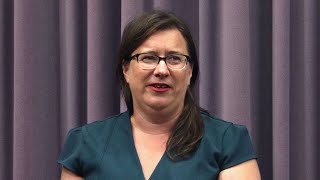
Edith Harbaugh, CEO of LaunchDarkly, traces her career from 1999 through founding her feature-flag company. She covers the dot-com crash, moving between engineering and product roles, early customer acquisition, and the challenges of creating a new software category.
Chapters
Who you are defines how you build. Hey, it's great to be here. Thanks for having me. I am Edith Harbaugh. I am CEO and co-founder of LaunchDarkly. We are a feature management platform, and we actually have 1,000 customers now. Stuff moves rapidly. And we have names, even if you haven't heard of LaunchDarkly, I hope you will have heard of Atlassian, Intuit, and BMW, who are some of our customers worldwide. We're a new category. What we say is that software powers the world. We power all teams to deliver and control their software. One of the things I'm most proud of as an engineer is that I get to visit customers all over the world. And I go and talk to their software developers. and they talk about how LaunchDarkly has made their life better. Like made a material difference in their happiness. They say with LaunchDarkly that they have less stressful releases. We saved their weekend because when something broke, they could just turn it off instead of having to scramble and do a hotfix. And they say that they can get the right feature to the right person at the right time. This is an engineer It's pretty much all you want. To feel like you've built something great and that people appreciate it and love it. The other thing I get more and more proud about as time goes by is every time we hire new hires, we have, I call it culture and values. Which is if you're a new hire, you spend an hour with me. And the reason why I do this is I think that culture is only as strong as the most recent person you hired. There's everything that you know, all this tribal knowledge, facts, fun history, just why something happened that the new hire has absolutely no idea. Like all the jokes that you think everybody just gets, like, oh, there's a pool on the roof. They don't get it. So with all the new hires, I sit them down for an hour and I say, this is your time to talk to me. I'm going to walk through the history of the company. And you can ask me anything, just don't tweet it. "this is your time with me." And the thing that touched me really deeply is I was telling them about how happy I was about how LaunchDarkly was changing the lives of people, of our customers, and a new hire said, "The reason why I joined is because the person who interviewed me, a LaunchDarkly long-term employee, said it had changed their life for the better." So employee engagement is something I pay a lot of attention to that our employees say consistently that LaunchDarkly is a great place to work. That feels really good. Okay, this is me. This is all the great world now. 20 years ago, I was a graduating senior, and I had no idea what I was going to do. And that's the journey I'm going to walk you through today, is going from somebody graduating in 1999 to now. So in 1999, I was a Harvey Mudd College graduate in engineering, and I really wanted to work at a startup. Like I wanted all the things I just described. I wanted to work at a passionate team that was building something really cool with people I really liked working with. So I went and interviewed at a couple companies. One was a 6-person company that I thought would be pretty cool, and they said, well, you don't really know anything. You know, you're this kind of wet behind the ears, you know, 20-year-old. And I was like, can't really disagree with that. I went and interviewed at another company which was this high flyer at the time called Scient which did dot-com consulting and they were also kind of like, "Eh, no." The job you want does not always want you. This is the number one takeaway I hope you all have is that just because you don't get the job you want out of college, life still goes on. You're getting a lot of nos. What I actually did is I went to work for a 30-person consulting shop in Oakland. And what we did is we would go out to like a big insurance company, and this was before there was Web 2.0. This was Web 1.0, and we didn't even call it Web 1.0. We just called it.com. We weren't big with numbering back then. And we would consult with them about how to get more modern and get on the web. It was my first job out of school, and I was absolutely miserable. And I had a really hard time picking apart whether I was miserable because I just didn't like working, Or I was miserable because it was the kind of place where I would be sitting at my computer and somebody would walk in and rip a laptop off a desk and say, "So-and-so quit," and then I fired them. And I was like, "Oh, this is not a great environment." So after about 5 months, I too quit. And that was really hard because, as Ravi said, I like sticking with something. So the lesson I hope you take from this is if you're really, really, really miserable at a job, it's okay to quit. It doesn't make you a failure. So then I went and worked at a flashy skyscraper downtown in San Francisco where I did the opposite thing. Before we were trying to get old companies modern. Now I was a dot-com consultant and there would be these bright Stanford MBAs who had funding and they would hire us to go actually build the product. So there was this idea back then that all you really needed was the idea and then you would hire consulting firm to build the actual thing. This was great. I had a blast. I was taking the train down to Mountain View. I was hanging out at the SoftBank incubator. I was like, this is kind of finally the life I want to live. I went out to the PacBell Park. They called it PacBell Park back then. And they had a box where the owner of the company took us out. And then he drove me in his Porsche, kind of crammed in the back seat, not the front. To the BART station, I'm like, wow, will this fun ever stop? He's like, no. You know, we write off the box as entertainment expense. The fun will never stop. That was baseball season. Thanksgiving that year, the dot-com crash had started. So all these startups, these Stanford MBAs had gotten money from a lot of Silicon Valley names you know. And the bottom fell out of the market. Like all these bright ideas were just kind of propped up by hope. And when the money spigot turned off, all the people who used to pay us money to build their ideas didn't have that money anymore. So I got laid off, I think around December. And this was pretty hard. I was like, wow, I've been out of college a year and 3 months, and I've had 2 jobs. I'd like to go to a holiday party once. So then I found my third job. A friend from the first job referred me and I went to work for a company called Epicentric. And this is, I think, is where my career really, really began. Epicentric was a software company that was building something called portal software. It was a new category. It was really fun. I was in engineering and I got to build these new systems. I got to see what it was like to actually run a release Beginning to end. Before I was a consultant where you kind of came in and built something and left, when you're actually building a release, you learn all sorts of stuff. Like how to scope requirements. What happens when you misscope a requirement? What happens when you overscope a requirement? What happens when a release goes really, really bad? What happens when two teams build APIs that don't talk to each other? What happens when all of a sudden you have to cut out 5 features that you promised to somebody because you just need to ship that night? I had a blast at Epicentric. I really learned how to actually build software for real. I got named as an inventor on some patents, which doesn't get you any money, but looks good when you tell somebody, sometimes. And I learned a lot about building software. Unfortunately, or fortunately, the really other cool part about being at Epicentric was, I told you before there was this high flyer named Scient that didn't give me a job. Epicentric moved into the old Science office because Science was out of business. So every day I went to work at One Market and they hadn't redone any of the decor, so it was this really dot-commy carpet with all these green dots on it. So I was like, huh, I got the job I wanted after all. And they're all out of business. So again, life has funny turns sometimes. The funny turn that happened then was Epicentric got bought by a Texas company called Vignette. Vignette was this public company based in Austin, and they saw a lot of the cool stuff we were doing about software, and they wanted me to transfer down to Austin and help run projects down there. So I took the move. I went down to Vignette and I worked down there, and I was an engineering program manager and I'd kind of risen to the top level. I was a staff engineering level. I didn't really see what was next. So then I made a lateral move and I became a product manager. This was hard because I basically reset my career. I became a product manager. Engineering managers build stuff. Product managers decide what to build. Or at least that's the way I thought it worked. When I became a product manager, I learned that product managers take in requirements from a lot of people, munge them together, try to satisfy various constituencies, and then decide. Vignette was also really fun because I got to talk to a lot more end users. So Vignette had customers all over the world. They had big newspapers in England, they had banks in Italy, They had a lot of media properties in New York. They had media properties in Chicago. So, and we also had really marquee customers that I was proud of, like NASA. So my job at Vignette was I would fly all over the world, go to these really cool locations, and get absolutely screamed at by unhappy customers. Vignette had a lot of really bad bugs at the time. There were bad bugs like, not like a really trivial bug like this should be green and it's actually teal, but a bad bug like we're a newspaper and you just deleted all of our content. Or we're a hotel chain and hotels actually have a lot of content. They have the pictures for the property. They have the blurbs. We're a hotel property and none of the blurbs go live, so we haven't been able to book hotels for a couple days. Really unhappy people yelling at me. My joke is that I learned how to get yelled at in several languages. But the reason why they were yelling at us is because they bet themselves on it. Like, I vividly remember going to Chicago and somebody said, you know, I picked you as a vendor. You're not doing well. I'm going to get fired because I picked a bad vendor. I was like, whoa. This is real. This isn't like some toy. This is something people actually believe in. So from this, I really learned the importance of if you build software, you need to take it seriously. People are— if you build software, people are actually going to use it. And it's not just you sitting in your nice shiny scraper in SF, like, oh, maybe it should work this way. People really depend on it. All right. So I had been at Vignette. I was a product manager. Having a good time, but I kept looking back at San Francisco. So this is 2007 where there started to kind of be this resurgence of Web 2.0. And I would see what my old friends were doing. I would read TechCrunch. I would be like, whoa, that's kind of where I want to be. But I'm like, well, I make more money here in Austin. So I kind of wavered for about 6 months about, you know, should I move back to SF or stay in Austin? And the thing that finally made me decide it is I was a single person. I didn't have any responsibilities. I was like, why am I acting like I'm 50? Like, why am I like, oh, I can't quit, it's too risky. Like, what's the real risk? The real risk is like regretting that I didn't do this. Like, I want to actually go work at a startup. I don't want to keep working at this big public company. So I quit. And it felt like the best feeling in the world. They were really surprised, but it was really fun. And I then took a break in the summer of 2007 where I biked cross-country from Bellingham, Washington to Washington, D.C. I decided I'd been working for a while and I just kind of wanted to reset and do something fun. This was really fun. If you ever have a chance to take a long period of time off between jobs, I really recommend it. It's a good way to get yourself back into a new headspace. All right. So I got back to SF in 2007, all eager to go work at the cool job I'd been wanting for forever. I was like, now is my chance. I'm going to go work at the flashy startup. I'm going to be that person. This is going to be awesome. And I went in and interviewed at these flashy startups, and their reaction was, well, you've really only been a product manager for about a year and a half. I said, "Well, what about all this engineering experience?" They're like, "Well, you've only been a product manager for a year and a half." And I said, "But I could do all this enterprise engineering stuff." They're like, "We want somebody who's really good at consumer product." This was really brutal to me. Once again, I learned that the job that you fall in love with does not always fall back in love with you. I went and interviewed at Flixster, which I very much wanted to work at. I really remember their quote. They're like, "We want somebody who's done consumer and you haven't." So didn't go work there. I went and worked at the job that actually wanted me. I went and worked at Monster.com and I actually learned a ton. So I got my own P&L. If you don't know what P&L is, it's profit and loss. So at the time, my division was making about $10 million. They said, "We want to make $15 million." Make it so. I learned so much from that. I learned all about, this was kind of the dawn of Google Ads. I learned about how to do email sends. I learned really how to do consumer marketing. And it was not the flashy company I wanted, but I learned a ton. So lesson from this one is even if it's not the job you want, you can still learn something. Around then, I finally, finally, finally got the job I had always wanted. Except for I didn't know that this existed because it was a new category. There was a company called EasyBloom and they made a plant device. And this was before there was really Wi-Fi or even like reliably like it is now or iPhones. It was a device which you put in a plant and it would measure the soil, the temperature, the light, and you'd stick it into your computer with a USB port and it would tell you what to grow. As an engineer, I thought this was really, really cool. And also as somebody that had killed many plants, I thought this was really, really cool. So this company at the time was 8 people. They had just come out of manufacturing and they were about to go ready to launch. And I was like, this is the perfect job for me. So I went and worked there. And it was the perfect job for me because it was fun. It was also the perfect job for me because we launched it at probably the worst time you can launch a gardening product. So we launched this product in November of 2008. So the students here are too young to remember this, but 2008 was right at the beginning of a global meltdown around mortgages. So everybody was giving up their houses, cutting discretionary spending, and not buying household goods. Plus, November is a terrible time for a gardening product. Nobody learns. The bright side of the story was, so the first month we expected to sell around 500 units if we thought it was bad, 1,000 units if it was good. We actually sold 12 units. Like 12. We had made all these plans for like what if there's a huge surge of people calling and asking for help? How do we get more units from China in a hurry if we need more units? Plan this elaborate launch. We'd actually sent the support person in a bunker to answer all the support calls. Calls we anticipated getting. And so we got 12 calls. I mean, so we got 12 units total. The bright flip side of this was I was the product manager at the time, and I told the boss, the founder of the company, like, hey, maybe I should try doing some marketing. He's like, oh, marketing? And I was like, I know how to run Google Ads. I can run some Facebook ads. Maybe I could also whip up some other stuff. And he's like, here's my credit card. And so I got us, by trying different stuff, I got us so that we made $1 million in sales in a year. And it was all because things were going so badly they could only go better. And also because it was a brand new company and they let me experiment. Like just any success at all they saw as a success. So lesson from this is even if you're working at a failing company, You have this great opportunity. How worse could it go? Okay, so I was at EasyBloom for about 3 years, and then I decided I wanted to go work for TripIt. TripIt was a mobile app, and they were extremely popular around consumers. They had about, when I joined, about 5 million users of the consumer app, and I really liked TripIt because I like traveling. And they hired me because they wanted to start up a business selling to businesses. Like before, they'd been strictly downloading for consumers. Now they said, "We want to also sell to businesses." And they looked at my resume and they said, "Oh, this is really great. You have all this business background. Like you're from enterprise. This is cool." So like all this experience, which I thought was completely useless, was suddenly very useful. Like it's really cool that you know how to talk to businesses. So I joined TripIt and launched TripIt for business. Got it to around $1 million in revenue. And Concur, which was this big giant, saw what we were doing and acquired us for roughly, this is public knowledge, roughly $100 million. So this was the second time I went through an acquisition. The second time I thought I was working for this cool consumer company and all of a sudden I was working for Concur. If anybody has ever done expense reports, Concur does expense reports. Not the funnest thing in the world. The thing I really liked about Concur though was it was this 18-year-old company based in Seattle, very different than most of the companies I worked for, which you were considered an old-timer if you'd been there 3 years. And they really invested in their people. Like if you were considered a good manager or a good director like I was, they kind of gave you a lot of training because they wanted to get you to the next level. And I know that at some companies, training is seen as a punishment. Like, I've heard at Netscape, it was like, "Oh, you're a bad manager. We're sending you to manager training." You know, it's like a punishment, like a timeout. Concur did a really brilliant job of saying, "This is a treat. This is us wanting to invest in you and get you to the next thing. Like, it's not that you're a bad speaker. It's that we want you to be a better speaker. It's not that you're a bad manager. We want you to be a better manager so we can promote you from manager to director. So I loved this. Every class I could take there, I did. I really liked that they invested in us. So the lesson in this one is, even if you're working at a big company that you don't necessarily like as big company-ish, you can still learn a lot. Okay, so in the background this whole time, I'd been wanting to start a company. I'd worked at these really small, EasyBloom was the smallest, about 8 people. I worked at big companies. I launched business divisions, and I was like, well, this is great. I knew that I could go from zero to a million, but I want to do it for myself. Like, I don't want to do it for somebody else. I don't want to do it as part of a spin-out. I don't want to do it as part of a division. I want to do it for me. The issue was I had no ideas. Like, I was like, I'm a very boring person. Like, all I really know how to do is build software. Like, that's it. Like, I'm not like somebody who's like, oh, I also know how to do, you know, crazy ideas all my friends were doing. I was just like, all I really know is software itself. Like, I know how to ship a release. I know how to design a release. I know how to bring it to market. But just software stuff. That's what I love. I love software. You know, what it— I mean, my friend John Kodumal and I, who'd gone to college together, we would hang out. He was in engineering. and we would just sit around and talk about software. How should Agile be implemented? Silly stuff we'd seen product managers do. How to build better releases. Release management. That was all we talked about. So John and I kept trying to come up with an idea to start our company around. Finally, we decided that we would just start working on something 10 hours a week. So if there's ever anybody you're considering joining a company with, Practice it first. You don't know what it's like until you actually work with somebody, what it's like to work with somebody. Sounds obvious. So what we started doing is we started working for 10 hours a week. We both kept our full-time jobs. John was at Atlassian, I was at Concur, and we would work on our idea for 10 hours. And we cycled through about, depending on how you count it, like 3 to 7 ideas. Initially, we thought about doing an app for children. Apps for children are actually very hard because there's a lot of regulations around what content you should show children. We thought about doing a productization of his PhD thesis, which was around static analysis. And we actually worked on this for a long time. We worked on this for around a year. So I was out there talking to a lot of developers. It didn't feel right. And then when we were talking to people about ideas, suddenly it became really clear to us that we should do something around feature flags. I was talking to my developer friends. They said, you know what I really like and miss is the framework that I used to have at Facebook, or the framework I used to have at Amazon, or I could see what people at Dropbox are building. I'd also, we'd had an internal framework at TripIt. We had this internal framework where we could roll features out to different users, we could control it, we could see who was using a feature well. And I had always complained when I was at TripIt, like, why isn't this a product? Why do we have to keep doing it in-house? Even when I was back at Monster.com, I remember we had this catastrophic release once. Where I really wanted to try two different versions of something and then be able to do a kill switch, and there just wasn't a way to do it. I was like, why don't we build a product that makes software development better? And John said, that's it. That's our idea. Finally, we have found an idea that takes advantage of what we're both really good at, which is software. The stuff that we thought wasn't important was actually really important because we we understood software. John had been at Atlassian, he had a PhD in software, CS. I knew software inside out. So we started LaunchDarkly. And I remember starting it because Ravi, who's sitting right here, actually saw one of the very first times we pitched. I had convinced John, my co-founder, to leave Atlassian, and I had been applying to a bunch of accelerators. And we got turned down by YC. We got turned down by 500 startups, and I never heard back from Alchemist, so I was just kind of like, okay. And I remember because I was going up to Tennessee Valley to run. I love running, and I was training for a 100-mile race, and all of a sudden I got a phone call, and I pull over to take it. Don't take a phone call while you're driving. If you're a student, remember nothing but that. And it was Robbie, and Robbie said, hey, you know, I've been trying to email you, I want you to come in for an interview to be a part of my accelerator. Why haven't you responded to my emails? I was like, emails? Maru? And he's like, yeah. This was on a Thursday. He's like, can you come on Saturday? I'm like, yes. And then I had to go call John, who had his big going away party from Atlassian on Friday. So he'd been at his company for about 8 years, and he had this blowout party planned. I'm like, John, actually we have to go down to Palo Alto at 8 AM on Saturday. Sorry. So we went down. We went down to Alchemist Accelerator. We pitched Ravi. He saw our very primordial, I'd say kind of crummy pitch, and he accepted us into Alchemist, and that is the beginning of our company. So the very first investor we got was actually sitting right here. So thank you, Ravi. For being the first to believe in us. He saw that we had the spark of something. And I say thank you, Ravi, because nobody else saw it. We'd gotten turned down by every other accelerator. We didn't have any customers, so I'm still shocked to this day that he saw something. Okay, so we'd started this company. We had some money from accelerator. Everything is just magic then, right? No. Now came the really hard part of going out and getting customers. John would go build. John was my co-founder, and I would go out and try to get customers. It took us about a year to get 9 people using it. And that was with a lot of hard work. That was with if somebody said they were remotely interested, like John and I would go show up at their office and say, okay, you're going to install it now. And we're not going to leave until it's installed. Sometimes this took a couple days. So the first year was incredibly hard. We were this new product in a new market that nobody had heard of, and if they had heard of it, they built it in-house. The one thing that really kept us going was that the people who did use it seemed to like it. So after the first year, we had 9 customers. In the second year, we started charging, and this is a different metric. So I say 9 customers the first year, what I really mean is users. So when I asked people to start paying, two of them said, "We were actually only using this as a favor to you and John." And I said, "Well, can you pay like $5 so I could claim that we have customers?" And they said no. But they had used it. So this is the hard line that you have to learn if you're going to start a company between users and customers. It's sometimes better to ask for money because then you quickly figure out whether somebody is using it for a favor or for real. However, we did have 5 customers. This made me really happy. One of them was a company called Auction.com. We'd put up a lot of content, a landing page, and they were the first person that I didn't know who we got to use us. They signed up for more information. I gave the director of engineering a phone call. He said he wanted a system like he'd used at LinkedIn that would help him with releases that had some sort of A/B testing and segmentation. I said, "We have exactly that." He said, "Great." So one customer that we didn't know that was willing to pay us 5 figures at the time gave me a ton of hope. So startups are sometimes a slow slog of just like you just look for these little tiny sparks of hope. I'm like, one person will pay us some money. Cool. Another customer I was really happy about was— so that happened in April. In September, we had about 7 customers paying us. And I know it was 7 because every month I had my spreadsheet where I would put down what customers started paying us. And every month I'm like, there better be another name or I'm going to be very unhappy. And what made me extremely happy was that somebody signed up and paid that I never met. Like, I just got this automated email. Somebody put down their credit card and paid for it. Cool. So if you're starting a startup and it's really hard, just always look for some flicker or cadence of stuff is happening and it's starting to move. So people ask me, how do you get these customers? We just put out a ton of content. I'm not a fan of stealth. I know some Stanford company just got like $50 million out of stealth. That wasn't our style. If people don't know we exist, nobody's going to use us. So I wrote a ton of blogs. I did the podcast, which we talked about. I would post stuff on Quora. I would go to give a talk anywhere that would have me give a talk. And this was really hard for me in the beginning because I was super shy. I was just all about getting the word out. And it worked. Like, people started to say, hey, I read your article. This looks really interesting. and we'd like to use your software. We did a big Product Hunt launch, and we put a ton of effort in this Product Hunt launch, and we expected to get around 400, maybe conservatively 200 customers from this big launch, because these are the numbers we'd heard from our friends. Instead, we got one. One customer. But one is better than zero. We got one customer, so it was Envision Software, and again, this was somebody that wasn't a personal friend of us. And I remember the first time we had a real call with Envision. So Envision is design software, and they were calling because they had a question about something. And so we're on this call with them, and then all of a sudden all these headstock start popping up on our screen. And it was because all the engineering managers were like, this is really important to me. And I want to also talk to the vendor. So we're talking. John and I, my co founder, are talking all of a sudden And suddenly there was like 20 people all talking to us like, "Hey, we want help with this. Can you help us?" We're like, "Whoa, people really care. This is important." The final early customer I'll talk about was TrueCar. This was again a really cool customer. They came in cold. I didn't know them. It was a guy who was named very poetically Joshua Go, which is good for a car company. And I talked to him and he said, "We've built this in-house." I actually built it. I really like their internal framework, but we want to be the best car buying company, not the best infrastructure company. And so they started using us very early. And they were the customer I referenced before when I went back about 2 years after they've been using us. And they talked about how happy they were and that it had changed their life. This feels really good. So my takeaway from all this is it's really hard to get early customers in B2B. I think you always hear about these overnight success stories. I know Snap is a Stanford company where you put something online and you get 100,000 people the next day and then a million the next day, and then you just go buy the Lamborghini. That was not us. B2B could be a long, slow roll of just getting a customer, getting a customer, getting a customer, getting a customer. And it can also be really slow sales cycle. So who here has heard of QVC? Cool. So QVC is a television channel where you could buy stuff, buy stuff. I knew QVC because actually when I was back at the plant company, we'd done an infomercial. So I'd actually gone down to their headquarters and taped this infomercial, which completely flopped. But so QVC was interested in using us at LaunchDarkly, and I went out and talked to them, and they're like, well, this is really interesting, but we don't really understand feature flagging your technology at all. And that was an 18-month sales cycle from beginning to end because they had to really get on board. But once they got on board, they were happy. So the nice thing about B2B is it sometimes takes a while, but once you get people, they're usually very, very loyal. Category creation is really hard. I think the takeaway I hope you have from this is find something that you really understand and love. And it's okay if you don't know what you know and love right away. All this stuff I thought had been kind of this dead knowledge that would never be used again, like the fact that I was really good at building software, the fact that I'd been an engineering manager. That I knew B2B SaaS, that I knew how to do content marketing from my time at Monster, suddenly became really useful later in life. So all these skills that you think you're like, why did I waste 10 years building software when I'm still paid the same as if I just got out of college, can actually really help you. Networking can help you. It sounds really obvious, but I got a lot of jobs just because I would let people know that I was looking for a job. Saying to people, "Hey, I got laid off," was not the Christmas card I wanted to send in 2000, but telling people that I just got laid off helped get me a job from somebody who's like, "Oh, you got laid off? Come join my company." So ask for help and ask for help from people who know you well because they'll sometimes give it. My final takeaway is it's not too late. I think there's this mythology that you have to be 21, fresh out of school to have a great idea. And that there's this mythology of the founder as you can't do it if you're over 30. We were over 30 when we started the company. We've done great, and I think part of why we did great was that we did have all this knowledge. To go back to the thing I said before, we had this toolbox of different things we could pull out of. John, my co-founder, knew how to build software really well. He and I both knew how to manage people. We knew how to actually execute and run a company, which was something that I think sometimes only comes after you've worked for a little bit. So thank you all. I hope you learned some lessons, and now I'm happy to take questions. You said on the write-up for the event that you could build the right thing, but if nobody knows about it, it doesn't exist. For me, that was kind of a B2C paradigm. Could you explain how you guys go marketing so that people do know you? Yeah. So to repeat, the question was, you could build something great, but if nobody knows you exist, you don't exist. I learned this the hard way at EasyBloom. Like I said, it was this cool working sensor that we all thought was really neat. Nobody knew we existed, so we didn't sell any. I'd say the transitions I made in my life were, when an engineer, you just think you build stuff. When you're a product manager, you realize it's all about building the right thing. And when you're a marketer, it's all about figuring out how to get the word about, about the thing you've built. Something I learned from various jobs is that you need to have a toolbox, a toolbox of marketing techniques. At TripIt, we tried to write a lot of content around travel, and it just utterly flopped. People have been writing about travel since Marco Polo. People love blogging about their trips. They love showing off travel articles. So there was a ton of competition. We couldn't break through that. Same when we were a gardening company. Every newspaper in America had or had a gardening column. When I started working at LaunchDarkly about getting the word out about this kind of infrastructure tech product, there was not any real content about what we were doing out there. So like articles that I thought were pretty basic got a ton of attention. One of my most popular articles was one I called Kill Your Staging Server. About how you should shorten deployments, and it was actually kind of a reaction to a patent I'd gotten years before and how I thought it was worthless. So my best advice about marketing is to not have just one technique, to not say like, hey, we're just going to do Facebook ads and only that, but to have kind of a mix of different things you could try and see which one works. Like, for example, Facebook ads worked really well at the gardening company. Like, really well. So I figured out our target user was Our target user was usually like a 55-year-old woman who was really into gardening. A really good targeted Facebook ad was somebody looking for a gift for their mom. It was like every Mother's Day, like everybody's like, "Oh, what should I get for mom? She likes gardening." So we had all these ads like Gardening Mom, Green Thumb Mom, and we would target at people in their 20s as a gift. Same with Google. Like one of our best running ones was, We would always try to buy it Mother's Day gardening, around Mother's Day, and we would get a lot of good clicks from that one. So in summary, marketing is not just one thing, it's just everything about getting the word out. Are there also any other lessons that you could share about the rest of your fundraising, especially when you were opening a new category and the type of reaction you got? Oh yeah, so the question was around fundraising. It was hardest in the early days, and again, I thank Ravi and Alchemist, and also Threshold, who's one of the sponsors who did our A. It's hardest in the early days when you're a new category because you don't have any market size. It's not like it's, hey, I'm gonna go into the database market, and there's an established category where people could say the database market is $3 trillion, and if you get the share from Oracle, you'll be worth $3 billion. In the early days, it was just finding people who really believed in us. And then as time went by, it got easier for us because we had more traction. Instead of just saying, hey, trust us, believe us, and I really think our early investors took this huge leap of faith. Like in the early days, we'd say, hey, we have 5 customers, but we think we're going to get more. When you have actual traction, you could just kind of say, I know this is going to be a big market. Our customers talk for us.
I'm a former Facebook software engineer, so I'm here because I was curious about learning more about LaunchDarkly. But I bet your sales process is optimized to convince the software engineer in the company that they need your the service, but not the decision maker that controls the budget, I guess. How do you overcome that issue? Because I'm sure that once someone tries the system, nobody wants to go back. But how do you get another company to convince the people in control of the budget that this is a good idea to invest in?
Yeah, well, first, thank you for coming. So let me paraphrase. You have the individual developer who's using you. You also have the person with money and budget who might be a VP or director. How do you convince them both? And that was one of our big challenges is to do both. So we went about it in both directions. Like John, my co-founder, and I give him a ton of credit all the time. He made our SDKs, our software development kits that you plug into developers' code, like bulletproof. Super easy to use. You can just drop them in and use them within 5 minutes. This was a lesson we learned from TripIt. TripIt was a consumer company and we said, "We need to have delight within 5 minutes." What if we take that paradigm and we put it into software developers? The documentation also has to be super easy. Developers do not want to pick up the phone and call somebody. They want to just get it done. Bottoms-up motion had to be very smooth. Then we also had to get budget. From a decision maker. And how we usually did this was in the early days different than how we do it now. In the early days, it was a lot of people who had either come out of Facebook or LinkedIn. So one of our very earliest customers, Auction.com, I referred to, it was a director who'd left LinkedIn. And he'd been brought into a new company and basically said, where's the system I used to have? Like, I need this. I need this to do my job. So that was a little bit more of the top-down where he had to convince all the developers it was good for them. The other situation we usually had is more the TrueCar situation where they built a system, or Envision also. They both built some sort of internal system that worked well enough, but they started to look at the cost of maintenance. There's a long-term cost of, hey, if I've pulled 3 to 8 developers off to work on this, it's not only that we have 3 to 8 people working on this, there's also the opportunity cost that they're not working on something else. It starts to really show up more and more over time. So that's definitely how we had to get both on board. And what I learned, and I should have mentioned this before, from being in engineering, is that you absolutely have to have the developer on your side. If a developer does not want to put something in their code, they will not put it into their code. I remember arguments, I was going to say fights, but arguments I had at TripIt when I was a product manager about something very simple like a tracking code. The co-founder VP of engineering is like, I don't trust your tracking code. I'm like, no, it's just a pixel. What's the worst that could happen? Engineers have to, have to, have to love it if they're going to use it. Last question. So I'm an engineer turned product manager too, just like you. And I was wondering, at what point did you know that you had to do your own thing? Just like when you moved from engineering to product management, you kind of knew that you had to be in the front end of the cycle. At what point did you know that you had to start your own company? Yeah, so the question is, when did I know I had to start my own company? Well, I wanted to do it in 1999. I just didn't have the skills. Like, I always wanted to do it. It was just always, it was like, oh, I don't know what I'm doing. This is a really terrible economy. And the economy in 2002 was terrible. And then it was, well, I have this really comfortable career. Why give it all up? The thing that finally tipped it is John, my friend, and I were talking. And we'd already wanted to do this for a long time. And I'm like, I don't want to be talking in another 15 years about why we didn't do this. Like, I would much rather us say, hey, let's try this for 2 years, and if we totally fail, we'll probably not be friends anymore, which will make me sad, and you'll go back and get your old job, and I'll go back and get a similar job. I mean, like, that's really the worst that could happen is we'll like we'll burn through our savings and we'll go back to our old lives. And I'm like, I would much rather take this bet than be sitting around and be like, why didn't I do this?
More from GHION.AI


O processo de reconhecer limites, mesmo quando a vida parece exigir sempre mais.





Depois de tantas histórias, aprendizados e pausas necessárias, o @interior_iza está de volta



