Starting from ‘Why’ [Entire Talk]
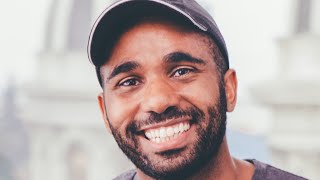
Cody Coleman, CEO of CoActive AI, shares his path from foster care to MIT and Stanford, then founding his startup to transform video and image data into searchable content. He emphasizes starting without a full plan, building culture as a product, and hiring rigorously. His personal why: prove anyone can succeed regardless of origin.
Chapters
Welcome everybody to the kickoff session of etl. This is etl, the Entrepreneurial Thought Leader Seminar, which is a Stanford seminar for aspiring entrepreneurs. ETL is presented by stvp, the Stanford Engineering Entrepreneurship center and Basis, the business association of Stanford entrepreneurial students. I am Ravi Balani, a lecturer in the Management science and Engineering department at Stanford and the director of Alchemist and Accelerator for Enterprise Startups. Today we are thrilled to kick off the new year of ETL with Cody Coleman, one of our own. Cody got his PhD in Computer Science from Stanford and I believe Cody got a perfect 4.0 GPA as a PhD in computer science at Stanford. He has his bachelor's and his Master's in Computer Science and electrical engineering from MIT. But Cody is most famous for being the CEO of CoActive AI, which is a startup funded by Andreessen Horowitz and Bessemer and others which is really on the mission of allowing humans and machines to work better together and with using AI. And starting with using AI for enterprises to search, filter and analyze data from video and image and unstructured data feeds towards structured data. That is one of several hats that Cody wears. Cody is also the founding member of ML Commons, a collaborative engineering organization focused on developing the AI ecosystem. His work spans from high performance deep learning to data centric AI. And Cody's also an advisor to nzvc which funds early stage startups and in New Zealand. He's also his story is featured as a vignette also in the book Grit. And so without further ado to kick off 2023's ETL, please welcome Cody Coleman.
Awesome. Thank you all. I am so honored and also absolutely terrified to be here today. So I did my PhD here in computer science at Stanford and even though doing a computer science PhD and even though I'm a founder and CEO of a company, I am terrified of public speaking. Absolutely terrified of public speaking. You're going to see me give a presentation today and that might be demystify that but just know that this is up there in my top five of kind of most terrifying moments. You know, first number one is lecturing to MIT students. Because MIT students have zero chill. I can say this. I did my undergrad there. You always have to make sure that you have every like I dotted and every T crossed. The second kind of most terrifying moment for me was actually meeting Bill Gates. This happened very early on in creating Coactive and to me Bill Gates is like an og. He is probably one of the most famous, if not the most famous entrepreneur that is alive Today for creating Microsoft and so many things they did. And then right after that is like right now being here in this lecture hall with all of you. And then right below that is actually doing my PhD defense here at Stanford. I had an amazing committee. You know, there was Fei, Fei Li who is like a luminary in computer vision and AI mate Zaharia, who is a luminary in distributed systems and created databricks as well as even Angela Duckworth was just like made a guest appearance for my dissertation. And you might wonder like why is that number four? Or like why is like right now number three? And you know, partially it's number three because of the fact that we could have, you know, Bill Gates or this is recorded so Bill Gates or MIT students could watch this and leave some comments later on. But also in thinking about this session and looking at the Entrepreneurial Thought Leaders series, you've had some amazing speakers here in previous quarters and previous years. Executives and founders from Okta and from Stripe all come here today that have kind of been through the entire journey. Whereas for me I'm in the middle of creating a company in the middle of my journey in Coactive AI. So I am entrepreneurial and I am a leader. I wouldn't say that I'm entrepreneurial thought leader just yet in the middle of a journey. So for today we'll say it slightly differently. It's entrepreneurial leader with thoughts. I'm actually really excited to be here today and to actually represent because one of the biggest kind of fallacies that I see in people in thinking about starting a company and a fallacy that I face myself is that you think that you need to have everything figured out in order to start and that's wrong. The only thing is it's actually the reverse. You just need to start in order to figure things out. So hopefully today I'm going to share with you kind of three parts. Why did I start a company? What is my personal kind of passion and mission in life? How did I actually start a company? What were the building blocks and how did I actually think about creating the team, creating the product and creating the company and finally thinking about what actually it is that we're doing at CoActive AI and also talking about this recent era of AI which has become mass adopted across not only the nation but the world. Starting with why. First you have to understand who I am. In the introduction we got the high level surface level of who am I? I'm a co founder of CoActive AI and I serve as the CEO I have my bachelor's and master's degrees in electrical engineering from computer science at MIT. I did my PhD here at Stanford, where I was advised by Matei Zaharia and Peter Bayliss. I've worked at leading organizations across many different industries, so jump trading and finance, Facebook, now Meta, Pinterest, Google, other startups, Vori and I've worked on a lot of impactful projects such as Dawn Bench, which was the first end to end benchmark for ML system performance. And that grew into MLPerf, which became the industry standard for measuring system performance, where it's almost kind of like the UN of computer hardware, where you have everyone from Nvidia, amd, Amazon, all contributing to that. So much so that it grew into this entire nonprofit called ML Commons to make sure that AI was something that benefited society at large and established the benchmarks, best practices and data sets to make sure that is something that benefits society at large. I was an Open Philanthropy AI fellow, so trying to mitigate the catastrophic risks of AI. And then randomly I am like an advisor to a VC fund in New Zealand. That's a long story. And I was also part of the Excel Leadership program here at Stanford. And you know, Coactive has been, we've been super fortunate in being backed by just two of the most amazing firms in venture capital and two of the most amazing partners that you can think of. So Martin Casado at a16z, who is just a legend in terms of enterprise SaaS, you know, kind of my twin, as I'll get to later. And then Elliot Robinson at Bessemer Venture Partners. Bessemer was, you know, one of, if not the oldest venture capital firm in the world. They created venture capital and A16Z, they created the game of venture capital and A16Z changed it. And then we have a bunch of other amazing investors and things like that. So on the surface level, you know, this is like, it's great. You know, I have the resume, I check all the boxes. It looks great for being a founder, an enterprise deep tech founder. I have degrees at MIT in Stanford, done research, connected to the right people. But that doesn't really tell you who I really am and why am I here? Why am I actually, why did I want to start a company? What am I trying to do? So I actually want to dive a little bit deeper into who I am. I'm going to save you from my TED Talk and instead I'm going to go through the spark notes of my story and where I came from, because that will help you understand Where I am now and where I'm trying to go. So I love this image. This was the student registration form that my mother filled out to register me to go to elementary school. And it basically captures in a single page the high level, kind of spark notes of my life. So first off, first question, city and state where child was born. And she wrote, in Monmouth County Correctional Facility. So my mother was actually in prison when I was born. She was on federal hold. So I was put into foster care and then eventually adopted by my maternal grandparents. Eventually she was released from prison. But during that time while she was incarcerated, she was also diagnosed as being mentally ill, probably suffering from something like paranoid schizophrenia. Eventually she was released, and my grandparents, having very big hearts for adopting me and my siblings, they also let her back into the house. So she was a part of the household growing up. But it was only my mother. I actually didn't know my father or anything like that. You can start to see some of those interesting questions here. So the next question on it is, please indicate the racial or ethnic designation you would want to appear in future records. Only choose one. You know, this is a different time. That's probably a problematic question to, like, ask today. I've only choose one rather than, like, you know, kind of a multiple choice thing. But, you know, my mom, she wrote in this kind of interesting answer of like, he's interracial, but he's not half white, half black. Which is kind of an odd way to answer this question. Like, wouldn't you imagine that you would just go and, like, say what he is rather than what he's not? But then this ultimately gets to kind of my favorite question, which is father's full name. And my mother, she wrote in Rafael Sanchez, question mark. And to this day, I still don't know my father's name. I asked my mother when I was growing up, what was my dad. I asked my grandmother what was my dad's name, and still to this day have no idea. They looked at me with blank faces, with zero idea of who this person was. Which is kind of crazy to imagine that this is like someone that was so critical to the creation of my life and just nothing. There's no recollection, no anything there. And then it continues to go on. So you see. So not only did my father leave before I was born, but we grew up in poverty. So in terms of name, the place of employment or address, my mom writes in none. And then in parentheses, welfare. And I grew up with one of my older brothers, Shannon, who you can see was 11 years older than me. So there was a massive age gap between me and my siblings. And we ultimately grew up with my grandparents. My grandparents grew up in the Great Depression. They only had a fourth grade education, a second grade education, but they worked really, really hard in order to have a house and to actually be able to provide for their family. So for me growing up, we kind of started from really nothing. We just had my grandparents, Social Security and welfare to live off of and a roof over our heads. And Winslow Township High School, which is, you know, I love it. I love Winslow. I love the teachers there because they made, you know, all this possible for me and encouraging me and believing in me. But it wasn't a great high school. We were just a poor public high school in New Jersey. Were ranked 300 out of 322 schools. I was the first student from my high school to ever go to mit. And part of that, part of this whole thing was it was originally out of survival. Growing up, I wasn't athletic. I didn't have any musical abilities or anything like that. And kind of at home, it was a hostile environment, actually. My biological mom actually loved cats and dogs and had a dream of starting her own pet shop one day, but she wasn't that organized. So we had a lot of cats and dogs in the house. Thirteen cats or 12 dogs, something like that. The only problem was I was actually allergic to those cats and dogs. So all I wanted to do kind of growing up was just survive to actually get out of that environment and to just be able to have kind of a normal life where I could afford the things that I needed and do some of the things that I wanted and through, through a lot of passion and perseverance and grit and just sticking with it. That became a reality for me. I went from when I first went into undergrad. I know many of you are in undergrad. My entire goal at MIT was just to be able to get a good job, to work at a place like Google so that I could afford the things that I needed and do some of the things that I wanted, like travel. And I was able to do that. And in that moment, you know, I like after working, after finishing undergrad, I actually accomplished that dream, the dream that I had for my life. And, you know, I had a steady paycheck and I could see like, you know, my bank account balance going up month over month, and that was really, really great. But then something, you know, kind of switched in my head and I went from thinking about, you know, survival to actually, you know, I could see the picture of my life. I could see the next 40 years of what my life would be, and it would be a great life. But I wondered if I could do more, if I could actually go from survival to thriving. Ultimately, that led to what is my personal why and what is my personal mission in life, which is to demonstrate that regardless of where you come from, that you can be successful. Success can mean many different things. So originally I wanted to go to MIT and have academic success, so get a 5.0 GPA. Didn't do that for my bachelor's, I got a 4.9. So I stayed for my master's and I got a 5.0. Then for my master's of engineering. I was a skinny kid in high school. I couldn't even bench the bar. So I wanted to eventually be strong. And there's this thing called the thousand pound club and powerlifting, which I was able to do. And this past weekend, I ran my first half marathon and finished in under two hours. So I am kind of strong and kind of fast. And then after those two goals, I was like, I want to start a billion dollar company to demonstrate kind of business or financial success. And then my last goal is to be President of the United States. So we're so far two out of four working on the third, and then we'll figure out the fourth one after that. And then the last piece of it is who am I? And Cody the Human. I think one thing that is really important to realize and that can be lost is I remember when I was sitting in the same seats as you, I thought of or even when I was growing up, I thought of entrepreneurs like Bill Gates or any of Steve Jobs and these people. And I just put up so much barriers kind of in my mind in terms of these people. They're geniuses. They've done so many amazing things. They know so much about the world and things like that. There's no way that they're anything like me and what I really want to do today. And one thing that I really want to kind of like for folks to take away is that that's not true. You know, like, I am a human being, just like all of you. I am a nerd and I have embarrassing photos from wearing the Google Noogler hat. I really enjoy hanging out with friends. I have hobbies in terms of going skiing and things like that. I didn't actually know how to ski until I came here to Stamford. And then I realized our lab did our first ski retreat And I was like, all right, let me do it. And even today, I woke up early in the morning and I was like, I was tired. I was just tired in the morning. Allergies were hitting me and I'm like, oh gosh, I got this full back to back day. I had procrastinated a little bit and I hadn't finished my slides yet. So even though I spent a decade in school, you would imagine that I'd be a better student, but ultimately got it done and things like that. So I'm just a human being, just like all of you. I wake up in the morning and there's days where I don't want to get out of bed. There's days where I'm stressed out or I have anxiety that there's just so much on my plate. How can I even get through this week? How can I accomplish all these different things? It just keeps getting more and more. Especially even this week. I was flying to visit a customer, then I was talking on a panel and I'm here today and then we have a company retreat. There's sales stuff, there's all these things that are going on and it's a tremendous amount of work and I have the same kind of stress, anxiety and the feelings that all of you do. Then another big part of who I am is I'm a founder. I am a CEO of CoActive Systems Inc. Is our legal name or Coactive. What we do at Coactive and fundamentally our goal is that we want to transform image and video data from being attack a tax on organizations because of the sheer volume of data into something that actually lifts sales and engagement by making it easy to search, filter and analyze visual content. So this comes up a lot in media and entertainment and consumer retail companies. I know enterprise SaaS is probably not the sexiest kind of area for startups, but I love it. It's a really fun challenge. And this is kind of our pitch today. But starting out, coming out of my PhD was really way more technical. It was like bring structure to unstructured data. Here's this whole flowchart and a SQL statement and things like that. We know what we're talking about. We're leaders in data centric AI. We're leaders in high performance, deep learning. We've been doing this for a long time. This pitch. When I first came out of the Ph.D. i was like, this sounds great. This is awesome. It's so technical and the idea was so brilliant. And there's all these little things that piece together between AI and systems and everything that I had learned over my career. Ultimately this pitch didn't really resonate with customers. So that was one lesson that I learned very, very quickly is that actually relating it to customer problems, explaining getting more simple language rather than doing SQL or anything like that. I realized I got asked the question of can you explain what coactive does to a fifth grader? And I use the word SQL and my team yelled at me for that. So I learned my lesson over time. But even before this, even before we had this kind of level of coactive, we started out with a name and a grand vision, ultimately with coactive. Coactive as a word means to work together. That's core of our DNA and core of our grand mission, which is to help humans and machines work together. Not for machines to replace human beings, but actually to accelerate, augment and help accommodate all humans. And it's kind of funny, we actually created this first logo in Google Slides in an afternoon and kind of a boring meeting. And we created that tagline before we had anything else. But it stuck with us. And we printed out the sign. And every single person that joins coactive, whether you're an employee, a consultant, an intern, an investor, an advisor, we have them actually sign the sign. We started out when it was just the two of us being like, yeah, we'll sign the sign and one day it's going to actually fill up. Interns will be signing in the little squares and on the side and things like that. And it's kind of crazy to see it today where it's actually starting to get a little bit full. And it also helps kind of establish that culture and bring people on to what is our ultimate grand vision. And to see that sense of growth and to be a part of something a lot bigger than themselves and bringing kind of all the pieces together and really creating that team. And then one of the other things that we first did as founders with Will, my co founder and I, we actually created actually a whole contract between us. So Will and I, my co founder, I had known him for over 10 years and we wanted to make sure that one, that we were aligned and that ultimately the business relationship did not impact our friendship overall. And we heard from another founder that had done this where they just wrote like kind of a simple. Just had that conversation up front to define kind of like, you know, just general kind of policies and things like that. And we did that. And it's helped so much, especially as you think about a co founder relationship, it's really like a marriage and understanding each other Understanding kind of how you view the world is really, really important to making sure that that's a good relationship, that you're well aligned as you go down this multi year long, probably a decade long journey. So our first business goal is we wanted to beat Martin Casado, who had the record. He's like my twin, effectively. So he came from a very humble background as well. He did his PhD in CS at Stanford. He graduated when he was 30. Like me, he immediately started a company right after graduating. And then there was one thing that I was hoping wasn't going to be in common, which is, you know, a year after he started his company, a recession happened. He started in 07 and then there was a recession in 08, and then we started in 2021 and then, you know, a year later there was a recession in 2022. But hopefully the luck continues because four years after that he sold his company for $1.26 billion to VMware. And we want to take that goal, we want to take that record from him, we want to beat his record and create a billion dollar company. And in thinking about creating this whole presentation, this slide and this point was actually the one that was the most kind of self conscious about thinking about. Because I know a lot of times with founders and with companies you hear just kind of this whole grand vision of just completely focused on the impact that your product will make or that in the world. And people say that money's not an issue or they don't think about it. But as someone that grew up with very little money and nothing, I want to put a disclaimer here and say that having money is nice. If you have grown up without money, actually being able to have money, to actually be able to do things and things like that are important. And then also part of the reason I wanted to start a billion dollar company and get to that unicorn status is to prove that it's possible. To prove that it's possible for someone like me to actually go and start a successful company. And again, kind of my mission of demonstrating that regardless of where you come from, that you can be successful. But it's not just that we are successful that matters. The other thing is that we really care about how we get there and how we succeed. So the second thing that we said is we created a list of we wanted to create a company that was admired and respected by our competitors, by investors, by employees, family and friends, even if we failed. So we wanted to do it in a way that was admirable, do it in the right way that could be an example for other founders and be role models to people that would come after us. We also wanted to create a company where our employees could succeed and achieve their personal and professional goals and where people will look back and remember working with us is the highlight of their professional career. And this statement, this idea, actually comes from Ben Horowitz's book, the Hard Thing about Hard Things, where very early in that book, he talks about a founder and a company where the company ultimately ended up not being successful. But after that journey, after going through that process, even though the company was successful, people still, despite going on and having successful careers, looked at that experience as the best possible experience, like the best experience in their entire career. And we love that idea. We love that just kind of mentality of that, regardless of the outcome, that people should think that this was such a worthwhile experience that helped them develop and help them be better. And we have a saying internally that we build products and we develop people. This is really, really powerful in a sense, because, you know, starting a company is very risky. You know, there's all sorts of stuff that can happen. You know, even in the two and a half years that we've been around, we faced the global recession. You know, we outlived our bank, which I did not imagine was going to happen. And there's so many more things that just are kind of completely unexpected that, like, you never, like, picture a financial collapse of a bank in the U.S. but sure enough, that happened. So making sure and thinking about how you do that, like how you do the process, how you get there and how you're treating people along the way can give you courage to keep going. And also, ultimately, for us, you know, the thing that we realized was our biggest fear wasn't that the company wouldn't be successful. Our biggest fear was that, you know, we would wake up one day and be like, dread going to work because we created a toxic culture. That was the thing that was the scariest thing to us. We didn't want to be miserable or for folks to be miserable coming into the company, because we've experienced that before. We've been at companies, we've been in toxic kind of cultures. And especially as a black man in tech, there's not that many of us. So I've always felt that pressure. And similarly for Will, who's Latino, we really wanted to create a company that was a breath of fresh air and that was welcoming to people from all different backgrounds. And that rather than diversity, equity, and inclusion being an afterthought that that was something that was core to our DNA, not only because it's the right thing, but also because diverse teams are just more successful. Having kind of more points of view at the table and more perspective is critical to success. And then the fourth thing is that we want to create a product that helped our customers succeed and achieve their goals and that our customers would organically and enthusiastically promote our product. Really creating something that drives value, that really has that impact in the world, especially at a cutting edge technology and time. And we thought about all this before anything else and had that kind of conversation to align kind of on what our goals are and what we're trying to do in coactive and really not just the billion dollar valuation or anything like that, but really kind of caring about how do we get there, what is the type of company that we're creating and what is the type of experience that whether it's our customers, partners or the team that they're having. So how do we create a company? And the first thing is entrepreneurship is a team sport. So originally finishing up my PhD in the last year of my PhD, I had always dreamed of. Well, basically I had an existential crisis. After my bachelor's degree, I had an existential crisis. I pressed the snooze button and did my master's. After my master's, I had an existential crisis and I did my PhD. And then after that I was like, can't press snooze on life anymore. And ultimately realized I had always dreamed of starting a company and that there would never be a better moment than now finishing up my PhD, going to Stanford, being here in the heart of Silicon Valley. But there's only one problem. I had an idea and kind of a rough, kind of a rough goal in mind, but I was alone and I didn't want to start a company alone. I didn't want to do it by myself because it's such a tough journey. And you know, now being kind of in the middle of it, I can just say it is a really, really tough journey. It's easy. And having that partner, having that person that can support you on days when you're tired and things like that is really, really critical. And I did a lot of co founder dating and things like that. But the ultimate thing that actually kind of resonated and I realized was the most kind of important is actually having trust in the person, actually knowing someone that you know how they work and you can trust one another and that things work smoothly. There's other kind of Co founders that I dated with that might have had some crazy resume or things like that, but, you know, it was like a shotgun wedding, which you don't want to deal before kind of embarking on this journey. So Will. And Will is an amazing, amazing, amazing individual in so many different ways, just from a technical perspective. We went to MIT together. He studied electrical engineering. We known each other for over 10 years. He went to Northwestern for his PhD in material science, where he was kind of an undercover electrical engineer and then transitioned into data science. He had studied management as well. He'd done so many kind of amazing things. He created the first carbon nanotube random number generator. He did continuous learning with spiky neural networks. He did all this stuff that I can't even imagine. It makes my brain hurt in terms of just pushing physics to the absolute limit. But ultimately he realized it's going to be about 15 years before any of that makes it to the practical world. And Will has been again, there's so many things that you have to deal with as a founder and having a partner in crime that can, you know, pick up the mantle for, you know, kind of all sorts of different things. So Will has worn many different hats kind of over the lifetime of the company. Right now, you know, he's doing solutions, customer success, security, and you know, jokingly, we say basically everything that starts with an S. And we actually met again 10 years ago at this pre MIT program. And, you know, why coactive? Again, it was very similar to me where it's like, you know, the right idea at the right time with the right friend. He had actually just moved out during the pandemic and I was one of the few people that he knew in the area and I was getting tested every single week because of Stanford. So he asked me to help him move his couch. And in that kind of process, he asked the two questions you should never ask a PhD, which is, when are you graduating and what are you doing next? Again, immediate existential crisis. But I clamored together and I created an answer and I was like, ah, there's this idea for coactive and this. It didn't even have a name then, you know, and he was like, you know, that sounds awesome. You know, you should definitely do that. There's never going to be a better time to do it. You have all the skills that you need in order to do it and like, you'll regret not doing it. And he believed in me. He was one of the first people to believe that, you know, I could do it. And you know, not only he put his kind of money where his mouth was and he was like, you know, actually, I would love to join you on this journey. Let me know what I need to learn in order to join you on this. And you know, basically nights and weekends he became an AI researcher reading papers. He created his own study guide and was working on that for six to nine months before we even started coactive. And I was like, that level of grit, that level of passion and perseverance and determination, that's exactly what you want in a co founder because it's a very long journey and you have to figure out a lot of things. So his special skill of going from 0 to 100 really quick really paid off. And then just again, a nerd like me, though he doesn't drink caffeine, which I don't know how he does it, that's magical to me. And he has this great saying which we really both align on. My mission is to demonstrate that regardless of where you come from, you can be successful. And he has a beautiful saying around making ladders. As we climb to new heights, make ladders so that it's easier for other people to find, follow after us. So now entrepreneurship is a team sport. We have two people, so kind of a team. And we kind of did something crazy before we hired any employees. We actually thought about culture. And we had talked with a lot of founders kind of before starting our company about what were their biggest regrets. Like founders that started billion dollar companies, decacorns and things like that. And the biggest regret that these founders had was our biggest pitfall that they fell into is that they didn't take HR seriously. They didn't think about the people or the culture that they were creating. And rather than culture being a strategic advantage for them, it actually ended up becoming more of a liability. Because culture is going to happen regardless of whether or not you think about it. It's going to emerge just from the interactions that you have on a daily basis. So you can either think about it ahead of time and create a culture that actually will help you move forward, or you can let a culture emerge and play it by ear. So we wanted to be, our goal was that we wanted to strive to be a role model for companies of what company culture could look like. And we didn't have to do that kind of alone. We could actually take in a lot of the great company cultures that we had been a part of. Things from Google and, you know, things from like Netflix and all of that and combine it together and Create a set of guiding principles. And you know, the first guiding principle, which is still with us today, is that we view culture as our first and most important product. And this is really powerful because culture is something that's going to change over time. Every single time that you add a person to your company, especially in the early days, it's a non trivial fraction of the overall company. And they're going to bring in their kind of own views and things like that. And also as the company evolves, your culture should evolve too, to support the goals that you're trying to achieve. And then from there, we thought about who we are. We're one team. It's really a relay race. We're not bystanders. We're humble and grateful. It impacts how we act and also what we sit. And we set all this up before we even hired our first employee. And this was actually a really good exercise for us to think about what was, what were the working environments that we enjoyed the most, who are the people that we kind of enjoyed working with the most. And going through that process of self reflection actually gave us that process of self reflection. And creating a culture helped us think about who should we hire. Because there's one part of hiring which is the skill set that people have, but another kind of equally, if not more important is who those people are, how do they think, what are their values and what drives them as human beings. And making sure that you're actually aligned there from a values perspective can be one of the biggest things in determining whether or not it's going to work out, especially with these early team members. So after we set up our culture, we started to hire folks and we hired an amazing team of people. And one thing that you'll notice about the team is that it's a very diverse group of folks. That was by intention. One thing. In talking to other founders again, before we started, we heard from them that if you don't think about it early, if you don't think about creating a diverse team and things like that, you're going to be fighting an uphill battle. So we actually wanted to go and do that and have that kind of a core part of our DNA. And we resisted. A lot of kind of prevailing wisdom is like, hire your friends, hire really, really quickly, especially because you have so much pressure to move kind of fast. But we wanted to take our time and actually do that and actually go outside of our comfort zone, bring people that we weren't maybe necessarily immediately connected with and actually develop a diverse team. And that Paid dividends, both in terms of establishing our culture and then broadening our network that we could hire from. And then also kind of at this, at this point, we were about seven people. And one thing that you'll probably hear a lot in terms of entrepreneurship and starting a company is this notion of product market fit and product market fit. People talk about it a lot and things like that, and it always felt very nebulous to me. But I remember I had a great conversation with Alex kind of about product market fit, where he defined kind of two stages. One, the first stage of product market fit is the proof of value stage. This is actually going and building something that someone in the world, like a few people, a few organizations in the world actually want that they're actually willing to pay you for if the thing actually works out. And at that stage of the company, you want to keep the team small and very technical so that you can actually iterate and adapt the product very, very quickly based off of feedback. So the team, at that kind of stage, that first half of product market fit, you want to keep it small, very kind of technical. So somewhere around three or four engineers and a team of six or seven overall, once you have those kind of initial wins and you go out of this kind of proof of value phase, you have those first people that are like, yes, we will buy this product. Things change. And because things change, we also changed our culture. We thought about and we updated it, we made it shorter and things like that. And then we moved on to the second phase of proof of market. So this is now actually saying you've proved value kind of once or twice now. Let's actually see if there's a market there. And here you start to develop kind of initial sales team and a slightly large engineering team to actually be able to support the customers that you have on the platform. So again, it's very heavily weighted towards engineering. But what you'll see is that we hire our first salespeople, we hire our first account executive, our first customer success or customer operations person, and our first solutions engineer to be able to actually support customers and to be able to actually test the market and figure out what is a sales playbook and actually figure out kind of what is that repeatable motion and iterate towards that. Now that we have a product that drives value, we got to figure out how do we actually sell it and how do we get it to the market. And that's that second phase of product market fit where again, you'll expand your team. You don't want to get too big because once you say you have product market fit and you go into the scaling phase, there's kind of no going back and it's really hard to move the team. So right now we're at about 16, 17 full time people, which is a really, really good, good size. And then we can augment it with having contractors and consultants to support us. And then once again, you know, our culture has adapted and evolved from that. You know, now we're thinking about how do we actually make magic for our customers and being more customer focused. And then also as we grow the team, continuing to embrace differences as we create a more diverse and inclusive environment. And again, constantly iterating on our culture as we also iterate on the product and the company as well. And then now that kind of takes us to present day, which is what are we doing? What is it that we are trying to do with coactive in the interest of time? I'll skip the slide and I'll go back to kind of an old saying from Bill Gates where He predicted in 1996 that in an essay called Content is King, he predicted that the real money on the Internet was going to be made in content, just as it was in the broadcasting era. And that the long term winners were going to be the people that were able to effectively leverage their content to deliver information and entertainment. Fast forward to today and those predictions have come true and the king is here. 80% of Internet traffic is unstructured video data. 80% of data worldwide is predicted to be unstructured data by 2025. And that prediction was made before this recent wave of generative AI which has dramatically lowered the barrier to being able to create content. And nearly 80% and all that content influences our everyday life. Nearly 80% of people say that user generated content impacts decision to make a purchase. So it really isn't a question of like if or when content is going to be king. The real question that companies are asking or should be asking is what type of king is their content? You know, everyone wants, you know, that legendary king, like a King Arthur, where their content lifts sales and engagement by delivering the right piece of content to the right person at the right time. And I was able to see the power of that from working at large Internet companies and things like that, of how it lifted search, recommendation and ads. But I also saw the tremendous amount of resources, both in terms of human and computational resources, tens, hundreds of millions of dollars and years of time to do it. For many other organizations, they instead have like a laser king Closer to like a King Henry, where, you know, all this content is being. Is sitting underutilized in cloud storage, basically just for serving or archived in backups. Effectively attacks on the organization because it costs a small fortune to store it. It can be even worse than that. You can actually have something that's closer to an Aerys Targaryen, where you risk violating the safety of online communities, corrupting the safety of user privacy, and then losing trust in consumer trust in your brands. But with all this problem and actually being able to have that legendary king, kind of thinking of that whole phrase of if content is king, then I believe that AI is the queen. AI is really the key to being able to unlock the value of content, to be able to work with content at the scale that we have around us today. But the problem is that actually marrying together, as with any marriage, marrying content and AI marrying data and AI is really, really difficult in the entrance of time. I'll go through this very quickly, but there's no free lunch. There's a number of challenges that we have to think about. Scale is really, really critical when we think about modern data, documents and images. If we look at tabular data, about 10 million rows is about 40 megabytes. If you take 10 million documents, that's about 40 gigabytes. That's like going from the surface area of Lake Tahoe to the surface area of the Caspian Sea. When you look at 10 million images, now you're talking about the surface area of the Pacific Ocean. All that content can be very, very skewed in terms of the data that it represents and the populations that it represents. And not all the content that's on the web is actually good content. We're dealing with ethical issues around IP and AI art. We're dealing with the people that are actually providing the moderation, providing labels being exploited in developing countries. We're dealing with all sorts of content that shouldn't be shared online that's influencing these models and doing potentially harmful and bad behavior. But with that, I want to end and I want to thank you all and open it up to Q and A. How do you balance a positive culture and this semblance of a family in.
The company with having to make hard decisions about perhaps having to fire people.
Or let people go for poor performance? That's a super great question, because there's definitely a tension there, or there can be a tension there in terms of having a very inclusive culture and then just the pressure that comes with executing at a really, really high level. And I would say One of the key things is to have a high bar hire. This is kind of age old wisdom of you want to hire slow and fire fast and really taking kind of being methodical in your approach to hiring people. And one book that I highly recommend is called who the A Method for Hiring. And this is something that we actually use with our founding engineers. There's this crazy part of it where you have to do like a three or four hour interview with people where you walk through their entire kind of career to get the kind of narrative behind it. But taking all that time, you know, doing a full on day, like full day off on site was super valuable in making sure that we actually hired the right people so that we ultimately didn't have to go through the painful process of firing people. So being very, very thoughtful about those early engineers, those early hires is key.
Thank you. Yeah, you talk about culture and there was this saying that culture is either by default or by design. Would you share how you design the culture? It's pretty much referred to the value of the co founders. And another one more question is for a team with about 16, 17 people. Okay, just to see that one question.
Yes, yeah, totally. So super great question. So culture can mean many different things and there's many different types of cultures that are successful. Amazon has one type of culture which is very different than Google, which is very different than Apple. And ultimately I think culture will only work, especially in the early days if you can actually live it. So as founders as kind of like the early team, really thinking about what is kind of the values, the culture, what type of work environment do you enjoy so that you can actually live and reinforce that on a day to day basis is critical to being able to design and create the culture that works for you and for your organization. So very much in the early days it reflects kind of the founders and their working styles. Terrific.
One more question. You mentioned that money is one of your top priorities. I'm curious to ask, given that there's so many external factors that can cause and drive what your valuation of your company is, how do you develop a healthy mindset and relationship with it?
Super great question. Yeah. Because one thing that I think has kind of become problematic in recent years is that you have a lot of entrepreneurs that run their companies to raise rather than raise to run companies. So the key thing there, and this is actually key as an entrepreneur in general, is being self aware and being honest with yourself about where you are and not getting too far ahead of your skis. It's quite interesting right now as an AI founder because there's that kind of juxtaposition where AI is a very, very hot area. But on the other side we have a general recession. We're seeing startups, whether it be growth or crypto or the metaverse, they got over ahead of their skis and then had to go through that painful process of down rounds or layoffs and things like that. So really being thoughtful and not just going for the highest check for the sake of the check but actually thinking about who are the people who are the partners, who are the partners of the firms that are joining you. Being realistic about where you are, being honest with yourself and with potential investors about the state that your company is at and trying to build piece by piece, brick by brick rather than trying to skip Stouts is really, really critical to being able to build lasting value.
Terrific. Thank you all. We have to cut it there. So join me in thanking COD.
More from GHION.AI


O processo de reconhecer limites, mesmo quando a vida parece exigir sempre mais.





Depois de tantas histórias, aprendizados e pausas necessárias, o @interior_iza está de volta



