Stewart Butterfield: Serendipity in Design and Entrepreneurship [Entire Talk]
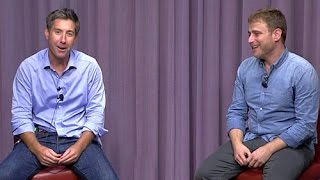
This content was created by GHION.AI . This content was uploaded by GHION.AI . This is a YouTube video titled "Stewart Butterfield: Serendipity in Design and Entrepreneurship [Entire Talk]" from October 6, 2015. It features a talk by Stewart Butterfield, co-founder of Slack, interviewed by Andrew Braccia. They discuss Butterfield's career journey, the development of Slack, the importance of communication technology, and the cultural values of Slack, including empathy and diversity. The talk also covers Butterfield's experiences with previous ventures like Flickr and the challenges of entrepreneurship.
Chapters
Thank you so much for giving us the opportunity to speak today. I was telling the folks when I first arrived that whatever chance I ever had of getting into Stanford, it was showcased that I had no chance of getting to Stanford by the fact that I couldn't even find the directions to get here. So that was not a good start for me in my Stanford career. But I made my way to this beautiful building in front of all of you to be able to spend time with Stuart today. And I thought maybe we would start off by asking Stuart to maybe just talk a little bit about your background. Because I think when you think about the products that Stuart has put together with his teams over the years, I think many of them are a reflection of not just what he's done in his professional life, but his journey as an individual and as a person through life. And it's an interesting background. I would love for you to share a little bit of that with the group here.
Sure. So I know there's all, you know, like the commune. And I should mention, yeah, I was born in a log cabin and didn't have running water or electricity. I think running water when I was three and electricity when I was four, something like that. But I'm going to skip way ahead from there to starting college in 1992. So that was a really fortuitous time. I think among the first things that happened when I got to school was I got an account on the school's Unix machine and discovered IRC and Usenet and talk and email. So a lot of early Internet technologies. And there was a World Wide Web then, but it wasn't very popular. I hadn't heard of it. It took me another year or so before that was something that was on my radar, but immediately was blown away by the power that the Internet had to connect people. I was from a pretty small town in British Columbia, Victoria, British Columbia. And I was at the University of Victoria. And my friends who went away to different schools, I could communicate with them, but also I could find people who shared interest in the same obscure philosophers and the same obscure music. And saw even back then, when there's maybe tens of thousands of people online in total, including all of the academics, there were communities for model train enthusiasts, and there were communities for breast cancer survivors. And that experience of seeing technology's power to connect people was a theme that I think goes through everything that I did since. Because the web came up while I was in college, my summer job every summer was making web pages for people. HTML was simple enough that I could Learn it. Back then I studied philosophy. I went to grad school. My plan was to be a philosophy professor. The 97, 98 academic year, I finished my master's and I had the option to continue. I had two good professors, both of whom said, this is a terrible life, don't do it. But I also had a good friend of mine who finished his PhD the year before me and got his first job. And it was the University of Louisville in Kentucky. And it was like 32 grand a year with no job security. He had to renew every year and he didn't want to live in Kentucky. And that was like a good outcome. And I still had many hoops left to jump through to get there. But because it was 97, 98, it was like the very beginning of the dot com era. There was a lot of excitement. I mean, I guess that's the year after the Netscape ipo. Right around the Yahoo ipo. Yeah, right around that time. And friends who were doing web stuff were making twice as much money. It was exciting and new. So I think I made the right choice there and, and began my career in Internet stuff.
Talk a little bit about what attracted you. I mean, even if you look back, whether it be grad Finder, which was sort of a, if it's possible, Maybe a worse Classmates.com product, if anyone remembers that product, then to the game never ending and to Flickr and obviously to Slack. And that theme of, of whether you call it social networking or communication or community has been consistent across all the things that you've been passionate about on the Internet. Talk a little bit about why is that the case? Why have you focused so much of your time and your effort in that arena versus others?
I think because this is something that is probably clearer now to more people than ever because of the rise of Facebook and WeChat and WhatsApp and a thousand other things that the fundamental application of computing technology in human beings lives is communication. And that wasn't true in say the 1940s when the fundamental application of computing technology was calculating the trajectory of surface to air missiles. And it wasn't true in the 50s when the fundamental application was tabulating the census or replacing double entry accounting. And there was huge productivity gains that we got through that and up to maybe the 1980s. But the real potential, this is like an experience that most of you will have every once in a while you turn on your computer and there is no WI fi here. You can't tether. There is no connection. And a computer that's not Connected to probably now Stanford. You go on vacation or something maybe and your computer is like this inert thing that doesn't really work unless it's connected to the Internet. There's so many ways in which people can connect and the game stuff. And we could talk about the origins and all that, but we'll talk about the game stuff. Yeah, okay. But games was never about games for me. It was about creating an environment for people to interact using play as the kind of substrate. So people like playing bridge with other human beings, for example, or playing golf or playing settlers of Catan or whatever. And that's just a thing that we do together. Just like other forms of play that are less structured, that might be wordplay or witticisms or just great dinner conversation or flirting or whatever. Flickr, the games grad finder Slack is all about people talking to each other and trying to figure out ways to make software do a better job of that.
Let's talk a little bit about your gaming experiences. Haven't been the most successful games in the world.
Terrible games.
But I think in both cases obviously some greatness has come out of those experiences. Whether it be how many of you know the Flickr story? Raise your hand if you know the Flickr story. See, it's been a while. Yeah, I don't think people talk a little bit about in both cases, whether it be Flickr or now with Slack, those products and those applications were essentially birthed out of failures to create a great game, a social and a community oriented game and maybe talk a little bit about 2, 2 similar outcomes in terms of creating something that's fantastic and now is the bell of the ball. But two different time frames and two different experiences. And what about you specifically has made you resilient through those experiences to be able to take the journey all the way through to create something really unique and special.
Okay, so here's the Flickr story short version. In the summer of 2002, me and a few other friends started a company to build a web based massively multiplayer game. And the general average age for college students like this is when you were still in elementary school. But 2002 was a terrible time to start any kind of Internet focused business. It was a terrible time to start any kind of business because first of all there was the dot com crash which still hadn't quite shaken out. But there was also the WorldCom and Enron accounting scandals. There was 9, 11. So we think that the markets have a little bit of turmoil now. Those days, the S and p was down 65% from its high. Nasdaq was down 80%. No one was interested in investing in anything that had anything to do with the Internet, but especially not consumer facing stuff. And within that, especially not something as frivolous as a game. So we had raised a little bit of friends and family money, we had built a prototype, people liked the prototype, there's a little community, but it's going to take us another year and a half to produce something that we felt like was going to be commercially and commercially viable and no one would invest. And there wasn't much investment in anything in the general sense then. So Flickr was a last ditch attempt to take the technology that we had already developed and apply it to something else. So we were working on a web based massively multiplayer game and we had this game client. It connected to a server and at the bottom of the screen there was little slots for inventory. You could see go pick up things in the world. In fact, one of the items you could pick up in this game world was Slack because it was a very absurd and surreal kind of Monty Python, Dr. Seuss Esque World. And you would get bonus points for picking up Slack. We replaced that with photos. And the experience, the idea for Flickr actually came overnight. I had food poisoning. I was feverish dream. But it all came to me at once. And that's actually literally true. But it was a terrible product. I mean it was technically super cool and it made a great demo. At the time especially, people were writing this thing in a web browser and you could chat and you could drop photos and they would pop up on someone else's screens and you could annotate the photos, but you had to be connected at the same time as them and you could only see photos that they were showing you at the time they were connected. The odds that someone you actually cared about being connected to this service that was, you know, that was a nascent service that didn't have any users, was about zero. So again, great demo, but terrible product. So that vision that came all at once in the food poison fever dream wasn't a very good one, but it really quickly iterated from there. By the middle part of 2004, it was growing like this. I don't know that there was quite a revival yet at that time in interest in the investment community, in Internet stuff, but it was just starting to pick up. The first Web 2.0 conference was that fall of 2015, 2004. And by early 2005 I had the choice between a term sheet actually from Excel and being acquired by Yahoo. And we made the right decision. So after three and a half years at Yahoo, myself and three of the original Flickr team, Cal Henderson, Sergey Morchev and Eric Costello, decided we were going to try this again. So it's seven years later. Technology is advanced, computers are way faster.
You couldn't be wrong twice.
No. What are the odds that you could be wrong about the same thing twice? And there's many more people online and we were better at what we did. And there's all this cool open source technology that had moved the ball down the line a little bit, or so we thought, and people were used to paying for stuff online. And there were other examples of massively multiplayer games which at the time were pretty successful. And so we decided we're going to try it again. In contrast, in 2009, even though this was right after the big financial crisis, I don't think they really had much of an impact on VC investing in tech stuff. It was easy for us to raise money now. We were well known. We raised I think a million and a half bucks in a seed round and then $5 million Series A, and then a year later a $10 million Series B. And there was all this initial traction and people liked it, but there was many reasons why it didn't work. Chief among them was people. 98% of people who came in the front door left right away. They didn't understand what it was. It was too strange. This is at a time when farmville was on fire. And that very, very simple idea of social gaming was one that was really prevalent. And here's the part that I'm going to get asked after this. For all the aspiring entrepreneurs, what is the big lesson? Well, there were four of us who started that company. Like I said, two of us were in Vancouver, British Columbia, one was in San Francisco, one was in New York. The way that we like, the natural mode for us to communicate was a product called irc, which actually predates the web by a couple years. It's from 1989. How many of you actually know what IRC is? How many people have heard of IRC? All right, so maybe a third. IRC stands for Internet Relay Chat and it's a messaging system where messages are directed to what are called channels rather than individuals or groups of individuals. Kind of hit the peak of its popularity in the mid to late 90s and still used by the open source community. A lot of software developers. But because it's from 89, it has all these deficiencies. So if Andrew and I were on the same IRC system and I wanted to send Andrew a message and he wasn't connected at the time that I like. The instant I wanted to send him the message and I just couldn't do it. There's no concept of store and forward. It's not like say imessage on your phone where you can just send a message to someone anytime you feel like it. So the first thing we did was built a system to log these messages so we would have archives. And once we had archives we wanted to be able to search them. And then over the course of three and a half years working in the game, we got up to about 45 people. And every time one of our internal communication problems got to the point where we just couldn't stand it anymore, we would spend the minimum number of minutes addressing that and then move on and slowly iterate. So we didn't know it at the time and it wasn't obvious. And this wasn't even obvious I think until like a year ago in this very non self conscious, non speculative way. We were designing Slack, but based on the actual needs that we had as a team that was distributed. The needs that we had as a team that was deep in technological development, that had a big degree of coordination because working on the game we had artists and animators and sound designers and level builders and we had people making content pipeline tools to bring all that stuff together. And just like any other business, most of your daily effort is in communication, no matter what your job is. So your job might be doing stuff in Excel, or might be doing stuff in an IDE or doing stuff in Salesforce or whatever your role specific function is. But most of the time is someone telling you what you're supposed to be doing, you attending a meeting discussing what you're supposed to be doing, you reading or writing email about what you are doing. And just that need to coordinate people is a really big part of how we work. So this is kind of the good news and the bad news is over after a couple years we have some insight into why it was successful. The bad news is that that's a hard thing to replicate, to be able to actually design something while not actively thinking about it. But it's definitely the best way. Because I think one of the biggest problems that software designers, product managers, entrepreneurs have is the temptation to be really speculative with what some hypothetical person would want as opposed to something that you know you need. So yeah, what was that about the game?
I forget. That was awesome. It was a little bit about this idea of resiliency. People ask me a lot about Stuart and what makes him tick. Why is he unique? Why has he been able to do what he's done multiple times at massive scale? And he's obviously, you can turn away and not blush while I say this. He's very handsome, of course, which is very helpful, but he's very smart. He has this. I always talk about this combination of art and design plus engineering and sort of technical competence. And those two things are incredible traits to have individually. But when you combine them and the creative forces that come with that, I think make Stuart really unique because he's phenomenal at both sides of that equation. But also, I think, and most importantly, as an entrepreneur, he's resilient and he's been knocked down multiple times, and he's picked himself back up and been able to rally a group of individuals and people and investors and markets around his new ideas. And that's something that's hard to train. It's hard to imagine how you can get better at something like that. Some of that's just innate to the human. And I think that is one of the things that we look for as investors and great entrepreneurs. We look for that idea of resiliency. Because a lot of the things that you hear about in the market, these overnight successes, they're not. They're journeys and they have ups and downs. I mean, Stuart started tinyspec, which birthed Glitch, which was the game that then led to Slack in 2009. That was six years ago. Slack is not an overnight success. And it's not because his team stuck with it and Stuart stuck with it. Going back to the Flickr days. I think another really important component of Flickr which will lead into Slack is I don't think people, given sort of the fact that a lot of folks here didn't know the background of Flickr, I don't think people fully understand and recognize how innovative Flickr was from a technical perspective. And this idea of what we take for granted now in terms of a lot of the background infrastructure that's available to developers and software designers today, a lot of the choices and all the architecture of Web 2.0 was really in some way showcased by Flickr. So maybe talk a little bit about some of the decisions that you made early on in building Flickr from an open API perspective, from thinking about it as a community tool. I mean, how many of us in this room have tagged a photo recently on Facebook, on wherever we're Instagram or Twitter Flickr really was birth tagging. I mean, delicious, which was Joshua Schuchner obviously had tagging as well. But Flickr is really where that idea of being able to have a community and individuals tag an image came from. So talk a little bit about some of the innovations there and how some of those things have fueled the web and what you think, how that applies to Slack moving forward.
All right. So one of the things was that we didn't have a whole lot to lose at the point we decided to work on Slack. So we had, we had run out of money. The only person who got paid was the one person on the team who had kids, Flickr, not Slack. You're absolutely right.
You didn't run out of money on Slack.
We did not run out of money almost. So being in a position where you don't have anything to lose makes some decisions a lot easier. One of those was having open APIs so people could do whatever they want. But there's also. That was, and this might come to pass again at some point, an area of really rapid innovation, not just by us, but by a whole bunch of people. Because the commercial focus was off of the Internet, because that wasn't people graduating from great schools, were going to investment banks and management consultancies instead of coming here and starting companies. And that gave a little bit of breathing space. I think for technologists, engineers, there's a little bit of a creative renaissance. I think it's also just because we had hit a point where enough people knew what they were doing at the time that we started working on Flickr, we had no idea what we were doing, but most people did. There was a handful of people in the world at ebay, at Yahoo, at Google, who had built things at Internet scale and maybe a few thousand engineers who were good at that. In fact, Cal Henderson, co founder cto, a couple years after Flickr was acquired, literally wrote the book Building Scalable Websites. Because there wasn't a book that said that and there wasn't a book that laid out what the architecture would be like and that was very influential at the time. But I think it's also a really nice call and response with the people using the product. There was very much a community focus at the time that Flickr started. The only websites where you could upload photos were ones that were designed to get you to print. That was private, closed off. It wasn't a place where you could share and showcase. Bob Baxley, who's now the head of design at Pinterest, was it Yahoo at the Time Apple, Apple in between had a great line on that, which was Flickr was a great place to be a photo. So if you were going to be a photo, then you had a happier life inside of that kind of ecosystem, but actually wanted to go back to the resiliency thing. Because here's the part that you don't imagine when you start a company, or you probably don't. So one of the things you got to do is tell a story that people can believe in. Whether that's the investors, whether that's co founders, whether that's employees you're trying to bring on board, that's customers, that's potential users, that's like what the brand is, what the landlord, landlords, everyone. Yeah, you got to tell a. And maybe your significant other or your parents or whoever. And you really have to hope that that comes true. And then often the way that you said it the first time doesn't happen. And so you alter the story and then that also doesn't happen. And then you alter the story again and that still doesn't happen. And at some point you think, am I stupid? Am I crazy? Am I lying about this? Is there something here? Or am I just going to have to keep on changing the story as reality punches me in the face over and over again? We had the experience, I think, with this company that ended up being a huge success of it failing. And the feeling was not like, well, chin up, old fellow, we're going to try again. It'll all be okay. In the end. It was just, personally speaking, from the inside, fucking horrible. Sorry, I'm not sure if I swear here, really, You're Canadian, you can get away with that. So actually, I mean, I still remember this very, very well. We had tried all these things. We were working the new user experience, we were looking at monetization. We're building this model, we're saying, we could do this, we could do. We had 5 million bucks left in the bank. There was always one thing that was coming up that was going to be the thing that would make this work. And sometimes those things where we pegged all our hopes on would actually move the needle a little bit, but not quite enough. And that's the hardest position to be in. Not quite failing, not quite succeeding, because we actually had very, very high average revenue per user. We had deep commitment. We had this community that was really into it, but just not enough. And November 11th, as I do, and I still do, I had trouble falling asleep and I was just like my mind was racing thinking about this Stuff And I just knew this is not going to work because I don't believe it's going to work anymore. And if I stop believing, there's no foundation for anyone else to believe. I wrote you guys and Andrew was on the board of directors. I wrote them an email saying that I talked to the founders. Two days later I'm standing in front of the company and telling them that it shut down. So that might sound bad, but here's how it's really bad. It gets worse. Oh yeah. Well, there was this moment we call a special all hands meeting. We didn't normally have them on Wednesdays and we had two offices. We had this video link up between the two and everyone's wondering what's up. I don't think anyone had any idea that this was coming. And I get up and I say, okay, I don't have a deck or anything like that. I just have to tell everyone that you don't have a job anymore. And right when I start talking, I just happen to be looking around the room and I lock eyes with this one engineer who three months earlier I had convinced to move to a new city away from his in laws who were helping take care of his 18 month old and buy a house. And like it was a big. It took me so long to convince this guy to make the move. And I told him how great it was going to be. And it was a really fun project. You get to work with all these amazing people and look at these business metrics, they're just about to go up and I should go to psychoanalysis or something like that. I have a very strong desire to avoid disappointing people, as many of you also have. And this was like, this is more than a disappointment. This was like I fucked up his life. Like he had made the wrong choice moving to a new city, not having the support of his family, having this small child and not having a job. So before I even actually said anything, I'm crying. And then people are like, this is a weird all hands. Everyone's a little bit uncomfortable. So that took several weeks of just real emotional turmoil and pain. And so that's horrible to have to tell people that they lost their job. But I mean, it's also very terrible from their perspective of course as well. It's humiliating. Like I said, there was so much riding on this. It was disappointing our investors, it was disappointing all of our friends whose time we had sacrificed to say that we're not going to do this thing or I'm not going to go visit my parents. I'm not going to hang out with my girlfriend. I'm going to be working and working and working, and all of that was for nothing. In this case, the story has a much happier ending for a couple reasons that we can get into, but that's. That's the part that you don't think about, and I think that's good. Just like if you're jumping from one rock to another on a beachside walk, you don't think about the horrible ways you could slip and fall. But it is not for everyone. There's been a couple of cases in the last year, I think, of founders. Even if companies that have done pretty well ended up committing suicide because the pressure is so great, I guess the last thing I'll say is that was a horrible period. It was very, very stressful. And since then, many things have worked out incredibly well. And I'm here, and we raised hundreds of millions of dollars. And the business is growing at 3% a week still. And it's incredible. And we have no problem recruiting from any company that we want. And the pressure is about the same. It's about the same emotional intensity because now the expectations are that much higher. There's that much more riding on it. It's like that much more visible when I'm on the COVID of magazines. I also know just from past experience that there is a cycle, and we are in this. And it's very hard to convey this to employees. I think that we're in this moment where it's not going to get any better. We have six months like this, maybe we have 18 months, probably a year, where, again, we have no real competition. The business is growing like crazy. It's easy for us to recruit. And we also have a special advantage. I think that all of the media uses Slack. So just like Twitter in 2010, where approximately 0% of the world used Twitter, but 100% of journalists did, and so they thought it was very important. Approximately 0% of the world uses Slack, 100% of journalists do. So they think it's very important. It's not going to get better than this. Right. And the mental preparation that you have to do to prepare yourself for the first. Like, what's Slack doing? And you can see that in all kinds of companies that there's this enthusiasm, there's this amazing support. People think you're a genius, and then it's like you stop growing quite as quickly. And then I'm a little bit skeptical. And then there's medium posts about the death of this company that has hundreds of millions of dollars in revenue. And Twitter is actually a great example because you talk to any VC and a lot of people in the industry and they'll say, twitter, piece of crap company. They're dead. And it's a 15, 20 billion dollars company that didn't exist nine years ago. So that's the death case. So even there, the degree of cynicism, hate criticism that you get is going to be high. So still riding the nice wave, but prepared for the bad one?
Yeah. Well, during that time too, I think Stuart and the team, I think this is indicative of the culture and we'll get into Slack's culture because I do think that's really unique and puts them in a very enviable position as it relates to building the company and recruiting great people. They did some extraordinary things. I remember Stuart calling me and saying, we're going to shut it down. We're going to have the conversation today, but we're going to spend the next month doing everything we can to help all the employees get jobs and we're going to give them really generous severance. And are you okay with that? And of course we were. And I think maybe a week later they had launched a website called Hire a Genius. Was that it?
Right.
Hire a Genius, which was a website of all the folks that had been laid off from Slack and their resumes. And I think Stuart probably did. I don't know how many references and.
Reference letters, reference calls and resume coaching.
Imagine most companies when whatever company lays off 500 people or 1,000 people building a website and marketing the people as really talented folks to the rest of the employment base in the general area. I think it just speaks to the type of person Stuart is and the type of leader he is. So let's talk a little bit about as we move past some of these challenges and we move into this zone of Slack and the unprecedented success and speed in which you all are operating. Talk a little bit about why. Why is this happening, what preconditions are in place, what is driving all of this momentum in this, in this product, in this category, in this business.
So there's definitely some external conditions which are really important. And if we'd started Slack three years earlier, I don't think it would have taken off in anything like the way it did. Part of that is another 6 to 800 million people coming online via Facebook and another similar number of people coming online outside of Facebook, but with the idea of messaging and messaging for me, I mean, like I said in 1992, I got my first Unix account and messaging was all the Internet was. And in the late 90s, I had ICQ and that's what messaging was. And in 2005, we talked about the strategic importance of Yahoo messenger versus MSN messenger, which I don't even know if either of them exist anymore. And I had a BlackBerry 13 years ago or whenever that was. So it's always seemed like an obvious simple part of the Internet and technology and computers, and that's not true for most people. So my mom's the first message she sent me. So she sent me many emails and other modes of communication, but the first text message she sent me was two years ago. And the proliferation of iPhones and Android devices and the rise of SMS as a, as a mode of communication is something that's going to like, probably feel super weird to you if you're 20 years old. And this was something that you did since you were a little kid. But it's a new thing in the world and it's also a new thing for most human beings. So people are accepting of the idea of a messaging app being the way that they interact with people. So they're ready for a messaging app for work. I think it's also a bunch of critical technologies that were ready at the right time. The proliferation of networks. It's only been a couple years since we've had great Internet, pretty much wherever you go in your pocket. Like it used to be 10 years ago when I first got to know Andrew, the very coolest phone that anyone in the world could get, and it was on backorder and it was really hard to get a hold of was the Motorola Razr. And I don't even know if that. You guys know what that is, but like the little flip phone, it was very thin and you could do things with it, including make phone calls and, and place it.
That's why I thought you were so cool, because you had one of those.
And that was it. So that wasn't. The idea that you would use the Internet on a mobile device was totally out of the question. So I think those things make a difference. I think there's a lot of external factors. I know you don't like this answer very much, but part of it is luck. Part of it is having the right people use at the right time. Part of it I think was the goodwill. So when we shut down Glitch, we had $5 million left. We could have kept going. We could have until we completely ran out of money. But because we had money left in the bank, we could say to our customers, you have the option of taking your money back or letting us donate it to charity or letting us keep it. We got to spend enough time with our employees that every single person got another job. And I think those things, you know, those kinds of acts make a difference and people are much more likely to support you. I also think that we had that interesting period of time, almost three, three and a half years, where we tested this system on ourselves again, totally unselfconsciously, not looking for the results, but just every time something didn't work, we made it work in the minimum amount of time and then took the next step. So those are hard conditions to replicate. And it's also maybe not something that needs to be replicated because I can't remember who told me this once, but there was this. It was a pretty well known bias at Google towards hiring people from a pretty small subset of all of the world's universities, because a lot of the people who worked at Google in the very early days were from here or from MIT or from Harvard. And so they thought, hey, we're super successful and we're hiring all these people from these great schools. Hiring people from great schools will make us successful. And it could have been that everyone at Google had red hair and then they would think like, all we got to do is find more people with red hair. And that's going to, we're definitely going to be successful. Or everyone who works here is under 5 foot 8. So we just got to hire a bunch of short people and then no problem, we would fit in there. The confluence of factors that have to come into play in order for something to be successful are tremendous. So it's like the quality of the design, the technical infrastructure doesn't fall down. Your ability, again, to tell the story in a way that people are going to understand is, is incredibly important. The alignment that you have to get among a group of people, that's something that I'm still, I think at 42 years old, still learning as a manager is the degree to which alignment matters more than the exact direction in which you're aligned. So I don't know, did I answer why it's successful?
You did. Why don't we. Yeah, kind of. I think the luck part may be the most important piece. Talk a little bit about, you know, we'll talk about. Why don't we talk about culture at the company and then maybe we could talk a little bit about your vision for Slack, because I think people have not yet fully understood what the potential of Slack is and how you think about it from a platform versus maybe a pure application standpoint. But before we do that, let's talk a little bit about the culture of, of Slack, where obviously in Silicon Valley there's a large emphasis on diversity and empathy and transparency and authenticity and all of those things, which are all buzzwords that are easy to say but hard to practice. So talk a little bit about your thoughts on that.
I would be happy to. So actually, here's another factor that I think helped in the success was that by the time we started to work on Slack, that was again, too early. 2013, all of the four co founders had worked together for at least 10 years at this point. One of the co founders I've now worked with for 18 years. So there's a very, very high degree of trust and understanding of people's capabilities and knowing how to work with these people. That that was the core of the team. And in addition, we had been through this traumatic experience. So there's eight people who made the transition from glitch to working on Slack. And going through trauma with a group of people is the best bonding experience you could have. And we had worked with them for several years, so that makes a really big difference. It also instructed the kind of culture that we wanted to have. And we made some really great early hires. And a lot of those decisions in the early days, you don't have enough information to make the decision properly. It could be this and it could be this. And so after some consideration, and by the way, John Doar once gave me some. I think it's really good advice. If a decision is really, really hard to make, then it probably doesn't matter, because if it's that close, it doesn't matter. And sometimes you're right, sometimes you're wrong. We were right many times and we got a couple of great hires. Our chief of staff for engineering is a guy named Nolan Cottle, who wrote this great piece when we were about 30 employees about building the kind of workplace that we would want to have and identifying at that time three traits that we would look for in people. And one of them was empathy. And that was something that was at the core of the company in the beginning. Just from my perspective, it's very difficult to design something well if you don't have any empathy for the people who are using it. In fact, empathy is probably the most important skill that a designer can have, because if you can't step back from your own emotions and your own ego about how the thing should be and your idea versus somebody else on the team's idea and really put yourself in the shoes of human. Human being who's going to be using the software. Then it's, I don't know, your chances of success are coin flips. Another one was curiosity and another one was diligence. And those have morphed over the years. And we actually on our day two of onboarding for new employees, it's the CEO welcome. And I start by telling them we had a management offsite to discuss corporate values and then wait for the. Wait for the groan. And what came out of that was empathy as expressed by courtesy. Expressed through courtesy. And you can be courteous without being empathic. A lot of psychopaths are super skilled at being great with people and not having any empathy. Craftsmanship tempered by playfulness. And playfulness in a sense doesn't just mean silliness or whimsy, although I think we got away with just enough of that in the brand to be accessible to people and authentic. But playfulness in that sense means willingness to improvise and be creative and to try to anticipate what other people are doing. If any of you have ever played team sports or played improvisational music, you'll know that attempts that you make to both act in a way that's going to be helpful to your teammates or your fellow musicians while simultaneously anticipating what they're going to do and paying attention to what they're doing now. And that's the kind of playfulness that we mean. Then the last one was, and this comes straight from the philosophy degree, is thriving, which is really because when we said flourishing, everyone thought we meant like this. Aristotle's Eudaimonian ethics discuss this kind of happiness that one gets from fulfilling their purpose irrespective of what the purpose is. So doing the thing that you're meant to do in the sense that like a knife is meant to cut things and so a good knife is a sharp knife. He does get into a little bit what Aristotle thinks that people should do, but that's irrelevant. There is a feeling that you get when you're really engaged in something. Sometimes people talk about the flow state and when you're doing the thing that you're meant to be doing, that's incredibly valuable. So the last set of values thriving both in ourselves and in others. So the last one is solidarity. And that's very strange as a list of values for a high tech company, because most lists of values are like excellence, integrity, I don't know what else would be on that list. But they're completely generic, and people forget them the day after they have their new employee welcome. And those have been kind of guiding principles and also good checks against business decisions that we're making. Like, you know, does this actually make sense? Bill Macidis, our CMO who came over from Zendesk, is, I think, unusual for a CMO in that his chief focus is, are we making customers happy? Because if we're making customers happy, then they're going to stay with the service, and that's a critical factor in our business success, and they're going to Recommend us. And 100% of our growth so far has been on the basis of. Of people recommending or 97% of our growth has been on the basis of people recommending us. And that's unusual. And it's very much in alignment with our values. And one of the things we do to check whether a decision is good or not is to see the extent to which it's in accordance with those values. And what was the other thing, besides values that you asked? Diversity. Andrew, you can open it up if you want for a Q and A.
I was going to do it in one minute.
I didn't even see. There's a time.
Yeah, I saw it. I've been watching it.
That was a little.
You took that. I had an extra minute there, but you took about a minute. But just speak really quickly about. You launched a diversity report, one of the youngest companies to ever do a diversity study and publish it. I think this is important. Maybe just in 30 seconds, talk about why you did it.
One of the reasons we did it was to hold ourselves accountable. We had a number of conversations with a whole bunch of people who I have a lot of respect for, including a woman named Joelle Emerson, who runs a consultancy called Paradigm, who we've been working with on unconscious bias training and a bunch of other things. Also Eileen Lee, former Kleiner partner now at Cowboy Ventures, who actually coined the word unicorn. I was at a diversity event with her that actually the White House sponsored Megan Smith. And one of the things we talked about was a pledge from CEOs that this would actually be something that was important. Part of it is internal. You can't manage what you don't measure. So just knowing what the numbers were and to hold our feet to the fire, I guess, to put it out there and then be accountable to the press, because the press has shifted to the point where, like, you know, shifted from. It would be nice if there was more diversity in Silicon Valley to. In the minds of, I think a lot of journalists, at least this is something that we are going to grill people on forever. So, like having, having that kind of, you know, almost vociferousness hold you to account, I think is really valuable. It's great. Questions.
You. You choose?
Oh, I choose, yeah. White shirt in the fifth row.
I think that's a six, but okay.
16. Qualifications from your previous companies. Actually, Slack were using before giving Slack. Well, so at Slack, we were using when we were working on Glitch, it was IRC plus a whole bunch of stuff that we had done. Oh, I'm sorry. Yes. Okay, let me nod if I have the question right. What kinds of communication tools were you using while you were before you had built Slack and at previous companies? Here's the interesting thing. We ask our customers, what did you use before Slack? And 80% of them say nothing because they don't think about internal communication as a product category in the way that if you were going to start a salesforce today, you would choose a CRM at the moment that you got started planning that. And if you were going to start an engineering team, you would choose a system for source control. You just wouldn't start writing code until you had chosen some system for managing that code. But you say, I'm going to start a new team, I'm going to start a new company, I'm going to start a new project. You don't make a decision about internal communication. So it was haphazard and scattered and it was like a couple people are on hangouts, a couple people are on Skype chat. We see customers who have used private Facebook groups. There's yammer and chatter and convo and social attacks and all that stuff. There's obviously things that are very much like Slack. There's hipchat and flodoc and there's IRC itself. But most of all, there's email. And the thing that I would say that we found, and this is probably in retrospect, is if you can't contain the whole spectrum of communication from. This is an important memo that everyone at the company must read to. I'm going to be 10 minutes late for this meeting, so why don't you just get started without me. If you can't get that whole range, then it's going to be another thing that you have to check because you still have to do both of these. I think that was the problem that we tried Yammer in 2010 and there's a tweet from me in 2010 or 2011 saying, wow, Yammer's amazing. And we had this initial burst of enthusiasm that lasted about six weeks before we realized now we had another thing that we had to check. So we didn't like those customers who say they used nothing. We used nothing. Next question. Oh, boy, there's a bunch of questions. White shirt in the second row, then red shirt in the first row. What's the pitch like to raise money for Slack after coming right off of a successful venture? Well, so, yeah, this is. I guess we kind of skipped over this.
Yeah.
Yes. What was the pitch? To raise money for Slack after a less successful venture. Is that right? Yeah. So this one's kind of interesting. So we had raised $17.5 million to work on Glitch, and we had 5 million left, and they very prudently didn't want their money back. And so we still had $5 million to work on Slack and there was only eight of us. And we kind of buckled down and we started working and we did this preview release which was kind of like a private beta. And once we felt like it was good enough, we did the full official launch. People could just sign up and we started charging money. And by that point it was clear that this was going to be much, much more successful than we had anticipated. Once teams start using Slack, they essentially don't stop. People were happy to pay money for it. So by the time that we had to go back to raise more money because we had spent a million and a half out of that 5 million, it was a quarter billion dollar valuation and rising fast. And the pitch was, look at these numbers. Essentially there wasn't, you know, if there's enough growth, you don't really need any other kind of story. One more question. Okay, sorry, I already said red Shirt first round.
Can we do one more after that one?
Really? 4, 5, 26. All right.
Okay.
So you mentioned there was like this turnaround period. And can you eliminate two or three of the factors that were key to that turnaround period that helped you create Slack at that inflection point? So talking about the transition from Glitch to Slack, two or three factors that helped us through that. So I think one of them would be the depth of the relationship with the team. So that would have been. And I think that I don't know what the studies say, but I bet the studies say that most startups fall apart not because they couldn't raise money or because investors were jerks to them or something like that, or even because the product failed, but because the founders eventually had a falling out. And even in very successful companies, that's often the case. So, yeah, one of the things would be the depth of that relationship. I guess the second thing very quickly is that we had come to a product design that was just really good, and we actually had that before we started. And what's incredible is I just, like, a month ago, dug out this pitch deck that before we had committed to the idea of doing Slack, we had this pitch deck that said code name Slack. And I went down to present to the Excel partners, and I presented it in Horowitz, and everyone said, yeah, I guess you could try that. We'd rather you try something than give us your money back, so go ahead. But we did exactly. And this is three years ago, we did, like, we're still executing against that same deck in exactly the same way. That's incredibly rare because usually it's, like, improvisational. So. Ravi, Ravi, take it away. Thank you all.
Thank you very much.
Yes, thank you.
More from GHION.AI


O processo de reconhecer limites, mesmo quando a vida parece exigir sempre mais.





Depois de tantas histórias, aprendizados e pausas necessárias, o @interior_iza está de volta



