Strategies for Student Entrepreneurs [Entire Talk]
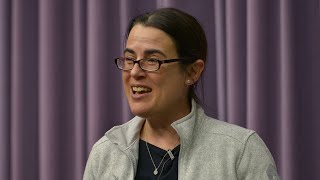
This content was created by GHION.AI . This content was uploaded by GHION.AI . This is a YouTube talk titled "Strategies for Student Entrepreneurs [Entire Talk]" (created 2020-02-26). It is a keynote/lecture by Mar Hershenson given to students (Stanford/ETL/Lean LaunchPad audience) in which she offers a personal bio, recounts startup and career stories (Barcelona Design, Savio, transition to Pear VC), describes her teaching/mentoring work, and gives practical advice for student entrepreneurs. Major themes include internships and career expectations, imposter syndrome, changing plans, learning from startup failure, and attributes of successful founders (get started, want it more, tackle the hardest problem first, keep it simple, lifelong learning, ask for help, confident-but-data-driven leadership, hiring/trust, and empathy). The excerpt ends with audience Q&A (an attendee labelled SPEAKER B asks about hardware and dependence on Asian manufacturing).
Chapters
Who you are defines how you build. It's really— I've been a listener of ETL for many years, so it's actually great to be here today. The last time I was here was actually 5 years ago. I came to listen to my longtime mentor, Catherine Gold. She actually helped us bring PairUp and She was one of the first female venture capitalists in the Valley, but not only that, she was actually one of the best venture capitalists in the Valley, and sadly she passed away 9 months after her ETL seminar. So today I thought I would take just a couple of seconds to remember her and actually encourage all of you to listen to her presentation. I think it's all worth it. I am going to start the talk by giving a little Twitter-style bio. And then I will get to DoubleTap on what I do today, and finally I'll get to the meat of the talk. So this is my bio, Twitter style. I was born in Barcelona, Spain, and I spent my childhood and my teenage years there. I actually spent one, my sophomore year in high school in Kansas City, Missouri. I was always a very mathy kid. I liked to do math, and even when I would go outside in the playground, I was looking for patterns and doing math in my head, which drove my parents nuts. I liked soccer and I love FC Barcelona, I still do that today. In '95, I came to Stanford. I did a lot of TAing and I ended up leaving with a PhD in electrical engineering, as Tom said. In '99, I started a company called Barcelona Design. This company went all the way up and then all the way down. And I'll talk about it, but I had my first baby, Isaac, so that was a good time. I started my second company in 2004. It was called Savio. I sold it to a public company. I spent some years there running engineering and product, and I had two more babies on the way. And finally, I decided I had to get out of semiconductors, try something new, so I went into investing. I did mobile, e-commerce, and Finally, I started Pear with my team and went back into teaching. So I'll double tap on the last bullet. First of all, Pear, I have 3 slides. We are a seed stage fund and we partner with founders really early on, what we call at zero, and we try to do whatever we can to help them build successful companies. I founded it with my business partner, Peshman Nozad, in 2013. We are investing out of a fund that is $160 million and we're a team of 12 people. And this is actually a picture of our team that we took 9 months ago. It's not our official picture. If you actually go to our webpage, we have really fancy pictures taken in a studio, but I love this picture, like the rogue picture, because we're all dressed in our uniforms and we pose like a soccer team, and that's really our culture at Pear. I think when we have a success, it's because of all of us, and when something doesn't go right, It's all of our fault, it's nobody's fault, right? And I can trust that everybody in our team has my back. So we do this picture every year and I really, really like it. I only have one slide on real graphs, but I think it's important. I've been working really hard for the last 6 years to figure out how to get companies from zero to one. And zero, every company has a day zero. We call 0.5 when companies build a product that somebody likes and we call 1 when that, when you figure out how to sell that product and make money. And that 0 to 1, sometimes people call it product-market fit and it looks like this. It's very bumpy and feels like a roller coaster but it's also fun and challenging and that's what I like about it. So that's what we do. And just the last slide on us, like Tom mentioned, we've had one IPO in the last 6 years. Our companies have raised $5 billion and they're worth almost $30 billion, which is incredible. These are some of the companies that we back: DoorDash, Branch, Garden, Nova, Affinity, Gusto, many more. We are so fortunate to work with the founders of these companies who do obviously most of the work. And one interesting fact for everybody in the audience is that all of these companies were actually started by Stanford alumni, and many of them while they were students here. So that's really exciting. Okay, this is the other thing I do in my free time. I'm part of the teaching staff for Lean LaunchPad, which is a class that is in the engineering school, Engineering 245. It's, you know, I was actually, the reason I became a teacher here was also because of Catherine. She introduced me to Steve Blank, who is the guy who's behind this class. It's literally like an experiment for 10 weeks we take students and we try to simulate what a startup feels like, just that zero-to-one stage. The way to define that class is we're exercising that muscle, so when you are faced with that situation in real life, you know you have some tools to figure it out. One of the nice things of this class, and I see many of the students here, is that I get to interact with great students, and it's new people every year and so full of energy, it's great. It's not the only time I get to interact with students. My daughter says I spend a lot of time with students. This is pictures of what I've done over the last 6 years, but I do spend a lot of time with students. Sometimes it's one-on-one, sometimes they're part of our investment, sometimes part of a pair program, and sometimes it's part of my outreach. I do a lot of outreach for female founders. Sometimes we all have ice cream and get on boats, so it's all sorts of activities. But the great thing is for, with a few of them, I have a deep relationship and they feel comfortable enough to come to me with their problems. So I have a little window onto what it is to be a student at this institution. Actually, I know some of them so well that when family weekend comes or graduation, I go out with their parents out to dinner, so that's actually really fun. So when I was preparing for the talk today, I thought, what am I gonna talk about? I watched a lot of ETL videos and I'm like, everything has been said, so I I decided that I would answer some of the questions and concerns and worries that I get from the students that come and talk to me. So I hope some of them will be useful to you. Let's start with the first one. And the first one is, yes, it's really okay if your freshman internship is not at Google, right? And I know you laugh, but it's true. Some people are really scared if it's the end of fall quarter and they don't have that internship lined up, and they're even more worried if it's not at a fancy place. But the truth is, it really doesn't matter. I think what really matters is when you go to that first internship, you have to really give it your best. No matter what you do, you have to give it your best. It's all attitude. I think, you know, one of the things I did this weekend is actually figure out what the CEOs of companies that went public in 2019, what were their first jobs? And it was actually really interesting. 'cause they were something like production shift manager at Mars, an advocate at some law firm. I actually didn't know what an advocate was, whether it was above or below a paralegal, I didn't know. And brand assistant at Clorox. So at least this is proof that you don't need to have a fancy internship to take a company public. And these are, I'll tell you now about my internships before grad school. I had two internships. One was a, Apple and the other one was at a little company called Linear Tech. And of course you can see from the buildings that Apple just looks fancier. And my parents knew what Apple was, they had no idea what Linear Tech was, but Linear was actually really important to me. Linear was started in 1981 and it went public in 1986, so 5 years, which is super record time these days. And it got bought by Analog Devices 2 years ago for $15 billion. So it was actually a good company. It was known for producing some of the highest quality analog circuits in the world. It also had very, very high operating margins, close to a software company, which was hard. And perhaps the most interesting is that it employed all these people that were super, super smart, these analog circuit designers, and they had a special name. They weren't called engineers, they were called gurus. And the place was called the Home of the Gurus. I'm sorry I couldn't find a better picture, but that's where I went to work. I got the job by accident. This is Bob Dobkin, he's the founder and CTO of the company. He happened to be a friend of my then-boyfriend and now-husband, so I met him at a party. And he was complaining that he couldn't hire analog designers. He had just gone to Berkeley, which maybe he should have gone somewhere else, and he, Didn't find anybody that would answer his questions on RC oscillators. I was sitting next to him and I just had studied RC oscillators, so I blurted out the answer and he was so shocked that this girl from Spain answered his question that he gave me an internship on the spot. So that's how I got the job, I wasn't even looking for it. And I was excited because I was gonna be able to spend the summer with my then-boyfriend in Menlo Park. So this come the surprises of this internship. First, this internship was in Milpitas, and I don't know how many people know where Milpitas is. I was surprised to find out some people don't know where that is, but it's 60 miles southeast of here, and in '94 there was no highway that would take you there. So, and I didn't drive and there was no Uber, so my only way to get to work was to take a bus, right? I actually had to take 2 buses and walk, so I looked it up on Google and it still takes 2 hours to get to Milpitas if you don't have a car. So if you do the math, I was gonna spend 4 hours, you know, public transportation getting to Milpitas. That was my first surprise. My second surprise, when I walked in, I thought I know the answer of this question, I'm gonna be a fancy circuit designer. They said, oh no, there's no desk for you and we're not giving you a computer. You can have a lab bench if there's one free, but you're gonna be working for the other people and taking measurements. So this was a translation for like, I have the lowest job possible at this place. My third surprise was that I was going to be the first female that actually worked in that lab. And people didn't know how to act in front of me. I was like a strange object. They were really fun people, very smart, and they had a culture of pranking each other. They were all these pranksters. So the first thing they did to me is they put a very heavy inductor in my backpack, tiny but heavy, so when I would walk for those many hours back and forth, my back started hurting. So anyways, it was pretty bad, but I was very lucky. That guy in the picture, his name is Jim Williams, Here he is. Jim Williams somehow took pity on me. He was like, his bench was in front of mine and he decided he was gonna help me out. And the first thing he did was he gave me a ride. So I would drive from Menlo Park to Milpitas in his car that had the license plate Analog. I don't think you could be more of an analog designer. The second thing is that he gave me an education. I think he really cared for me and I didn't know at the time but he was one of the people that was best known for circuit design. He actually had pulled Linear Tech with him. This is the way he thought, his brain was just a mess inside, but then he had this magic power of translating knowledge into form that was consumable by humans. So he would literally blurt out this, application notes, he would even write books, and he had this art, he had this kind of Miro-like art in his house that were all circuits. So I was so impressed with him that I worked so hard to keep up with him, right? So I learned a lot. And actually the best thing about Jim is he was the chief prankster in that lab. So the last week I was at Linear, he decided that we were gonna get back at the boys. And we came in early, and for those EE in the audience, the audience, they'll understand the joke. We had a test board for testing voltage regulators. We went in and we flipped the polarity of all the electrolytic capacitors, and when you do that to a capacitor and you power it up, it literally blows up. So that day when they turned on the test board, literally there was this explosion in the lab. I don't know if you could do this today, but you could 25 years ago. So anyways, that's my first internship. I didn't know, and this is, you know, what I got. I was so happy that I serendipitously found Jim Williams and that he taught me a lot about circuit design. Okay, so that's concern one. Anybody concerned about that internship, you shouldn't be concerned. The second point that I get a lot is no, not everyone here is way smarter than you are. Right? And I know that you may not believe it because everybody around you is really, really smart, right? But everybody here is smart in different ways and I think part of it is believing in yourself. Everybody that I interact with during class, I know is capable of great stuff. So I didn't always feel this way. In fact, when I first came here to Stanford, I thought I had gotten in because Bob wrote a recommendation letter. And I thought that Bob wrote the recommendation letter because he just felt so bad for me that I had worked so hard at Linear. But anyways, I got in and Bob said, go see Greg Kovacs, Professor Greg Kovacs, he's my friend, and see what you can do. So I went there and Greg said, oh, why don't you come to my research group, we'll just kind of like figure out if there's something here for you. So I showed up to the research group meeting and they're tiny rooms, And everybody first looked really tall, but second they were speaking a language that I could barely understand. And it got worse. At some point this guy, he's my friend now, John Suh, he stood up and said, "Oh, I'm gonna demo what I've done." And he had this little chip that it was kind of the first autonomous micro robot. It would like move on the table and carry these paper clips. I'm like, "Oh my gosh, where am I? This place is crazy that people have moving chips. What am I doing?" I literally went home and Matt was still my boyfriend at that point. He was a really smart person and I said, okay, I quit, I'm going to go in tomorrow, maybe they'll give me my tuition back if I'm lucky. We have to figure out the visa situation because I can't stay here unless I have a visa. And my husband Matt said, I remember he said, listen, do you want to be the smartest person on that research group? Or you want to be the dumbest person, because if you are the dumbest person, you're going to learn something. It's like playing tennis, you always want to play up, you don't want to have your tennis class with somebody that is worse than you. And at least that was enough to get me through the next few days. So I eventually did graduate, this is a picture of my graduation. But the time that I was here, I want to tell for anybody in the audience, was actually really, really hard. I was always feeling like I didn't belong. I would go through this cycle, I actually, for those EEs in the audience, they know that if you want to get a PhD, you have to take this exam called the Quals, and it's very mystified, 'cause you know, it's part of the story. But I was completely convinced I would never pass the Quals, right? I was just convinced. I was so scared that I wouldn't even look at the results, so I had to actually, I would send my son Matt, who I think at that, I don't know if he was my husband at that time, I was like, just go look at it, I can't even look at it. And then once I passed, I would tell everybody, I was so lucky, I got the right professors to ask me the questions that I knew, and that's why I passed the quals. And I was just convinced of that, right? So now obviously I know that has a name. At the time I didn't know, that's called imposter syndrome. Even my 10-year-old son, knows imposter syndrome. They teach it in school now, in elementary school, so that's good. But at the time I didn't know. I know now also that 70% of the population has it, so the other 30% are very, very loud people, and they're probably— they're on Twitter, they're on Twitter tweeting about themselves. So, but it does exist, right? And I think it was a big problem for me. Because in many occasions I didn't raise my hand when I should have and I didn't say that I could do it and I didn't take the opportunity to do something that was— that felt hard. So I don't want that to happen to anybody in this room. Anybody can do anything they want, it's just a matter of wanting to do it. So even sometimes I get this feeling of imposter syndrome coming and now I have two techniques. One is whenever I go into a room and I feel like everybody is really smart, I keep saying I'm playing up and that's okay. And the second thing I do is I over-prepare. So even this talk today, you may think it just comes naturally, but actually I did prepare and I decided to scan a bunch of the papers that I did as I was preparing for the talk to give you a sense. So if you do this, I think I scribbled around 50 pages even before I figured out what I was going to talk about. So it's okay to prepare and admit that you actually work to get something done. Okay, the next one is, yes, it's definitely okay if your plans change, right? I think a lot of us come with plans. Some people don't have plans, which is also okay, but some people have plans and then you just don't know that life is just full of surprises and things change. This is my dad. My dad was a professor in the University of Barcelona. He taught pediatrics in the medicine department and he was also a researcher. So I was kind of, academics was in the family. So I was destined to be an academic. This was just part of it. I actually also spent a lot of time with him in Spain, so I would go to his lectures and I remember the first time I went, I was probably 7 or 8 and he was, as I said, teaching pediatrics, which is a requirement. So in Spain, it's a public university, they have these giant auditoriums and I was in the front row, people are very noisy and as soon as my dad walked in, it was like silence and everybody was looking up to him and I was like, wow, my dad's really important. And the other thing, Traveling actually was pretty exotic, we had just come out of a dictatorship, people didn't leave Spain, but he was always out at scientific conferences, he would go to exotic places like Russia and Japan, India, so I thought this is it, I'm going to be a professor, people are going to listen to me, I'm going to go on these fabulous trips, and that was for many years what I thought I would do. So when I came to Stanford I did two things, One is I did a lot of TAing. So of all the quarters I was here, the only quarter I did not TA was my first quarter, and every other quarter I was TAing, which if you're a grad student that's trying to graduate is almost the kiss of death because you can't do research, right? But I loved it. I think my husband was actually really upset at me because I would spend so much time with the students. He would come and turn off the lights on the lab saying it was time to go and I had to go home. And over the last year, one of the things I did, which was now in retrospect crazy, but I decided I would rewrite the entire notes of one of the classes I was teaching. And that class was called EE113, and now it's called EE101B. And I wrote these notes in LaTeX, which is also crazy. But as I was looking this weekend, I saw that they were still using it, which it's a huge— it made me super happy because I thought, wow, Transistors have not changed in 20 years. Anyway, so that's one thing I did. And the second thing I did is I did a lot of research. And I was very fortunate. I not only had one PhD advisor, I had two. So I got double for the price of one. I had Professor Tom Lee and Professor Stephen Boyd. And my thesis was in using convex optimization to design analog circuits. It was really cool. I don't have time for that, but it was really cool. One of the things I did in the last 6 months of my stay here was I have to get a job. So you go into these interviews to be an academic, and you take your research and you go to all these really fancy schools and you present your research in front of professors. So this is actually a pretty intense job. It's probably worse than the calls. But I did it and at the end I had a couple of job offers and I was trying to figure out where to go and all of a sudden I changed my mind. I said I'm not going to take any of those jobs, I'm going to go into entrepreneurship. So I defended on March 19th, '99, I went through this life crisis where I decided I would not be a professor, I would actually go into entrepreneurship and I remember talking to a bunch of people about it but it was, 1999 and it was crazy here, everybody was doing startups, so a combination of fear of missing out and encouragement, pressure, et cetera, made me go into entrepreneurship. So in 60 days I went— actually less than 60 days, we went from defending my thesis to signing a term sheet without knowing anything. And many times I reflect on that decision, do I regret going into entrepreneurship or not? Fortunately, you can't A/B test your life, so I'm actually pretty happy I get to teach a little bit in Lean LaunchPad, then through my portfolio companies and all the students that I mentor. But anyways, your life's plans can change and it's okay. Okay, fourth thing is yes, it's really, really okay if your first startup fails. So I think also this happens at Stanford, we all have great, great resumes, And I think if you're really successful, failure seems even a bigger risk, right? But it's okay to fail. As I mentioned, I started this company called Barcelona Design. I still think we had a super cool logo and we did great. We actually had a lot going for us. Our technology was amazing. We were able to literally design circuits that would take a human maybe days or weeks to design, we would get pretty close within a few minutes, right? So that was pretty impressive, and that's when computers were slow. The second thing we did, which at the time was definitely crazy, was putting the application on a web browser. So it was really cool. We were able to recruit a lot of great PhDs from here, so we had a stellar team. We raised money and we had customers and that's not even all, the people loved me in the press, I was a woman in semiconductors so they had never seen any of those people, so we had a lot of press, right? So the company was high fly-up. Then all of a sudden things started going down. So I think there were many reasons, there's never just one thing but it's a combination of things and we hired a CEO, I don't think that was the problem, I think The issue was I never did get along with him and I didn't work hard enough to get along with him. So that's number one. Second is we raised a lot of money and when you raise too much money you hurt your company because sometimes, because you go from being kind of nimble and fast to being comfortable. We didn't hire well, the culture was broken, so everything was a mess. And I was sitting here and I'm like okay, what slide should I show, what's the picture? To show that I was actually— it was terrible. Luckily I had my separation agreement, so that's it. You can get it all in a piece of paper at the end where it says, Mar, we don't need you anymore, right? It's really hard. If you're a founder, I think I've— in this last 20 years I've met a lot of founders that have gone through that, kind of failed founders. You can start a group called Failed Founder Anonymous and It would actually be very successful because we all feel the same pain and it's very acute. It's like somebody died. You go through the 5 steps of grief. You're like denial, anger, depression, bargaining, and acceptance, right? You really suffer that cycle. And at the end, once you get to acceptance, it's when it gets good, right? Because once you get there, you can decide to learn from the experience. And that's what I did. Once I got there, I was like, what could I have done to make it better? And life is just a series of failures. Sometimes it works, sometimes it doesn't work, sometimes successes. It's just every day, right? And I think I try very, very hard every time something doesn't work to not blame it on anybody but me. Because if I do that, then I know that I'm learning from that experience, right? So I think for all of you, there will be small, big failures, it doesn't matter. I think the important thing is to look at it and say at the end what could I have done rather than what could they have done, right? Okay, so obviously I went to start a second company, Savio Labs, but I can tell you that's kind of like the Apple LTC thing, you don't learn as much when things go well, you learn more when they don't go well. Okay, so this is the last point, the fifth point, and is yes, you can learn to be a great founder. Great founders are not necessarily born, it's not that you show up and you're a great founder. Sometimes I think this is the most popular question I get when I give presentations. What are you looking for in a founder? What are you looking— what makes a good founder, et cetera? It's hard to give a set of instructions or set of variables that would translate into good founders, right? It's definitely not take this class, have this job, learn, read this book. It's nothing like that. It's really at the core being a great founder is an exercise on character. You have to overcome your character flaws and I really, really believe that. As humans, we're not perfect and we have life to go through to make us better and that's the way that you can become a great founder. So I have a few suggestions and I'll go through it. It's not a complete list, but if you pick one or two, you're doing great. Okay, the first one is very simple, you have to get started. If you want to do something, you have to start. This sounds very simple and obvious and maybe not something that would make the top 8 list of Mar, but it has had a great impact in my life. This guy, his name is Ali Hajimiri. He was my officemate at Stanford. He is probably one of the smartest people I've ever met. He's an electrical engineering professor at Caltech. He's founded 2 companies and When we were students, we were all in our 20s and he was this guy that was 60 but trapped in the body of a 25-year-old. And he would look at us and give us advice all the time about what we should do and shouldn't do and so on. So one day I was on a, you know, if you're a grad student here, you've gone through this period where you're like, oh my gosh, what is gonna be my thesis? What am I gonna work on? I don't know. I'm never gonna graduate. So I was telling that to Ali, I was like, I have these ideas but I don't know, I'll never graduate. And Ali looked at me and said, Marthe, the fastest way to finish is to start, which I took as like, stop complaining and get something done. And it's truly what he meant, but I think when we look at founders, you're looking for people that really think that way. If you want to get something done, get started. That's what it takes. You don't have to wait for people, you don't have to wait for money, you don't have to wait for anything, just get started. The second one is wanted more. So I think we look for founders that just wanted more. They want to succeed at all costs, right? And I'll give you a story about it that for some of the audience will remember. June 19th, 2016, it was Game 7 of the NBA Finals and it was the Cavs against the Warriors. The Warriors had had a great season and the last game was in the Oakland Stadium. So everybody, everybody here in the Bay Area were all Warriors fans. Everybody was so happy, parties at people's houses. We were going to win. It was just so clear we were going to win. First half, the Warriors were winning 49 to 42 and just very similar to the 49ers, we ended up losing. 93 to 89. So that was a big disappointment. I think we became maybe a little bit too confident. The next day we had John Donahue come to our office and John Donahue is now the CEO of Nike. He was the CEO of eBay, ServiceNow, and Bain Company. He graduated from Stanford GSB with an MBA in 1986 and he was there giving a talk about career, life, leadership, et cetera. And one of the students asked him, hey, John, you went to school with really smart people. How come you are so successful and the other people in your class were not as successful? And John said, well, because I wanted it more, just like LeBron wanted it more that day in the final. And if you watch that game, you know what I'm talking about because you could just tell that just LeBron had it in him to win that game. So that's what we want when we see a founder, that power of wanting to succeed at all cost. Okay, the third one is do what really matters first. And this goes completely against human nature. I think if you have— if you're— we're naturally procrastinators and if you have something that is hard to do, you leave it until the end. You don't want to do it at the beginning. Right? So it's the opposite. We're actually looking people that want to do the hard stuff first. I would say that I was a great test taker. I'm sure many people in the audience are great test takers and you took the SAT or GRE or whatever and you know that when you take this test, what you do is you have to go and answer as many questions as you can really, really fast. And every question is worth the same, so if you find a hard question, you basically don't answer it, and you come back to it. That's the strategy. But in a startup, it's actually the opposite. You should take the startup test by doing the following. You walk in and you read the test and you find the hardest question and then you answer just that question and then you pass. Because if you don't answer that question, you will not pass, right? So when I look at a company now in our portfolio, I'm always trying to figure out what is the weakest link in this company. What do we have to do to ensure success? And I want the founders to just work on that because nothing else matters. And there's always ways to keep you busy when you're in a company, always ways to keep you busy, but there's only one thing that typically matters. Okay, the fourth one is keep it simple and be super clear. So I named my second company after this guy, This guy is a king in Spain. His name is Alfonso X el Sabio, which is the 10th, the wise man. This king lived in the 13th century, and this king is a special king because he did a lot of wars, he'd go to court and wars and so on, but he loved knowledge and education, and he surrounded himself by a bunch of scholars. So he liked history, he liked economics, he liked astronomy and he was very interested in it. And at the time, you know, the people thought that the Earth was at the center of the universe, right? But people were also bored, so they took a lot of measurements of the stars and the skies and then they had a problem because they had all these measurements and they had the theory that the Earth was at the center of the universe, so how could they put those two things together? So they did, they had very complicated systems and one of them was Ptolemaic system, which would have a planet stand on two spheres, very complicated. The astronomer was explaining it to the king and Alfonso turned around and said, if the Lord Almighty had consulted me before embarking on creation, I should have recommended something simpler. Which I think it's really clever because it didn't get him into trouble with the Pope, but also because it's true. If you get an explanation and it's really, really complicated, it's likely not true, right? And if you— when it applies to founders, when you're a founder and you're pitching your company to an investor, you want to keep it simple. We are looking for those people that have clarity of mind and can communicate easily what they do. It should be simple, right? If you're building a product and the product has 10 features or 4 that depend on 3 and you need a very complicated map to construct it, you're building the wrong product. I know. If you are talking to a customer and you're talking to them about the 5 great things your product does, it's wrong. You should just give one thing because that's enough, right? And customers, just like investors, we just are poor people, we don't know enough, we just keep it simple. So it's something you have to exercise on but it's important. Okay, the fifth one is always be learning. I actually met somebody a few weeks ago who told me— I said, oh, what do you do? And he said, I'm a lifelong learner. I was like, wow, I want to be that. It's like, it's a great job because you're always learning little by little. But it's true. I think you've heard this before, you leave Stanford and you have to keep learning and there's no credits and there's no classes, so how do you do it? So I'll tell you a couple of stories. This is a picture of Shubi and Ray. They're the founders of a company called Affinity. This picture is taken when they were sophomores, it's in our office. They look pretty serious but they're actually really happy people, so I'm not sure what was going on. They were probably trying to look adults in this picture. But anyways, they were part of our group of people and we took them to Dropbox to talk to Drew. The CEO, we went on a little field trip on a bus and we went there and Ray, who is the guy standing up, looked at Drew and said, hey Drew, like 6 years ago you were like running this company with 2 people and now you have 1,000 people, how did you become such a great CEO? And Drew said, oh, that's easy. I actually, when I run into something I don't know, I go and I find the best books on the subject and I read them and I study them and I try to really understand them. At first I was hiring really expensive consultants, but then I figured out that the best consultants have books and it's actually better to read the book because they put a lot of thought into that book rather than in the hour they're talking to me. And that's true, I think you've heard it before, but you know, Jeff Bezos, Mark Zuckerberg, I think this is Patrick Collison from Stripe, his reading list. It's really interesting, actually you can go online and type all these CEOs have reading lists. And this guy has these books that are like, on home construction and history and they're all over, right? It's not about just startups. You actually want your mind to be broad and open and learn like Alfonso about a bunch of stuff, right? So read, that's very easy, right? Okay. The second one is ask for help, okay? And I'm talking especially to all those first-time founders that think everything should be perfect. We know things are not perfect because we've been there. It's really hard to be a founder and if you don't ask for help, it gets harder. So you really have to raise your hand when you don't know something and just get others to help because people typically help. So I'll go back to Shuvi and Ray. Shuvi and Ray are actually— they went off to build Affinity. Affinity is now a 100-people company in San Francisco, they're growing really fast and 2 years ago they sent me an email, long email and they said, Hey Mar, basically I try to summarize it there, we want to make sure we're learning from the right people, can you help us connect with them, right? So I think when we get that email as investors, we are like okay, jackpot, we got founders that want to learn and they're aware of what they don't know. So again, don't be afraid to ask for help because I think the best people in the industry do have help. Okay, the sixth one is, You have to be confident but with knowledge. And I think confidence is a really touchy thing because you can be arrogant if you're too confident and you may be not paranoid enough if you're confident, but it's important to be confident if you want to take people with you on your trip, right? Remember, you're a founder and people have to give you money, they have to buy your product, they have to follow you. I'll tell you a story of one of the persons that I believe has confidence with the best level. This is DoorDash. We invested in DoorDash in 2013 and my partner, Pejman, he was really gung-ho from day one. He was like, oh, we should do it, we should do it more, and I'm kind of like the analytical person in that office and I was like, I don't know, food, who knows, I don't know, it's really hard to deliver food. I'm not even sure it's a high-tech business. And did you see all the companies that are doing food delivery? At the time there were all these companies and probably more, I couldn't find all of them. I was like, that's a really bad idea. So basically I took it upon myself to prove Peshman wrong and I went and I did a lot of diligence. I met with a lot of restaurant owners and I was like, well, I don't know, what do you think of DoorDash? Everybody loved it. And kind of the last thing, the last test for us was to go talk to Tony, the CEO. I had a long list of questions, okay? So very VC-like. So what's your unit economics and what's your growth and your competitors and blah, blah, blah, blah, blah. And we went to their office and their office was this place in Stanford Avenue. They had a house, student house at the kind of living room, dining room areas where they worked and they had all these whiteboards on the— behind them, so I went in with my list and Tony is like, no problem, let me get some whiteboards. So he got like 3 whiteboards and wiped them all out and he basically answered all my questions with extreme confidence, fact-based, data, and me that I'm an engineer, I was completely sold. I'm like, okay, it does work, I should do it. So he basically sold me that I should definitely give money to this company, right? And it's a— he was confident without being arrogant and he took the time to actually write by hand everything that I wanted to know. So that's the story and I've, of course, maybe some of you have used DoorDash. Okay, the last two are about people. So I think if you're a founder, you know this is not a solo sport. You really have to— you can't go public with one person. You actually have to hire people if you want to build a company. And it's really important to trust the people that you hire. I think trust is the number one thing. It feels like a soccer team. If you're playing soccer, there's a formation and people basically have zones that they guard and that's their responsibility. And then everybody else in the team knows where these people are, so if they pass the ball, they know there's somebody there that should take it, right? When you move out of formation, that's when you lose the ball. So in companies it's the same. You hire the best people, you empower them as much as you can, you want to make people as powerful as they can be, and then you trust them. And if you don't trust them, then you don't move fast because you're looking back at what are those guys doing? I don't know, I don't trust them and that's not good, right? So I think when you're a first-time founder, don't be afraid to hire somebody that it may be better forward than you are because that's how you're going to win the game and that's really important. And the last one I would say for me is that I think you really— it's really important to feel true empathy to whoever you're working with, not just your employees but your customers and investors, anybody that surrounds you. So I think it's really important to take the time to get to know what people want to do or where they want to get, what is their— what are their goals so you can align them better to your company, but not just that because actually you really care. So I think in my case, as you know, my first company didn't work, but that was the best thing that happened to me in order to be an investor because I know when somebody is sitting in front of me pitching me their company, it's a really scary thing, right? And you don't know what you're doing and if you're doing it right and I also know that when a founder has a problem and there's problems all the time, you cannot meet sales or you cannot— your co-founder is leaving or you have— you can't raise money. I know it's like real pain, right? And I cannot— at least acknowledge it and then say, okay, we got it, let's make a plan and let's go fix it, right? So I think it's something to work on for all of us. Anyways, I leave the list here. I could have gone on. I think if I had another week to prepare for the talk, we would have 16. Luckily I don't. So this is my research group and I wanna tell, 98, I wanna tell you that All of us went off— most of us went off and started companies. It's not an accident. This is a team that we worked on in 2014 with Garage. They were part of the ACM group at Stanford and I looked it up, everybody started at least one company. So each of you guys here in this room, around you there is a founder, I promise, or somebody is going to start more than one company. So if you have time, go and meet them today, don't come talk to me, come talk to the people around you. Thank you. I have to say two thank yous. Thank you to Tom again and Tina and also to the Lean LaunchPad team, some of them are around, and my pair team. I know we have a lot of work, so thank you. And then my family who's there. I want to thank my husband who, you know, I wouldn't be here without him. I think his encouragement at many places in my career has made it possible for me to be here today. So thank you so much. Questions, if there are questions. Go ahead.
So we've seen recently the logistical troubles that happen when we depend too much on Asian manufacturing.
On what?
On Asian manufacturing, like Apple, Boeing, et cetera. What would be your advice for people like yourself who have hardware in their blood but can't really pitch the software margins from the get-go?
Yes, I think the question is about hardware companies, right, and the fact that they have lower margins, right? You know, hardware comp— and you know, what do people like us that are investors— and there's all these problems with manufacturing. It's always hard— harder, I guess, to raise money for a hardware company than a software company, right? I would say it's okay because the world does need hardware and somebody, if not you, is going to actually build it and make money. So if the opportunity is big enough, I think any investor is willing to take that risk, whether it's margin risk or capital risk or whatever. We only look at it about how big is this opportunity. It's not whether you're hardware or software, it's just what's the opportunity that we look at.
More from GHION.AI


O processo de reconhecer limites, mesmo quando a vida parece exigir sempre mais.





Depois de tantas histórias, aprendizados e pausas necessárias, o @interior_iza está de volta



