Strike the EQ/IQ Balance in Venture Capital [Entire Talk]
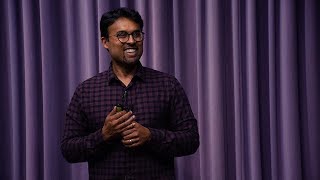
Puneet Agarwal explains how True Ventures uses emotional intelligence alongside analytical skills to evaluate founders and build trust with entrepreneurs. He argues that venture capital decisions depend less on spreadsheets than on understanding what drives people, and shares real scenarios from his firm's investment process.
Chapters
Who you are defines how you build. It is a huge honor to be here because Tom said I was basically you guys. I was a student. 20. I was saying 20, but I guess it is 21 years ago. You know, it was a lot different, different facilities, but it's really weird to kind of come full circle and actually present back to you. So I'm super, super, super thrilled about it. I'm going to talk about a topic that's near and dear to my heart and my partners at True Ventures Hearts actually about designing an eq, or emotionally intelligent driven venture capital firm. And I'll talk a lot about what that means. But first, I just wanted to set a little context. Tom did that earlier, but this was. I don't know if Tom, if you recognize this. This is the Fortune magazine cover where the Mayfield. So I was a Mayfield fellow back in 1997. Back then, it was actually called TVC, and then it became Mayfield Fellows. And that summer, July, I think, of 97, and we couldn't find the magazine. We were looking all over for it, so we couldn't find the picture inside, but there was a picture of us in this Fortune magazine, the actual Mayfield Fellows class. And it was like this really huge deal. It was kind of a big launching point for us. It's really a prelude of so many amazing things that have happened with Mayfield Fellows, the program with stvp. And one thing I'll say to you is, for me, that was my complete introduction to technology, to entrepreneurship, to Silicon Valley. It was really the springboard for basically my entire career. So I would say you should consider yourselves very lucky. Take advantage of this opportunity. It's a huge deal. The relationships I made back then are still relationships I have today. So the one thing I'll say is this. Ferrari is a really bad image. This was back then. They're trying to showcase how cool Silicon Valley was. It's really antithetical to everything I'm going to talk about, but that was the COVID back then. Just a little bit on True Ventures, and I'll get into this topic. I didn't want to do a big commercial on us, but I've been there 10 years. The firm started 13 years ago. We raised our first fund 12 years ago. There's about 20 of us. Sorry. Among our partner team, we founded close to 20 companies ourselves. Three of our partners are actually entrepreneurs at the same time. So it's kind of a very different kind of mix of people. We have about nine funds under management now, over 2 billion managed. There's about 140 companies that are active across all the Funds, and about 260 founders, CEOs that are active today. More importantly, close to 10,000 employees across all the portfolio. Something we're really, really proud of. And one thing we like to say, I'm going to talk a lot about our culture, but we like to say we like to start small, but we don't think small. So the strategy has not changed. Essentially what we do is we invest a little bit of money at that early stage, usually 1 to 2 to $3 million, and then we stay throughout that company's life. But when we start, companies are super raw, super early. Just really visions and stories, right? And so that's where we tend to play. And that'll come into more context as we go. So, getting into the topic a little bit, this is a picture of Doug Song. I don't know if you recognize him, but Doug Song is the founder and CE of Duo Security. So we've been humbled recently by some of the success we've had. Last year, you may have heard of Ring, which sold to Amazon. We were the first investors there. We were the first investors in Duo Security, which just sold to Cisco for over $2 billion. But this is that image of like, hey, yeah, I did it right? And if you read most of TechCrunch, most of articles, they're all great publications, but it's all about the success, right? It's all about, here's this next fund that's raised a bajillion dollars. Here's this company that's raised 20, $30 million, or actually not even 20, that's small, hundreds of millions of dollars. So it's all about this beautiful, great success. And it's good. We should celebrate that success. There's no question about it. But the reality is, and this is what I kind of live every day as a venture capitalist is it's like this. You know, if you look from point A to point B, where a company starts to where it exits, it's up and down. And it is crazy. You know, there's all kinds of really tough decisions that happen in this process around your leadership team, products, your burn rate. There are at least there's several crises along the way. I can tell you that right now. And so it's not that sort of simple journey. And that's what I kind of want to talk to you more about today. And I actually took some time to think through some of the questions that actually founders have asked me and talked to me about through the years, actually, all of our partners. Some of these actually happened today. I'm not no joke, even in the last week. So stuff like, I want to sell my company, I have an illness, I made a big personal mistake. I can't afford to support my family, I can't stand XYZ board member, our CEO wants to leave. We missed the quarter by a mile. My so and so executive won't scale. I'm not having fun anymore. These are like real conversations that happen literally all the time. And so part of this job, I mean, it's like psychology. It's therapy, right? And so you can look at this and say, hey, these are a bunch of business issues, right? Partly a lot of business issues. These are things that you have to deal with as you scale a company. But the reality is they're really human issues. They affect the whole person and they affect their families and the families of all the people that are around them and their individual lives. So it's a very human issue. And that's where I get to a little bit around what EQ really is, or emotional intelligence. If you think about it from a venture capital perspective, venture capital is fundamentally a human business. All these companies, there's people behind them, there are people who build these products, there's people who ship stuff, there's people who start them. And all the decisions that are made inside of these companies have real emotional drivers that not only affect them, but affect their families and all others around them, as I was just mentioning. So you have to think about the whole person. If you can get, as a venture capitalist, if you can actually get in touch with someone's emotional drivers, what's actually driving them emotionally, and you can understand what they're going through, you and them will win. At the end of the day, that doesn't always necessarily mean monetary success, but you will win because you will understand each other in a better way. And I'll talk through that. One thing I do want to say is it's not just about being a cheerleader and saying, hey, I'm just here to do whatever you say. I'm going to support founder. Whatever you say, I'm going to do. It's actually the opposite of that. It's really having honest, truthful conversations. I'll get into a lot of what that is. That's a backdrop of what I mean a little bit by emotional intelligence. But I want to unpack it a little further specifically around what it means for venture capital. So I would say there are two emotions. Basically, a venture capitalist can drive in an Entrepreneur or project onto an entrepreneur or even elicit from an entrepreneur. And I think those two things are either fear or safety at a high level. So fear, if you project fear onto an entrepreneur, it's pretty dangerous because you're living in a world of really imperfect information. And so if they're always looking over their shoulder, afraid or paralyzed, right? To make a move, to take a step forward, to take a chance, it can be really, really debilitating. Think of any time you have been afraid in your life or had fear, right? It's super paralyzing. Can't really do anything if you think about it. And we really believe this. Fear kills creativity, it kills risk taking, it kills all your personal growth. It's a huge, huge issue. If you think about safety, which is really having the space to be yourself is what I really mean by safety. It's the exact opposite. You become more creative, you actually take risks, you grow. Think of this school, it's safe. It's a great place to learn. This is what this school is all about. But fear is a big issue, right? So let's even unpack that further, right? So why does a venture capitalist have fear, right? Does anybody know what loss aversion is? Raise your hand if you know what loss aversion is. Have you heard of it? Just a few of you. It's kind of like what it sounds, right? It's the fear of losing. It's thinking negatively, always about loss instead of actually thinking about what is capable, what actually can happen. So to break it down to what a venture capitalist thinks, it's actually the fear of losing money. And it can happen in a couple ways. So it can happen right at the beginning of an investment. So you're making a new investment and you're kind of like, wow, this can go wrong. That can go wrong. By the way, you can talk yourself out of every single investment possible as a venture capitalist, because there's always 100 things wrong at a really, really, really early stage, right? So it's that fear. It's also the fear of when you've already made an investment, so things aren't going so well. Say you put $2 million in a company and the company starts doing pretty well, and now you have to put another $5 million in the company. Does your mind go all the way back to the 2 million that happened before? And you say, well, I already, I think I'm going to lose that 2 million, I'm going to lose this 5, it's going to be 7 million. Or are you thinking well, you know what? We're going to put this money in. We're going to go win, right? So it's a real big fear of losing. Everybody has it. So it's not like nobody's holier than thou, right? But everybody has this fear, right? And it's not just venture capitalist, but it's in life, right? So what we tried to do at tru, and this is how we design, this is where I get to how we design the firm. We wanted to put EQ at the root of what we were doing. So what we would try to do is design a way to actually lessen loss aversion, right? So we could actually bring safety into the boardroom so that the entrepreneur could be their best self, right? So one of our core tenets at TRU is to. And one of our core philosophies is that we want to maximize risk. We want to maximize risk on product, we want to maximize risk on timing, on market. We want to get in early and basically swing for the fences. And by the way, the idea of maximizing risk, a lot of venture capitalists won't say it, but, you know, it's like the third bullet point that's been on our slide deck when we go raise money for 13 years. It hasn't changed. We always say we want to maximize, but here's the thing. We want to minimize risk on the dollars we put in and on the people we invest in. So we want to really know these individuals extremely well. And what I mean by dollars is that we usually. Our first investment is typically $2.5 million, right? That's less than one half of 1% of our whole fund. So this is going to sound totally blasphemous, but basically, it's okay to lose it. We don't want to lose it, but it's actually okay to lose it. So when we walk into a boardroom now, we're not bringing our fear of losing money because we're not investing a ton of money to start. We're actually saying, be your creative self, pivot. Do this. Do whatever it takes to build this company, right? So that's a big part of. That's a big part of our thinking. The other aspect I would say that we've designed the firm around is we do not believe in consensus decision making. So we don't all have to agree to make an investment. There's no, like, point system that says, okay, we get above 35 points and we're going to make this investment. Right? We actually encourage dissension we want to disagree, right? So every deal we do, there's a couple people that are saying, hey, this is really cool. And there's a couple people going like, oh, my God. Have you thought about this, this, this, and this? That's great, right? We want that. Because if you're all agreeing on everything, we're playing at the lowest common denominator and not actually out there maximizing risk. But more importantly, when I walk into a boardroom and I'm actually talking to an entrepreneur, I'm not worried that, hey, my other partner over there didn't think this deal was so good, because, frankly, we disagree almost on every deal. So it's normal for us. So you don't have to be right when you make that first check. It's super important. You don't have to be right. What we're trying to do is simply create a process for maximizing risk. We follow that process. We know six funds in that some stuff is going to work. So this is, again, how we design this. Right. The second thing, and this is the corollary to all of this, is that we really try to have a culture of. Of no attribution. So this is the true team. Super proud of our team. This is at least the investment side of the team. Nice picture. So venture capital is kind of a star business, right? You see the Midas list, and you see everybody talking about their wins, et cetera. It's a little bit of a star culture, and that's okay. Some people really like that. But if you try to create a culture of no attribution, first of all, you can help companies a ton. So what that means is we work as a team. We try not to take credit and say, this is your deal, or this is my deal. So in terms of helping companies, when we make an investment, yeah, there might be a point person, but the reality is you get the whole team because there's so many moments where people can help, right? Like Om Malik over there. I don't know if you know Om. He created gigaom a long time ago. Om is one of the best storytellers in the world, right? He should help you market yourself. Our cfo, Jim Stewart, who's sitting over there in the middle, he's taken five companies public. He should tell you how to hire a cfo, right? Jeff Bean, who's sitting here, he's one of the top probably three designers in the world, Web designers in the world. He should be telling you design stuff. So if I'm not feeling good about incorporating the entire team into whatever investment I'm making and just living in a silo, that's not good for the entrepreneur. The other thing is on the failure side, if you think about it. So if you have this culture of your deal versus my deal, and this is where again, you can avoid loss aversion, right? If a deal's going bad, this is what typically happens, right? An investment's not going well and someone says, hey, you partner, this investment's not going well, you better fix it. That person starts getting nervous. They are unsure about even making new investments. Then they go into the boardroom and start talking to the entrepreneur and they start getting nervous. And then it bring on that same fear and panic, right? So if we can create, and this is super hard to do, we try to create this culture of no attribution, meaning we don't try to assign deals to people so that we can actually again, bring safety to the boardroom. And one subtle thing, I mean, this is very intentional. If you go to our website, for example, because a lot of it is you have to live these actions, right? If you go to our website, you won't see what companies each of us are on the board of or what we invest in. You'll see in general what TRU is invested in, but not by partner. We may be the only venture firm that's ever done that. There's a couple. But these are subtle things, right? But that's how we propagate our culture internally to again, bring safety in the boardroom. The third thing, I've been talking about safety a bunch, but this is very intentional part of it, right? And you guys have some of this too, for sure. But we have invested a ton of our resources in building community. And you can actually tell what people care about oftentimes by where they're actually investing money. And we invest a lot in this. So this is all our founders and CEOs at what we call our last founder camp. This was back out in Carmel when we bring all these guys together. So it's a great picture of them. But we have, As I said, 140 active companies, 260 plus founders, CEOs in the community. And I like to call it a hyper connected community. That's basically a non judgmental zone, right? So whatever question you have, you can ask, you will get an answer probably within five minutes. And you will not be judged. So you can absolutely be vulnerable and talk about your issues. So like for example, at this founder camp, which we're gonna hold in another week or so, we bring all these folks together and we don't have outside speakers. We don't call it like a CEO summit, which are great too. You bring this great Bill Gates or whoever in and he talks about his life and what he's done. It's amazing. We just have our founders and they just talk about their problems. Off the record, it's not a big ring the bell, rah rah fest, some of that, but for the most part, it's actually talking seriously about what they're going through. Right. Similarly, we've invested really heavily in something called True Forums, which is kind of modeled after YPO. Founders get together every month, 10 of them or so. They have a moderator off the record, and they talk about issues that are affecting them. We're investing in mental health. Right. We put a lot of our dollars into this because again, it brings huge safety and it allows them to be their best self, which is a really, really big deal in our book. Right. So hopefully this stuff is not completely glossing over your head and kind of two up in the sky. I mean, this is how we have designed the firm. So I thought what I'd do is actually walk through some very real life scenarios and how we reacted in those scenarios. And by the way, this is not black and white. There's a lot of shades of gray. This is hard to figure out. I've anonymized all of it, so I really hope I do not get in trouble. But I thought we could bring this to you. So. So here's the first scenario. This really happened. So a CEO calls the day of the financing. So when we actually wire the money, so when we invest, we do a term sheet, we sign it. Usually the lawyers work for a month, you close it, and then what happens is there's actually a day where you wire the money from your bank account into their bank account. So that's this day, the day of the wiring. We wired. I think in this case it was $5 million. So it's. It was about double what we normally do. So it was a big check for us. Okay. And the CEO calls with some bad news. And the CEO says, hey, I have cancer. Right? It's very serious. He's not sure how long he has to live. It's devastating. He didn't know. He had just been getting tests in that past week. And so on the one hand, you're sitting there and you're like, this is horrific. What do we do? On one hand, it's material, new information. Big reason why we invested was this individual. We invest behind these people who take us. And basically 75% of the reason we invested was because of that person. But now that person is telling us he's not going to be able to work in this company. It's a very serious issue for him and his family. So the question is, what do you do? And I'll give you a few options. I'll see what you guys pick, right? So one is you sort of say gracefully, hey, like, you need to go take care of yourself. We need to take the money back because this is solely different from what we invest in, but please take care of yourself. We're so sorry, but go do that. The second option is I would say just give the money and go for it, right? And I would say a third option. I'll give you a third out, which is, I don't know. Okay, so how many of you would do A, Probably a third. Third of you, I think. How many of you would do B? A little more. How many? You don't know? C. Okay, a bunch of you. It's pretty interesting. It's like almost divided evenly, right? These are hard things, right? So I'll tell you what we did on the spot. We said, take the money, it's yours. Don't even worry about it. Don't think about it. Go take care of yourself and your family. And the reason is because if you think about our values, right, it's about thinking about the whole person. By the way, there were like 15 other people in the company, right? It was a moment for everybody where everybody had to step up, including us. And so we said, go do what you need to do. We're all going to step up. There's too many families who are at stake here who are involved in this. Let's go make this happen. So we didn't hesitate. We gave the money. Company's actually doing well and he's actually doing a lot better. We don't know what the outcome's going to be, but we've all kind of stepped up and done it, right? But as you can see, like, it's not. None of this stuff is a no brainer, right, as you think about it. So this is an interesting one. Okay, so we invested a small amount of money in a company. This is a little different for us. Usually we lead around. And then the company pivoted into a different direction that we felt was counter to what we believe in. So it became this kind of anonymous chat app at that time. And by the way, it was taking off, it was growing like crazy. The founders Said, hey, this is the direction we want to go. The problem was that a byproduct of it was there was some bullying going on in it. These anonymous chat apps aren't necessarily the best places for like high schoolers to hang out. So we sat down and said, what do we do? We don't really have a lot of influence here, but this is really kind of counter to our value system. Like, we don't believe in this. Like, we want to fund companies that make impact. That's part of one of our core values. So, like part of EQ is thinking about your value system and living your value system. So what we did was we called the founders up in a very open way. We said, look, we respect what you're doing, but we don't think this makes sense for us. So what we did was he said, you can have all our stock back for a dollar. We just sold it all back to him for a dollar, gave it back, which is pretty crazy. You know, this stuff could have been worth millions and millions of dollars. I actually don't even know what happened. But we just said, for our sake, for our long term sake, we have to live by our values. Right? So another interesting scenario. So I have a few more of these and by the way, I have 100 if you ever want to sit down. But this one is board member, at odds with the founder and wants their money back. Okay. So counterparty risk is a big thing. So counterparty risk means you're in a boardroom, there's another person in the boardroom has other interests and that's causing friction in terms of what's going on. So in this case, this is a startup we invested in. A new investor came in, didn't like the direction the company was kind of going up and down, put a lot of money in this new board member and was sort of pounding the table and saying, I need my money back. I don't even want to have anything to do with this. Right. That's a tough situation. Right. This is an example of loss aversion, like direct. The person put a big check in was bringing fear into the boardroom. He was nervous about his investment, he was starting to get panicky. And that was then being reflected onto the founder who was basically just nervous at all times. It's a really real issue. We, on the other hand, thought the founder had been making some missteps. What was growing, was getting better, good product. We wanted to see it through. So what do you do? So we tried to talk it through. That did not Work. This person was pretty adamant about it. So at that point we said, well, what can we do to help this person go forward? And so what we said was, hey, you, Mr. Board Member, this is going to be difficult, but why don't you just take your money back? Just take it. We'll keep our money in, you take yours back. We'll figure out how to go raise some more money. Which was going to be difficult having to do that, but we're like, let's do it. Let's give this entrepreneur a chance. So we had that conversation and that's kind of what happened. Ultimately, it was sort of a wake up call and the person got off the board. But interestingly, as soon as this person got off the board, you could tell the founders sort of there was like a release valve, right? They started just feeling like they could perform better, they could take chances, safety, right? The company started doing better and actually ended up with a good outcome. Right. So you can see it like it can paralyze you. And in this case, we sort of unlocked that sometimes it doesn't work oftentimes. But this is a really cool one. It's one of my favorite ones, which is a. A founder admits that the idea is not working after spending most of your money, but has a new idea and wants money that needs money, doesn't necessarily want money. So luckily it was a smaller check, it was a seed check. So like I said before, it's okay. We can lose money in some of these situations, but in this case, the founder had gone through it. What I liked about it was that because we had a trusting relationship, which I talked about earlier, that trust piece as part of eq, he told us, I don't think this is going to work. He didn't try to hide the ball. He wasn't afraid. He just said, I don't think it's going to work. But I have this other idea. It was interesting because when we met him, we were like, that other idea is actually really good and actually fits your. Fits your background extremely well. It's kind of what we wished you did all along. So what we did was we said, fine. We lost that money there and we actually invested in a new company of his. So we put more money into his new company. That company's actually thriving today. But I sort of added this interlude. So we've had 23 repeat founders now in our history, and a lot of them actually didn't necessarily succeed the first time because there's a lot of factors that are frankly, completely out of Your control when you invest all the time. But we actually believed in the person. So sometimes you can't just form a judgment early on. You have to have that trust so you can actually talk to each other openly about it. And if you have that, sometimes you can make magic, which is what happened in this company. If we didn't have that kind of relationship, we wouldn't be able to do what we wanted to do. Make sense. The last one's a tough one, but the founder and CEO is not performing as the company is scaling. Okay, so this is the person you invested in, this is the person you believe in, this is the person you stand behind, but the company is not performing. And I talked a little bit about this earlier. EQ does not mean hiding from the hard conversations. It's the exact opposite means going toward these hard conversations. Right? In this case, we sat down with the founder and we were very open about it and we said, hey, look, you've built an amazing company, but going forward, it's not really working right now. Are you feeling the same thing? And interestingly, in this case, the founder knew it too. More often than not, the founder or the individual is feeling the exact same thing. So again, it was kind of a release valve for that person. And what we decided to do was say, let's look for a CEO here. You take this position, we'll actually look for this person together and let's see if we can build this company in a little bit differently. But these conversations come up all the time. And the best way to handle it from an EQ perspective is to actually have trust and be open about it. But you can't do it unless you create that safety net to start. Right? So that's sort of my last scenario there. So if you think about this, I've been talking a lot about how we kind of design true. And how we built the firm the way we did. The question is, what does it mean for all of you? You're sitting here kind of like, what does this mean for my day to day life? And a lot of you are undergrads. As I understand it. When I was sitting in your spot, I probably didn't really appreciate this the way I do now. And I would say hopefully out of this talk, sort of the number one thing at least you gain out of it is that EQ matters a lot. A lot of you are going to your classes, you want to succeed, you're Stanford students, you want to get great grades, you want to go do the next job. But EQ is maybe the most important thing, it just really is in your personal life, in your professional life, it will matter a ton. The second thing I would say is around living your values. So have a value system, develop a value system. And I would say design your life or your job or whatever it is to have these values like just as true. For example, we consciously said we're going to build true so that we can have these values and it will allow us to be our best selves in a lot of ways and have these values that I just described all this stuff. You can't do it unless the firm is designed that way. Right. I would say the same thing for you guys. If you start a company, if you're an employee at a company, if you manage a team at a company, in your personal life, think about your value system and how you're going to design your life to adhere to these values and live these values. And I try to do that every day, super hard. But we try to do it every day. And the other piece, the last piece I would say is don't compromise. So I think don't listen to any advice that basically says you can't have a high EQ and have a great bottom line. I don't believe that at all. In fact, I think the two are deeply intertwined. And by the way, it may not look that way oftentimes in the short term, but it's absolutely true in the long term. So try to keep the two absolutely together, intertwined together and just, just try not to compromise. I know there's going to be moments in your life where you're going to be tested. I just guarantee it. It's super hard, but that's what I would leave you with. So that's all I had today. Hopefully this gave you a sense of how we work, but hopefully gave you some idea of sort of how to live your own life. And I guess I'm happy to take questions or whatever else you guys want to do. Yeah, Yeah. You talked about when you, when you.
Find companies and then they have change of core values and things like that and it puts you in a position where you don't feel comfortable, right?
Yeah.
When you're investing in companies. I kind of have a two part question. When you're investing in companies, do you ever consider putting that in as like a clause in the investment? They guarantee that they will align with your core values. And then the second part that I have is like in the cancer case you gave by giving him the money, don't you think you might have Done worse off for him in his personal life because you've maintained his stress level.
Yeah. Yeah. Okay, so there was a two part question. Great question. So one is, and tell me if I'm wrong on this, but have we ever considered in the value case, so the case where the person kind of changed, pivoted and sort of didn't align with our core values, have we ever thought about putting in the terms, in our term sheet around kind of having sort of like, if you do that, there is a consequence.
Is there a morality clause for NFL players?
Yeah, morality clause for NFL players, something similar. We've talked about it, to be honest. We've actually talked about not making it a punishment, but more saying, here's a page, we have a term sheet, here's the deal, here's the numbers. But having a page afterwards that says, this is what we believe in. So we've talked about it probably in the whole process, but sometimes you don't internalize it. But this is the things that we believe in. We believe in building a company of impact. We believe that you should hire diverse teams. And it's sort of like you could put a pledge in there around it. It's something that still we're trying to figure out because a lot of this is so much trust. So the debate on our side is kind of like if we put this piece of paper there and they sign it, does it really mean anything? Because it might. It might because it's sort of like this contract. But that's where we've sort of thought about it. But the way we solve for it typically, that's a pretty interesting case. The way we solve for it typically is there's so much work up front in trying to make sure that we understand each other when we invest. And then the second question, which is a really good question because we thought about it a ton, which was, sorry. Which was, could we have been doing a disservice to that individual who said he had cancer by putting more stress on that person's life by giving them the money? Right. Yeah. So we asked him that directly. Right. And for him, this was his life, this was his baby. And it was such a huge moment to get financing because they had bootstrapped that company for the longest time. So for him, it would have been complete disaster if we pulled out. And he knew that. And he said, the way we also solve for that was said, you just go away. We don't want you even thinking about the company. We're gonna put an interim CEO in. We're all gonna step up. We have to be out there a ton. We're just gonna do it that way. But in that case, it was specifically that. But I hear your point. In other cases. Yeah, it could be. That's why you gotta think about the whole person and what they're thinking about. But great question. Yeah. How do you convince LPs to invest in your company? How do we convince the LPs to invest in us? That's a good question. So we've been doing that. We've done it for several funds for us. We go out to various LPs and we talk about our model, we talk about our value system. But you do have to deliver results. At the end of the day, we've been fortunate enough to deliver those results in a lot of ways. So we talk about the numbers as well. But for us, it's, you know, we tell them our story. You know, we live at the seed level. This is where we focus. We feel like we've given an unfair advantage to our entrepreneurs by giving more muscle, more capital, more community than anybody in our sector in this space. So if you want to invest at the seed level or you want to have a position in a firm that really focuses at the seed level and you think there's an opportunity there, you should invest in true ventures. And so that's how it's sort of grown over time. And then obviously, as you get bigger numbers become more at stake. They want to see that you're actually delivering returns. The other thing I'll tell you, too, is that we've been very conscious about the type of LPs we pick as well, because we want to return money that makes impact ultimately. So a lot of universities, a lot of endowments, even people who give to charity. So we want to make sure we're making money for those type of funds, folks. Did I answer your question? Okay. Yeah. What are the primary qualities you look.
For in founders when you're choosing a founder?
Yeah, that's a great question. So what are the primary qualities we look for in a founder? So we're super early, as I said. Right. So we want to take massive risk. So we're looking for founders who I think have a vision and can really tell a story. I can't tell you how many times I've seen the same pitch over and over again. Many times. But then there's one founder who comes in and tells that story in just an incredible way. So it's very authentic and very real. I think if I was to be very practical, some domain is helpful, but sometimes a completely different look into the problem is also very interesting as well. And I think you want to see that they have a vision for now and then a vision for the future. So there's a vision for now that says, here's how we're going to break into this market, and then there's a vision for the future. The other thing I will say, too, is that we're really looking for founders who are creating new markets. So if the market is here today, it's probably not an investment for True Ventures, to be honest, because it's sort of too incremental for us. I'll give you an example. When we invested in Fitbit, we were the first dollars in Fitbit in 2008. They were talking about a concept called wearables, which is sort of common now, but no one knew what it was. If you thought of the company as a pedometer, you wouldn't have invested, because that was like a $100 million market and there were like 50 of them at Safeway. Right. But if you thought of it as here's this new way of thinking, which is the way the entrepreneur pitched it, then you thought about, wait, this is a new market that's going to exist, that's going to create. We happen to be right on that and got fortunate to be involved in that. But that's also something we really look for. Are you creating something new, and can you articulate it? Also, we put stuff at a higher score in our world. If an existing founder refers that investment to us, that means a lot to us as well. Yeah, sorry back there, how did you get into venture capital, and what made.
You want to get involved in the first place?
Yeah, that's a good question. So how did I get involved in venture capital, and what made me want to think about getting involved in the first place? That's an interesting question. Venture capital is a weird industry. It's, like, very serendipitous how people get involved with it. My initial introduction to it was actually through the Mayfield Fellows, because I was a Mayfield Fellow. And then the individual at the Mayfield Fund who helped sponsor the Mayfield Fellows, guy named Mike Leventhal, said, why don't you come to Mayfield, which is a venture fund, and try it out? I was like, 22. I didn't even know what it was, honestly. And I saw basically the boom and the bust. So I went in 99. None of you were probably. I don't know what you guys were doing. Hopefully you were born by 99, but 99 was crazy high. And then like 2000, 2001 was ultimate, just destruction, just companies falling apart. And so I saw that cycle and so I was always intrigued by it. So then I went out and did a whole bunch of operating work. And then I came back because I was actually really intrigued by True's model. And the founders of TRU are people I had known for a long time. So I had always waffled between two things like starting a company, being an operator and being a venture capitalist. And I think people often have those. Both are like, kind of in those two minds. Something clicked for me the second time I did it where I just really loved the model and the innovation of what we were doing. I was a partner, maybe I had kids, and I was sort of feeling like I'm not ready to start a company at that time. That was part of it, I think, And I sort of got into it. But I would say the way to get into it is to network, meet people, and it kind of serendipitously happens. I hate to say it, but that's kind of how it happens.
Yeah, you said that when you guys invest in a company, you create a sense of safety with them by. Because it's, you know, it's a drop in the buckets, a half a percent. And so you guys aren't worried about losing it necessarily. But when you first got started, that half a percent was probably like, it wasn't small to you. So when you first get started, how are you willing to take that risk?
Yeah, so. Sorry, go ahead. Sorry, I didn't mean to. Yeah. So the question was our model is such that that first check is not that big of a check, so it's okay to lose it, as I mentioned before. But how did we do that when we started? Right. Well, the reality is we actually started with our first fund was about $165 million in about 2006 timeframe. So it's still a decent sized fund. And back then, our check sizes actually still were sub one and a half million when we first started. So it's always been ingrained in our model. It's always been ingrained in our model. I will tell you, to be perfectly frank is where we get nervous, or anybody would get nervous is when you keep putting in money after money after money and around and you're still not sure of a company, that's when you get into trouble. So if you put $20 million into a company, that's a pretty significant amount in a fund. And if that craters, then you run into issues. But also one of our sayings as a firm is we like to put good money after good meaning. In that first 18 months, we learn a ton about product, market, customer. We're very clear about what we are thinking the entrepreneur should do. And the entrepreneur knows it as well. And so we know we have a good sense of what will come next. So we're pretty disciplined about figuring out how much more to put after that. That makes sense. Sorry, right there. Yeah, you. I was going to ask, how can, like, having a value system and leading with. With EQ and impact investing become more mainstream in Silicon Valley and then startup culture overall? Yeah, the question was, how does. How can EQ and leading with values become more mainstream in Silicon Valley? I think you asked the $10 billion question there. It needs to be. It 100% needs to be. We're trying to push forward on it. We're trying to lead from the front on this one. We don't think a lot of people are talking about it. Tom and I were actually having a conversation before this, how this just needs to become front and center, needs to be taught in schools. It needs to be a part of everyday life. I wish it was. I wish there was more of it. And I leave it up to you guys too, you all actually to kind of push forward on it because it's super important. But we're trying to do it. We're literally trying to come out more with this messaging. This is really one of the first times I've actually done it more publicly. We do it really privately, oftentimes with our entrepreneurs. And now we're saying to ourselves, we gotta be more public about it because the industry's gotta come along. One more. Yeah. So what's your acceptance ratio and how do you deal with fear of missing out? What's our. What ratio? Acceptance ratio. So how many pitches you miss in two? Oh, that's a good question. So what's our acceptance ratio, meaning how many pitches we listen to and how many do we invest? And then what was the second part? Fear of missing out reveals. Oh, fear of missing out. Fomo. Yeah. So FOMO is pretty real. So our exception rates, you know, we probably. We look at several thousand things a year, honestly, across the team, some stuff just like, comes over the transom. But if you actually add it all up, it's probably a few thousand. And we probably invest in 20 companies, 20 new investments a year, which is pretty high compared to a lot of other firms. We'll probably do 45 to 50 new investments per fund. A lot of funds typically do 20ish, but we do a little more. And then our view on so FOMO is one of these things that lives is sort of a part of venture capital. We really try hard not to. It's another cultural thing where we don't like to chase. This happens to us all the time. We're very focused on the seed level. But the hot A deal will come or B deal will come and people will tell us this is the hottest thing ever. You got to put money in. If it doesn't fit our model, we won't do it. We're pretty disciplined on that. So we don't want to be. We can't be in every great deal, but we just want to make sure that the deals we're doing are great. And so we're pretty disciplined about it. And you know, there's always another interesting company that may come along. So if we miss out, we miss out. But we don't want to do things in a rush and we don't want to do things because someone else is doing it. We have to do it based on our conviction.
More from GHION.AI


O processo de reconhecer limites, mesmo quando a vida parece exigir sempre mais.





Depois de tantas histórias, aprendizados e pausas necessárias, o @interior_iza está de volta



