Susan Koger: Find Your Venture's Emotional Core [Entire Talk]
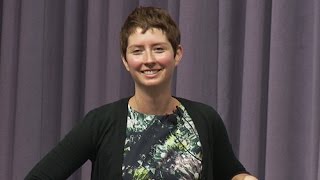
This content was created by GHION.AI . This content was uploaded by GHION.AI . This is a YouTube video titled "Susan Koger: Find Your Venture's Emotional Core [Entire Talk]" which contains a talk given by Susan Koger. The talk focuses on identifying the emotional core of a venture.
Chapters
Hey, everyone. This is really an honor to be here. Thank you for having me. I heard that this is the last lecture series of the semester, and I know you guys are like, going into finals. I definitely remember what that feels like. So I really appreciate you guys taking the time and coming out, and I'd love to answer some questions at the end. So please, I keep those coming. Keep thinking about them as I'm presenting. For those of you that don't know about ModCloth, I saw that there were maybe a few hands that didn't go up. We're an online retailer of women's fashion and decor. We carry independently designed items and we design our own lines in house. We have about 7,500 items on the site. These are from designers based around the world. And I think that our customers would tell you that we have some of the coolest product that you can't find anywhere else. But I think they would also say that we are more than cool product. We've really built a name for ourselves in putting our community at the center of everything that we do, which is pretty innovative for a fashion retailer. Traditionally, fashion is very tops down. It's sort of like, we tell you what's cool, and then you buy it and you wear it, and then we tell you what's cool next week, and then you buy it and you wear it. And it's like constantly this cycle, it's been like this very like a lot of businesses have been interrupted by the technology changes that have happened in the last 10, 15 years. Very tops down, very hierarchical, and we've sort of flipped that pyramid. We've said that we want to put our community at the center of everything we do. We want to empower her to help us pick the products that we sell on our site. She actually helps us design some of the products that we sell on our site. She helps us merchandise them by taking outfit photos. She leaves really detailed reviews to help other community members find the right fit and enhance their shopping experience. And I could describe our customer to you in demographics and psychographics. She's in her 20s and 30s. Our age range is 18 to 35, but it goes below and it goes above as well. The average age of our customer is 27, but I think that a picture is worth a thousand words, right? So, like, this is her. This is our community. Like, this is kind of the best way to get a sense of what our brand is and what ModCloth is to give you a sense of our scale quickly. Today we now have a team of over 350. We're based in three offices across the country. Our headquarters are here in San Francisco, which is where I live. Pittsburgh has our fulfillment and distribution. We do all of our product photography there as well. I'm a Carnegie Mellon alum. I'll talk more about Pittsburgh a little bit later in the presentation. Why Pittsburgh? A city specifically is on this list here and our buying office is in Los Angeles and our in house design team is there as well. So I spend a lot of time with our team in LA developing and designing the products and picking the products from the market that we sell to our customers. Another way to get a sense of our scale like these are some of our followers on social networks. Like we're one of the highest followed retailers on Pinterest. I think that probably makes a lot of sense when you think about our community that I just showed you. It's a pretty good fit there. Other than these numbers, I'd say we shipped close to 2 million orders last year. It's. It's definitely come a long way from when I started at 17 in my parents living room. And I won't spend a ton of time on this, but I wanted to just kind of run through our founding story and how ModCloth came to be. Honestly, I don't know that I was a born entrepreneur. I wasn't that girl that was like selling lemonade as soon as I could and trying to employ my friends to make an extra buck. But I am absolutely an entrepreneur through and through. That's one thing that I would love to share with you guys if you could take something away from this. There's no right way to be an entrepreneur. As I've gone through this journey and as I've had the incredible opportunity to meet so many other amazing entrepreneurs. Yes, there are those born entrepreneurs who when you hear their stories, you're like, oh my God. Basically as soon as you could talk, you were trying to sell something and to start a business. And that's amazing and I really respect that. But you can come to entrepreneurism. You can find your entrepreneurial path in many different ways. And I think that I'm proof of that. So for me it starts with my passion for fashion and just loving clothes. I'm not ashamed to admit it. It might sound unintellectual, but I've always liked getting dressed and it's always something that I was drawn to and I was passionate about and I had an eye for. I didn't have a ton of disposable income growing up, so I started Shopping at thrift stores and vintage stores. Basically, I wanted to be able to stand out, and I wanted to be able to buy things that other people wouldn't have. And the intersection of those two things, like a little bit of disposable income and wanting to stand out, led me to vintage and thrift store shopping. I grew up in South Florida, in a suburb near Fort Lauderdale, and I was a Florida girl. I had seen snow once, and when I was in high school, I worked really hard. I wanted to not be a Florida girl anymore. I got into Carnegie Mellon. I decided to be a business major because honestly, I didn't really know exactly what I wanted to do. But I figured business maybe could lead to fashion. I also didn't really know what jobs existed in the fashion industry other than this concept of being a fashion designer. And I wasn't sure that I had the artistic skills to be a fashion designer. So I got into Carnegie Mellon. I had to move up to Pittsburgh and experience my first winter ever, which is kind of daunting. Maybe you guys had an opposite experience, coming to beautiful, sunny Stanford from a place that was cold and snowy. But for me, I had to buy a whole new wardrobe. And I couldn't do that in South Florida, even if I had the disposable income to be able to go to the mall and buy everything brand new. There isn't winter wear or even autumn wear in the malls in South Florida in the summertime. And so I started going to thrift stores and looking for winterwear for the first time. And I found a lot of amazing stuff. And I think that was kind of the moment when I sort of started to become an entrepreneur. Like, that seed started to grow. I was just like, I can't pass up these beautiful pieces of clothing. I know they're worth so much more than they are kind of marked at just sitting here. Maybe this was my innate merchant coming out. And I just. I found myself buying stuff even if it didn't fit me. And I would kind of say, like, oh, like, I'll give it to a friend. Or I will use the buttons for a craft project, which would never happen. Or I'll learn to sew and I'll tailor it to fit me, which also has not happened. I still don't know how to sew. That's okay. But I was bringing all this stuff home, like trash bags and trash bags full of it. And I started dating this guy around the same time. He was. His name is Eric. He's my husband today. He's my co founder at ModCloth. And he had actually started a web hosting business with two of his friends in high school. I would say he is more of that born entrepreneur, like thinking about running a business from age 4 or whatever, like as soon as he could talk and kind of think about what he wanted to do. So he had this web hosting business. He'd built a few e commerce sites. Like, think about it, this is like 2000, 2001. It was sort of like we're these like young smart kids. Like, let's help you get on the interwebs. Like it would go around to local business owners in the South Florida area and kind of pitch them on, like, we'll help you get. You need a website to like make your small business bigger. And so he had some experience and he was actually the one that suggested that I build a website and sell some of these products that I was finding this, like one of a kind, these one of a kind vintage pieces. And I thought that it sounded like a fun challenge. I mean, quite honestly, I also thought, hey, if I sell some of this stuff, that means that I get to buy more stuff, which sounds really cool. And it's again, thinking back to that time, there weren't really any other options. Ebay was an option, but I wasn't really finding designer goods and I didn't really think I could build a brand on ebay. It seemed like if I was going to do it, I wanted to be able to control more of the customer experience and more of the shopping experience. And there wasn't Etsy, there wasn't any of these easy to start up shopping carts. There was no Instagram to sell on. When I think about the entrepreneurs that are starting today, it's like all you really need is a mobile phone and an Instagram account and you can be connected to, you can be a tastemaker to a group of people that kind of look up to you and think that you have good taste. It was different then, which is kind of crazy. I mean, I still consider myself very young and I'm still learning and kind of exploring the world. But then when I think back to when I started my business, there was no iPhone, there was no Facebook. It's hard to imagine. And so I was gifted a digital camera for my high school graduation gift. It was my first digital camera. It was kind of like a brick. And I used that digital camera and I used all these kind of leftovers that I was finding when I was thrifting to launch the website. I also taught myself Photoshop. I Taught myself some web design. I think I was using God, like Microsoft front page. It's like something kind of embarrassing. And my boyfriend helped me hack an open source shopping cart. We used Interchange, which was like a Linux shopping cart, if anyone ever saw that floating around back in the day. And I spent that summer before I moved up to Pittsburgh, kind of like we incorporated and I bought the first set of inventory and I merchandised that inventory. Like I wrote all the descriptions, I thought of the names, I designed the site, I thought about like some of the user experience of the site, as much as we could kind of change from this open source platform. And we launched in January of 2003 and we actually had a sale on our very first day. It was not someone I was related to or someone that I knew, which was very exciting. It kind of felt like magic. And I think that was sort of like going into those thrift stores and seeing those products and seeing opportunity was the scene succeed. That was the moment when I feel like I became an entrepreneur. I was just like, wow, this is really cool. I can go out and find this stuff and I can do all these things that I really like to do and people will pay me for it. That's pretty awesome. And if I could. I was just getting started in my college career and I was just thinking about what I wanted to be as an adult and the things I wanted to study and the things I wanted to do. And I kind of had this inkling of like, wow, if I could do my own thing, that would be pretty special. That would be pretty amazing. So I ran the business part time while I was at school. I continued to sell one of a kind vintage and you know, it grew. It was like kind of fits and starts, you know, like some months it was really slow. We'd only have a handful of orders. I was doing whatever I could. I ended up being a double major. I double majored in business and in German. So I had like a pretty rigorous course load as well. But like on spring break, winter break, summers, like whenever I could, whenever I wasn't like doing other stuff that normal college kids do, like, I just kept coming back to this. Like, I loved it and I was getting better at it and that was a really good feeling. And so when I was Approaching Graduation in 2006, I, you know, kind of my junior, my senior year, I really started thinking about ModCloth as a legitimate career option. And it was a scary decision to have to make. And one of the things that I intuitively did that I would recommend to all of you guys, and it's been something that's been really powerful in my life is when you're making big decisions like this, and maybe it's obvious and you guys already do this, but if you're making big decisions, sit down and really think about what are the worst case scenarios and write them down and get them out there and you won't get them 100% right, but get comfortable with those and then you can go ahead and make your decision. That's always helped me and this was definitely what I was doing at this time in my life. I was thinking about, wow, if this doesn't work, I'm going to be behind my peers. I haven't gotten. I was making these decisions of do I spend the summer working on the business or do I try to get an internship? Where do I devote my time? That's like the eternal question for, I mean everyone, but particularly for entrepreneurs, where do I devote my time? That question will never go away. But I sat down and I said, okay, if I don't get a job, maybe people will look at me and say, wow, what was she doing? She didn't get a job right out of college. It's all these things. Maybe I won't be able to pay my student loans. Worst case scenario, maybe I will go bankrupt. I'm young, I don't have a family, that's okay. I put that all out there and really thought about it and it's scary, but at least you know what you're scared of versus just being afraid of the unknown. So in 2005, 2006, I spent a lot of time thinking about the business model. I knew if I wanted to, I knew that we had a lot of traffic. I knew that new things that were happening on the web, like Facebook. I was a student at the time, so I was one of the first people to use it. I saw the power of not just building an online retailer, but really building a community and allowing. I realized that part of why customers were drawn to ModCloth was not just the fashion, but it was because they were similarly minded individuals, similarly minded women. And I saw this opportunity to build a community, to build a lifestyle, to build something that was more than just about fashion and that spoke to, that spoke to customers and that empowered them to be actually part of the process. Facebook isn't fun if your friends aren't on it in the same way. I thought that I could build a retailer that would actually allow you to meet new people, meet new like minded people, get style inspiration, get Style advice from. From not just a fashion company, but from other individuals. There's also the rise of personal bloggers and celebrity bloggers and kind of like everyone was gaining an audience. And I saw this opportunity to build my brand and to gain an audience from Wodcloth. And so I was thinking a lot about the business model. I was thinking about all this stuff that was happening at the time. And I saw the opportunity to. I knew that I had to move away from one of a kind vintage pieces. Like, it's not scalable. It's not a great customer experience either. Everything is like in one color and in one size. But I really had no idea where to start. Like, I wasn't a fashion person. I was based in Pittsburgh, Pennsylvania, not necessarily the most fashionable city city in the world. At Carnegie Mellon, which isn't really a school that has a lot of people. I was starting to meet entrepreneurial mentors, but I didn't really have anyone in my life that had retail experience at that time. But I was eventually able to find independent designers and to really make the business start to look like what it looks like today, which is this mix of product products that some of them have a direct vintage inspiration. But really all fashion is vintage inspired in some way or another. Because it's like whether it's a dress from the 40s that then was reinterpreted in the 80s, then is reinterpreted today, and it's just hemlines are longer, shorter, shoulder pads get bigger and tinier and kind of move to different spots, the silhouette changes, but it's all inspired in some way. So I was able to kind of take this business that started in my parents living room and eventually moved into this photo here. In 2006 was our first official fulfillment center. And then looking at today, we're in a 200,000 square foot fulfillment center in Pittsburgh. Like I said, we're shipping 2 million orders last year. We've come a long way. But another lesson that I've learned as an entrepreneur is that part of that drive that really drives you to start things will never let you be satisfied. So it's really important as an entrepreneur, I think, to work, to work on the practice of celebrating your wins and taking a moment to step back and saying, wow, we've actually come a long way. Because I look at this and I'm like, okay, we've come a long way, but I still have such high aspirations for the brand. I have such high aspirations for the business. We still have such a long way to go. And that's been an important learning for me is how do you make it sustainable? How do you celebrate these wins, but still keep that drive to want to get bigger and better? So I'm still excited to get bigger and better. I'm still learning tons of lessons along the way. And one of the biggest ones that I've learned thus far is that it's okay to be. I'm kind of calling it like, it's okay to be a rookie. It's okay to kind of not know what you're doing. It's okay to come at problems from a really rookie mentality. And that can actually be. It's not just okay, but it can actually really be an advantage. And I think that as I look back at my career and my story at Modcloth, I think that it absolutely was an advantage for us in a lot of ways. Like I said, we weren't retail veterans. We didn't come from retail families. This is a photo of me with our first delivery of non vintage merchandise, peeking over those boxes like, oh my God, what am I going to do with all these boxes next? This is like literally, you can kind of tell literally in our college house. And when I was going through this process back in this really formative time, like 2005, 2006, and thinking about making this a real business, I literally had to Google, where do I find wholesale clothing. I didn't know where to go and who to ask. And it eventually, all my googling eventually led me to some of the major fashion trade shows. And I kind of bought a ticket to Las Vegas and went to these trade shows and walked in without knowing what to expect. And I thought, maybe it's going to be this glamorous thing. I mean, you hear about a fashion trade show, it sounds like maybe it's going to be kind of cool. In reality, this is what it actually looks like. You're in the Las Vegas Convention center, you're walking through, it's kind of concrete, there's no windows. So this was what I walked into with this kind of rookie mentality. And I think the fact that I did just go in and asked a ton of questions and was like, I literally asked about everything. I mean, I probably honestly was asking some dumb questions. I was like, if I buy this, how many do I have to buy and when will you ship it to me and when will I pay you? And like, some of these things that usually, you know, by the time you get to this level. And you know what I learned about the trade shows really quickly right Is like, the buyers go there, they walk the floor. Like, everyone from small retailers, like Modcloth was at the time to the big department stores, they walk the floor. They look at the designers. The designers all bring samples that are hoping to put into production. They see how many buyers are interested in the samples, and then they go back and they make some bets and they say, okay, this is, you know, we have some pre orders for these and, like, these things people were kind of interested in. So this is where we're going to, you know, kind of place our bets and, like, place our production orders. And so what I realized really quickly in 2006, 2007, as I was starting to, like, build out our designer portfolio and move away from this one of a kind vintage model, was that a lot of the items that I really loved weren't getting made. And so what I'd hear from the designers is like, oh, but Nordstrom bought this one. Don't you want this one? This one will get made. And of course, I didn't want the item that Nordstrom bought, even if it was a great seller for Nordstrom, because I needed differentiated, cool product for my customer. So, you know, I kind of, like, I asked some rookie questions. Like, I was like, hold on. You guys have all of these samples here and you're showing them to us, and, like, just because I'm the only one that likes them, like, sometimes half of the items that we were finding at these trade shows weren't getting made. Like, we had a really big fallout rate. So, yeah, I asked him these questions. You know, I said, we have all these samples here. Like, I have all these customers that I can talk to, like, immediately. I don't have to, you know, wait six months and then walk out onto a sales floor like the traditional brick and mortar guys do. If you have these samples here, you've already gone through the cost of making the sample. Can I just take those samples and see? Maybe my customers will really love it. Maybe I can help you get to that. Usually, depending on the item, it's like a hundred to six hundred minimum production order. So maybe I can help you get to that so I can guarantee my order and I can give you some real customer feedback. This led to our Be the Buyer program, which we launched in 2009. This is kind of like a quick snapshot of the concept, but it really came from this rookie mentality of, why not? Why can't we do this? And I think some people in the fashion industry kind of had this reaction of, but that's your job as a buyer, that's the thing that you're supposed to do is you're supposed to go out there and kind of make your educated guess of what the customer will like. But from my perspective, I was like, if I don't have to take that risk and I can actually engage my customers and let them let her be part of the process, wouldn't that be much better for everyone? For our independent designers as well, this was giving them direct customer feedback rather than just getting. Traditionally, they just heard from the buyers why the buyers like something or not. So giving them this, like, actual feedback from customers was a really innovative thing at the time. And this was a really important part of our growth. Like, we were able to, for one, like, get more items that we actually needed. Like I said, like, half of the items were falling out at the time. And this was like the core of, you know, this, like, launched the core of our. Our core tenet at our company, that we should really be empowering the community to help us make these decisions, even these decisions that traditionally are made internally at traditional fashion retailers. I think that it's important. So in telling this whole story, like, I think it's also important as entrepreneurs to kind of keep in mind that fake it till you make it is totally valid, like, that concept, but it's just one of many tools in your toolbox. And that's something that I've found as I've looked back at my career and as I think about what I would share with my younger self. I think that often we try to just fake it till we make it all the time. And I think part of it is kind of the culture, like, especially in the entrepreneurial world. Like, you're just. You're always, you know, you're just like, yes, of course I can do this. Of course we'll be able to hit these numbers. Of course we'll be able to. You know, we know what our plans are going to be one year from now, two years from now, five years from now. And, you know, that's totally fine. And, like, sometimes you really do have to do that. Like when you're. When you're pitching your business, when you're talking to investors. Absolutely. Fake it till you make it. But I think that sometimes if you get too caught up in this mentality, I would caution you to resist faking it, because you might miss opportunities to actually find your own path, and you might miss these opportunities to put your hand up and say, why are we doing it this way? Why is it happening this way? Does this actually make sense? And this has been a really valuable lesson for me. Okay, one last word on being a rookie. I will tell everyone out here, don't be afraid to go into an industry that you don't know anything about. I'll say, look at this girl. If she can go on to be the creative lead of a well loved, multi million dollar fashion brand, you can do it too. Even if you're not raised in it, it's not in your blood or whatever. I think that I am living proof that if you're passionate about something, you can create your own place in that world. This leads very well into my next lesson, which is that it's okay to look back and cringe. I'm definitely putting those pictures up. Makes me cringe a little bit. Not going to lie. I think this has been a really important lesson for me as a creative entrepreneur. I think especially as you start out in your career, it can be really scary to be vulnerable and to put your work out in the world. You want everything to be 100% perfect. And I don't think this is just. When I say creative, I mean, I spend a lot of my job and a lot of my time thinking about aesthetics and thinking about design and these sorts of things. But I think this is just as applicable to if you're a coder, whatever you're doing, whatever type of product you're building, when you're starting out in your career, you are not going to be good and you are hopefully going to get better, which means that you're going to look back and your tastes are going to be better and you're going to know so much more and you're going to cringe on your earlier work. So you have to just like, get out there and do stuff. This is one of my favorite quotes by the author Neil Gaiman. Like, if you're making mistakes, it means you're out there doing something. And I think it can be hard sometimes, right? Like you want to just like you want to wait until it's absolutely perfect. And I'm not advocating by any means that you should not care very much about what you do and not have like real attention to detail. But I think that this, like having this permission of, like, no, no matter what, I'm gonna get better and I'm gonna look back and cringe on my earlier work. I think is really freeing. So it's something that, you know, it's, it's one of those lessons that's like easy to listen to and maybe to understand intellectually and it's harder to actually put to work in your life as an entrepreneur. It's something I'm still trying to work on. And it can be tough, quite honestly, to find that balance of like having that attention to detail and not wanting to release anything until it's perfect and just getting it out there and like knowing that it's gonna change and you're gonna move on and you're gonna look back and you're gonna cringe one way or the other. So let's just take a moment. I will show you my look back and cringe. This is the first version of ModCloth. This is our first logo. I think it's very clearly designed by a 17 year old who's just learned Photoshop. Yeah, but this doesn't mean that I was really proud of this thing when we released it. I spent time on it and I was thoughtful and I thought that this embodied my brand and I thought that Bevel looked really cool. But I look back on it now and it's cringeworthy. This is the next version of the site. This was 2005, 2006, we'd switched to another open source Linux based shopping cart. But again, it was like I had taken a few design classes, it was starting to get a little better. But this is some of the content that we were producing around that time. I look back at it and I'm like, oh my God, it's horrible. But if I hadn't done it, if I hadn't put it out there, I wouldn't be where I am today. This is kind of circa 2007, 2008 starting to come along. You're starting to see some of the like, kind of more of the hallmarks of the Modcloth brand that you see today. For those of you that are familiar with the brand and you're starting to see more of like our kind of playful, quirky aesthetic come through. But again, I look back at this in the work that I do today and I'm like, yikes. And like I said, it is about having this, this is where we're at today and it's having this permission to be okay with the fact that in 10 years you'll look back and you'll be proud of what you did. But hopefully you're going to be better and you're going to be past that stage in your career and your life and you're going to be onto greater and better things. So the way that we think about this philosophy and putting it into Practice today at ModCloth is in one way, thinking about the concept in our product development on the technology side of a minimum viable product, and I'm sure you guys are probably familiar with this type of concept. It's like, think about what's the minimum that I need to put this out into the world and get user feedback on it. So an example, like a more recent example for us at ModCloth is our style Gallery. This is a feature that we built when we launched on our site in 2012. And the two goals are let our customer come and upload outfit photos and browse those outfit photos and get inspired and love them and build the community in that way. And then the second goal was to make those outfit photos shoppable. And this was the first version that we rolled out. We worked really hard on it, we felt really good about it. But as soon as we got it out there to our users, we saw that she knew, she realized that she should browse, and she got the inspiration part of it, but she did not get the shopping part at all. So we iterated, released many new versions, lots of small iterations. We found that just like adding this magnifying glass on the mouseover told her that she could actually click in and shop. So it's like these little things. And even though the first version of our Style Gallery failed, we wanted it to do two things, and it only did one of those things. We didn't view it as a failure. We got something out there and we learned and, you know, if we had waited to, like, make it 100% to, like, like, if we weren't diligent on really thinking about, like, what is that minimum vi viable product to get out there and to get feedback, we would have probably spent a lot of time, like, running in a different direction. Because once you actually get things in front of your community, in front of your users, like, that's where you get the feedback that actually matters. And I think for us and for our brand, the fact that our customers were able to be part of this experience of iterating, she tells us what she likes and what she doesn't, then she actually sees that we listen and that we make changes. That's really empowering to our customers. And that's like, that empowerment is more than just retail. It's more than just transaction. That is part of the, I think, emotional core of what has made ModCloth successful, and I think what's made Modcloth, like, loved by our community as a brand. And that's the kind of final thing that I really want to talk about. Today is that the emotional core of what you do, like the purpose of what you do as an entrepreneur is really important, and that's really what endures. I think part of this is it's not just external. It's not just that the emotional core of what you do connects your customers to you, but it's internal as well. Your purpose is what connects your team to the work. It's what makes employees like an actual team, an actual company. It makes. It's what makes everyone move in the same direction. And I think that at ModCloth, our purpose is really defined on understanding our audience. We know that if you ask women, this study showed that 96% of women say that they agree with the statement that what you wear affects how you feel. That's more than dresses. It's more than just a transaction. And, like, being able to connect to that, I think has been, like, externally and internally has been one of the most valuable things that we've done as a company. So understanding. So it's important to understand your audience. And I feel like there are. When I've talked to other entrepreneurs about this, I hear, like, what if I'm in a B2B business? I'm not dealing with. Dealing with an audience like yours that has this sort of emotional need for product. But it's not just about, like I said, it's not just about external. It's about internal as well. Right. And I think, like, when you think about companies that are. That really endure and that people love and people love working at, it's having a purpose that's more than just like, we're going to grow quickly and we're going to make money. You need to think about. And I have not come across a business yet that doesn't have some sort of emotional core that doesn't make people's lives better in some way, that doesn't serve some purpose. Even if you are B2B, like, you're helping those other employees, the other employees of those other businesses be more efficient, do better at their jobs, there is an emotional core there. And I think that getting to it is really important. This is ours. At ModCloth, we're committed to inspiring personal style and helping our customers feel like the best versions of themselves. And it's different from. I'd say it's different from the rest of the fashion industry in that we're encouraging our customers to be themselves and to be the best versions of themselves. We're not saying you have to become this idealized ModCloth version. We're just saying we'll help you be the best version of who you are. This is really powerful. This is what our customers see from the rest of the fashion industry. Each of these images is actually taken from a different retailer's campaign. I mean, you see them next to each other and they look pretty similar, I think. And there's nothing wrong with these images. Like, they're beautiful and there's lots of good things to say about them. But for me, I'm a customer and I look at them and I don't see myself here. I don't feel like I necessarily belong. And this is an image from one of our most recent swim campaigns at Modcloth. This campaign went viral. It was written about around the world. We decided to photograph our employees in one of our best selling swimsuits. It's a swimsuit that we carry in a broad range of sizes and that we've carried for years and years. It has thousands of reviews from customers of all age ranges and shapes and sizes that say that they love it. And this is really powerful. I mean, you look at this and I think this is a message in branding as well. This is a message, this is a lesson in branding as well. If you look at these images, even though they're from different retailers, they blend together. This image is different. And it's important that your business aesthetically kind of stands out as well, but emotionally it stands out too, right? Like, this is a different message. This is saying women look different and that's okay. It's something that can be celebrated and that we can be happy about. And it's also, It's like, this is the most vulnerable time for a woman, probably when she's wearing a swimsuit. Like, that's what we hear from a lot of our customers. And it's saying, like, hey, it doesn't have to be that way. It's okay. And so I think this emotional, like I said, this is our emotional core for our business. For all of you, whether you're starting businesses, you're already an entrepreneur. If you're just like, you want to take an entrepreneurial mindset to a bigger company, think about the emotional core of what you do really is important. It's a lesson that I learn all the time. We get this incredible emotional outpouring from our customers because they see what we do for them, how we speak to them, and we see it on Facebook, we see it on Twitter, we see it internally on our site. And for me, this is the, like, this is the thing that I'm most proud of when I talk about what I've built at Modcloth, and I think if you can find something that you love to do that is financially viable, you gotta get paid for it. And that also emotionally connects with other people, that makes other people's lives better in some way that is really powerful, and that's something that's worth getting out of bed for. And as an entrepreneur, I think that you have to have. I think in some ways you have to have that drive because there's going to be some days when you need something to get you out of bed. It won't be easy. And this emotional core is also what gets you through tough times. Right? And I think that, you know, a lot of times in the entrepreneurial world, like, we don't talk about what it's actually like to go through tough times. Like, I feel like you hear a lot of the kind of overnight success stories, and, like, I've had that story written about me in various ways. You know, like, I've been on a lot of those 25 under 25 and 30 under 30 lists. And. And entrepreneur does this great thing and has built this incredible business. And I'll say, at least from my perspective and from the other entrepreneurs that I've met and I've learned about, that concept of an overnight success story just does not exist. There's always something more to it, and it's never just like flowers and rainbows. And then I feel like on the opposite end of the spectrum, like, you do hear about. I'll just pull one out of the sky. Like, you hear about something like pets.com, where it's like, oh, crazy explosion, implosion, however you want to describe it. But you don't hear as much about the stuff in between. Like, the actual, like, what is it like to weather hard times? And I've been through that. Like, the last 12 months at ModCloth were not the easiest time of my life. And part of why I want to talk about it is because I do think that you don't hear other entrepreneurs talking about it very much. And I do think it's like part of it is the kind of the culture in the same way that I was talking about, like, we feel like we have to fake it till we make it. That's a tool and it's not something that you have to do all the time. And I think that, yeah, often when you're in the Valley or wherever you're at as entrepreneurs, you start to equate your personal success and your personal worth with your business's. Success and your business's worth. And I think that there's no way to get around that when you're starting out, because it is just you and your. Or it's you and, like, a very small group of people, and you're putting so much of yourself into the business. But as the business grows and as you. I mean, if your goal is to actually add more people, you know, it isn't just you anymore. And I think that's like, an important lesson that founders have to learn, is it's not just going to be you. And that's like, for the good times and the bad times. Like, the good times, it's your team. The bad times, it's you and your team as well. And that can be. Again, it's one of those lessons that I think is probably easier to understand intellectually than to actually, like, put in practice in your life. And, you know, for me, over the last 12 months at ModCloth, like, kind of the long story short, it's like we grew really quickly. We had to make some tough decisions in the business because we were at a point where we'd grown quickly. We weren't able to support our burn rate anymore. And this purpose was what got me through making those decisions and having those times where it's hard to get out of bed and it's hard to go to work, that's another thing that's hard to face as a founder. When you've created your own job and you don't want to go to that job, that's a tough place to be in. I think if you don't have this purpose, if you don't have something that's deeper, that's pulling you back to it, it'll be all but impossible for us. Like I said, we had to make some hard decisions. We had to lay people off. Last year, it was the hardest thing I have ever done professionally. Quite honestly, I spent a lot of last year personally feeling like a failure, and that's a tough place to be in again, this purpose was what brought me back to, okay, even though I'm feeling this way, I can step outside, I can look at this, I can look at my business, and I know that my business is a success because my business has this purpose. My business has this thing that it's doing. This is real, and we're making a real difference in people's lives. Having this brought me through that time. It also brought our company through that time. This was what our team rallied around. It wasn't easy. Like I said, we had to make some hard decisions to set our business up for, for success and set our brand up for the future. And we decided to really focus on the things that we did better than anyone else in the world. That was thinking about building community and taking, engaging with that community and creating products and creating innovative social experiences that they would love and that they would respond to and, and having that focus and having this purpose to kind of drive that focus enabled us to kind of look forward and start thinking about the future. And as we started thinking about the future of ModCloth in the last 12 months or so, we knew that that involved taking the brand to the next level. Part of that is thinking about what a physical presence means for ModCloth and what that would look like and whether that's pop ups or fit shops or guide shops or some combination of them, brick and mortar stores. We knew that was where we wanted to go. We also knew that we needed to work on our own proprietary product. So thinking about designing things that she couldn't find anywhere else because we know our customer best and we know what will fit her and we have all this great data on what works for her. So in order to do that, we actually decided to hire a new CEO, someone who had retail experience and who had kind of done all of those things, had brick and mortar experience, understood proprietary brands. And our new CEO started in January. His name's Matt. And since January we've actually already launched our first fit shop, our first fit pop up. We did this in LA about a month ago and it was incredible. We had customers, community members lining up around the block, hundreds of them, some of them waiting for hours to actually get in and be able to try on our products and interact with each other and interact with the brand and all of this is possible. Moving forward, thinking about the future of ModCloth because of that core and that purpose. And I think it's part of why I'm so passionate about sharing this message with other entrepreneurs because I feel like it's easy to think about. There's just this kind of list of things that I need to do as an entrepreneur and I need to just check them off and I need to grow a business, I need to do this, I need to do that. And I'm not sure that like this concept is on that like, well known list. This concept of like find your purpose and find what you're doing and I'd like it to be there. I also don't think that the check off the list is like actually a thing that people should Be doing. Like I said, like, I feel like all entrepreneurs have different stories and, like, come from different backgrounds and kind of approach it in different ways. But I do think this is one thing that, like, every business, in order to really, like, know where it's going in order to weather rough times and to be headed in the right direction in good times, like, this is probably, like, the most important thing that I would leave you guys with, and I would love to answer some questions. Thank you for having me here today. Okay, so you mentioned that it's okay to look back and cringe, but is it possible that your earlier choices, even when you look back, you feel that it's unsophisticated? It actually fits the other people of that same age group. They actually prefer the unsophisticated versions of style. Oh. So the question was, it's okay to look back and cringe, but sometimes you find that, yeah, maybe the naive version actually fits your age group better. Yeah. That the naive version is better for a certain age group or, like, for a certain customer. So I think I see what you mean, and I do think there's definitely some validity to, like, I don't think it's about necessarily looking back and saying that wasn't cutting edge or that doesn't feel cutting edge because everything will feel stale kind of a few years into the future. So I do think there's definitely validity to kind of. I feel like maybe what you're asking about is a purposeful throwback or something that feels more, I don't know, kind of retro. And I think that's totally valid. I do think, though, that if you. So if you feel good about what you're putting out into the world, Part of the thing that I want to convey is if you feel good about it, get it out there and don't just kind of sit on it and hold it in because you want to make it perfect, because it'll never be perfect. But, yeah, I do think that there's validity to looking back and saying, like, oh, this is actually great, and it's, like, perfect again in this moment in time. Yes. In the back. Can you talk a little bit about the transition that you're between sort of filling a simple need? Like, as a small company, you really need consumers, and you know that they want a product and then being able to actually empower those consumers, like, fulfilling a simple need to being able to empower your consumers and contribute to that cycle. Yeah. So the question is about what was the transition for Modcloth from going from, like, a purely transactional relationship with our community to actually empowering them to be part of the process. Yeah, yeah, I think, I mean I do think a lot of that for ModCloth story was timing for us. Like I said, we were kind of, I was like thinking about taking the business to the next level at this time where Facebook was really gaining traction and like all this stuff on the social web was happening. So for me it intuitively made sense that whatever business I was starting, this had to be a part of it. I looked at the way I was using Facebook and the way my friends were interacting on Facebook and it made sense to me that because my customers were probably pretty similar to me and my friends that they would want to interact in that way as well and not just with the brand, but with each other on the website. And giving them that opportunity was, was going to be something that would be not just useful for us because we learn more about them, but it would actually be a brand differentiator. I think the transition really was around the time that we launched our Be the Buyer program, having that brainstorm of oh yeah, let's ask our customers, let's get them involved, let's listen to them. It really was this confluence of what we were thinking about, what we were excited about and what was happening in the market and in the broader social world that allowed that to happen. Was that too vague or does that answer your question? Cool, yeah. I'd like to know, do you, you currently have your own designers and also I'd like to know, are you buying and selling globally and what's been your experience with that? Yes. So the question was if we have our own designers, which we do. So that's definitely something that we see as a big part of ModCloth's future and moving forward is doing more and more proprietary design. We release about 150 designs a quarter right now that are coming from our own internal design team and we see that scaling quickly. The other part of the question was whether we work with international designers globally and kind of what that is. Buying and selling? Yeah, both buying and selling. So we do sell around the world. Our audience is mostly here in the us but we do have like a fairly substantial following in Canada and Australia and like some of the other English speaking countries that you'd expect in like high English speaking countries. We do work with designers based around the world and it can be, it's incredible from a branding perspective being able to introduce a designer to the US for the first time and bring them into a new market, you know, it's great for their business too. And, you know, for us, like, it's part of how we've become known as a place that, you know, you can find stuff that you can't get anywhere else. But from a pure retail business perspective, it can definitely be a challenge. It's hard for designers that haven't worked with companies in the US before, just all of the actual logistics of bringing product in and making sure it's going to get through customs and going to be able to sell in the US because we really value independent design. So we work with a lot of independent designers and some of them are really great at design and not so good at logistics and some of the other parts of their business. So we have to kind of step in and fill that role. Does that answer your question? Cool. Yeah. The fashion industry, it's really a cluttered and it's really a competitive space. And I know a lot of brands, they go over and out, you see the craziest companies. But I'm just curious, what was the one thing modcloth did differently that got its early adapters? Yes. The question was, what did ModCloth do differently to get early adopters? And I think when I think back to the real early adopters, like people that were joining the brand in 2006 and 2007, what we did differently was really go where our customers were at a time when other fashion brands weren't thinking about those spaces. So being one of the first brands to really build a fan page on Facebook for this audience, going to up and coming celebrity gossip bloggers and personal style bloggers, because we knew we used to do a lot of advertising. We still do, but we do a lot of advertising with cute blogs, so blogs that post pictures of bunnies and kitties and that sort of thing, which isn't fashion related. So it wasn't entirely clear to the broader industry that they should go and find customers there. But we knew. I knew because that's the stuff that I was interested in. And it was new and it was up and coming and my friends were interested in it. So we were able to go and find our customer where she was at. And I think that was definitely what really spoke to our early adopters. They looked at us and saw us as, in some ways, we were early adopters as well. We were the first to work with, have partnerships with certain fashion bloggers and be working with them to create great content that didn't feel like an ad, but talked about the brand and got brand awareness out there. Susan, thank you so much. It's been fantastic for having. Thank you.
More from GHION.AI


O processo de reconhecer limites, mesmo quando a vida parece exigir sempre mais.





Depois de tantas histórias, aprendizados e pausas necessárias, o @interior_iza está de volta



