Sustaining a Startup's Growth [Entire Talk]
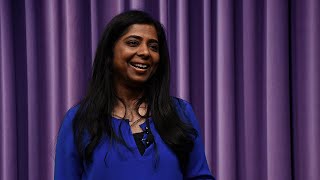
Ritu Narayan, founder and CEO of Zoom, talks about building a company focused on safe and reliable child transportation. She covers the company's growth, the challenges she faced, and how passion, perseverance, and people shaped her leadership.
Chapters
Who you are defines how you build. I'm the founder and CEO of Zoom, a company I founded four years back. Actually a quick walk from here, right there in gsb. And the idea of the Zoom was refined right here in engineering school as part of e245 Lean Launchpad. So excited to be back at engineering school and sharing my journey with you. Zoom is an idea. We are solving a universal parenting challenge. How to take your kid safely and reliably from one place to another. How to transport them and take care of them at the same time. We have built a platform for schools and parents where we provide any size of the asset to them and a certified and vetted drivers when they need it and where they need it. Just to give you an idea of how big this problem is, there are 63 million families in us who face this problem every single day. And 10 million women in us have already left job to take care of their children. Schools annually spend $35 billion on very suboptimal school transportation system where kids end up spending 60 to 90 minutes on a bus trip each time. So it's a very large problem. In past 24 months we have grown 10 times in terms of revenue, we have grown our teams by 12 times and we have been fortunate enough to raise over $71 million from some of the very prestigious VCs in the Silicon Valley. In this time we have also driven children 5 million miles and we have saved California schools over $15 million and parents 100 plus years of their time that they would otherwise spend on the road driving their children around. So Zoom today is a late stage startup with a pretty exciting growth trajectory. And that's all is actually still pretty amazing to me. As a kid I aspire to be an astronaut. At that time, growing up in India, in a country of 1 billion people, there was only one astronaut. But that didn't stop me from dreaming. My parents actually encouraged me to dream often and dream big. While I did not become an astronaut, my interest in science and technology actually led me to be the first person in my family to get accepted in a computer engineering program. It was a top school in India. There were 300 students, but only six women. At that time in the Indian society, engineering was not supposed to be a very fit course for women. While I was taking the course, I kept hearing about Silicon Valley. This magical place called Silicon Valley, which was a fantastic place for technology enthusiasts and people were launching their moonshots here all the time. After I finished my degree, I moved to Silicon Valley here and I studied at Stanford, worked at several well known companies in the Silicon Valley, and finally, eventually that led me to my moonshot, Zoom. My journey has been one of breaking barriers, breaking stereotypes, hearing several nos, but in the process also many people taking a chance on me and in turn me getting a chance of creating opportunities for others. It has been a journey from dreaming about being an astronaut to actually reaching for the stars. Today, here I'm going to share with you the three lessons that I learned in my lifelong journey. The three lessons that mattered most to me in everything I did. And these three things are passion, perseverance, and people. Actually, one easy way to remember these three lessons is equate them with the tenants of physics, inertia, momentum and catalyst. So let's start with the first principle, passion. So your passion for something is when your love for something is greater than the fear of failure. You love something so much that you really want to do it because you're not afraid to fail. What I have come to learn is that one should only do a startup when one is very, very passionate about the problem they are trying to solve. Because building a startup, and especially building an enduring startup, is seven to eight years of commitment. For example, take example of Jeff Bezos. It took him almost more than two decades to build Amazon into a company from just selling books to selling everything or anything and delivering to your doorstep in less than an hour. Same if you take example of Elon Musk, who wants to change every car on this earth from gas car to an electric car. These are hard problems to solve and they take years and years of enduring efforts. That's why it's so important to be passionate about the problem you're trying to solve so that you can sustain and be a winner. In 2013, actually, I was working at ebay. I was leading a platform where 4 million sellers used to sell anything and everything to 250 million customers. This technology based platform actually worked like a magic. You could sell anything in a few minutes. But in my personal life, I could not solve a very simple challenge of parenting. How to take my kids from one place to another. I wanted to do well in my career and grow in it and at the same time be present for my kids. And every day I was challenged. How do I drop my kids in the morning and yet be there for the meetings? Morning meetings with executives and how to pick my kids at 3:30pm in the afternoon, take them to extracurriculars when I'm supposed to be at work at 5pm When I looked around, I Found that it's not just me. Every single parent in the ebay was facing the same challenge. And upon reflection, I realized 30 years back, my mother had faced the same challenge in a small town in India. And eventually she left her job to take care of her four kids. What I realized was nothing had changed. This problem spanned geographies, it spanned generations. The same disconnect had been solved in other areas with the platforms like Amazon and ebay. But when it comes to parenting, this had not changed. It felt like I was failing as a mother and also as a business leader. So I started Zoom to solve this problem. With Zoom, what we are trying to do is provide parents with freedom, choice and opportunity. What we feel is that no parent should have to make choice between their career and caring for their children. This is a problem I'm so passionate about that I'm willing to do anything and everything to solve it in an enduring way. Today, many people, especially the early stage entrepreneurs, they admire us for our success. Specifically, they admire us for raising a large amount of money, for growing three times year over year, for growing our team to over 100 people in just two years. But one misses a point. For two years we did not have any money to run Facebook or Google Ads. We were completely self funded with no money from outside. There were two other companies that had already raised Series A before us, and there were many times we were very close to closing the company. The only reason we kept on going was just one, our passion to solve this problem at its core. So your passion can not only help you kick start in your startup, but but it also gives you unique insights into the area that you're trying to solve. Our passion to solve this problem has led us to ask deeper questions, to get one step deeper into the whole problem and see how we can solve it at its core. For example, at a very beginning stage, we realized that doing digital marketing and getting customers or acquiring customers was a very cost prohibitive thing. If we had treated it as a wall that we cannot surmount, I would not be standing here today. Instead, we started asking, who else would be willing to pay for these rides? How can we subsidize these rides and acquire customers for cheaper? And in that discussion, we realized that kids go to school every single day and they commute from school at least twice every day. So they need at least two rides from school every single day. So we thought, why don't we go to school and find out if school would be willing to promote us. I still remember the cold call I had made to the assistant dean of Harker, it's a large private school in San Jose. I asked him, hey, would you be willing to promote Zoom to your parents? He said, sorry, I can't do that because we are a nonprofit. I said, okay, then how do you promote other services to this to the parents? He said, because school is using those services and they are paying for those services, so I'm allowed to do that. I said, okay, so how do you do your school transportation? That one question led us to an amazing $35 billion market which nobody was attacking using technology. It was an antiquated market which was stuck in 70 year old infrastructure and nobody was addressing it. So what we started doing was we pivoted our business model and started serving schools as part of our business model and signed multi year, multimillion dollar contract. That insight and unique insight actually led us to grow three times year over year and led to a success that we have today. So your passion for something is one thing that can blow away the inertia that may have, the fear of failure that may have. It can actually take you away from the obstacles that you may think you face and help you reach towards your goal. But passion can only take you so far. So that brings us to our next principle, perseverance. Perseverance is actually one of them to me is not giving up even when the success is delayed or even when the success is. You don't see any path to the success. It's just continuing on your path till you get to the end. So perseverance is actually one of the quality for entrepreneurs, which is highly underrated, but it's one of the most important quality, I would say. I have practiced perseverance since I was a kid, when I was in middle school. Ever since I was in middle school, I started getting up very early in the morning, like 4am to basically get ahead in the class from everybody. And this habit of perseverance, of not giving up even when it's very uncomfortable, just became part of my life and it's, it became my secret superpower. So every day in the morning, what this habit enables me to do is make sure that I'm prepared and I'm ready to lead a, well, very smart, hungry team. This habit of perseverance is something I have also applied to other facets of my life. For example, I was never ever a runner in high school. Actually I hated the short sprints that were there and I never wanted to run. But then in 2016, to overcome my fear of running and also to Raise money for the cause, leukemia that I deeply care about. I decided to basically run for a full marathon. Anybody who knew me would say I'm kidding. But then I started coaching with a coach and for three months I coached with them every week, one mile at a time. I made progress slowly but steadily. Unfortunately, at 18 mile mark, I got a stress fracture and my doctor said that I could not run anymore. I was barred from running. It was very disappointing for me because I had raised money from hundreds of friends and had committed basically to raise money for leukemia and lymphoma society and complete the Nike Women's Marathon. After a couple of days of reflecting through it, I had an alternate plan. I basically started swimming and started visualizing how it would be like running again. I missed the 20 mile run. I missed the 22 mile run, which is the last run before the 26.2 mile run. On the day of marathon, I showed up and I completed the marathon. There were so many times the day when I was running, my body wanted to just give up. I wanted to give up. But it was just one thing. The commitment I had made to my friends that I would be running and the commitment I had made to myself to not let anybody down, that kept me going. Fast forward. As a founder, perseverance has really paid us off and has led to long term thinking. A clear example of this would be when we were raising Series A from Sikova. We were going through the process of due diligence and the process was going pretty well, but we were not at the final step yet. At that time, another investor had given us a term sheet and we basically had one week to say yes or no. To top it all, we only had one month of money left in the bank and we had to figure out how to pay our five employees. At that time, everybody said that a bird in hand is better than two in the bush. Take it, take it. Now it is the perseverance that led us to long term thinking. We wanted to build an enduring company by partnering with a VC that had actually invested in other enduring companies like Apple, Google, Dropbox, DoorDash, Airbnb. We brought a team on board and basically decided to say no to the term sheet in hand. And we persisted to the process of CEQA due diligence. In two weeks, we actually had a term sheet and that became a defining moment for Zoom. And I would say an inflection point for Zoom because that made the things rolling for us and have us build the company in a very enduring way. So perseverance is A quality that leads to a momentum that builds momentum around you, which is very hard to stop once it starts. The momentum actually becomes a superpower and it compounds into your unfair advantage as you build a company or in your life. Now, passion and perseverance can only take you so far because what you need is a third principle. People who are actually going to catalyze your growth. Now, collaboration, creativity and support are only possible when you surround yourself with people who have the same passion and perseverance as you. People are important both tactically and strategically. My professor in the organization behavior at GSP used to say, you're only good as five people you interact the most with. That makes it very important that the people that you interact with and have around you are smarter than you. It becomes extremely important for you to surround yourself with people who are better than you. I get often asked, how do you unlock the exponential growth in a startup? The insight that I have is not new, but it's true. By having the people and the most talented people in your team, because great talent or great people actually attract the great talent and that momentum keeps building on you. One example of this happen is in the early stages of Zoom, me and my co founder, we used to sell the product, market the product, build the product, do operations, do everything. And we just hired two salespeople. By doing that, we actually got to 2030 school partnerships. But what we really wanted to do was grow exponentially nationwide. This was a very lofty goal and we were not very good in the sales at all. That was not a core skill. What we wanted to do was actually get a sales leader from outside who could help us with this. So we found a sales leader who was perfect for us. But in the beginning we were not perfect for him at all. But then we finally closed him and if you ask him what made him join us, he would say our passion and perseverance. And since he joined us, we have actually grown our revenue 10x and we have grown to 2000 schools through partnerships across five states. And not only that, he has built a great team around that. That has built a very scalable process for us to keep growing the sales. The right team can make the huge difference for you. And getting your team right is both a science and an art that you have to find what works for your startup and hone that as much as you can. Now, while people lead to the success of a startup, people can be actually number one reason that your startup will fail. I don't know if you guys have watched Professor Greer's video recently, she said that the number one reason your startup will fail is people issues. There's a book called Founders Dilemma which says that 9 out of 10 startups are going to fail and 2/3 of the failure happens because of the people issues. These could be fights between the co founders, this could be disagreement between what product do you want to build, who do you want to hire, who do you want to, where do you want to sell, who do you want to take investment from. Any of these problems can actually kill your startup. The speed, the quality of decision that you make, the commitment and consensus that you have for those decision will actually determine the how innovative your startup is going to be and how fast can you scale your startup. At Zoom actually we have learned from our mistakes. In the beginning, there was a phase when we were hiring leadership team, we started going for very shiny objects just because the resume looked good or these people come with the credentials even when they did not match in the culture or the values for the company. These kind of mistakes can be very expensive for the company, especially at the leadership positions because not only these people impact their work, they actually impact the team's work and the hiring that happens in the startup. Fortunately for us, we corrected this problem pretty quickly and today we have built an amazing team. Now another myth about people is that people think that to attract great talent you need a lot of money in the bank. But interesting thing is what great people get attracted towards is your mission and your vision and with what passion and what stories do you communicate this mission and vision to them. So this is the kind of people you want to build your startup alongside, not the people who join you just for the exit or just for the ipo. So the catalyzing effect of people can truly be the difference in your startup being amazing or mediocre. I feel blessed every day coming to the work with the team that we have built here. I hope all of you will find the people that you can connect with and work with in your endeavors and in your life. So to summarize the power of passion, perseverance and people can actually help you get to your moonshot. In my work, I have seen how passion can actually blow away the inertia. Perseverance can help you build the momentum and people can catalyze growth. I hope the stories and the insights that I've shared with you actually help you in your activities and your endeavors. I hope the tools and the insights I've shared today with you help you reach your journey to the stars. I'll take your Questions. Now.
Working inside the niche for ride sharing industry, how do you feel about, are you afraid of the giants coming in and taking over the market? Have they approached you to buy the company?
Yes. Interesting. So the differentiation that we have built is with the school go to market. The giants Uber and Lyft are primarily in direct to parent model where they basically have very on demand up to the minute rights. In our case the difference is we sign a year long multimillion dollar contracts, the demand is very visible and we serve it over the period of time for very specific population. Everything in the system and platform is actually designed grounds up with the children's trust and safety and that contracts in mind. So that's the differentiation we have. Do you have any special techniques for people better than your true group? Better than our group?
Already better than your group?
Can you repeat the question?
So the question that was asked is do you have any special techniques to attract the people who are better than you? So the first thing is that we all are actually in a way like always looking out for great talent wherever we go. Whether it's informally, informally the lead generation process of it. But the other side of this process is in the interview process. We make sure that there is a wide variety of people actually rating people on different attributes that we would want for a specific job. And that way we make sure that it's not just one or two people making decision. We have the opinion of the group and that's pulling us. And the second thing we also do is actually an Amazon technique similar to, we call it bar raiser. So I don't know if you've heard about it in every interview. What we do is we see is this person better than the 50% of the people doing the same job? For example, if we are hiring somebody for finance, we would say, oh, is this person better than the 50% of the people who would be doing that finance job? And that's very important for us again to raise the bar and continue to hire great people in our team. Yeah.
What was your biggest challenge and inflection point in the company that was kind of make or break moment and how did you overcome that?
So in a way, two inflection points I pointed out here. One was taking money from Secoa was a pretty important inflection point and give you more detail than I gave in the talk was the other people who were giving us money at that time, they were saying take this money and go to five cities immediately. And they didn't have a context of what would it mean to spread out a small team in five cities. Whereas Sequoia was asking us master your playbook, make it right, get your unit economics right, get your business model right and then scale to more cities. And that became actually an inflection point for us. That also led us to find more and more profitable and differentiated business model like the school model that I described to you. Instead of running very quickly in the early stages to a large part of geography, we started finding out what is the profitable model that we can scale up to more cities.
What kind of setback did you face coming from school and your parents when.
You were going to. What kind of setback?
It's about the challenges did you face with your school and parents?
Yes. So in this solution, trust is the foundation for the solution. And actually as part of the Lean Launchpad class, we used to do interviews every week, 20 interviews and follow through the parents doing hundreds. Over the course we actually interviewed hundreds of parents and trust was the number one thing that would prevent or that would make people actually put their children in strangers car. So watching that early on, we designed our entire solution about what would make parents trust their kid in our car. And that meant our driver population is very different from Uber and Lyft. All our drivers are actually childcare providers. They come from childcare background, they go through fingerprinted background check and everything in the technology in terms of tracking, in terms of how we hand off the kids, it's not like a driveway, we just drop the kid and run away. It's like handing it off properly or checking them inside the school, checking them out of the school. Every process and tracking was designed with that trust in mind for us. Does your company provide the actual vehicles for the transportation or do they use their own? I'm just curious, in our case, all the drivers own their vehicles and these vehicles actually go through 22 point inspection before they're certified on the platform. Now since we started serving schools, we also have fleets of vehicles. But these fleets of vehicles are again owned by the vendors and they go through the certification on a platform and they have their own drivers who go through the certification. So in essence we don't own any asset. And the revolution, to give you more detail, fundamentally the reason we are saving schools money is schools don't need to own assets. We are using the underutilized assets that are available in the market and highly certifying them and making it available for them.
What was your next goal after making.
Your first cold call?
What was it like after making your first sales? Like what Was your next goal like where'd you go from there?
This sales call was very insightful. We never expected. We went there to just make sure that this assistant dean can actually send out email to all the parents telling them about Zoom. When he got so intrigued about a solution and started asking us and we started having conversation about school transportation, it became and Harker, if you know about this area, is a very well known private school. Anybody you tell Harker is using you. It becomes very easy for you to get the next school. So it was basically replicating the model. Would somebody else bite it? Would somebody else give us the similar kind of transportation? And that's how we did first 10, 15, 20 schools by just replicating the same model. And that's actually an insight like once you find a customer that you can solve in the right way, can you replicate it to more customers?
Number of traits per driver, number of traits per kid. And also more importantly, what did you displace? What are the after in space?
So we have done around million drives in last three years. In average driver earns $2,400 per month on a platform. And they may be doing anywhere from three to four trips a day. And basically it's completely flexible. They give their availability and they can determine their times. But in our case, the unique thing is that these people actually like predictability. They like flexibility, but they like predictability. And that's what our platform is able to provide them. Most of our 90% of our rides are predictable, scheduled well in advance. So they know where they are going. They built a relationship with the children that they are transporting. We try to assign them the same group of children and that brings a very high level of satisfaction to them. The second part of your question is what is actually we are displacing. So on the parent side it is status quo. Either parents doing themselves or they're hiring expensive nannies on an hourly basis to do it by themselves. Basically in our case, you can just order a ride and order a ride for your multiple children. You don't have to worry about being in different places. On the school side, our goal is to be the one stop shop for any student transportation. Essentially these are vans, these are school buses who are surprising insight that we had was school bus. 80% of the time, only five kids are traveling in a school bus. They're very unutilized. But that's the mode of transportation because the routes are so long and kids have to spend so much time. Anytime parents end up doing those routes. So what we are Doing is we are building this micro infrastructure where we can actually do smaller routes for three kids at a time, four kids at a time, and make sure the experience is very high for everybody in the process and the money that the school spend is much lower.
And then you have this built in repeat situation.
That's right.
Go to soccer every Wednesday.
That's right.
The same driver goes to pick up the same kid every Wednesday.
That's right. And it's not the same, but it's the pool of driver, but same driver, similar driver. So that builds a lot of certainty. That was actually part of the trust also that we learned early on because the errors are less. If the people know the child, they know the routine. Even though everything is there on the app, but there's a familiarity aspect to it.
Are you trying to diversify? A single form is found for.
So in the beginning we are one of those startups who try out everything we tried. The part of the story that I didn't cover here is we went to corporations and we said, hey, your productivity is getting lost because the parents are leaving at 4 o' clock in the afternoon. Would you want to tell your employees about us? The same thing we thought about how do we, how can we provide more work to these drivers? Should we do seniors in the afternoon? But interesting thing what we found was seniors had a lot of things which were very different in a way, like many of them don't have phone. It's a similar situation where somebody would have to book on their behalf. And it was a different cohort. In terms of partnerships though, it's there in the plan, like when we scale up and we want to do adjacent services. But at this point our focus is very sharp with the resources that we have on children only. Yeah.
So this is amazing. But I have a question. So when you were in initial phases trying to map out the idea, did you ever think about partnering with already existing ride hailing services like Uber or Lyft or, you know, did you second out yourself on that? And then how did you. What do you think is your competitive advantage? And how would you differentiate? Like how did you get that internal conviction of knowing that we have a substantially different product that can't already be done with idealing?
Yes. So interesting question. In the beginning stage, when we talk about two startups who had raised Series A before us, one of them actually died within an 18 months period because they were just trying to be Uber for kids. They hired a lot of Uber and Lyft drivers to serve the kids and the Problem with that, what happened was in the last minute, if there was a peak ride that was coming in or they were far away, they would cancel the kids ride. So the experience was very flaky for children. Like it was just like not bearable. And that became such a reputation issue that they had to close down the company. In our case, it was more about solving the problem. What is the pattern that the children follow? What kind of drivers are needed? And we came up with very unique Personas of driver. In our case, there are four different Personas of driver. These are stay at home moms or childcare professional, or graduate students or part time professional, like nurses, coaches or people in the community. And these people would actually not be on the road but for driving for children. So it's a very unique cohort of people. Like everything, when I just start describing you in the solution is built in a very different way just for the children instead of partnering. The second insight that I want to give you is Uber and Lyft drivers are not fingerprinted. Background check. In fact, they cannot do that because they'll have to do it for millions of their drivers. In the case of children, that's a requirement. That's a legal requirement to do.
I was hoping to ask you a question about contingency planning. So as I'm sure you're aware, parents with children can be very protective and anything that goes wrong could be very devastating for a company like this. So I was wondering, in a case, you know, where maybe a car accident happens or something like that, how do you mitigate the issue of parents all of a sudden no longer trusting the service?
So crisis management is a big part of any service like this, like airlines or hospitals or ride hailing specifically for us. Because this is a precious cargo. Absolutely. Like the highest form of trust and safety you would need. So actually two forms of that. First we do is a proactive. In the proactive, it's the way we hire drivers, how we actually take feedback after every ride from the driver, behavior from the kids and from the parents. And based on that, we decide who will stay on the platform or not stay on the platform. What kind of feedback do we want to provide them? All of those things. We have a special insurance that's actually applicable when the drivers are doing rides on behalf of us. So that's the second. This is still a proactive part. The reactive part of this is called crisis planning. So we have a team which is a trust and safety team. We go through all the scenarios. We call it like 69 way that things can go wrong. And what would you do? It could be as simple as the electricity outage. And nobody can see on the app where the child is. Where should I drop? Where's the navigation to as complicated situation as they can be a natural disaster. And all of this is basically, we have a script checklist what needs to happen, and we go on behalf of that.
According to the estimates that are filed with the SEC by Uber, Lyft and Pinterest, none of those three companies are profitable.
Do you have a goal of being profitable?
That's a great question. That's actually a different thing about us, the profitability metric. So our take rates are very different from Uber and Lyft. The school business that we are in is highly profitable. And San Francisco region for us will be profitable this year. And that's one of the reasons that investors get very attracted towards our model. Like it's not only predictable, but it's very highly profitable for us.
Yeah, you mentioned that you probably shouldn't work with people who are just there for the exit or for the ipo. What are the techniques for. For maybe saying, hey, maybe this percentage is here for that.
Great question. If you actually, I invite you to come to Zoom and actually see our office. Everybody who works at Zoom, whether they are fresh out of college, whether they have few years of work experience, whether they're a parent, they're not a parent. Surprisingly, they come to us because they're very attracted towards a mission. And the stories that you would hear them in the interview process, I'm not selling them. Usually these people are selling me and telling me, oh, I was the last one to be picked up from school because I was in South Bay and my mom used to work in East Bay or my sister had this problem. So somehow they relate to the mission in such a way that they are 100% committed. They want to provide the best possible service. And those are the kind of people we look for. The passion for our mission and the fit for the culture and our values. And that goes so beyond, because in that case, you don't have to tell people what to do. They are actually telling you the best possible way to serve your market.
What prevents the parents from getting to know the driver and then leaving the platform and getting them off platform?
Interestingly, at ebay we call it leakage problem. In this case, the interesting part is the value that we provide for both the sides of the platform is way beyond just connecting a child to the driver from the driver side. The problem that we are solving is if you're a part time care provider, then continuously finding work for them, work for yourself is very hard. You spend more time finding the work than doing the work. And if you are on the parent side, if you want to hire a part time care provider and do it, you cannot keep the part time care provider because you have to provide them more and more hours of work and you should have those many hours of work. So in the end, driver would not want to work with the parents because we provide them a set of rides and we can provide them with more amount of work as compared to just leaking out and going to a parent. Same for the parent. If the driver, this driver doesn't show up tomorrow, then what happens? In our case, it is guaranteed somebody will show up no matter what.
More from GHION.AI


O processo de reconhecer limites, mesmo quando a vida parece exigir sempre mais.





Depois de tantas histórias, aprendizados e pausas necessárias, o @interior_iza está de volta



