Taking Action for Startup Success [Entire Talk]
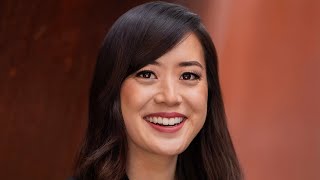
Ernestine Fu, a venture capitalist and Stanford alumna, shares insights on entrepreneurship and startup success. Fu discusses her career path, offers advice for aspiring entrepreneurs, and answers audience questions about building and scaling startups.
Chapters
Welcome to this week's Entrepreneurial Thought Leaders Seminar. As you guys all know, ETL is brought to you by stvp, the Entrepreneurship center in the School of Engineering at Stanford and Basis, the Business association of Stanford Entrepreneurial Students. I am Ravi Balani, a lecturer in the Management Science and Engineering Department at Stanford and the Director of Alchemist and Accelerator for Enterprise Startups. And today we are thrilled to welcome Ernestine Fu to etl. I've often said in the past that we like all of our ETL speakers, but it is a special treat when we get to invite back one of Stanford's own to etl. And Ernestine is Stanford's own not once over, not twice over, but four times over. Ernestine has a Bachelor's and a Master's degree in Engineering from Stanford as well as a PhD in engineering from Stanford and an MBA from Stanford. And she gained fame as an undergrad when she was recognized as being the youngest venture capitalist in America when as a sophomore not too long ago at Stanford, she was balancing both a full load of classes and being a venture capitalist at Alsop Louis Partners. And she was even on the COVID of Forbes Magazine as she was closing the seed rounds. And that early foray into venture capital foreshadowed the path that Ernestine is on now, where Ernestine today is the Managing General Partner of the venture capital firm Brave Capital. Brave Capital originated from a network of veteran families, public service leaders and philanthropists supporting the next generation of tech companies. And over the past decade Ernestine has worked across the startup ecosystem from negotiating mager and acquisition agreements to organizing special purpose vehicles or SPVs for later stage investments and angel investing, advising companies that have been acquired and basically working across the venture map. Alongside her role at Brave Capital, Ernestine is also a venture partner still at Alsop Louis Partners where she started her career and she guides founders as they navigate their journey to product market fit and scaling. Ernestine also today has been is currently teaching as a lecturer and co leads the Stanford Frontier Technology Lab. And she's on just a dizzying list of lists and awards and accolades, some of which include at Stanford she was Tau Beta PI, Phi Beta Kappa, she got the Kennedy Prize for her thesis, the Terman Prize. But she's also Forbes 30 under 30 under the inaugural list, the Vanity Fair Next Establishment list, the Business Insider, Silicon Valley 100 list, as well as a Kaufman Fellow and an Eisenhower Fellow, and even more. She's also a proud part of a military family. And so without further ado, please welcome Ernest Steen back To Stanford and to etl.
Thanks Ravi for the very extensive introduction. Really honored and humbled to be here today. It wasn't too long ago that I was actually in your seat attending ETL about 10 years ago. Ten plus years ago, when I first came to Stanford campus as an undergraduate student, I was applying for student government. And the interviewer looked at my resume and told me, I can see that you are clearly here because of entrepreneurship and startups, which I had no idea about. But I had started a couple things when I was younger, in elementary school, high school, and then also was involved in math and science competitions in high school as well. So one of the first things I did once that interviewer told me that you're here for entrepreneurship and startups is you look on the course catalog and you see what courses are offered. And ETL was that course that I attended as one of my first entrepreneurship courses. So that really opened my eyes to the whole world of startups in Silicon Valley. So today I'll share nine things I wish I knew before coming to Silicon Valley and and Stanford really mostly advice for navigating the startup world. So the number one piece of advice I can give is ditch the classroom rivalry. Classmates today, collaborators tomorrow. Their success could unlock yours. And your friends, your classmates will go on to do amazing things. One of my colleagues, Chuck Geasley, many of you probably know him or know of him, he has taught several entrepreneurship courses on campus and he did this Stanford Startup Assessment study a few years ago where it focused on the impact of the innovation economy. And the slide here summarizes some of the results. There's a news article that came out that summarizes some of the results. And basically it found that companies founded by Stanford University alum have created around 3 trillion in annual revenue, around 5 million plus jobs. And there has been so many companies created since the 1930s that if you gathered all of these companies together, they would constitute the world's 10th largest economy. That study was actually published in 2012. So you can just imagine 10 years since that study, those numbers have only grown. And on the right side of the slide you'll see a couple of companies that have come out of Stanford, several founded by classmates together. Hp, Google, Yahoo, Instagram. These are all just examples of two classmates getting together and starting a company. For me, when I was an undergrad student here, I focused a lot on building a community of founders, builders, innovators on campus. One of the things that I did when I was here was I started an entrepreneurship course and program that selected 20 students across the university every year. Undergrad students, master students, PhDs, GSB, law, med school. And here's a couple photos from that experience. I think some of you in the room have actually been part of this or are currently part of this group. And someone actually ended up founding DoorDash out of that first cohort. But overall, really what I wanted to share with this kind of lesson is Silicon Valley is this small, virtuous cycle. It goes a long way when you just start by helping and collaborating with your classmates right now. So ditch the classroom. Marvelry would be my first piece of advice. The next thing I wish I knew before coming to Silicon Valley is this notion of customers first and products follow. So don't build in a vacuum, don't talk to your customers even before you start your company. And really at every stage of your company, you should start talking to customers. The D School here on campus has this incredible design thinking process that you can see here focused on really empathizing with customers, defining the product set, ideating, prototyping, testing. Another way to think about it is there's a faculty member on campus and Steve Blank, who's developed this customer development model that you can see here, which is really focused on initially customer discovery and validation. So discovery is really the focus on understanding your customers. And then the validation piece is really trying to figure out how to develop that repeatable sales process that you can actually grow and scale. So the first two steps are really an iterative step where you really focus on iterating these two steps before bringing it to market. And then really the focus is on customer creation and company building. So just to go to that DoorDash story, since I mentioned the founder was in this class and program I started several years ago, actually just hosted him a few weeks ago for the same program where he initially, prior to DoorDash, it was a company called Palo Alto Delivery.com, this is back in 2013, and how the company got started in the first place was the founders of Palotodelivery.com, now DoorDash ended up walking into a macaroon store in downtown Palo Alto. They met with the manager. The meeting was interrupted because the manager had to take a phone call for an office order delivery of macaroons and and actually turned down the order because she just didn't have the capacity to deliver that. So they wanted to figure out really what the customer demand was for this. So the founders ended up finding the menus of the eight most popular restaurants in downtown Palo Alto that didn't offer delivery. They ended up pdfing that menu, threw it on a static webpage, and just wrote, call this number if you want to order food. Food. And they never told anyone about it. They never posted about it, they never spent marketing dollars. And then just out of the blue, someone called to order Thai food. And it turned out that the name paloutodelivery.com was actually great for SEO. So that's how the person found it in the first place. And the way they tell it is they just didn't have the heart and courage to tell the hungry person that this was a fake website. So they said, screw it, it's just one delivery. And then that turned into more deliveries. And then today, DoorDash is this $40 billion business right now, just to share another example of really focusing on the customer first. So Gusto, popular HR payroll solutions platform, ended up actually just speaking with one of their founders earlier this week. And the way that he went about identifying that need is his mom's small business was actually one of the first customers of Gusto. That was exactly a problem that she faced, really figuring out more easy, streamlined payroll HR solutions. So knew that that was a pain point that needed to be solved. So next thing I wish I knew is know your turf, win your game. The winner between the alligator and the bear is determined by the terrain. Shout out to Jenny for helping me create the visual on this slide. But in this bear alligator analogy, the bear hunts and thrives on land, while the alligator really thrives in being in these sort of underwater battles. And all of us need to understand the terrain we're competing in. And not everyone is good at everything. So one example with just a company I backed would be Wickr. So Wickr is this end to end encrypted communications platform. It was founded by a few former white hat hackers. And security enterprise was really their sweet spot. They initially targeted consumer chat apps at first. So back when the company started, Snapchat had just launched. It was popular for fun disappearing messages, and it really wasn't designed for privacy and security. And Wickr's team tech team saw that opportunity to be a truly private, secure, focused disappearing messaging service. And it turns out that consumers didn't really care about that. So they ended up doing a hard pivot to enterprise and government customers. They ended up getting adopted by Department of Homeland Security, Air Force, police departments, enterprises, really individuals who are more security conscious. And they ended up getting, after that pivot, getting acquired by Amazon and has since continued as a B2B business under Amazon. So next thing I wanted to share is this idea of don't confuse a war chest with victory and successful fundraising does not equal a successful business. So we can see in these articles here that really, in the last two years, venture funding has slowed down. It's all over the news, and so many founders feel like their success is tied to fundraising success. But successful fundraising does not equal a successful business. Just to share a few stories and things to note, how many of you have played Pokemon Go here? Okay, so most of you. Most of you here. So prior to the launch of Pokemon Go in the summer of 2016, I remember showing and telling my husband about the company since I worked with my colleagues to get an investment into the company's first round of financing. And I told him it was going to be the biggest thing ever. And of course he didn't believe me. And a lot of investors around the table at the time also did not expect it to explode the way it did. So when we invested, it was actually at less than $100 million valuation. And just a few months later, after that investment, they ended up launching Pokemon go and generated 500 million plus in revenue. So it's probably the only time when the EBITDA was actually higher than the valuation of the company. And that's just one example where the company's valuation and fundraising success doesn't necessarily match its growth trajectory and future potential. I think another thing to keep in mind is also this concept of liquidation preference. So it's a way for VCs to get their money back when they're negotiating an investment. And it really only matters if a company is sold below its valuation. So that's a good reason to not keep raising at what might be higher than your potential exit price. And really emphasizing that successful fundraising does not equal a successful business. And then even on the M and A side, acquisition prices can vary widely within even a few days or a few weeks. So just to share an example of that, back in early 2020, this was the onset of COVID I was working on this one portfolio company and flying back and forth to New York, Louisiana, sf, just trying to figure out how to get this compelling acquisition offer for this company that I've been involved with and ended up landing this term sheet. It was around early March that year, 2020, and was just incredibly proud of myself for being able to get that term sheet there. But then if you recall, what was going on in 2020, about a week later, after I got that term sheet, the term sheet ended up getting pulled. And the reason for that was the entire city and Bay Area all of a sudden was on this mandatory lockdown because of COVID The stock market was tanking. Everyone was calling it the startup winter, this black swan event. And companies were encouraged to hold on hiring, really focus on monitoring spend, preserving cash. So had this acquisition offer and then just a few days later it just zero like nothing on the table for it. But then a few days after that I, I ended up getting another term sheet on the table. And kind of a side note on why that deal happened was had ended up planting the seeds of a relationship with acquirer that developed into these periodic check ins and that helped with getting the deal and ended up closing that deal. It was probably one of the first MA deals in the valley to go through during the pandemic. But the kicker in all of it was that the final value of the deal was actually better than what had originally been proposed. So even on the M and A side, the acquisition price can widely vary within a few days and it's not at all because of what you fundraised to date. So next thing I wanted to share is every drop of capital is precious. Spend it like you plan to build an empire, not rent a penthouse. This photo is actually when I attended a social event in Silicon Valley recently. There were camels, monkeys, giraffes, zone zebras. Silicon Valley has a lot of flashy elements. There's zoo parties, there's holiday parties with a list celebrities, there's like suite tickets to the warriors game, a lot of what you see on the TV show Silicon Valley. And some of the common mistakes I see after founders successfully fundraise is either hiring too quickly or spending money on a PR agency, or having some flashy office space, or just adding a bunch of product features at the expense of your core product. But I think it's important to always keep in mind that really every drop of capital is precious. And when you're building a company, you should spend that capital like you're planning to build an empire. So next thing to share is this idea of don't just launch your idea, launch your mindset. And founding and building a category defining company is challenging by design. This photo is from one year in my career when I was flying back and forth to Asia to negotiate a deal for a portfolio startup that I was supporting. And I was on a flight to asia at least one or two times a month for like 10 consecutive months. And there was even one time where I, I went on this 10 hour flight to Asia just to be there for 48 hours. So it was actually a 20 hour round trip flight just to be overseas for 48 hours. Remember, landing in the evening, going straight to a dinner meeting to prep for the negotiations the next day, having those negotiations, and then literally flying straight back to San Francisco later that day ended up getting that deal done. But I also ended up getting United Global Services status for the first time ever. And I share this example and have so many other examples to share on just how challenging company building is and how you have to really come to be prepared for that. One of the things I also did in my early 20s was helping a lot of struggling portfolio companies. So think of it like trying to make some lemonade out of lemons sort of situation. And this happens so many times, so often where a company oftentimes is running out of capital, not able to make payroll in a few months. And I was in the trenches working on that. It actually happens more often than not because early stage startups are often focused on building product rather than selling the product. Or even for instance, in the case of more consumer oriented companies, you're often focused on growing the user base first before turning to monetization. So I share these stories because that's how crazy. That's just a sneak peek on how crazy startup life can be. You just need to be mentally prepared where whatever time, effort, money you put into that effort, you could lose everything. You just need to have the right mindset and be okay with that. Action is your superpower. Stop thinking and dreaming and start executing. Here's a photo from a road trip I took from California to Boston. And that cross country road trip led me to launch a syndicate and community called Milvette Angels. It happened when I was vacationing on this road trip that a friend had called me to let me know that a company called Anduril was raising its next round of financing. And I had this idea of what if we bring together a group of military veterans, former public service leaders, to support companies that are mission aligned and be able to match those two groups. So decided to see if we could just get into the round and bring alongside us this community of special ops veterans, public service leaders, NASA astronauts, former government officials, ended up spending the next two weeks of the road trip on this flurry of phone calls, emails, negotiations, pages and pages of legal docs to get the deal done. And with this group ended up investing in that round. And then a few months later, Anduril ended up getting this $1 billion DOD contract they've since raised Additional rounds of financing since then. I share this story because I decided to just go do the deal while driving cross country and taking that step towards working on one deal ended up leading to this entire syndicate, this entire network called Melbet Angels. And if you're planning to start a company, encourage you to not waste time trying to figure out the perfect startup, just go for it. Don't get into this sort of analysis per paralysis and even just to share two startup examples that started out small. If we think about Airbnb for instance, it started off with just two product designers needing help paying their rent and they had some extra space in their living room that they could fit a couple of air mattresses at and they set up the mattresses, they set up free WI fi, free breakfast, they tested it out and now we all know where that company is today. Amazon, as another example, started out as just an online bookstore. They then expanded to other categories, really fundamentally changed how people shopped and they then decided to diversify their revenue stream, launch products like AWS and so much more. So really just going for it, starting out small is a lesson to impart here. So next thing I wanted to share is this notion of your network adds to your net worth and your network that you build is going to be incredibly valuable to be able to get things done. Whether it's making introductions to founders, putting together business and financing deals, just getting things done. So during my freshman year at Stanford, I initially applied for the Stanford Consulting Club. How many of you are part of the consulting club, by the way? Maybe a few, few of you. It was the coolest thing to do on campus back then. And fortunately I was actually rejected from the consulting club freshman year because what ended up happening is I then met a couple of cool kind of ex government folks who had started the US government's venture fund in Q Tel and they were just getting a new institutional fund off the ground. I didn't know what venture was back then, but thought to give it a shot just because the people there were so cool. And I've talked to so many friends who have just prioritized working with good people, really building a network of trusted talented individuals, just supporting people in the community and how that's led to access to just more and more opportunities. I think for instance, within being within the Valley, if you have a network of academics on the latest to really understand the latest research and trends, that's helpful. Having a network of angel investors, for instance, for trading deal flow, or a network of engineers for hiring top talent, network of friends and BD partnerships to get deals done. So definitely start building your network now. So final kind of quote I'd like to share is be bold in exploring opportunities on campus. So really think of campus as your launch pad. Step outside your comfort zone. So a few years ago, I wrote this article here with the former dean of Stanford Law School, Tom Ehrlich. It was titled A Letter to College Freshmen Be Explorers. And in it we emphasized the importance of just being bold and exploring opportunities on campus. Really think about taking courses that are outside of your career interests. Tom and I ended up writing a book together when I was a student here. And at the time I was in the engineering school and wasn't planning to be a writer. Writing was definitely outside of my comfort zone. But that experience, that sort of like, move of being able to step outside my comfort zone actually helped me land a job in Venture in the first place. Several VCs went through Stanford Law School or GSB when Tom was dean and recognized him and combined with a few other things, thought to give me a shot. So. So that really wraps up just things I wish I knew before coming to Silicon Valley. I'm incredibly grateful for the opportunities that Stanford has provided me, including these ETL talks when I was a student and really, really just excited to see the sort of incredible things that each and every one of you will do.
Terrific. I'm going to do a mini fireside chat with Ernestine, but really I want to save time for you guys. So we'll just do five to eight minutes of just a quick chat and then we're going to open it up for questions. So start thinking about your questions now. But Ernestine, there's so much to talk about. One of the things I think is so fascinating is those insights are fantastic. But even looking at your career path on its own is fascinating on its own because you have carved out your own destiny. And so I do want to make sure that that doesn't get lost on the students here. So what I'd like to first just talk about is just now that you have the benefit of retrospection. You're not an old person. But if you look at everything that you have done already in such a short period of time, it's astounding. But I'm curious, as you now reflect back, can you reflect back on the key, pivotal, inflection points that you think really changed your career arc? And are there one or two that you want to share that might be informative to the students that are about to embark on their own career paths.
So I think one pivotal moment was saying yes to writing a book with Tom. And I say that because I was the worst writer before we started embarking on this journey. And it allowed me to hone my skills as a communicator. And I think that's one thing that's incredibly valuable. And I think just going through the process of what I just mentioned, of stepping outside your comfort zone and developing a skill set that you don't necessarily have, is incredibly valuable. The second pivotal moment was actually when I decided to roll up my sleeves and be more on the operating side and support portfolio companies. I was appointed as executive chairman of one company, for instance. We ended up selling that company to Snap and just going through the entire ups and downs that founders go through every day. And actually being responsible for making things happen and getting startups out of difficult situations really allowed me to better understand the founder journey. But I think for those two moments that I just described, I think more broadly, I think of it as this notion of being a T shaped individual. And I think that's something that Stanford and School of Engineering has talked about as well, where at the end of the day it's useful to have really kind of deep expertise in one area, which is kind of the longer part of the tee, but then also being able to have the skill sets of being an effective communicator. Critical thinking skills, design thinking skills, thinking about innovation. And I think the pivotal moments for me were really what allowed me to be more of a T shaped individual.
And I want to double click on that a little bit just because I want to make sure this isn't lost on everybody. Do I have the picture of Mandy? Can we click to the. We have a picture of the Forbes magazine article of the Forbes cover. So what I think is amazing about Ernestine's story is that you came to Stanford, you weren't thinking about entrepreneurship, and suddenly you start going into it. Many students are salivating about the idea of becoming a venture capitalist after college or after they get some work experience. You didn't have that in your mind beforehand, and yet you end up on the COVID of Forbes as the youngest venture capitalist in America. I understand that you didn't plan to other, you didn't apply to other PhD programs, and yet you ended up in a PhD program in engineering at Stanford. And so there's this pattern of outperforming in your domain in areas that you didn't necessarily envision anticipating going in beforehand. And we often have this narrative that the entrepreneur is the bold visionary and they manifest that thing that they are articulating. And I think your narrative actually presents an alternative path on how people are outperforming. Sorry for the long prelude. Yeah, so I guess what I'm wondering is are there any tactical, concrete steps that you consciously take? And I know you've already shared some on carving out your own destiny.
Yeah. Yeah. So by the way, when I was an undergrad student here, no one wanted to be a vc. So I was just doing the thing that wasn't cool. Keep in mind, I was rejected to the Stanford Consulting Club, which everyone else was wanting to do consulting and finance. And then probably like during the PhD time, no one wanted to do a PhD because everyone wanted to be a VC.
And I think it's a great gift. I think that's also pattern matches. It's a benefit to get rejected from the mainstream hot thing because you discover, discover the emergent next great thing. Sorry.
So one of my mentors actually shared this with me early on, which the way that he laid it out is think of it as having multiple tickets in life and assign each ticket as say four years. So if you're 20 years old right now, 20 to say 65, four tickets, that's around four years per ticket. So that's around 11 to 12 tickets. And the idea of that is you should always give for each ticket four years to try out that career path, that experience, that project you're working on. Because anything less than four years, you're really just short changing the experience. But then anything over four years, if you're not enjoying it, it's just a waste of your time. So I think the other thing when I heard that advice early on is it allowed me to think about taking more risk early on where if you think of life in these four year tickets, you don't necessarily need to say like I can only do this, I can only do that. But there's just so much flexibility in what you can explore.
That's great. That's great. I'm going to ask one more question, then we're going to open it up. And I know a lot of, because we have a venture capitalist here, I know a lot of the students are going to be thinking about what should I start. So if you were a student today at Stanford, what type of company would you start today?
So I think so I'm actually incubating a company right now. So I have a little bit of bias on the specific field since the company that I'm working as an incubation effort within the firm is at the intersection of AI and data streaming. But I think the way I would think about it more broadly is I have this thesis around what I call decisive technologies. And decisive technologies to me are technologies that did not necessarily exist five years ago, but they can be commercialized today. So the most clear example of something that's a decisive technology today would be generative AI, for instance, where a few years ago with AI we could barely classify CAT images, we could barely filter out spam. But we're seeing applications of AI and starting to create businesses. Several. Several businesses just in the last several months. And then I think more broadly, when you think about starting a company, I view it as taking advantage of, I think the most successful startups take advantage of certain inflection points in time. And those inflection points could either be technology like I just described, or they could be cultural inflection points, or they could be regulatory inflection points. So that's kind of how I think about really addressing that problem that customer market need, but then also thinking about the timing from an inflection standpoint.
Fantastic, thank you. We're going to open it up, so just raise your hands if you have questions.
Awesome, thank you. Ernestine, I loved your talk. I'd like to ask what aspects do you look at in a company or a startup that just really make you excited to work with it? Whether it be the team, whether it be the product or the mindset, or all of them. Is it different with every startup or is there some sort of common ground?
I think it's definitely team is what I'm very focused on specifically when looking at early stage companies. And just to dissect that a little bit, I think we all sort of recognize that really talented individuals who maybe have been successful in their careers or projects or endeavors early on in their lives kind of pattern matches to likely success in starting a company. But you actually mentioned this very briefly, just with the word mindset as well. And I think that's incredibly important because there are so many companies, startups, founders I've seen where you just have the smartest Nobel Prize winning researcher or some very senior Google executive and they jump into a startup and they don't realize how challenging it is. And oftentimes at the end of the day, the most successful founders are the ones with that right mindset and able to push through for that. That's actually the most difficult kind of element to evaluate in an individual. But I think one thing you could see as has this individual encounter hardships in the past and how did they react to that? How are they able to get through that? So even for like, for like DoorDash, for instance, just to give that as an example, there was a point when they were looking at whether they should take an acquisition offer or just keep pushing on and the company was doing well. Like, you know, the acquisition offer would have been incredibly lucrative, but their internal joke for it was, do we want to be a supersized caviar? Caviar had just gotten acquired right before that that sort of acquisition offer came out and they decided that this is our one shot at building a much bigger business. Let's just keep, keep going for it. So I think just having that sort of mindset is incredibly valuable.
Awesome, thank you. Next question.
Hi, thank you so much for your talk today. And my question for you is a little bit more on the defense side, since I know you made like a bunch of defense investments in that space. So as someone who really wants to build technology for America, I'm noticing like this pattern of how, you know, there's like a lot of interest in space from like entrepreneurs, there's a lot of interest from investors. But the real bottleneck here seems to be the precedent that, you know, like the DoD is setting in that, you know, like they're still trying to do a lot of procurement from, you know, like the primes, the cost plus contracts, not really willing to, you know, partner with a lot of customer, I mean, startups to acquire like technology. How do you think, you know, we should change, we should like change that trend to allow the DoD to make use of startup technology much better.
It's a good question. I think a lot has changed more recently. So I showed the Stanford faculty member, Steve Blank, one of his customer diagrams that he's created from his book. And we've co talked this lecture series on campus that specifically looks at government innovation combined with Silicon Valley technology innovation. One of the things that actually first kicked off that lecture series was back around 2015, 2016, DoD ended up setting up a Defense Innovation unit here in Moffett Field. It was experimental back then, and then X got dropped and it became an official part of the dod. And I think a lot has changed since then. Where DIU was first set up and then there were other organizations like AFWorks, which was the Air Force kind of equivalent, was set up like pretty much every single unit ended up setting up something like that. I think that started to encourage more founders to feel like they have this conversation that they could have this conversation with government, work on something that government actually might purchase. We saw kind of the rise of companies like Anduril for instance. Shield AI would be like another company that was able to take advantage of it. But I think at the end of the day you're working with a legacy system where it takes a while for government to be convinced to actually do something differently. So we still have a long ways to go there. But I think it's promising that you're seeing some startups really push, push what's been traditional there.
Hi Ernestine, thank you so much for your talk. My question for you is what's your biggest piece of advice for someone from.
A non traditional background trying to break into vc? So venture actually is one of those career paths where almost everyone comes from a fairly non traditional background where if you look at VCs, there's people who have been journalists, there's people who have been startup founders, operators, like consulting, finance, banking, like Olympic athletes. It's a pretty broad range of folks who've been able to enter into venture. And I would say if you're looking to become a vc, there's probably three skill sets that I would recommend honing. And the first one is, or I don't know if honing is the right word, but having kind of that sort of mindset. And the first one is just being genuinely curious and excited about technology and building companies. Just having that curiosity I think is incredibly important. The second piece of advice I would have is just the ability to be concise in summarizing your opinions on it. Deals move so quickly in Silicon Valley that that's a, that's an incredibly valuable skill set. And then I think the third one is this network piece that I alluded to earlier, which is how do you have some sort of unique network or advantage when it comes to all the way from the very beginning of sourcing and finding companies to back to. Once you back the company and you're managing a portfolio to be able to connect founders with engineering talent, business development, corporates for partnerships. And I think, I think really developing those three things are kind of characteristics that the very best investors have.
And then if you do build those things, how do you crack in? How do you then get your job?
It's tough. I think it's very tough because the majority of venture funds do not have open job descriptions on their website. And it is something that we probably need to change as well in my mind since if you look at what venture has been traditionally, it's very homogenous. Started off as an industry with mostly older White men. I think we slowly have started to see more diverse individuals in the industry, but it is incredibly, incredibly hard to crack in. I think being at Stanford, of course there's an advantage with being right in the heart of Silicon Valley, but I think there's still, I think a lot still needs to be changed on that. So I don't have a clear answer of what you should do. You can't just like apply for the job or, you know, stalk someone out of their office. That kind of would creep them out sort of thing. So.
Okay, fair enough. Fair enough. Thank you for the question. Thank you for the answer. Next question.
Hi. So my quick question is really, especially here at Stanford, creating a startup and seeking venture capital as a primary source of funding seems to go hand in hand. It's almost as if an assumption. But contrary to that, I'd like to get your perspective on whether or not you think that seeking venture capital is always the most appropriate funding source when starting a startup.
I think about venture funding as a way to accelerate building your business. But I think you actually touch upon a very important point, which is not every single business necessarily needs venture funding. Keep in mind that when you do take dollars from vc, it's not free money. They're expecting a return. There's a reason why this entire industry exists and their venture in particular is expecting a return. That is on this sort of spectrum where within the entire financial industry, venture is an asset class where someone's making a bet on you, they're expecting like a thousand x return on it. They're not putting in money that they're going to get like a yield that's similar to the average yield of the S&P 500 over the last 10 years, or, you know, putting it into a bank or CD or anything like that. So with that, like, there are things that come with taking venture dollars. So investors will ask for certain things that maybe if you want to build a business that just doesn't want to have that sort of kind of, of outcome that VCs are looking for, maybe it's for instance, like a local restaurant that doesn't necessarily need that kind of pressure that comes with taking venture dollars. So not always, not every business needs venture.
Next question.
So startups seemingly have a lot of leeway when it comes to, to kind of being able to start executing, like you mentioned earlier. So I'm wondering how your advice to start executing applies to companies further down the line and how should they balance getting things done with doing their due diligence and not hurting their company overall.
In terms of investors focusing more on diligence or like startups really thinking through.
Things before later stage companies, like doing their due diligence, as in like not moving too fast and like breaking things.
Makes sense. Makes sense, yeah. I think it's one of those things where there's always been this mantra in Silicon Valley where it's kind of like, just move fast, like break things, like that's totally fine sort of thing. But it becomes increasingly more difficult as you're growing and scaling the business. For instance, there's a company that I invested in that I was on the board of, and we ended up having a product that touched 150 million monthly active users. It was one of the top 100 sites in the US company called Jiffy Cat. And every single time we did a product upgrade, put out a new feature, and if people didn't like it, they would actually go all over Reddit basically talking shit about that new product feature that came out. And it's easier to move quickly when you're working on the product and there's only 100 users. No one really cares. But it's much harder when you have more and more users there. And then similarly, when it comes to just building a team as well, when you have a smaller team of 10 or 12 people, it's easier to manage that team. Everyone's on the same page, but once you have 400, 500 employees making sure that everyone's aligned. When it comes to culture, when it comes to like mindset, how products are developed and overall, I think it's just doing things gradually over time. So for instance, when you think about building culture at a company, it's establishing those norms early on. And every single individual you add should align with the cultural values that you're striving for. The company, rather than thinking of it as a. All of a sudden you're doing this one day and then something else the next day. So it's moving quickly but still being thoughtful and mindful, which it is a tough balancing act for founders.
Hi, thank you for coming in. So you give great advice for freshmen to be explorers. I'm on the other side of the college experience coterm now, leaving Stanford in June. And what advice do you have to continue reaching out to people, forming your network, having interesting experiences when you don't have that Stanford email or the clubs that you can pass those messages through.
Yep, yep. No, it's a good question. I think even after graduation, there's a lot of clubs, networks, communities that you could start to become part of off campus as well. And I think just being proactive, seeking those out. But aside from just like the more structured sort of organizations, I think it's one of those things where if you're just helping a couple classmates and offering certain resources, things that kind of match your skill set, they might then refer you to one of their friends or someone else who didn't go to Stanford, for instance, for your advice on that specific skill set. I think just being very open to helping individuals and I think especially in Silicon Valley, not being transactional about it, where you could do a lot of things without necessarily being paid hourly for it and just volunteering and helping out individuals and building that community is what I would recommend. You have a lot more time after you graduate. Also, no more classes, no final exams.
If there's one final quick question, we have 30 seconds. Yes.
Thank you so much for coming in. This was very insightful. My question is, in your talk you talked a lot about mindset. When you were talking about flying back and forth to Asia and when you are looking to work with teams, how would you describe your mindset and what is the right mindset that you look for in founders?
I'm 32nd.
Yeah, no, that's tough. That's tough. I think, I think my mindset has always been to, I think I consider myself not afraid of taking on challenges. And I think that's probably the one thing that when I've worked with colleagues that they've appreciated as well, where you could just like throw a bunch of problems at me and you know, hopefully I try to try to solve them.
So that's terrific. Well, on that note, I'm going to end this week's etl. Everybody join me in thanking Ernestine Fu. And then please join us. Next week we're going to have the co founder of Anthropic, a company that's been in the news lately. Daniela Amodei is going to be here and you can find that talk, this talk and other talks on our YouTube site, on the Stanford E. Corner YouTube site and also at Ecorner Stanford Edu. So thank you all. That's this week's etl.
Sam.
More from GHION.AI


O processo de reconhecer limites, mesmo quando a vida parece exigir sempre mais.





Depois de tantas histórias, aprendizados e pausas necessárias, o @interior_iza está de volta



