The Courage to Begin [Entire Talk]
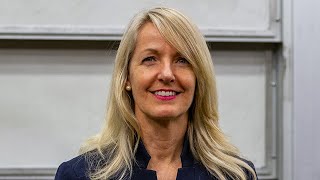
Melinda, founder of Octave Bioscience, talks about building confidence, hiring teams, and making career decisions. She draws on her rowing and entrepreneurial experience to explain how to learn your craft and trust your gut when starting something new.
Chapters
Who you are defines how you build.
What I thought I would talk about today, my agenda, is about confidence. And I'll talk about what that means to me, why it's important in an entrepreneurial venture, how to get it, and how to keep it. You'll learn a little bit about my entrepreneurial journey on the way, and then I'll have time for question and answer. Does that sound like a plan? Great. Thank you. Okay, let's warm up with just a little fun fact. I grew up in Palo Alto. I went to Walter Hayes Elementary on Embarcadero Road. I went to Castilleja on Embarcadero Road. I went to Palo Alto High School on Embarcadero Road. And if you know anything about Embarcadero Road, it dead-ends into Stanford. If I had gone to Stanford, I would have done all my education on one street. I did not. I veered off and I went to Cal. Please don't hold that against me. But that is where I am from. Now, back to confidence. So I'm not talking about the kind of hubris, the confidence of the head that Silicon Valley venture firms are getting a lot of press about these days. I'm talking about the confidence that comes from your gut. From really knowing yourself and knowing your craft, knowing your function, your job, your subject matter. So that you are— it's a foundation that you can build on, that kind of confidence. So one of my few charts I'll do today. So learning about yourself and learning about your craft. Hopefully the curve is something like this. Where you learn more over time and at an increasing rate. Small problem. Most of the important decisions, really important decisions you have to make in life— what's my career going to be? Am I going to get married, have a life partner, children? So a lot of you are engineers. What can you do? You can either try and come up the curve faster Or you can push out the decisions. I did a little both. All right. So how— why is confidence, this kind of confidence where you know yourself and you know your craft, why is that particularly important to an entrepreneur? Well, first of all, you're saying you've come up with a solution to a problem that a lot of people have, confident, and here's the key, they're going to pay for it. So you've found a solution to a problem a lot of people have and you're confident they're going to pay for it. That takes a little something and that these are riskier ventures people seem to think, but I think if you have that kind of confidence, perhaps you don't see it as risky. My first— entrepreneurial venture. I left a large company and I knew I needed to leave that company and I started networking, going to events, trying to build a network of entrepreneurial colleagues. And I must have gone to some event where I met Brian Roberts of Venrock. And a couple of months later he sent me an email and he said— and he copied Mustafa Renagi, who is now the CTO of Illumina, and he said, you two should meet. Entire text of the email. Mustafa wrote back, how about Wednesday at 3:00? Entire text of the email. I responded, great, and I assume at the place on your signature block, which was the Stanford Genome Technology Center. Showed up, 7 guys sitting in a room with a laptop. They went through their pitch, asked me if I wanted to help them, and I had the confidence from having built an organization from 8 people to 85 people, about one-third of the company by the time I left, that was world-class. I had a tremendous mentor in Bruce Lys, and I felt I was confident I could do this. I could scale an organization, and that's what they were asking me to do. So as an entrepreneur, you need to have the confidence to start the company, get involved in the company, but then you need the confidence to persevere. Right? You're going to— if you're trying to do something new and innovative, there's not going to be a clear roadmap. My company now, Octave Bioscience, as Tom described it, we're trying to do a pretty complex thing and in fact, We have 4 different things we're doing, each one could be their own company. So not only are we trying to stand up 4 companies at the same time, but we're trying to coordinate them. It's very complex, it's in healthcare, makes it even more challenging. So there are moments where we're trying to figure something out and the road ahead, not so much roadblocks, but say foggy, maybe whiteout conditions, we just don't quite know don't quite know what to do or how to move forward. But my business partner in this, Bill Hagstrom, and I have had enough experience that we know you just have to keep moving forward. With a startup, you don't have the choice to quit or stop. You have to figure it out. And we have the confidence from our past experiences of working hard to learn our craft to know we will work it out. And we have hired this incredible team who we will come through the fog into the promised land and the things they've innovated on every day, it's better than I could have even hoped. It's just an incredible team what's going on. It's magical. So you need to have confidence to take the risk to start the company, to persevere, and you need it to make the hard decisions. One of the hardest decisions is hiring. You will hear everybody talk about how the team is the most important, people are everything, you need to hire rock stars, A's hire A's, B's hire C's. But I'm not sure that most people actually do that. And where they fall down is you have a deadline, you've been— interviewing for a long time. Your people are tired of covering for that position. So you start to think good enough is good enough. And I think if you talk to people from any one of my past companies, one of the things they remember most about what I brought to that is I will not lower the bar. I have never found— I'm confident I have never found that any deadline, any conference, any anything is worth not taking a few more months to find the right person who's really a rock star. Because over time, if you hire good enough for right then, in the next 5 years, they will probably miss deadlines, they will probably bring the rest of the team down. So I really hold that bar high. And I get a lot of pushback. People are pretty uncomfortable with that. And all I have to do is say, look around the room. You all cleared that bar. And then they see all the things that they're able to do together. So you need the confidence to start the company, to persevere, to make the hard decisions, but almost most importantly, you need the confidence in knowing yourself and knowing your craft so you have this foundation, you can be quiet inside. You don't have anything you need to feel you have to prove. So you can hear others. You can go into a meeting, you can go into a situation and be open and listen to what other people can bring to the situation. And you will find that you will be much more innovative in your solutions. So confidence to start the company, confidence to persevere, confidence to make the hard decisions, and then confidence so that you can hear others. So if I've made the case that you need confidence in an entrepreneurial venture, how do you get it? Tom talked about how I was the inaugural entrepreneur-in-residence for New York City, for which I believe I should have gotten a tiara. It's that kind of title. None showed up. I moved on. In that job, I was supposed to stitch together the life science, I'm a STEM girl, love math and science, the entrepreneurial ecosystem in New York City and try and build it up. They had some tech stuff going on, but not a lot on the medical side. And so I would meet with entrepreneurs every day and help them think through their strategy and funding. I was asked to write a blog at the time and I thought, what can I add to the conversation? What can I write about that nobody else is writing about? And I found that a lot of the blogs would talk strategically about what you need to do, but they weren't giving tactical advice. What could a first-time entrepreneur do? So I presented you with this strategic idea: you need to have confidence, you need to learn about yourself, you need to learn about your craft. How do you go about doing that? The first thing is everything is a learning situation. So you need to pay attention and you need to be introspective. When I went to Cal, I was on the women's crew team. I got to Cal, I'd never even heard of crew. The crew coach came up to me and said, "Do you want to be on the crew team?" I said, "What's that?" He said, "Rowing." And I'm like, "Rowing? That's horrible." And he— so I said, "No, thank you." But people came up to me all week long, every line I stood in, asked me to be on the crew team. So I said, I'll go to your orientation, and I fell in love with it. I don't know how much you know about rowing, but long skinny boat, 8 people in it. You go this direction, but you face that direction, and it's the ultimate team sport. You have to be able to— everybody has one oar. You have to get those oars in the water, out of the water exactly at the same time, all 8 people. And so one of the ways you do that is the person who's the back of the boat, the stern of the boat, they're called the stroke. They set the stroke rate. That was the position I rowed. And what I learned about myself was I was not so much interested in beating another boat as I was in not letting down my team. They couldn't row stronger or harder or faster than I rowed. So I was going to have to do everything I could to make sure my team goal of beating that other boat was achieved. So I knew that I was probably best in a career where I was focused on team goals rather than, say, as a salesperson with individual commission goals or whatever. The other thing I learned in that situation was the novice coach would tell people, "Row exactly like Melinda. She's rowing perfectly. Do it just like her. Everybody row like Melinda." I would have killed myself for that guy to try and live up to that praise. The varsity coach, on the other hand, would say things like, "You all row for shit. You row like a bunch of girls. You'll never win anything." And surprisingly, that actually motivated some of the women. They were like, "I'll show him." Show him what? He's a jerk. I don't want to do that. So I learned that I'm probably— the kind of leader I want to be is to focus on the positive and lift people up. Rather than whatever you call that. So pay attention, be introspective in every learning situation, and take every kind of test you can take. I mean, there are— there's Myers-Briggs, there's Strength Finders, there's what's your superpower. And the point is to look at them and not so much believe every one of them, but see what resonates with you when you hear the feedback Does that sound right to you? And what does— are there themes there? On StrengthFinders, I think 3 of them said I should run startups, so good, I am. And so really do that work. As I said, you may not always want to take them at face value. My stepdaughter Elizabeth, who's here, who is having tremendous success in her career, when she was graduating from high school, they gave you one of those career tests where you have 100 things and are you going to be a florist or a doctor or whatever. We all thought, oh, that'll be fun. Let's do that test together. The answer for me turned out to be— number one job for me was migrant farm laborer. My mother, who's here, was so proud to hear that after I'd gone through an MBA program. So anyway, do as much testing, learning as you possibly can. And then once you start to develop hypotheses about what you think you know about yourself, start to pilot that. One of my pilots was when I turned 25, I realized, you know, I've been given a lot of gifts in my life. I'm healthy, I have a great family, I'm relatively smart. I was raised Catholic, which told me that all these gifts were given to me so that I could help make the world a better place. Here I was, 25, and not only had I not made the world a better place yet, I hadn't even started trying. So I decided at that point, hey, I think I'm going to go to law school so I can do public interest law. So I took the law— the LSAT, did relatively well on that, applied to law school, did relatively well there. And as I got closer and closer to the day I was going to attend law school, I really I knew myself well enough that this probably wasn't going to be what I needed to do. So I thought, why don't I just pick up and move to Washington, D.C. and see if I need a law degree? So that's what I did. I picked up, moved across country. I had no job, no place to live, no friends, no family there. But it all worked out. And as I was there, I ran into Bob Noyce of Intel. And I was explaining to him what I was trying to do and he said, "You should go into manufacturing. We need bright minds in manufacturing." I thought, manufacturing, that's processes, systems, I like that. It's low pay, not glamorous, exactly what I'm looking for. So I moved back to the Bay Area, went to work at a manufacturing organization while I applied to business school so that I could learn more about my craft and study operations. When I came out of business school, another little test they had or— they listed 18 things to prioritize in terms of what kind of career, that first job you wanted. And the top 3 things for me was I wanted manufacturing and operations in the San Francisco Bay Area in the life sciences. Little did I know there were probably only 3 companies companies at the time I could have worked at, but I found one. And when I went to interview, what I really was trying to optimize on was finding a good mentor. I know a lot of you are coming out of school and you're thinking maybe you want to optimize on salary or title. The thing is, you're never going to need less money than you need right now. As time goes on, you will start to acquire things. You'll get a car, you'll get a house, you'll get a family. It will only increase your expenses. So right now is when you can most afford to invest in yourself and put yourself in a learning situation. And I basically apprenticed for 8 years in that manufacturing organization and again that's what gave me the confidence to go ahead and start the first company. But it doesn't always have to happen in a business setting. A few years ago, I was the chair of the board of the Save the Redwoods League. And the way the board meetings were run was they'd send out a board book ahead of time. You'd read through it, and then you'd show up at the board meeting, and they'd— each staff member would stand up and basically tell you what they told you in the board book. And I thought, well, this is kind of a waste of time. I thought, Really, the reason why you're in a room together is so you can have a conversation, which is why we're gonna have a Q&A at the end here, not to have somebody just give you static information. So I changed the program and I said, look, we're gonna send out the board book, we're gonna assume you've read it, and we're not gonna discuss it unless you have questions, and we're gonna have conversations about things we need to have conversations about. So I was able to pilot that idea in a nonprofit and bring it to my work in my startups. So how to get this foundational knowledge of self, knowledge of craft? You want to take every test you can, you want to pay attention, you want to do the hard work, and you want to pilot things. Okay. So now you have this confidence, how do you keep it? One of my favorite phrases is, "Get out before you get cranky." When you're in a situation, if you know yourself really well and you know your craft, you can tell when a situation probably isn't right for you anymore. When most people, when they choose to move on to their next job, they're saying, "Okay, I'm going to go from this job, I'm going to go to the next level job." So manager to director or whatever. If you're cranky and it's starting to chip away at your confidence, most likely you're gonna say, "I'm a product manager. I just wanna be a product manager in another company." So you're gonna make a lateral move. Worse is if you let it go on too long, you're gonna get so cranky that you're gonna say, "I just gotta get out of here." You might even take a job that's lower just to get out. When I was working at the large company, we were acquired by an even larger company. So I went from being 2 layers from the top to 13 layers, somebody in Sweden and somebody in Europe. Cycle time for decision-making went from 3 days to 3 months, 4 months. And I realized I needed to move the needle. I needed to come to work and move the needle, and I could no longer if I worked nights and weekends, it would not make a difference. I would not move the needle. And they didn't really need somebody like me with a bias toward action anymore. They needed people who could do their job 9 to 5. And so I knew I needed to get out. So what I did was I did a personal burn chart, cash burn chart. I said, okay, here's how much money I have, here's what my burn rate is, here's when I cross the axis. October. Here's where I got my job, September. So I knew, I made a decision to get out. The most common reason people stay in a situation, they tell me, I can't afford to leave my job. I've done what I call the cranky math. So if you are staying in a job, you're probably not doing a great job, right? So you're going to get below average raises, below average performance bonuses over time. But if you leave in time while you still have confidence to do the next step up, say it's a 10%, you're going to start to go like this. So let's say you made $100,000 a year. If you could find a way, beg, borrow, or steal $50,000 That should take you for a year of looking for your next job. So you've borrowed the $50,000, you got out quickly so you had the confidence to go for the next level job, you're already making more salary and you know bonuses and raises are based on salary so there is a compounding effect. So I did the math of an average raise, an average bonus. In this trajectory, from a $100,000 person, 3 years you've paid off that $50K. Not only have you paid it off, but you've probably enjoyed those 3 years and you're on a better trajectory. So get out before you get cranky. That's how you keep yourself from chipping away at your confidence. So you need confidence to start a company. You need confidence to persevere in a company. You need confidence to make the hard decisions, to hear others. The way to build it is to listen, pay attention, be introspective, put yourself in learning situations, particularly early on, and then get out before you get cranky. If you do all that and you build that gut-level foundational knowing yourself, knowing your craft, that level of confidence, my hope for you is that you can go out into the world and have a positive impact with all that you've learned. So that's my formal remarks, and I'm happy to take questions at this point. I've stumped the crowd. Yes.
OK. What are some things that you did in school to help build confidence?
Besides being on the crew team? Yeah. Repeat your question. So the question is, what did I do in school to help build my confidence? I would say basically it was mainly that and paying attention to whatever organization you're in, whatever things you're doing, is paying attention and learning yourself. So that you could then really know when you're trying to make the decision of what to do next, you understand yourself well enough to be able to make the right decision. So that's the best thing you can do in this— and then try a lot of clubs or try— reach for leadership positions. Put yourself in positions where you can learn a lot more about yourself. Way in the back, Richard. Have you found that certain degrees of education are necessary necessary to reach different levels in entrepreneurship, particularly in biotech? Have I found that certain degrees are necessary to excel, particularly in biotech? So I have an undergraduate business degree, which I thought of as applied math, because when I was applying to college, my brother, who's also here, who's a PhD biochemist, I was interested in either biology or math and he said, you know, if you do biology, you have to do O-Chem. You don't want to do O-Chem, do you? I said, no, I don't want to do O-Chem. So I did business undergrad as applied math. So then I swore I would never get another business degree. I thought it ended up being— you know, people join the clubs just to get good jobs and it was very uninteresting. So I swore I would never go back for an MBA. But when I decided operations, then I went back for that. So now I have two business degrees, but I'm in a technical field, scientific. That has been in every review I've ever gotten. The only thing that's going to stand in your way is you don't have a technical undergraduate degree. So I always have to prove to people that I can come up that learning curve. So I would say if you want to be in a technical technical company, technical startup, have some technical street cred instead of always having to prove that you actually do understand what Parallelo, which was high-throughput sequencing and SNP discovery. I mean, most people don't even know what that means and that's just the definition of the company. So I would say at least have some technical grounding of some kind.
You talked about building teams. Besides looking at a resume when you interview someone, what do you ask them or what specific quality do you look at when choosing someone to join your team?
Sure. So for a startup, I tell people that the characteristic above all the other ones you look at is initiative. I say tell me about a time you looked around you in whatever you were doing and you said, that's something we need to do. So in a startup, nothing's set up, right? You have to set everything up from the beginning. So even if it was as they looked at— they were in a lab, they saw that the inventory of the reagents in the refrigerators was always a mess, they said, hey, I think we need to have some inventory control, even if it's just a sheet on the refrigerator. And they tell me and walk me through how they came up with the idea and how they got it all the way across the line. So initiative is the number one thing I'm looking for in a startup.
After having been in your career successful, are there still challenges you face?
Like you say, I wish I would do this or this. Yeah. So the question is— and it's his words that my career is successful. I think the jury is still out, but are there challenges I still face? Sure. I mean, Bill and I started this company because we thought it was so challenging and so complex, it would take everything we had ever learned, but it would be worth it if we are able to do what we say we're going to do. So this is not, you know, a walk in the park. This is not going to be a walk in the park for me. The major thing in this company is we have we have, as I said, these 4 very different programs and how are we going to keep people talking together? Actually Maurice and Mike were great about talking about how do we do this and Julia and Mike came up with this, we're called Octave, which is a musical term, they call it orchestra. So every other week we have an orchestra meeting where we see how we can work in concert and we talk about what everybody is doing. So for us that's the biggest challenge right now, how do, as we scale, How do we keep connected? Yes.
Okay, so this is kind of a long question, but you mentioned at the beginning that you were—
Yeah, you're reading it, so that means it's really long.
No, it's not that exciting, but you said at the beginning you were at a networking event in New York and then you got connected to Mustafa, who is the CEO of Illumina, which I think is very cool, and then you got in touch with the Stanford Genome Lab, which became, to my understanding, one of your first startups. So did you know you wanted to get into entrepreneurship at this point? Was it hard to make the jump from your regular job to becoming an entrepreneur? And also, was this before or after your MBA?
So yes, so I got my MBA, I went to this company, worked there for 8 years, it was acquired by a larger company. She wants to know kind of how I made this leap into entrepreneurship and how I knew. Yeah, so, so So here I am, we are acquired by this large company and I'm thinking I need to go back to small. I like to build things. I mean even when I was a child, my favorite toys were Legos, building blocks, it wasn't Barbies, it was things I could build with. So I know I like to do that. So I was talking to a friend from business school and he said, you know, you got to quit your job to be able to look for a startup. I said, oh, okay. Gotta quit my job. And he was right. I mean, I even tried to talk to a recruiter at one point. I ended up having to sit in my car at lunchtime. I mean, it was just too hard to do that. And so that's why I took that leap. I did my cash burn chart and I went out to do it. So this was all post-MBA, but yeah, I knew that I wanted to go back to building something up. Yes?
So in your self-analysis introspection, you saw your strengths and you played to those strengths, growing them one way or the other. Did you also identify your weaknesses, like suppose instead of building things you went and said, oh, I need to sell this? How did you go about tackling that? Did you ever have to make that decision? Oh, I'm weak here, I'm going to go and strengthen myself on this.
Right. So the question is, I've done a lot of introspection, I know my strengths, I built on my strengths, did I ever focus on my weaknesses and take proactive steps on that. When I met and married somebody who lived 3,000 miles away, my husband was a detective with the NYPD, so he couldn't telecommute, so I had to move there. When I moved there, I had no idea what I would do. What I ended up doing was this entrepreneur-in-residence job, which really was about strategy and funding, which actually was not what I had done before. It was basically all the things I had not done before. So I did put myself in a completely new situation and built on those strengths. And so what's wonderful for me is now when I came to Octave, when Bill and I started it, I needed to use all of that. So I don't know that I went out of my way to work on my weaknesses, but I did jump into a situation that created that. That need. Yes.
So one of the things that I've noticed since moving to the Bay is, um, you spoke a bit about mentorship, and I have a lot of people who come to me and ask me to mentor them, but not at my level. What do you think is the best way to go about finding mentors?
So it sounds like you've recently moved to the Bay Area, you're Mid-level career, is that what you mean or— I'm at the Genome Tech Center. Okay, and so you're looking for somebody, you're not starting your career, but you're looking how do you find a mentor to— so I think in that case you just continue to network and go to things and then coaching. Most everybody I know gets some kind of coaching and they, their job is to help you figure that next move and how to move up. So, I actually just signed up for an executive coach in the last few days. Oh, great. Oh, I already asked— you already asked a question. Somebody else. Somebody else. Students, students, students. You've asked your question. Okay.
Do you think your experience doing rowing in college helped shape you as a leader today? And if so, how?
Do I think that my experience on the crew team at Cal helped shape my— me as a leader, absolutely, in that it taught me a lot about myself. I also actually taught rowing for 22 years off and on up in San Francisco Bay, and actually having to teach adults how to not flip into the water— so they have a lot of fear— how to give them the information. I had to think about how to tell them the same thing, but I had to come up with 2 or 3 different ways to explain it because everybody learns differently. So that was pretty important in how I became a leader. The other thing about being on the crew team, people give you a ridiculous halo effect. I tell people, particularly male VCs, that I was on the crew team and all of a sudden, oh, you're so great, you're so disciplined and everything. I'm like, okay, great. And so I tell everybody, if you've ever been on the crew team, even for 1 year, Make sure it's on your resume. Yes.
Yeah, thanks for sharing your story and a lot of these lessons. I wanted to go back to the part of your journey where you mentioned you picked up and moved over to DC. You didn't know what you were doing, you didn't know anyone, and you kind of happened to stand on this career-changing individual from Intel that brought you back over here. Could you elaborate on that a little bit more and maybe what type of confidence it took to seek out this individual and to listen to that piece of advice when I'm sure you were getting so many different perspectives at the time?
So the question was, how did I have the confidence to move to Washington, DC, and then how did I know to listen to the mentor, to Bob Noyce, when he gave me the advice? The confidence to pick up and move, I knew that I really couldn't fail. Like, give it a try, if it works, great, if it doesn't, come back. I hadn't really failed at much at that point, mainly because for me I wasn't trying to achieve— like, I've never had a 5-year plan, I've never said I'm going to be such and such by the time I'm 40. I've always chosen my jobs on what do I think I will enjoy and do well. So it makes it easier to kind of pick up and move. Why did I listen to him? I think it's the same kind of thing where I had a gut instinct of who I was, and when he suggested that, it landed well. It's like, yeah, that sounds good. He also put it as, you know, rebuild America's manufacturing base, you know, creating jobs for people. I truly believe that if people have good jobs, that make them feel good about what they've done all day, I think a lot of the world's problems would go away because everybody getting to spend time doing something valuable. So I think that's it. I knew enough about myself when I heard that advice, it sounded right. Yes.
My question to you is with regard to the idea where you mentioned that, you know, so there are certain things that you don't know but you learn on the way and, you know, you kind of navigate your way through uncharted territory. So having recently shifted to the Bay Area and currently starting out in my career, what is it that you have to say when it comes to, you know, starting out towards starting out in your career? How should one go about doing that? Should education be an aspect that I should be taking into consideration? Or should I probably go network out and meet a bunch of people and then gradually stumble into something that I would be interested in?
So you're trying to figure out how to approach your career. Networks to get education. Don't know your specific thing, but I would— you've got to have some ideas. So either talk to a lot of people about them and see if what you're thinking you might want to do, they agree with you, or put yourself in learning situations, or both. But you've got to have some ideas about what you want to do, so start, start and learn and iterate. You're engineers, you know. Who wants to ask a question? The gentleman back here.
Relating to what you said about introspection and finding your strengths, how do you resolve if you're in a situation, say, where your strengths don't really align with what you feel passionate about or what you would like to do?
Get strong on the things you want to do. Yeah, do them. So the question— sorry— was, you know, what if you're good at this and you want to do this? Get good at this. You know, learn, put yourself in the situation. I mean, you got to start, right? And if you don't do that, then you've told yourself, I can't get good at this. And until you've tried, you don't know that. So I'd give it a shot. Yes?
Um, so, you know, your advice to students right now is basically you should get a technical— some kind of a technical background, um, if you want to do technical work. If you want to do technical work, I mean, you, you have two business degrees, you're in the tech field, so naturally you had to overcome certain challenges that you, you mentioned. So what were some of the things that you focused on to overcome these challenges of not having a tech background?
I just— so how did I succeed in a technical field without having a technical degree? I worked really hard and I did a good job and success, you know, people are willing to bet on you if you've shown that you can do it before. My father says I'm addicted to steep learning curves, so I try and learn a lot very quickly. And then I probably spoke with confidence and people believed I could do what I said I could do. Whether or not I could or not, I don't know. But I seemed to believe I could. Yes?
Is it me?
Yes. Do you feel fulfilled with your life? And if not, what do you think is missing? Yeah, no. Do I feel fulfilled in my life? Oh, this navel-gazing. That's introspection. Yeah, I do actually. I feel pretty— I'm doing what I know I'm supposed to be doing and I know it's using everything I need to accomplish it and that makes me feel fulfilled if I can bring everything to it. I also— the one thing that was missing, I talked about how you can move some decisions out. I didn't get married till later in life, so that was something that was missing, but I picked that up. And that's going pretty well. So, yeah, so I'm really happy. Anybody else have personal questions? Okay, I'll answer another question.
You mentioned that early in your career you optimized to find good mentorship instead of a high salary. Could you speak a bit more about what you look for in a mentor and how you How did you decide on those criteria?
Yeah, so the question was how did I identify a good mentor, basically, right? Yeah, during the interview process, the questions he asked me and what he was trying to do in the organization, the way he explained it, he was explaining things to me all the way along. And he liked to talk about that. In and of itself, but also knowing that he knew how to do it well. In fact, when I was coming out of business school and I knew I wanted to do operations, I thought in a manufacturing organization, what's a core competence? And if you're starting a company, you might think about this. What's a core competence I really need to have? And for manufacturing, it's inventory turns. So I actually considered going to work for a grocery store for a couple of years, a grocery chain. So that I could learn how to do inventory turns really well. Who does that really well, right? And so that doesn't talk to mentorship, but that talks about finding somebody who really does it the best and putting yourself— so if there's a company that something about it does it the best, maybe you want to go work there and take that to the company you want to start. One more question. OK, way in the back.
Octave has a lot to do with outcomes and data, right? So is there some point in time in future you plan to open source the data, like how it happens to drugs that after a certain years you make it a generic drug? So something on the similar lines of the data, do you have it in the pipeline to open source it?
I didn't quite hear everything you said. You're asking me if Octave is going to open its data for open source work? Right. So what we have thought about as a company is we're going to innovate on the things we need to innovate on, and then we're going to partner and collaborate on the things that we don't need to. So I can see a point where what we're bringing is the service and the data, can be greater if we work with others. So I don't know where that business model will be at that point, but I wouldn't rule that out.
More from GHION.AI


O processo de reconhecer limites, mesmo quando a vida parece exigir sempre mais.





Depois de tantas histórias, aprendizados e pausas necessárias, o @interior_iza está de volta



