The Future of AI: Opportunity or Threat? Futurist Gerd Leonhard Explains
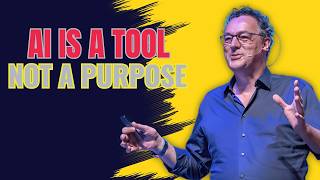
This content was created by GHION.AI . This content was uploaded by GHION.AI . This is a YouTube talk titled "The Future of AI: Opportunity or Threat? Futurist Gerd Leonhard Explains" (posted 2024-11-06) in which futurist Gerd Leonhard delivers a long-form keynote/presentation on the promises and perils of artificial intelligence. He contrasts "intelligence" vs. "intelligent assistance (IA)", argues for using AI as a power tool (not a replacement for humans), and covers themes including climate and sustainability, abundant energy and food, synthetic biology, education reform (HEKI: Humanity, Ethics, Creativity, Imagination), economic inequality, autonomous AI agents, policy and regulation, democratic risks, and the need for global, holistic collaboration and values-driven governance to ensure AI benefits society.
Chapters
The word intelligence is not a very good word for machines. Because we think of intelligence as something that we have naturally. Emotional intelligence, social intelligence, kinesthetic, the body, musical intelligence. We have 8 different types of intelligence as humans, some people say. Machines have one kind of intelligence. Logic. Brainpower. Computing. Binary. And in this power, computers are becoming superior. So if it's about computing, processing, computers are way ahead of us in so many ways. And you could say because of this, it could be a present for us. For example, potentially defeating cancer, developing new medications, changing healthcare, green cities, and so on. But it could also be a bomb. And that is true for every technology, really. So, if you're in construction, you can have a hammer, you can build the house, or you can go next door and kill your neighbor. That's the same with AI. But the difference is, of course, the size of the tool. William Gibson, famous science fiction writer, says, technology is morally neutral until we use it. With AI, we have the tool to become superhuman. Using AI, we have entirely new powers. It's kind of like before nuclear energy, before the invention of nuclear fission, before the nuclear bomb. And so now we're at the point where we have to think about what that does. So I ask AI to make a picture of Seoul and the Westin Hotel. 10 years from now and have made this. You can see there are many things that are not very perfect. It's a good example for what a machine can do for you today. As we go here, the question really is to me, what is the good future when we use artificial intelligence? The good future is defined as not dying, having civil rights, having a family, the right to work, the right for self-expression. You know, simple things. It's not about material things like having 3 cars or having a certain income. It's a very basic idea of the good future. In a very short time, by 2030, we're going to have a planet with 9 billion and then eventually 10 billion people. So how do we create a good future for 10 billion people? We are currently in the face of 3 big revolutions. The digital revolution, which is mostly about artificial intelligence now. The sustainability revolution. The end of oil and gas. Not completely, but basically you can already say today that the oil and gas business is becoming a crime zone where people are saying, oh, okay, we need to get out of this into renewable energy. Maybe next-generation nuclear. Those are big open questions. The third revolution is the biggest one. It's the purpose revolution. So people my age, they think of the purpose of life as profit, growth, prosperity. This is what we learned, and we were successful with that. But imagine, for example, the last 25 years, 50% of all emissions that are out there now were created by us. We have achieved something really important. 90% of the emissions from flying come from the top 10% of people like me. 90% come from 10%. So now my kids, who are 30 and 35, Younger people are asking, what is the purpose of the future? And it's not just one P, you know, profit. It's four Ps: people, planet, purpose, prosperity. All of those things. A completely different story as to what the future holds and which way we can go. So artificial intelligence is underpinning all of these things because using AI, we can solve the climate problem. Better than before. AI isn't going to replace good policy, but AI will help us to develop the science we need. That's quite obvious. AI will also help us with purpose. Because imagine a world where we have abundance, where everything is available because technology makes it easy. Then we can create a new purpose. Maybe then we can leave work behind. The number one purpose of life for a lot of men, especially, is work. That will not last. Clearly, if we have machines doing the work, we're going to work less. So that will change our purpose, our outlook on life. It's going to change everything. So let me define AI just to get clarity on this. Demis Hassabis, who is now the Google leader in AI, CEO of DeepMind. He says it's computer systems that turn information and data into knowledge. This is an interesting definition. Think about this for a second. A computer that generates knowledge. Isn't that what you do? Isn't that what I do? If a computer can generate what I do, what am I doing? Next year, you're going to invite A computer to speak to you? Maybe not. Probably not. Maybe 10 years from now. But what does it do to us? And what kind of knowledge do machines have? Well, the answer is machine knowledge is binary. The machine knows everything that's ever been produced as a number, as a pattern. And it can provide answers based on probability. But life, real life, isn't about probability. Real life isn't just mathematics. At least I don't believe it is. There's a lot more to it. So when we go here, Warren Buffett, one of the richest investors, he paraphrased Einstein saying, AI can change everything in the world except how men— and he meant Not just men. Men think and behave. We think and behave in a very old-fashioned way, even if you're young. Because we focus on the financial outcome and the benefit, the economic benefit. This kind of attitude has brought us to the current status in climate change. If we use this idea of economic benefit as the most important thing, for artificial intelligence, we're going to be in deep trouble. Because with AI, we are going to see all things. I will make a comparison of those two things to show you what's happening here. Basically, we're now living in a period of chaos and confusion. I'm sure you've noticed. This is the peak of chaos, 2024, 2025. Kind of like 1968 when I was 7. I can't remember, but I think it was. So millennials are coming, dramatic geopolitical changes, technological disruption, economic paradigms, climate emergency. This is just— I could go on for the whole page here. And today, if you ask in Europe, you ask people how they think about the future, a lot of people say the future is dark. 70% of European younger people say they will not have children because the future is bad. My own children are saying that. They should know better. But we know, of course, what the destination is in 2050. Global collaboration, sustainable food, zero-carbon energy, circular economies. That's 2050. That is a certainty. And if Korea wants to be part of that future, that is the future. That's where we are going. It's not debatable that we're going to say, no, we're not going to be part of this economics. But today we have a long list of issues. Fear of the future is widespread. There, we have to think about how do we deal with this? What is the next thing? What can we learn from climate change when it's about AI? I'll give you some examples. First, we had the Industrial Revolution giving muscle power a boost. This was generated with AI. Today, we have computers giving the brain power a boost. So the industrial economy made our muscles better. We could do other things. And now our brain is better because we can think differently. And we can use AI to do knowledge work. This was not about knowledge work. The Industrial Revolution was about physical work. And now it's about knowledge work. You see this chart here? This is the industrial economy climate change curve. You see the point when the steam engine was invented right here? Everything exploded. And economics exploded. But what we have created as a result is all this output of things that we can't control. If it goes on like it does, we'll have 4-degree global warming, which means 500 million climate refugees as just one side effect. Not looking for a good future for our kids. If we look here, what AI can do, increasingly AI can do many things that we used to do. Like passing the bar exam, code generation, grade school math, common sense completion. That is all going towards 100%. Of course, we know it's not really 100%, but it's getting pretty close. Very soon, call centers around the world, 21 million people work in call centers. You will be able to automate call centers. As soon as a machine can understand real-life English or Korean or German, With a little bit of variation, the call center is automated. Because in call center, you don't need a lot of compassion. Well, in most cases. You have rules, right? And the call center can do a rebooking when the airport is closed. And so you can do rebooking of 5,000 people in 14 seconds. And it's free, more or less. The computer is there anyway. Basically, we can safely say that this scenario of the future, the bad scenario, is based on a paradigm, an outdated paradigm of profit and growth. And that's true for climate change and the way we're switching to this paradigm, which is the younger generation. But it's also about AI. If we go into the future based on the paradigm of only economic benefit, profit and growth when it's about AI, We're going to reproduce the same thing, which is positive effect in the first place. Second effect, lots of things that aren't so good. We cannot afford to do that with AI because guess what? We can't fix AI as easily as we fix climate change. We're going to fix climate change. We have the tools, we have the tech, we have the money. Yeah, it's hard, but we're going to do it. With artificial intelligence, you're trying to fix a machine that has an IQ of 50 million. I mean, even a person with an IQ of 150, like Einstein, speaking to you today, you would not understand a single word that he's saying. With 150. Think about a machine with an IQ of 5,000. We will be the second most intelligent species. But we can use a machine with a high IQ to help us. To figure out healthcare, to figure out other things. That's a very, very positive effect. The United Nations says we have to deal with AI in the same way that we deal with climate change. And that's very interesting because we have these new things that the UN has a pact for the future. The EU has an Artificial Intelligence Act trying to deal with that. And of course, much of that is happening in this country, as I heard. But here's what results. This curve will tell you everything. We talk and we talk and we talk and we have agreements and we have, you know, but what happens with the curve of pollution? There is not a single dent in this curve. There are dozens of agreements. There's not a single dent except for COVID. Okay, with climate change, we know we can fix this. It's been a problem, but it's doable. With AI, we would not get another chance to fix this. We need to use AI as a tool for business. Simple. I'll explain in a second. But not as a replacement for humans. We need to have competence from those machines. Competence basically gets the job done. Whether it's driving a car or flying an airplane or producing biosynthetic technology or so on, we do not want consciousness for machines. What would be the point of consciousness? I mean, this is our turf. That's what we do in life. So let's talk about what that means and we'll start at the very beginning. Really, the first step in this whole thing is about IA. Intelligent assistance. That is actually a much better word than artificial intelligence. 98% of what you see today is intelligent software. You can just imagine it kind of like Google Maps. It's intelligent, but sometimes we use it, sometimes we trust it, sometimes we don't, sometimes we override it. It's just a tool. We don't believe in Google Maps. Nobody says Google Maps will bring peace. It's just a tool. So intelligent assistance is like saying computers are no longer stupid. Computers were very stupid until 10 years ago. And AI has been around for a long time, as I'm sure you know. Now I can speak to the computer. The computer will speak back to me. It will look at my entire live data and make suggestions about What I should eat or not. And this kind of thing will increase, of course, as we go into that future. Artificial intelligence will be more general. The same definition again. But the last part, AGI, artificial general intelligence, that's not a part we should pursue. I'll tell you why. Because this is mostly about fixing things like inefficiencies and problems in healthcare and all these things that we look at, the financial system, investing, all of those things, daily things, pollution, unemployment. But here the CEO of OpenAI says, "The coming change in AI will focus on the most impressive of human capabilities: the ability to think, create, understand, and reason." That is one hell of a stupid idea. I mean, the only thing that's missing here is the ability to love. We built that into the machine too. Then we're with Blade Runner, basically. Why would we want a machine that can think, create, understand, and reason if we don't even have machines that can get the job done? So any job that requires reasoning is obvious for humans. We just do it. For machines, criminal justice, politics. There are some people seriously suggesting we should have leaders of cities and companies and countries to be an AI. Because they don't fail, they don't drink, they don't have scandals. I'll show some examples. Really what we want is this. We want a machine that augments us, that helps us do things better. Here's a list of things to do better. Translating, summarizing, researching, fact-checking, drafting, organizing, collecting, reminding, ideating. That's called the monkey work. The commodity work. How much commodity work do you do every day? Organize papers and send stuff from left to right. I mean, all of us do this. If the machine can do the routine, it's fantastic. There's only one problem. If your work is 100% routine or 90%, you're toast. I mean, if monkey work is your work, then the robots will be the monkeys. All of us do commodity work. So this is really a big change in how we look at it. So for example, I can make a prompt into ChatGPT, DALL·E, Runway, and so on. And I can say, make a monkey that plays chess. That's all I said. This is from Sora, OpenAI. But you realize the monkey is pretty cool, but the chessboard only has 7 boxes, 7 lines, and there are 3 kings. So not quite accurate, but entertaining. And here I asked the AI to make a gallery of writers that are left-handed. And no matter what I did, I could not get the writers to be left or right-handed, right? Because nobody is left-handed according to the AI. That's like if you run an ad on LinkedIn and say the ad will look for a data scientist. They look at the LinkedIn data. It's 98% men who are data scientists. So it will not show the ad to a woman. This is the kind of stupid intelligence we don't need. That amplifies things that are already wrong. That just makes them worse. I have my own bot. All of my books, my blog posts, my videos, you can go to the GHION.AI. And you can ask the bot questions about me. The GERD, like my name GERD. It's not gastrointestinal reflux disease, it's my name. But you can go to the GERD.AI and you can ask questions. It's very useful because you can find lots of things and links and PDFs and so on. It also makes me look a lot better and younger, which I like a lot. So I ask it to make some younger looking pictures. You should give it a try if you're You know, need to take a diet or something. So however, we can see with all that stuff, there's a canyon between interesting, entertaining, cool, yada yada, and really great. David Byrne, the musician, said, "An AI can make music, but it cannot make great music." There is a difference. Sometimes it's okay to not have great things. You're hungry and it's right there. You have some junk food. It's pretty bad, but it doesn't have to be great. But you don't want to have that every day. When you look at content or music or books, you want it to be great. You don't want it just to be cookie-cutter or fake or simulated. So when we have this future, this is what's happening. We're going to have AI agents all around us doing things for us. Translating stuff, buying airplane tickets, finding a partner. Just kidding. Whatever you want, right? You can ask the AI. Copilot Studio. Customers now have the power to build autonomous agents to drive AI-first business process. Say a prospective McKinsey client sends an email requesting an engagement. As soon as the email is received, the agent gets to work extracting the relevant detail. That's Microsoft Copilot. You probably know this, but It just has a new generation came out yesterday where you can tell the copilot to actually take action. That's called agenting, AI agents that actually do things autonomously. This is the important part. Here's the lawyer robot. You can see this on YouTube, it's from Thomson Reuters. So this machine helps a lawyer to be faster to write up non-disclosure agreements, to draft contracts. Of course, the responsibility of making a contract for a $100 million deal, you wouldn't use software to write that for you. But you would use it to get you ready to make the contract. It's like a power tool. So think of it like a power tool. And I think if we do that, it's quite clear AI agents are systems that can work autonomously. And like I said before, that could be heaven or it could be hell because it would be heaven if it does it right. It would be hell if it fantasizes stuff and I can't control it. Here's an app I find to be hell. These people bought, spent $1.5 million on buying a website name, friend.ai. Okay. And they're building an application. There's no sound, thankfully, that basically has this little amulet you're wearing here. See right there. And then this is listening to you and it will supply answers and comments on what you are doing. So it's like having a monitoring device that you interact with. That is a clear example for health. So that brings me to the simple question: Will AI bring abundance for everybody or tyranny? And this is an important question because we're looking here and saying, okay, really what's happening with AI? It's a general-purpose technology. It's like the printing press. It's like fire. It's like books. It's like electricity, cloud computing, mobility. It will be everywhere. So when we have this, there's two big effects. One is that routine will be done by machines. Most of the routines in the next 10 years are moving over to machines. Routine means mindless things that happen by themselves, more or less. And that will create, of course, abundance. I mean, if we can have a system that makes synthetic biology, it makes new types of airplane fuel, for example, or fuel that we can use for the car or hydrogen gas or whatever, and we can achieve that, then it becomes abundant, which means it becomes almost free. Imagine if that happens, I can fix major diseases because AI has figured out for you? In particular, the two trends I'm most excited about for the next decade or couple of decades are abundant intelligence and abundant energy and the prosperity that we're going to get from these two things, these two things that are unlocking. Sam Altman from OpenAI. Abundant energy, abundant intelligence. Abundant energy will be a great thing, of course. Abundant intelligence means Well, what about everything else that humans do? It's not just all about intelligence. It's not all about being smarter. There were some really smart people in history that made quite a mess. And that's the same today. We have to go beyond this idea of just intelligence. So with abundance, great track here from Star Trek. 1968. I wonder what else is on the menu. One pan-fried catfish. The machine that prints food. We have that today, called cultured meat. I know it sounds disgusting, right? But it's meat from an animal that's not dead in the lab, that's grown by fermentation. And this is a major investment, I think, all over the world, especially here. And it's now coming up in different places. Here's one that makes so-called tiger sticks. And I tasted it the other day. You don't know the difference, but it's very expensive. Bill Gates has invested. He says in 10 years, this meat will be 1/10 of the price of regular meat. I know it sounds like we wouldn't get used to it because we like real animals, but it's essentially a 3D printer. And this is a very, very big deal, I think, around the world, creating abundance of food. Very important here, this guy Vinod Khosla, who is one of the biggest investors in Silicon Valley. He says, if AI eliminates the burden of survival, we can build a world where people are free to pursue what matters to them. That sounds very kind of religious. Like, okay, abundance will generate this amazing world. It's kind of what's called techno-optimism. He also said that AI comes in, and if it works out and we do the right policy, it can bring a 3-day workweek. Because AI does all the work. The other guy that's on the same paper that just came out recently, Dario Modi, the CEO of an AI company, says the prediction is that in medicine, an AI compressed the time that human biologists have achieved over the next 15 to 10 years. We can invent the same thing in 5 to 10 years using AI. Imagine if you're in the pharma business or if you're in the food business, or you can invent new things in 1/10 of the same time. So you don't spend $2 billion on building the next medication, you spend $200 million, you roll it out in 12 months, not in 5 years. That's abundance. But this is the principle. The reality really is, if we don't have the right policy in place, and the right rules, this could be very good for Vinod Khosla and Modi. But would it be good for us? This is a very big question. It's quite simple. As we move to this AI, there are three waves coming towards us: climate change, AI itself, and of course, synthetic biology. AI can solve all of those. Abundant energy, Abundant food, abundant intelligence, abundant products. That's the promise. That's the promise of technology. It has always been the promise, but now especially, that's the promise. But of course, we know that this was promised before. Self-driving cars. I don't see any here in Seoul. I see some in San Francisco. Most people don't like them. I don't see a lot of people eating cultured meat. In fact, now there's a pushback on cultured meat. Because a lot of people say, no, it's not healthy and so on and so on. But in principle, these things would be possible. But let's not mistake a clear view for a short distance. It will take another 10 years to get to self-driving. And Elon Musk keeps saying every 2 months, well, Elon says many things, but this is one thing that he likes to talk about. So this world here is called the utopia. This happy world where we are all connected, doing what we want, coexisting with robots. Yeah, that would be interesting if it actually happens. But I think a lot of that is sort of technology-driven, techno-optimism, what's called accelerationism, making things fast, effective altruism. Those are trends in technology. I think that's interesting, but we need to look at what it really does. Here's our friend Marc Andreessen, one of the other famous investors. He wrote something called the Techno Optimist Manifesto, which you should read. And he says this: intelligence is the ultimate engine of progress. It sounds like something that we could hear here for the future, right? The ultimate engine of progress. The ultimate engine of progress is not technology. And it's humans. It is what we want it to do, not what it can do. He says, basically, no material problem, including those caused by technology, cannot be solved with more technology. Okay, that's spoken like a true scientist's obsession. We have to think a little bit beyond this. Not every possible problem is solved with technology. Wars aren't solved with technology. Cultural issues, religious issues, that's not solved. It's made worse by technology. As we know from our friend Mark Zuckerberg, who recently had to apologize in Congress in America about how Instagram messes with the lives of young women. Countless young people around the world have killed themselves because of Instagram. And Facebook was the platform for creating things like Myanmar. And so on, long story. And he says about the metaverse, we're going to be spending time in immersive digital worlds become the primary way we live our lives. Well, I don't know, that's kind of interesting, but I'm personally not interested in living in a video game. I don't know about you, but that seems like very much limited. So I always say selling out humanity is the biggest business opportunity ever. Replacing humans with machines, replacing human relationships with this, right? Having more relationships with a machine than in real life. That makes a lot of money. It's probably just as bad as Saudi Aramco. Make lots of money doing very bad things. We need to think of a compromise here. Free markets alone won't work. "If we want to solve humanity's biggest problems, we can't just say the market will work it out." That's Milton Friedman, 1976. We're a little bit behind that now. It's like 50 years later. So what does it mean for humans and machines? Clearly, machines can read humans now. Look inside of our mind. They can act like they're humans. Many things about ChatGPT are you kind of feel like there's a human inside because it's such a perfect fake. But we have to keep in mind that really technology is about this: logic, probability, simulation, explicit knowledge, knowledge that's put out there. Probability. This is what machines do. They calculate probability and they give you an answer based on probability. But machines only understand 5-10% of real life. They don't have a body. They don't smell. They don't know anything except for logic and data and patterns. No consciousness, no agency, no reasoning, no awareness. So we need to use the machines for the jobs that require this. The stupid jobs that require only this. Because they know how to do this. We have digital intelligence on the one hand, and then we have on the other side, human intelligence. That is not the same thing. We should stop pretending like machines can be like humans or humans can be like machines. There's no such thing. That's why many people call this AI, the alien intelligence. Because it's not from here. And this is already the big difference when we look at those two things. It's understanding how that works. It changes the paradigm of how we work. This is the paradigm of work. We used to work down here. If you're a knowledge worker, intellectual knowledge, data, information, and then some on top. And now the AI is coming and saying, wait, I'm going to take this piece. If you're in education, this is a huge flag. AI will take the knowledge and information and make it theirs. Because this is just numbers. It's remembering. It's downloading. And we're going to be up here. So you want to have lots of work in the future in this country or anywhere for that matter, we got to move up the pyramid. Deeper knowledge, quiet knowledge, understanding, wisdom. The economics of information are about to radically change because we're going to reduce the cost of production of knowledge to zero marginal cost. And this is, this is just a very difficult— The cost of production of knowledge to zero marginal cost. This is, of course, the guy who runs Microsoft AI. He should know. When that happens, what do we do? Well, we've got to move up the pyramid. The things that machines can't do. And it's super important that we start realizing what that means. Technology has no ethics. Machines don't feel. They don't have hunches. They don't understand. They don't imagine. That's our job. What we should do is give the machines the jobs that we have to do that are routine, that are commodity. And then we stay with these jobs. That is the future of work. So I only have a few minutes left, so I'll go through them rather quickly here. We're moving into an economy of post-knowledge. Post-knowledge means just information and data just won't be enough. Understanding, intuition, imagination, the things that make us human. This shows you this kind of graph on what AI is doing. Clearly in the future and in reality today, AI is already doing all these things. Data knowledge. And it's going to grow here. It's going to have more knowledge in the future. But we need to think of what that means for education. It's no longer about STEM, science, technology, engineering. That will remain important no matter what you look at. Understanding technology and doing technology will be important, of course. But really what the future holds is the opposite. HEKI, I call it. Humanity, ethics, creativity, imagination. Every scientist needs to learn this, and every humanist needs to learn from science. This is the future of education and of our work. I always say, if you work like a robot, a robot will take your job. And that's not new. It's just more Darwinistic. If you learn like a robot at school, you'll end up working for the robot. Because we have to do the opposite of the robots. The future-fit economy is really different. It's not what OpenAI says it is. It's not this idea of this. It's our goal here at Tyrell. More human than human is our motto. Blade Runner 1982. More human than human is our motto. This is the motto of OpenAI. That's why it's raising $6 billion at a valuation of $160 billion, because it's making humans. That's the idea. And as much as I find that interesting on a science fiction level, I think that's not a very good path into the future. We're going to make more money because of AI. GDP is going to increase. $17 trillion. That's the latest outlook because of AI. But societies around the world are saying, oh, you know, it's going to make that worse. The inequality is going to mess with politics. It's going to change war. There's all of these bad things. So you could ask a question: Is AI great for the economy but bad for society? The winning ticket to the future is to make it great for economy and awesome for society. That's the ticket. That's what you want to do here. You don't want to invent technology that makes it great for money, for business, for economy, for progress, yada yada, at the same time dehumanize people, turn people into robots, turn us into robots. We don't want that. We want a future that is going to be different. Being that again, the VC says the leader in technology will be those that are in a commanding position for global destination of technology. You know where that will lead us? Here. An arms race. Do we want an arms race in artificial intelligence? We don't want that because nobody is going to survive that. Because the AI itself will win if we have an arms race like this. This is why we need legislation. And other things. So democracy is another thing. Democracy has suffered in the last couple of years. And why? Because social technology shows us how bad the world is, how bad other people are, and why we can't trust them. And in many ways, you could say that's a little bit like democracy is being under fire from AI. Like this year in the election. It's like a giant gun of AI firing at our trust in each other. We don't want people messing with our brains and fake stuff, social media, artificial intelligence, and all of those things. So let me summarize. To value intelligence over everything else is a disaster. Intelligence is important, but it's not the only thing that matters. You've heard of compassion, empathy, all of those things that make human life interesting. The most intelligent person isn't always the best person. It's just intelligence. Let's not put profit over human flourishing, just like we did in fossil fuels. So now I'm going to really sum up. First important point, this has to be the goal. Whatever you do with technology, It's not about the 1P economy, profit and growth. If you do that, eventually we reach the top of the development and we explode. That's roughly 2050. This is why General Secretary Antonio Guterres says it's either collaborate or die. And he was talking about climate change, but I'm talking about AI. We collaborate or 2050. Is our expiration date. AI is essentially a power tool. People with the power tool beat the people without the power tool. Right? Also not new. So we've got to use the power tool. We cannot spend the future refusing a power tool. That's like refusing the mobile. Yeah, we could if you're really rich or, you know, I don't know, you live on the mountain somewhere. But generally speaking, it's not about that. It's about using the tool in the right way. A power tool can also be very dangerous. We have to be careful with how we use this tool. It's a tool, not a purpose. It's not a religion. It's not God. It's not bringing the salvation. The salvation of humanity will not be with a power tool. It takes a bit more than that. And it's about competence. Every tool that promises competence delivers it is worth the money we spend on it. As we move into this future, we have to remember AI is a useful servant, but a terrible master. In fact, AI as a master, that would be the end of humanity, as many people have said. AI as a tool could bring us economic nirvana, could fix diseases. Let's keep it a tool. Let's keep it so that we can actually put it to work. Let's keep it so we use some telos, the good old Greek word for wisdom, to balance what it does and what it shouldn't do. Let's make the good future based on these paradigms, not the bad future based on something else. Let's collaborate. Let's take a holistic view. Holistic means you're looking at all those pieces. Not just one piece. When you make the policy for Korea or for the city of Seoul, take a holistic view. Community, culture, business, science, technology, all of that. Not just one thing. This leads to places like NEOM, Saudi Arabia. That's not a holistic worldview. That is a functioning worldview. And of course, collaboration. We're going to have to collaborate globally to solve this dominant issue of AI. Without that, we don't have policy that will sustain us all across. So to finalize, I always say the future is better than we think. We should not go into the future based on fear. We should remain optimistic because we have the most amazing tools ever at our disposal. But let's not make the tool be the goal. Let's not pray to the hammer because the hammer can build a house. Famous futurist Barbara Hubbard said, "Mistrusting the future makes it hard to give up the past or the present." We have to trust the future that it can do good things. And from there, we create good things. Buckminster Fuller said, famous futurist, "We are to be architects of the future, not its victims." So that's what I wish for you. Construct the future, and I'll see you next year when you've done it. Thank you.
More from GHION.AI


O processo de reconhecer limites, mesmo quando a vida parece exigir sempre mais.





Depois de tantas histórias, aprendizados e pausas necessárias, o @interior_iza está de volta



